Friday, December 26, 2025
Home Blog Page 2047

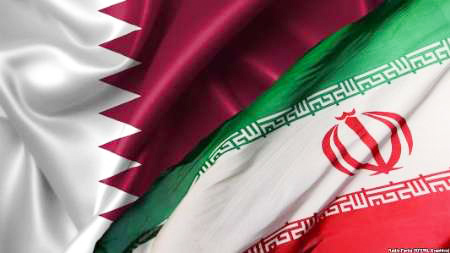
Iran and Qatar to form joint working group for South Pars study

Iran and Qatar to form joint working group for South Pars study

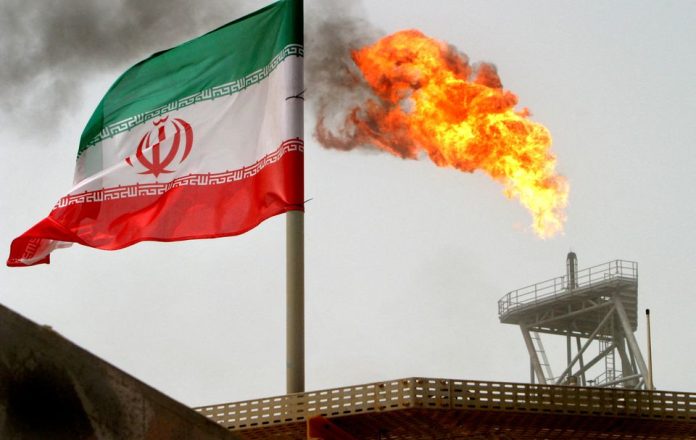
The source told IRNA the plans are on the agenda of the talks between the two countries oil ministers who will meet on the sidelines of the the summit of the Gas Exporting Countries Forum (GECF) next week in Doha.

The source added that the possible focus of the talks between the oil ministers of Iran and Qatar will be more on world markets and gas trade.

The informed source stressed that the gas swap will also be considered as one of the prongs of the negotiations.

He said in these talks, common positions on gas trade and global markets will be emphasized, adding that the establishment of joint knowledge-based companies in the field of oil and energy will be discussed by Iran and Qatar.

The informed source went on to say that the establishment of a joint working group to study the South Pars gas field that belong to Iran and Qatar is another issue that will be discussed during the meeting between the Iranian and Qatari oil ministers. Earlier, Iran’s Ambassador to Qatar announced President Ebrahim Raisi will attend the GECF summit during his visit to Doha next week.

Members of the GECF control 44% of world gas production, 60% of world gas reserves, 64% of pipeline gas transmission and 66% of liquefied natural gas (LNG) trade.

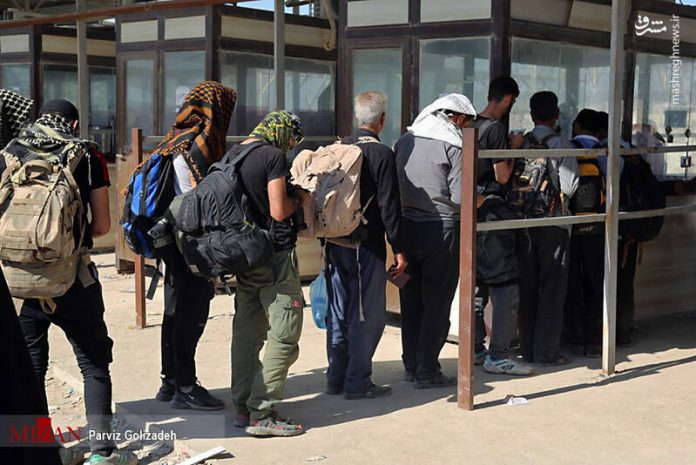
Iranians returning from Iraq should be fully vaccinated

Iranians returning from Iraq should be fully vaccinated

“However, if there are people with symptoms at the border… they must, if necessary, undergo a PCR test and follow the instructions announced by the Ministry of Health,” Director-General of Border Affairs at Iran’s Interior Ministry Hossein Qassemi said on Thursday.

He also pointed out that Iran and Iraq have waived visas for air travelers between them and plan to expand the waiver to cover land travel in the future.

Iraq is a major source of tourists visiting Iran. And a very large number of Iranian pilgrims head for the holy Iraqi cities of Najaf and Karbala each year. But coronavirus restrictions have drastically reduced the number of Iranians and Iraqis visiting the two countries.

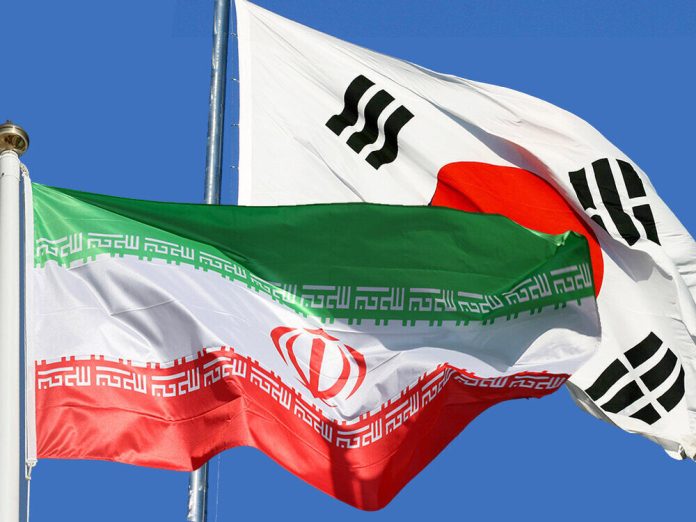
Iranian Central Bank confirms talks with South Korea over frozen assets

Iranian Central Bank confirms talks with South Korea over frozen assets

Mostafa Ghamrivafa, Director General of Public Relations of Iran’s Central Bank
said the negotiations were held in Seoul with the aim of unlocking $7 billion in frozen Iranian assets.

According to this official, the money has been frozen for 4 years at 2 South Korean banks under the pretext of US sanctions.

Iran’s Foreign Ministry Spokesman Saeed Khatibzadeh also said on Wednesday that an expert delegation from the Islamic Republic of Iran consisting of banking and oil experts held talks in Seoul this week with South Korean officials and companies.

He said the talks aimed to look into the possibility of resuming exports of Iranian oil and gas condensate to South Korea.

The Iranian Foreign Ministry spokesman noted that the results of the meeting in Seoul could serve as a test of South Korea’s determination to resolve differences and restore relations to normal, including by selling oil and gas condensate to South Korea and investment by South Korean companies in Iran’s economic projects. South Korea’s Yonhap News Agency earlier said Seoul plans to resume oil imports from Iran.

Japan mulls resuming Iran oil imports, pending Vienna talks

It will take about two-to-three months to resume oil imports from Iran if and after such an agreement on the nuclear deal is made as the refiner will need to make various arrangements such as insurance and shipping, Eneos Chairman Tsutomu Sugimori told reporters.

“We have not begun such preparations yet, but we will consider resuming imports of crude oil from Iran as one of our procurement option if an agreement over the nuclear deal is reached,” Sugimori added.

Asian refiners, traditionally big buyers of Iranian oil, are keen to resume imports from Iran if there is an agreement to revive the nuclear deal, which could pave the way for more supply on global markets and soften prices.

Most Asian buyers halted Iranian oil imports in 2019 after former U.S. President Trump withdrew from the nuclear deal with Iran and re-imposed sanctions on Tehran’s oil exports.

Oil prices are at their highest in more than seven years as fears of disruption in Russian energy supplies have boosted Brent and U.S. crude futures. Refiners are also paying record spot premiums for crude produced in Europe and the Middle East as producers struggle to meet a robust recovery in demand after the pandemic.

With the prospect of a new Iran deal, South Korea, previously one of Tehran’s leading oil customers in Asia, said on Wednesday it had held working-level talks on resuming imports of Iranian crude oil and unfreezing Iranian funds.

A major South Korean refinery is watching the developments at the nuclear talks, a company source stated, as Iranian crude oil is cost-competitive and easy to process compared with other grades such as Mexican oil.

“As long as the two countries decide to resume oil trade, we can purchase crude from Iran,” this source added.

“Since we’ve previously used crude oil from Iran, we don’t need to test the oil at our facilities,” he continued.

A refiner from India, Iran’s No. 2 customer, is in talks with Iran for sourcing its oil, an Indian refining source said, adding that it was also waiting for more clarity on the nuclear deal. The sources declined to be identified due to sensitivity of the matter.

Iran has kept some exports flowing despite sanctions as intermediaries find ways to disguise the origins of the imports and China, Iran’s biggest customer, has been a big destination.

Last month, China’s customs reported the first import of Iranian crude in a year.

Russia-Ukraine tensions have raised volatility in global oil prices, but positive developments in the U.S.-Iran negotiations have raised hopes of Iranian oil returning to markets, helping to calm oil prices, Claudio Galimberti, senior vice president at Rystad Energy said in a research note.

“Although not a done deal yet, prices are sliding on news of progress and broad consensus in the talks as it could ultimately see up to 900,000 barrels per day of crude added to the market by December this year,” he added.

Negotiations in Vienna to revive the Iran nuclear deal are nearing their conclusion, Iranian and U.S. officials have suggested, raising hopes the landmark agreement may soon be restored.

Intensive diplomatic talks continue in the Austrian capital of Vienna between Iran and the P4+1 group of countries to discuss all possible ways to salvage the 2015 nuclear deal by removing all sanctions imposed by Washington against Tehran.

The secretary of Iran’s Supreme National Security Council has stressed the U.S. and Europe have failed the test of fulfilling their commitments under the 2015 nuclear deal, officially known as the Joint Comprehensive Plan of Action, JCPOA.

Ali Shamkhan stated that the JCPOA is now an empty nutshell in terms of economic benefits and sanctions removal. He promised that Iran will not hold any negotiations with the “unfaithful” U.S. and Europe beyond the JCPOA.

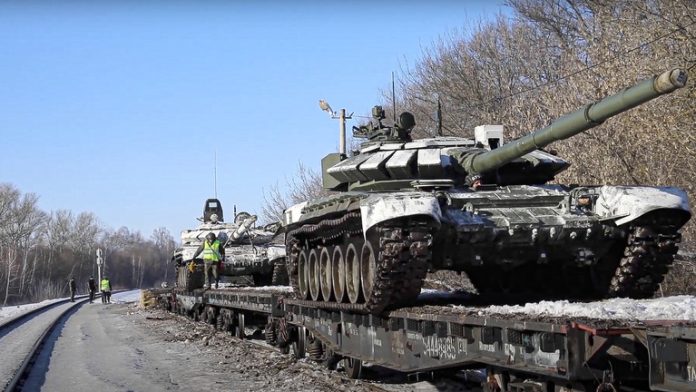
Russia says more troops and tanks returning to bases following drills

“The military echelon with the equipment of the units of the WMD tank army went to the point of permanent deployment after the completion of the planned exercises,” the ministry said in a statement on Thursday.

The transportation of tanks and armoured tracked vehicles is carried out by rail over a distance of about 1,000 kilometres (621 miles), the statement read.

No details were given as to the location of the drills or their place of permanent deployment.

Russia has carried out drills involving nearly all military districts to conduct operational training of troops. Forces of the Southern Military District have also begun preparations to return to the site of permanent deployment, the ministry noted.

On Thursday, heavy fire and explosions have been reported on the contact line in Ukraine’s war-torn Donbass region, with Kiev’s forces and those loyal to the two breakaway self-declared republics accusing each other of aggression hours after the Kremlin warned fresh fighting could be on the cards.

Russian Presidential Spokesman Dmitry Peskov told reporters on Thursday Moscow is keeping a close eye on the situation in southeastern Ukraine and its actions will depend on future developments.

“We are keeping a close eye [on the situation]. We’ll see how the situation will unfold,” he said, when asked if the Kremlin planned to take any action.

Reporters also asked if there were any plans for talks between Moscow and Kiev. In response, Peskov said that “there are no plans for talks with Kiev.”

“However, it is a source of deep concern,” the Kremlin spokesman added.

According to Peskov, Russia expects that its “opponents in Western capitals” will use their influence to warn the Kiev authorities against escalating tensions further.

“We have repeatedly warned that Ukraine’s excessive military buildup in close proximity to the line of contact, along with possible provocations, could pose a great danger. We can see that provocations are taking place. We have seen reports from the self-proclaimed republics about an exchange of strikes on the line of contact and the first strikes came from Ukraine. This is very alarming information,” Peskov stressed.

“We hope that our opponents in Western capitals, in the US and NATO countries, will use their influence to warn Kiev against escalating tensions further,” he added.

The situation at the border between Russia and Ukraine is stable while tension is growing at the Donbass line of contact, he noted.

The Russian presidential spokesman thus commented on the Ukrainian military’s claims that the situation in Donbass was stable.

“The situation at the Russia-Ukraine border is, indeed, stable,” the Kremlin press secretary said.

“Incidentally, we have repeatedly heard statements by the Ukrainian military that they do not see any extraordinary potential from Russian territory, which are in stark contrast with the claims of other countries that always refer to their intelligence data unconfirmed by the Ukrainians themselves,” Peskov added.

However, as for the line of contact with the territories of the self-proclaimed Donetsk and Lugansk People’s Republics, “we see that tension is growing there,” the Kremlin spokesman emphasized.

As the Russian presidential spokesman pointed out, the situation in Ukraine may go beyond the scope of information attacks and explode at any moment.

“Each moment risks going beyond the scope of information attacks and bringing about consequences that will rekindle the war in close proximity to our borders,” the Kremlin spokesman cautioned.

The Kremlin is not ready to and will not consider complaints, including from the US, on how Russia deploys its armed forces on its own soil, Peskov told journalists.

“First of all, we are not ready to and we won’t consider complaints with regards to how we move the armed forces on the territory of our country. This is our sovereign right and we don’t intend to discuss it with anyone,” the Kremlin official said in response to a request to comment on information that Russia allegedly continues to send its troops to the border with Ukraine.

He reiterated that earlier, Russian Defense Minister Sergey Shoigu reported to Russian President Vladimir Putin that “certain phases of drills in regions adjacent to the border with Ukraine, in Crimea, are nearing completion.”

Putin’s press secretary explained that as those phases of the exercise are being completed, the units begin to return to their permanent military bases and this process had already started.

“This is a prolonged process. It is clear that the contingent for the drills, for the exercise was formed over many weeks, and, of course, it is impossible to withdraw it in one day. They cannot simply go up in the air and fly away all at once,” the spokesman said, reiterating that this process takes time and the Defense Ministry has a precise schedule for returning the units to their bases.

“So, in this case, these are, as always, absolutely groundless accusations,” the spokesman concluded.

Covid-19 claims 182 more lives in Iran

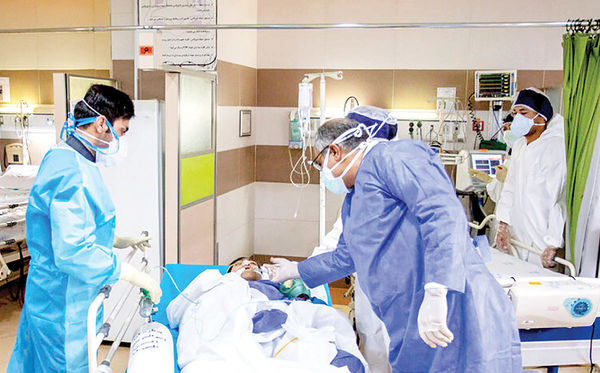
The Iranian Health Ministry said on Thursday that the latest deaths took the total number of fatalities from Covid-19 to 134,238.

It said over 17,500 more people had contracted the disease over the past 24 hours.

On Wednesday, the country reported 185 deaths and over 16,000 new infection cases.

A new highly transmissible strain of the coronavirus known as Omicron has pushed up the number of fatalities and infections in recent weeks despite Iran having administered over 138 million doses of vaccine with nearly 55 million people fully vaccinated.

Nearly 22 million people have received their booster shots with health authorities still urging people to get their third jabs as soon as possible.

Iran is also racing to immunize children against the respiratory disease.

Health Minister Bahram Einollahi said on Thursday that 90 percent of children in the 12-18 age group have received a vaccine shot.

He pointed out that 20% of those who contract the new variant are children, urging parents to have their children vaccinated as soon as possible.

Einollahi also warned that the sixth wave is expected to reach its peak in the coming weeks urging people to observe health protocols more carefully.

Australia designates Hamas as terror group; the movement calls it hostile

Hamas

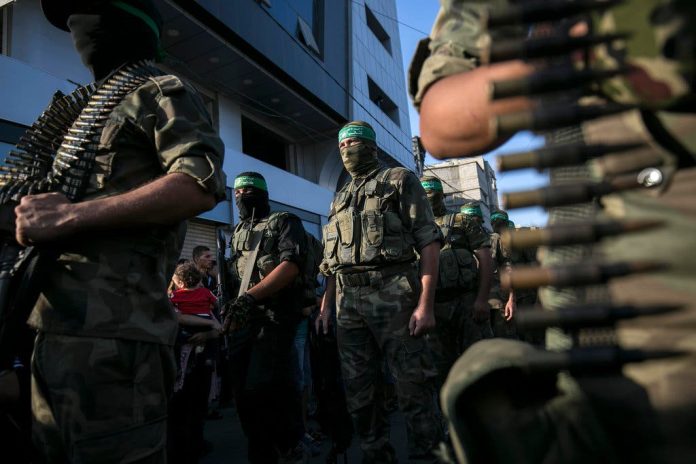
Australia had previously listed Hamas’s al-Qassam Brigades military wing as a “terror” group in 2003, but the new designation which will come into force in April, will list the organisation in its entirety, including its political wing.

Hamas has fought successive wars with Israel since 2007. The latest 11-day Israeli assault on Gaza in May last year killed at least 248 Palestinians, including 66 children, and wounded more than 1,900 others. Rocket fire from Gaza also killed at least 12 people in Israel, including two children.

“The views of Hamas and the violent extremist groups listed today are deeply disturbing, and there is no place in Australia for their hateful ideologies,” said Home Affairs Minister Karen Andrews.

The designation will place restrictions on financing or providing other support to Hamas – with certain offences carrying a 25-year prison sentence.

“It is vital that our laws target not only terrorist acts and terrorists, but also the organisations that plan, finance and carry out these acts,” Andrews added.

But, the Australia Palestine Advocacy Network, a national coalition of Australians who support Palestinian rights, disagreed with the designation, saying it does nothing to advance the cause of peace and will only create more suffering for the two million people currently living under the 15-year Israeli blockade.

“The government has failed in its duty of searching for a peaceful solution and has shown it applies one set of rules to Palestine and another to Israel,” Network President Bishop George Browning noted.

Israeli Prime Minister Naftali Bennett welcomed the Australian move, tweeting that it marked “another important step in the global fight against terrorism”.

Israeli Foreign Minister Yair Lapid also thanked Australian Ambassador to Israel Paul Griffiths for what he described as a “significant step” in Israel’s international effort to curtail terrorist organisations.

Zionist Federation of Australia President Jeremy Leibler stated the Hamas listing made clear Australia’s “absolute rejection of hatred and terrorism”.

“There is absolutely no doubt that Hamas in its entirety meets the definition of terrorist organization,” Leibler announced in a statement, adding that the decision aligns Australia with the United States, European Union, Britain and Canada.

The United States and Canada have long designated Hamas a terror group. A similar European Union decision had been the subject of a protracted court battle, that eventually resulted in Hamas being returned to the terror list.

In November last year, Britain banned the group as a terrorist organisation, after Home Secretary Priti Patel pushed for the move, arguing that it was not possible to distinguish between Hamas’s political and military wings.

Following the UK’s move, Chris Doyle, director of the Council for Arab-British Understanding, noted the decision was not going to improve a climate of peace.

“There is a degree of gesture politics going on, whereby the UK government is trying to look tough on terrorism and anti-Semitism, but the reality is that this will not have much meaningful impact on the ground where it really matters,” Doyle told Al Jazeera at the time.

“I don’t think you are going to see any stemming of violence at all as a result of this, nor will it impact the fighting against anti-Semitism because those who hold anti-Jewish views and spout it out are going to do so regardless,” he continued.

Iranian daily: Officials paying lip service to improving economy

Officials paying lip service to improving economy

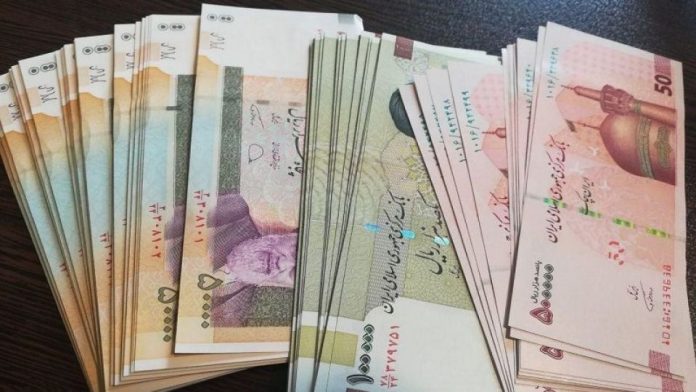
The daily said in a report that prices are inflating every moment and every day and officials are “paying lip service” instead of taking practical steps so that their positive effect is felt in people’s lives.

The daily warned that things are getting strictly difficult for the people in the last days of the year, when people ordinarily do their purchasing for clothing and prepare for the Persian New Year – Nowruz.

“Pockets are emptier than ever and the slogan “More Exorbitant Prices Every Day” has become more achievable than any other thing in reality and on the ground. Promises of the economic officials and managers of the society are, on the other hand, limited to slogans that try to control the psychological atmosphere of the society and are kilometers away from statistics and realities,” the paper wrote.

“Undoubtedly, immediate solutions by the officials for the removal of the sanctions can prevent further increase in the pressure on people’s livelihoods and, restore mental calm among the people, to an extent.”

Iran has been witnessing hyperinflation for decades. But the trend has been worsening since the US withdrawal from the nuclear deal in 2018, the reimposition of the sanctions and the fast devaluation of the national currency,vRial.

US lawmakers: Iran deal without congress ok, to have same fate as jCPOA

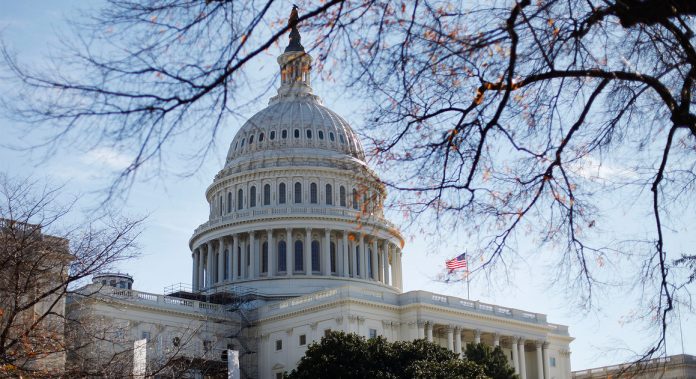
The GOP letter — signed by most members of the party that polls say will run the House next year — bluntly rebuffs Tehran’s request. An Iranian official has called for Congress to pledge that the U.S. will stay in a potential deal.

It also complicates Biden’s already-fraught efforts to revive the deal negotiated by the Obama administration and backed by the European Union and U.N. Security Council.

“We will view any agreement reached in Vienna which is not submitted to the U.S. Senate for ratification as a treaty — including any and all secret agreements made with Iran directly or on the sidelines of official talks — as non-binding,” the GOP lawmakers wrote to Biden.

The letter lays out conditions to which Iran’s leaders would likely never agree.

The Republicans promise to oppose any agreement that lifts U.S. sanctions on Iran unless Tehran has first fully dismantled all its enrichment capabilities.

They also want “Iran to destroy its nuclear-capable missiles, halt all sponsorship of terrorism and pay U.S. federal court judgments owed to the American victims of terrorism sponsored by the Iranian regime”. Iran has rejected U.S. allegations, blaming Washington for the turmoil in the region.

Iran has categorically rejected any U.S. preconditions for its return to the landmark agreement. Tehran has also rejected calls for wider negotiations over its military activities and missile defense program, stressing it would only discuss over its nuclear program with world powers.

The letter sends a clear statement to the Iranians of the GOP’s determination to oppose a re-entry into the 2015 nuclear deal, known as the Joint Comprehensive Plan of Action (JCPOA).

175 House Republicans, including establishment members and hardcore Trumpists alike, signed the letter — a striking statement in itself.

Reps. Mike Gallagher (R-Wis.) and Michael Waltz (R-Fla.) led the effort. House Minority Leader Kevin McCarthy signed it, as did his political enemy, Rep. Liz Cheney (R-Wyo.).

33 Republican senators have taken the same position, warning in a letter this month that implementation of a nuclear deal would be “severely if not terminally hampered” if Biden did not submit to a Senate vote.

A State Department spokesperson told Axios, “The Biden administration is not negotiating a return to mutual compliance with the JCPOA based on who is in office in Iran today or tomorrow, and we would expect the same approach from Iran.”

These messages echo a 2015 open letter to Iran led by Sen. Tom Cotton (R-Ark.).

At that time, Democrats accused him of undermining the nuclear negotiations by claiming any deal not ratified by Congress could be revoked “with the stroke of a pen.”

With the indirect talks reaching crunch time, Iran has publicly appealed to Congress to make a “political statement” committing the U.S. to the potential nuclear deal.

“As a matter of principle, public opinion in Iran cannot accept as a guarantee the words of a head of state, let alone the United States, due to the withdrawal of Americans from the JCPOA,” Iran’s Foreign Minister Hossein Amir Abdolahian told the Financial Times.

The GOP’s categorical refusal to entertain this request — and pledge to withdraw from any deal next time it takes the White House — could end up influencing Iranian decision-making.

“Republicans are sending a pretty strong and clear message to the Iranians and to the private sector with this letter,” says Richard Goldberg, a former top Iran official in Trump’s National Security Council now serving as senior adviser at the Foundation for Defense of Democracies.

“To Iran: Whatever you think Biden is agreeing to in Vienna lacks the political support in Washington to survive the next change in party control of the White House or Congress — sanctions will absolutely return,” Goldberg told Axios.

“To the private sector: Are you really going to put your head in the lion’s mouth with these same Republicans set to take back Congress in November?” Goldberg added.

“The reality is that the JCPOA has already been reviewed and voted on in Congress. What the administration is negotiating in Vienna is a pathway back to the original deal, not a new one,” Ali Vaez, Iran project director at Crisis Group, told Axios.

“All the political posturing notwithstanding, there is practically nothing that Congress can do to stop that from happening,” he added.

“This letter shows that the Republicans are either incapable or unwilling to learn from the failures of Trump’s maximalist 12 demands that have now brought Iran closer than ever to the verge of nuclear weapons,” he continued.

Intensive diplomatic talks continue in the Austrian capital of Vienna between Iran and the P4+1 group of countries to discuss all possible ways to salvage the 2015 nuclear deal by removing all sanctions imposed by Washington against Tehran.

The secretary of Iran’s Supreme National Security Council has stressed the U.S. and Europe have failed the test of fulfilling their commitments under the 2015 nuclear deal.

Ali Shamkhan stated that the JCPOA is now an empty nutshell in terms of economic benefits and sanctions removal. He promised that Iran will not hold any negotiations with the “unfaithful” U.S. and Europe beyond the JCPOA.

Iran insists that the talks must lead to the removal of all American sanctions that were imposed against Tehran following Washington’s unilateral withdrawal from the landmark agreement in May 2018. Tehran has also demanded credible guarantees that Washington will not abandon the deal again.

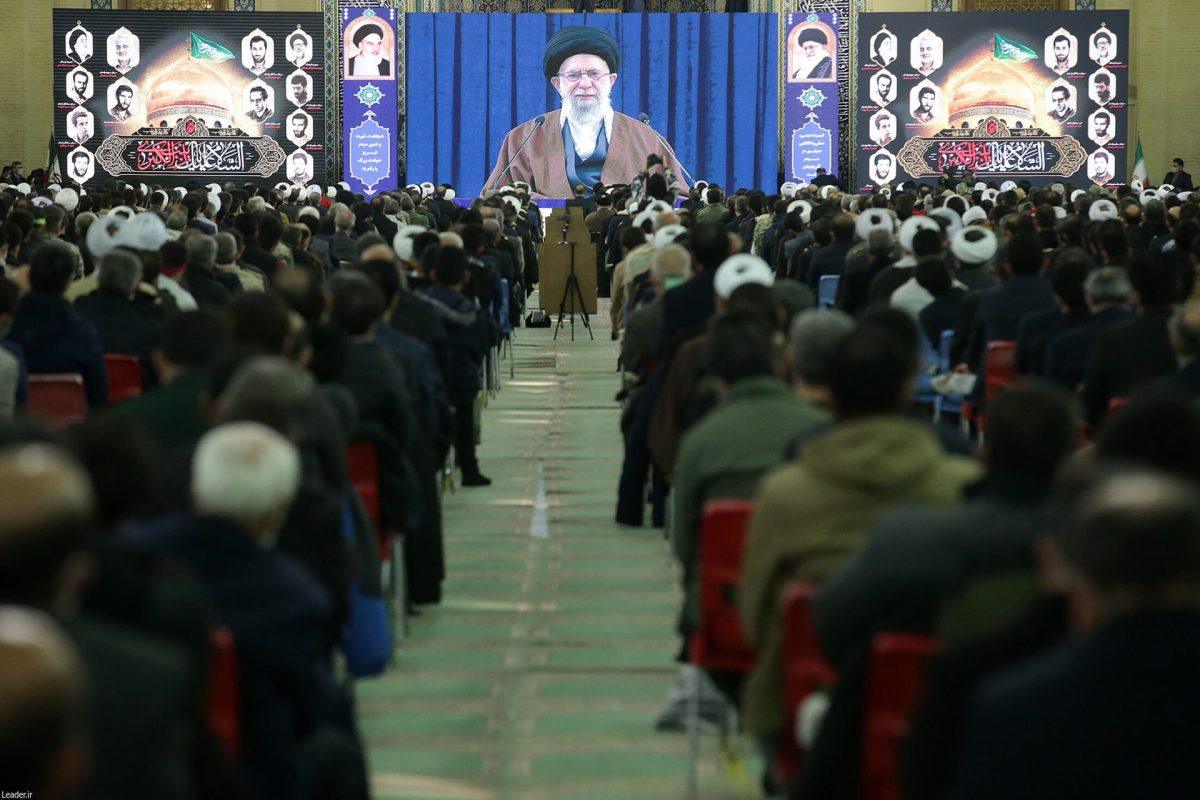
The Leader: We want to use peaceful benefits of nuclear energy

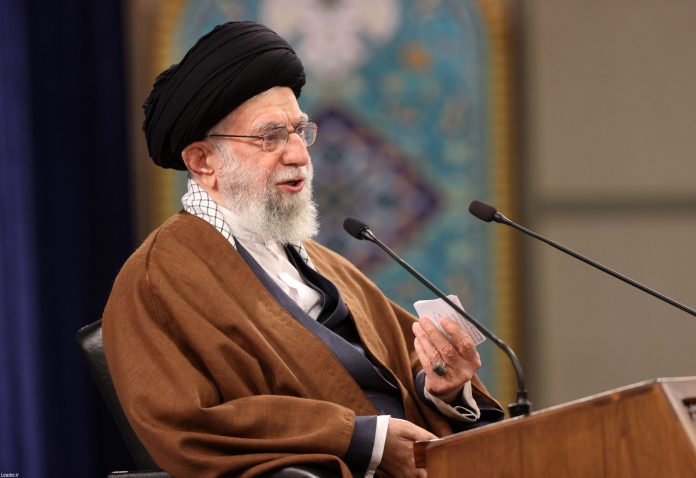
Leader of Iran’s Islamic Revolution Ayatollah Seyyed Ali Khamenei

The leader said the enemy has “oppressively” focused on “our nuclear energy issue”, which they know is for peaceful purposes.

“They now say Iran is just such an amount away from producing a [nuclear] bomb. These are nonsense and meaningless,” he stressed.

“The world is becoming more dependent on nuclear energy every day. We will also be in dire need [of nuclear energy], sooner or later. If we do not think of the future, if we do not pursue [this energy] today, tomorrow will be late and we will be empty-handed. The day, the world will be dominant over all aspects of this issue, that day it will be difficult for us to move and advance.”

Ayatollah Khamenei also talked about the discussions around the nuclear deal and the ongoing Vienna talks on its revival.

“On the developments on the JCPOA in 2015 and 2016, the shortcoming I used to talk about was that some points should have been observed to prevent subsequent problems. My objection was mostly this. I used to say these points should be taken into consideration. I also repeated them in my warnings. And some of these were not taken note of and was not attended to, and these later problems arose, … therefore the look to the future is important” the leader said.

The leader also underlined the need for continuation of the revolutionary move forward. He said such revolutionary moves would be ensuring progress and social justice in the country and maintaining Iran’s power and creating an Islamic society that ultimately leads to a new Islamic civilization.

“The slogan of the revolution is fighting arrogance and arrogant powers. Those who talk about submission to the arrogance and to the US, they cannot be committed to this revolution and these objectives,” he stressed.

Leader: We want to use peaceful benefits of nuclear energy

The leader further noted that the resistance movements are growing in the region and the US is no longer feared as nations begin to oppose the US.

“We should prize this and continue this movement of the revolution. They spend billions of dollars and try to get the Iranian nation and especially the youth to turn back from treading the revolution’s path. One [such efforts] is economic pressure to put people in a tight spot and get them separated from the Islamic system. Another [such effort] is mudslinging. Mudslinging, falsificatinos, accusations, which they level against the pillars of the revolution. They accuse centers that are [positively] impacting the progress of the revolution,” Ayatollah Khamenei said.

“One day it is the Islamic Consultative Assembly [the parliament], one day it is the Guardian Council, another day it is the IRGC; today it is IRGC’s turn. They level accusations against the IRGC and engage in mudslinging and also [do the same] against the great martyr [Lieutenant General Qassem] Soleimani. If they even dared and did not fear people’s anger and reaction, they would have also insulted Imam [Khomeini].”