Friday, December 26, 2025
Home Blog Page 2046

Oil prices extend losses as Iran nuclear deal nears

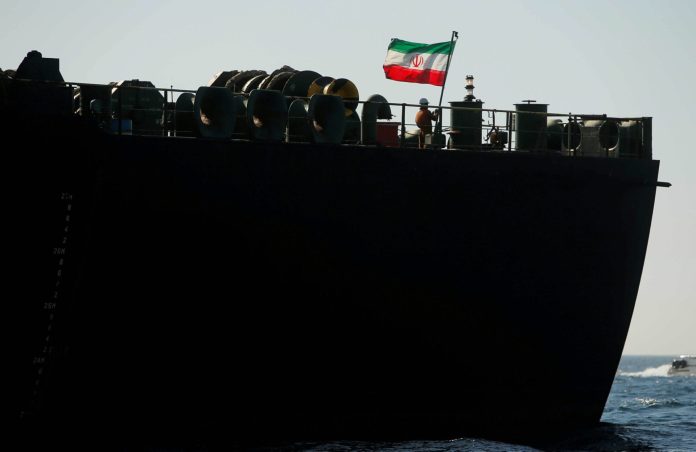
Iran Oil Tanker

Brent crude futures fell 47 cents, or 0.5%, to $92.50 a barrel at 0410 GMT, extending a 1.9% drop from the previous session.

U.S. West Texas Intermediate (WTI) crude futures shed 62 cents, or 0.7%, to $91.14 a barrel, after sliding 2% in the previous session.

Both benchmark contracts hit their highest levels since September 2014 on Monday, but were headed for their first weekly fall in nine weeks amid reports of a deal taking shape to revive Iran’s 2015 nuclear agreement with world powers.

Diplomats say the draft accord outlines a sequence of steps that would eventually lead to granting waivers on oil sanctions. That would bring about 1 million barrels a day of oil back to the market, but the timing is unclear.

“The downward pressure on crude from the prospect of a deal is likely to sustain … unless the parties end the latest round of talks still in a deadlock,” stated Vandana Hari, founder of oil market analysis provider Vanda Insights, in a note.

The Ukraine standoff fear premium in crude is starting to fray at the edges, Hari added.

Still, analysts do not expect prices to fall much in the near term, even with the prospect of more Iranian oil, with the Organization of the Petroleum Exporting Countries and allies, together called OPEC+, struggling to meet their production targets.

“Oil markets are vulnerable to supply disruptions given global oil stockpiles are tracking near seven year lows and as OPEC+ spare capacity comes into question given disappointing OPEC+ supply growth,” Commonwealth Bank (CBA) analyst Vivek Dhar stated in a note.

With oil demand also recovering as air travel and road traffic picks up, CBA sees Brent holding in the $90 to $100 a barrel range in the short term and topping $100 “quite easily” if tensions escalate between Russia and Ukraine.

U.S. President Joe Biden is set to host a call on Friday on the Ukraine crisis with the leaders of Canada, France, Germany, Italy, Poland, Romania, Britain, the European Union and NATO, according to the office of Canada’s Prime Minister Justin Trudeau.
US says deal with Iran possible within days

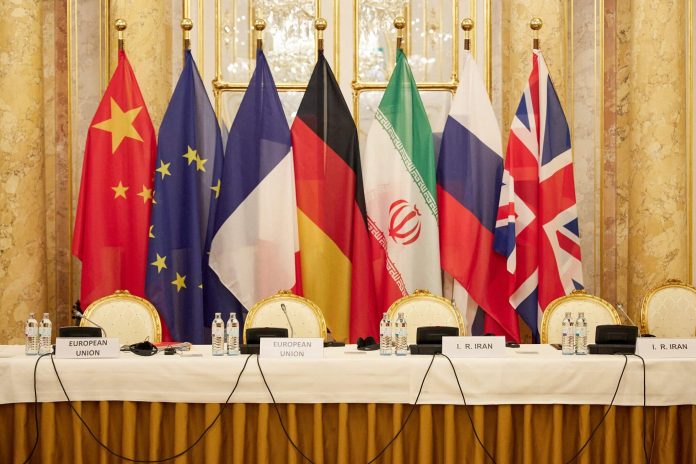
The Vienna talks, which involve Iran as well as Britain, China, France, Germany and Russia directly, and the United States indirectly, resumed in late November with the aim of restoring the landmark deal. Western diplomats say they are now in the final phase of the talks and believe that a deal is within reach.

Stating that “substantial progress has been made in the last week,” a State Department spokesperson told AFP that “if Iran shows seriousness, we can and should reach an understanding on mutual return to full implementation of the JCPOA within days,” using an acronym for the nuclear deal.

But “anything much beyond that would put the possibility of return to the deal at grave risk,” the spokesperson added.

Iran insists that the talks must lead to the removal of all American sanctions that were imposed against Tehran following Washington’s unilateral withdrawal from the agreement in May 2018. Tehran has also demanded credible guarantees that Washington will not abandon the deal again.

Iran’s chief nuclear negotiator has recently stated the involved sides are now closer than ever to an agreement.

“After weeks of intensive talks, we are closer than ever to an agreement; nothing is agreed until everything is agreed, though. Our negotiating partners need to be realistic, avoid intransigence, and heed lessons of past 4yrs. Time for their serious decisions,” Ali Bagheri Kani said in a tweet.

His tweet comes amid speculations and reports over the past days that the Vienna talks are headed toward an agreement with a report claiming 98 percent of the outstanding matters have already been resolved.

Iranian MP: West must accept Iran’s conditions in Vienna

Iranian MP: West must accept Iran’s conditions in Vienna

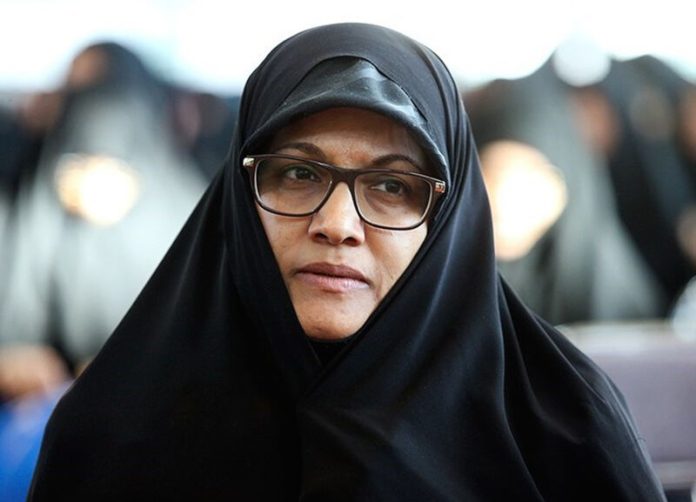
Zohreh Elahian described the Vienna talks aimed at sanctions removal and revival of the 2015 nuclear deal as tough and serious.

She told IRNA if the Western side is determined to reach a deal, it must accept Iran’s conditions and remove all nuclear-related sanctions.

She underlined the need for verification of a possible agreement in Vienna, noting that the government will not wait for the result of the Vienna talks.

Elahian said the current administration is seeking to strengthen the country’s economic diplomacy and improve relations with neighbors with the aim of neutering anti-Iran sanctions. Elahian also urged the US and Europe to stick by their commitments following a possible deal in Vienna.
Elahian noted that if the Vienna talks do not result in sanctions removal, then Iran will put the notion of strengthening its economic diplomacy on the agenda more than ever before to help blunt the impact of the sanctions.

She said the selling of 1 million barrels of oil per day proves that the current Iranian administration has managed to properly come up with solutions to neuter the sanctions.

Elahian also touched on the 25-year strategic partnership deal with China, saying it paves the way for selling oil and for the imports of technology to Iran as well as foreign investments in the country.

Brazil minister says seeking balance in agricultural trade with Iran

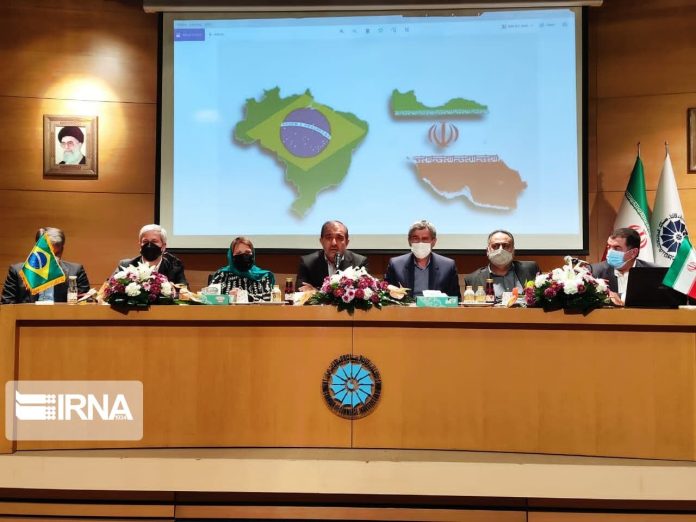
Brazilian Agriculture Minister Theresa Christina has said that her country wants to increase imports from Iran while exporting to the Islamic Republic with the aim of achieving equal trade. Christina was speaking at a meeting of the Fars Province Chamber of Commerce, Industries, Mines and Agriculture in Shiraz on Thursday evening.

She noted that the purpose of her trip to Iran is to be able to increase bilateral relations between the two countries in the field of agriculture. Christina also said the whole world should help provide quality food at reasonable prices worldwide.

“By 2050, food demand will increase by up to 60 percent, and food-supplying countries need to make progress on new methods of cultivation and harvesting,” Brazil’s agriculture minister said, citing figures from the Food and Agriculture Organization (FAO).

Christina said that Brazil does business with Iran through intermediary countries, adding that these challenges are focused on products such as corn, soy and similar crops.
The Brazilian agriculture minister said a group of businesspeople were accompanying her on her visit to Iran to increase trade between the two countries.

Cristina traveled to Shiraz on Thursday at the head of a delegation, and after visiting the capacities of the agricultural sector of Fars Province and the World Heritage Site of Persepolis, attended a meeting of the Chamber of Commerce of this province.

Israel rules out cooperating with UN over Gaza crimes probe

Meirav Eilon Shahar, the Israeli ambassador to the UN and international organizations in Geneva, made the remarks in a letter, which she personally delivered to Navi Pillay, the head of the Commission of Inquiry that has been established by the UN Human Rights Council (UNHRC).

“There is simply no reason to believe that Israel will receive reasonable, equitable, and non-discriminatory treatment from the Council, or from this Commission of Inquiry [COI],” said Shahar.

“This COI is sure to be yet another sorry chapter in the efforts to demonize” Israel, she added.

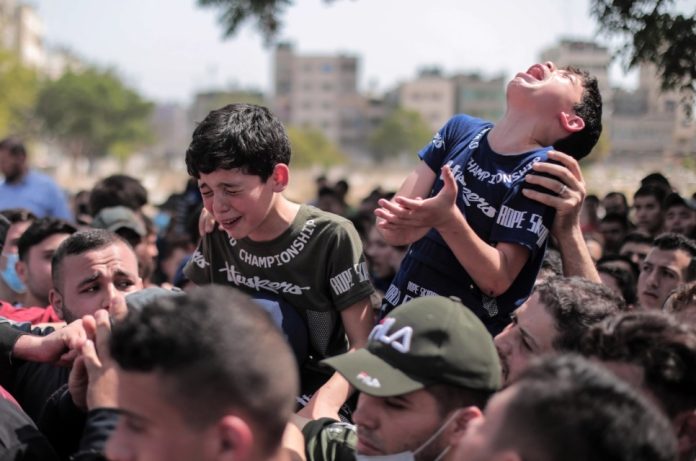
The Israeli regime launched the war last May after Palestinians in the Gaza Strip rose up in protests in solidarity with their fellow countrymen in the Israeli-occupied West Bank, who were facing a significantly ferocious crackdown by Tel Aviv.

The war killed at least 248 Palestinians, including more than 60 children, and injured upwards of 1,200 others.

The war was the fourth wholesale military campaign by the occupying regime against the densely-populated Palestinian enclave.

Michelle Bachelet, the former UN high commissioner for human rights, told the Council back then that the Israeli strikes might have constituted “war crimes.”

Shahar also took a personal aim at Pillay, denouncing her for calling Israel an “apartheid” regime and backing the Palestinian-led anti-Israeli Boycott, Divestment and Sanctions (BDS) movement.

Russia: U.S. must take first step to revive JCPOA

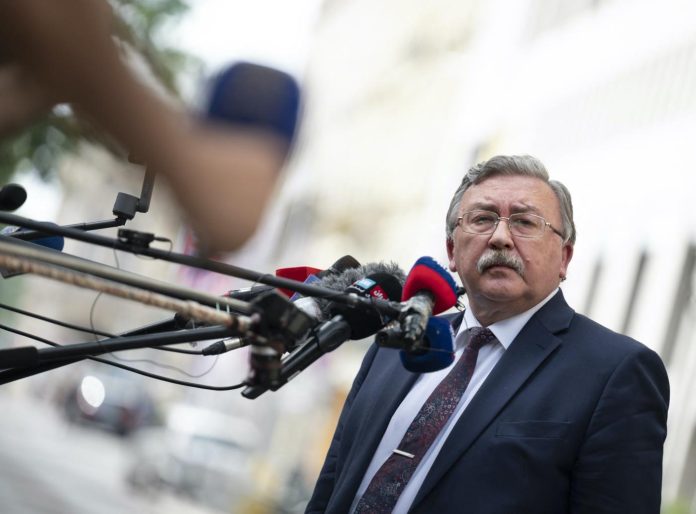
Mikhail Ulyanov

“The United States first withdrew from the agreement and now has to take the first step,” Mikhail Ulyanov told reporters in Vienna on Thursday evening.

The Russian negotiator also dismissed a Reuters report on the terms of the draft agreement, saying that the claimed prisoner exchange has nothing to do with the nuclear deal and would not be included in a possible agreement.

Meanwhile, the head of the Chinese delegation said that all parties have responded to a text proposed by the European Union, stressing the coming days will be of vital importance.

Wang Qun said negotiations are ongoing in different forms and at different levels, and that Iran has made constructive efforts during the talks in the Austrian capital.

Iran’s top nuclear negotiator Ali Bagheri Kani said on Wednesday that after weeks of intensive talks, the parties are closer than ever to an agreement, adding that it is now time for the other party to make a decision.

The eighth round, which began on December 27, has now become one of the longest rounds of the talks between Iran and the P4+1, Russia, China, Britain, France and Germany.

Over the past days, Iran has stepped up criticism of the West for prolonging the negotiations in Vienna aimed at reviving the 2015 nuclear deal and removing sanctions against Tehran.

Iran insists that America must remove all sanctions imposed on Tehran after former U.S. president Donald Trump unilaterally abandoned the deal in May 2018 in violation of American commitments. It also says Washington must provide guarantees that it will not leave the deal again.

Iran rejects Reuters report on Vienna talks as “unsourced spin”

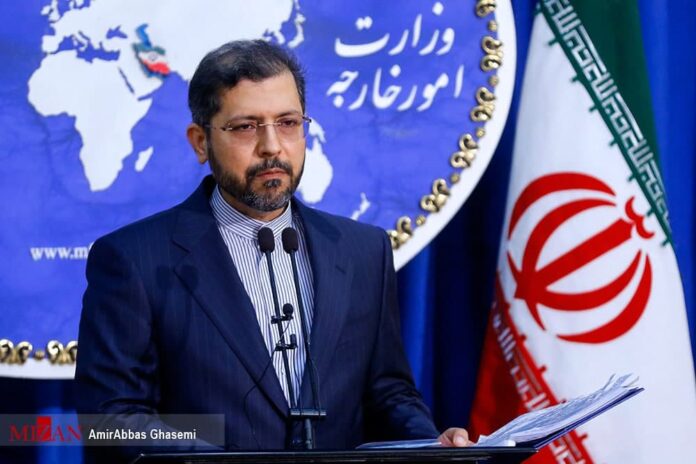
khatibzadeh-Iran

Foreign Ministry Spokesman Saeed Khatibzadeh said in a tweet that misinformation disguised as reporting is dangerous. Khatibzadeh strongly denied the Reuters report, saying the final deal to let the US return to the JCPOA will be far from the news agency’s “un-sourced spin”.

He noted that the final deal won’t be between Iran and the US and warned of more “spin” as the Vienna talks near their final days.

Reuters has claimed a US-Iranian deal taking shape to revive Iran’s 2015 nuclear agreement lays out phases of mutual steps to bring both sides back into full compliance, and the first phase does not include waivers on oil sanctions.

It also quoted three unnamed diplomats as claiming that the draft text of the agreement, which is more than 20 pages long, stipulates a sequence of steps to be implemented once it has been approved by the remaining parties to the deal, starting with a phase including Iran suspending enrichment above 5% purity. According to Reuters, the text also refers to other measures that include unfreezing about $7 billion in Iranian funds stuck in South Korean banks under U.S. sanctions, as well as the release of Western prisoners held in Iran.

Reuters further claims only once that initial wave of measures has been taken and confirmed would the main phase of sanctions-lifting begin, culminating in what many diplomats call Re-Implementation Day – a nod to the original deal’s Implementation Day, when the last nuclear and sanctions-related measures fell into place.

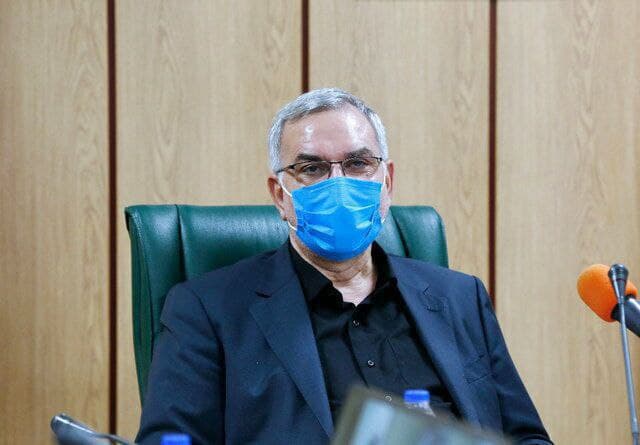
Iranian health minister: Iranians do not seek medical treatment abroad

Einollahi said Iran is now self-sufficient in all medical fields.

Einollahi added that all Iranians are effective in making their country stronger so that Iran can achieve the ideals of Imam Khomeini and its leader Ayatollah Seyyed Ali Khamenei.

On Covid, he said many countries that claim to be powerful and advanced are helpless in the face of the disease.

The singled out the US as an example, noting 2 to 3 thousand Covid deaths happen daily in the country.

The health minister said the people of Iran are so strong that they withstood the war for 8 years and today despite the sanctions imposed on Iran, a new chapter of prosperity is starting in the Islamic Republic.

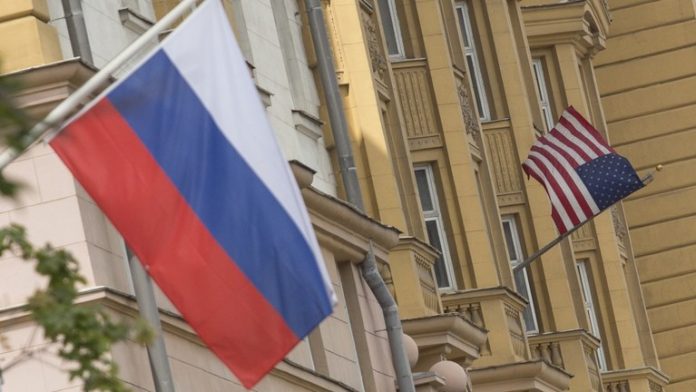
Russia expels top US diplomat in Moscow amid Ukraine crisis

Bart Gorman, who has been serving as deputy ambassador, was asked to leave the country, RIA Novosti and TASS have reported on Thursday, citing the American mission.

The embassy told the news agencies that Washington is considering a tit-for-tat response.

Gorman is a career US diplomat specializing in security, according to his bio. He previously served as the deputy assistant secretary and assistant director for Threat Investigations and Analysis (TIA) in the department’s Bureau of Diplomatic Security.

He was also posted as a security officer at a number of US diplomatic missions around the world, including in Russia, Iraq, Jordan, China, Kazakhstan, and Armenia.

In its comment to the Russian media, the embassy said that a diplomat with a rank corresponding to Gorman’s left the US in late January “after his term expired.”

Moscow had yet to comment on the reported expulsion at the time of writing.

Azizi Khadem removed from Iran football federation presidency

Members of the federation’s board of directors voted to temporarily remove him from the top position. They have been dissatisfied with the way things are going on in the federation.

Member of the board of directors Mehrdad Seraji was appointed as caretaker president of the IRIFF until an extraordinary assembly convenes.

Azizi Khadem was elected as the president of the football federation in February last year.

From the beginning of his tenure, he faced controversies with some criticizing him for what they called legal and economic ambiguities in the contracts related to the football federation.