Friday, December 26, 2025
Home Blog Page 2034

Iran calls on nationals to use “every possible means” to exit Ukraine

The embassy issued the warning as part of a statement on the situation in Ukraine, seeing the developments on the ground and the restrictions on flights, imposed by the Ukrainian government.

The mission “strongly advised” Iranian nationals to take shelter in safe areas and shelters, designated by local officials of their place of residence, in case circumstances do not allow them to exit Ukraine.

The embassy also called on nationals to avoid approaching military and other sensitives sites. The mission said consultations are underway with the Ukrainian government to gain flight authorization to evacuate Iranians.

The statement comes after Russia launched what the Ukrainian president called “a full-scale invasion” of Ukraine Wednesday, bombing military targets near major cities.

Kiev has announced martial law across all of Ukraine amid the conflict.

World reacts to Russian invasion of Ukraine

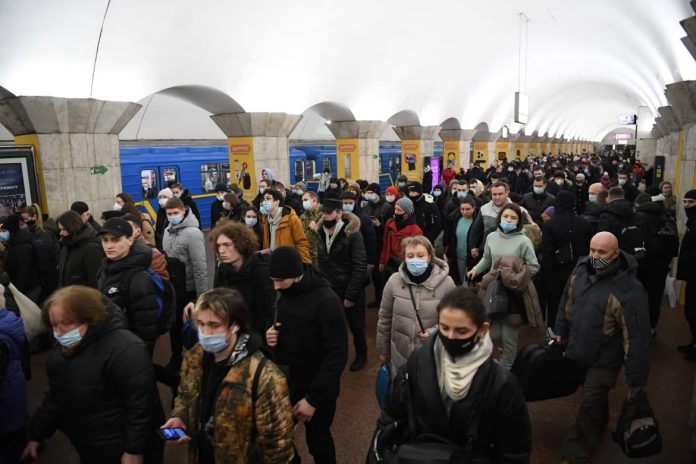
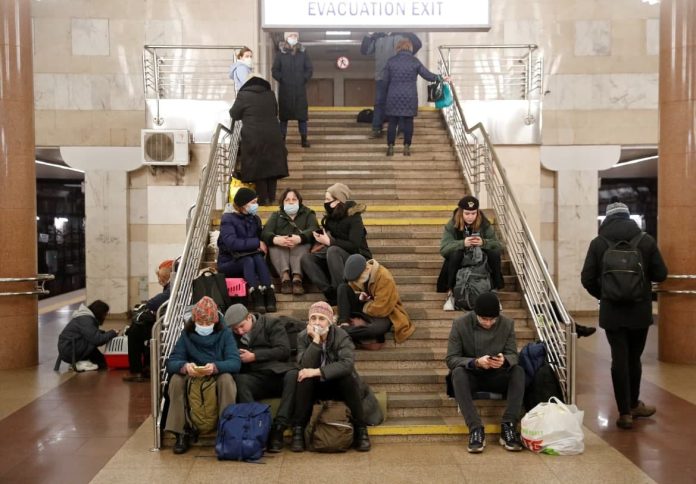
People, some carrying bags and suitcases, walk at a metro station in Kyiv

The United States

President Joe Biden has condemned Russia for an “unprovoked and unjustified attack” on Ukraine while promising that his country and its allies “will hold Russia accountable”.

“President Putin has chosen a premeditated war that will bring a catastrophic loss of life and human suffering. Russia alone is responsible for the death and destruction this attack will bring, and the United States and its allies and partners will respond in a united and decisive way. The world will hold Russia accountable,” he stated.

The United Nations

Secretary-General Antonio Guterres condemned Russia’s actions, telling Putin to “bring your troops back to Russia”.

“In the name of humanity, do not allow a war to start in Europe which could be worst war since the beginning of the century with consequences not only devastating for Ukraine, not only tragic for the Russian Federation but with an impact cannot even foresee,” he added.

Germany

Chancellor Olaf Scholz condemned Russia’s attack on Ukraine as a “blatant breach of international law” that “cannot be justified by anything”.

The United Kingdom

Prime Minister Boris Johnson said he was appalled by the horrific events in Ukraine and has spoken to Ukrainian President Volodymyr Zelenskyy to discuss the next steps.

“President Putin has chosen a path of bloodshed and destruction by launching this unprovoked attack on Ukraine,” Johnson tweeted.

France

President Emmanuel Macron condemned Russia’s military actions in Ukraine and called on Moscow to end them immediately.

“France strongly condemns the decision of Russia to start a war with Ukraine. Russia must immediately put an end to its military operations,” wrote Macron on his Twitter account.

The European Unions

The European Union will hold Russia “accountable” for its attack on Ukraine and is preparing fresh sanctions that will deal “massive and severe consequences” to Moscow, the bloc’s chiefs said on Thursday.

“We strongly condemn Russia’s unjustified attack on Ukraine,” European Commission President Ursula von der Leyen and European Council President Charles Michel each wrote on Twitter.

“In these dark hours, our thoughts are with Ukraine and the innocent women, men and children as they face this unprovoked attack and fear for their lives,” they continued, adding, “We will hold the Kremlin accountable.”

EU leaders are to hold a snap summit late Thursday.

In a joint statement, von der Leyen and Michel stressed the summit will “discuss the crisis and further restrictive measures” that “will impose massive and severe consequences on Russia for its actions”.

The European Union will slap the harshest package of sanctions ever implemented on Russia for attacking Ukraine, the bloc’s foreign policy chief has said.

“The European Union will respond in the strongest possible ways…(EU leaders) will adopt a stronger package, the harshest package of sanctions we have ever implemented,” Josep Borrell told reporters in Brussels.

Australia

Prime Minister Scott Morrison has promised “further waves of sanctions” against Russians including hundreds of members of parliament as he condemned Putin for the brutal and unprovoked invasion of Ukraine.

Morrison stated the Russian president had chosen war and Australia would “band together” with the international community to “ensure there is a cost for this violent, unacceptable and egregious behaviour”.

Turkey

President Recep Tayyip Erdogan has denounced Russia’s invasion of Ukraine as a “heavy blow” to regional peace.

“We reject Russia’s military operation,” Erdogan said in a televised speech, calling it as a “heavy blow to regional peace and stability.”

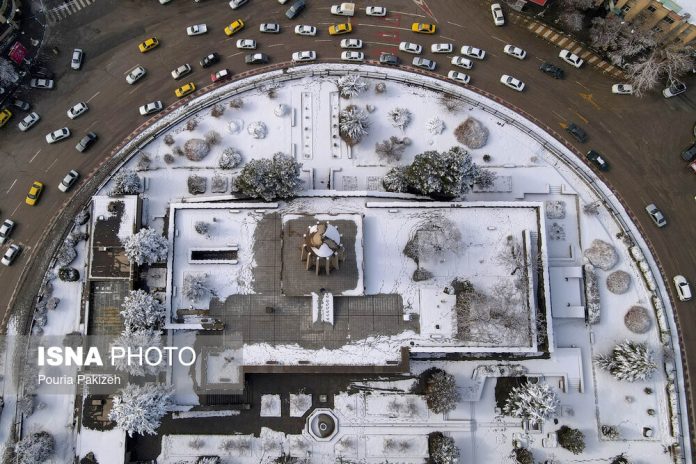
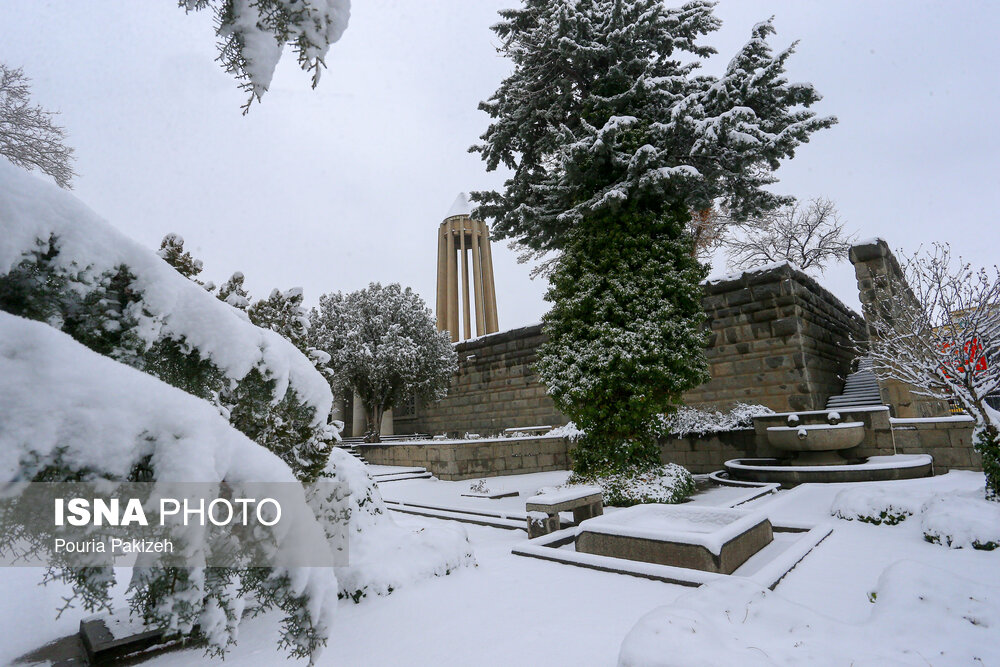
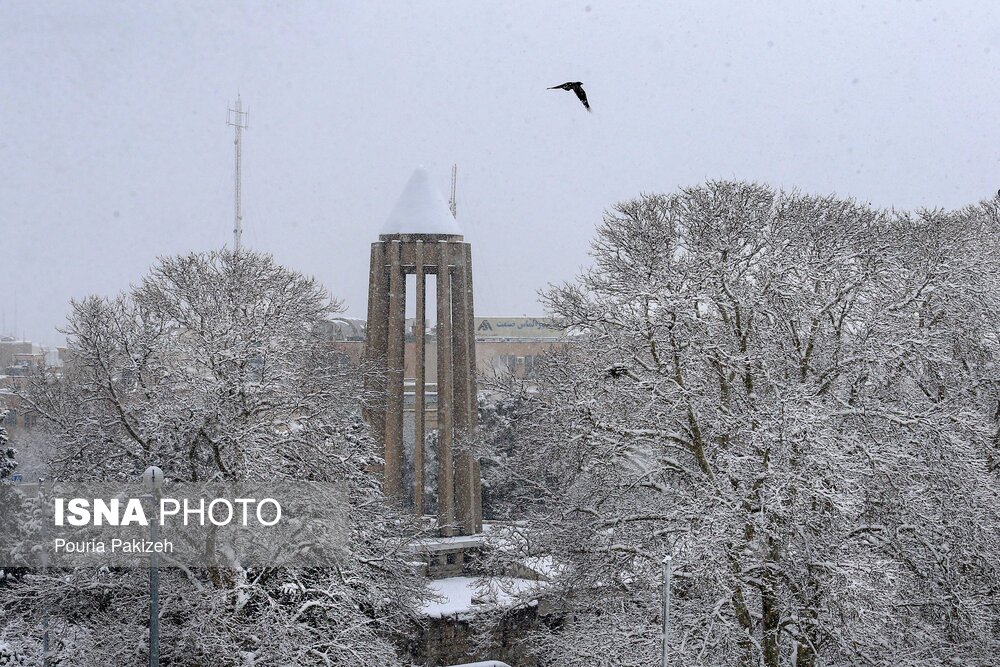
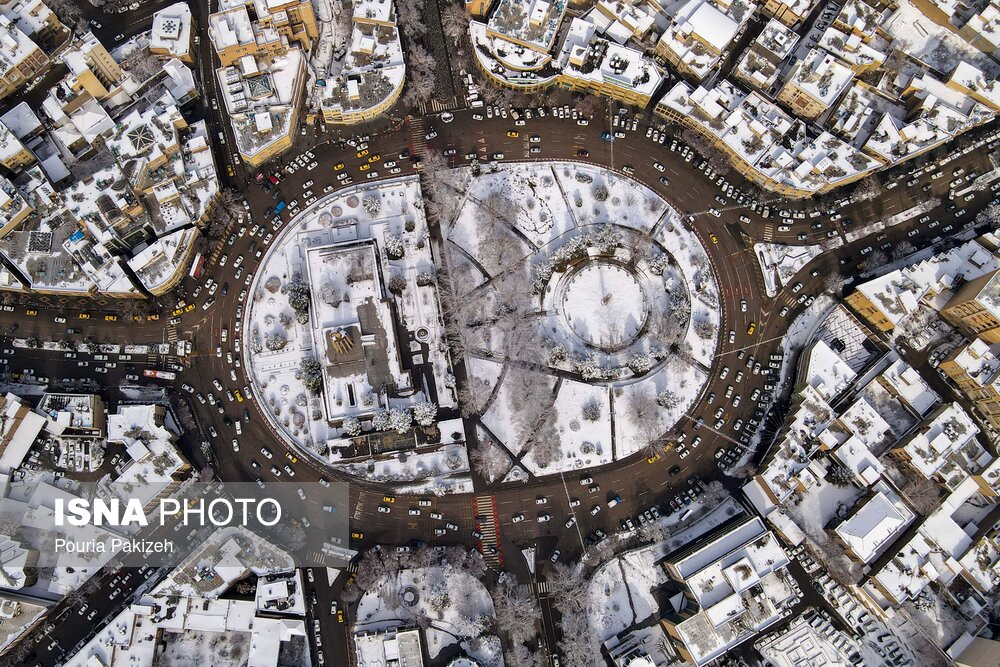
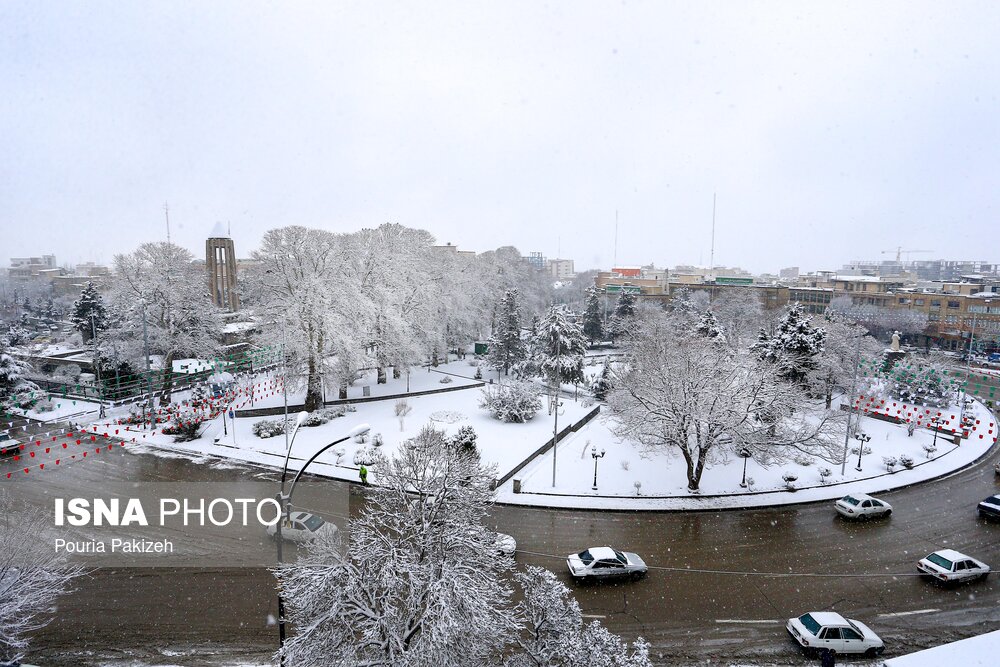
Sheikh al-Raees Ibn Sina mausoleum under a blanket of snow

This has given Hamedan numerous sights to see, just like many other key cities in the history of Iran.

One of the most important such sights in Hamedan is the mausoleum of the great world-renowned physician and philosopher Abou Ali Sina – Avicenna — which is a must-see venue for any traveler, who visits Hamedan.

The Mausoleum of Sheikh al-Raees Ibn Sina – the title he is known by in Iran and in many other countries – is located in a square of the same name in Hamedan.

In 1945, a design competition was held for the mausoleum. Housahng Seihoon was the architecture student, who won the contest.

Mohsen Foroughi, the former Dean of the Campus of Fine Arts of the University of Tehran and founder of the Iranian Architects’ Association, and Andre Godar, the former technical director of the Ancient Iran Museum, assigned Seihoon to execute the project as a prize for his win.

The structure was completed in 1951 and later that year was transferred under the protection of the Association of National Assets. The mausoleum is now an eye-catching attraction, especially in the winter when it is blanketed by snow.

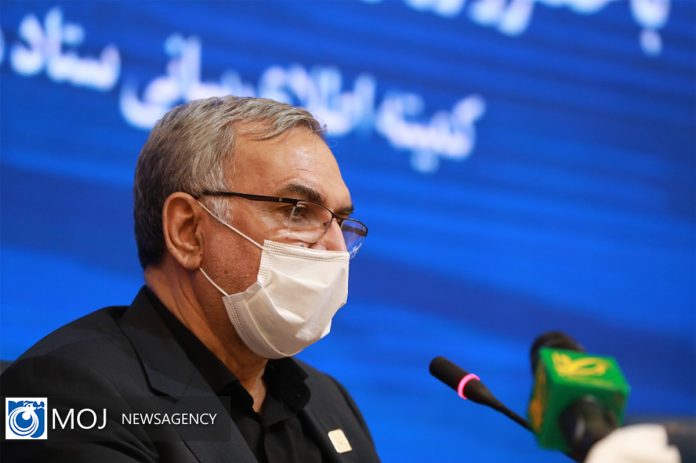
Iran Health Minister: Omicron spread under control

“So far 92 percent of people have received the first does, 85 percent has received the second dose and 35 percent have received the third dose of the Coronavirus vaccine,” Bahram Einollahi said.

“We are seeing a quick spread of the coronavirus in the world, but thanks to high vaccination in Iran, the disease is under control.”

Referring to the three waves involved in the pandemic, he said “The first wave is outpatients, the second is hospitalized patients and the third is fatalities and, it seems, the first and second waves are over.”

The minister added in the coming weeks we expect an improvement in the outbreak of the pandemic.

He said that, according to the ratification by the National Coronavirus Taskforce, there will be no limitations for travels during Nowrouz – New Iranian Year – holidays, “just like the previous years”, but all those who seek to travel should be triple-vaxxed.

Iran had imposed strict travel restrictions during Nowrouz over the past two years.

The country has seen a surge both in the number of its infections and fatalities over the past weeks, due to the spread of the Omicron variant of the coronavirus.

Officials announced 227 new deaths and more than 15 thousand new infections Wednesday.

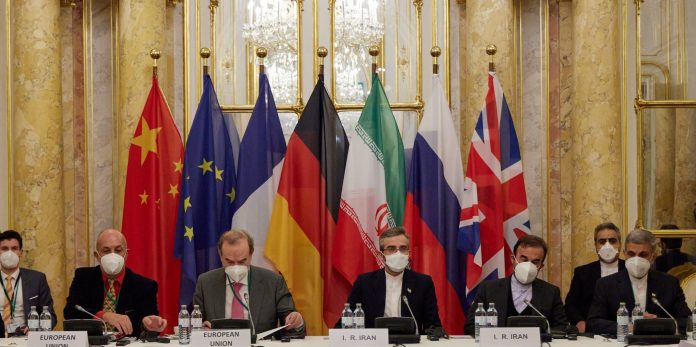
US says Iran nuclear talks close to ‘possible deal’

“What we’re seeing is there is significant progress being made, and we are close to a possible deal. But there are a number of very difficult issues that remain unresolved,” White House Press Secretary Jen Psaki said Wednesday.

“And there’s very little time remaining to reach a deal given the pace of Iran’s nuclear advances,” she added.

Tehran, Moscow and Beijing have pushed back on the need to establish a fixed deadline for the nuclear negotiations to conclude. Iranian officials have rejected western diplomats’ remarks about a deadline for reaching an agreement in Vienna talks, and stressed Tehran is only after a good agreement.

“Also, I would note that typically the most difficult components — the last mile — is where it — where there is the most difficult conversations and negotiations,” Psaki noted, adding, “So, yes, significant progress and we are close. But there’s a lot that still needs to be worked out.”

“We believe if Iran shows seriousness, we can and should reach an understanding on mutual return to full implementation of the JCPOA within — potentially within days. But there is still more work that needs to be done,” she said.

Iran’s chief negotiator in the talks in Vienna has stated that decisions should be made by the western parties to the negotiations before they lead to an agreement.

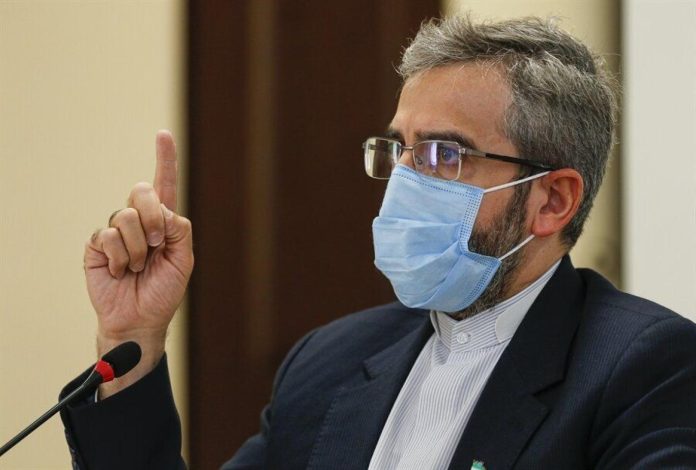
“Being near the finish line is no guarantee one crosses it,” Ali Baqeri Kani said in a tweet.

“It requires extra caution, much perseverance, additional creativity and a balanced approach to take the last step. To finish the job, there are certain decisions that our Western interlocutors need to take,” he added.

Iranian Foreign Minister Hossein Amir Abdollahian has also noted Tehran and the P4+1 group of countries have never been this close to reaching a good agreement since they started talks to revive the 2015 nuclear deal.

In an exclusive interview with CNN’s Chritian Amanpour in Munich, Amir Abdollahian said Iran is optimistic about reaching an agreement in Vienna because the administration of President Ebrahim Raisi has a strong will to achieve a good deal.

He added in order to get close to a good agreement, the Iranian team showed good initiatives and flexibility, but now it’s the Western side including the US and the European troika that should show flexibility and initiatives.

Iran FM: West ‘serious will’ needed in Vienna talks

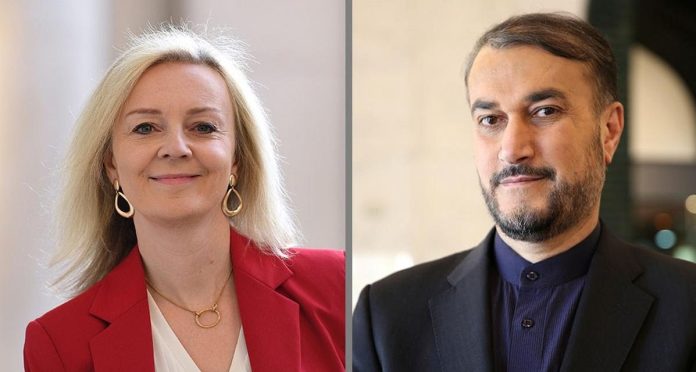
Hossein Amir Abdollahian, in a phone conversation with British Foreign Secretary Liz Truss, added the western side should guarantee and ensure Iran’s interests, especially with regards to the objective removal of sanctions, in order to work out a lasting agreement.

He expressed hope the European countries present in the talks will, through a realistic look, play a constructive role in clinching a deal.

The top Iranian diplomat also touched upon the talks he held, in Munich, with his German counterpart as well as Joseph Borrell, the European Union foreign policy chief, adding, “We made good progress during those talks,”

The two sides also emphasized that the settlement of Britain’s overdue debts to Iran is among the key issues of mutual concern, adding it is essential that the issue be resolved through proper channels and London’s arrears to Tehran be settled.

During the phone conversation, the UK foreign secretary reviewed the latest status of bilateral relations as well as talks to resolve the issue of London’s overdue debts to Tehran, and elaborated on her country’s viewpoints on that issue as well as on the Vienna negotiations.

She said Tehran-London growing ties will serve the interests of both sides.
She noted good achievements have been secured in the Vienna talks so far. However, she said the negotiations should come to an end with a result desired by all sides.

She expressed hope that bilateral issues, namely consular affairs related to prisoners as well the settlement of Britain’s overdue debts to Iran, will be resolved in the near future through constant cooperation between the two sides.

Iran: Vienna talks near finish line, but that may never be crossed

Ali Bagheri Kani

“Being near the finish line is no guarantee one crosses it,” Ali Baqeri Kani said in a tweet.

“It requires extra caution, much perseverance, additional creativity and a balanced approach to take the last step. To finish the job, there are certain decisions that our Western interlocutors need to take.”

Baqeri added that a few outstanding issues are resolvable and a final agreement can be reached within days, but only if the western governments make the necessary decisions they should.

His comments come as the eighth round of the Vienna talks is underway amid optimism by all parties on the possibility of hammering an agreement very quickly.

However, there are sticking points and Iran says one of them is the United States failure, so far, to offer the guarantees, Tehran has sought, to ensure Washington does not unilaterally abandon the agreement again, when a new administration takes office.

Oil prices surge above $100 following Russia Ukraine attacks

Oil

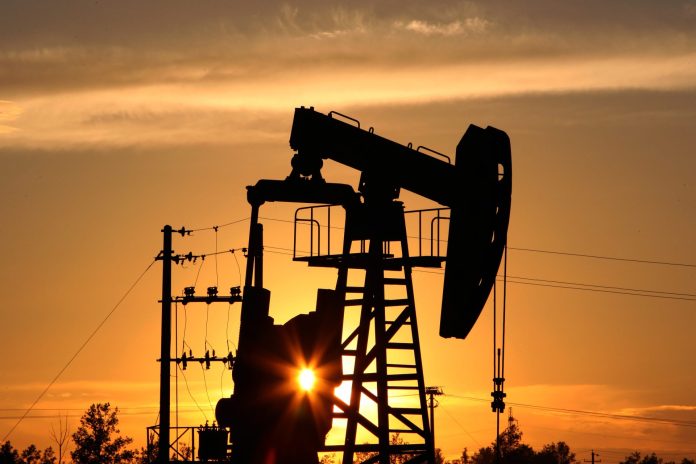
Brent surged to $100.04 a barrel after the announcement, as concerns grew about a full-scale conflict in eastern Europe. WTI hit $95.54.

It came after Putin made a surprise statement on television to declare his intentions.

“I have made the decision of a military operation,” he said shortly before 6:00am (0300 GMT) in Moscow, as he vowed retaliation against anyone who interfered.

He also called on the Ukrainian military to lay down its arms.

His statement came after the Kremlin said rebel leaders in eastern Ukraine had asked Moscow for military help against Kyiv.

US officials had warned of an imminent incursion by Russia after the Kremlin this week recognised two breakaway regions in Ukraine and said it would provide “peacekeepers”.

Fears of a move were ramped up after separatists called for help to repel Ukraine forces.

The threat of a conflagration has fanned concerns over supplies of key commodities including wheat and metals just as demand rallies owing to the reopening of economies after pandemic lockdowns.

Crucially, oil has soared in recent weeks and on Thursday world benchmark Brent finally broke the $100 mark last seen in September 2014.

“Russia/Ukraine tensions bring both a possible demand shock (for Europe), and more importantly a much larger supply shock for the rest of the world given the importance of Russia and Ukraine to energy, hard commodities and soft commodities,” said National Australia Bank’s Tapas Strickland.

The crisis comes as governments struggle to contain runaway inflation fuelled by demand as life returns after recent lockdowns, with many fearing the fragile global economic recovery could be knocked off course.

Russia announces ‘special operation’ in Donbass, eastern Ukraine

“Circumstances require us to take decisive and immediate action,” the order reads.

“The People’s Republics of Donbass turned to Russia with a request for help. In this regard, in accordance with Article 51, part 7 of the UN Charter, with the sanction of the Federation Council and in pursuance of the friendship treaties ratified by the Federal Assembly and mutual assistance with the Donetsk and Lugansk People’s Republics, I have decided to conduct a special military operation,” Putin concludes.

At the same time, in address to the public, Putin said that he wanted to “demilitarize” and “de-Nazify” Ukraine.

According to him, “we have no plans to occupy Ukrainian territory.”

Within moments of the speech, a series of explosions were reported in cities across Ukraine, with CNN, CBC and a number of Ukrainian media outlets reporting to hear a blast in the capital, Kiev.

In a statement, US President Joe Biden said that “the prayers of the world are with the people of Ukraine tonight as they suffer an unprovoked and unjustified attack by the Russian military forces.”

The decision comes days after Moscow recognized the independence of the Donetsk and Lugansk breakaway republics in the Donbass, alleging Kiev had not lived up to its obligations under the Minsk agreements struck in 2014 and 2015 to resolve conflict between separatists and the Ukrainian government.

Officials later authorized what they describe as a “peacekeeping operation” in the region.

Western leaders for months had predicted a looming incursion, claiming Russia has amassed troops near its border with Ukraine and in neighboring Belarus, where Moscow has conducted joint drills in recent weeks.

Russia has so far denied plans for an attack, however, and maintains its actions in the Donbass will be defensive in nature.

The US and its European partners have already imposed sanctions on a series of Russian financial institutions, officials and lawmakers following the recognition of the break-away states, vowing to bring more penalties should Moscow “further invade” Ukraine.

Putin has claimed that Russia had “no plans to occupy the Ukrainian territories” after announcing that a special operation was launched to defend the Donetsk and Lugansk People’s Republics from “Ukrainian aggression.”

The operation’s ultimate goal is “to protect the people who have been subjected for 8 years to genocide by the Kiev regime,” Putin stated in an adress on Thursday morning, adding that Moscow would “embark on a demilitarization and denazification of Ukraine, and handing over to justice those who committed numerous atrocities against civilians.”

The Russian president noted, however, that Moscow harbors no far-reaching plans to take over the whole territory of Ukraine.

“We do not have plans to occupy Ukrainian territories. We are not going to impose anything on anyone by force,” he continued.

The Russian Defense Ministry stated that the Russian military is attacking Ukrainian military facilities as part of an ongoing operation in Ukraine. Precision weapons are used against military infrastructure, air defense sites, military airfields and aircraft, according to a statement.

The military said that Russia was not attacking Ukrainian cities, contrary to claims that say otherwise. Ukrainian civilians are not under threat, the statement added.

Ukraine’s President Volodymyr Zelensky confirmed that Ukrainian military sites were under attack. Speaking in a video address on his social media, he announced martial law in the country.

He called on Ukrainians to stay calm and preferably not to leave their homes. He stressed Ukraine was “strong” and will “defeat anyone”.

Kiev’s foreign minister has also declared war has broken out between Russia and Ukraine, as Moscow confirms it has hit Ukrainian military targets moments after the Kremlin issued an order for a “special operation” in the breakaway Donbass region.

In a statement issued early on Thursday morning, Dmitry Kuleba said that Russian President Vladimir Putin “has just launched a full-scale invasion of Ukraine.”

“Peaceful Ukrainian cities are under strikes,” he added, with claims coming in of explosions near the capital, Kiev.

“This is a war of aggression. Ukraine will defend itself and will win,” he insisted, stating, “The world can and must stop Putin. The time to act is now.”

US sanctions company behind Nord Stream 2

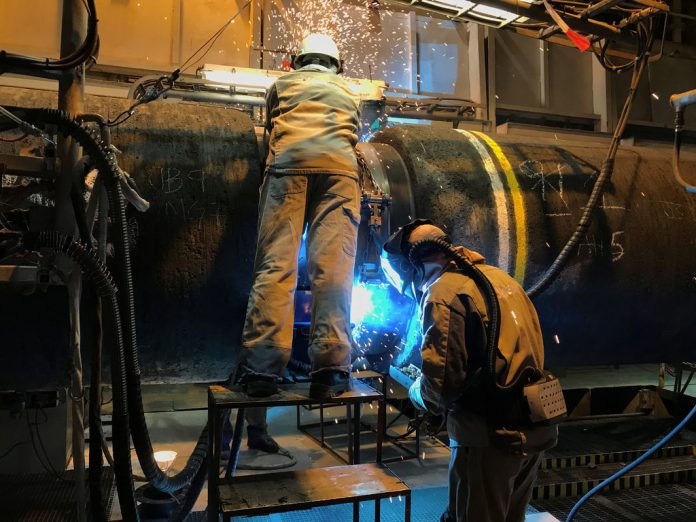
“Today, I have directed my administration to impose sanctions on Nord Stream 2 AG and its corporate officers. These steps are another piece of our initial tranche of sanctions in response to Russia’s actions in Ukraine,” Biden said in a statement.

“Through his actions, President Putin has provided the world with an overwhelming incentive to move away from Russian gas and to other forms of energy,” Biden added.

Until now, the question of whether to impose sanctions on Nord Stream 2 has been a thorny one for the Biden administration. Since its inception, Germany has strongly supported the pipeline project, and viewed it as a crucial source of affordable energy for western Europe’s most populous country.

But earlier this week, German Chancellor Olaf Scholz made the surprise announcement that final approval of Nord Stream 2 would be put on hold, after Russia moved troops into regions of eastern Ukraine. Scholz’s announcement freed up the Biden administration to move ahead with its own sanctions, which have strong bipartisan support in Congress.

On Wednesday, the United Kingdom warned the Russian government that it was ready to impose more rounds of devastating sanctions should Moscow push farther into Ukraine.

“This is just the start,” said Tariq Ahmad, Minister of State for the Commonwealth and the United Nations, referencing the U.K.’s previously announced sanctions.

“If Russia continues its campaign of aggression, we have a further package of sanctions ready to go. We asked the wider international community to join us in this effort,” Ahmad told the international forum.

Ahmad’s remarks follow the United Kingdom’s largest sanctions package against Russia.

“We must meet Russia’s aggressive acts with solidarity with strength including through coordinated sanctions to impose a severe cost on Russian interests and their economy,” he continued.

Ahmad warned that further Russian military action will take a horrific toll not only on Ukrainians but also on Russians, calling both “victims of an unnecessary war of the Kremlin’s choosing.”

A Pentagon official said Wednesday that about 80% of Russia’s military forces that are amassed around Ukraine are “ready to go” for an attack.

“They are literally ready to go now if they get the order to go,” the official stated.

The official, who spoke on the condition of anonymity in order to share new details of the Pentagon’s assessment, noted that Russian President Vladimir Putin has assembled enough aviation, maritime and ground assets to “conduct a large-scale invasion.”

The majority of the forces are ground military assets, the official added.

“What continues to give us concern is the full range of capabilities that Mr. Putin has at his disposal right now, everything from significant offensive missile capability to offensive ground power. He has more than two dozen warships in the Black Sea,” the official continued.

“He has a cruise missile capability, he’s got ballistic missile capability arrayed, armor, artillery, certainly infantry, special forces and we assess today that he is near 100% of all the forces that we anticipated that he would move in,” the official announced.