Wednesday, December 24, 2025
Home Blog Page 2033

UAE says to buy Chinese military aircraft after Yemen attacks

In December, the UAE threatened to scrap its mega-purchase of US F-35 fighter jets, protesting stringent conditions amid Washington’s concerns over China.

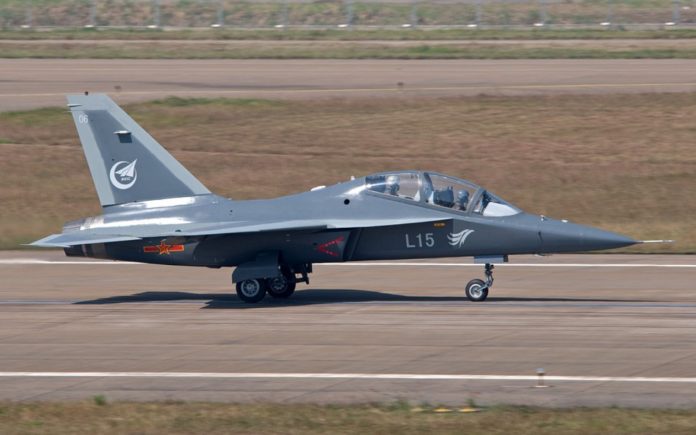
The UAE Defence Ministry said it intended to sign a contract with China National Aero-Technology Import & Export Corporation (CATIC) to purchase 12 of the L15 training and light combat aircraft, with the option for 36 additional jets of the same type, the official Emirati news agency WAM reported.

“We have reached the final stage in our talks with the Chinese side. The final contract will… be signed soon,” Tareq Al-Hosani, CEO of Tawazun Economic Council, was quoted as saying.

The value of the deal was not disclosed.

Tawazun — the Emirates’ defence and security acquisitions authority — was seeking to “develop the UAE’s defence capabilities and to achieve its strategic priorities”, added WAM.

The US and UAE have yet to finalise a $23 billion arms deal that includes F-35 fighter jets.

Lawmakers from US President Joe Biden’s Democratic Party unsuccessfully sought to stop the sale, pointing in part to the Persian Gulf state’s role in the Yemen war.

American officials have also been increasingly concerned by China’s involvement with the US ally.

But the UAE continues to plough money into drones, robots and other unmanned weaponry as autonomous warfare becomes more and more widespread — including in attacks on the Persian Gulf country by Yemeni troops.

The UAE is Saudi Arabia’s main ally in a 2015-present bloody war against Yemen.

The Yemen’s Houthis have recently begun directly targeting the UAE, while intensifying their attacks against Saudi Arabia.

The US has deployed a warship and fighter planes to help protect the UAE.

Saudi Arabia and its allies launched a war against the Arab world’s most impoverished nation in March 2015. The war has been seeking to restore power in Yemen to Riyadh’s favorite officials.

Hundreds of thousands of people have been killed directly or indirectly in Yemen’s seven-year war, while millions have been displaced in what the UN calls the world’s biggest humanitarian crisis.
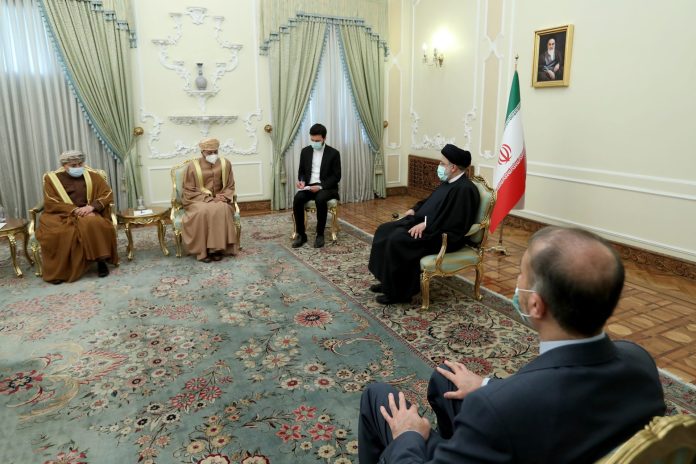
Raisi calls for expansion of Iran-Oman ties

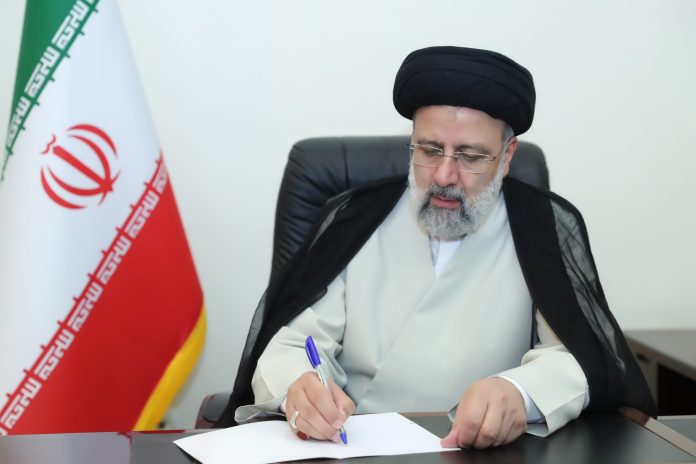
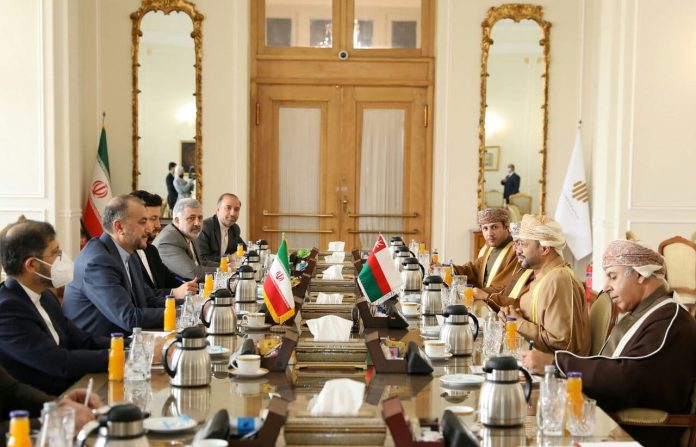
Raisi was speaking in a meeting with Omani Foreign Minister Badr bin Hamad Albusaidi in Tehran on Wednesday.

He also thanked Oman’s Sultan for inviting him to visit the Persian Gulf sultanate, saying the visit and the talks involved can undoubtedly be instrumental in bolstering ties and resolving regional and international issues.

The president praised the position of the Omani government on Palestine and Yemen as well as on regional issues.

Raisi said Iran’s policy is to expand ties with Oman and other friendly nations.

Albusaidi for his part appreciated the Islamic Republic of Iran’s support of neighbors, describing bilateral ties between Tehran and Muscat as excellent.

Addressing Raisi, the Omani foreign minister said, “Your trip to Oman will be historic and will achieve the goals of both nations.”

Russia promises strong response to US sanctions

“There should be no doubts – the sanctions will result in a strong response, not necessarily symmetric, but well-calculated and painful for the American side,” the foreign ministry said in a statement.

Moscow also stressed that the American sanctions policy is counterproductive, but that it has also become a reflex for Washington.

“Russia has proved that, despite all the costs, we are able to minimise the damage. And even more so, sanctions pressure can’t affect our determination to defend our interests,” the statement read, noting that this round of anti-Russian sanctions (101st) will not achieve its goal.

The statement comes in response to sanctions imposed by Washington on Tuesday. The restrictions target Russia’s sovereign debt, as well as several banks and individuals following Moscow officially recognising the two Donbass republics, the DPR and LPR, as independent states, and urging Ukrainian forces to stop the escalation in the region.

In response to US sanctions on Russia’s sovereign debt, the Russian Ministry of Finance has also announced measures that it said will ensure the stability of its access to debt markets.

The ministry announced it has enough money available — more than 4.5 trillion rubles (around $56 billion) — to ensure that it can be flexible in borrowing money and selling new government debt. In the coming weeks, Russian government bond auctions will be restricted and will take into account the market situation, it added.

The ministry’s reserves are more than double the planned net borrowing for 2002 of 2.2 trillion rubles ($27 billion), and it also said that the measures along with those taken by the Russian central bank on Tuesday will “facilitate a smoother adaptation” to the sanctions.

Russian presidential press secretary Dmitry Peskov has also stated Moscow needs to see which sanctions the European Union plans to impose on it before elaborating its response.

EU foreign diplomacy chief Josep Borrell noted earlier on Tuesday that the European Union has unanimously approved a new package of anti-Russian sanctions following its decision to recognize the Donbass republics.

“First, we need to see what these sanctions are about,” Peskov noted when asked whether Moscow would prepare measures in response.

On Wednesday, Russian media reported Moscow has begun evacuating personnel from all of its diplomatic facilities in Ukraine.

Moscow’s embassy in Kyiv confirmed the evacuations were under way, TASS reported. Russia also has consulates in Kharkiv, Odesa and Lviv.

Minister: Lebanon thwarts Daesh suicide attacks

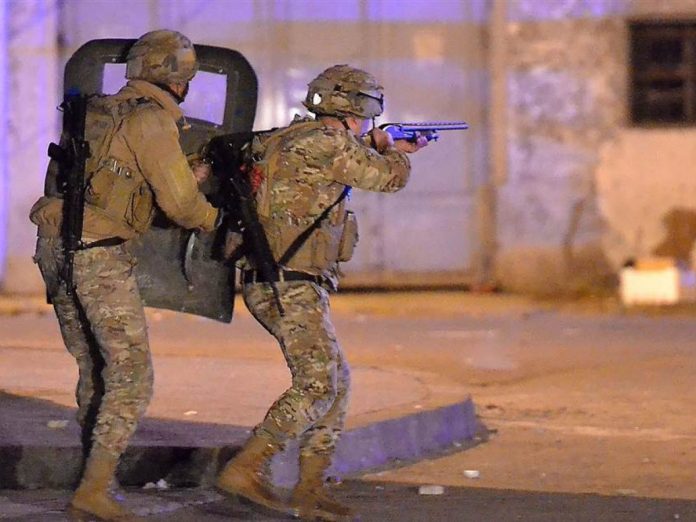
Mawlawi stated at a press conference that militants had planned to carry out attacks in late February by using rocket-propelled grenades, gunfire, as well as suicide vests rigged with explosives that could have killed many people.

Two suspects were arrested on the same day and are being held in custody, with explosives, weapons and munitions seized, he added.

The Islamic State (IS) group controlled areas in northeastern Lebanon from 2014 to 2017, and claimed two suicide bombings in Beirut’s southern suburbs in 2015 that killed over 40 people.

Iranian president congratulates Japan’s National Day

Ebrahim Raisi noted that historical relations between Iran and Japan are based on mutual trust and respect.

In his message to Japanese Prime Minister Fumio Kishida, the president expressed hope that increased consultations between Tehran and Tokyo will result in further strengthening of bilateral ties.

Also addressing Emperor Naruhito, Raisi reiterated the friendly relations between the Islamic Republic of Iran and Japan will expand more than ever before with the efforts of both sides.

Iran and Japan established diplomatic ties in 1929. The two countries have enjoyed friendly and strong ties throughout history.

Interior Minister: Iran seriously pursuing Hirmand water rights

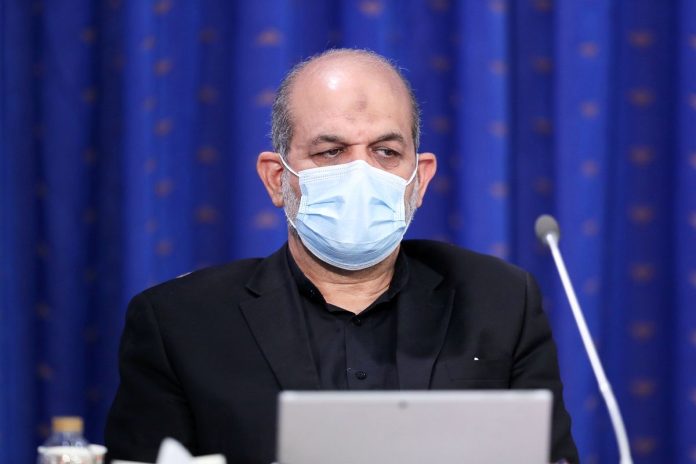
Ahmad Vahidi

Vahidi, who is visiting the southeastern Iranian province of Sistan and Balouchestan, where Hirmand flows, said Afghanistan and the Taliban have failed to fulfill their commitments on Iran’s water rights from the river.

“The issue of Hirmand’s water is in fact in the hand of foreign side and talks have been held in this regard at different levels and the obligations of the country [Afghanistan] on water rights have been reminded to them, and the issue is being pursued. At some point, they made promises, but they were not fulfilled,” he said.

Vahidi added that Iran is using “a strong diplomacy” to get its water rights from Afghanistan.

The minister will also pay a visit to the Hirmand basin and the international Hamoun Pond, which gets its water from the river during his two-day visit to the province of Sistan and Balouchestan.

The issue of Iran’s water rights from Hirmand goes back to more than half a century ago, and was outlined in a 1972 agreement between Iran and Afghanistan.

Based on the agreement, Iran’s water rights amount to 820 million cubic meters a year, equal to 26 cubic meters of water every moment.

Days ago, the Taliban said they have released Hirmand’s toward Iran, but no water from the river entered Iranian territory and Iran’s Hamoun Pond.

Taliban now say they remain committed to the 1972 agreement. They say the water did not reach Iran due to “technical problems”.

Iranian president’s special envoy meets Afghan ministers in Kabul

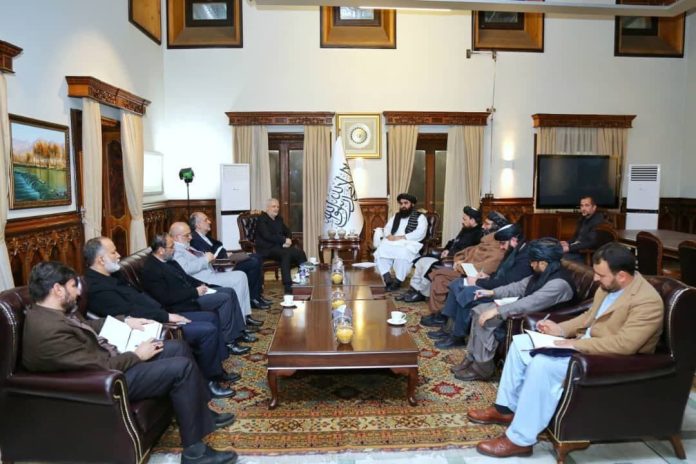
In the meeting, Hossein Kazemi Qomi and the Afghan ministers discussed the situation in Afghanistan and also investment in several sectors in the country such as energy، railways and agriculture.

Afghan Foreign Minister Amir Khan Mottaqi described talks between Afghan and Iranian officials as fruitful and underlined the need to strengthen bilateral ties.

The Iranian special envoy also announced his government’s readiness for joint ventures in the fields of mining, agriculture, energy and railways. Also, Nigel Casey, the British prime minister’s special envoy for Afghanistan and Pakistan, met on Tuesday with Kazemi Qomi in Tehran, to discuss London’s assistance to Afghan refugees.

According to Casey, Britain has allocated 6.5 million pounds to help the Afghan refugees in Iran. Also on Tuesday, the ministry of energy and water of the Taliban interim government blamed technical problems for its failure to deliver the Helmand water to Iran and announced its commitment to a water agreement between Afghanistan and Iran in 1972.

Earlier, the Iranian minister of energy had said after several meetings with the Afghan side about Helmand water rights, that despite continuous follow-ups, nothing has happened so far and Iranian officials hope to see the release of Helmand water in the coming days.

On Monday, Iran’s Foreign Ministry Spokesman, Saeed Khatibzadeh, said one of the key criteria for Iran to measure the Taliban’s responsibility is the water rights of the Islamic Republic.

He urged the Taliban to translate its word into action regarding the matter.17:06

Iran logs +15k new Covid cases, 227 more deaths

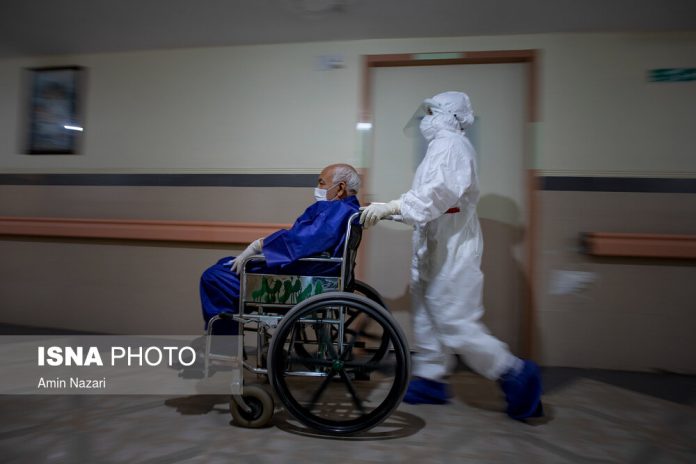
According to the health ministry on Wednesday, 227 people lost their lives to Covid and 15,340 new patients were identified over the past 24 hours.

The figures take the total fatalities to 135,716 and the national caseload, so far, to nearly seven million.

To deal with the new surge in cases, authorities are pushing a campaign of vaccination, which saw over 450 thousand doses get administered in the last 24 hours.

So far, over 55 million people in Iran have received two doses of the Covid vaccine and among them, over 22 million have also received booster jabs.

The new surge in Covid cases has also put 337 Iranian cities in the red alert zone. That leaves 64 cities in the less severe orange zone and 47 in the minimum alert level. No Iranian city is now blue, or normal in Coronavirus outbreak terms.16:36

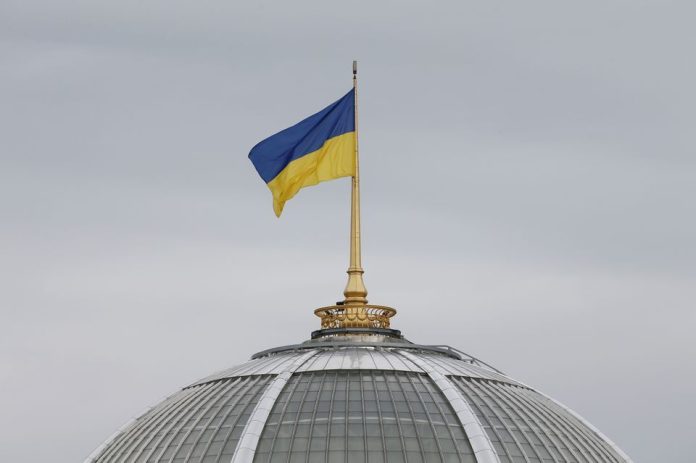
Ukrainian parliament approves sanctions on hundreds of Russians

The sanctions restrict almost all possible types of activities, in particular a ban on entry into Ukraine, and prohibit access to assets, capital, property and licenses for business.

The Ukraine’s Security Council was due to impose the sanctions after the vote.

Ukraine’s parliament has also voted to approve a draft law that gives permission to Ukrainians to carry firearms and act in self-defence.

“The adoption of this law is fully in the interests of the state and society,” the authors of the draft law said in a note, adding that the law was needed due to “existing threats and dangers for the citizens of Ukraine”.

The Ukraine’s foreign ministry has also warned the country’s nationals not to visit Russia and urged its citizens already there to leave the country.

“The foreign ministry recommends that citizens of Ukraine refrain from any trips to the Russian Federation, and those who are in this country to leave its territory immediately,” the ministry said in a newly-issued travel advisory.

Ukraine is set to impose a state of emergency on all of its territory, apart from the Donetsk and Luhansk regions where such a measure has already been in place since 2014, the country’s top security official says.

Oleksiy Danilov stated that the measure would initially last for 30 days. It could be extended for another 30 days if required, he added.

The state of emergency must be formally approved by Ukraine’s parliament. A vote is expected to take place in the coming days.

Ukraine’s military has put the country’s more than 200,000 reservist forces on notice that they will be mobilised as tensions with Russia escalate.

“Reservists aged 18 to 60 will be called up,” Ukrainian Ground Forces said in a Facebook message.

“The call will start today. The maximum service life is one year,” the military unit added.

Russian President Putin noted Moscow is ready to look for “diplomatic solutions” to the crisis but has stressed that Russia’s interests are “non-negotiable”.

“Our country is always open for direct and honest dialogue, for the search for diplomatic solutions to the most complex problems,” he said in a video address to mark the Defender of the Fatherland Day, a public holiday in Russia.

But he added that “the interests of Russia, the security of our citizens, are non-negotiable for us.”

Putin spoke after parliament’s upper house, the Federation Council, on Tuesday gave him unanimous approval to deploy “peacekeepers” to two breakaway Ukrainian regions now recognised by Moscow as independent, and potentially into other parts of Ukraine.

Iran, Oman FMs discuss bilateral ties, Vienna talks

Foreign Minister Hossein Amir-Abdollahian of Iran sat down for talks on Wednesday with his Omani opposite number, Sayyid Badr Albusaidi, in Tehran. The two sides later attended a joint press conference.

The top Iranian diplomat said at the presser that ties between the two countries are “on a good track.”

He said economic relations between the two countries have seen a significant growth in recent months, but the two sides agreed to increase interactions to further develop the ties given the great potentials of both countries.

Amir Abdollahian said Muscat had invited President Ebrahim Raisi to visit Oman, a trip that could be a turning point in bilateral ties.

Among other regional issues, the two ministers discussed the Vienna talks, which “have entered a critical and sensitive stage,” he added.

He said “there are a few but highly important issues remaining [for negotiation] in Vienna,” and that Tehran has repeatedly emphasized to the Western parties to the talks that it will not cross its red lines to achieve a deal.

“We have so far received positive messages from the US side, but it has not yet taken any practical measure to prove its good will,” the minister said.

“In general, we are positive about the Vienna talks and hope that the remaining important and sensitive issues will be resolved with the Western side’s realism in the next days to come,” he added.