Friday, April 24, 2026
Home Blog Page 194

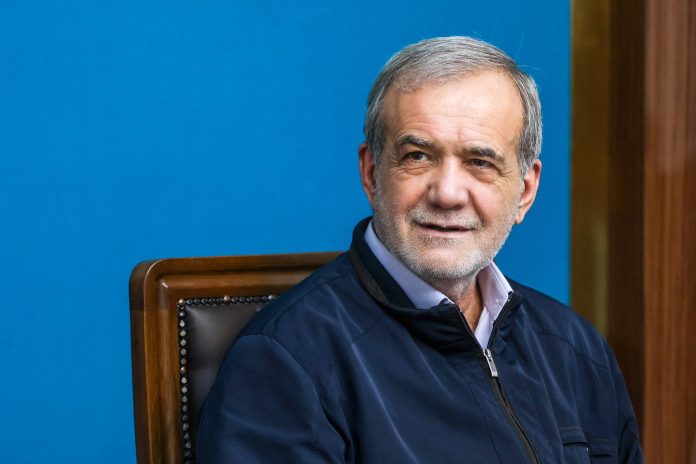
Iran ready for broader cooperation if nuclear rights recognized, says President Pezeshkian

Masoud Pezeshkian

In an interview with Oman TV on Wednesday during his official visit to Muscat, President Pezeshkian emphasized that Iran does not seek nuclear weapons and remains committed to peaceful nuclear energy.

The president underscored Iran’s position, stating that no nation can be deprived of its legitimate right to science and technology.

He also praised Oman’s mediation efforts in the Iran-US nuclear talks, acknowledging the pivotal role of Sultan Haitham and Omani diplomacy.

Touching on regional ties, Pezeshkian said Iran and Oman enjoy strong political relations and share common views on key issues, including the Palestinian cause.

On economic cooperation, he noted challenges due to sanctions but affirmed both sides aim to boost bilateral trade beyond $10-20 billion.

President Pezeshkian reiterated Iran’s commitment to peace and cooperation with Islamic and neighboring states, while calling on regional youth to pursue knowledge to shape a stronger future.

Denouncing the Israeli genocidal campaign in Gaza, he called on Islamic nations to unite in defense of the Palestinian people.

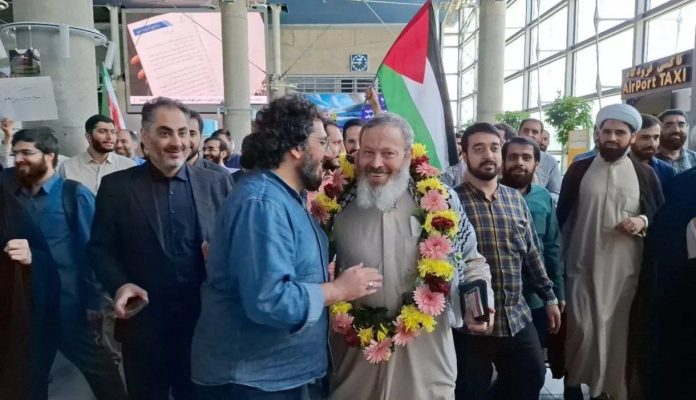
Iranian cleric Ghasemian released from Saudi custody

Ghasemian confirmed in a social media post on Thursday that he is returning to Iran via Dubai.

The announcement was also made by the official page of “Mahfel,” a religious TV program associated with Ghasemian, which stated he was freed after sustained follow-up by the Iranian consulate in Jeddah.

Ghasemian was arrested on Monday, while performing Hajj rituals in Saudi Arabia, for accusing Saudi Arabia of turning Mecca and Medina into “centers of immorality.” His detention sparked widespread debate on social media and among Iranian political circles.

Iranian authorities described his remarks as personal opinions and stressed that the matter was being pursued by the Committee for the Protection of Pilgrims’ Rights in coordination with the Foreign Ministry and Iranian diplomatic missions in Saudi Arabia.

Reacting to the case, Iranian Foreign Minister Seyed Abbas Araghchi emphasized Iran’s strong stance against any actions undermining Muslim unity, particularly during Hajj, and reiterated the government’s commitment to preserving improving ties with Saudi Arabia and its regional neighbors.

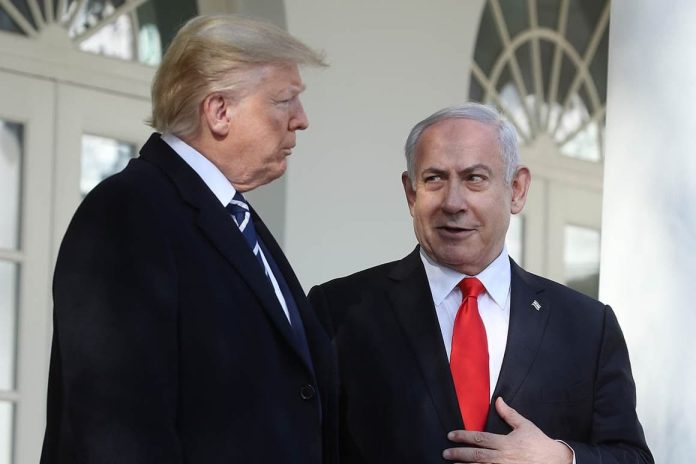
Trump warns Netanyahu off Iran attack as negotiations continue

Trump Netanyahu

Trump told reporters on Wednesday at the White House that he relayed to Netanyahu a strike “would be inappropriate to do right now because we’re very close to a solution”.

The Israeli leader has been threatening a bombardment of Iranian nuclear facilities. Iran has stressed it would respond with severity if any such attack were launched.

In the meantime, Iran may pause uranium enrichment if the US releases frozen Iranian funds and recognises its right to refine uranium for civilian use under a “political deal” that could lead to a broader nuclear accord, two Iranian official sources told the Reuters news agency.

The sources, close to the negotiating team, said on Wednesday that a “political understanding with the United States could be reached soon” if Washington accepted Tehran’s conditions. The sources told Reuters that under this arrangement, Tehran would halt uranium enrichment for a year.

The latest developments came as the head of the UN’s atomic watchdog group said that “the jury is still out” on negotiations between Iran and the US over Tehran’s rapidly advancing nuclear programme. But Rafael Mariano Grossi described the ongoing negotiations as a good sign.

“I think that is an indication of a willingness to come to an agreement. And I think that… is something possible.”

The 2015 nuclear deal, formally known as the Joint Comprehensive Plan of Action (JCPOA), placed limits on Iran’s nuclear programme in exchange for sanctions relief.

It collapsed after Trump unilaterally withdrew the US from the agreement in 2018, leading to a sharp escalation in tensions and a breakdown in diplomatic relations.

US officials have repeatedly said that any new deal must include a firm commitment from Iran to halt uranium enrichment, which they view as a potential pathway to building nuclear weapons.

However, Iran has consistently denied seeking nuclear arms, insisting its programme is solely for civilian purposes. It has rejected Washington’s demand to eliminate enrichment capabilities, calling it an infringement on national sovereignty.

It remains the critical sticking point after negotiators for Tehran and Washington met for a fifth round of Oman-mediated talks in Rome.

Instead, Iran has reportedly proposed that the US publicly recognise Tehran’s right to enrich uranium under the Nuclear Non-Proliferation Treaty (NPT), and approve the release of Iranian oil revenues frozen under US sanctions.

Sources familiar with the discussions echoed Trump’s optimism and told CNN that they are closing in on a broad agreement that could be clinched when the US and Iran meet next, most likely in the Middle East.

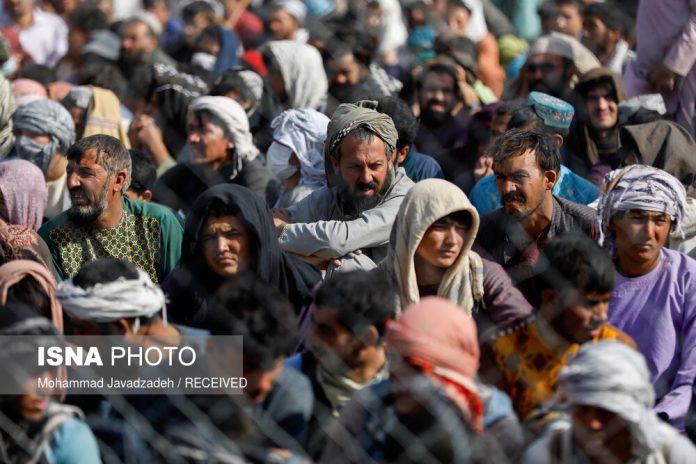
Iran’s police chief: Illegal migrants to be deported through border

Afghan Refugee in Iran

Speaking to reporters, Radan stressed that such individuals will be detained and deported through official border crossings.

“In the same way that illegal immigration is not tolerated in other countries, the law must also be upheld in our own,” he noted.

“According to Iranian regulations, undocumented foreigners must be arrested, transferred to designated camps, and expelled from the country.”

Radan’s remarks come amid growing concerns over the rising number of illegal migrants in Iran, particularly from neighboring Afghanistan.

Earlier, the head of the Office for Aliens and Foreign Immigrants Affairs at Iran’s Interior Ministry disclosed that an estimated four million undocumented migrants have entered Iran without valid identification.

The official added that approximately 50% of Afghan nationals in Iran are currently residing in Tehran, which translates to nearly three million people, placing significant strain on the city’s healthcare, education, and public service infrastructure.

He also said it’s natural that citizens express frustration over this sharp population increase.

Iran has been hosting millions of Afghans over the past five decades with any substantial assistance from international organizations.

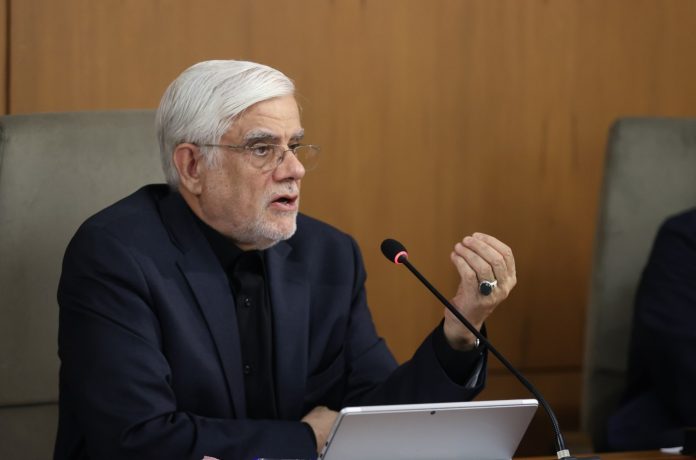
Iran VP urges restraint following cleric’s  controversial video about Saudi Arabia

Mohammad Reza Aref

Speaking to reporters, Aref criticized “individuals who express personal opinions that could harm the improving ties with Islamic and regional countries”.

Aref stressed that such actions risk undermining Iran’s diplomatic efforts.

“Intellectuals and influential figures must frame their positions in a way that does not obstruct the path of constructive foreign relations,” Aref said.

He reaffirmed that expanding high-level relations with neighboring and Islamic countries remains a strategic pillar of the Pezeshkian administration’s foreign policy.
The vice president noted that regional governments are fully aware that the opinion of an individual does not represent the stance of the Iranian government.

The comments follow the arrest of Iranian cleric Gholamreza Ghasemian in the holy city of Medina, reportedly after making controversial remarks in a viral video.

Meantime, head of Iran’s Hajj and Pilgrimage Organization Alireza Bayat confirmed that Iranian officials have conducted three consular meetings with the detained pilgrim, and diplomatic efforts are ongoing to resolve the issue.

Bayat said incidents of “provocative and unilateral behavior” occasionally surface, but expressed confidence that such actions will not derail the growing cooperation between Tehran and Riyadh.

Bayat said strong ties between the Islamic Republic of Iran and Saudi Arabia benefit both nations and the two countries can complement each other on many fronts.

At Moscow security summit, Iran reaffirms commitment to nuclear independence

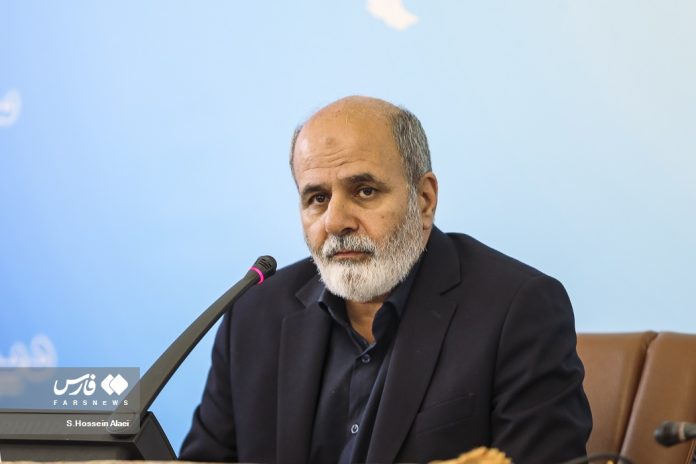
Ali Akbar Ahmadian

Ahmadian stated that while Tehran welcomes dialogue, it remains firmly committed to nuclear independence. He emphasized that maintaining the full nuclear fuel cycle and enrichment capabilities is a non-negotiable aspect of Iran’s peaceful energy strategy.

Addressing the theme of building an equitable and sustainable security architecture, Ahmadian criticized unilateralism in global politics, which he said has led to humanitarian crises, particularly in West Asia.

He pointed to the conflicts in Yemen, Lebanon, Syria, Afghanistan, and Iraq as evidence of systemic injustice driven by Western dominance.

He condemned the ongoing atrocities in Gaza, calling the suffering of women and children a result of deliberate policy. Ahmadian stressed that global security must be based on multilateralism and fairness, and called for a shift toward a multipolar world order.

The summit, attended by delegations from over 100 countries, opened with a video address from Russian President Vladimir Putin. Russian Foreign Minister Sergei Lavrov reiterated support for Iran’s peaceful nuclear rights during his opening remarks.

Iran may allow US inspectors access to nuclear sites if deal is reached, says atomic chief

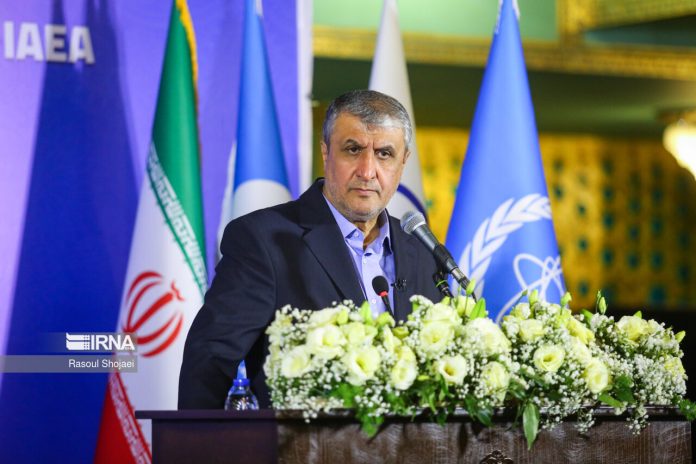
Mohammad Eslami

Speaking to reporters after a cabinet meeting, Eslami emphasized that uranium enrichment remains a red line for Iran, forming the core of the country’s nuclear industry.

“Enrichment is essential, just like a power plant is to the electricity grid,” he said, stressing that high-level enrichment does not automatically imply military use.

Eslami underscored that enriched uranium is crucial for medical isotopes and food safety applications, warning that without it, sectors like healthcare would suffer.

He added that the International Atomic Energy Agency (IAEA) continues to monitor Iran’s nuclear program transparently. He called on the agency to maintain professionalism and reduce external influence, particularly from Israeli-aligned actors.

Referring to discussions about moving enrichment activities to Persian Gulf states, Eslami dismissed such ideas, reaffirming Iran’s sovereign right to enrich uranium on its own soil. He also clarified that no formal proposal on forming a multinational enrichment consortium has been received.

President Pezeshkian: Foundations in place to expand Iran-Oman cooperation

Speaking on Wednesday with Omani business leaders, President Pezeshkian said the foundations are in place for enhanced cooperation in economic, social, cultural, political, and security sectors.

He called for immediate action to deepen ties through maritime and air connectivity, as well as industrial and commercial collaboration.

President Pezeshkian underscored Iran and Oman’s strategic position in linking regional markets and called for leveraging their geostrategic advantages to connect with Africa, Russia, Central Asia, and Europe.

He stressed the urgent need to strengthen financial infrastructure, noting that a robust banking framework is key to unlocking wider economic engagement.

The Iranian president said with the right mechanisms, bilateral trade could grow to $20-30 billion, driven by joint investments and private sector partnerships. He also advocated for expanded cooperation in science, medicine, and culture.

Reflecting on centuries of shared history, President Pezeshkian urged Islamic unity in the face of foreign interference and emphasized peace and constructive collaboration as pathways to regional stability.

10,000-year-old fishing tools discovered on Iran’s coast

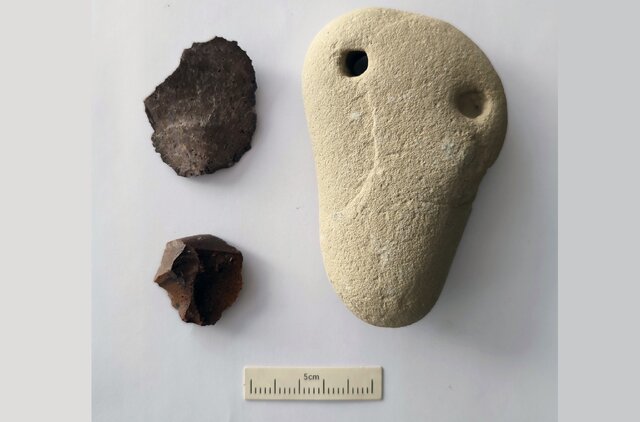
Morteza Hessari, head of the excavation team at the Koopal archaeological site, announced the discovery of a flat pebble with two deliberate holes, possibly used as a fishing net weight or a small anchor. Nearby, two stone tools characteristic of the Paleolithic era were also found.

Hessari highlighted the significance of these findings, suggesting a close connection between the perforated stone and Paleolithic stone artifacts typically crafted by hard hammer techniques.

This raises important questions about when coastal communities began exploiting marine resources and engaging in early seafaring.

While the stone tools show typical Paleolithic wear and desert varnish indicating great age, the holey pebble exhibits different erosion patterns, necessitating further studies for definitive conclusions.

The site also contains pottery from the 4th millennium BCE, indicating prolonged human activity. Hessari emphasized ongoing analyses, including micro-wear studies and dating, to better understand the relationship between these artifacts and their archaeological context.

These discoveries enrich our knowledge of prehistoric human use of marine resources along Iran’s Makran coast and may redefine the timeline of early maritime culture.

Iran FM responds to cleric row during Hajj, backs Muslim unity, Saudi ties

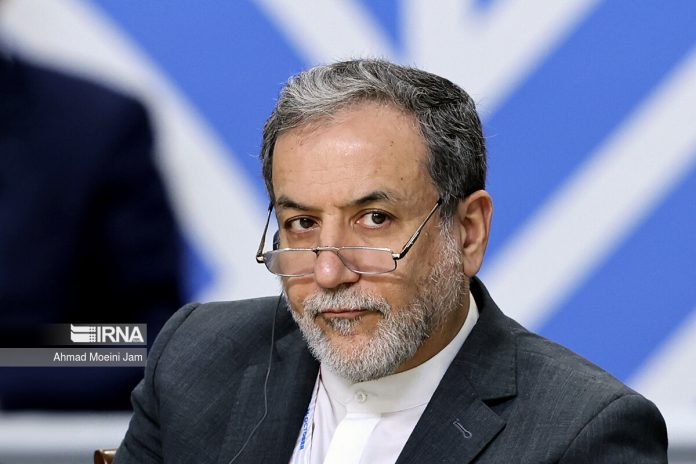
Abbas Araghchi

In a post shared on X social media platform, Araghchi stated, “Iran in no uncertain terms condemns any attempt to harm Muslim unity, particularly in the spiritual atmosphere of the Hajj. We are determined to not allow anyone to sabotage relations with our brotherly neighbors, including the progressive path of Iran and Saudi Arabia.”

“The highly competent management of this year’s Hajj is well appreciated by Iran. I extend warm greetings and prayers for continued success to the Government and people of Saudi Arabia as they welcome Muslims to the Holy Shrines,” he further pointed out.

Qasemian faced criticism after a video of his comments during the pilgrimage was shared online. In the clip, the cleric harshly criticized the country’s changing social landscape and likened the holy sites to popular tourist spots such as Antalya.