Thursday, December 25, 2025
Home Blog Page 1909

Live Update: Russia’s “Special Operation” in Ukraine; Day 100

Russia Ukraine War

Moscow blacklists 41 more Canadian citizens

Russia has announced travel bans on 41 Canadian citizens, including several members of the Ukrainian Canadian Congress, in retaliation for what it described as “anti-Russian” sanctions imposed on Moscow.

Russia’s foreign ministry said “entry into Russia is closed for [these] citizens of Canada, including heads of organisations supporting ultra-nationalist forces in Ukraine, as well as top military officials”.

The list of affected individuals includes several Canadian deputy defence ministers and members of Ukraine-linked organisations, such as the Ukrainian Canadian Congress and the Ukrainian World Congress.

Russia had already blacklisted hundreds of other Canadian citizens prior to the move.


AU head tells Putin African nations are ‘economic victims’ of Ukraine conflict

The head of the African Union has urged Russian President Vladimir Putin to take into account the suffering in African countries from food shortages caused by the conflict in Ukraine.

Macky Sall, who also serves as Senegal’s president, told Putin on a visit to Russia to “become aware that our countries, even if they are far from the theatre [of war], are victims on an economic level” of the conflict.

He added that food supplies should be “outside” of Western sanctions imposed on Moscow over Ukraine.


Germany says Putin, not West, responsible for food crisis in Africa

A spokesperson for Germany’s foreign ministry says Berlin strongly condemns what it describes as President Vladimir Putin’s attempt to create a narrative that the West is responsible for a looming food crisis in Africa.

“We have to stress that the fact that there is a risk of famine in parts of the world, that some countries are being cut off from grain exports, is a consequence of the Russian war of aggression and not of Western sanctions,” the spokesperson said at a regular government news briefing.


Zelensky pledges “victory shall be ours” in video message on 100th day of war

Ukrainian President Volodymyr Zelensky said in a brief video message Friday that Ukrainians have been defending their country for 100 days against Russian aggression and that “victory shall be ours.”

“The leaders of parliamentary factions are here, the president’s chief of staff is here, Prime Minister of Ukraine [Denys] Shmyhal is here, [presidential adviser Mykhailo] Podolyak is here, the president is here. Our team is much bigger. The Armed Forces of Ukraine are here. Most importantly, our people, the people of our country, are here,” Zelensky stated.

“We have been defending Ukraine for 100 days. Victory shall be ours. Glory to Ukraine,” he added.

The message echoes a video from the president shortly after Russia’s invasion first began in February, with Zelensky flanked by his staff on a street in Kyiv, noting “we are all here.”


Scale of destruction in Ukraine ‘defies comprehension’: Red Cross

The scale of destruction in Ukraine “defies comprehension”, the International Committee of the Red Cross (ICRC) announced in a statement to mark the 100th day of the conflict.

Thousands of people “are living with the anguish of not knowing what happened to their loved ones”, ICRC’s director-general Robert Mardini stated.

Mardini’s statement said: “It would be hard to exaggerate the toll that the international armed conflict in Ukraine has had on civilians over the last 100 days. The scale of destruction in cities defies comprehension.”

Homes, schools and hospitals have been destroyed and civilians have suffered the horrors of conflict, with lives lost and families torn apart, the statement read.

He urged all parties to allow access to prisoners of war, adding that “while we have been able to visit some prisoners of war, the parties are yet to give us access to them all. And some is not enough.”


Moscow warns of consequences over “West’s hostile actions” against Russian press

Russia’s Foreign Ministry wants to “explain” the consequences of what is called “West’s hostile actions” to the legal representatives of foreign media outlets that are in Moscow, Foreign Ministry Spokeswoman Maria Zakharova said Friday as she invited them to a meeting.

“If Russian media operators are not allowed to work normally in the US, Russia will take the harshest measures,” Zakharova stated at the Foreign Ministry’s weekly briefing in Moscow.

Zakharova added the Foreign Ministry press center will explain the consequences of “their governments’ hostile policy […] their media and the entire media sector,” jokingly adding that “we will provide tea and coffee.”

“So much has been tolerated by our journalists working in the West,” she noted, reiterating once again Moscow’s claims that Western media are waging a disinformation campaign against Russia.

On Friday, the European Council announced in a news release that the EU has introduced sanctions against some Russian broadcasters, suspending the broadcasting activities in the EU of three Russian state-owned outlets: Rossiya RTR/RTR Planeta, Rossiya 24 / Russia 24 and TV Centre International. Several other Russian media outlets have been banned in previous rounds of sanctions.

Meanwhile, Russia introduced a censorship law in March making it impossible for news organizations to accurately report the news in or from Russia, forcing many foreign media outlets to scale back or shut down their operations in the country.

The law, according to the Committee to Protect Journalists, makes it a crime to disseminate “fake” information about the invasion of Ukraine, with a penalty of up to 15 years in prison for anyone convicted.


Millions of Ukrainians have fled their homes since invasion started: Zelensky

Almost 12 million people have been displaced since the Russian invasion of Ukraine began in late February, according to the country’s President Volodymyr Zelensky.

Zelensky said Russian troops have entered 3,620 settlements in Ukraine, of which 1,017 have been taken back by the Ukrainians while 2,603 are still held by Russia.

Zelensky added more than 5 million people, mostly women and children, have fled Ukraine since the war started.

According to the latest update from the UN Refugee Agency, estimated 6.6 million refugees fled Ukraine since late February, with 2.1 million people coming back to Ukraine since February 28. Further 8 million have been displaced internally, meaning they fled their homes, but stayed elsewhere in Ukraine.


Russia ramps up oil output, exports

Russian oil production rose by 5% last month after a sharp decline in April, the newspaper Vedomosti reported on Friday, citing an industry source.

May output amounted to 10.2 million barrels per day, up from 10 million in April but is still 2.5% down on production in May 2021.

Russian Deputy Prime Minister Alexander Novak said that oil production in 2022 could drop to 480-500 million tons, from 524 million tons in 2021. According to the official, however, the government expects a gradual recovery in production by about 1 million barrels per day this month.

According to the Vedomosti report, over January-May Russian oil producers increased output by some 3.5% compared to last year to 219.9 million tons. This was led by Surgutneftegaz (up 13%), Lukoil (up 10%) and NNK (up 9%).

Oil exports rose by almost 13% to 102.7 million tons, statistics show. This comes despite some foreign oil traders being hesitant about buying Russian crude due to the risk of secondary sanctions.

The US and Britain have already placed an embargo on Russian oil, while the EU agreed on a partial ban on Thursday. Under the bloc’s sixth round of sanctions, the import of Russian oil to the EU by sea will be banned within six months. However, restrictions on imports via the Druzhba oil pipeline have been postponed. The Czech Republic, Hungary and Bulgaria have been temporarily exempted from the embargo of Russian oil supplies.


EU adopts sixth package of sanctions against Russia

The European Council has formally adopted the sixth package of sanctions against Russia over its aggression in Ukraine, it said in a press release Friday.

The European Council is the top political body of the European Union, bringing together the heads of states or governments of the 27 EU member states.

Josep Borrell, the EU’s High Representative for Foreign Affairs and Security Policy, stated the sanctions package increased “limitations to the Kremlin’s ability to finance the war by imposing further economic sanctions.”

He added: “We are banning the import of Russian oil into the EU and with this cutting a massive source of revenue for Russia. We are cutting off more of the key Russian banks from the international payment system SWIFT. We are also sanctioning those responsible for the atrocities that took place in Bucha and Mariupol and banning more disinformation actors actively contributing to President Putin’s war propaganda.”

The Council has listed the different areas impacted by the sanctions as:

  • Oil embargo
  • De-SWIFTing of additional Russian and Belarusian banks
  • Broadcasting
  • Export restrictions
  • Consulting services
  • Individual listings

The announcement followed an extraordinary European Council summit attended by EU leaders in Brussels on Monday.


Ukraine says Russia trying to move war into ‘protracted phase’

Ukraine’s defence minister says he believes the Kremlin is trying to move the war into a “protracted phase” by building layered defences in occupied regions in the south of the country.

“The Kremlin is trying to move the war into a protracted phase,” Reznikov told the GLOBSEC 2022 Bratislava Forum by video link.

“Instead of advancing, the Russian armies are constructing layered defences” in southern occupied regions, primarily Kherson, he added.


More talks needed to allow Russian exports: UN official

More talks are needed to strike a deal on allowing exports from Russia as part of an envisaged accord to resume Ukrainian food exports, the United Nations crisis coordinator for Ukraine stated.

“There was in principle agreement from Russia that they will agree to that, however there is more negotiation to be done to also…facilitate the exports of Russia,” Amin Awad, who also serves as an assistant secretary-general at the world body, told an online news briefing from Geneva.


Russia to continue ‘operation’ until all goals are achieved

Kremlin spokesman Dmitry Peskov says Russia will continue its self-described “special military operation” in Ukraine until all its goals have been achieved.

“One of the main goals of the operation is to protect people in the DNR and LNR. Measures have been taken to ensure their protection and certain results have been achieved”, Peskov said, referring to the self-proclaimed Donetsk People’s Republic and Luhansk People’s Republic.


NATO should consider ‘de facto’ membership for Ukraine: DM

NATO should consider granting Ukraine “de facto” rather than “de jure” membership of the alliance when it discusses its strategy for the next 10 years at an upcoming summit in Madrid, Ukrainian Defence Minister Oleksii Reznikov says.

“I think that if we are talking about the membership of Ukraine with NATO de facto, not de jure, it could be the good idea in this strategy,” Reznikov told the GLOBSEC 2022 Bratislava Forum by video link.

“Ukraine will be also part of the strategy because we also are the part of eastern flank of Europe, the eastern flank of NATO countries, eastern flank of the EU. I think it will be a win-win situation for all countries,” he added.

NATO allies have supplied Ukraine with billions of dollars worth of weapons amid Russia’s offensive.


Ukraine war ‘will have no winner’: UN official

The UN crisis coordinator for Ukraine has warned there will be no victor from Russia’s invasion of Ukraine as the conflict enters its 100th day and Moscow’s forces press deeper into the country’s eastern Donbas region.

“This war has and will have no winner. Rather, we have witnessed for 100 days what is lost: lives, homes, jobs and prospects,” Amin Awad, who also serves as an assistant secretary-general at the world body, said in a statement.

“This war has taken an unacceptable toll on people and engulfed virtually all aspects of civilian life … We have witnessed destruction and devastation across cities, towns and villages. Schools, hospitals and shelters have not been spared,” he added.

“Our tireless efforts to respond to the war’s devastating impact will continue, robustly and steadfast. But above all we need peace. The war must end now,” he continued.


Ukraine’s envoy says Turkey among those buying stolen grains

Ukraine’s ambassador to Ankara has accused Turkey of being among a number of countries that Kyiv claims are buying grains that Russia stole from the country amid its invasion.

Ambassador Vasyl Bodnar also told reporters he has sought help from Turkish authorities and Interpol to investigate who is involved in the alleged shipments of grains transiting Turkish waters.


Ukraine has no plans to attack Russia with US missiles: Presidential advisor

Ukrainian presidential advisor claims Kyiv does not plan to use multiple-launch rocket systems it receives from the United States to attack facilities in Russia.

“Ukraine is waging a defensive war and does not plan to use the MLRS to attack facilities in Russia,” Mykhailo Podolyak said in a Twitter post.

“Our partners know where their weapons are used,” he added.


Ukrainian officials say Russia is suffering “systematic counterattacks” in south

Russia is suffering from “systematic counterattacks” by Ukrainian troops in Kherson in the south of Ukraine, a statement from Operational Command South said on Friday.

“The enemy suffers from systematic counterattacks of our units,” the statement said, adding that Russia brought in 27 infantry fighting vehicles by rail, and unloaded 40 kilometers (25 miles) from Kherson to support their operation.

Russian troops “continue to try to hold the ground” in Kherson, a separate update from the Kherson Regional Military Civil Administration said, and at the border with the neighboring Mykolaiv and Dnipropetrovsk regions, “hostilities are taking place.”

Residents of Kherson and some local communities have been without any internet or phone connection “for the fourth day in a row,” the Regional Military Civil Administration added.

There is also information that ”the occupiers in Kherson have seized passport services” and are now issuing Russian passports to residents, the update said.

In nearby Mykolaiv, Operational Command South stated two people were killed and two others injured on Thursday after heavy shelling in the morning, afternoon and evening hit two high-rise buildings and four homes.

However Russia’s “desperate attempt” to retake their lost positions around Mykolaiv “didn’t succeed,” Operational Command South announced, adding that two Russian airstrikes also hit their positions, with no losses.

Northeast of Mykolaiv in the Kryvyi Rih area, Russian troops “intensified air reconnaissance and attempted assault operations,” but the attempt was thwarted and they retreated to their former positions.


Putin fires five more generals

Russian President Vladimir Putin fired a slew of generals earlier this week as Moscow continues to experience losses among its top officers and generals during its invasion of Ukraine.

Five top generals — Maj. Gens. Vasily Kukushkin, Alexander Laas, Andrey Lipilin, Alexander Udovenko and Yuri Instrankin — in addition to Police Colonel Emil Musin were fired by the Russian president on Monday, the Russian newspaper Pravda reported, citing a decree extract, which a source close to the Ministry of Internal Affairs of Russia confirmed the authenticity of to the news outlet.

Pravda, citing Russian media organization RBC, noted that a standard employee reshuffle procedure accounted for why the top officials had been fired.

But the development comes as officials have noted that Russia has suffered an unprecedented loss of top officers and generals.


Russia likely to control all of Luhansk in two weeks: UK

Russia will likely control the whole of the Luhansk region in the next two weeks, the UK’s ministry of defence has said, adding that Russia controls more than 90 percent of the Luhansk region, one of the two regions that make up the Donbas.

But although Russia currently appears to hold the initiative over Ukrainian opposition in the Donbas, Moscow’s “tactical successes” have come at a “significant resource cost”, the ministry said in its latest intelligence briefing.

Measured against Russia’s original plan to take the capital Kyiv and Ukrainian centres of government “none of the strategic objectives have been achieved,” the ministry noted.

“In order for Russia to achieve any form of success will require continued huge investment of manpower and equipment, and is likely to take considerable further time,” it added.


Some 70 Luhansk schools, 33 hospitals and 237 clinics destroyed in 100 days: Governor

In the 100 days of Russia’s invasion, more than 400km of roads have been damaged, and almost 70 schools and 50 kindergartens destroyed in the Luhansk region, the governor has said.

Serhiy Haidai said the price the region has paid included “33 hospitals and 237 rural outpatient clinics equipped with the latest medical equipment.”

“Today, all this is destroyed by enemy artillery, and angiographs, ultrasound and CT scanners are being taken to the “People’s Republic”,” he added, speaking of the Luhansk People’s Republic established by Russian-backed separatist forces in the region and recognised by Russia as an independent state.

“Our grandfathers and great-grandfathers are buried on this earth, our children were born here. Therefore, until our last breath, we will fight for the freedom, unity and prosperity of our small homeland,” Haidai said in a post on Telegram on Friday morning.


US, European weapons supplies to Ukraine mean proxy war against Russia: Medvedev

The United States and Europe are eager to supply weapons to Ukraine, because this situation gives them an opportunity to wage a proxy war against Russia, Deputy Chairman of Russia’s Security Council Dmitry Medvedev said in an interview to Qatar’s Al Jazeera television.

“US and European curators are already saying that everything must be done to ensure Ukraine’s victory. But it is Ukraine who is fighting, not the United States or Europe. They don’t want to spare lives of Ukrainians and supply the country with weapons eagerly, including the above-mentioned MLRS [multiple-launch rocket systems], they support Ukraine financially, and, by doing this, they in fact encourage the hostilities to continue,” Medvedev stated.

“Their participation in those hostilities is limited to the so-called proxy war,” he continued.

He added that at the start, the Kiev government agreed to address most of the issues at the negotiating table.

“They were ready to discuss Ukraine’s neutral status, demilitarization, de-Nazification and – in certain aspects – to recognize territorial realities,” he said, adding, “But then they stepped out, because they started to receive lots of money and weapons from Europeans and Americans”.

Medvedev said Ukraine’s declared intention to obtain nuclear weapons could be the last straw for Russia, after which the decision to launch the special military operation was made.

“Ukraine’s declared intention to return to nuclear weapons might have been the last straw that affected the final decision-making,” he continued, adding, “Under those circumstances, our country had to ensure due level of security”.

That is why Russian President Vladimri Putin made the decision to carry out the special military opration, Medvedev said.

In his words, NATO’s continuous expansion remained the factor of permanent concern for Russia, and Moscow made that clear at all diplomatic levels. The official also reiterated that Moscow had submitted its draft security agreements to Washington and NATO headquarters in Brussels in an attempt to be heard.

“They would not listen. They were saying the same thing over and over again: everyone can join NATO, we will expand as much as we want,” Medvedev noted.

“It is totally clear that it was a direct and clear threat to us. NATO bases on Russain borders, where strike missiles could be deployed would turn all security matters upside down. This level of threat would be absolutely unacceptable for us, and we have said that many times before,” he added.

NATO’s destructive attitude hampered a peaceful resolution of the situation in Ukraine, Medvedev underlined.

In his words, “those who, in fact, imposed their point of view on Ukraine” played “a huge role” in the failure of the diplomatic path.

“I will name them openly. Those are the United States of America, European Countries and NATO in general. If it were not for their destructive stance, we would have come to an agreement,” Medvedev underscored.

When asked whether it was possible for Russia to achieve its goals without the special military operation, Medvedev replied: “There was a certain point in time after which it was no longer possible”.

Russia is sour on any expansion of NATO, which is trying to gain the upper hand all over the world, he said.

“I’ll be pretty straitforward: we are sour on any expansion of NATO, because the global balance has shifted when the Warsaw Pact was off the center stage,” he stated, commenting on Sweden and Finland’s plans to join NATO.

“There no longer are two blocks that can offset each other. On the contrary, NATO is trying to gain the upper hand all over the planet,” he added.

The United States and its NATO partners are encouraging militaristic moods in Ukraine, so that its people fought with Russia “until the last remaining Ukrainian,” Medvedev noted.

“They are trying to encourage militaristic moods, the militarist hysteria, to make Ukraine fight with Russia ‘until the last remaining Ukrainian,’ so to say. For obvious reasons, neither the United States nor Europe sustain any losses in this situation,” he said.

“Six million people have already left Ukraine, and those countries bear a noticeable share of responsibility for what had happened,” Medvedev added.


Some 50 embassies resume work in Kyiv: Zelensky

Around 50 embassies have resumed work in Kyiv, President Volodymyr Zelenskyy has said.

“More and more embassies resume their full-fledged activities in Kyiv. As of today, there are already 50 of them,” he said, adding this wasn’t only important on a diplomatic, but also a symbolic, level.

“Every new embassy that returns to our capital is a testament to the faith in our victory. Faith that Ukraine will be able to defend its statehood in this war unleashed on our land by the Russian Federation,” he added.


UN confirms 9,151 civilian casualties in Ukraine

The United Nations has confirmed 9,151 civilian casualties in Ukraine from the start of the conflict on February 24 until June 2.

This includes 4,169 people killed and 4,982 injured, the Office of the UN High Commissioner for Human Rights (OHCHR) said in its latest civilian casualty update, noting that the actual figures are likely “considerably higher”.

“Most of the civilian casualties recorded were caused by the use of explosive weapons with a wide impact area, including shelling from heavy artillery and multiple launch rocket systems, and missile and air strikes,” the OHCR added.


US and allies vow to hold Russia accountable for crimes in Ukraine

The United States and its Allies are vowing to hold Russia accountable for crimes committed by its forces since they invaded Ukraine on February 24.

US Undersecretary of State Uzra Zeya told a United Nations Security Council meeting Thursday on strengthening accountability and justice for serious violations of international law that in nearly 100 days the world has seen Russian forces bomb maternity hospitals, train stations, apartment buildings and homes and even kill civilians cycling down the street.

Zeya added the US was working with its Allies to support a broad range of international investigations into atrocities in Ukraine.

Ireland’s Attorney General Paul Gallagher welcomed efforts over the last three months to support calls for justice in Ukraine, saying Ireland was one of 41 countries that quickly referred the situation in the country to the International Criminal Court.

Gallagher stated the ICC has deployed a team of 42 investigators, forensic experts and support staff to investigate Russian crimes and support Ukrainian efforts.


Ukraine investigates Russians who looted private property in Bucha

Ukraine’s prosecutor general’s office has begun an investigation into 10 Russian military personnel who looted the property of civilians in the town of Bucha, in the Kyiv region, when it was under Russian occupation.

The prosecutor’s office said these men had been reported under “suspicion of violating the customs of war”, having stolen items which “could not be used for military purposes: from underwear and clothing to large household appliances”.

“After the liberation of the territories of Kyiv region, the occupiers, retreating to Belarus, from Mozyr sent the looted property in Ukraine by mail to their relatives,” the prosecutor general announced in a post on the Telegram app.


NATO chief in talks with Turkey over Sweden, Finland’s bid to join pact

NATO Secretary-General Jens Stoltenberg said on Thursday that he was in close contact with Turkey to find a way forward to address Ankara’s concerns over Sweden and Finland’s bid to join the alliance.

“When an ally, Turkey, raises concerns, we have to do what we always do and that is to sit down, address those concerns, then find a united way forward. We are in close contact with Ankara, leadership there,” he stated, noting NATO was also in close contact with Sweden and Finland.

Stoltenberg was speaking outside the White House after meeting with US President Joe Biden.


European Parliament bans Russian lobbyists from premises

The European Parliament has announced that it has banned all Russian lobbyists from its premises, AFP reported.

A parliament spokesperson stated it was due to “Russia creating and spreading false narratives about the war in Ukraine through multiple channels, including through state-owned companies”.


Much of key Ukraine city destroyed by attacks

Some 60 percent of the infrastructure and residential buildings in Lysychansk, one of only two cities in the east still under at least partial Ukrainian control, have been destroyed by attacks, a local official has said.

Oleksandr Zaika, head of Lysychansk City Military-Civil Administration, said on an “information telemarathon” cited by the Unian news agency that non-stop shelling had knocked out electricity, natural gas, telephone and internet service.

Zaika said 20,000 people are left in the city, down from a prewar population of 97,000.


Situation in Severodonetsk ‘hardest’: Zelensky

President Volodymyr Zelensky has said the situation in Severodonetsk was “the hardest right now”, as well as in cities and communities nearby.

“Lysychansk, Bakhmut and others. Many cities are facing a powerful Russian attack,” he stated in his nightly video address to the nation.

Zelensky noted Russian forces were mobilising people from areas of the Donbas that were already under their control and sending them into battle in the first line of attack, with Russian troops coming in behind them.

“The longer the war goes on, the more vile, shameful and cynical things Russia is forever inscribing in its history,” he added.

Ukrainian forces have had some success fighting Russian forces in the city of Severodonetsk but the overall military situation in the Donbas region has not changed, Zelensky has said.

“The situation in the Donbas has not changed significantly over the last 24 hours. We have had some success in the battles in Severodonetsk,” he added.

He also slammed what he called the “absolutely senseless shelling” of northern border regions from Russian territory, especially on Chernihiv.

“Mykolaiv, Kharkiv, the Kharkiv region were shelled. The entire temporarily occupied territory of our state is now a zone of complete disaster, for which Russia bears full responsibility,” he continued.


US adds 71 new Russian, Belarus companies to trade blacklist

The United States has added 71 new Russian and Belarusian entities to its trade blacklist, including aircraft plants and shipbuilding and research institutes.

The export restrictions include the Russian Academy of Sciences. In total, the Commerce Department has now added 322 entities to its economic blacklist for support of Russia’s military since February.
Report: Saudi Arabia likely to boost oil production

Saudi Arabia Oil

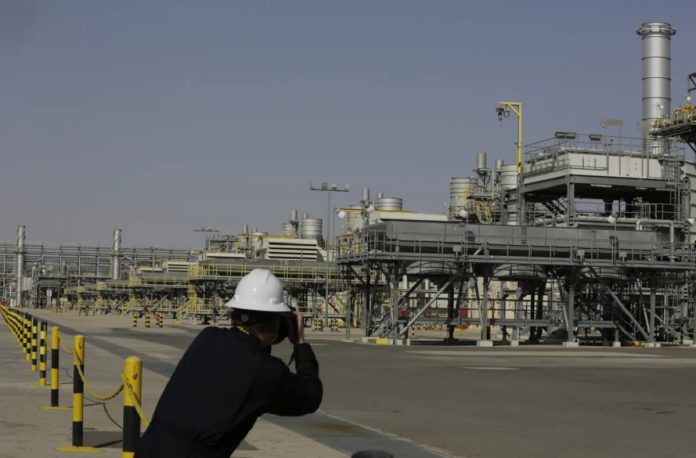
The Kingdom, the world’s largest oil producer, has repeatedly rejected demands from the US to raise crude production immediately.

According to the Financial Times sources, the Saudi government believes that the situation in global oil markets has not yet become critical and that its spare capacity should be kept in reserve.

However, according to the publication, the recent visit by a high-level US delegation to Riyadh has led to a shift in tone. This also comes against the backdrop of a fresh EU oil embargo.

Adopted on Tuesday, the measures prohibit importing Russian oil to the EU by sea. European Commission President Ursula Von der Leyen said the ban will “effectively cut around 90% of oil imports from Russia to the EU by the end of the year.”

The EU and UK have also agreed to prohibit insuring ships carrying Russian oil cargoes to further hamper Russia’s ability to export its crude. Russia is the world’s second largest oil exporter after Saudi Arabia. Before the start of its military operation in Ukraine it was supplying more than 10% of global crude.

Oil prices, which have been rallying in recent months as demand has outstripped supply, were trading near a decade-high of $120 per barrel this week.

At the OPEC meeting being held on Thursday, meanwhile, the output hike originally slated for September could be announced ahead of schedule, the FT reported.

OPEC is also reportedly considering whether to exempt Russia from the oil production agreement, due to concerns about the growing economic pressure on the country owing to the sanctions. If Moscow is exempted, other exporters such as Saudi Arabia would be able to increase output to make up for the shortfall from Russia

Iranian foreign minister: Nuclear deal at hand in Vienna

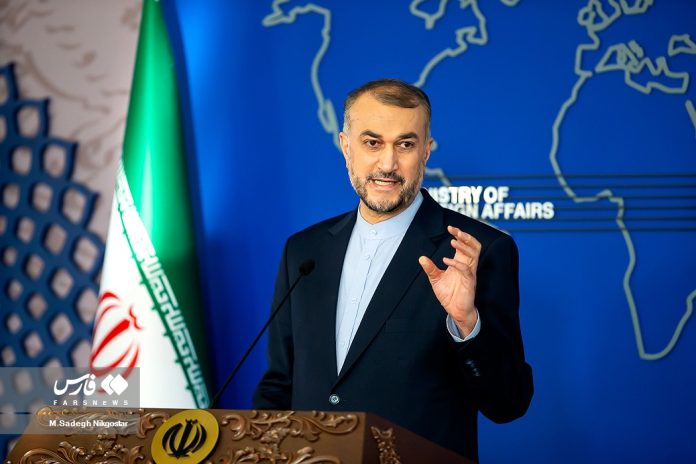
Iran’s Foreign Minister Hossein Amir Abdollahian

Hossein Amirabdollahian, in a phone conversation with his Singaporean counterpart, underscored that a deal is at hand if all sides realistically stick to diplomacy and their commitments, not threats.

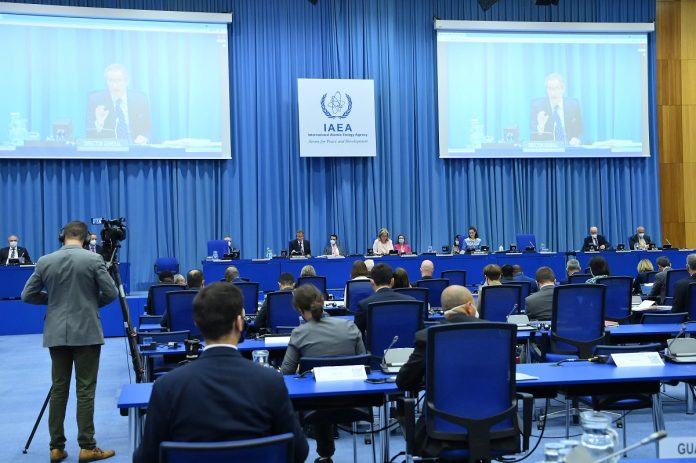
The Iranian foreign minister referred to the necessity of ending creating artificial and unconstructive hypes at the upcoming meeting of the International Atomic Energy Agency’s Board of Governors.

Amirabdollahian said the trend of cooperation between the Agency and Iran’s Atomic Energy Organization and the repeated emphasis by the UN atomic body that Iran’s nuclear program is peaceful, cannot be reversed all of a sudden by making a hasty political statement.

The Iranian foreign minister added that during the recent visit of the IAEA Director General Rafael Grossi to Tehran, the two sides reached a mutually agreed deal in a positive process, adding, “We consider political interferences with the IAEA’s technical issues as totally unconstructive.”

He also spoke about the Ukraine crisis and called for a cessation of hostilities there. The Iranian foreign minister noted that diplomacy and dialog are the best way to end the crisis

Iranian expert: Israel seeking IAEA resolution against Tehran

IAEA Board of Governors

Hassan Beheshtipour added that such untrue claims are only meant to frame Iran.

Beheshtipour also suggested that what the Israeli prime minister is now publishing is not new and dates back to before the year 2003.

He added that most of the purported documents Naftali Bennet is posting online were mentioned by the previous IAEA chief Amano under the title of PMD (possible military dimensions).

According to Beheshtipour, in 2015, the IAEA Board of Governors voted to close the PMB case for good after Iran and the P5+1 group of countries reached the nuclear deal, JCPOA.

Behshtipour added that Bennet is actually waging a propaganda campaign by putting forth these documents that date back 18 years.

He maintained that the alleged uranium traces the IAEA says were found in undeclared sites in Iran is no big deal because they were below 5 percent of purity.

Beheshtipour added that Iran has been more cooperative with the IAEA than any other country.

He warned that the ratification of a resolution against Iran at the IAEA board of givernors will be detrimental to the Islamic Republic. Beheshtipour said Iran must be vigilant and make an effort to prevent the issuing of a resolution and the repetiion of history.

Cyber-attack knocks out Tehran municipality website and control cameras

Cyber Attack

Tasnim News Agency quoted the public relations office of the municipality’s IT center as saying that this cyberattack happened very quickly.

A hacking group claimed responsibility, saying that it targeted more than 5,000 control cameras of different bodies and organizations in Tehran and knocked out 150 websites and systems of Tehran’s municipality.

There are no details about this hacking group.

According to this report, the online service providers of Tehran’s municipality have been restricted for the time being so that the IT center’s technicians will check the systems.

The IT center of Tehran’s municipality is investigating the issue to take precautionary measures for the purpose of preserving the quality of services provided to citizens.

Iran Covid: Zero deaths, first since the start of deadly pandemic

COVID in Iran

The tally also showed that 175 people had tested positive for the Coronavirus in the past 24 hours.

The new infections included 34 hospitalizations.

The zero death toll comes as around 700 people died daily during the last wave of Covid with the daily caseload hitting more than 50 thousand people.

Iranian official attribute the declining numbers of fatalities and infections to a nationwide vaccination campaign and also people’s observance of health protocols.

Iran’s Raisi: Regional states must work to prevent Israeli infiltration

Iran’s President Ebrahim Raisi

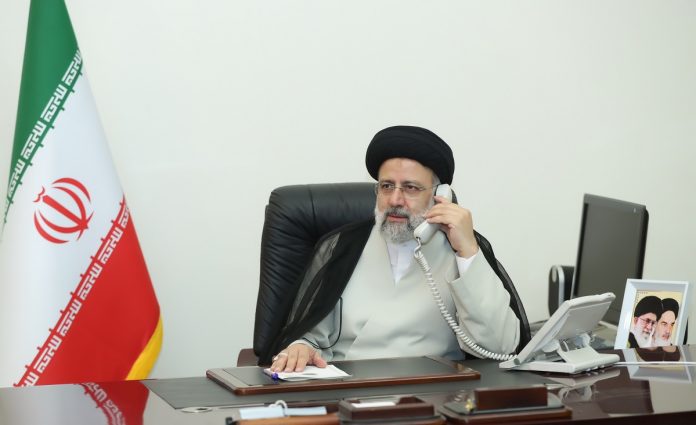
In a telephone conversation with his Armenian counterpart, Vahagn Garniki Khachaturyan, on Wednesday, Raisi said the Zionist regime is “not a friend” to regional nations and its oppression of the Palestinian people is unprecedented in history.

“All of the Zionist regime’s activities should be faced with sensitivity and care in order to prevent its infiltration into the region,” the Iranian president added.

As part of its fundamental polices, he said, Iran seeks preservation of the region’s current geopolitical status, including international borders, respect for the sovereignty of other states, and enhancement of trans-regional communication infrastructure.

Raisi also voiced support for further expansion of bilateral and multilateral ties in the region in the fields of energy and transportation and said, “Such cooperation bolsters peace, stability and economic growth” in the neighborhood.

In turn, the Armenian president praised Iran’s respect for the territorial integrity and sovereignty of regional states and described the Islamic Republic as a significant and influential player in the region.

He also said his country was willing to boost cooperation with neighboring Iran in political, economic and cultural fields, adding that holding of the Joint Economic Commission will facilitate the promotion of relations between the two sides.

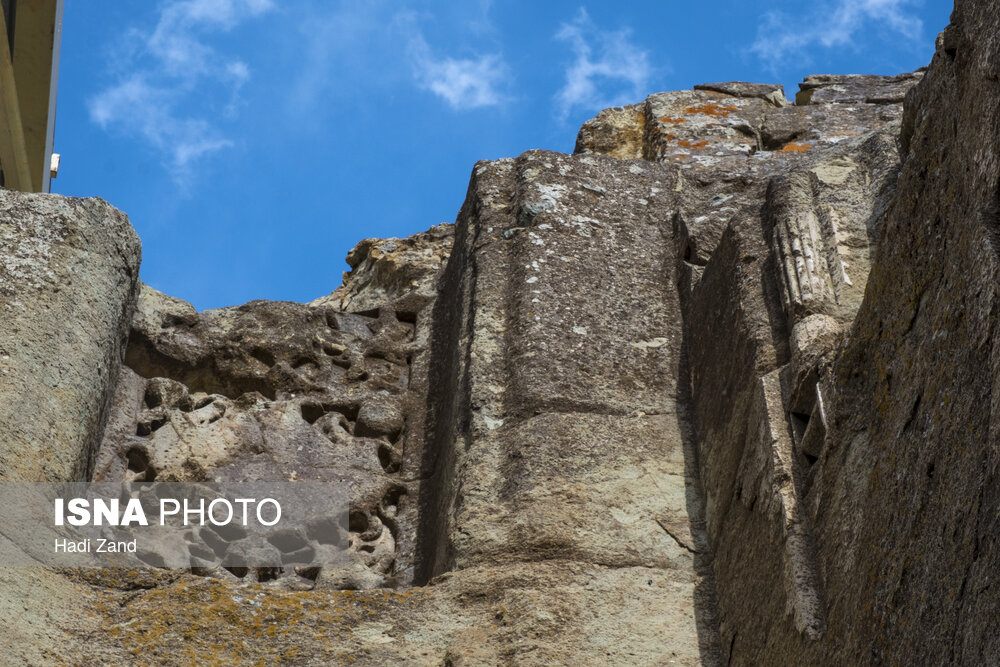
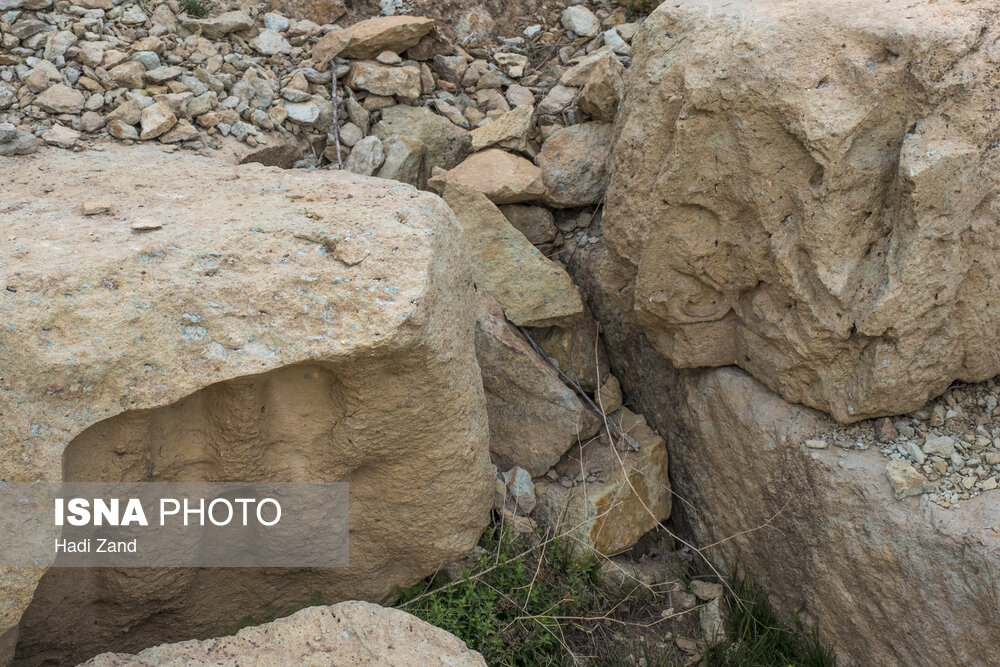
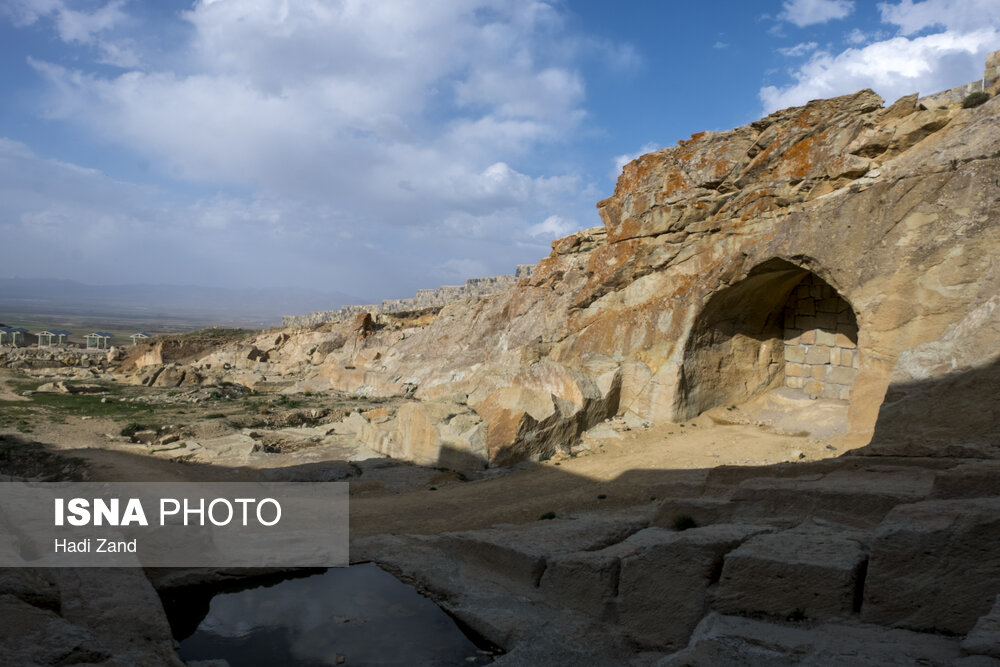
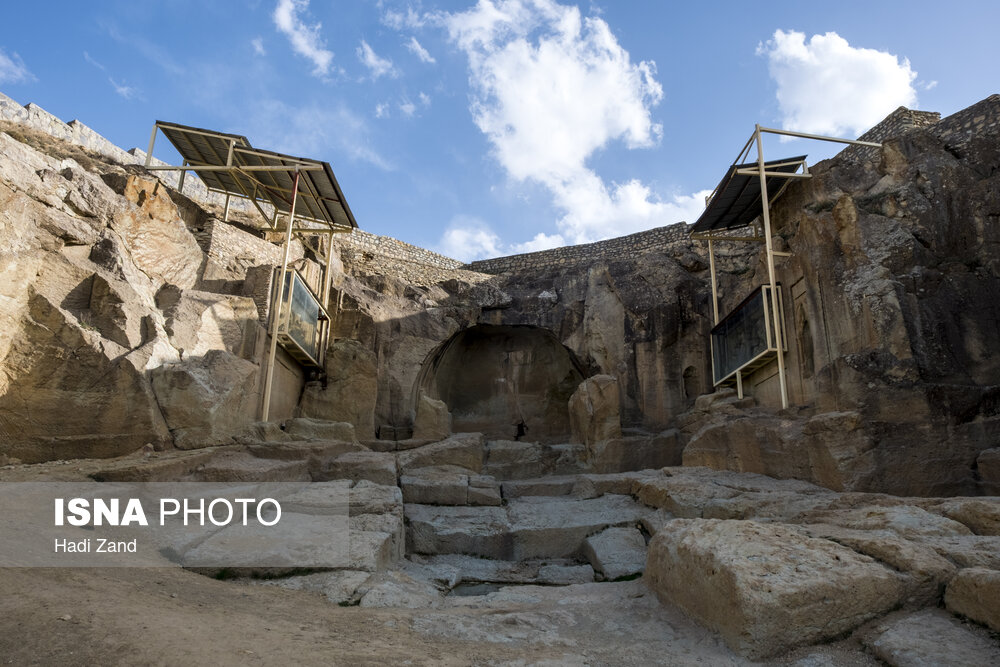
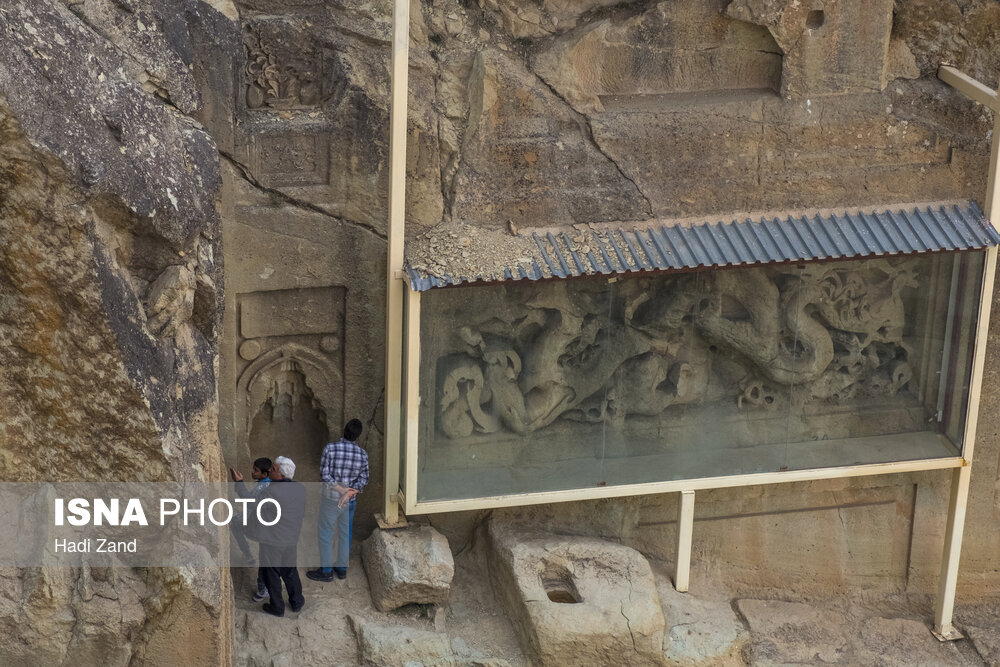
A mixture of Iranian and Chinese architecture in the Dragon Temple

Mixture of Iranian and Chinese architecture

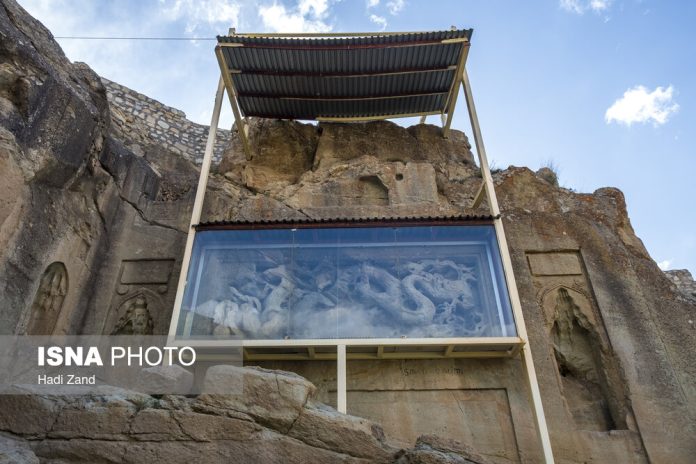
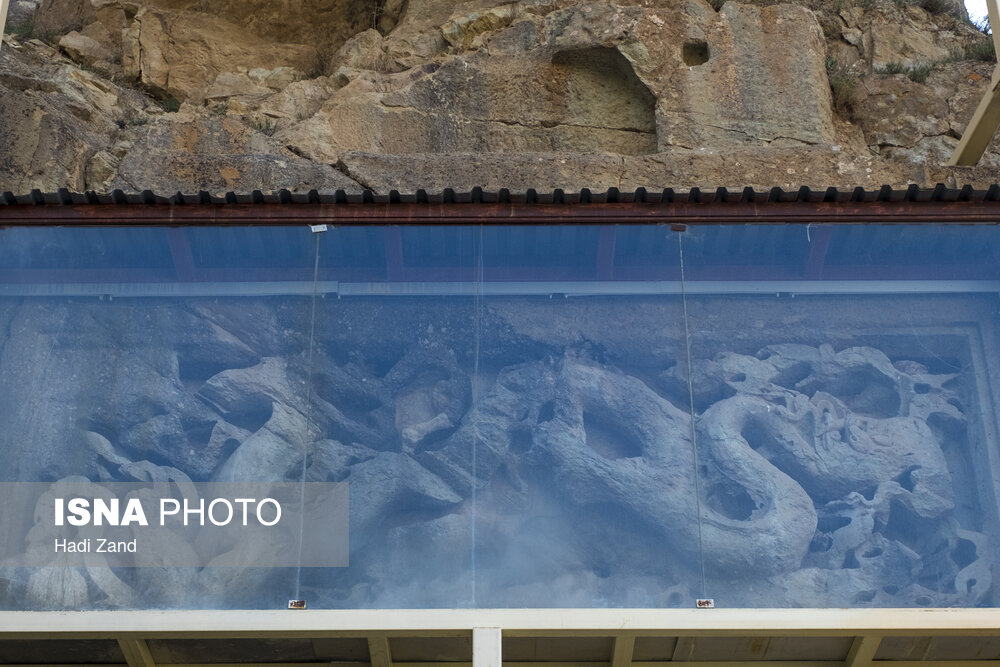
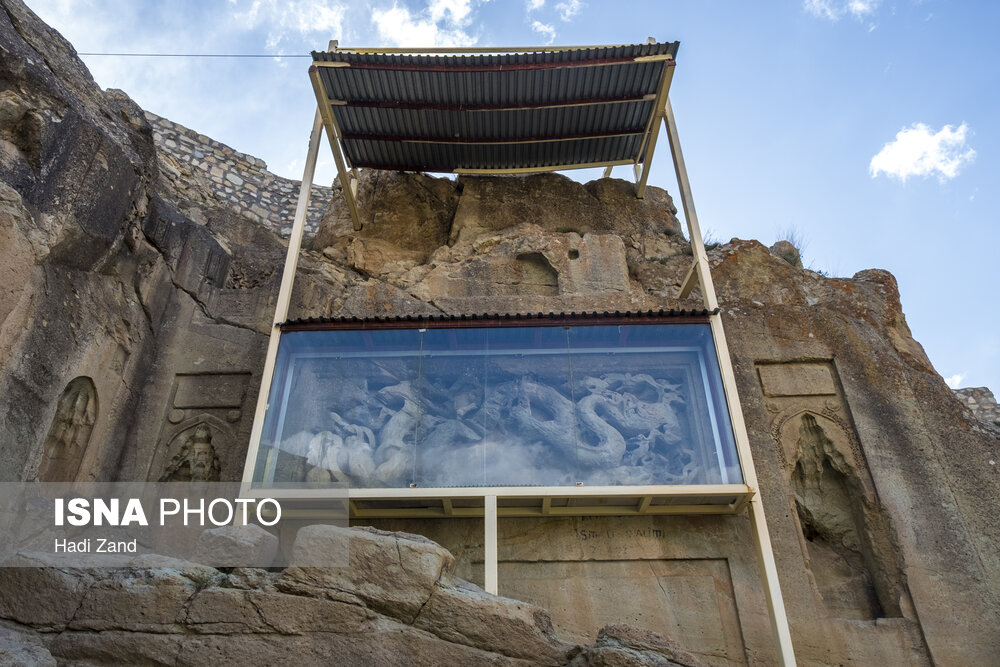
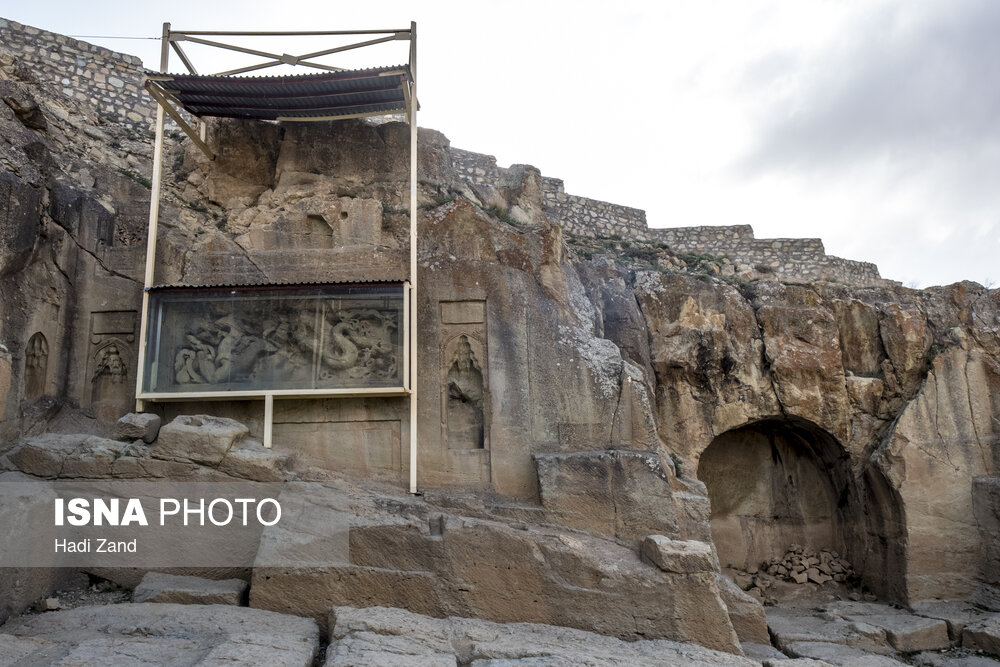
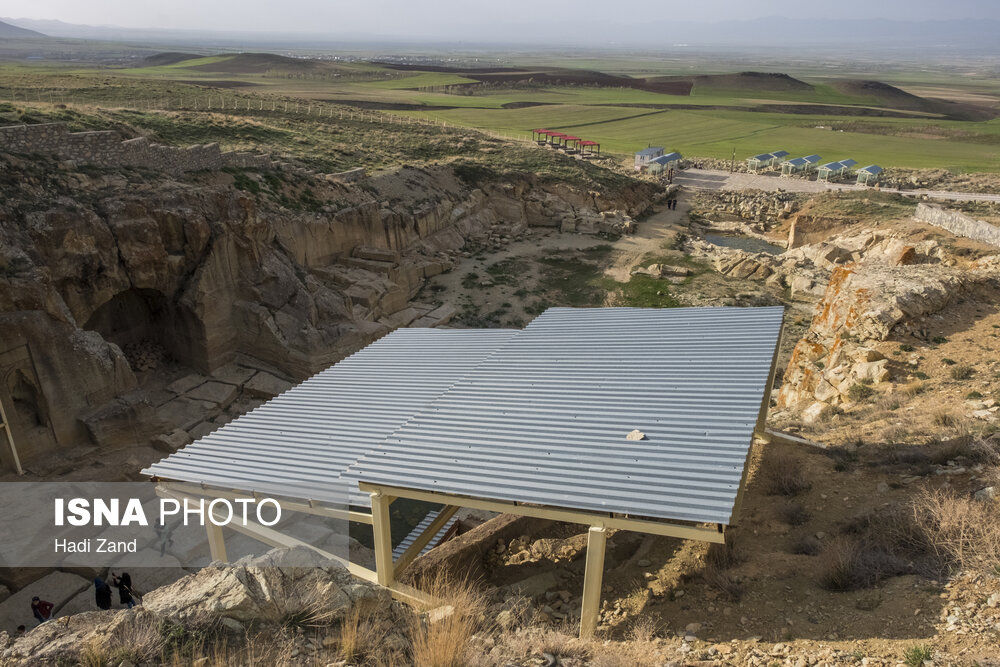
Inside the Dragon Temple, reliefs of two dragons, usually used in the Chinse architecture, stand out. The plan of the temple is rectangular with a length of 400 and a width varying from 300 to 50 meters.

History of the Dashkasan Temple

The temple dates back to the Ilkhanate era (Read more). The construction began following the death of Arghun Khan, a ruler of the Mongol empire, but it has unfortunately remained incomplete.

Some archeologists, however, believe the temple had been built in the Sassanid era and served as a temple for followers of the Mithraism religion. Apart from that, no other trace has remained in the temple.

The major characteristic of the temple is the same reliefs of two dragons, created during the Ilkhanate era. Besides the reliefs, other ornaments in the temple were also created during the Ilkhanate era.

Mixture of Iranian and Chinese architecture

Where is the Dragon Temple?

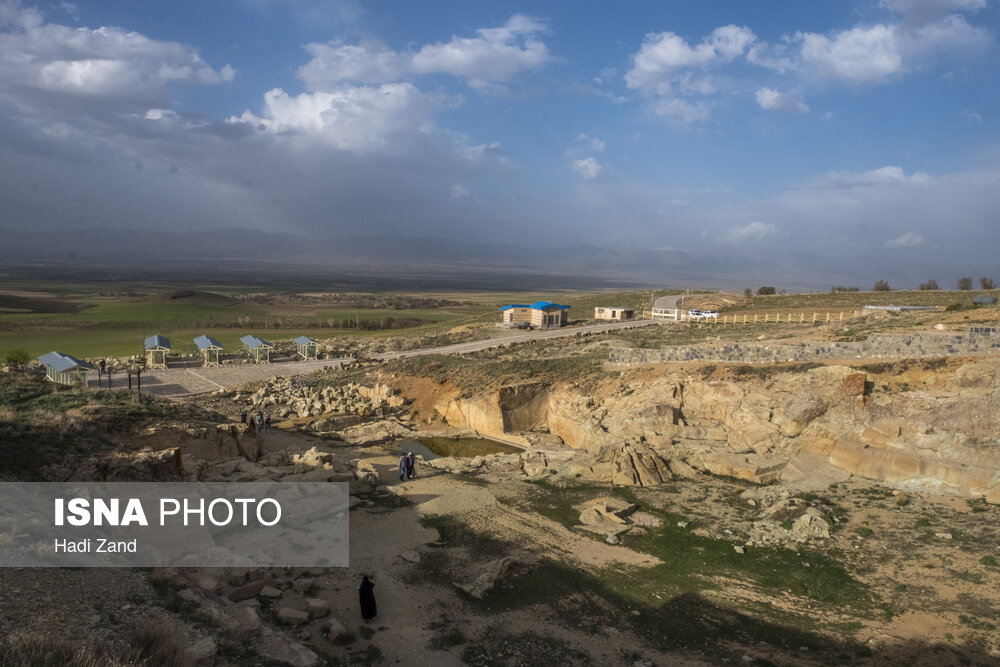
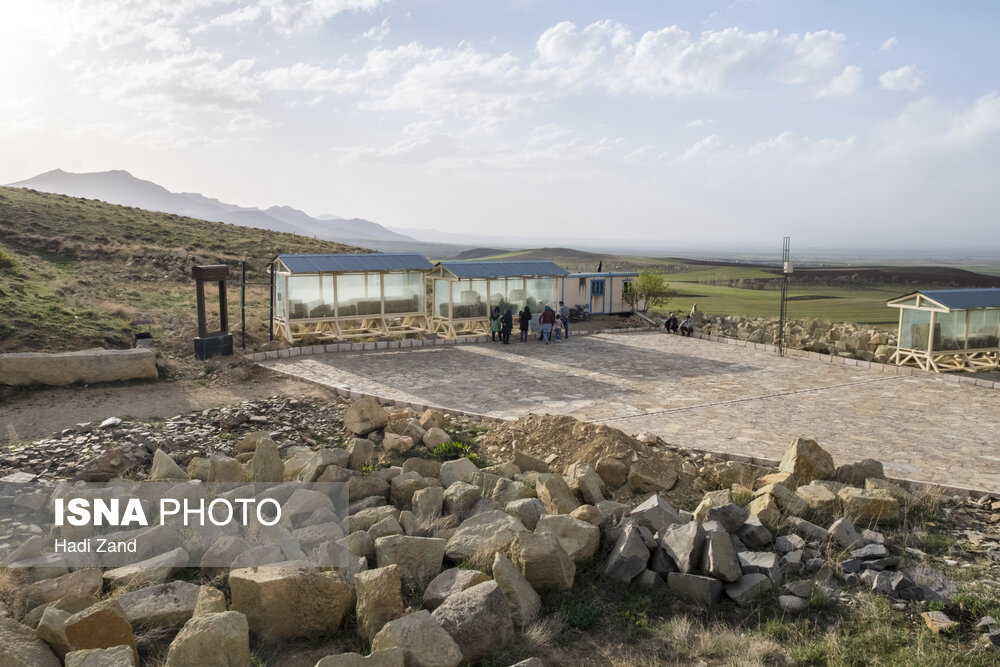
This temple is one of the landmarks of Soltaniyeh, which is located about 15 kilometers northeast of the city and around five kilometers from the village of Viyar.

A straight unpaved road connects the village to the temple and you can easily reach the site in usual cars. There are, however, no traffic signs along the road and you’d better get help from the locals.

Mixture of Iranian and Chinese architecture

The Dragon Temple’s main feature

The temple is one of the most spectacular rock-cut sculptures in Iran. The most important feature is the two dragon reliefs, which sit across from one another in harmony and catch the attention of those interested in different architecture styles.

At first sight, some of the tourists think it is a Chinese temple. Even the area surrounding the temple is referred to as China in Iran!

The reliefs are five meters in length and 1.5 meters in width and have been created by a Chinses artist.

In Iranian literature, the dragon used to be a symbol of repression and cruelty. With the entry of the Ilkanate to Iran, however, it took on a positive sense in the Iranian culture and turned into a symbol of the good, blessings and a lasting government, like an ever-vigilant guardian.

Mixture of Iranian and Chinese architecture

The architecture of the Dashkasan Temple

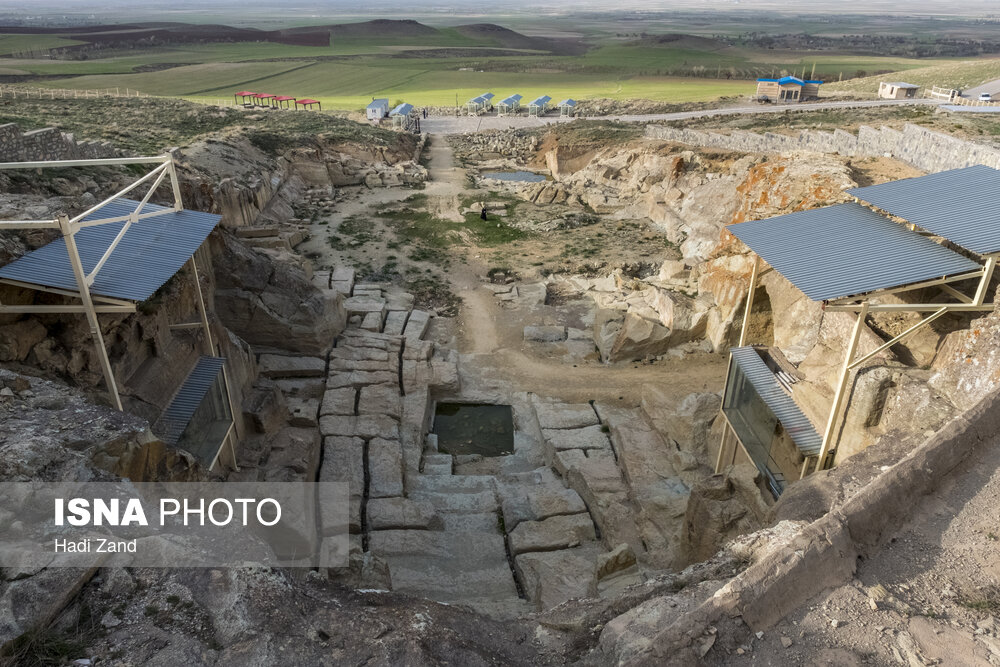
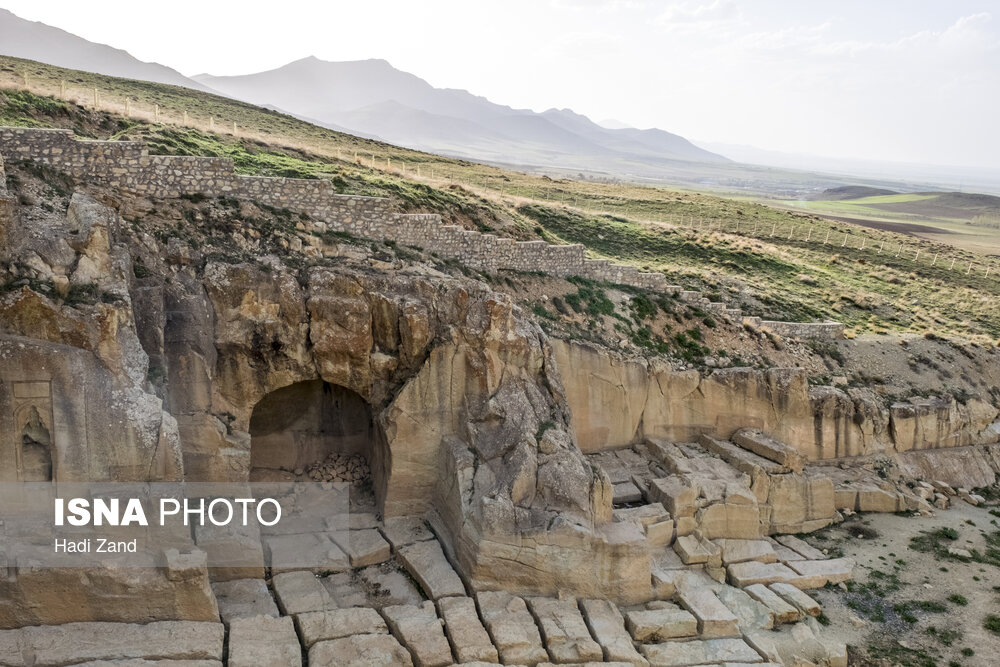
The temple is comprised of several ancient porches and areas, with reliefs seen all over the site. All the features in their entirety have turned the Dashkasan Temple into an unparalleled work of architecture.

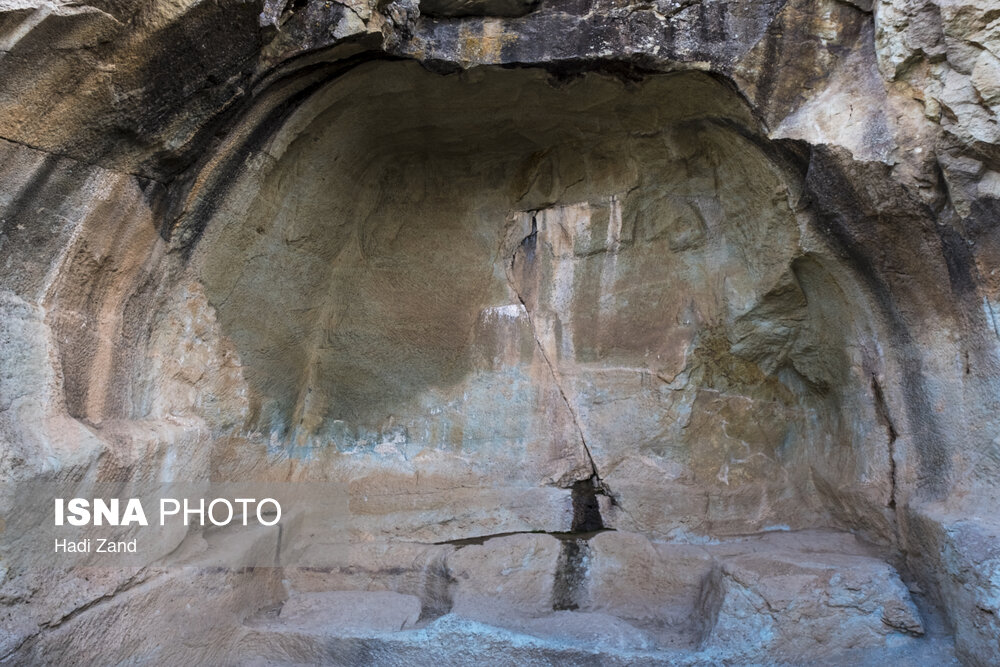
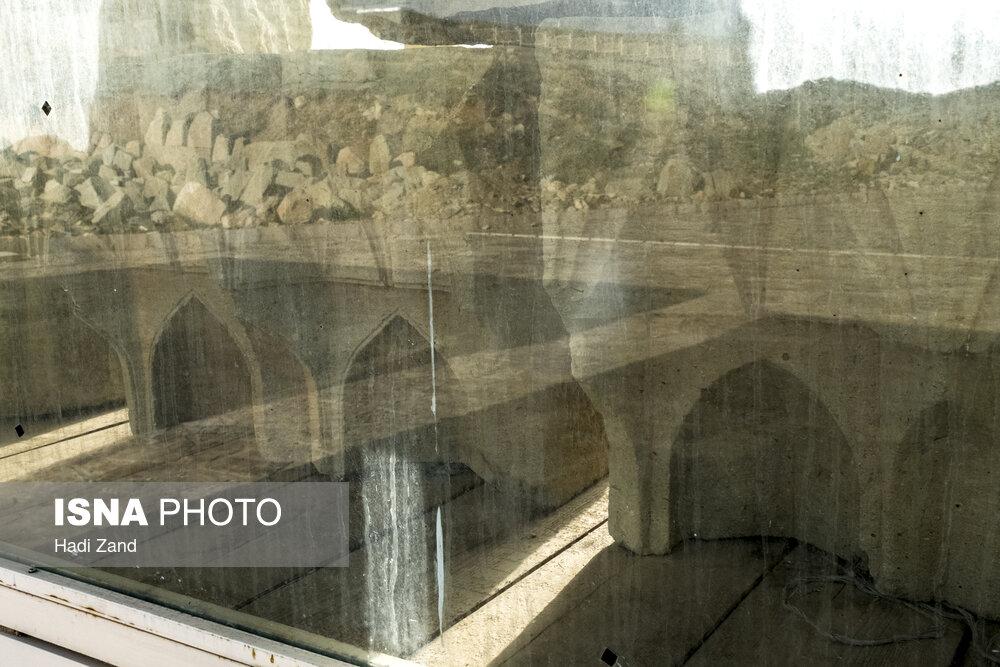
Three niches have been carved in the heart of rocks in the western and eastern sections of the temple, which are decorated with beautiful ornamented vaultings (Muqarnas) and distinctive Persian patterns featuring different designs.

It appears that the design and the creation of the patterns took place under the influence of the social status in Iran in the 8th century.

Mixture of Iranian and Chinese architecture

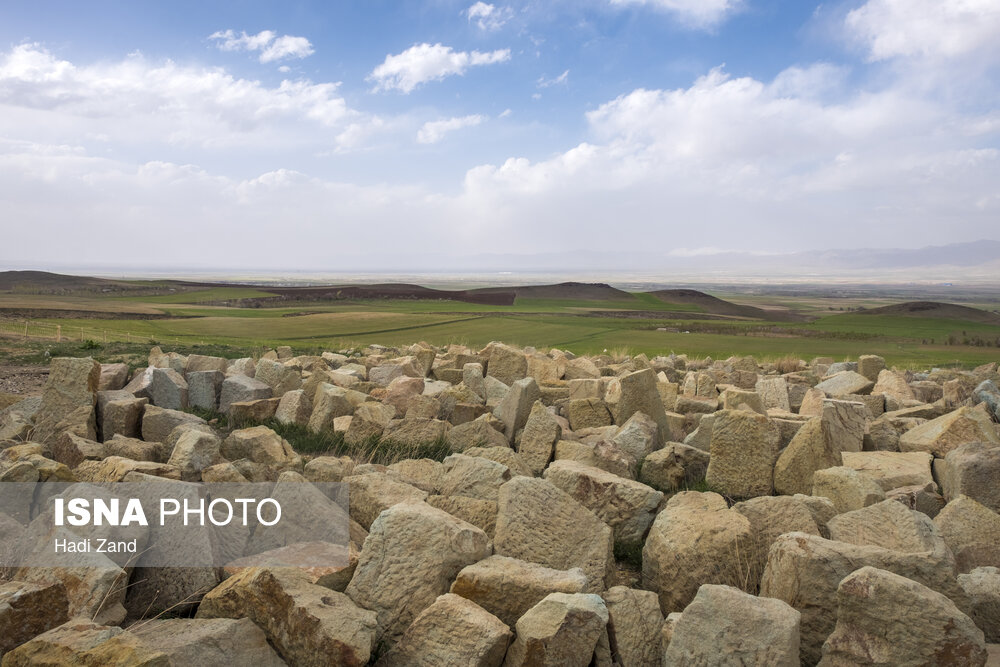
Archeological experts believe that the most advanced techniques of the time were used for stone carving using steel.

Choosing the best location for constructing the temple, from among other spots in the region, is indicative of the builder’s deep knowledge of geology. The stone carvers possibly used some sculpturing techniques as well.

More photos of the Dragon Temple

Here are photos of different sections of the Dragon Temple, taken from the ISNA news agency:

Report: Iranian national on trial in Sweden loses contact with family

Sweden Embassy Iran

Word is that Hamid Nouri has been in solitary confinement since one month ago. Swedish judicial authorities once changed his confinement place.

Nouri’s family has tried hard to get news about him over the past weeks, but to no avail. This has made them worried.

Nouri was put on trial in Sweden after he was detained upon arrival in the country on a tourist visa.

His detention happened due to a push by the Mojahedin-e-Khalq terrorist organization. Iran says the trial is illegal.

The MEK was blacklisted as a terror group by many countries including the US for a long time. But Washington delisted the group to pressure Iran during Barack Obama’s presidency.

The MEK is responsible for the deaths of thousands of Iranians, among them high-ranking officials including a president and a prime minister. These two officials died in bombings for which the group claimed responsibility.

Russia’s “Special Operation” in Ukraine; Day 99: Zelensky says Russia occupies 20% of Ukraine’s territory

Russia Ukraine War

US imposes new sanctions on Russia

The fresh US sanctions target multiple individuals, including Maria Zakharova, spokeswoman for the Russian foreign ministry, and Economy Minister Maxim Reshetnikov. The US Treasury Department has also imposed restrictions on Severstal, the largest steel company in Russia.

“Today’s designations were taken in tandem with the US Department of State and the US Department of Commerce. The US Department of State imposed sanctions on five of Russia’s oligarchs and elites, including Maria Zakharova, the spokesperson of the Russian Ministry of Foreign Affairs; Alexey Mordashov, the leader of Severgroup and one of Russia’s wealthiest billionaires; and family members and entities associated with the oligarchs and elites”, the Treasury Department announced on Thursday.

Washington has also sanctioned seven yachts, including two that the Treasury claims are linked to Russian President Vladimir Putin. The department has slapped restrictions on three aircraft in Russia, too. The White House then announced that Washington would be prohibiting 71 “parties” from Russia and Belarus from accessing American technology and equipment.

“The Department of Commerce is further restricting the Russian military’s ability to obtain technologies and other items it needs to sustain its aggression and project power. This includes adding 71 parties located in Russia and Belarus to the Entity List, effectively cutting them off from obtaining U.S.-origin items or foreign-made products derived from certain US technology or software,” The US Commerce Department added.


Russia vows response to sixth round of EU sanctions

The Russian Foreign Ministry has vowed to respond to the sixth round of EU sanctions against Moscow.

The reaction comes shortly after the French delegation, which currently holds EU presidency, announced that the legal text of the sixth package of Russia sanctions had been approved.

The list includes a ban on the import of Russian oil transported by sea, further restrictions on exports of chemicals and high-tech products to Russia, as well as a ban on broadcasting of three Russian TV channels.


EU agrees new anti-Russia sanctions

The European Union approved a sixth round of sanctions against Russia on Thursday, Reuters reports. The package reportedly includes an embargo of Russian crude.

“There’s a decision of the ambassadors. The sixth package will come into force after publication in the Official Journal of the EU, tentatively on Friday,” an unnamed diplomat told journalists in Brussels, as quoted by Reuters.

People familiar with the matter told Bloomberg the new measures would be the EU’s toughest to date. They will reportedly forbid the purchase of crude oil from Russia delivered to member states by sea in six months and refined petroleum products in eight months.

According to earlier reports, the EU was considering imposing import tariffs on Russian crude if any members of the bloc refused to implement the terms of the newly announced embargo on oil from the country. This week, EU member states reached an agreement on a partial ban of Russian crude. The cushioned embargo will affect about 75% of Russian oil imports, with that percentage growing to 90% by the end of the year.

The latest sanctions reportedly also include a ban on insurance related to shipping oil to other countries, which will take effect six months after the formal adoption of the measures. The ban aims to restrict Moscow’s options for diverting its supplies elsewhere in the world.

The sanctions package will also see Russia’s biggest lender, Sberbank, cut off from the international payments messaging system SWIFT, the sources said. The same restriction will apply to Credit Bank of Moscow and Russian Agricultural Bank, they added.


Biden administration split over Russia sanctions

The Joe Biden administration is split over how much further the US can push sanctions against Russia without undermining its own economy and Western unity, Bloomberg reports.

According to the news agency, US President Joe Biden’s team has largely backed the sanctions plan Washington set in motion after Russia attacked Ukraine in late February. However, discussions on the matter have become more heated as the sanctions failed to persuade Russian President Vladimir Putin to change course, Bloomberg reported on Wednesday, citing sources familiar with the matter.
US officials within the Biden administration have reportedly formed two factions. One group that includes State Department and White House officials is said to be advocating for an even more hawkish stance, making the case for enforcing secondary sanctions.

They believe that any opposition from US allies and partners can be overcome, according to Bloomberg.

Another group, largely represented by Treasury Department officials, has reportedly raised concerns regarding the economic woes such actions would entail, especially considering that Americans are already suffering from high oil prices and inflation. Some are also said to be worried about the upcoming midterm election in November, and Democrats’ chances to hold their seats in Congress.

Bloomberg sources, however, characterized the ongoing discussions as “healthy internal debate,” saying there is nothing unusual about the Treasury scrutinizing policies that can cause economic pain.

The US has been suffering from record-high inflation and gas prices, which Biden has tried to pin on Putin, the conflict in Ukraine, and the coronavirus pandemic.

According to the Pew Research Center, however, the annual rate of inflation hit 6.2%, the highest in more than three decades, as early as in October 2021, long before Moscow’s attack on Ukraine.

At the same time, if Washington presses with more sanctions against Moscow, it may find itself alone in its efforts, as doing so could drive a wedge between the US and its allies, Bloomberg said.

The US and UK previously imposed bans on Russian oil and gas, but at the time, the EU did not follow suit.


Ukrainian embassy says Russia ships ‘stolen’ wheat to Syria

Russia has sent its ally Syria an estimated 100,000 tonnes of wheat stolen from Ukraine since invading the country, the Ukrainian embassy in Beirut has said.

In a statement to Reuters, the embassy announced the shipments included one aboard the Matros Pozynich, a Russian-flagged vessel which docked at Syria’s main sea port Latakia in late May.

“The wheat is stolen from a facility that combines wheat from three Ukrainian regions into one batch,” the embassy stated, adding, “This is criminal activity.” It added that it had tried to reach out to the Syrian authorities but had never received a response.


Sweden to supply more military aid including anti-ship missiles to Ukraine

Sweden will provide Ukraine with more economic aid and military equipment, the Nordic country’s defence and finance ministers has stated.

Finance Minister Mikael Damberg and Defence Minister Peter Hultqvist told a news conference the military equipment would include anti-ship missiles, rifles and more anti-tank weapons.

Sweden in February announced it would send military materiel including 5,000 anti-tank weapons, helmets and body armour to Ukraine, and in March announced it would send another 5,000 anti-tank weapons.


Moscow rejects Kiev’s ‘worthless’ promises not to use US rocket systems against Russia

Russian Foreign Ministry Spokeswoman Maria Zakharova laced into Kiev’s assurances that it wouldn’t use US multiple-launch rocket systems on Russian soil branding the Volodymyr Zelensky regime’s promises as worthless and warned that they should not be trusted.

“There is no point in deliberating over the promises, or words in context, especially by Zelensky since they are useless,” the diplomat told the Soloviev Live program on Thursday, when answering a question on the matter.

In her opinion, whatever the Ukrainian president or Western leaders say cannot be taken at face value any longer.”

“Nobody can take Zelensky or even Western leaders at their word anymore: they know its value, it’s worthless. Not because these words are invaluable promises, but because they are worthless,” Zakharova specified.

Earlier, the US announced that the Ukrainian authorities, even at the Zelensky [administration] level, had given assurances to Washington that they would not use the HIMARS lightweight multiple-launch rocket systems against Russia.

A day earlier, the US announced a new $700 million military aid package for Ukraine, which includes the HIMARS (High Mobility Artillery Rocket Systems) and ammunition for the systems.

The West is trying to find reasons to explain its weapons supplies to Kiev and actions against Moscow, Zakharova stated.

“They keep making disclaimer statements that they are providing weapons to Ukraine on certain terms. They are clearly trying or pretend to be trying not to cross boundaries one way or another. They haven’t rejected this part yet, they indeed are looking for some explanations because without an explanation, they will become the party that is waging aggression in all directions,” she pointed out.

According to Zakharova, Western countries are trying to explain their policy and actions to their domestic public.


Ukraine seeking UN-backed mission to export grain shipments through Black Sea

Ukraine is working with international partners to create a United Nations-backed mission to restore Black Sea shipping routes and export Ukrainian farm produce, foreign ministry spokesman Oleg Nikolenko has stated.

Russia has captured some of Ukraine’s biggest seaports and its navy controls major transport routes in the Black Sea, blocking Ukrainian shipments and deepening a global food crisis.

“We call on countries whose food security may suffer more from Russian aggression against Ukraine to use their contacts with Moscow to force it to lift the blockade of Ukrainian seaports and end the war,” Nikolenko wrote on Facebook.


Russian military warns foreign mercenaries fighting in Ukraine are criminally liable

“According to the data that we have, today the total number of foreign mercenaries in Ukraine has almost halved – from 6,600 to 3,500 people,” Konashenkov told a briefing.

Mercenaries prefer to leave Ukraine because of heavy losses in combat, but the Kiev regime prevents them from departing, according to Konashenkov.

Earlier, Russian Defence Ministry said that Ukrainian authorities have recruited almost 7,000 mercenaries from 63 countries to fight in the conflict, with many having fled, gotten killed or taken prisoner during the operation. Most mercenaries were based in Kiev, Kharkov, Odessa, Nikolaev, and Mariupol.

US plan to sell armed drones to Ukraine does not affect military operation: Russia

Russia has announced US plans to sell Ukraine four MQ-1C Gray Eagle drones that can be armed with Hellfire missiles for battlefield use against Russia would not change the parameters of what Moscow calls its military operation.

“Pumping [Western] weapons into Ukraine does not change all the parameters of the special operation,” Kremlin spokesman Dmitry Peskov told reporters on a conference call.

“Its goals will be achieved, but this will bring more suffering to Ukraine,” he noted


Russia occupies 20 percent of Ukraine’s territory: Zelensky

Russia is currently occupying about 20 percent of Ukraine’s territory, President Volodymyr Zelensky has told Luxembourg’s parliament in a video address.

“We have to defend ourselves against almost the entire Russian army. All combat-ready Russian military formations are involved in this aggression,” he said, adding that the front lines of battle stretched across more than 1,000 kilometres (620 miles).

Zelensky also expressed gratitude for the military assistance received so far and called for weapons supplies to be stepped up.

Ukraine already considers itself part of the European Union, he continued.

“Ukraine has already become a de facto member of the EU,” he said, adding, “I believe that Ukraine is already showing by its actions that it meets the European criteria.”

Referring to Russian President Vladimir Putin, Zelenskyy called on the bloc to “stop this individual from destroying European values. If we do not manage together to stop this man, then these are dark hours – dark hours that we have already experienced in the Second World War.”


Denmark expected to join EU defence policy vote: FM

Danish Foreign Minister Jeppe Kofod has said he expects Denmark to join the European Union’s common defence policy after two-thirds of voters who cast ballots in a referendum supported abandoning a 30-year-old waiver that kept the EU country out.

There are “a series of formal steps before Denmark can be admitted” to the defence agreement, Kofod said, including the Danish Parliament giving its approval of the referendum’s result.

The minister added he expects Denmark to be able to join as of July 1. According to figures from Statistics Denmark, 66.9 percent voted in favour of getting rid of the opt-out while 33.1 percent were against.


EU move to partially phase out Russian oil likely to rock markets: Russia

The Russian foreign ministry has said that the European Union’s decision to partially phase out Russian oil was likely to destabilise global energy markets.

“Brussels and its political sponsors in Washington bear full responsibility for the risk of an exacerbation in global food and energy issues caused the illegitimate actions of the European Union,” the ministry added.


Russia says not planning to ‘close window to Europe’

Russia does not plan to “close the window” to Europe, the Kremlin has said, as its relations with the West linger at new lows over the conflict in Ukraine.

Asked whether difficult relations with Europe were turning the clock back on Peter the Great’s efforts to open Russia up to Europe, Kremlin spokesman Dmitry Peskov stated: “We are not planning to close anything.”

Peter the Great oversaw Russia’s transition to a major European power and founded the city of Saint Petersburg, dubbed Russia’s “window to Europe”.


Slovakia to send Ukraine Zuzana 2 howitzers

Slovakia will deliver eight self-propelled Zuzana 2 howitzers to Ukraine under a commercial contract which a state-controlled producer signed, the Slovak defence ministry has announced.

The Zuzana 2 howitzer, a modernised version of an older model, uses 155mm rounds and has an effective range of 40km (25 miles) to more than 50km (30 miles), depending on the ammunition type.


Ukraine prosecutor says 261 children killed since start of war

The office of Ukraine’s prosecutor general has announced 261 children have been killed and 460 injured since the start of the war.

The tally does not include places of active conflict, the office said on Twitter.

It also registered over 15,000 crimes of aggression that could amount to war crimes.


US and allies are looking for solutions to free up millions of tons of grain stuck in Ukraine

The Joe Biden administration is working to get temporary storage containers for Ukrainian grain into the country, a stopgap measure as it seeks to mitigate a growing food crisis caused by Russia’s months-long blockade of Ukrainian ports, administration officials told CNN.

These storage containers – such as bags or boxes – could help salvage some of the more than 20 million tons of grain that are currently stuck inside Ukraine. They could also help Ukraine load the grain onto trains or trucks out of the country once overland routes are established, a senior administration official explained.

Still, as these efforts are underway the US and its international partners are no closer to finding a quick and absolute solution to lifting the Russian blockade of Ukrainian ports that’s raised global food prices and threatened to cause a catastrophic food shortage in parts of the world.

The work that the US is doing to open up overland routes for the grain to get into neighboring countries, get containers into the country, and implement long-term changes meant to drive down global reliance on Ukrainian grain could collectively have an impact on the crisis. But many view the efforts as marginal fixes to a much larger problem that can’t be completely resolved until Russia eases its blockade, particularly of Ukraine’s biggest port in Odesa, which has been surrounded by Russian warships for months.

UN and Turkish officials are preparing for separate rounds of diplomatic talks with Moscow coalescing around a new plan to try to open up sea routes for Ukrainian grains, sources say.

Millions of tons of grain remain stuck in Ukraine, stored in silos and at the port in Odesa, leading to a dramatic spike in global food prices that’s likely to worsen as the war continues. Ukraine is the world’s fourth-largest exporter of corn and the fifth-largest exporter of wheat, according to the State Department, and the UN’s program to fight food insecurity buys about half of its wheat from Ukraine each year.


Russia warns US deliveries of MLRS to Ukraine undermine stability

Grigory Mashkov, a Russian ambassador-at-large, said US deliveries of MLRS to Ukraine undermined stability as the West moved its weapons closer to Russian borders.

“As for multiple launch rocket systems as weapons as such, then, naturally, this undermines stability,” Mashkov told reporters, adding, “Today I tried to explain to my colleagues [at the meeting of the UN 1540 committee] that everything that is happening in and around Ukraine had been building up for many years.”

“We are not approaching them [Western countries] with our weapons, but they are approaching our borders with their defensive ideas,” he went on to say.

“[There was] a direct threat to Russia’s national interests, this conflict situation arose, which was provoked by all the actions of the West over the past 30 years,” he continued.

According to the ambassador-at-large, Russia wouldn’t like similar situations to emerge in other areas.

“We are trying to ensure the security of our country, global security so that our interests are not infringed upon,” the diplomat continued.

The United States creates new regional alliances getting ready for future conflicts and Russia will counteract this in every way, Mashkov stated.

“Currently, at various regional levels, the US is weaving alliances which have the same focus as everything that’s going on in the world,” the envoy noted.

“The creation of a system of global domination, AUKUS, the American-Japanese, the American-South Korean alliances – all these are regional schemes to resolve their global goals. Look at all the countries that [the US] has allied relations with, they lost their voice. <…> Europeans have done everything to destroy their own regional security,” he explained.

“What [the US] is doing now is, essentially, the preparation for the future conflict situations,” the diplomat said.

“This is the Middle East, the creation of air defense systems, the Asian track, the shaping of alliances against China,” he added.

He emphasized that Russia “will counteract this in every way.”

“We won’t help Americans resolve the issues of establishing world domination. We are protecting our national interests, will defend [them] by diplomatic means,” the ambassador-at-large stated.

Mashkov said the West will sooner or later have to restore the system of European security, but it’s no longer possible on old terms.

“They (Western countries) destroyed the European security system, sooner or later they will have to restore it,” the diplomat stated, adding, “But it’s no longer possible on old terms”.

According to the envoy, when Russia agrees to certain compromises, the West views it as weakness.

“They begin to put pressure. That time has passed,” the diplomat noted.

He pointed out that the West considers itself a winner in the Cold War.

“Essentially, they are establishing a new neocolonial system. They have subjugated Europe, now it’s our turn but we stood up against it,” the envoy said.

“So this is not the issue of a fight between Russia and Ukraine anymore, but the issue of a new global system being formed,” he added.


Persian Gulf Arab states won’t sanction Russia over Ukraine: CCTV

Russian Foreign Minister Sergei Lavrov has said that Persian Gulf Arab states would not participate in sanctions against Russia and Belarus, China’s CCTV has reported.

Lavrov’s comments came after a meeting with members of the Cooperation Council for the Arab States of the Persian Gulf (GCC) – Bahrain, Kuwait, Oman, Qatar, Saudi Arabia, and the United Arab Emirates – in Riyadh, Saudi Arabia on Wednesday.

CCTV reported that Saudi Foreign Minister Prince Faisal bin Farhan Al Saud said during the talks that the Persian Gulf states shared the same position on the Russia-Ukraine conflict and were very concerned about the impact of the conflict on world food security.


Russian forces making steady gains in Severodonetsk: UK

While Russia has taken most of the key city of Severodonetsk and continues to make steady gains, its forces have sustained losses in the process and risk losing momentum when they switch to focus on taking the neighbouring Donetsk region, the UK’s ministry of defence has said.

In its latest intelligence briefing, the ministry said that the Siverskyy Donetsk River crossing, the sites of which include an area between Severodonetsk and Lysychansk and the recently-captured town of Lyman, still remain under Ukrainian control. Russian forces would need the crossing as they switch to focusing on the Donetsk region after taking Luhansk, the ministry announced.

“It is likely Russia will need at least a short tactical pause to re-set for opposed river crossings and subsequent attacks further into Donetsk Oblast, where Ukrainian forces have prepared defensive positions,” the ministry added.

“To do so risks losing some of the momentum they have built over the last week,” it stated.


OPEC+ working on making up for lower Russian oil output

Oil group OPEC+ is working on compensating for a drop in Russian oil output, Reuters reports two OPEC+ sources having said.

A Persian Gulf OPEC+ source said a decision on the matter was “highly possible” at a meeting on Thursday.

Another OPEC+ source familiar with the Russian position told Reuters Moscow could agree to other producers compensating for its lower output but it may not happen at a Thursday meeting and might not be in full.

Russia’s production has fallen by around 1 million barrels per day in recent months as a result of Western sanctions.


200,000 kids among Ukrainians taken to Russia: Zelensky

President Volodymyr Zelensky has said that 200,000 children are among the Ukrainians who have been forcefully taken to Russia and dispersed across the vast country. They include children from orphanages, children taken with their parents and those separated from their families.

“The purpose of this criminal policy is not just to steal people but to make those who are deported forget about Ukraine and unable to return,” Zelensky stated in his nightly video address to the nation on Wednesday, which was International Children’s Day.

He added Ukraine would punish those responsible but first, it would show Russia on the battlefield that “Ukraine cannot be conquered, that our people will not surrender and our children will not become the property of the occupiers.”

Zelensky noted 243 children have been killed so far in the war, 446 have been wounded and 139 are missing, adding that it could be more as his government doesn’t have a full picture of the situation in areas occupied by Russian troops.


Russia vulnerable to Ukraine’s forces in Kherson: ISW

Russian forces in the now occupied Kherson region are scrambling to secure the vital ground line of communication the Ukrainians have threatened, the Institute for the Study of War (SW) has announced.

The ISW had previously noted that Russia had left vulnerable its position in Kherson as it threw everything behind its attempts to capture the key Luhansk towns of Severodonetsk and Lysychansk.

“Ukrainian forces carried out a series of organised counterattacks targeting settlements on the eastern bank of the Ihulets River that are very close to a key highway supporting Russian forces further north,” the ISW said about the Kherson region. The institute added that the Russians destroyed the bridges Ukrainians had used to hold their line against anticipated counteroffensives.

But “Ukrainian forces are likely still close enough to the highway to disrupt its use as a main supply route, potentially undermining the Russians’ ability to hold against Ukrainian counter-offensives from the north,” the ISW stated.


Russia’s war has led to massive destruction to cultural heritage: Officials

Ukraine’s Culture Ministry has documented 367 war crimes against Ukraine’s cultural heritage, including the destruction of 29 museums, 133 churches, 66 theatres and libraries, and a Jewish cemetery, the Kyiv Independent has reported.

“Russians have the precise aim of destroying our culture as part of our identity, something that distinguishes Ukraine from Russia,” Olha Honchar, co-founder of Ukraine’s Museum Crisis Center told Bloomberg.

“It has become quite clear now for the whole world that Russia bombs museums, archives, and theatres not by accident,” Honchar added.


NATO doesn’t foresee Russia retaliating against US decision to send Ukraine advanced weapons: Chief

NATO does not foresee any Russian retaliation to the decision by the United States to supply advanced weapons to Ukraine, Secretary General Jens Stoltenberg told CNN on Wednesday.

“No, I don’t foresee that because what NATO allies and NATO is doing is to provide support to Ukraine to uphold the right for self-defense, and this is a right which is enshrined in the UN treaty,” Stoltenberg said.

US President Joe Biden announced on Tuesday the US is providing Ukraine “more advanced rocket systems and munitions” as its war with Russia grinds on.

Writing in a New York Times op-ed, Biden said the US goal is “to see a democratic, independent, sovereign and prosperous Ukraine with the means to deter and defend itself against further aggression.”

He stated the new shipment of arms would “enable them to more precisely strike key targets on the battlefield in Ukraine.”

Stoltenberg held a news conference alongside US Secretary of State Antony Blinken in Washington, DC, on Wednesday and is set to meet with Biden at the White House on Thursday.


Ukrainian official says about 80% of Severodonetsk is occupied by Russian forces

Serhiy Hayday, the head of Luhansk’s regional military administration, says street fighting continues in the eastern city of Severodonetsk but Russian forces now occupy about 80% of the city.

“On some streets, our defenders are successful,” Hayday said. Six Russian soldiers have been captured, he added.

Hayday said the remaining parts of Luhansk region still under Ukrainian control were under constant shelling but local volunteers had gotten trucks with humanitarian cargoes to many settlements and also evacuated people.

The Ukrainian official noted the neighboring city of Lysychansk “is under Ukrainian control. This is a militarily advantageous position. The location of the city on a hill gives many opportunities. The city’s defense is strong.”

Hayday added that heavy fighting continued in settlements to the south and west of Severodonetsk as Russian forces try to encircle the Ukrainian defenses.

“Despite the simply constant, daily shelling, it is still possible to bring humanitarian supplies both to the Hirske community and to Lysychansk,” Hayday continued.


Denmark looks set to join EU defence policy

Denmark will join the European Union’s defence policy after a referendum, public broadcaster DR has projected.

Preliminary results by DR showed that 66.6 percent of voters were in favour of removing an opt-out to the EU’s so-called Common Security and Defence Policy (CSDP). Denmark is the only EU member that is not part of the policy after the country secured several exemptions in a 1993 referendum.

“It is a completely new approach to Europe, that we are signalling to our European allies, to the whole world,” said former foreign minister and member of the Social Liberal Party, Martin Lidegaard.

“It can hardly be overestimated, the importance it has on our foreign and European policy,” Lidegaard added.


UK will give Ukraine rocket systems capable of hitting targets about 50 miles away: Defense secretary

The United Kingdom will send multiple-launch rocket systems to Ukraine to help defend itself against Russia, British Defence Secretary Ben Wallace said on Wednesday.

Britain will send M270 launchers able to strike targets up to 80 kilometers (49.7 miles) away, offering “a significant boost in capability for the Ukrainian forces,” according to a statement from the British Foreign Office.

The move has been “coordinated closely” with the United States decision to provide Ukraine with its High Mobility Artillery Rocket System (HIMARS) – a variant of the multiple-launch rocket systems that will be gifted by the UK, the statement added.

“The UK stands with Ukraine and has taken a leading role in supplying its heroic troops with the vital weapons they need to defend their country,” Wallace stated.

“As Russian’s tactics change, so must our support to Ukraine. These highly capable multiple-launch rocket systems will enable our Ukrainian friends to better protect themselves against Russia’s brutal use of long-range artillery, which Putin’s forces have used indiscriminately to flatten cities,” he added.

The British government also announced that Ukrainian troops will be trained on how to use the launchers in the UK, so the effectiveness of the launchers can be maximized.


US to send medium-range rocket systems to Ukraine

The Pentagon has announced that the US will send Ukraine four sophisticated, medium-range rocket systems and ammunition to help try to stall Russian progress in Ukraine’s eastern Donbas region.

But it will take at least three weeks to get the precision weapons and trained troops onto the battlefield, said Colin Kahl, the US defence undersecretary for policy.

“It is a grinding fight,” Kahl said during a Pentagon briefing. “We believe that these additional capabilities will arrive in a timeframe that’s relevant and allow the Ukrainians to very precisely target the types of things they need for the current fight.”


Interpol fears weapons delivery to Ukraine will end up on black market

Interpol has expressed serious concern about the delivery of small and heavy weapons to Ukraine that can end up in the hands of criminals in Europe.

Agency head Jurgen Stock urged countries supplying military equipment to Kyiv to focus on tracing mechanisms.

“The wide availability of weapons during the current conflict will lead to the proliferation of illicit weapons in the post-conflict phase,” he told the Anglo-American Press Association in Paris, as reported by Le Figaro news.

Stock feared the pilferage of arms and armaments by criminals in the EU’s black market as prices of guns are higher there. Several European countries, including France and Germany, along with the US, have delivered high-end defence equipment, artillery munitions, and guns to help Ukraine defend its territory and fight Russian forces.


US plans to sell armed drones to Ukraine in coming days

The Joe Biden administration plans to sell Ukraine four MQ-1C Gray Eagle drones that can be armed with Hellfire missiles for battlefield use against Russia, three people familiar with the situation said.

The sale of the General Atomics-made drones could still be blocked by Congress, the sources said, adding that there is also a risk of a last-minute policy reversal that could scuttle the plan, which has been under review at the Pentagon for several weeks.

Ukraine has been using several types of smaller shorter range unmanned aerial systems against Russian forces that invaded the country in late February. They include the AeroVironment RQ-20 Puma AE, and the Turkish Bayraktar-TB2.
But the Gray Eagle represents a leap in technology because it can fly up to 30 or more hours depending on its mission. It can also gather huge amounts of data for intelligence purposes. Gray Eagles, the Army’s version of the more widely known Predator drone, can also carry up to eight powerful Hellfire missiles.


Russia seeks to ‘minimise’ effects of EU oil ban, gas exports down

Russia announced it was moving to limit the damage from a European Union oil ban as its other key energy export, gas, has fallen after President Vladimir Putin sent troops to Ukraine.

“Sanctions will have a negative effect for Europe, us, and the whole global energy market,” Kremlin spokesman Dmitry Peskov told reporters.

“These are purposeful, systematic actions that will allow us to minimise the negative consequences,” he said, adding that a “reorientation” was under way to find alternatives for the oil that will no longer be sold to Europe.