Wednesday, December 31, 2025
Home Blog Page 1907

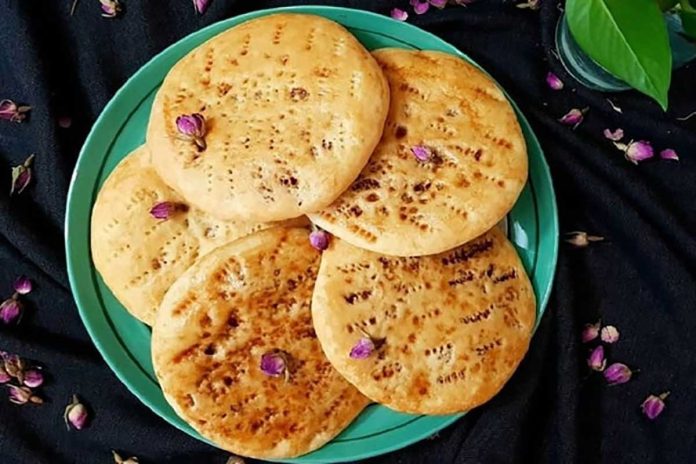
Fatir; A Sweet Iranian Bread for Breakfast

Fatir; A Sweet Iranian Bread for Breakfast

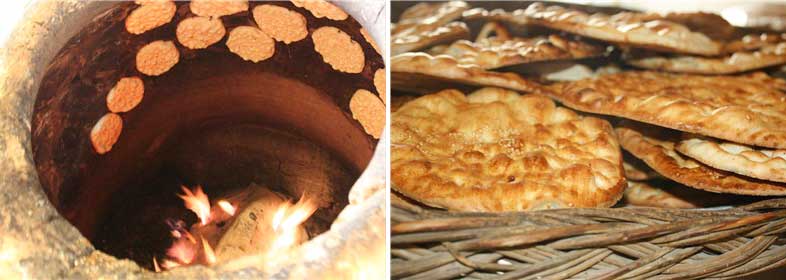
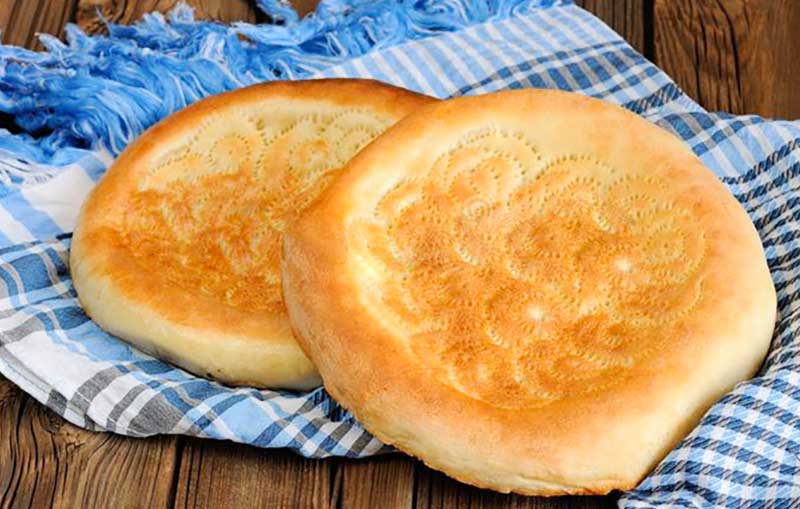
Fatir is a bread whose dough is not brewed. Fatir’s origin goes back to the East Azarbaijan province of Iran and the city of Sarab.

Breads baked in this city are at their best in terms of variety and deliciousness. This bread has a special roughness. Some of the sweets that are cooked in some cities of Iran are also called Fatir.

Fatir Bread

Ingredients for Fatir Bread

  • Warm Water: ½ Cup
  • Sifted Flour: 4 Cups
  • Hot Water: 2 Cups
  • Salt: 1 tsp
  • Sugar: 2 tbsps
  • Yeast: 2 tsp
  • Liquid Oil: 1 tbsps
  • Sesame: A little (for garnishing)
  • Crushed Walnut: 1 Cup
  • Cinnamon: 2 tbsps
  • Sugar for Filling: ½ Cup

Fatir Ingredients

Fatir Bread Recipe

Mix the yeast with a tablespoon of sugar and warm water (40C) and place in a relatively warm place to puff. Then, mix a cup of flour with the rest of the sugar, salt and warm water and after 10 minutes add to the mixture and wait for another 10 minutes. Now, add the liquid oil and stir.

Add the rest of the flour little by little to the mixture and stir till it turns into sourdough. Knead the dough until it does not stick to the hands. Cover the prepared dough and place it in a relatively warm place for two hours until it doubles in volume. Preheat the oven to 175 C or 350 F.
Fatir Bread Recipe

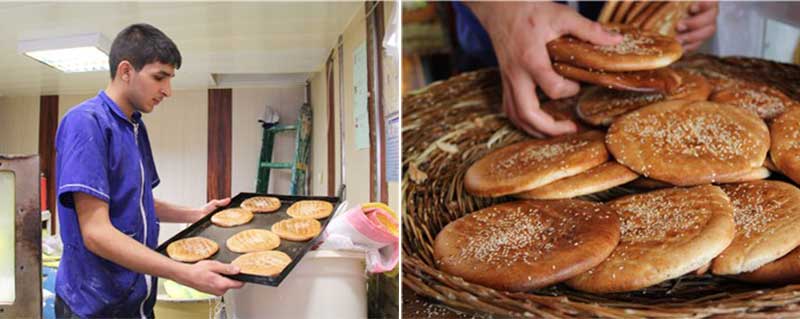
Mix walnuts, sugar and cinnamon to use for the filling. Cover a smooth surface with some flour, remove 100 g of dough and roll it out with a rolling pin. Then, put some walnut and sugar mixture in the middle of the bread and gather the dough around it.

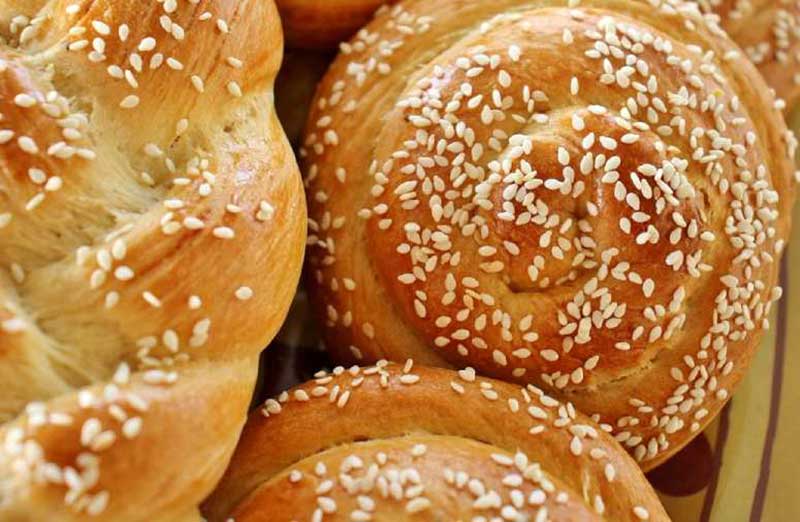
Then spread it by hand. Place the sweet bread on a greased tray for 10 minutes. Then, apply a little oil on the dough and sprinkle with sesame seeds. Place the tray in the middle of the oven for 25 to 30 minutes. If the dough sticks to your hands, add a little flour and liquid oil in addition to the given measurements to eliminate the stickiness of it.
How to make fatir bread

Additional Points for Baking Fatir Bread:

1. If you do not have an oven, you can use a large skillet and apply some oil on it before putting Fatir dough rounds inside. Now wait a little for the Fatirs to form bubbles and for their bottom side to turn gold before flipping them to let the other side get baked.

2. If the dough sticks to the hand, add some wheat flour and oil in addition to the ingredients to remove the stickiness.
Fatir recipe

3. If you are not sure you Fatir dough is ready, you can take time to raise the dough beforehand.

4. Wrap the Fatir breads in a cloth napkin after baking so that it softens.

5. You can add some ginger to Fatirs.

6. How sweet your Fatirs would be depends on your taste so you can add less sugar than mentioned in recipes.
Fatir bread

7. For the stuffing of the Stuffed Ardebil Fatirs or those of any other city, roast 100 grams of wheat flour in the skillet, let it golden bake to remove the raw taste and then add some 100 grams of butter and some sugar and stir.

When preparing the dough rounds, choose the size at will and press the middle to form a hollow where you should place the stuffing. Then once again round the dough and press with a rolling pin.
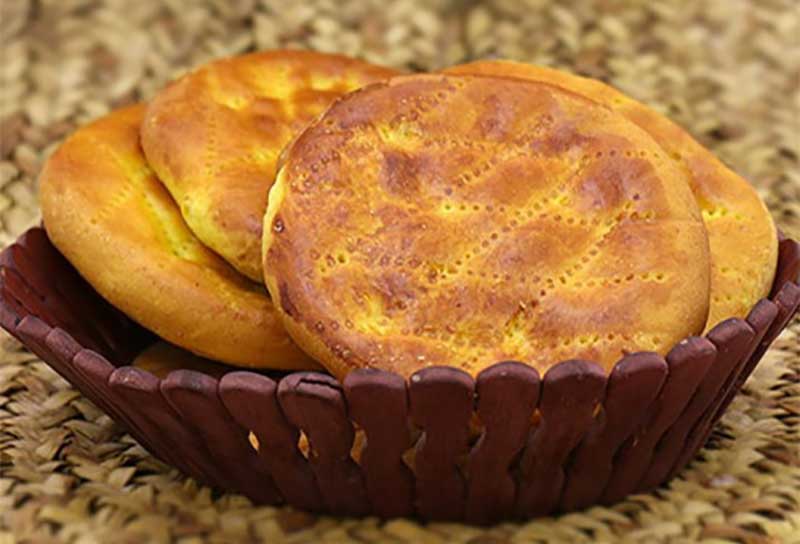
Fatir

Why Fatir breads get dry?

Adding too much flour makes the bread dry and prevents the dough from puffing up. Placing a bowl of water inside the oven creates moisture that makes your breads softer.

Iranian president describes ties with Venezuela “strategic”

Iran and Venezuela Presidents Raisi & Maduro

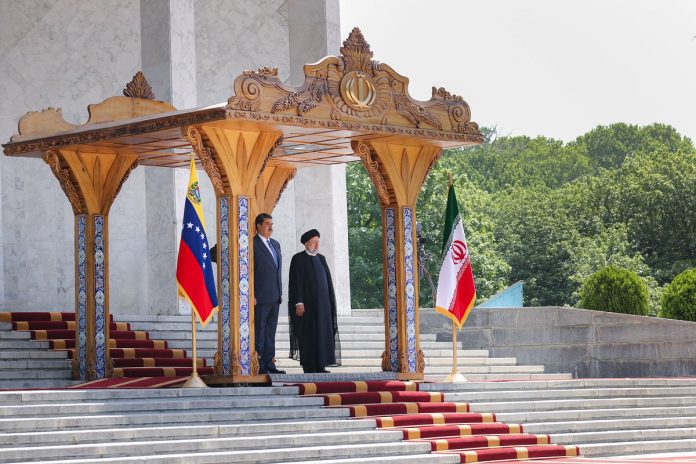
Raisi was speaking during a joint news conference with his Venezuelan counterpart Nicolas Maduro in Tehran where he described bilateral ties as strategic.

He referred to a White House spokesman’s admission that Washington’s so-called maximum pressure campaign failed humiliatingly, saying this statement proves the Iranian people has triumphed over the US and other adversaries.

The president then cited Venezuela as an example in regard to resistance against sanctions.

He added that reports coming out of Venezuela show that the country has withstood mega-inflations and is now on track toward economic growth.

The president said this is a good sign and proves to everyone that resistance and perseverance pays off and forces the enemy to retreat.

Raisi described the Tehran-Caracas relations as strategic, adding the ties are continuing in all spheres.

He noted that the signing of the 20-year partnership agreement between Iran and Venezuela is proof of the determination of the two countries to expand their ties in all areas.

Raisi said Iran and Venezuela have good cooperation in areas such as energy, trade, agriculture and military, science and technology.

The Venezuelan president also said his country went through very tough times from 2017 and 2020 but it withstood pressures and assaults from the US.

Maduro said Venezuela will finally prevail and that the country will use the experience of the Islamic Republic of Iran in this way.

Maduro added that Caracas is seeking bright prospects in ties with Tehran through signing the 20-year partnership agreement.

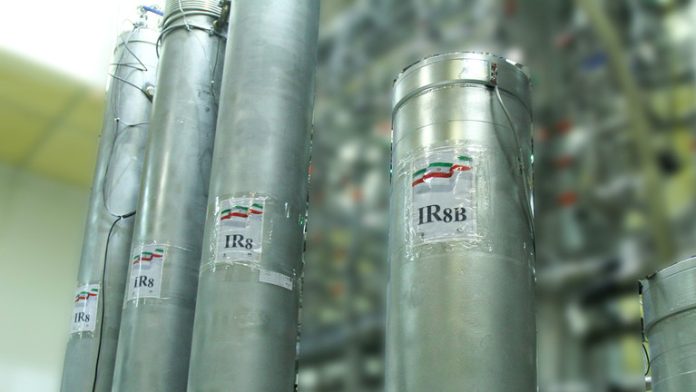
‘IAEA, US two blades of same pairs of scissors against Iran’

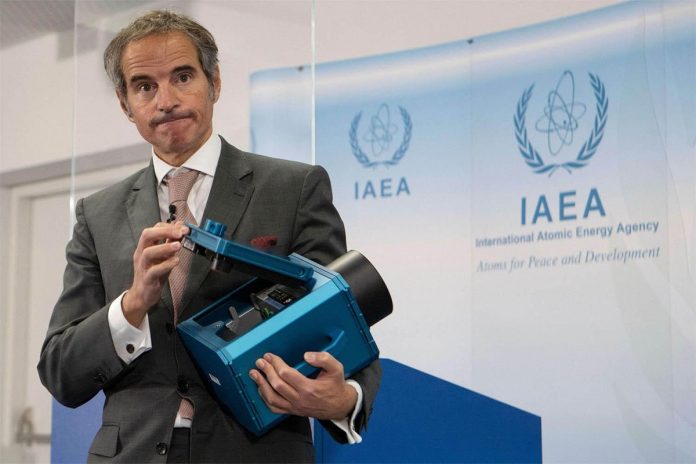
IAEA Camera

In an interview with Iran’s Radio Goftogoo on Saturday, former Iranian Foreign Ministry spokesman, Hamidreza Asefi, said, “The agency and the US are two blades of the same pair of scissors that put us under pressure from both sides,” referring to the International Atomic Energy Agency (IAEA).

He deplored a recent anti-Iran resolution by the IAEA’s Board of Governors that was approved by 30 votes in favor, three abstentions, and two against.

Asefi said the Iranian Foreign Ministry needs to shed a clear light on the Islamic Republic’s ties with countries like Senegal, Malaysia, and the United Arab Emirates who voted for the resolution against Tehran.

He also said the IAEA openly departed from impartiality as the agency’s chief Rafael Grossi traveled to Israel and met with Israeli premier Naftali Bennett, ahead of the nuclear body’s Board of Governors meeting on Monday.

Asefi said the UN nuclear agency needs to be cautious not to allow the US and Israel to use it as a tool and influence its independence in decision-making.

Iran to hold international traffic conventions workshop

International traffic conventions workshop

The workshop on international traffic conventions of the United Nations and the World Customs Organization is going to be held in cooperation with FIA (Fédération Internationale de l’Automobile) for managers of relevant ministries and organizations in Iran, as well as representatives of tourism and motor racing clubs from Iran’s neighboring countries, which will be co-hosted by the Touring & Automobile Club of the Islamic Republic of Iran and the Economic Cooperation Organization (ECO).

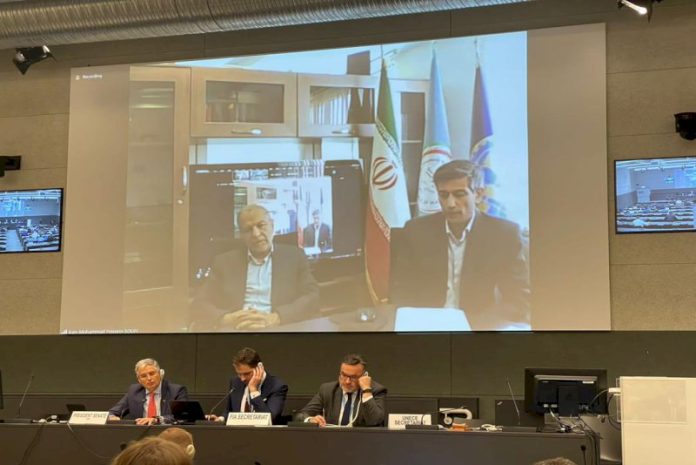
According to a report by Miras Aria News Agency, citing the public relations office of the Touring & Automobile Club of the Islamic Republic of Iran, the advanced training meeting of the international traffic conventions of the United Nations and the World Customs Organization, was held from June 8 to 10 at the UN’s European headquarters, in Switzerland. Mohammad Hossein Soofi, the Chairman of the Board of Directors and the Managing Director of the Touring & Automobile Club of the Islamic Republic of Iran, participated online in the event as the representative of the Islamic Republic.

The Touring & Automobile Club of the Islamic Republic of Iran, participated in the advanced workshop online at the official invitation of the International Automobile Federation (FIA) as one of the 12 international members of the FIA Customs Council. The body is a joint initiative of the United Nations Economic Commission for Europe that is in charge of Conventions for the Temporary Importation of Private and Commercial Vehicles, and FIA as the operator of Carnet de Passages.

In the meeting, it was decided that a workshop on the international traffic conventions of the United Nations and the World Customs Organization will soon be held in cooperation with FIA for managers of relevant ministries and organizations in Iran, as well as representatives of tourism and motor racing clubs from Iran’s neighboring countries, which will be co-hosted by the Touring & Automobile Club of the Islamic Republic of Iran and the Economic Cooperation Organization.

The Conventions for the Temporary Entry of Private Vehicles (1954, New York) and Commercial Vehicles (1956, Geneva) are the two legal and strategic tools for United Nations to facilitate the international traffic of international private vehicles for passengers (tourists and traders).
Meanwhile, Carnet de Passages is also an appendix to all three conventions as a passage for the mentioned vehicles, without paying customs duties or taxes.

The temporary papers for Carnet de Passages are also an international customs document and a valid international guarantee to cover customs duties and taxes.

Iran, Venezuela sign 20-year cooperation deal

Iran, Venezuela 20-year cooperation deal

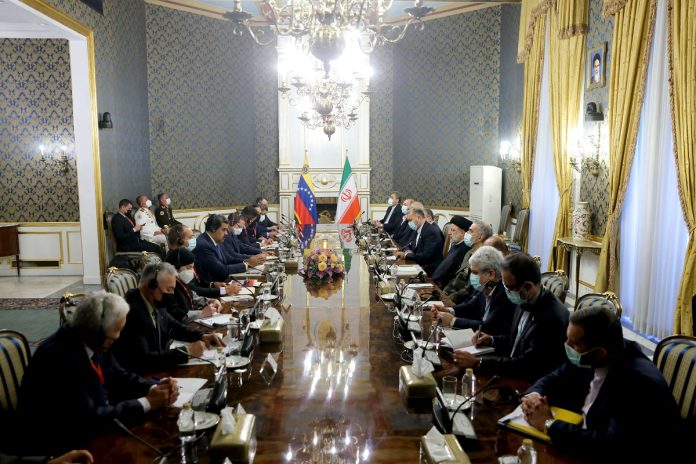
Iranian President Ebrahim Raisi and his visiting Venezuelan counterpart Nicolas Maduro as well as high-ranking officials from both countries were present in the signing ceremony in Tehran.

After a meeting with the Iranian president, Maduro told a press conference, “In 2022, we expanded our ties with the Islamic Republic of Iran and painted a bright future by signing a 20-year cooperation deal.”

He also added direct flights between Tehran and Caracas increased in July, which in turn is expected to boost tourism in both countries.

Maduro also praised Iran for its achievements in agriculture in recent years.
The Venezuelan president arrived in Tehran on Friday for a two-day official visit at the invitation of President Raisi.

Both Iran and Venezuela have withstood economic embargos by the United States, and have closely cooperated to cushion the impacts of the sanctions.

Iran to discuss sandstorms with regional countries

Iraq sandstorm

The head of Iran’s Department of Environment (DoE), Ali Salajegheh, said, “The environmental conditions in the world are changing, so, resources such as water, soil, vegetation, and waste have to be managed.”

Salajegheh said Iran has already held meetings with Iraq and Syria, and will continue talks with Turkey and the United Arab Emirates to find a common ground.

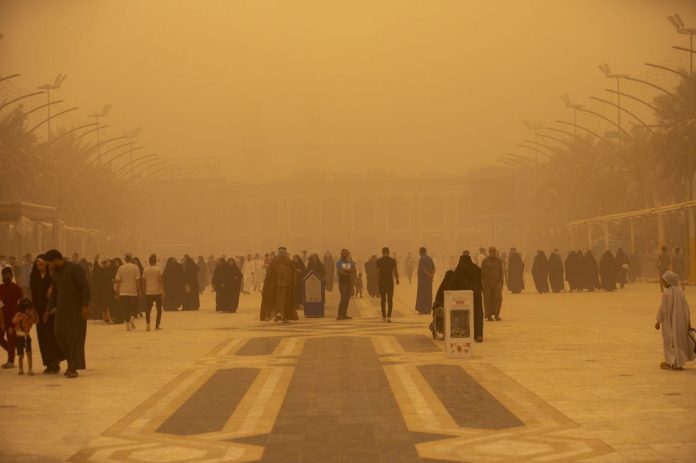
This year, the frequency and intensity of sandstorms in the region have increased.
Iranian officials say the phenomenon originates from neighboring countries, due to drought and dam constructions.

President Ebrahim Raisi has instructed the DoE and the Foreign Ministry to talk with the regional countries to tackle the issue.

Iran, Venezuela on course to boosting trade ties: Expert

Iran and Venezuela Presidents Raisi & Maduro

Rezan Tabatabai told ISNA that Maduro’s trip, which is part of his regional tour, is likely to see several agreements clinched between Tehran and Caracas, particularly in the area of trade.

“After this trip, Iranian President Ebrahim Raisi will, in response to his counterpart’s visit, most probably visit Venezuela,” said the expert.

“Trips to Tehran and Caracas by the presidents of both countries indicate senior officials of the two states have the political will to conduct major economic activities,” he added.

The former Iranian diplomat noted that Venezuela is notorious for suffering from “hyperinflation,” and that the value of the paper used to print money in the country is more that the money itself.

“Based on statistics and figures, Venezuela has got out of this situation to a great extent over the past one and a half years, and tried to tackle this problem by using certain solutions,” he explained.

Accordingly, he said, Venezuela has tried to open up its borders to foreign goods, reduce customs tariffs and sell more of its oil.

He added Venezuela has capitalized on the energy crisis caused by the Russia-Ukraine war and increased its oil exports.

The expert also urged Iran and Venezuela to do more serious planning to boot ties and also re-establish flights between the two countries.

Iranian daily: Don’t backtrack on nuclear case

Iran nuclear program

The resolution was approved late on Wednesday by 30 votes in favor, three abstentions, and only two – Russia and China – against.

Johmouri Eslami, in an article on Saturday wrote that diplomatic efforts by the administration of former Iranian president Hassan Rouhani had cornered the US.

It noted that thanks to the Iranian diplomats during the former administration, the United Nations blocked a controversial bid by the US to re-impose sanctions on Iran in August 2020. Only Washington and a tiny nation voted for the move, the daily pointed out.

The daily also said the “ongoing plot” by the US and the European troika – namely Germany, France and Britain – against Iran can be rendered ineffective provided the Iranian delegation to the Vienna talks deals with the issue intelligently and the country forges a united front.

After the Board of Governors adopted the anti-Iran resolution, some Iranians raised the idea of quitting the UN Non-Proliferation Treaty (NTP), while some others said Iran should ignore the hostile move altogether.

Johmouri Eslami said that the wide range of disparity shows lack of a cohesive stance among the decision-makers, warning that walking down the path could put Iran under Chapter Seven of the United Nations Charter, which can ultimately put Iran and the West on a collision course.

Iran says to keep developing nuclear knowhow

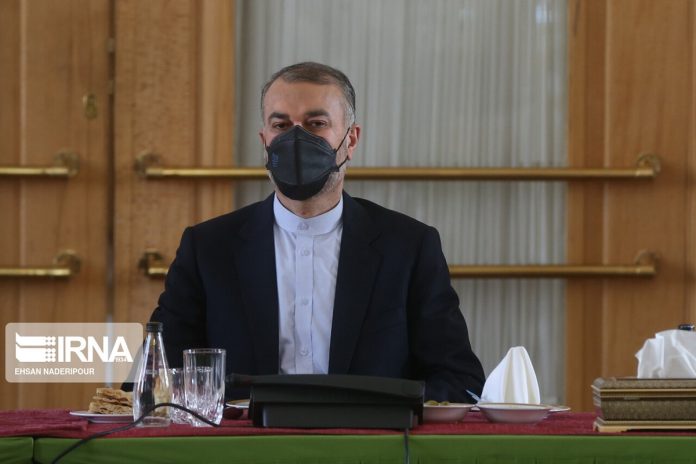
Iranian Foreign Minister Hossein Amir Abdollahian

“Nuclear technology is a complex one. Only when a country develops its knowhow in the domains of physics, mathematics, chemistry and different dimensions of science and technology can it achieve nuclear technology,” said Hossein Amirabdollahian.

“Today, anyone who is in possession of nuclear knowhow enjoys the highest scientific status,” he explained.

“A country which has nuclear knowhow enjoys knowhow in all technical-engineering fields as well as all areas of science and technology,” he added.

The top diplomat noted Iran wants nuclear knowhow for the welfare of the nation.

“Under no circumstances will we give up developing nuclear technology,” he stressed.

Elsewhere in his remarks, the foreign minister underlined Iran has also made great breakthroughs in its defense sector.

“Today, we have missiles with pinpoint accuracy in order to defend the country,” he said.

Iran demands end to unilateral, hostile sanctions

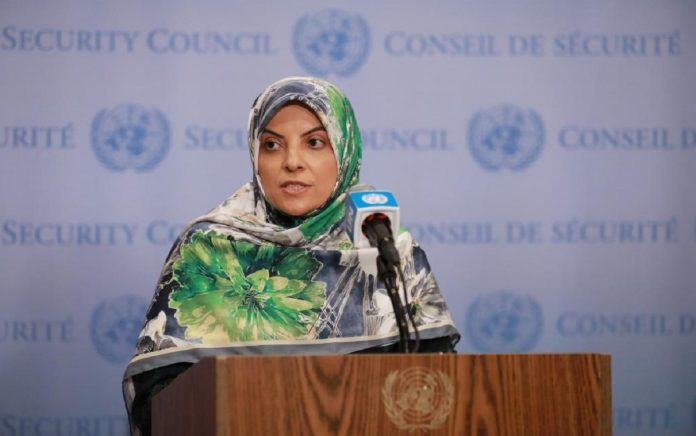
Zahra Ershadi

Addressing the UN General Assembly on eliminating AIDS/HIV on Friday evening, Zahra Ershadi said, “Unfortunately, the unilateral hostile measures, including those sanctions imposed on economic, financial and banking sanctions in Iran, have seriously violated the Iranians’ right to access healthcare.”

She added the punitive measures spearheaded by the US, have blocked the channels for international cooperation and are a source of concern as they have hampered Iran’s efforts to combat AIDS/HIV, as well as the timely and effective access to diagnosis and medicine.

The Iranian envoy said, “Iran condemns such illegal and unjust actions and such illegitimate policies that affect the health sectors of countries and interrupt healthcare services to patients.”

Iran has been subject to a broad scope of unilateral economic, trade, and financial sanctions by the US since the victory of Iran’s Islamic Revolution in the late 1970s.
United Nations Special Rapporteur, Alena Douhan, who was on a mission to Iran from May 7 to 18, described US sanctions on Iran as unjustifiable and inhumane.