UN: Over 7mn people have crossed Ukrainian border since start of war
More than seven million people have crossed the border from Ukraine since the war began, according to the UN Refugee Agency.
A total of 7,023,559 border crossings have been recorded since the Russian invasion began on February 24.
The number of individual refugees from Ukraine recorded across Europe stood at 4,712,076, with Poland, Russia and Moldova among the top host countries, according to the agency’s figures.
Food is now part of Russia’s “arsenal of terror”: EU chief
Food has become part of Russia’s “arsenal of terror,” European Commission chief Ursula von der Leyen said Wednesday.
In an address to the European Parliament in Strasbourg, von der Leyen stressed the urgent need to restore Ukraine’s Black Sea ports, as a remedy to the looming global food crisis.
“This is a cold, callous and calculated siege by Putin on some of the most vulnerable countries and people in the world. And therefore now, Honorable Members, food has become now part of the Kremlin’s arsenal of terror, and we cannot tolerate it,” von der Leyen told EU lawmakers.
The EU’s sanctions against Russia “do not touch basic food commodities,” the EU Commission chief stressed.
“They do not affect the trading of grain or other foods between Russia and third countries. And the port embargo specifically has full exemption on agricultural goods,” she added, highlighting the need to counter Russian “disinformation” about the food crisis.
Her remarks come as Russian and Turkish foreign ministers held meetings in Ankara on Wednesday to discuss issues related to grain exports from Ukraine.
Von der Leyen thanked the United Nations for its “efforts” to help restore Ukraine’s Black Sea ports, reiterating that the “majority of Ukrainian grain can only be exported” through these routes.
There is an expectation for the EU to show the “same solidarity” it has “shown to Ukraine when it comes to addressing the food crisis in the world,” she added, committing the bloc to this task.
Ukraine suffering “significant losses” in Donbas: Russian military
Ukraine is suffering “significant losses” in the Donbas region of eastern Ukraine, the Russian military claimed Wednesday.
“The Ukrainian force in the Donbass [‘Donbas’ in Ukrainian] suffers significant losses in manpower, weapons and military equipment,” the Russian Ministry of Defense said in a press release.
“Only during the liberation of Svyatogorsk [‘Sviatohirsk’ in Ukrainian] in the Donetsk People’s Republic, over three days of fighting, the losses of Ukrainian troops amounted to more than 300 nationalists, six tanks, 15 armored combat vehicles of various types, 36 field artillery guns and mortars, four Grad multiple rocket launchers and over 20 automotive units,” it added.
The Donbas has seen intense fighting between Ukrainian and Russian forces for weeks.
Parts of the Ukrainian cities of Rubizhne and Severodonetsk in the region have been significantly destroyed by fighting, satellite images taken on Monday by Maxar Technologies show.
Ukrainian forces there have held on despite intense bombardments by Russian artillery and jets. Russian forces are continuing to try to advance into, and past, the two major Donbas cities.
Ukraine says ‘Russian aggression’, not sanctions, fuelling grain crisis
Ukraine’s foreign minister has stated Russia’s invasion is responsible for a global grain crisis and dismissed Moscow’s claims that Western sanctions on Russia were responsible for prices of the foodstuff soaring.
“We have been actively communicating, the president and myself, about the true cause of this crisis: it is Russian aggression, not sanctions,” Dmytro Kuleba said during a news briefing with Ukrainian journalists.
Russia has seized large parts of Ukraine’s coast and its warships control the Black and Azov Seas, blocking Ukraine’s farm exports and driving up the cost of grain.
Ukraine and the West accuse Moscow of weaponising food supplies. Russia says Ukrainian mines laid at sea and Western sanctions imposed on Moscow are to blame.
The United Nations has attempted to intervene and is currently working on plans with Kyiv and Moscow to restart grain exports from Ukraine’s Black Sea ports, with Turkey possibly providing naval escorts to ensure safe passage.
Ukraine and Russia hand over bodies of dead soldiers in frontline exchange
Ukraine and Russia have each handed over the bodies of 50 of their deceased soldiers in an exchange that included 37 Ukrainian soldiers killed at Mariupol’s Azovstal steelworks, Ukraine’s ministry for reintegration says.
In a statement on its website, the ministry announced the exchange took place on the front lines in the southeast Ukrainian region of Zaporizhia.
It added such exchanges would continue.
Ukrainian forces pushed back to outskirts of Severodonetsk: Governor
The governor of Ukraine’s eastern Luhansk region says Ukrainian forces have been pushed back to the outskirts of Severodonetsk by intense Russian bombardment on the city.
Ukrainian special forces launched a counteroffensive days ago and cleared almost half of the city, but it made no sense for them to stay when Russia started levelling the area with shelling and air raids, Serhiy Haidai told the RBC-Ukraine news agency.
“Our [forces] now again control only the outskirts of the city. But the fighting is still going on, our [forces] are defending Severodonetsk, it is impossible to say the Russians completely control the city,” he added.
Canada bans export of support services for Russian oil, gas and chemical industries
Canada has announced new sanctions on Russia, banning the exports of 28 services, such as accounting and advertising, that are needed for the operation of Russian oil, gas and chemical industries.
Canadian Foreign Minister Melanie Joly said the measures would affect commerce that accounts for about 50 percent of Russia’s federal budget revenues.
Since Russia launched its invasion on February 24, Canada has imposed sanctions on more than 1,070 Russian individuals and entities.
Joly added Ottawa would “continue to relentlessly pursue accountability for [Russian President] Vladimir Putin’s senseless war.”
‘Empty words’: Ukraine dismisses Russia’s assurances over grain shipments
Ukraine has dismissed assurances from Russia that it will not use the situation to its advantage if Kyiv allows grain shipments to leave safely via the Black Sea as “empty words”.
Italy warns food crisis could kill ‘millions’
Italy’s foreign minister has warned that millions of people could die of hunger unless Russia unblocks Ukraine’s ports, with tens of millions of tonnes of grains currently sitting in silos in the country.
“The next few weeks will be crucial to resolving the situation,” Luigi Di Maio said at a conference on the food crisis held in Rome.
“I want to say clearly, we expect clear and concrete signals from Russia, because blocking grain exports means holding hostage and condemning to death millions of children, women and men,” he added.
Ukraine is one of the world’s largest exporters of wheat, corn and sunflower oil, but the war and a Russian blockade of its ports have halted much of that flow, endangering food supplies to many countries. Many of those ports are now also heavily mined.
Kremlin says sanctions must be lifted for Russian grain to reach markets
Moscow announced that sanctions on Russia must be lifted if it is to deliver grain to international markets.
Kremlin spokesman Dmitry Peskov said in a call with reporters that “no substantive discussions” about lifting sanctions were ongoing, however.
Peskov also added there are no grounds for Russia to default on its debts, as the country struggles to make interest payments to bondholders because of the measures imposed by an array of Western countries.
He blamed the sanctions, which have seen almost half of the country’s foreign currency reserves frozen, for “pushing Russia into an artificial man-made debt default”.
Ukraine seizes assets of company owned by Putin ally
The Security Service of Ukraine (SBU) announced it has seized the assets of a major concrete company owned by one of Russian President Vladimir Putin’s closest allies.
The company is one of Ukraine’s largest producers of concrete construction materials, and its owners are Russian businessmen who financed separatists in the Donbas region, the SBU said in a Telegram post.
“And one of them is part of the Russian president’s inner circle and is a sponsor of the election campaign of the [ruling] United Russia party,” SBU added, without specifying the individual’s name.
It said the seized assets had been transferred to the management of the National Agency of Ukraine for finding, tracing and management of assets derived from corruption and other crimes, a special governmental body.
Russian passports to be issued in Zaporizhia region: Report
Moscow-appointed authorities will start issuing Russian passports to the residents of Ukraine’s partially-occupied, southeastern region of Zaporizhia on Sunday, TASS news agency has reported, citing a Russia-backed official.
Yevgeny Balitsky, the head of the Moscow-installed military-civilian administration in the area, stated the move would coincide with Russia’s Independence Day celebrations on June 12.
Ukraine files eight more war crime cases
Ukraine has filed eight more war crimes cases in court in addition to three sentences already handed down to Russian soldiers, Ukraine’s prosecutor general stated.
In total, Ukraine has now opened more than 16,000 investigations into possible war crimes during Russia’s invasion, Iryna Venediktova said in televised remarks.
“Every day we see an increase (in investigations),” she continued, adding, “We are talking about people who didn’t just come as military combatants… but also came to rape, kill civilians, loot, humiliate and so on.”
Moscow denies allegations its troops have committed war crimes in what it describes as its “special operation” to demilitarise Ukraine.
Melitopol mayor accuses Russian forces of abducting hundreds of residents
The mayor of Ukraine’s Russian-occupied southern city of Melitopol has alleged that more than 500 local residents have been kidnapped for having a pro-Ukrainian stance.
“The occupants definitely want to make sure that everyone who thinks differently leaves the [occupied] areas and doesn’t interfere with their propaganda and political system,” Ivan Fyodorov noted in televised remarks.
Russia shipping Ukrainian wheat to Turkey, Middle East: Moscow-backed official
A Moscow-backed official in Ukraine’s partially-occupied, southeastern region of Zaporizhia, says that Russia has begun shipping wheat to Turkey and Middle Eastern countries.
“We are sending the wheat via Russia, most of the contracts have been made with Turkey,” Yevgeny Balitsky, head of the Moscow-installed military-civilian administration in the occupied areas, told Russia’s Rossiya 24 TV news channel.
He did not specify which Middle Eastern countries were allegedly being supplied with the wheat.
There was no immediate comment from Moscow, Ankara or Kyiv on Balitsky’s remarks.
A meeting between Russian president Vladimir Putin and his Ukrainian counterpart Volodymyr Zelensky is now impossible because Kiev has withdrawn from the negotiation process, Kremlin Spokesman Dmitry Peskov told reporters on Wednesday.
“Our position is well known: any meeting at the highest level must be productive and well prepared,” the Kremlin spokesman said.
“We know that the Ukrainian side has withdrawn from the negotiating track, and so now we do not have to talk about the possibility of preparing such a summit meeting,” Peskov pointed out, reacting to another statement by Zelensky about his readiness to meet with Putin.
Earlier on Wednesday, Russian Foreign Minister Sergey Lavrov stated during talks in Ankara that Putin and Zelensky may meet only after the negotiation process between Moscow and Kiev is resumed. According to Lavrov, the Ukrainian leader’s approach to negotiations is not serious and he wants a meeting for the sake of a meeting.
Huge grain stockpile burned by Ukrainian militants: Russia
The Russian Defense Ministry has accused Ukrainian “militants of the nationalist battalions” of deliberately setting fire to a large granary in Mariupol’s sea port while fleeing from Russian forces.
According to a ministry statement, the alleged act of arson was down to the unwillingness of the “militants” to leave grain supplies to Mariupol’s residents. As a result, according to the military, more than 50 thousand tons of grain were destroyed.
“This inhuman crime demonstrates to the entire world community the ‘true face’ of the Kiev regime, which, in fact, uses the methods of food terrorism against its own people,” it claimed.
The ministry added the destruction was committed as the “so-called civilized West” continues to support Kiev while accusing Russia of stoking a global food crisis.
The Defense Ministry stressed that Russian forces during their “special military operation” support the civilian population, treat it humanely and “do not strike at the social infrastructure of the country, unlike the Ukrainian armed formations.”
Since the launch of the Russian military operation in Ukraine, Moscow and Kiev have accused each other of various war crimes, while denying their own liability.
Norway to give Ukraine heavy weapons
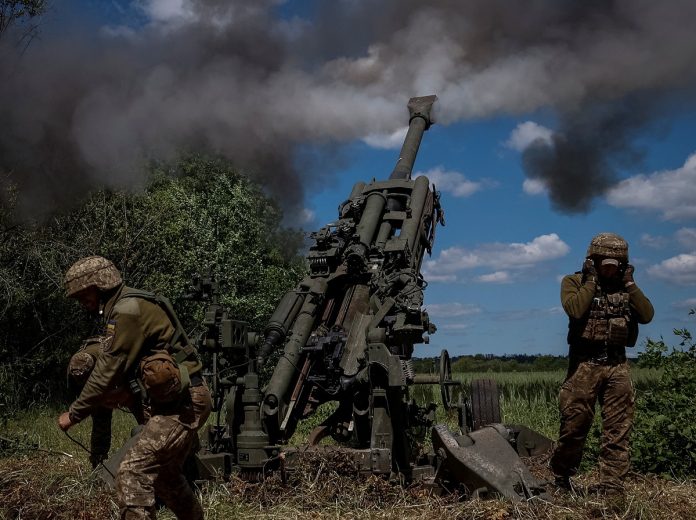
Kiev is to get 22 M109 howitzers from Norway, the Nordic country’s defense ministry announced on Wednesday. The weapons were donated complete with gear, spare parts and ammunition, the statement said.
The M109 is a 155mm tracked self-propelled gun that was first introduced in the 1960s and has an effective range of between 20-40km, depending on the shells used. Each requires a crew of four to operate.
Norway said it has already trained Ukrainian soldiers on how to use the weapons at a facility in Germany.
The contribution was made possible by Norway rearming its own military with new Korean artillery pieces, the ministry noted.
The weapons headed to Kiev come from a stockpile of discontinued arms. Norway purchased Korean K9 155mm howitzers in 2017 and is currently negotiating more deals with Seoul.
Defense Minister Bjorn Arild Gram called the donation “a substantial contribution and one that is very much in demand by Ukraine”. Norway previously supplied M72 LAW single-shot anti-tank weapons, Mistral anti-aircraft missiles, protective gear, and other equipment to Kiev.
The statement said the howitzers had been shipped from Norway but didn’t say if they had arrived in Ukraine yet.
Ukraine needs to de-mine ports to allow grain shipments: Russian FM
Russian Foreign Minister Sergey Lavrov has said he hopes issues relating to grain shipments from ports in Ukraine can be resolved, providing Kyiv de-mines the waters around them.
Addressing reporters in Ankara following talks with his Turkish counterpart Mevlut Cavusoglu, Lavrov also stated Russia’s self-described “special military operation” in Ukraine was going according to plan.
He added that peace talks would need to resume before there was any chance of top-level discussions between Russian President Vladimir Putin and Ukrainian President Volodymyr Zelensky.
Lavrov has stated that Moscow is ready to hold negotiations with counterparts from the UN, Turkey and Ukraine on grain deliveries.
“As for additional meetings in Istanbul, we are ready for such gatherings. We appreciate the UN’s interest in being involved […], but, frankly, this will not bring anything other than some symbolism,” Lavrov said.
He added that Moscow would now see how the preliminary agreements on the export of grain from Ukraine, discussed in Turkey, would be translated into practical deeds.
Turkey says UN grain-export plan for Ukraine is reasonable
Turkey’s foreign minister has described a UN plan to open a corridor to restart Ukrainian grain exports as reasonable but said the proposal requires more talks with all sides to ensure ships would be safe.
Mevlut Cavusoglu told reporters at a news conference in Ankara that he had held fruitful discussions on the issue with Lavrov, who was on a visit to the Turkish capital.
Referendum in Zaporizhzhia to be held this year: Russian official
A Russia-appointed official in the partially-occupied southern Ukrainian region of Zaporizhzhia stated a referendum on joining Russia will be held before the end of the year.
“The overwhelming majority of our region’s residents want to come back to the motherland and become part of big Russia,” Kirill Rogov, a former journalist who is now part of Russia’s administration in the area, was quoted by Russia’s RIA Novosti news agency as saying.
“The sooner we become Russia, the faster our lives will improve,” he added.
Ukrainian President Volodymyr Zelensky has repeatedly accused Russia of planning to “falsify” an independence referendum in the country’s partly occupied southern regions.
UN comments on grain stealing allegations
The UN is unable to verify accusations made by Kiev that Moscow is “stealing” and exporting Ukrainian grain, Stephane Dujarric, the spokesman for the UN Secretary-General, has said.
Asked about the claims during a news briefing, Dujarric said that neither the UN Secretary-General’s office nor the UN World Food Programme (WFP) had any credible information on the matter.
“We’ve seen recent media reports, we’re talking to our colleagues at WFP. They have no way of verifying these allegations. I think WFP, as we all have, has been advocating for a free movement of food from the Black Sea to ensure that the needs of people around the world are met,” he added.
Ukraine could pull back “to more fortified positions” in Severodonetsk
Ukraine could pull back its military “to more fortified positions” in Severodonetsk, a regional leader suggested on Wednesday, while insisting that Ukraine would not “give up” the key city.
“Fierce battles are taking place in Severodonetsk,” Serhiy Hayday, head of the Luhansk Regional Military Administration, said on national television Wednesday morning.
“Our defenders are fighting for every inch of the city,” he continued.
“Nobody is going to give up the city, even if our military will have to pull back to more fortified positions, as the city is constantly being shelled. Still, it wouldn’t mean the city is given up,” he added.
A leader in the Russian-allied so-called Luhansk People’s Republic, Rodion Miroshnik, said Wednesday that Ukraine has control “over only a small part” over the Azot chemical factory in Severodonetsk. Hayday announced last week that around 800 civilians are sheltering under that facility.
“Ukrainian militants are firing indiscriminately at the quarters near the enterprise,” Miroshnik stated on Telegram, adding, “Snipers are working. The circle of allied troops around the remaining group narrows.”
Miroshnik also claimed that Severodonetsk airport had “already been cleared of Ukrainian formations.”
“The shelling that was carried out from there has stopped. The remaining militants [referring to Ukrainian forces] are hiding in forest plantations around the airport. Allied forces are searching for them and clearing,” he added.
Hayday, the Ukrainian official, said that Russia has devoted huge resources to its attempt to cut the main road that links Severodonetsk and neighboring Lysychansk to Bakhmut, further west.
“The strategic goal of the Russian army is to control the Bakhmut-Lysychansk route,” he said, adding, “And by controlling, I mean putting their check points there and hold it under their control. As of now they are shelling the route, but not controlling it.”
He said that Ukraine no longer uses that road, as anyone driving there has a “90% chance” of being shelled.
“We have other routes to deliver humanitarian aid and evacuate people,” he added.
Ukraine is expecting Russia’s offensive on Lysychansk and Severodonetsk to “increase multiple times,” he said, adding, “We are expecting fierce battles.”
Nonetheless, the Armed Forces of Ukraine (AFU) said Wednesday morning that: “Our soldiers are successfully holding back the assault in the city of Severodonetsk, and hostilities continue.”
“Lysychansk is being shelled very hard,” Hayday stated Tuesday evening, adding, “They shoot purposefully at humanitarian headquarters, at schools [where people are sheltering]. Destroy the entire infrastructure completely.”
“Yes, it is very difficult to keep Severodonetsk,” he conceded, noting, “Yes, they just destroy the city completely. But they do not control the city.”
He said that “fierce battles” also continue to rage in towns elsewhere in the Luhansk region, such as Zolote to the south.
“Settlements are shelled, simply completely erased from the face of the earth,” Hayday continued, adding, “But the enemy cannot pass them yet.”
NATO says doesn’t guarantee non-deployment of nuclear weapons in Finland, Sweden
The US-led NATO alliance says it does not guarantee Russia that it will not deploy nuclear weapons on the territories of its two prospective new members, Finland and Sweden.
In an interview, NATO’s Deputy Secretary-General Camille Grand stated it is up to the individual countries whether they want to host nuclear weapons, noting that the alliance will not set up some principle restrictions on the matter.
“Every country is free in the nuclear field to deploy or not to deploy such weapons. We are not talking about setting up some principle restrictions on the possible actions of the alliance,” the NATO official told Swiss broadcaster RTS in an interview.
Sweden and Finland have submitted official bids to join the US-led military alliance. The Nordic states say they made the decision after Russia attacked Ukraine.
Their bids, however, have so far been challenged by Turkey, which accuses them of supporting terrorist groups.
Next winter will be most difficult since independence: Zelensky
The next winter in Ukraine will be “the most difficult” since the country gained independence in 1991, President Volodymyr Zelensky has said, adding that Kyiv was setting up a headquarters to centralise the running of the next heating season.
The decision was made at a meeting the president held with government officials and representatives of Ukraine’s state-owned energy companies and regulators, Zelensky stated in his nighttime address.
“Whatever the occupiers plan for themselves, we must prepare for the next winter … In the current situation due to Russia’s aggression, this will indeed be the most difficult winter of all the years of independence,” he said, adding that in the meeting, officials discussed the purchase of gas and coal.
“At this time, we will not be selling our gas and coal abroad. All domestic production will be directed to the internal needs of our citizens,” he added.
He also said that ministers were working on repairing thermal power plants, combined heat and power plants and boiler houses which were damaged in the war.
Satellite imagery shows destruction in Severodonetsk and Rubizhne
Satellite imagery from Maxar Technologies collected on Monday shows significant damage and destruction in the city of Severodonetsk and nearby Rubizhne.
“Russian multiple rocket launchers, self-propelled and towed artillery are deployed to the northeast and oriented in firing positions toward the cities,” the US company said in a release.
Ukrainian officials had stated their forces staged a surprise counterattack last week, driving the Russians from part of the city centre.
Before that, Russia had seemed on the verge of encircling Ukraine’s garrison in Luhansk, attempting to cut off the main road to Severodonetsk and its twin city Lysychansk.
Russia using information as ‘weapon of war’: Blinken
United States Secretary of State Antony Blinken has told an online summit on digital democracy that Russia was using information as a weapon of war.
In a talk with Philippine journalist Maria Ressa, Blinken said that he believed democratisation of information was positive but that technology had also allowed the abuse and spread of misinformation in ways nobody fully anticipated.
“So we see authoritarian governments using this. We see it, for example, right now in the Russian aggression against Ukraine. We saw it in 2014 when Russia initially went at Ukraine and was using information as a weapon of war,” he noted.
“So in that particular instance and in this instance, we’ve actually reversed this on them precisely by using information, real information, to call out what we saw them preparing and working to do,” he added.
Report: Over 1,000 Ukrainian prisoners sent to Russia for investigation
More than 1,000 Ukrainian soldiers who surrendered in the city of Mariupol have been transferred to Russia for investigation, the Tass state news agency has cited a Russian law enforcement source as saying.
Later on, more Ukrainian prisoners will be transferred to Russia, the source told Tass.
Ukraine has announced it is working for all the prisoners to be returned while some Russian legislators say they should be put on trial.
‘I’ll do my best to make them disappear’: Medvedev
Russia’s former president and deputy chairman of its security council has made some strong remarks against his enemies, calling them “bastards” and saying he would do his “best to make them disappear”.
“I am often asked why my posts on Telegram are so sharp. I answer – I hate them. They are bastards and freaks. They want death for us, Russia. And while I’m alive, I’ll do my best to make them disappear,” Dmitry Medvedev wrote on Telegram.
Medvedev – whose posts often contain derisive language against Europe, the US and Ukraine – did not specify who his words were directed at.
In previous posts, Medvedev has called European Commission President Ursula von der Leyen “Europe’s auntie Ursula”, referred to NATO’s policies as “cosmic cretinism”, labelled Ukrainian officials “mongrels” and said Volodymyr Zelensky’s eyes are often “burning with stimulants”.
US deputy secretary of state meets Ukraine counterpart in Seoul
US Deputy Secretary of State Wendy Sherman met with Ukrainian Deputy Foreign Minister Dmytro Senik in Seoul on Tuesday.
Sherman and Senik discussed the war’s impact on global food security and how to get Ukraine’s grain to international markets, according to a statement from the US state department.
“The deputy secretary emphasised the United States’ robust, continued support for Ukraine’s sovereignty and territorial integrity in the face of Russia’s unprovoked aggression,” the statement said adding that Sherman updated Senik on US assistance including “budgetary support and aid for long-term efforts”.
Envoy claims US suggested him to speak out against Russian government
Russian Ambassador to the United States Anatoly Antonov said he had received a letter calling upon him to make a public statement against the Russian government.
“I have recently received a letter by mail, with a call to denounce my motherland and condemn the Russian president’s actions. And I was recommended to make an enquiry to the office of US Deputy Secretary of State Wendy Sherman if I am ready to accept the proposal,” he told the Bolshaya Igra (Big Game) show on Russia’s Channel One on Tuesday night.
Antonov added that the Russian embassy has demanded explanations from the US Department of State over the issue.
“I don’t think that the US ambassador or US diplomats in Moscow are receiving any letters of this kind, which in my opinion are provocative,” he said, adding, “When I see US media publications calling upon Russian servicemen and diplomats to betray their homeland, I have no words to describe my rejection of such moves.”
According to the diplomat, several people were spotted handing out cards with phone numbers outside the Russian embassy and inviting its staffers to “communicate with FBI agents.” At the same time, the ambassador noted he could not say for sure whether those individuals were indeed special agents or just mere detractors.
Western supplies of long-range weapons systems to Kiev are unlikely to reverse the situation in Ukraine, Antonov said.
“There has been lots of speculations, lots of talk about long-range hardware that Kiev wants so badly. But no western systems can change the situation on the ground,” he added.
UK Defense Secretary Ben Wallace announced in early June that London would send Kiev M270 rocket systems with munitions capable of striking targets at a distance of up to 80 km. The decision was synchronized with the delivery of US M142 HIMARS systems and ammunition to Kiev. The US administration earlier said that the first batch would include four rocket systems while the strike range of a light wheeled HIMARS that would be handed over to Kiev would not exceed 70 km. Kiev assured the US it would not use those systems to attack targets on the Russian territory.
Antonov stated he had seen no signs indicating US intentions to close Russian diplomatic missions in the country.
“Of course, we should never say never, but the current situation and remarks coming from the White House and the US Department of State indicate that they have still retained some degree of common sense, and the question of closing diplomatic missions has not been brought up,” the envoy added
The ambassador added that Russia and the United States, as two major powers, are “doomed to communicate.”
Stalemate with Russia ‘not an option’: Zelensky
Ukrainian President Volodymyr Zelensky has told the UK’s Financial Times newspaper that a stalemate with Russia is “not an option”.
“Victory must be achieved on the battlefield,” he said as he repeated his call for Western military support.
“We are inferior in terms of equipment and therefore we are not capable of advancing,” he told the daily, adding, “We are going to suffer more losses and people are my priority.”
Zelensky has stated he’s still ready for direct talks with Russian leader Vladimir Putin.
“I am still resolute and determined whether I want it or not,” he said, adding, “I’m ready for direct negotiations with President Putin if we are ready to discuss putting an end to this war seriously.”
He said “there’s no time” for talking with Moscow about issues not relating to ending the conflict, including Ukraine’s possible accession to NATO.
“If we are not in NATO there are no bases of foreign countries on our territory,” the Ukrainian president continued, adding, “If you want to accept us into NATO then please invite us, but we are not discussing it at the moment.”
Estonia, Lithuania slam French president’s call not to ‘humiliate’ Russia
The leaders of Lithuania and Estonia have hit back at a recent appeal by French President Emmanuel Macron that Russia should not be humiliated due to its invasion of Ukraine.
“Russia has humiliated itself with this war,” Lithuanian President Nauseda said after talks with German Chancellor Scholz and his Baltic counterparts in Vilnius.
Estonian Prime Minister Kaja Kallas stated, “I don’t think we should worry that much about what Putin or Russia feels. We should be more concerned about Ukraine holding out.”
Ukraine presses to buy Israel’s Iron Dome
Kyiv’s ambassador is urging Israel to sell its Iron Dome rocket interception system and provide anti-tank missiles to defend civilians against Russia’s invasion.
At a news conference in Tel Aviv, Yevgen Korniychuk said Ukraine wants to buy the Iron Dome system, contending that the United States would not oppose such a sale.
Korniychuk also added that last week Israel declined a US request for Germany to deliver Israeli-licensed “Spike” anti-tank missiles to Ukraine.
Israel has limited its support for Ukraine to humanitarian aid and was the only country operating a field hospital inside the country earlier in the year.
High-ranking Russian official visits Melitopol as referendum preparations are underway
Russian President Vladimir Putin’s First Deputy Chief of Staff Sergey Kiriyenko visited the Russian-occupied Ukrainian city of Melitopol on Tuesday, according to the pro-Russian self-proclaimed Mayor Galina Danilchenko.
She announced his visit in a video posted on Telegram and added that Melitopol was starting preparations for a referendum.
The city is “very grateful to the Russian Federation for the help and support that we are receiving in building this life. We know that our future lies in unity with Russia. The Russian Federation is here forever. And now we are starting to prepare for the referendum,” Danilchenko said.
Melitopol is a key city in southeastern Ukraine’s Zaporizhizhia region. It’s also a neighbor to the Kherson region that has been under Russian control since the beginning of the invasion in late February.
Hennadii Lahuta, the Ukrainian head of the Kherson Military Administration who is a pro-Kyiv official, confirmed that preparations were underway for an upcoming referendum to be held “by autumn” in Russian-held areas of southern Ukraine.
The area was preparing for referendum on “the inclusion of the region into the Russian Federation,” Lahuta noted in a Tuesday telethon broadcast on Ukrainian television channels of the Russian-occupied city of Kherson.
After Russian-backed separatists took control in 2014 of parts of the Luhansk and Donetsk regions in the Donbas in eastern Ukraine, people’s republics were declared in both areas.
Bodies of 210 Ukrainian soldiers who died in Mariupol now repatriated: Defense ministry
As of Tuesday, the bodies of 210 Ukrainian soldiers have been repatriated by Ukraine, according to Ukraine’s Ministry of Defense Main Intelligence Directorate.
“The process of returning bodies of fallen defenders of Mariupol is ongoing,” due to the efforts of the POW Treatment Coordinating Staff, the statement said.
It added most of the bodies returned to Ukraine were those of the “heroic defenders of Azovstal,” so Ukrainian soldiers at the massive Azovstal steel factory in Mariupol, the last bastion of Ukraine’s defense in that southern port city, before it fell to Russian and Russian-backed forces.
The Coordination Staff on behalf of Ukraine’s President Volodymyr Zelensky is working to get the bodies of all the deceased returned, as well as some 2500 POWs believed held in the custody of Russian or Russian-backed forces.
“All fallen soldiers must return to the territory controlled by Ukraine. And each of them will be lead to the last journey with honors due to the heroes,” the statement said.
The statement adds that work continues to bring home “all captured Ukrainian defenders.”
Ukraine and Russia have conducted an exchange of bodies as part of the agreement that ended that siege.
Russia claims it created 2 maritime humanitarian corridors in seas around Ukraine
The Russian defense ministry said it has created conditions for two maritime humanitarian corridors to allow for the safe movement of ships in the Black Sea and the Sea of Azov, according to a statement posted to Telegram on Monday. The statement comes amid international condemnation over Russia’s months-long blockade of key ports.
“The Russian Federation is taking the whole range of measures to ensure the safety of civil navigation in the waters of the Black and Azov Seas,” the Russian ministry claimed in the statement.
“There remains a danger to navigation and damage to port infrastructure from the drift of Ukrainian mines torn from anchors along the coast of the Black Sea states,” it added.
Ukraine is “giving maximum effort” to unblock seaports: Ministry of Foreign Affairs
Ukraine is “giving maximum effort” to unblock seaports and prevent a global food crisis, according to a statement from the Ukrainian Ministry of Foreign Affairs.
“Together with the UN and our partners, we are trying to create a humanitarian corridor for the export of Ukrainian agricultural products,” the ministry said on Tuesday.
“Ukraine has already started supplying grain to the world market by truck, rail, and river transport. We are doing all we can, but this issue can be definitively resolved by unblocking Ukrainian ports,” the statement added.
“We appeal to all interested partners, together with Ukraine, to focus their efforts on finding a balanced solution that will lift the Russian blockade of ports, while at the same time provide clear security guarantees for the Ukrainian Black Sea coast and relevant humanitarian corridors,” it noted.
The ministry also said that it could not exclude the possibility that Russia would use a sea corridor as a way to attack Odesa and southern Ukraine, adding that “for this reason, effective security guarantees are required to restore export activities.”
“Such guarantees should be provided by supplying Ukraine with appropriate weapons to defend the coast from threats coming from the sea and by involving naval forces of third countries to patrol the relevant area of the Black Sea,” the statement added.
The ministry also noted its appreciation for “Turkey’s efforts to unblock Ukrainian ports,” although an agreement has yet to be reached between Turkey, Russia and Ukraine.
The statement added that authorities “will reject any agreements that do not factor in the interests of Ukraine.”
The statement comes as global leaders have condemned a months-long blockade by Russian forces at key ports in Ukraine and Russia is coming under increasing fire for fueling a growing global food crisis.
Russia claimed Monday that it has created conditions for two maritime humanitarian corridors to allow for the safe movement of ships in the Black Sea and the Sea of Azov, according to a statement posted to Telegram.
World Bank board approves $1.49bn in new funds for Ukraine
The World Bank has said its board of executive directors approved $1.49bn of additional financing for Ukraine to help pay wages for government and social workers, expanding the bank’s total pledged support for Kyiv to more than $4bn.
The World Bank added in a statement that the latest round of funding for Ukraine is supported by financing guarantees from the United Kingdom, the Netherlands, Lithuania and Latvia.
The project is also being supported by parallel financing from Italy and contributions from a new Multi-Donor Trust Fund.
War in Ukraine is impacting energy and food prices around the globe: US treasury secretary
US Treasury Secretary Janet Yellen conceded on Tuesday that inflation is at “unacceptable levels,” but also sought to underscore it is not a problem exclusive to the United States.
“Putin’s war in Ukraine is having impacts on energy and food prices globally,” Yellen told lawmakers, adding, “We are not the only country experiencing inflation. You can see that in virtually every developed country around the world.”
Speaking during a Senate Finance Committee hearing on Tuesday, Yellen pointed to the Biden administration’s record-setting release of oil from the Strategic Petroleum Reserve.
“Energy and gasoline prices, while very high, they would be higher without that,” Yellen said of the emergency oil release.
She also emphasized that the United States is not immune to global energy shocks.
“We are part of global oil markets that are subject to geopolitical influences,” Yellen stated, noting, “Given the global nature of these markets, it’s virtually impossible for us to insulate ourselves from shocks like the ones that are occurring in Russia that move global oil prices.”
She added that it is critical that the United States becomes “more dependent on the wind and the sun that are not subject to geopolitical influences.”
Russia claims it has opened a land corridor to Crimea through occupied Ukrainian territory
Russia’s Ministry of Defense claimed on Tuesday that it had opened a land corridor to Russian-occupied Crimea, allowing civilians and goods to pass through the eastern Ukrainian territory now under its control.
Russian defense minister, Sergei Shoigu, said in a conference call on Tuesday that the military, working with Russian Railways, had restored 1,200 kilometers (745 miles) of train tracks and opened roads to allow “full-fledged traffic” between Russia, eastern Ukraine’s Donbas region and Crimea, the peninsula annexed by Russian forces from Ukraine in 2014. The supply of water through the North Crimean Canal — a lifeline for Crimea — had also resumed, Shoigu added.
According to an official readout of the call, the defense minister said that the land corridor allowed Russia to begin delivering goods to Mariupol, Berdiansk and Kherson, southeastern Ukrainian port cities that have been seized by Russia since it launched its invasion in late February. He claimed that the Mariupol and Berdiansk ports were operating normally and were ready to ship grain, amid international condemnation over Russia’s months-long blockade of key ports that has left millions of tons of grain languishing in Ukraine.
“As instructed by Supreme Commander (Russian President Vladimir Putin), we are ready to load grain in the ports,” Shoigu stated on Tuesday. ”
Earlier Tuesday, Kremlin spokesperson Dmitry Peskov restated that Ukraine must de-mine the coastal waters for grain ships to pass and ensured Russia will facilitate their passage and won’t use the de-mined sea corridors to attack Ukraine.
“President Putin… said that Ukraine should de-mine the approaches to the ports, which will allow the ships, after being checked by our military to ensure that the ships do not import weapons, to enter the port, load with grain and then, if necessary, even with our help, proceed to the international waters,” Peskov told reporters on a regular conference call.
The minister’s comments come as global leaders have condemned a months-long blockade by Russian forces at key ports in Ukraine — including Mariupol on the Sea of Azov and Odesa on the Black Sea — which has left more than 20 million tons of grain stuck inside the country.