Macron confirms death of French journalist in Donbass
France’s President Emmanuel Macron has confirmed the death of French journalist in Donbass.
“I share the pain of journalist Frederic Leclerc-Imhoff’s loved ones and colleagues,” Macron wrote on his Twitter account on Monday, noting that the reporter was covering the events in Ukraine.
“I want to express France’s support for all those who are carrying out their challenging information mission amid combat actions,” the French president stressed.
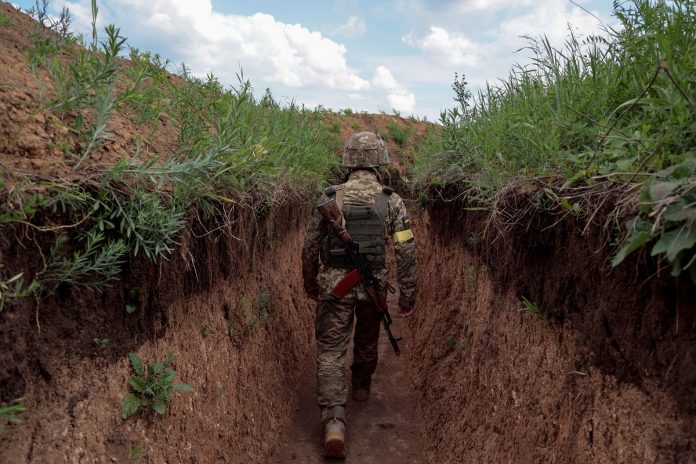
BFM TV reported that the 32-year-old journalist worked as a camera man for the French television channel. This was his second trip to the zone of combat actions. According to the report, the journalist was in an armored vehicle and was killed when a shell exploded.
French Foreign Minister Catherine Colonna has called for an investigation into the circumstances of the journalist’s death in Donbass.
“France demands launching an investigation as soon as possible to establish all circumstances of BFM journalist Frederic Leclerc-Imhoff’s death,” the statement reads.
Putin confirmed to Erdogan that Russia can export food if sanctions are lifted: Kremlin
Russian President Vladimir Putin confirmed readiness of the Russian side to export fertilizers and foods if sanctions are lifted in the telephone conversation with President of Turkey Recep Tayyip Erdogan on Monday, the Kremlin’s press service announced.
“In the light of problems on the global food market occurred in consequence of the unwise financial and economic policy of Western states, it was confirmed that Russia can export considerable volumes of fertilizers and agricultural produce in case relevant anti-Russian sanction restrictions are lifted,” the Kremlin said.
Putin and Erdogan discussed the situation in Ukraine with the focus on providing safe navigation in the Black Sea and the Sea of Azov and elimination of the mine threat in their water areas, the Kremlin’s press service added.
“Vladimir Putin noted readiness of the Russian side to facilitate unobstructed seaborne transit of goods in coordination with Turkish partners. This also pertains to export of grain from Ukrainian ports,” the press service noted.
Erdogan tells Putin Turkey can help in Russia-Ukraine ‘observation mechanism’
President Recep Tayyip Erdogan has told President Vladimir Putin that Ankara is ready to take on a role in an “observation mechanism” between Moscow, Kyiv and the United Nations, if an agreement is reached in that regard.
Erdogan’s office announced he had told Putin during the pair’s talks by phone that peace needs to be established as soon as possible and confidence-building steps need to be taken on the conflict.
Russia calls US announcement on rocket systems ‘rational’
Russian Security Council Deputy Chairman Dmitry Medvedev has welcomed Washington’s decision not to send Ukraine rocket systems that could reach into Russia, calling the move “rational”.
US will not send Ukraine rocket systems that can reach Russia: Biden
The United States will not send Ukraine rocket systems that can reach into Russia, President Joe Biden stated on Monday.
The comments followed reports that the Biden administration was preparing to send advanced long-range rocket systems to Kyiv.
Russian Foreign Minister Sergey Lavrov has cautioned Western powers against supplying Ukraine with weapons capable of hitting Russian territory, warning such a move would be a “serious step towards unacceptable escalation”.
Hungary PM says there is still no EU compromise on Russian oil embargo
The EU’s latest proposal for sanctions against Russia that would include a ban on seaborne oil imports would be a good solution but there is no compromise yet on the issue, Hungarian Prime Minister Viktor Orban has said.
Orban told reporters ahead of the EU leaders’ summit in Brussels that Hungary also needed guarantees that it could purchase oil by sea if Russian oil shipments stopped coming via the Druzhba pipeline.
“What is a problem for us, and why we have to fight today, is that if something happens to the Russian oil coming by pipeline… if there is no oil coming, then we should have the right for purchases by sea,” Orban stated, adding, “This is the guarantee we need.”
Oil ban against Russia not there yet: EU
European Commission President Ursula von der Leyen stated on Monday that the sixth sanctions package against Russia is “not there yet.”
She also told reporters that she does not expect an oil embargo deal to be reached in the next 48 hrs between all member states.
However, the issue should be resolved after that, von der Leyen added.
Germany ‘expects’ EU to reach consensus on Russian oil embargo
German Chancellor Olaf Scholz stated he expects the European Union to reach consensus on an oil embargo against Russia, but did not confirm a time frame.
“Everything I hear sounds like there could be a consensus – and sooner or later there will be”, he said as he arrived for an EU summit in Brussels.
EU diplomats are attempting to clinch a deal ahead of a two-day EU leaders summit that begins this afternoon.
The starting point for their talks is the European Commission’s proposal from 4 May for the sixth and toughest round of EU sanctions against Russia.
The proposal includes an import ban on all Russian oil – sea-borne and pipeline, crude oil and refined products.
Ukraine accuses Russia of ‘stealing’ nearly 500,000 tons of wheat
Ukraine’s first deputy minister of agriculture has accused Russian forces of stealing nearly 500,000 tonnes of wheat from occupied areas in Ukraine.
Taras Vysotsky claimed in televised remarks that Moscow had tried to sell the wheat to Egypt and Lebanon, but Beirut and Cairo refused to buy it.
There was no immediate reaction to Vysotsky’s remarks from Moscow.
EU can reach ‘overall’ deal on Russian oil ban: Bulgarian PM
EU member states should be able to reach an agreement on an import ban for Russian oil under certain conditions on Monday, Bulgaria’s prime minister has stated, several hours before the start of a summit of EU leaders.
“I think it will pass with certain derogations”, Kiril Petkov said about the bloc’s proposed embargo on Russian oil imports.
“Overall it should pass, depending on some individual characteristics and criteria that member states may have,” he added.
Estonian PM talks down prospect of agreement on Russia sanctions for now
EU member states will probably not reach a full agreement on new sanctions against Russia today, Estonia’s prime minister has said.
“I don’t think we’ll reach an agreement today”, Kaja Kallas stated several hours before the start of the meeting.
She added it was more likely a deal would be reached at the next summit in June.
NATO to boost defence across entire territory, not only eastern flank: Stoltenberg
NATO wants to reinforce defence capabilities both in the east and throughout the alliance’s entire territory to be able to counter threats from any direction, bracing for a long conflict in Ukraine which its intelligence anticipated back in Autumn 2021, Secretary General Jens Stoltenberg said on Monday.
Stoltenberg told Spanish newspaper ABC that NATO expects the summit to boost preparedness and strengthen defenses throughout the alliances entire territory and not just the eastern flank.
He said nobody can tell precisely how soon the conflict in Ukraine would end but noted that NATO had shared intelligence on Ukraine last autumn and that the alliance should be ready that hostilities there would last long.
Stoltenberg also urged NATO countries to support Ukraine’s right to self-defence.
The chief of the alliance also stressed that the bloc would embark on a path to deepening cooperation with the European Union and countries in the Indo-Pacific region at the Madrid summit, which is scheduled on 29-30 June.
“At the Madrid summit, we will chart the way ahead for the next decade. We will reset our deterrence and defense for a more dangerous world. We will deepen our cooperation with like-minded countries and organizations, including the European Union and countries in the Indo-Pacific,” Stoltenberg said at a ceremony marking the 40th anniversary of Spain’s accession to NATO.
According to Stoltenberg, Finland and Sweden are also expected to join the summit, given their “historic applications” for the membership in the alliance.
Earlier in May, Finland and Sweden submitted their membership bids to NATO but Turkey blocked them, claiming the two Nordic nations were supporting the Kurdistan Workers’ Party, labelled as terrorist in Turkey and several other countries.
Poll reveals how many Russians approve of Moscow’s special military operation in Ukraine
The approval of Moscow’s special military operation in Ukraine has remained high among Russians for the past three months, with the latest poll published on Monday by the All-Russian Public Opinion Research Center (VTsIOM) showing 72% of Russians giving it their full support.
“The decision to conduct Russia’s special military operation in Ukraine is backed by 72% of Russian citizens, while 18% oppose it and 9% had no opinion,” the pollster said in a statement, adding that this support has remained stable at a high level over three months of the monitoring.
The majority of respondents (40%) still believe that the goal is to protect Russia, disarm Ukraine and prevent NATO from setting up military bases on the latter’s territory. Another 20% of those surveyed said the priority was to reform Ukraine’s political course and denazify it, while 18% of respondents said it was to protect the population of the Donetsk and the Lugansk People’s Republics. That said, 7% of those polled are buying into the claim that Russia seeks to occupy Ukraine and annex it.
“The inclination to protest has dropped by another 4 percentage points since March 2022, with a mere 14% of respondents saying protests are likely to erupt in their locations as of May 26 against 26% over a year ago,” the statement reads.
French FM to meet Zelensky in Ukraine
French Foreign Affairs Minister Catherine Colonna arrived in Ukraine on Monday for her first trip to the country, according to a tweet on her official account.
Colonna will meet with Ukrainian President Volodymyr Zelensky and her counterpart Dmytro Kuleba in Kyiv to discuss France’s support for Ukraine in “all areas, and in particular the blockage of grain and oilseed exports from Ukraine,” the French Foreign Affairs Ministry said.
The ministry added Colonna’s visit is to demonstrate France’s solidarity with Ukrainian people and to strengthen its support for Ukraine, “both in humanitarian and financial terms and in terms of supplying defense equipment.”
Colonna will also visit the town of Bucha and donate civil security equipment, including fire trucks and ambulances, from France to the Ukrainian authorities, according to the ministry.
EU predicts how Ukraine conflict will develop
The conflict in Ukraine is likely to last for a long time but will eventually conclude with peace talks between Kiev and Moscow, EU foreign policy chief Josep Borrell said on Monday.
Borrell stated in an interview with France Info that he expects the Russian military offensive to drag on.
According to the foreign policy chief, Moscow will act more aggressively, requiring the EU to keep arming Ukraine and apply further sanctions against Russia. The Russian economy is already slowing down due to the economic restrictions, and further pressure should help Kiev gain a stronger position in future peace talks with Moscow, he claimed.
The events on the ground in Ukraine have apparently persuaded Borrell to amend his perspective on the conflict, with the diplomat saying last month that “this war must be won on the battlefield” by Kiev.
EU officials push for “difficult” Russian oil embargo agreement before leaders meet
European Union officials are renewing efforts to agree on a Russian oil embargo on Monday, after a difficult weekend of talks ended in deadlock and delayed a sixth round of European sanctions against Moscow.
The EU’s 27 ambassadors failed to find an agreement on Sunday night, an official told journalists in Brussels, but talks continued on Monday ahead of an extraordinary meeting of European leaders later in the day.
The bloc has repeatedly struggled to get countries including Hungary on side when negotiating Russian sanctions, and Hungarian Prime Minister Viktor Orban has for weeks resisted the possibility of banning the import of Russian oil.
“I think what I’ve seen in the room is that there is a willingness from all member states to work on oil and to ban oil from European markets,” an EU official told reporters Sunday.
“The question is, how to do it and how to cater for national specificities since some member states are more dependent on this than others,” the official added.
“If you target oil, you have certain countries that are 100% dependent on Russian oil, and the phase out is quite a challenge. So, this is what you need to fine tune,” the official said.
In a separate briefing, a senior diplomat from an EU country told journalists that the technicalities of an oil embargo were “extremely difficult” to solve. Countries like Hungary, Croatia, Bulgaria, the Czech Republic and Slovakia were still seeking assurances over security of supply issues.
The senior EU diplomat also explained that, given the complexity of the oil sector across Europe, the EU has to “be very careful in the crafting of legislation and conclusions” in order to preserve the level-playing-field of the EU’s internal market.
The diplomat expected the issue of oil and the sixth round of sanctions to be discussed by leaders at the extraordinary European Council (EUCO) meeting Monday, but didn’t think the heads of state and government would be able to solve technical issues.
“I think we are now in the last stretch of trying to get this done,” the diplomat added.
NATO support for Ukraine ‘unbreakable’: Spanish PM
Spanish Prime Minister Pedro Sanchez says NATO’s support for Ukraine is “unbreakable”.
“Supporting Ukraine with determination is the only way to ensure that the Europe and the world we have built has a certain future,” Sanchez told an event marking Spain’s 40th anniversary as part of the alliance.
The United States and other NATO allies have backed Ukraine, which is not a NATO member, with billions of dollars’ worth of weapons supplies during Russia’s offensive.
Kherson official says grain being sent to Russia
An official installed by Russia in the Kherson region of southern Ukraine says grain from the area is being sent to Russia.
Kirill Stremousov, the deputy head of the Russia-backed administration for the Kherson region, told Russia’s TASS news agency that grain from last year’s harvest was being delivered to Russian buyers.
“There is space for storing [the next crop] although obviously there is a lot of grain here,” Stremousov was quoted as saying.
“Now people are partially exporting, having reached agreements with those who are buying from the [Russian] side,” Stremousov added.
Russian troops overran most of the Kherson region in the early weeks of the war and have tightened their grip on the area since. Russian Deputy Prime Minister Marat Khusnullin visited the region earlier this month and suggested it could become part of “our Russian family.”
Kremlin says gas-for-roubles scheme could be applied on Eurobonds
A Russian gas-for-roubles scheme used with foreign purchasers has proved convenient both for buyers and sellers, the Kremlin has said.
Kremlin spokesman Dmitry Peskov’s remarks came after Russia’s finance ministry proposed to apply a similar scheme to foreign holders of Russian Eurobonds.
“The practice of paying for gas [in roubles] has shown its convenience for sellers and buyers. So why not use it [for Eurobonds]?” Peskov stated during a conference call with reporters, adding that Moscow remained willing to honour its external debts.
EU top diplomat hopeful of deal on Russian oil ban
EU members should be able to reach an agreement on a new sanctions package against Russia, including imposing restrictions on Russian oil imports, during talks being held by officials, the bloc’s foreign policy chief has said.
“We need to decide unanimously. There were tough talks yesterday afternoon, as well as this morning”, Josep Borrell told broadcaster France Info.
“I think that this afternoon, we will be able to offer to the heads of the member states an agreement,” he added.
Asked if plans to include a ban to import Russian oil could fail over the resistance from Hungary and other eastern European states, Borrell stated: “No, I don’t think so … there will be an agreement in the end.”
Russia’s army likely to suffer further decrease in morale and discipline: UK
The United Kingdom’s defence ministry says that Russia’s troops in Ukraine are likely to suffer a further decrease in morale and continued poor discipline.
According to the ministry, this is partly due to the fact Russia’s army has “suffered devastating losses” among its mid and junior ranking officers.
“Junior officers have had to lead the lowest level tactical actions, as the army lacks the cadre of highly trained and empowered non-commissioned officers (NCOs) who fulfil that role in Western forces,” the ministry said, adding the large loss of these officers will exacerbate command problems.
“Battalion tactical groups (BTGs) which are being reconstituted in Ukraine from survivors of multiple units are likely to be less effective due to a lack of junior leaders,” it added.
Ukraine claims 243 children killed amid war
Ukraine claims it has confirmed the deaths of 243 children due to the war, with 444 children being injured.
The highest number of children who suffered was in the Donetsk region (153), followed by Kyiv (116), Kharkiv (109), Chernihiv (68), and Luhansk (52) and Kherson (52).
The office of the prosecutor general announced these figures were not final as work was underway to establish numbers in areas of active hostilities, and in temporarily occupied as well as “liberated territories”.
No gas or water in Severodonetsk: Governor
The governor of Luhansk has said there is no gas or water in Severodonetsk, and no possibility of restoring these services.
Serhiy Haidai added that about one million people have been left without water supply in the Luhansk region.
He stated two civilians have been killed and five wounded by shelling as Russian troops entered the outskirts of Severodonetsk.
Haidai said Russian troops were attacking the city with all weapons and air support, and have entered its southeastern and northeastern areas. He said the fighting was “very fierce” and it was a very difficult situation for the Ukrainians.
The nearby town of Lysychansk is still in the hands of Ukrainian forces and evacuations of civilians are underway, he added.
He noted Moscow’s troops were moving into the centre of the city.
Moscow looking to withdraw from Russia-US organisations
Moscow is reviewing the terms of its agreements with the US “in the fields of scientific and educational cooperation” with a view to terminate or suspend them, state news agency TASS has reported newspaper Izvestia as saying.
According to TASS, Russia’s First Deputy Chairman of the State Duma Committee on International Affairs, Svetlana Zhurova, told Izvestia that the committee will consider all international treaties and analyse whether Russia’s participation in various joint organisations is feasible.
Izvestia didn’t specify that kinds of scientific and educational organisations the Duma committee was looking into.
But Sergei Tsekov, a member of the Federation Council committee on international affairs, reportedly told Izvestia Russia is extremely likely to withdraw from other organisations, such as the the Organisation for Security and Co-operation in Europe (OSCE).
Moscow: Anti-Russian sanctions planned long ago, unlikely to be lifted
The West planned its anti-Russian sanctions long ago and is unlikely to lift them, Russian Foreign Minister Sergey Lavrov said in an interview with France’s TF1 television channel.
“You said both sided are expelling diplomats. We have never expelled anyone. These sanctions, which are more like a hysteria (I would rather say an agony) were initiated by the West. The speed they were imposed with and their scope prove that they were not invented ‘overnight.’ They were planned quite a long ago. And these sanctions are unlikely to be lifted,” he continued.
“At least the United States is saying, not publicly, but in contacts with its allies, that when the whole thing is over the sanctions will stay in place,” Lavrov noted, adding that they are not about Ukraine, which is used as an instrument, “a bargaining chip,” but about containing Russia.
“It [Russia] is not letting the West to build a unipolar world Washington has proclaimed with Europe’s obedient consent. What will be Europe’s geopolitical benefit from it? I don’t know. Political analysts now say that from the point of view of future perspectives Europe will be the biggest looser.” he stated.
On February 24, Russian President Vladimir Putin announced a special military operation in response to a request for help by the heads of the Donbass republics. He stressed that Moscow had no plans of occupying Ukrainian territories, but aimed to demilitarize and denazify the country.
Following this step, the United States, the European Union, the United Kingdom and several other countries imposed large-scale sanctions against Russian individuals and legal entities.
The foreign minister noted special military operation that Russia is conducting in Ukraine proceeds according to a plan.
Lavrov said Russia will now judge about Europe’s intentions by its deeds but doesn’t think that the doors to the resumption dialogue with the West are closed.
He added NATO will not allow the European Union to decide where and how to use its armed forces, stressing the United States totally imposed its will on Europe and will never let it build its own architecture of security.
West deliberately tried to set Ukraine against Russia, Lavrov told France’s TF1 television.
“It’s hard to understand what is going on now without taking a look at the longstanding history of how the West was indoctrinating Ukraine to be Russia’s enemy. There are no doubts that it was a deliberate effort. There are reasons why we were left with no choice but to defend Russian people living in Ukraine, who are citizens of this country, from neo-Nazi lawlessness, to defend the Russian language and culture,” Lavrov said.
The future of Ukrainian territories, where Russia is carrying out special military operation, should be decided by their citizens, he added.
Ukraine claims 30,150 Russian troops killed since start of war
At least 30,150 Russian soldiers have so far been killed during the war in Ukraine, the Ukrainian General Staff claimed.
Some 150 Russian troops were killed over the past 24 hours, according to a Ukrainian General Staff statement.
It said Ukrainian forces have destroyed 207 planes, 174 helicopters, 1,338 tanks, 3,270 armored vehicles, 631 artilleries, 203 rocket launchers, and 93 air-defense systems since the start of the war.
Russia has also lost 2,240 vehicles, 13 ships and light boats, and 504 unmanned aerial vehicles along with 116 cruise missiles, the statement added.
Russian figures for its soldiers killed have been far lower than Ukrainian figures.
Images show Russian ship, with allegedly stolen Ukrainian grain, in Syria: CNN
New satellite imagery shows that a Russian ship carrying grain allegedly stolen from Ukrainian farms has arrived in the Syrian port of Latakia, CNN reported.
The images are provided by Maxar Technologies and show the carrier Matros Pozynich at Latakia on May 27.
According to CNN, the Pozynich is one of three ships that have been loading grain in the Crimean port of Sevastopol since the Russian invasion of Ukraine. It was last seen in Sevastopol on May 19 and then tracked along the Turkish coast.
CNN has previously reported that convoys of trucks have been seen carrying grain from farms and silos in southern Ukraine into Crimea.
Ukrainian authorities estimated earlier this month that Russian forces in occupied areas had seized more than 400,000 tons of grain.
Russian forces damaged 2,229 high-rise buildings in Kharkiv region: Governor
The governor of the Kharkiv region says Russian forces damaged 2,229 high-rise buildings, of which 225 have been completely destroyed.
In the city of Kharkiv itself, the northern and eastern districts suffered the most damage and destruction, Oleh Synyehubov told Volodymyr Zelensky during the president’s visit to Kharkiv, adding that 30 percent of housing stock was either damaged or destroyed in these areas.
Serbia secures gas supply deal with Putin
Serbia’s President Aleksandar Vucic has announced that he has secured an “extremely favourable” three-year natural gas supply deal with Russia, amid efforts by the European Union to phase out Russian energy supplies.
“What I can tell you is that we have agreed on the main elements that are very favourable for Serbia,” the Serbian president stated after clinching the deal during a telephone conversation with his Russian counterpart Vladimir Putin.
Ukraine’s Donbas ‘unconditional priority’ for Moscow: Russia’s FM
The “liberation” of Ukraine’s Donbas is an “unconditional priority” for Moscow, while other Ukrainian territories should decide their future on their own, the RIA news agency cited Russia’s Foreign Minister Sergei Lavrov as saying.
“The liberation of the Donetsk and Luhansk regions, recognised by the Russian Federation as independent states, is an unconditional priority,” Lavrov stated in an interview with French TV channel TF1, according to RIA.
For the rest of the territories in Ukraine, “the people should decide their future in these areas,” he added.
Zelensky: All critical infrastructure in Severodonetsk destroyed
President Volodymyr Zelensky says Russian shelling has destroyed all of the critical infrastructure in Severodonetsk, describing the taking of the city as Russia’s “principal aim” right now.
“As a result of Russian strikes on Severodonetsk, all the city’s critical infrastructure is destroyed… More than two-thirds of the city’s housing stock is destroyed,” Zelensky stated in a televised speech.
“Taking Severodonetsk is the principal aim of the occupying contingents,” he added.
No EU deal on Russian oil embargo yet; more talks on Monday
European Union governments have failed to reach an agreement on an embargo on Russian oil, but will continue negotiations on Monday morning, an EU official told the Reuters news agency.
The proposal under discussion now among EU countries assumes a ban on Russian oil delivered to the EU by sea by the end of the year but foresees an exemption for oil delivered by the Russian Druzhba pipeline, which supplies Hungary, Slovakia and the Czech republic.
Germany: EU unity on Russian sanctions ‘starting to crumble’
German Economy Minister Robert Habeck says he fears that the European Union’s unity was “starting to crumble” ahead of a summit to discuss an oil embargo against Russia and plans to cut dependence on Russian energy.
EU leaders will meet on Monday and Tuesday to discuss a new sanctions package against Russia, which could also include an oil embargo and a programme to speed up ending dependence on fossil fuels, including Russian gas.
“After Russia’s attack on Ukraine, we saw what can happen when Europe stands united. With a view to the summit tomorrow, let’s hope it continues like this. But it is already starting to crumble and crumble again,” Habeck added.