Ukrainian officials put death toll from Odesa strikes at 19
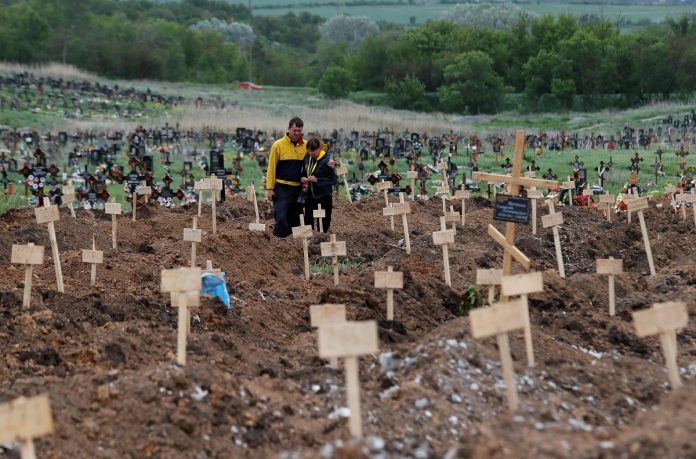
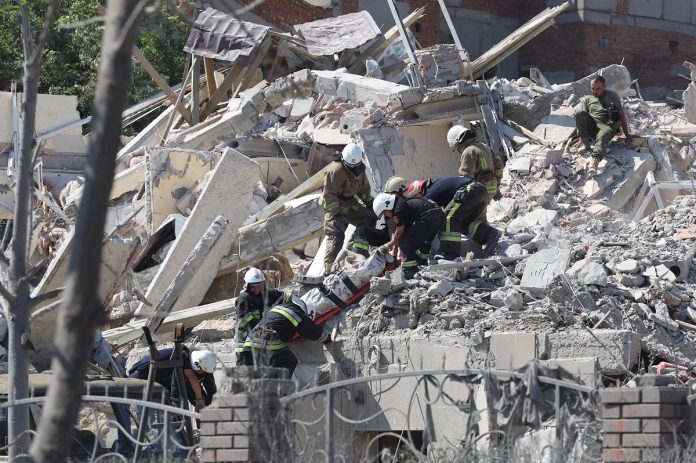
Ukraine’s State Security Service (SBU) says the death toll from reported Russian missile strikes in the southwestern region of Odesa now stands at 19 people, including two children.
Another 38 people, including six children and a pregnant woman, were hospitalised after being wounded during the strikes, the SBU added in a Telegram post.
It alleged that Russian bombers had fired the three X-22 missiles which struck an apartment building and two campsites.
Russia has denied responsibility for the strikes.
“We’re watching Russia wither before our eyes”: Former US defense chief
Former US Defense Secretary James Mattis criticized Russia’s war in Ukraine, calling it “immoral” and “operationally stupid,” while speaking Friday at the Seoul Forum 2022.
“We have a saying in America, we say that nations with allies thrive, nations without allies wither and we’re watching Russia wither before our eyes right now,” Mattis said.
When asked what military lessons could be taken from the war so far, the former US Marine stated: “One is don’t have incompetent generals in charge of your operations.”
He also called Russia’s military performance “pathetic” and decried “the immoral, the tactically incompetent, operationally stupid and strategically foolish effort” of its campaign in Ukraine.
Mattis spoke of previous US efforts to try and bring Russia into the “community of nations,” but said that was not possible with Vladimir Putin as leader.
“The tragedy of our time is that Putin is a creature straight out of Dostoevsky. He goes to bed every night angry, he goes to bed every night fearful, he goes to bed every night thinking that Russia is surrounded by nightmares and this has guided him,” he continued.
Putin had removed anyone from his circle that would disagree with him, so he “probably thought that the Ukrainian people were going to welcome him,” Mattis added.
Turkey can re-export Black Sea grains: Erdogan
President Recep Tayyip Erdogan says Turkey can re-export grain products like wheat, oats and barley from the Black Sea to countries in need after talks with Russia and Ukraine.
Speaking after Friday prayers in Istanbul, Erdogan stated his office was working with Kyiv and Moscow to set up calls with his counterparts and that 20 Turkish vessels were ready to take part in the potential shipments.
After the talks, “we can send wheat, barley, oat, sunflower oil and all to countries in need by carrying out a re-export through us,” he continued, adding Turkey’s stocks were “in good shape” for now.
Ukraine is one of the top global wheat suppliers, but shipments have been halted by Russia’s invasion, causing global food shortages. The United Nations has appealed to both sides, as well as maritime neighbour Turkey, to reach an agreement on resuming exports.
Kremlin: Putin told Modi Russia is reliable supplier of grain, fertiliser, energy
President Vladimir Putin told Indian Prime Minister Narendra Modi that Russia is still a reliable producer and supplier of grains, fertilisers and energy during the pair’s talks by phone, the Kremlin has said in a readout of the call.
In detailed discussions on the global food market, Putin “drew attention to the systemic mistakes made by a number of countries that have disrupted free trade architecture in food goods and triggered significant rises in their prices”, the Kremlin added.
Russia’s Snake Island withdrawal based on troop vulnerability, not goodwill: UK
Russia withdrew its troops from Snake Island due to their vulnerability to Ukrainian strikes, as well as their isolation – as Ukraine’s anti-ship missiles often prevented Russian naval vessels from resuppling the island – rather than Moscow’s claimed “gesture of good will,” the United Kingdom’s defence ministry has said.
“The Ukrainian Armed Forces conducted attacks against the Russian garrison in the past few weeks using missile and drone strikes. In addition, it used anti-ship missiles to interdict Russian naval vessels attempting re-supply the island,” the ministry said in its latest intelligence briefing on Twitter.
Russia’s defence ministry announced its forces had withdrawn from Snake Island, which Russia had seized on the first day of the invasion, on Thursday. The island sits along the main shipping lanes to Odesa and its adjacent ports,” the UK’s ministry noted.
“Separately, Russian ground forces claim to have captured the village of Pryvilla, north-west of the contested Donbas town of Lysychansk,” the ministry added.
Moscow denies striking civilian areas in Odesa
The Kremlin has dismissed reports from Ukrainian officials that Russian missiles struck residential areas in Odesa early on Friday morning and reiterated its claim that Moscow does not target civilians.
“I would like to remind you of the president’s words that the Russian Armed Forces do not work with civilian targets,” Kremlin spokesman Dmitry Peskov said on a conference call with reporters.
Ukrainian authorities had earlier stated Russian missiles hit an apartment building and two holiday camps in the region, killing at least 18 people and wounding dozens of others.
Putin: Western pressure speeding up Russia’s integration with Belarus
President Vladimir Putin has said political pressure from the West is pushing Russia to accelerate its integration with neighbouring Belarus.
His remarks came after Russian defence minister Sergei Shoigu last week said the two countries must take urgent joint measures to improve their defence capabilities and troops’ combat readiness.
EU slams Russian threat to sever diplomatic ties with Bulgaria
Russia’s threat to sever diplomatic ties with Bulgaria in response to its decision to expel 70 Russian diplomats is unjustified, the EU has said.
The bloc announced in a statement that Bulgaria’s action was “fully in line with international law”, as the diplomats of the Russian embassy were acting in violation of international treaties.
“The European Union stands in full support and solidarity with Bulgaria in these circumstances and will follow this matter closely,” it added.
Bulgaria’s outgoing prime minister on Thursday called on Russia to withdraw its diplomatic ultimatum, which included a threat to close Russia’s embassy in the Balkan nation.
18 dead in Russian missile strikes on Odesa
Russian missile attacks on residential buildings in the Ukrainian port city of Odesa early Friday killed at least 18 people, including two children, authorities reported, a day after Russian forces withdrew from a strategic Black Sea island.
The deputy head of the Ukrainian presidential office, Kirill Tymoshenko, said 18 people died, including two children.
A spokesman for the Odesa regional government, Serhiy Bratchuk, stated on the Telegram messaging app that another 30 had been injured.
Ukrainian news reports said the target of the missile attack was a multi-story apartment building and a recreational area.
“The worst case scenario played out and two strategic aircraft came to the Odessa region,” Bratchuk said in a TV interview, adding they had fired “very heavy and very powerful” missiles.
He announced that the missile appeared to have been fired by aircraft from the Black Sea.
Ukraine ‘now has clear European perspective’: EU
Ukraine now has a “very clear European perspective” following the European Union’s decision to grant the country candidate status to join the bloc, European Commission President Ursula von der Leyen said in a speech to the Ukrainian parliament.
“Ukraine now has a very clear European perspective. And Ukraine is a candidate country to join the European Union something that seemed almost unimaginable just five months ago,” von der Leyen stated in a speech by video-link to the assembly.
“So today is first and foremost. A moment to celebrate this historic milestone, a victory of determination and resolve and a victory for the whole movement that started eight years ago on the Maidan,” she added.
Second missile in Odesa kills three
A second missile that hit Odesa’s Bilhorod-Dnistrovskyi district has killed three people, including one child, and injured one other person, Ukraine’s Ministry of Internal Affairs announced.
The second missile hit three and four-storey buildings of a recreation centre, the ministry said on Twitter.
Russian forces capture part of Lysychansk oil refinery: Governor
Russian forces have captured part of the Lysychansk oil refinery, some 17km southwest of the city, the governor of Luhansk has said.
“The occupiers are storming the Lysychansk oil refinery, holding the north-western and south-eastern parts of the plant,” Serhiy Haidai wrote on Telegram.
Moscow’s troops are still attempting to surround Ukraine’s military in Lysychansk, the military’s last stronghold in Luhansk, attacking the city from the south and west, he said, adding that this was “in vain”. He said Russian forces had also so far failed to capture the highway connecting Lysychansk to Bakhmut in the neighbouring Donetsk region.
“Residents of Lysychansk spend almost 24 hours in basements and houses. The shelling of the city is very dense,” he added.
Toll from Odesa strike rises to 14 dead, 30 injured
The toll from the missile strike that hit a nine-storey building in Odesa early on Friday has risen to 14 people dead and 30 wounded, according to Ukraine’s Ministry for Internal Affairs.
The strike occurred at about 1 a.m. in a village in the Bilhorod-Dnistrovskyi district of Odesa, the ministry said on Twitter.
Russian missile strike kills 10 in Odesa: Official
A Russian missile struck a nine-story apartment building in the Black Sea port of Odesa early on Friday, killing at least 10 people, a local official said.
“The number of dead as a result of a strike on a multi-story apartment building has now risen to 10,” Serhiy Bratchuk, spokesman for the Odesa regional administration stated on his Telegram channel.
Earlier reports said six people had died in the night-time incident, including three children.
Bratchuk also stated a second missile had hit a recreation centre and casualty numbers were being determined. He added Russians launched the rockets from aircraft from the direction of the Black Sea, Hromadske reports.
Putin has made “a big mistake” in underestimating both Ukraine and NATO: Alliance chief
NATO Secretary General Jens Stoltenberg stated that Russian President Vladimir Putin has underestimated both Ukraine’s resistance and the unity of the NATO military alliance.
“He [Putin] has made a big mistake; he totally underestimated the strength of Ukrainian armed forces, the courage of Ukrainian leadership and the Ukrainian people, and he also underestimated the unity of NATO and partners in providing support to Ukraine,” Stoltenberg told CNN’s chief international anchor Christiane Amanpour Thursday.
Speaking from the NATO Madrid summit, Stoltenberg said that Putin had failed in achieving his objectives when it came to weakening the NATO alliance.
“One of his main messages at the beginning of this war was that he wanted less NATO. He actually proposed to sign an agreement to have no further NATO enlargement. What he’s getting now is more NATO and two new NATO members, including Finland with a border … with Russia, doubling NATO’s border with Russia,” he added.
“That does not mean we don’t see the seriousness of the difficulties that Ukraine is facing in Donbas,” Stoltenberg continued.
Stoltenberg told CNN that he is ignoring Putin’s rhetoric and that he will “assess him on his actions.”
“What he does in Ukraine is a brutal violation of international law. It is a war that has led to a lot of civilian casualties, civilians killed and huge losses,” he told CNN.
The accomplishments at the NATO summit in Madrid are a “victory” for the military alliance, according to Stoltenberg.
“It is a victory for NATO that we once again have demonstrated our unity and ability to change, adapt when the world is changing,” the NATO chief said.
“We live in a world where we see brutal use of force against a close neighbor of NATO, a close partner of NATO in Ukraine, and that’s the reason why we have significantly stepped up and will further step up our presence in the eastern part of the alliance to remove any room for miscalculation or misunderstanding in Moscow about our readiness to protect and defend all allies,” he noted.
“This is deterrence, and the purpose of deterrence is to prevent conflict. And that’s exactly what NATO has done for more than 70 years — prevent conflict and preserve peace,” he added.
Strategic territory of Snake Island is “free again”: Zelensky
Snake Island is “free again,” Ukraine President Volodymyr Zelensky said in his nightly brief Thursday.
“Zmiinyi [Snake] Island is a strategic point, and it significantly changes the situation in the Black Sea. It does not guarantee safety yet, it does not yet guarantee that the enemy will not return. But it already limits the actions of the occupiers significantly. Step by step, we will drive them out of our sea, our land, and our sky,” Zelensky stated.
The small but strategic territory was the scene of one of the opening salvos of the war in Ukraine, with demands from a Russian warship calling for the Ukrainian defenders to surrender, who boldly replied with “Russian warship, go f*** yourself.”
Known as Zmiinyi Ostriv in Ukrainian, Snake Island lies around 30 miles (48 kilometers) off the coast of Ukraine and is close to the sea lanes leading to the Bosphorus and Mediterranean.
Ukrainian Armed Forces announced Russian troops left the island on Thursday, after they carried out what they said was a “successful” operation. Meanwhile, Russian army spokesperson Igor Konashenkov said at a briefing that its forces left the island “as a gesture of goodwill.”
Biden places blame for gas prices and food crisis squarely on Russia
US President Joe Biden said the increase in gas prices and food shortages around the globe are due to Russia’s invasion of Ukraine.
“The bottom line is ultimately the reason why gas prices are up is because of Russia. Russia, Russia, Russia. The reason why the food crisis exists is because of Russia,” Biden stated during a news conference at the NATO summit in Madrid.
Russia has blockaded Ukrainian Black Sea ports, not allowing grain to be exported from one of the main areas of grain production in the world.
“In addition, at home … I’ve released a million barrels of oil per day from our oil reserve, and in addition to getting other nations to move forward, a total of 240 million barrels of oil to release from the Strategic Petroleum Reserve, number one. Number two, I have asked Congress, would they in fact go and temporarily end the tax on gasoline at the pump, and, thirdly to ask the states to do the same thing. If we do these things, it is estimated we could bring down tomorrow, if they — if Congress agreed and the states agreed, we could bring down the price of oil about a dollar a gallon at the pump in that range,” he continued, adding it would bring “immediate relief.”
While pledging to “support Ukraine as long as it takes,” Biden said that the war in Ukraine has already taken a toll on Russia.
“Look at the impact that the war on Ukraine has had on Russia. They’ve had to renege on their national debt for the first time since the beginning, almost well over 100 years. They’ve lost 15 years of the gains they’ve made in terms of their economy. They’re in a situation where they’re having trouble because of my imposition of dealing with what can be exported to Russia, in terms of technology. They’re going to have trouble maintaining oil production because they don’t have the technology to do it. … And they also are in a similar situation in terms of their weapons systems and some of their military systems,” he stated.
“So they’re paying a very, very heavy price for this,” Biden added.
The American president pledged the US and NATO will “stick with Ukraine.”
“Ukraine has already dealt a severe blow to Russia: Russia in fact has already lost its international standing. Russia is in a position where the whole world is looking and saying, ‘wait a minute, all this effort to try to take the whole country; you tried to take Kyiv, you lost, you tried to take the Donbas and all of it, you haven’t done that yet,'” Biden noted.
“The generic point is we’re supplying them with the capacity and the overwhelming courage they have demonstrated that in fact they can continue to resist the Russian aggression. And so I don’t know … how it is going to end, but it will not end with a Russian defeat of Ukraine in Ukraine,” Biden continued.
NATO officials say plan to boost high response force to 300,000 is “still a work in progress”
NATO military officials are walking back the secretary general’s announcement earlier this week that 300,000 troops “will” be placed on high alert across the alliance, now saying the high number is a “concept” the bloc aims to enact by mid-2023.
NATO chief Jens Stoltenberg said on Monday that NATO “will increase the number of our high readiness forces to well over 300,000.”
But it now appears that number is more aspirational, and is based on a new model NATO believes will take at least another year to accomplish.
The initial announcement appeared to be a seven-fold increase from the 40,000 troops NATO currently has on high alert, and two NATO officials told CNN that number caught many NATO countries’ defense chiefs off guard.
It was not clear to them, for example, which troops from each member state would need to contribute to that new high-readiness force, or whether enough countries had even been asked or agreed to provide the sufficient forces for it. It was a point of apparent confusion and disjointedness in an otherwise highly choreographed show of unity among the allies.
Two senior NATO officials told reporters in a briefing on Thursday that the new high-readiness model will eventually replace the NATO Response Force model, but that it is “still a work in progress.”
“We know from nations, through our planning process, the number of forces that nations have at their disposal, the readiness that they have,” one of the officials stated, adding, “So there will be several iterations of populating this model, but we would not be giving figures for a model if we were not extremely confident that we could deliver on those things. But it’s a work in progress.”
The officials indicated that under the new model, many of the troops would remain in their home countries rather than move under the command of NATO’s Allied Command Operations. But they would be quickly available to NATO should a security crisis arise, such as if Russia were to attack a member country.
Asked what the trigger would be to move those forces to high alert under NATO command, one of the officials would only say it will involve “indications and warnings” of a potential attack.
Pentagon reviewing proposals for new weapons capabilities for Ukraine’s fight against Russia
The US Defense Department is now reviewing 1,300 proposals from 800 companies for innovative new weapons and commercial capabilities they may be able to develop and produce for Ukraine to use in its fight against Russia’s invasion, according to a defense official.
The Pentagon expects to decide in the coming weeks on which ideas it will pursue, leading to possible eventual production for Ukraine as well as for the US military.
The proposals, requested by the department, center around key areas — including weapons capabilities for air defense, anti-armor, anti-personnel, coastal defense, anti-tank, unmanned aerial systems, counter battery and secure communications — which have been identified by Ukraine as key military needs.
They were sought as part of a broad initiative by the Defense Department to “fulfill Ukraine’s priority security assistance requests,” according to the original solicitation for ideas sent to industry. The goal is to get ideas and information in hand in order to accelerate production and build more capacity across the industrial base, as its now accepted the US and its allies are likely to have to support Ukraine long after its own existing weapons stockpiles run out.
This comes as the Pentagon continues its multiple billion-dollar weapons transfers. On Thursday, President Joe Biden said the US will soon announce another $800 million in new aid, including air defense systems and offensive weapons. So far, the US has committed $6.1 billion in security assistance to Ukraine since the Feb. 24 invasion by Russia. The US has been working with more than 50 other nations to see what weapons they can offer.
The preference has been for what they have in Russian weapons, because Ukraine’s forces are familiar with those systems and would not need training. But as the war has gone on, more advanced weapons have been provided and Ukraine’s forces have been trained in nearby countries.
The department’s plan for potential new production contracts reflects some urgency as it looks for potential deliveries anywhere from less than 30 days to more than 180 days. It is also asking companies to detail what type of air, land or sea platform their weapon might be deployed on and if they already have something in production.
“In particular, the Department is exploring options which would accelerate production and build more capacity across the industrial base for weapons and equipment that can be rapidly exported, deployed with minimal training, and that are proven effective in the battlefield,” the DOD said in its solicitation to industry for ideas.
The effort comes as a followup to a Pentagon meeting earlier this year with eight of the largest defense contractors, as well as approval by Congress for funding purchase contracts for weapons in addition to the ongoing drawdown and transfer of systems from the US military stockpile.
The Pentagon has put into place a detailed bureaucratic structure to assess Ukraine’s needs and try to accelerate supplying them, it said. A new “senior integration group” of senior officials reviews Ukraine’s latest operational needs.
The funding could potentially come from the Ukraine Security Assistance Initiative, which is a pot of nearly $1 billion for contracting for weapons for Ukraine. Nearly $240 million has been contracted for in areas ranging from Switchblade drones to secure communications devices.
France to deliver CAESAR howitzers to Ukraine
President Emmanuel Macron has announced that France will deliver six CAESAR howitzers and armoured vehicles to Ukraine, the Kyiv Independent reports.
Macron added that the NATO allies’ meeting in Madrid “unanimously decided” to boost humanitarian and military aid to Ukraine.
Food crisis not caused by NATO sanctions: NATO secretary general
NATO Secretary General Jens Stoltenberg on Thursday denied that sanctions against Russia by NATO members are to blame for the worsening food crisis.
“Contrary to what President Putin and also China are now telling the world through different disinformation campaigns, this food crisis is not caused by NATO sanctions. It is caused by President Putin’s war and the best way to end the food crisis is to end the war,” Stoltenberg said.
“The impact is severe, including on some of the world’s most vulnerable people. Food prices are hitting record highs, and many countries depend on Ukraine for substantial wheat and other food imports,” he added, noting that NATO allies discussed efforts to mitigate the crisis and get grain out of Ukraine.
The NATO chief said that Turkey is trying to facilitate some kind of agreement and that Greece announced “that they are ready to make available ships to get grain out of Ukraine.”
Lithuania and Romania are making efforts “to expand their own land capacity by railway to transport more food,” he added.
Russia summons ambassador over ‘offensive’ UK remarks
Russia’s foreign ministry said it has summoned the British ambassador in Moscow, Deborah Bronnert, to protest against Prime Minister Boris Johnson’s “offensive” comments regarding Russia and Vladimir Putin.
A strong protest was expressed to the ambassador over “the frankly boorish statements of the British leadership regarding Russia, its leader and official representatives of the authorities, as well as the Russian people”, it said in a statement.
The ministry added Russia had told her it objected to British statements containing “deliberately false information, in particular about alleged Russian ‘threats to use nuclear weapons’”.
Russia’s move comes after Johnson stated Putin would not have started the war in Ukraine if he were a woman and said the military operation was “a perfect example of toxic masculinity”.
Ukraine begins exporting electricity to the EU
Ukraine has begun exporting electricity to the European Union, Ukrainian Prime Minister Denys Shmyhal and the EU Commission President Ursula Von der Leyen announced on Thursday.
“Just three months after receiving the energy certification, the long-awaited export of Ukrainian electricity to Europe has begun! Today, from the first hour of the night, such exports went to Romania. The initial volume is 100 MW,” Shmyhal said in a Facebook post.
The president of the European Commission welcomed the move, stating it serves both Ukraine’s and the EU’s needs.
“It will provide an additional source of electricity for the EU. And much-needed revenues to Ukraine,” von der Leyen tweeted on Thursday, adding, “So we both benefit.”