Friday, January 9, 2026
Home Blog Page 1863

Italy’s FM: Italian companies willing to do business in Iran

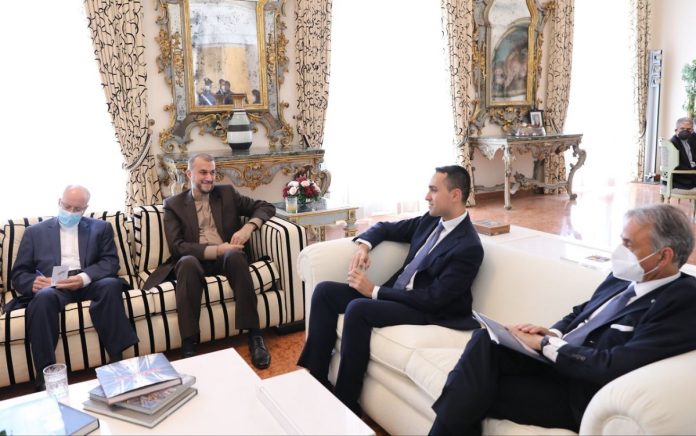
Iran and Italy FMs Hossein Amirabdollahian and Luigi Di Maio

Luigi Di Maio made those comments in a meeting with the visiting Iranian foreign minister in Rome on Monday noon.

Di Maio also expressed hope that talks over the revival of the Iran nuclear deal, the JCPOA, bear fruit and expressed Italy’s readiness to play a positive role in this regard.

Iranian Foreign Minister Hossein Amirabdollahian also said in the meeting, “We want the JCPOA to work smoothly; we seriously seek a good and lasting deal; we believe that Iran must be able to enjoy full economic benefits from the JCPOA.”

Amirabdollahian added that the US must understand this reality with regarding to the issue of giving guarantees to Iran. The Islamic Republic of Iran has always put forth its own new initiatives but the US has failed to act soundly and logically. They must understand the issue logically.”

Amirabdollahian further noted that Iran wants to have its natural share of the energy market, thus helping the international community.

Amirabdollahian reaffirmed Iran’s opposition to resorting to war, be it in Yemen, Afghanistan or Ukraine.

The Iranian foreign minister referred to Tehran’s diplomatic efforts to help resolve differences between Turkey and Syria through peaceful talks and to prevent a new conflict in the Middle East.

Amirabdollahian and Di Maio also underscored the importance of expanding tourism between Iran and Italy given the tourist attractions of the two countries and also the significance of increasing flights between them.

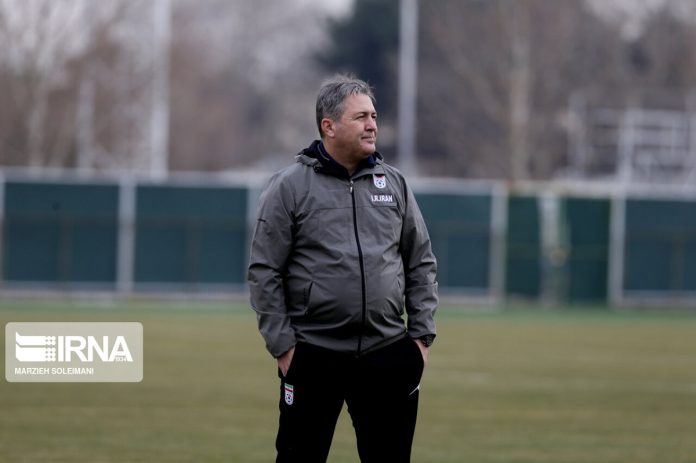
Iranian Football federation confirms Dragan Skočić removed as national team manager

Dragan Skočić

The spokesman said the committee decided that Skočić is not qualified to lead the Team Melli in the FIFA World Cup 2022 in Qatar.

He added that Ali Daei, former manager of the national football team and the world’s top international goalscorer, is the top candidate to replace Dragan Skočić.

The next candidates are respectively Gol Gohar Football Club’s manager Amir Ghalenoei and Foolad Khuzestan Footbal Club’s manager Javad Nekounam.

The spokesman of the Iranian Football Federation’s Technical Committee said a foreign manager is not a priority for the Team Melli and that it chooses to appoint an Iranian coach to the post.

He however said the former manager of Perspolis FC, Branko Ivanković, is a candidate, but not the former manager of the Team Melli, Carlos Queiroz.

Ivanković himself has reportedly ruled out the possibility of accepting a proposal to lead the Team Melli in the FIFA World Cup 2022 in Qatar, saying he signed a contract with Oman to be its national soccer team’s manager.

Iran will participate at the World Cup for the sixth time in the country’s history and on a third consecutive occasion.

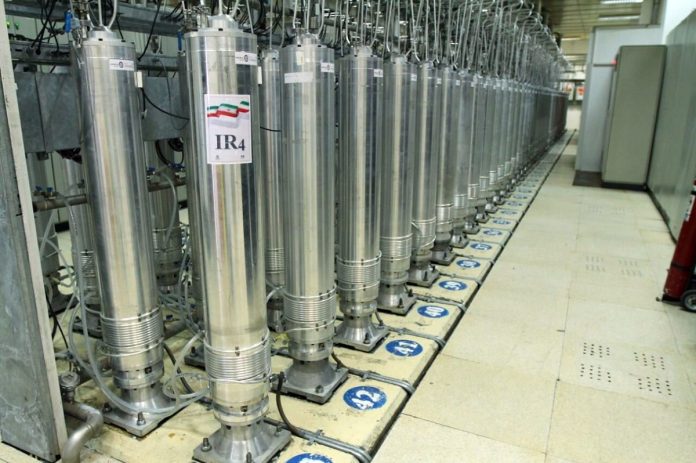
Iranian atomic organization: Launching of IR-4 centrifuge not new

Iran nuclear program

Behrouz Kamalvandi said Iran had already notified the International Atomic Energy Agency, IAEA, of its decision to launch the IR-4 centrifuges.

He added that the AEOI is obliged to enrich a given amount of uranium to a purity of 20 percent as per the legislation approved by the Iranian parliament.

Kamalvandi noted that the move to launch a large number of centrifuges is in line with that law.

He added that experience shows that such information makes the round quickly at the international level. Kamalvandi said the media do not report that three IR-6 cascades were set in motion but they give information about each of the cascades separately.

Then, according to the AEOI’s spokesman, a report is published by the IAEA and western media for each cascade.

He noted that Western countries report a single issue in several stages as part of their effort to create a media hype of the matter.

Kamalvandi said the advanced IR-6 centrifuge is spinning in the Fordo facility and that 5% enriched uranium is then injected into it, which enriches the uranium to a purity of 20%.

He noted that as per paragraphs 26 and 36 of the 2015 nuclear deal, Iran is entitled to partly or wholly suspend its commitments and the latest move was made in line with those paragraphs.

He noted that if the other sides return to compliance with the deal, Iran will do the same.

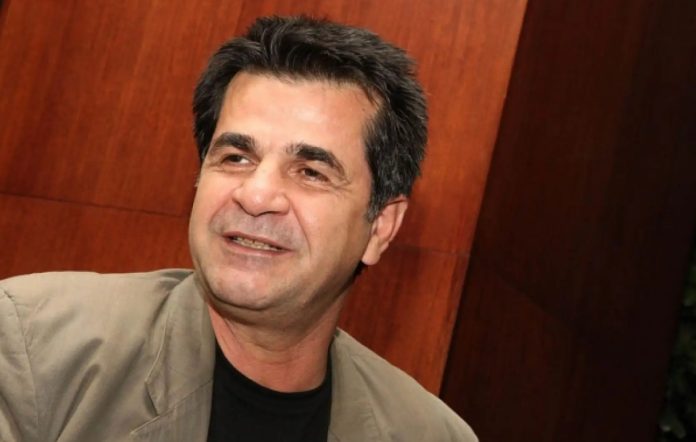
Banned Iranian filmmaker Jafar Panahi arrested

Jafar Panahi

Reports say Panahi had been summoned to the justice department in connection with the case of another filmmaker, Mohammad Rasoulof.

The exact reason for Panahi’s detention is unknown.

Authorities earlier arrested Rasoulof along with another filmmaker, namely Mostafa Al Ahmad, over an appeal they posted on social media.

They have been accused of establishing links with anti-Iran groups based outside the country and of plotting to undermine Iran’s national security.

They posted the hashtag #put_your_gun_down in reference to efforts by police to calm down sporadic riots in a few cities after a building collapsed in the southwestern city of Abadan.

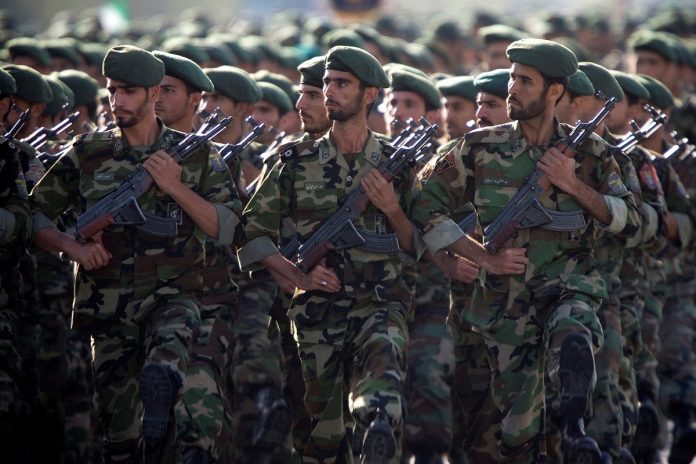
IRGC deputy commander: Saudi, US and Israeli alliance to fail

Iran’s Islamic Revolution Guards Corps (IRGC)

Brigadier General Yadollah Javani the IRGC’s deputy commander for political affairs said the record of the US, Saudi Arabia and the Zionist regime which is filled with defeats in the past years at the hands of the resistance front.

Javani noted that alliance building against Iran and the axis of resistance during the period when the US and its two regional allies were at the height of their power was a failure let alone now.

He cited the Persian Gulf Cooperation Council as an example, saying the body was formed over 40 years ago but its record is empty of any achievement.

Javani referred to the Saudi and UAE alliance against Yemen which also failed to achieve anything in the war on Yemen.

As another example, he mentioned Syria where the US, Israel and Saudi Arabia as well as 100 other countries joined hands to topple the Syrian government but failed to do so.

Javani said all indications show the US will leave the Middle East and the Zionist regime will collapse, adding that nothing can reverse this trend.

Referring to US President Joe Biden’s upcoming visit to Saudi Arabia and occupied Palestine, he said it is aimed at persuading the Saudis to increase their oil production to defuse the energy crisis in the West and to speed up the process of normalization of ties between the Zionist regime and some Arab states, especially Riyadh.

Report: US mulls lifting weapons sale ban to Saudi Arabia

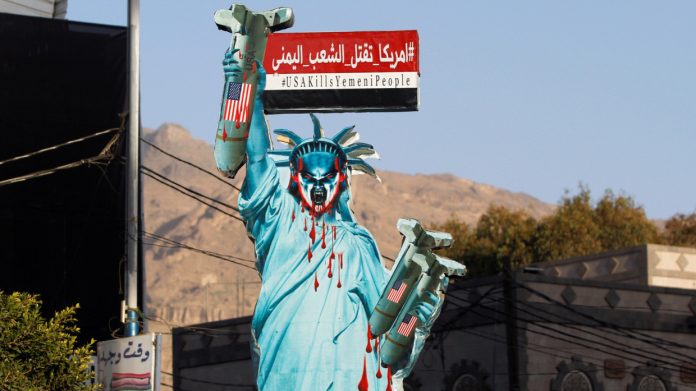
Yemen War

Senior Saudi officials pressed their US counterparts to scrap a policy of selling only defensive arms to its top Persian Gulf partner in several meetings in Riyadh and Washington in recent months, three of the sources said ahead of Biden’s visit to the kingdom this week.

The internal US deliberations are informal and at an early stage, with no decision imminent, two sources said, and a US official told Reuters there were no discussions on offensive weapons under way with the Saudis “at this time.”

But as Biden prepares for a diplomatically sensitive trip, he has signaled that he is looking to reset strained relations with Saudi Arabia at a time when he wants increased Persian Gulf oil supplies along with closer Arab security ties with Israel to counter Iran.

At home, any move to rescind restrictions on offensive weapons is sure to draw opposition in Congress, including from Biden’s fellow Democrats and opposition Republicans who have been vocal critics of Saudi Arabia, congressional aides say.

Soon after taking office early last year, Biden adopted a tougher stance over Saudi Arabia’s campaign against the Iran-aligned Houthis in Yemen, which has inflicted heavy civilian casualties, and Riyadh’s human rights record, in particular the 2018 killing of Washington Post journalist and political opponent Jamal Khashoggi.

Biden, who as a presidential candidate denounced Saudi Arabia as a “pariah,” declared in February 2021 a halt to US support for offensive operations in Yemen, including “relevant arms sales.”

Saudi Arabia, the biggest US arms customer, has chafed under those restrictions, which froze the kind of weapons sales that previous US administrations had provided for decades.

Biden’s approach has softened since Russia’s invasion of Ukraine in March, which has prompted the United States and other Western countries to appeal to Saudi Arabia, the world’s top oil exporter, to pump more oil to offset loss of Russian supplies.

Saudi Arabia also won White House praise for agreeing in early June on a two-month extension of a UN-brokered truce in Yemen, scene of the world’s worst humanitarian crisis.

Washington would now like to see it turned into a permanent ceasefire.

A person in Washington familiar with the matter noted the administration had begun internal discussions about the possibility of removing Saudi weapons restrictions but indicated they had not reached a decision-making stage.

Among the times when Saudi officials raised the request was during Deputy Minister of Defense Khalid bin Salman’s visit to Washington in May, according to a second source.

The Saudi government did not respond to a request for comment.

The sources stressed, however, that no announcement was expected around Biden’s July 13-16 trip, which will include stops in Israel and the West Bank.

Any decision, they added, is expected to depend heavily on whether Riyadh is deemed to have done enough to find a political settlement to the Yemen conflict.

Among the biggest-ticket items the Saudis would likely seek are precision-guided munitions (PGM) such as those approved under former President Donald Trump in the face of objections from members of Congress.

But the Biden administration is expected to move cautiously as it discusses which systems might be offered, two sources continued.

Amnesty International announced US-made precision-guided bombs were used in a Saudi-led coalition air strike on a detention center in Yemen in January that killed scores.

If Washington eases the ban, it may be easier to push through sales of less-lethal equipment such as armored personnel carriers or replenish stocks of less-sophisticated ground-to-ground and air-to-ground weaponry.

Even under existing restrictions, the United States began stepping up its military support for Saudi Arabia earlier this year following Houthi missile strikes on the kingdom.

Washington approved missiles and an anti-ballistic defense system sales to Saudi Arabia, the Pentagon said in November, and the United States sent Patriot missiles this year as well – all deemed by US officials to be defensive in nature.

The Biden administration has also maintained backing for the Saudis to receive a Terminal High Altitude Area Defense (THAAD) system first approved in 2017 to counter ballistic missile threats.

While lawmakers have mostly acquiesced to such sales, Biden could face fallout on Capitol Hill if he decides to sell Riyadh offensive weapons again.

Some have questioned Biden’s decision to visit Saudi Arabia, seeing it as lending legitimacy to Crown Prince Mohammed bin Salman, the Saudi de facto leader who the US intelligence community concluded was behind Khashoggi’s murder.

Among the likely opponents would be Democratic Senator Chris Murphy, a staunch critic of the Saudi campaign in Yemen who praised Biden when he froze offensive arms sales.

Daily: Many “allies, friends” of Iran impeding its development

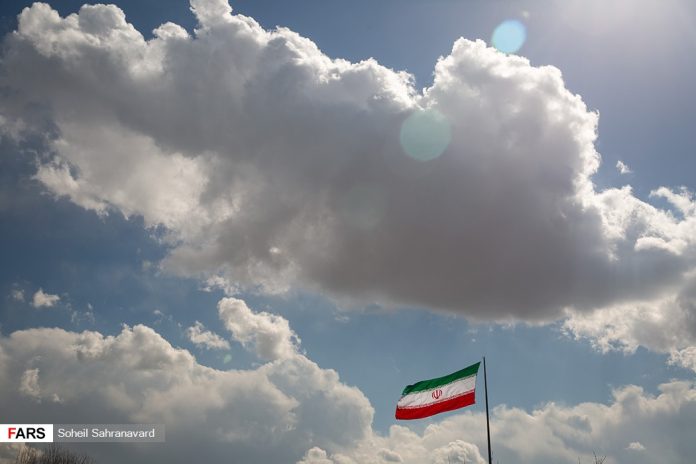
Iran Flag

The column highlights Iran’s “exceptional” position in geopolitical and energy terms, saying this is a “historical asset and opportunity” that should be used now.
According to the daily, geography and energy gives Iran numerous “golden opportunities” that are neither without risk nor eternal.

“Numerous rivals and enemies in this very region or beyond fear Iran moving into the heart of international economy, finance and even normal culture,” the daily said.

“We will be favorable to them only when in economic and cultural isolation, many of Iran’s apparent allies and friends prevent its development and fear that such a country, with its exceptional privileges, would connect with the global trade and join economic powers.”

Iran is an energy hub, the daily wrote, and that is while the large part of the global economy relies on the energy resources of the Middle East.

“Under such circumstances, Iran cannot downplay economic rivalry and close its eye on the progress and rapid growth of trade-oil-tourism based economies in the region, that are inclined toward industrial production and new technologies,” the daily wrote.

The paper warned that the region is witnessing “hoarding of water” in Turkey and new energy and transportation treaties that leave out Iran.

“Such developments, or better to say such plans, will make our privileges fade, or perhaps disappear, in the next ten years. We should not be neglectful,” the daily wrote.

“The basis for any balance [in ties with other countries] is economic profit and benefit, and the basis for any negative balance is preventing loss and preventing political and military powers to use our country in tensions that are not relevant and nor beneficial to us. There will be no justification for any cooperation that does not lead to profit and development, or does not boost our security and power.”

IRNA: Iran national football team head coach Skocic sacked

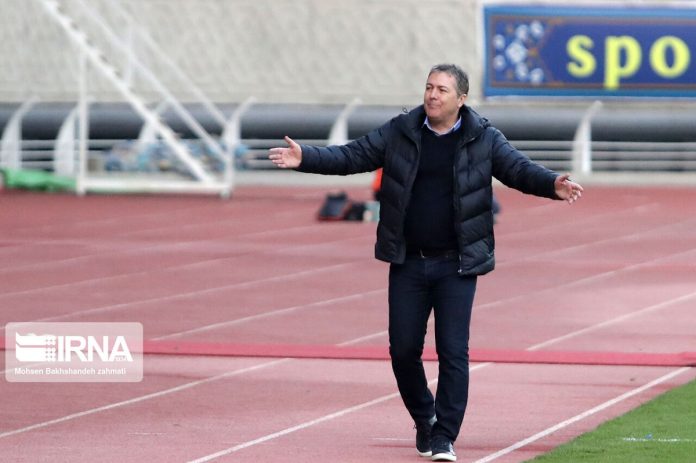
Dragan Skočić

According to the news, which is yet to be confirmed by Iran’s Football Federation, the decision leaves the post vacant for several foreign and domestic candidates, including Croatian Branko Ivankovic, who was a former head coach of Iran’s national team (Team Melli) in 2006 World Cup and is currently leading Oman’s national football team.

Amir Ghalenoei, who currently manages Iran’s Gol Gohar Sirjan, and Javad Nekounam, Foolad FC’s coach are among the top domestic contenders.

Former head coach of the Iranian national football team Ali Daei has reportedly turned down the offer to replace Skocic.

Meanwhile, former Portuguese head coach of Iran’s national team Carlos Queiroz, has also been taken off the shortlist of possible candidates who would be at the helm for the World Cup in Qatar.

Iran’s sport ministry and football federation officials are reviewing the candidates for the post and will announce the replacement within days, IRNA reported.

Jordan PM says seeking good ties with Iran

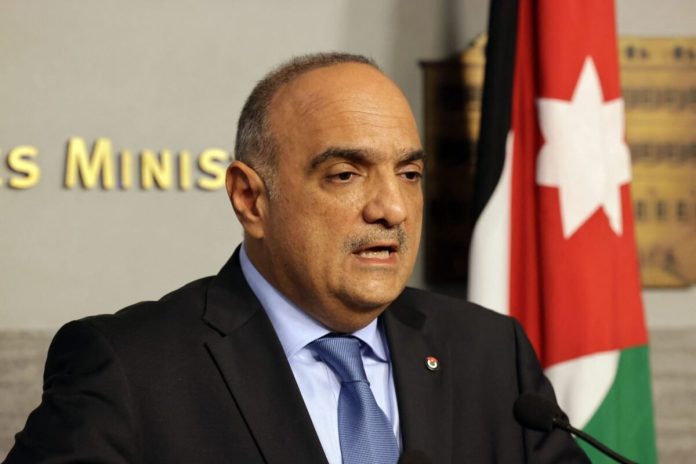
Bisher al-Khasawneh

Bisher al-Khasawneh told BBC Arabic on Sunday, Iran’s interaction with Arab countries of the Persian Gulf region is an inseparable part of Jordan’s national security structure.

He said, “Amman is looking for a formula for dialogue with Tehran based on good neighborly relations.”

The remarks come a month after Jordan’s King Abdullah told CNBC News network that he supports the formation of a NATO-style military alliance in the Middle East reportedly with Israel and other Arab countries.

The issue touched a raw nerve in Iran, with high-ranking officials warning the Islamic Republic would give a befitting response to any interventionist move by Israel in the Middle East.

However, officials in Jordan rushed to clear “the misunderstanding” with the country’s Foreign Minister Ayman al-Safadi saying Arab countries want friendly relations with Iran and to achieve the goal, all sides need to remove sources of tensions thought a negotiated solution.

In an interview with Al Jazeera, Safadi dismissed reports that Arab countries in the region are forging an anti-Iran coalition.

Kazakhstan announces visa-free travels for Iranian nationals

Imam Khomeini Airport

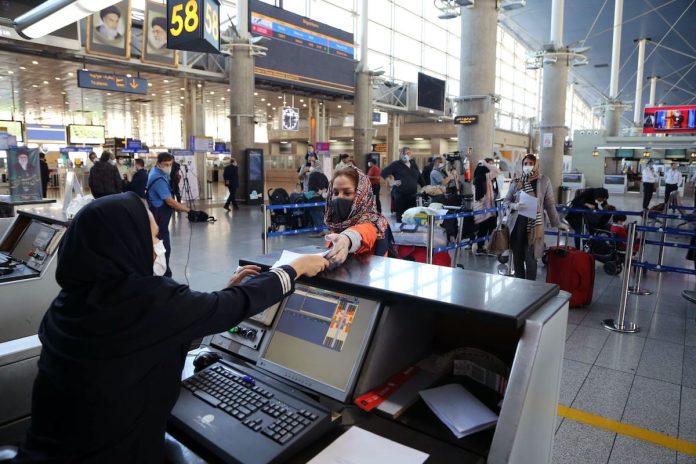
Kazakhstan’s interior ministry says the decision is made based on earlier mutual agreements with Iran.

Under the new regulations also implemented for nationals of China and India, Kazakhstan also allows a total of 42 calendar days of stay in the country in any six-month period for Iranians using the visa-free travel.

“Visa-free travels will be authorized for visits for trade, tourism and personal reasons. Nationals of the mentioned countries should seek work permit or proper visas for visits or any other purposes,” the Kazakh interior ministry’s migrants’ services committee said.

The visa-free travels for Iranians was part of agreements reached between Iranian and Kazakh presidents during the latter’s visit to Tehran last month.

During Kassym-Jomart Tokayev’s visit to Tehran, he said the visa-free travels are aimed at increasing cooperation in different fields including by facilitating contacts between businessmen of the two countries and by increasing tourist travels.