‘Massive’ Russian shelling on Ukraine’s Sloviansk: Mayor
Russian forces are pounding Sloviansk with “massive” shelling, its mayor has stated, as the eastern Ukrainian city becomes Moscow’s next target in its campaign in the Donbas region.
“Sloviansk! Massive shelling of the city. The centre, the north. Everyone, take shelter,” Vadim Lyakh wrote on Facebook.
Pavlo Kyrylenko, governor of the Donetsk region, also said on Telegram two people have been killed and seven more injured amid Russian bombardment of Sloviansk.
He added the Moscow’s forces had targeted the city market.
“Once again the Russians are intentionally targeting places where civilians assemble. This is terrorism pure and simple,” Kyrylenko stated, urging local people to evacuate.
Russian-held parts of Ukraine rife with arbitrary detention: UN rights chief
Arbitrary detention of civilians has become widespread in parts of Ukraine held by Russia’s military and affiliated armed groups, with 270 cases documented, the UN human rights chief said on Tuesday, announcing plans to boost monitoring in the country.
The findings were based on information from monitors’ field visits and interviews conducted with just over 500 victims and witnesses of human rights violations, as well as other sources of data, UN High Commissioner for Human Rights Michelle Bachelet told the Geneva-based Human Rights Council.
“Despite restrictions on access, we have documented 270 cases of arbitrary detention and enforced disappearance. Eight of the victims were found dead,” Bachelet stated in an update on the situation in Ukraine in the period from February 24 to May 15.
UN condemns ‘senseless war’ in Ukraine
The UN rights chief has condemned Russia’s “senseless war” in Ukraine as she demanded an end to the “unbearable” civilian suffering unleashed by the invasion.
Michelle Bachelet called for an immediate end to hostilities and redress for the war’s victims, in her final appearance before the UN Human Rights Council.
“As we enter the fifth month of hostilities, the unbearable toll of the conflict in Ukraine continues to mount,” the United Nations High Commissioner for Human Rights added.
Russia claims weapons shipments to Ukraine spreading to Middle East
Russia has claimed some of the weapons the West sent to Ukraine are ending up on the black market across the Middle East.
Speaking in televised remarks, Defence Minister Sergei Shoigu said that Ukraine had received more than 28,000 tonnes of military cargo so far.
“According to information at our disposal, some of the foreign weapons supplied by the West to Ukraine are spreading across the Middle Eastern region and are also ending up on the black market,” Shoigu added, without providing any details to back up his claim.
Russian-backed forces head for Donetsk front
Forces of the Russian-backed Donetsk and Luhansk people’s republics are moving towards the Donetsk region, TASS has reported.
Russian state news agency cited Donetsk People’s Republic leader Denis Pushilin as the source of the information.
Though Russia took the final Ukrainian strongholds in Luhansk region last week, Kyiv still controls around 45 percent of the neighbouring Donetsk region.
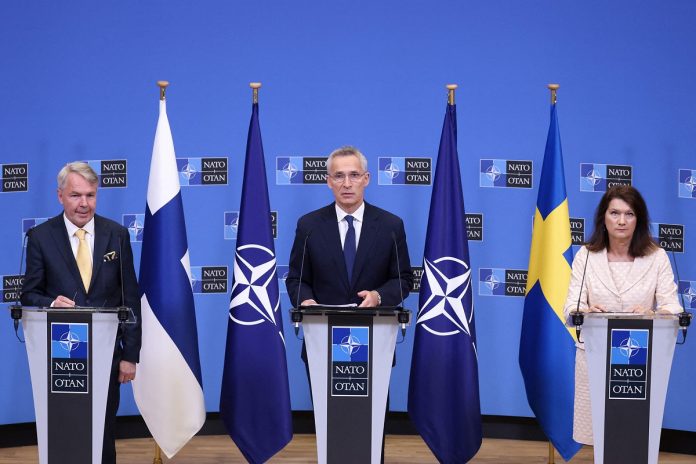
NATO formally begins process of ratifying membership of Sweden and Finland
NATO has formally begun the process of Sweden and Finland joining the alliance, its secretary general has said.
NATO members signed the protocols of accession on Tuesday, in what Jens Stoltenberg labeled an “historic moment.”
It comes after the NATO summit in Madrid last week where allied leaders agreed to invite Finland and Sweden to join the alliance.
“This is truly an historic moment. For Finland, for Sweden, for NATO and for our shared security,” Stoltenberg stated.
“This is a good day for Finland and Sweden, and a good day for NATO. With 32 nations around the table, we will be even stronger and our people will be even safer, as we face the biggest security crisis in decades,” he continued.
He added that NATO’s door remains open to democracies in European that are “ready and willing to contribute to our shared security.”
Finland and Sweden ended their decades of neutrality when they applied to join NATO following Russia’s invasion of Ukraine, which was met by some opposition from Turkish President Recep Tayyip Erdogan, who accused them of housing Kurdish “terrorist organizations.”
Last week, Turkey dropped its opposition after a joint memorandum was signed between the three countries, underscoring their commitment to fully support each other against threats to their security.
Kremlin comments on possible NATO base in Finland
Russia’s response to a possible NATO base in Finland would be outlined by the military, Kremlin spokesman Dmitry Peskov said on Tuesday.
Peskov responded to Finnish media reports, which claimed that the mayor of a city close to the Russian border wanted an increased Western military presence there.
“We have discussed on many occasions that relevant plans do exist [in the defense ministry] and that work is underway to ensure our security,” Peskov sفشفثی, when asked about the comments. Russia’s attitude towards Finland’s looming accession to NATO did not change, he added.
Last week, Finnish broadcaster Yle cited Lappeenranta Mayor Kimmo Jarva as saying that his city and the entire region could benefit from an inflow of investment after the country ascends to NATO. He شییثی the city airport in particular could be used for military purposes.
Lappeenranta, a city of some 70,000 residents, is located in the South Karelia region 20km from the Russian border.
Disputed Russian cargo ship remains stranded off Turkish coast
A Russian-flagged cargo ship at the centre of a fight over grain between Kyiv and Moscow has remained anchored off Turkey’s Black Sea coast four days after its unexpected arrival.
Ukraine alleges that the Zhibek Zholy had set off from its Kremlin-occupied port of Berdyansk after picking up illegally seized wheat.
Ukraine’s ambassador to Turkey, Vasyl Bodnar, told Al Jazeera that Kyiv had presented evidence to authorities in Ankara and that an investigation was underway.
Moscow concedes that the 7,000-tonne vessel was sailing under the Russian flag but denies any wrongdoing.
UK reveals stance on Black Sea warship deployment
Britain will not deploy warships to the Black Sea to help with the delivery of Ukrainian grain, Prime Minister Boris Johnson has said. The shipments from Ukraine, a major grain exporter, have been disrupted following Russia’s offensive against the country.
Speaking in Parliament, Johnson was asked to confirm if he was looking to breach the Montreux Convention, a 1936 international agreement that allows Turkey to block access to the Black Sea to warships from outside the region.
The PM replied: “No, we’re not looking at that. There are alternative solutions that don’t involve the presence of the UK or other warships in the Black Sea.”
Johnson suggested that the Danube and other rivers, as well as rail transport, could be used to ship the grain out of Ukraine. These methods could help to “get grain out in smaller quantities,” as opposed to arranging a maritime convoy, the PM added.
“We’re looking at all the possible options,” Johnson said.
US veterans train Ukrainian soldiers despite warnings: Report
A number of US veterans are reportedly training Ukrainian soldiers near the frontlines of the Russia-Ukraine conflict, despite the Pentagon urging them not to do so, claimed the New York Times in an article.
“Americans are in Ukraine,” states the outlet, noting that the exact number of US citizens fighting on the front lines of the conflict is unknown. The NYT adds that some of these Americans are also volunteering for casualty evacuation teams and to be bomb disposal specialists, logistics experts and instructors.
The NYT also claims that there are currently small teams of former special operations members providing training to Ukrainian soldiers and, in some cases, helping Kiev’s forces plan combat missions.
While the US has pledged nearly $7 billion in security aid for Ukraine, it has so far refrained from directly involving itself in the conflict. Washington officially pulled out its 150 military instructors from Ukraine shortly before the conflict started in late February, with President Joe Biden stating that “we will not fight the third world war in Ukraine.”
The Pentagon has denied any affiliation with any US volunteer groups and has repeatedly warned US citizens against traveling to Ukraine to take part in the conflict.
At least 21 Americans have been wounded in combat since the conflict started, states the NYT, citing a nonprofit organization that evacuates them. Also, two US nationals have been killed, according to the State Department, while two others have been captured and one is reportedly missing in action.
Russian parliament passes first vote on war economy measures
Russian lawmakers have given the first stamp of approval to two bills enabling the government to oblige businesses to supply goods to the military and request their employees to work overtime.
Deputy Prime Minister Yuri Borisov told parliament the moves were driven by the need to support the military at a time when Russia’s economy was under “colossal sanctions pressure” from the West, more than four months into what it calls its special military operation in Ukraine.
“The load on the defence industry has increased significantly. In order to guarantee the supply of weapons and ammunition, it is necessary to optimise the work of the military-industrial complex and enterprises that are part of cooperation chains,” he stated.
Finland seizes hundreds of Russian freight cars following EU sanctions
Finland has seized nearly a 1,000 freight cars belonging to Russian companies as a result of European Union sanctions, according to Finnish state-owned rail operator VR and a letter from Russia’s rail monopoly seen by the Reuters news agency.
VR’s spokeswoman Taina Kuitunen confirmed by email that there were “around 800 units of sanctioned [freight] cars in Finland at the moment” and the company sought to return the non-seized ones to Russia as soon as possible.
Russian-held part of south Ukraine aims to sell grain to Middle East
Russian-imposed authorities in the southeastern Zaporizhzhia region of Ukraine, which is partly under Russian control, say an agreement has been reached to sell grain abroad, mainly to the Middle East.
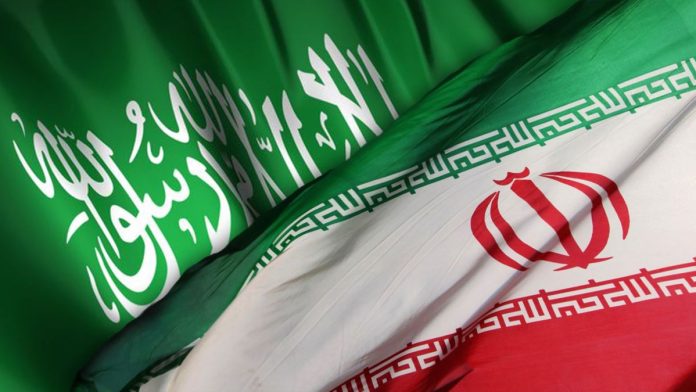
The countries involved are mainly Iraq, Iran and Saudi Arabia, Russian state news agency TASS reported, citing Yevgeny Balitsky, the head of the Russian-installed administration of the Zaporizhzhia region.
Ukraine and the West accuse Russia of stealing Ukrainian grain while Moscow denies this.
Foreign Minister Dmytro Kuleba has called on Ukraine’s allies to crack down on Russian trade.
“After all, what Russia really exports to the world today is death, crisis, and lies,” he wrote on Twitter.
No decision taken on switching Russian LNG sales to roubles: Kremlin
The Kremlin says no decision has been made on whether to switch sales of Russian liquefied natural gas (LNG) to roubles, its official currency.
Speaking to reporters, Kremlin spokesman Dmitry Peskov said that no presidential orders were currently planned on the proposal, which would see certain countries pay for LNG in roubles.
Russia’s Gazprom could propose expanding its roubles-for-gas scheme for pipeline gas to include LNG, the Interfax news agency quoted a senior manager as saying on Monday.
Ukrainian forces take up new defensive lines in Donetsk
Ukrainian forces are taking up new defensive lines in Donetsk, where they still control major cities, after Russian President Vladimir Putin claimed victory in neighbouring Luhansk province.
Putin told his troops to “absolutely rest and recover their military preparedness” ahead of a renewed offensive on the industrial region.
Pavlo Kyrylenko, the governor of Donetsk, stated the towns of Sloviansk and Kramatorsk have been shelled overnight.
“They are now also the main line of assault for the enemy,” he said of the towns, adding, “There is no safe place without shelling in Donetsk region.”
Russia has demanded that Ukraine hand both Luhansk and Donetsk – known collectively as the Donbas – to pro-Moscow separatists.
Security services official takes over Moscow-occupied Kherson region
An official from Russia’s powerful FSB security services has taken over the government of the Moscow-occupied Kherson region in southern Ukraine, Kremlin-installed authorities have announced.
Sergei Yeliseyev, until now the deputy head of government in the Russian exclave of Kaliningrad, “became head of the government in the Kherson region”, Vladimir Saldo, who heads the Russian occupational administration, stated.
“Ukraine is forever in the past for the Kherson region. Russia is here forever,” the Moscow-installed authorities said on instant messaging service Telegram.
Russia accuses Ukraine of torturing prisoners of war
Russia has claimed it is investigating the torture of Russian soldiers held prisoner in Ukraine and recently released as part of a prisoner swap with Kyiv in late June.
The Russian committee said Moscow’s soldiers told investigators about “the violence they had suffered”.
According to its statement, one of the soldiers said Ukrainian medics treated him without anaesthetic and that he was “beaten, tortured with electricity in captivity”.
The Russian Investigative Committee, which probes serious crimes, said in a statement that it was “verifying facts of inhuman treatment of Russia soldier prisoners in Ukraine”.
Up to 60 million tons of grain could be stuck in Ukraine by fall: Zelensky
Up to 60 million tons of grain could be stuck in Ukraine by the fall if the country continues to face blocked exports, Ukrainian President Volodymyr Zelensky told reporters in Kyiv.
“You know, 22 million tons are blocked now,” Zelensky said, adding, “We also expect about 60 million tons in the fall. Then we will be in a really difficult, very difficult situation.”
The president also stated he was working with the United Nations to try to open a safe corridor that would allow Ukraine to export grain from its Black Sea ports.
“We are interested in this as exporters. We are interested in this, so that our farmers continue to work for the next year, for the next harvest. To do this, we need to export all this grain — barley, wheat, corn, etc,” Zelensky noted.
“From our side, the Ukrainian state is not wasting time and we are working on various ways of railway and river ports for the export of our grain, and we are increasing this export every day,” he continued.
Ukraine admits no potential to join NATO anytime soon
Ukraine’s Foreign Minister Dmitry Kuleba has said that he doesn’t see how NATO might change its stance on Kiev’s accession to the bloc in the near future.
“Ukraine still pursues Euro-Atlantic integration, but I do not see the potential in the near future for NATO to change its position in a way the European Union did, and to take concrete steps to ensure Ukraine’s accession to the alliance,” he told local media.
Kuleba noted that while the EU has radically altered its stance on Ukraine’s membership after Russia began its military offensive, NATO is still dwelling “in a pre-conflict world” despite having opened its doors to Kiev in 2008.
“As of February 24, NATO had an edge over the EU in this respect, because it had a decision on Ukraine eventually becoming a member of the alliance… Over the past four months, the EU outpaced NATO, taking the process to the second stage, while the alliance is standing still,” he added.
In late June, the EU granted candidate status to Ukraine, although, according to various European leaders, it might take Kiev decades to finally join the bloc, considering that it has to enforce a slew of economic, democratic and anti-corruption reforms.
At the same time, Ukraine’s prospects of becoming a NATO member look even bleaker, with Ukrainian President Volodymyr Zelensky saying in mid-March that Kiev should accept this reality.
“Ukraine is not a member of NATO. We understand that. We have heard for years that the doors were open, but we also heard that we could not join. It’s a truth and it must be recognized,” the president conceded at the time.
Ukraine says 345 children dead amid war
At least 345 children have died in Ukraine as a result of Russia’s invasion and 644 have been wounded, the prosecutor general’s office has reported.
Most child casualties occurred in the Donetsk region (345), followed by the regions of Kharkiv (185), Kyiv (116), Chernihiv (68), Luhansk (61), Mykolaiv (53), Kherson (52) and Zaporizhia (31), the prosecutor general announced.
The office added figures were not final as work was still underway to establish them in places of active hostilities, temporarily occupied areas and territories “liberated” by Ukraine.
Russia continues to shell populated areas in Luhansk: Governor
The governor of the now Russian-occupied Luhansk region says Russian forces are continuing to shell populated areas.
“In the recently occupied territories, the Russians establish their own rules; tell nonsense about the opening of schools from September 1, (and) the rapid restoration of communications,” Serhiy Luhansk wrote on Telegram.
“This is all a lie, the same thing happened in Mariupol – everyone saw how water ran through the destroyed houses. The only thing the Rashists are capable of is terrorising the local population,” Haidai added, using the popular term for “Russians” in Ukraine.
He stated Russian forces had started looking for “activists” and “military families” to collaborate with them against Ukraine.
NATO’s decision to declare Russia its enemy may escalate tensions and undermine security in Europe, and it also runs counter to the Russia-NATO Founding Act, the Russian Security Council secretary, Nikolay Patrushev, said on Tuesday.
“The US and its allies identified Russia, that has been fighting to defend its national interests and sovereignty, as their enemy, as seen in doctrinal documents, including those approved at NATO’s summit in Madrid,” Patrushev noted, addressing a national security meeting in Russia’s Far East.
He recalled that the US and its satellites had refrained from a constructive dialogue with Russia in the sphere of strategic security and had completely rebuffed Moscow’s demands for security guarantees.
“NATO has been deploying its military infrastructure closer to our borders, and it has been ramping up military forces on its eastern flank. Decisions were made to accept Finland and Sweden into the alliance, and a new security pact, AUKUS, was launched,” the Russian Security Council secretary added.
“These decisions and moves may not only escalate tensions and undermine European security, they also clearly run counter to the Russia-NATO Founding Act that is still valid de jure,” he emphasized.
Putin has likely directed an ‘operational pause’: ISW
President Vladimir Putin has likely directed his troops to take an “operational pause” after they captured Severodonetsk and Lysychansk, the Institute for the Study of War (ISW) has said.
After congratulating his troops on taking the Luhansk region, Putin said the forces participating in the recent gains should “absolutely rest and recover their military preparedness”.
“Putin‘s public comment was likely meant to signal his concern for the welfare of his troops in the face of periodic complaints in Russia about the treatment of Russian soldiers. His comment was also likely accurate – Russian troops that fought through Severodonetsk and Lysychansk very likely do need a significant period in which to rest and refit before resuming large-scale offensive operations,” the ISW announced.
“It is not clear, however, that the Russian military will accept the risks of a long enough operational pause to allow these likely exhausted forces to regain their strength,” it added.
Nearly 90 Ukrainian athletes, coaches have died amid war: Zelensky
President Volodymyr Zelensky’s office has detailed the toll on Ukrainian sport during the Russian invasion, now in a fifth month.
A total of 89 athletes and coaches have died “as a result of hostilities,” 13 more have been captured by the Russians, and “more than a hundred thousand Ukrainian athletes do not have the opportunity of training,” Zelensky stated.
Zelensky has thanked the International Olympic Committee (IOC) for supporting a ban on Russian teams and athletes competing in most Olympics sports, ahead of a court hearing Tuesday to challenge the ruling in international soccer.
Zelensky met in Kyiv on Sunday with IOC President Thomas Bach and praised “his unwavering position” on sports sanctions against Russia and its ally Belarus, according to a readout of the visit provided by his presidential office.
The IOC advised sports leaders on February 28 to act and soccer bodies FIFA and UEFA made a joint ruling later that day. It is the subject of an appeal Tuesday by the Russian soccer federation at the Court of Arbitration for Sport in the Olympic home city of Lausanne, Switzerland.
The IOC also announced it has now tripled its fund for Ukrainian sport to $7.5m since the war started.
Luhansk is Russia’s last victory in Ukraine: Adviser
Moscow’s capture of the Luhansk region is “the last victory for Russia on Ukrainian territory,” an advisor to the head of Ukraine’s president’s office has said.
“These were medium-sized cities. And this took from 4th April until 4th July — that’s 90 days. So many losses…,” Oleksiy Arestovych stated in an online post.
Arestovych added besides the battle for Donetsk, Ukraine was hoping to launch counter offensives in the south of the country.
“Taking the cities in the east meant that 60 percent of Russian forces are now concentrated in the east and it is difficult for them to be redirected to the south,” he said, adding, “And there are no more forces that can be brought in from Russia. They paid a big price for Severodonetsk and Lysychansk.”
Kramatorsk residents stock up on food in fear of Russian advance
Dozens of mainly elderly people in the eastern Ukrainian city of Kramatorsk queued up for hours on Monday to receive milk, bread and other groceries from World Central Kitchen.
Many are fearful Russian forces will try to seize all of the Donetsk region after capturing Luhansk last week, Reuters reports. Bakhmut, Sloviansk and nearby Kramatorsk lie southwest of Lysychansk, and are the main urban areas holding out against Russian forces in Donetsk.
Kramatorsk Mayor Oleksandr Honcharenko told Reuters that some residents were packing up to leave after three barrages of missiles hit the town over the weekend. He added the strikes did not kill anyone but one landed in a suburban area and injured one woman.
More than two thirds of the city’s population have left since the war began, leaving just over 60,000 people, he said. But many said they did not have any choice rather than stay as they could not afford to rent apartments and support their families away from their homes.
Russia to supply Crimea with electricity from Ukraine’s occupied power plant
The Russian-installed head of the occupied city of Enerhodar, home to the Zaporizhia Power Plant, says the city plans to provide electricity supplies to the annexed territory of Crimea once damage to the plant is restored, Russia’s state news agency TASS reports.
“We are ready to supply Crimea – according to approximate calculations – about 25% of the energy produced by the plant. But they are very slowly restoring the towers blown up in 2015 near Chonhar (village),” Yevgeny Balitsky told TASS adding that the towers were blown up by “Ukrainian nationalists”.
“And let’s face it: in eight years everything is already there (in Crimea). Everything is fine without us, there is no urgency for Crimea, although energy from nuclear power plants will be cheaper. But for us, there is both urgency and a need,” Balitsky said.
Ukraine freezes $12 million worth of Russian and Belarusian assets: Prosecutor general
The office of Ukraine’s prosecutor general announced the freezing of $12 million worth of assets belonging to Russian and Belarusian businesses.
The assets include 300 railway containers with mineral fertilizers found to be in breach with Ukrainian customs regulations, according to the statement posted on the prosecutor’s website.
“To ensure the property is preserved as evidence and its potential confiscation, the Office of the Prosecutor General imposed the freeze, based on the decisions of the investigating judges of the Shevchenkivskyi District Court of Kyiv,” the statement read.
Ukrainian Bureau for Economic Security and Large Scale Tax Evasion is conducting the investigation, according to the statement.
Sweden will support NATO open door policy: PM
Sweden “would be supportive of NATO’s open door policy,” Prime Minister Magdalena Andersson said Monday during a joint press conference with Ukrainian President Volodymyr Zelensky in Kyiv.
NATO’s “open door policy” is based on Article 10 of its founding treaty, which states that any decision to invite a country to join the alliance must be based on consensus among all allies.
“What I can tell you is that when we become members, we would be supportive of NATO’s open door policy,” Andersson stated alongside Zelensky.
Sweden and neighboring Finland completed accession talks on Monday at NATO Headquarters in Brussels. Both countries formally confirmed their willingness and ability to meet the political, legal and military obligations and commitments of NATO membership, the alliance announced in a statement.
Both countries have held neutral status for years, but support for NATO membership within the countries has risen since Russia’s invasion of Ukraine.
Andersson also said Sweden remains “open to further sanctions” against Russia.
“I think there are different opinions within the European Union if that would be the right way forward right now,” Andersson continued.
“We are open for it,” she added.
Zelensky noted, “Of course, I want to congratulate Sweden and the Prime Minister personally on the historic decision of the NATO summit in Madrid on Sweden joining the alliance under an accelerated procedure.”
Ukraine is in talks with Turkey, UN on grain exports: Zelensky
Ukraine is holding talks with Turkey and the United Nations to secure guarantees for grain exports from Ukrainian ports, President Volodymyr Zelensky has said.
“Talks are in fact going on now with Turkey and the UN [and] our representatives who are responsible for the security of the grain that leaves our ports,” Zelensky told a news conference alongside the Swedish prime minister.
“This is a very important thing that someone guarantees the security of ships for this or that country – apart from Russia, which we do not trust. We therefore need security for those ships which will come here to load foodstuffs,” he added.
Zelensky noted Ukraine was working “directly” with UN Secretary-General Antonio Guterres on the issue and that the organisation was “playing a leading role, not as a moderator”.
German chancellor calls high inflation caused by Russia’s aggression a “historic challenge”
People in Germany must stand together to cope with the “historic challenge“ of soaring costs of living caused by Russia’s aggression on Ukraine, German Chancellor Olaf Scholz said Monday after meeting trade union and employer association leaders.
“The current crisis will not pass in a few months,“ Scholz told reporters, adding, “We need to be prepared for this situation not to change in the foreseeable future.”
“Russia’s war of aggression on Ukraine has changed everything, and at the same time, supply chains are still disrupted since the pandemic and general uncertainty is growing,” he added, saying, “We will only get through the crisis if we agree jointly on solutions.”
Scholz kicked off a series of meetings on Monday to spur “the spirit of togetherness“ in a so-called “concerted action“ with unions, employers, the Federal Bank, scientists and the government in order to cope with the challenges of inflation caused by skyrocketing energy costs.
Germany will spend 30 billion euros (USD $31.3 billion) to help households with the rising costs, the chancellor noted.
UK adds six people, one business to Russia sanctions list
Britain has added the names of six individuals and one company to its list of people and businesses who are subject to an asset freeze following Russia’s invasion of Ukraine.
The measures allow for “the freezing of funds and economic resources of certain persons, entities or bodies involved in destabilising Ukraine … or obtaining a benefit from or supporting the Government of Russia,” Britain’s finance ministry said.