Tuesday, January 13, 2026
Home Blog Page 1842

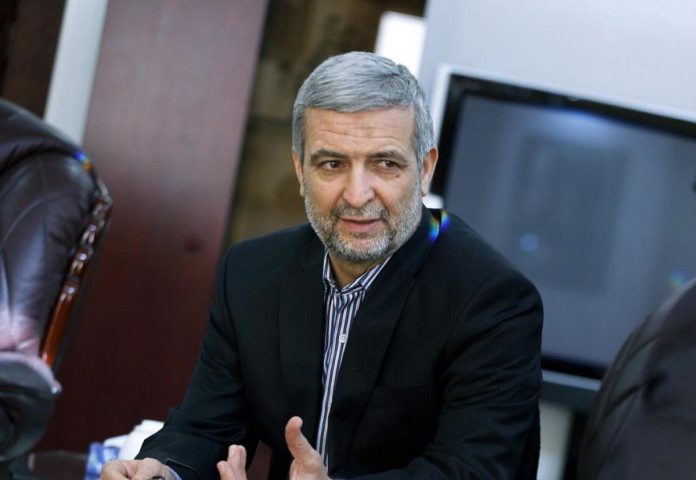
Iran’s special envoy holds consultations with Pakistan FM on ties, Afghanistan

Hossein Kazemi Qomi

Hossein Kazemi Qomi and Bilawal Bhutto Zardari were holding talks in Islamabad on Friday at a meeting where Iran’s ambassador to Pakistan and also the Pakistani special envoy for Afghanistan were present.

They underlined the need for using all regional possibilities to alleviate the ordeal of the people of Afghanistan.

Kazemi Qomi and Zardari further discussed regional initiatives regarding Afghanistan, especially agreements related to the meeting of the top diplomats of Afghanistan’s neighbors and future meetings as well.

Since the Taliban takeover of Afghanistan in August 2021, the country’s neighbors including Iran and Pakistan have held several rounds of talks to discuss ways of restoring stability to Afghanistan.

Nearly all the neighbors of Afghanistan say the only way to stabilize the country is the formation of an inclusive government there in which all Afghan ethnic and religious groups participate.

IRGC Navy Cmdr.: Israel brings nothing but insecurity to Persian Gulf

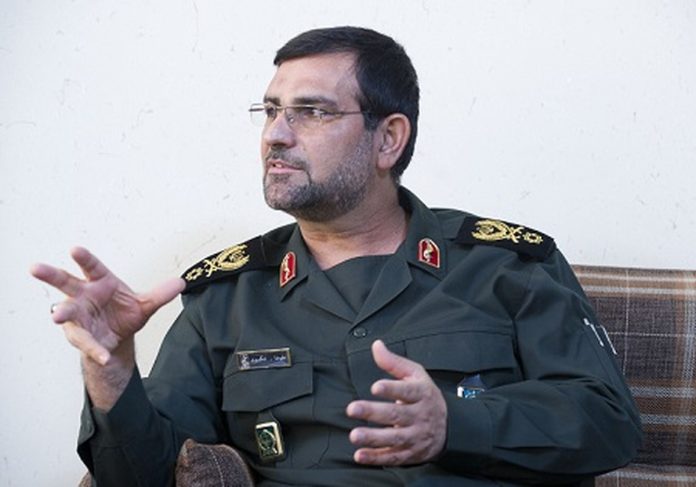
Admiral Alireza Tangsiri

Admiral Alireza Tangsiri was speaking at a meeting with the Commander of Oman’s Navy Admiral Said ibn Nasser al-Harby in Tehran.

He said the Islamic Republic of Iran believes that the presence of extra-regional forces in the Persian Gulf would not help with security there and would, quite the contrary, destabilize the region.

Tangsiri added that Persian Gulf countries by themselves are capable of protecting the security of the region.

He noted that the Zionist regime is the No. 1 enemy of Muslim nations and that the regime was built on oppression and aggression.

Tangsiri said Israel would not hesitate to commit any crime to continue its wretched life but the regime is doomed to failure.

The commander of the IRGC Navy also condemned the recent visit to the region by US President Joe Biden as “provocative”.

On ties between the two navies, Tangsiri said the relations are progressing. He further said the IRGC Navy is ready to give its Omani peer any technical assistance.

The Commander of Oman’s Navy for his part said extra-regional sides only think about their own interests, adding regional security must be protected by regional countries themselves.

Harby added that boosting cooperation between regional nations will strengthen security in the Persian Gulf and will foil plots by foreign powers that covet the Persian Gulf.

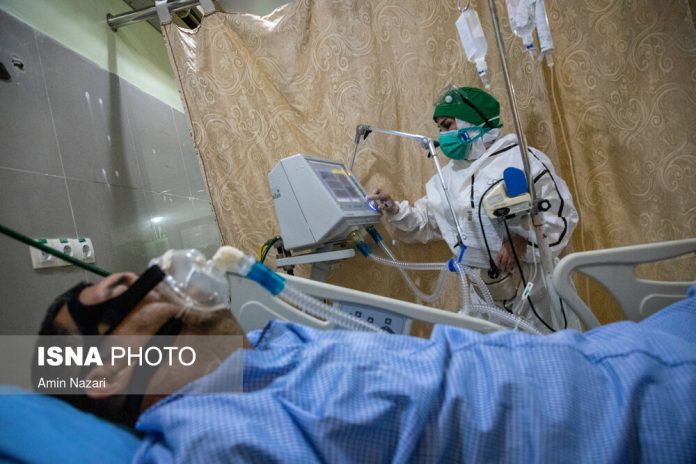
Covid kills 31 more people in Iran

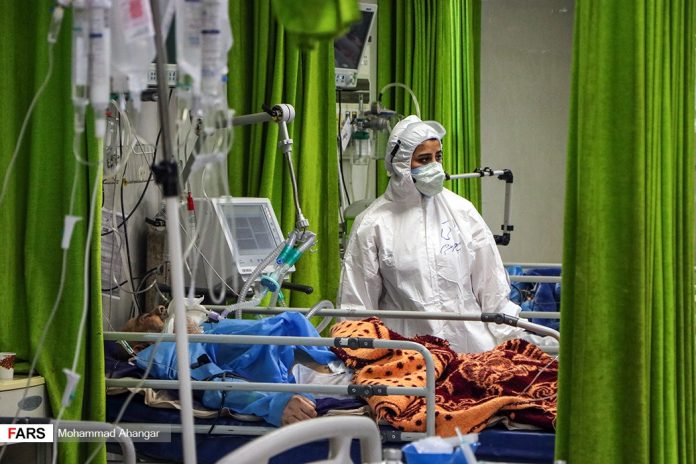
COVID in Iran

The daily caseload was 7,851.

The latest deaths push to 141,624 the total fatalities from the Coronavirus in Iran.

Until several days ago the daily death toll was single-digit and the trend held for many days.

On several days, the death toll was zero. This caused many people to relax Covid-related health protocols.

Now a number of cities are red countrywide in terms of risk from Covid. Authorities in Iran have repeatedly warned people that the Coronavirus pandemic is not over and that “we are not out of the woods” yet.

People in Iran have realized that the danger is real and they have rushed to vaccination places to get their booster shots of the Covid jab.

The vaccination centers are working extra hours to inoculate citizens and officials are urging them to get their boosters as soon as possible.

First Iranian female climber conquers K2 summit

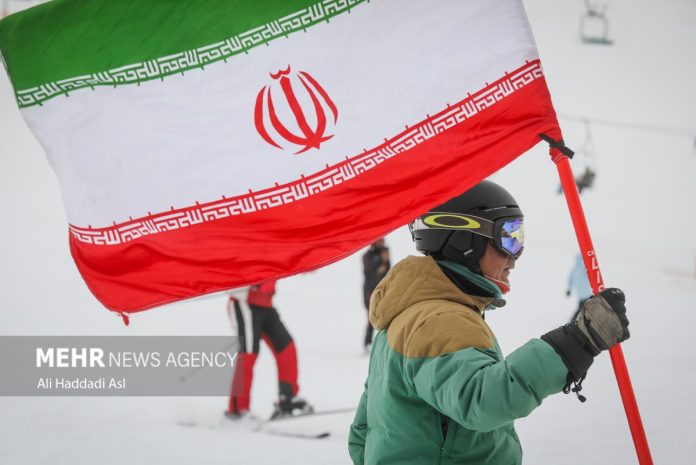
Afsaneh Hesami Fard

Hesami Fard, who ventured out along with a group of female climbers from Pakistan, including Samina Baig, reached the top of the second-highest peak on the earth, after Mount Everest in Nepal.

Hesami Fard was also the third woman to reach the top of Mount Everest last May.

In 2019, Iranian mountaineer Hossein Bahmanyar climbed K2, also known as the Savage Mountain.

Over 80 people have died scaling the mountain, mostly of them on the way down. It was conquered in 1954 for the first time.

Iran marks Iraqi Baathist regime’s 1988 chemical attacks on border villages

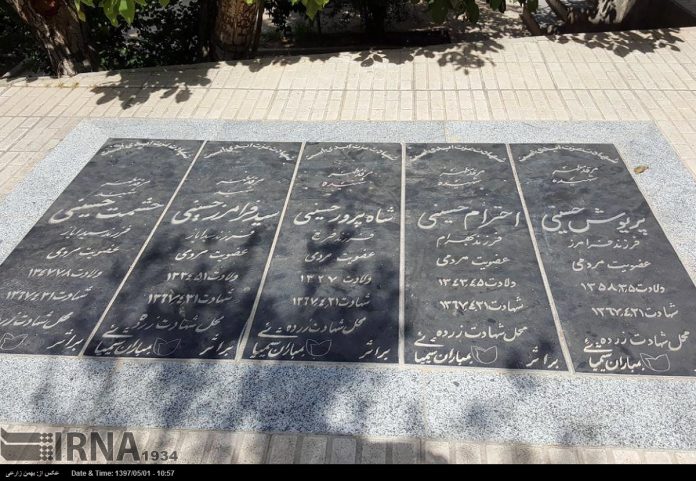
Iraqi Baathist regime’s 1988 chemical attacks on Iranian villages

According to the IRIB news agency, in the early hours of July 22, 1988, only four days after the United Nations Security Council Resolution 598 was adopted, the sound of five Baathist fighter jets was heard in the skies of Zardeh, Sarmil, and Nesar Deireh.

On that fateful day the fighter jets dropped chemical bombs on the residents of the villages and left them grieving forever.

One of these chemical bombs landed on the water spring of one of the villages and the people who drank from the water suffered severe complications and some even died.

In addition to Zardeh, the villages of Nesar Deireh in Gilan-e Gharb and part of Salas-e Babajani and Sarpol-e Zahab were also targeted by the Baathist regime’s chemical bombs.

Currently, many residents of the villages are chemically wounded, with several of them succumbing to their injuries every year.

The chemical attacks by the Iraqi Baathist regime on residential areas are one of the most painful and tragic moments in the history of Iran-Iraq war during the 1980s deadly conflict.

The attacks that resulted in the death of a large number of defenseless people in Iran were carried out amid the silence by international human rights organizations and institutions and the supporters of now-executed Iraqi dictator Saddam Hussein.

Some Western countries, like France and Germany, supplied Saddam with chemical bombs and other equipment against Iran.

According to official figures, there are almost 70,000 survivors of chemical attacks in Iran who continue to suffer from the complications.

Iran: US failure in decision-making main obstacle to JCPOA revival

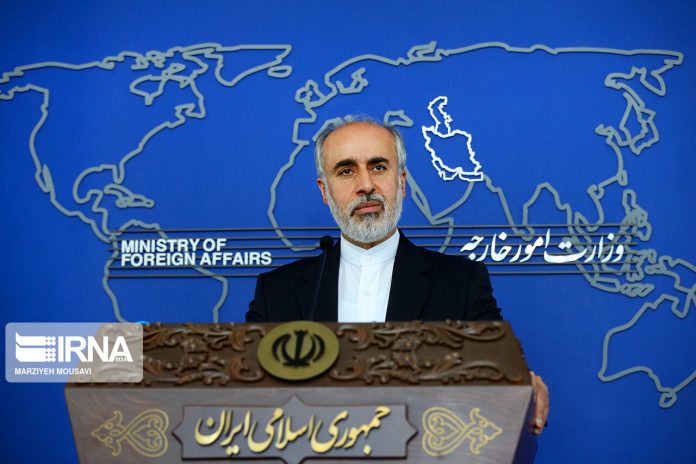
Iranian Foreign Minister Spokesman Nasser Kanaani

Iranian Foreign Ministry’s Spokesman Nasser Kanaani took to Twitter on Friday to react to remarks by Robert Malley, the US special envoy for Iran, who claimed in an interview with the CNN earlier this week that Tehran was facing a choice between renewing the nuclear deal and siding with the Russians.

Malley claimed that Iran “can opt for a position of relative dependency on Russia, which itself is isolated internationally…or it can choose to come back into the deal that’s been negotiated…and have normal economic relations with its neighborhood and with Europe and the rest of the world.”

In his tweet, however, Kanaani said Iran’s policy toward neighbors was not dependent on the 2015 nuclear deal, called the Joint Comprehensive Plan of Action, or Washington’s permission.

“The fake dichotomy between the JCPOA (to which Iran is still a party unlike the US) and good relations between Iran and its neighbors, including Russia, does not hide the fact that lack of decision making on the part of perfidious America is the main obstacle to reaching an agreement on restoring the nuclear deal,” the official raid.

The US official’s remarks come amid anger in Washington over flourishing Tehran-Moscow ties, which saw a visit by President Vladimir Putin to Iran earlier this week.

Report: Three Syrian soldiers killed in Israeli airstrike

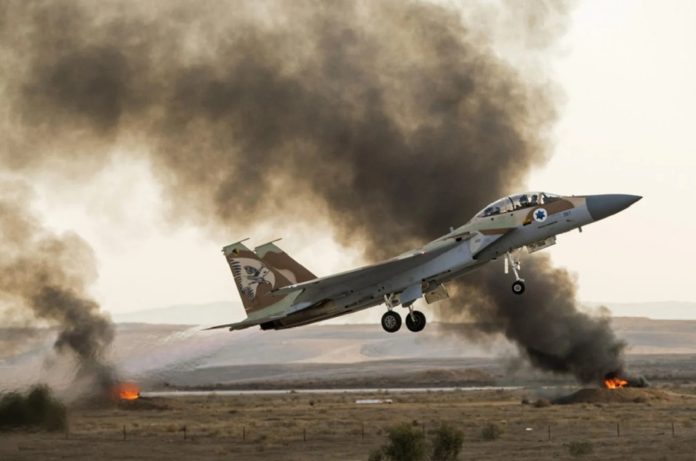
Israeli Fighter Jet

According to the news outlet, the attack, which targeted facilities on the outskirts of Damascus, came from the Golan Heights.

The Syrian defense ministry also said in a statement, “The Israeli enemy carried out an air strike… from the direction of the occupied Syrian Golan… The aggression killed three soldiers and wounded seven others.”

The ministry also added Syria’s air defense had managed to intercept some of the incoming projectiles.

Syria and the Israeli regime are technically at war due to the latter’s 1967-to-present occupation of the Arab country’s Golan Heights.

Israel maintains a significant military presence in the territory, which it uses as one of its launchpads for attacks against the Syrian soil.

The regime’s attacks on Syria started to grow significantly in scale and frequency after 2011, when Syria found itself in the grip of rampant foreign-backed militancy and terrorism.

The Israeli regime, along with the United States and their other Western and regional partners, has been a staunch supporter of the terror groups that have been operating against the Damascus government.

Iran envoy calls for removal of anti-Syria sanctions

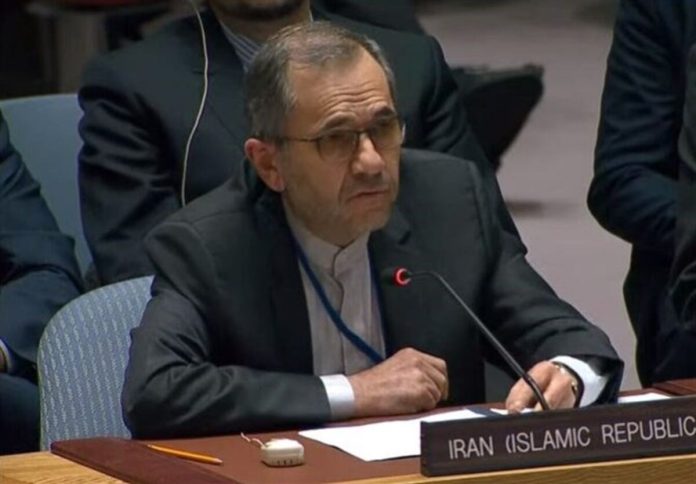
Majid Takht Ravanchi

“Iran’s position vis-a-vis Syria’s humanitarian issue is completely clear. The Islamic Republic of Iran has always supported the efforts by the United Nations and the international community in helping Syria,” Takht Ravanchi said on Thursday addressing a meeting of the UN General Assembly on “Strengthening of the United Nations system – Item 124 Debate pursuant to resolution 76/262”.

The following is the full text of Takht Ravanchi’s speech at the UN General Assembly:

Mr. President,

My delegation aligns itself with the statement delivered by the representative of Venezuela on behalf of the Group of Friends in Defense of the United Nations Charter. I would like to make the following in our own national capacity.

In accordance with the principles of independence, humanity, neutrality, and impartiality, Iran has always supported the United Nations and the international community in their efforts to assist Syria.

We have frequently stated that the provision of humanitarian aid to Syria is critical and that political circumstances must not be allowed to prevent aid from reaching people in need. This must be done in a manner that fully respects Syria’s political sovereignty, independence, unity, and territorial integrity and in compliance with the purposes and principles of the United Nations Charter.

In line with our consistent position, we have reiterated that the cross-border aid delivery mechanism should be considered as an exceptional and temporary measure imposed by specific circumstances and that humanitarian aid to those in need must be delivered in cooperation and full coordination with the Syrian government and from within the Syrian territory. This will help to prevent the divergence of aid to unintended persons

During the discussions of the issue in the Security Council, my delegation was actively engaged with Penholders of the resolution, the Syrian delegation, and Council members in order to bring this process to a successful conclusion.
We welcome the adoption of Resolution 2642 (2022) and consider it a crucial step toward addressing Syria’s urgent needs. In this regard, we would like to highlight the following points;

1- While the resolution extends the cross-border mechanism for a period of six months, it also sets out explicit demands for early recovery projects and increased transparency in relief efforts. The resolution underlines the critical need to increase cross-line delivery throughout Syria. In this context, we call on all parties to carefully adhere to the basic principles governing humanitarian assistance, as well as to ensure neutrality and transparency.

2- We demand the lifting of unilateral sanctions against Syria, which impede the implementation of the Resolution. In this context, the implementation of early recovery projects such as electricity, which are critical to restoring access to basic services, must not be affected by unilateral sanctions. These illegal measures also stymie Syria’s reconstruction efforts and humanitarian relief delivery in a variety of ways, even delaying the return of refugees and displaced persons. In this connection, we call for the removal of sanctions in the context of the ongoing COVID-19 pandemic.

3- Resolution 2642 requests the Secretary-General to provide a special report on the humanitarian needs in Syria. The report should include overall trends related to unhindered and safe United Nations cross-line operations which should reach all parts of Syria, early recovery projects, and detailed information on the humanitarian assistance delivered through United Nations humanitarian cross-border operations, including their transparency, the distribution mechanism, the number of beneficiaries, operating partners, locations of aid deliveries at district-level and the volume and nature of items delivered;

4- And finally, the resolution encourages the convening of a Security Council Informal Interactive Dialogue in order to regularly review and follow up on the implementation of this resolution, including progress in early-recovery projects. We believe that through this mechanism, the Council will be able to monitor progress in the effective and balanced implementation of the resolution.

I thank you

Iranian health ministry: Six-fold increase in coronavirus caseloads

COVID in Iran

Top infectious diseases specialist, Dr. Hamidreza Jamaati, said the new wave of coronavirus surge in Iran will peak in October, before the curve falls.

Authorities have been calling on the Iranian people to get booster shots immediately as the highly contagious sub-strains of the Omicron variant, BA.4 and BA.5, have trigged a new surge in Iran.

The Iranian health ministry in its daily update on Thursday said 29 people were killed and over 7,900 cases were registered within 24 hours.

The ministry added 728 covid-19 patients are in critical conditions in intensive care units.

Health Minister Bahram Einollahi said on Thursday over 151 million doses of vaccine have been administered across the country of about 84 million people.

Iran grabs seventh spot in Volleyball Nations League

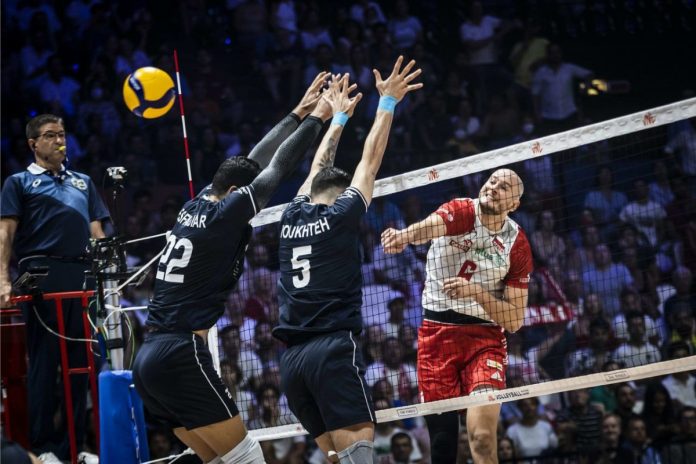
Iran men's national volleyball team

According to the latest ranking of the International Volleyball Federation (FIVB), which listed the top sixteen volleyball teams in the world, Iran was ranked seventh atop the Netherlands.

Iran faced powerhouse Poland on Thursday and suffered a 3-2 loss despite putting on a bold face.

The Iranian team had defeated world champion Poland in its two previous matches in 2020 Olympics and 2022 VNL Pool 6.

The United States, Italy, France and Poland moved on to the semifinals of the VNL games.

Poland will meet the US and France will take on the host Italy in the semifinals.