Friday, January 2, 2026
Home Blog Page 180

Iranian President urges SCO involvement in resolving Palestine crisis

Speaking at the Shanghai Plus meeting on Monday, Massoud Pezeshkian said what is happening today in Gaza is undoubtedly a stain on human history and a tough test for all nations and governments witnessing these brutal crimes.

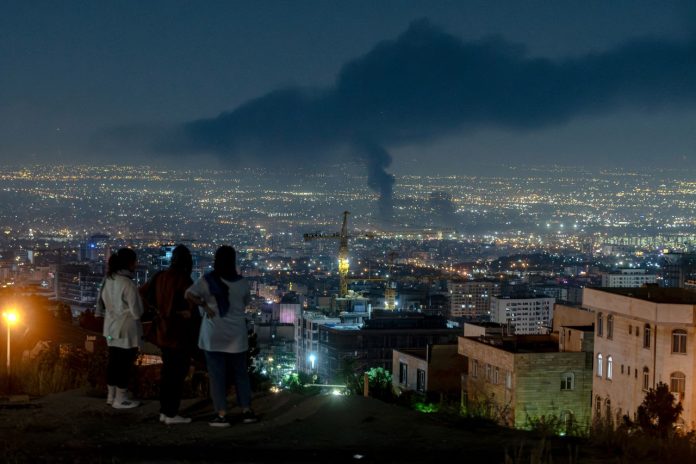
Referring to the US and Israeli aggression against Iran in June, Pezeshkian noted that this occurred while the United States was hypocritically sitting at the negotiating table with Iran.

He added that Iran is now being threatened by European countries with the reimposition of international sanctions, even though they have failed to uphold their own obligations, while the Islamic Republic of Iran has been subjected to the most extensive international monitoring of its nuclear activities.

He reiterated Iran’s readiness to seek a diplomatic solution for the peaceful resolution of its nuclear program.The Iranian president further emphasized that Iran’s position as a central link between East and West provides a significant geographic advantage for connecting transit corridors within the framework of the Belt and Road Initiative.

Pezeshkian stressed that the world today needs a new understanding and framework for global governance—one that must move away from power-based logic and instead embrace principles of equality and justice.

According to him, the annual SCO summit has, since its inception, been a rare opportunity for dialogue and exchange of views among countries whose common concern has been peace, cooperation, and collective efforts toward building a fairer and more secure world.

He added that the SCO over the past three decades has promoted a new model of regional and international cooperation—one not built on enmity and identity-based confrontation, but on cooperation, mutual trust, and respect for diversity.

The Iranian president said that the SCO’s experience has shown that cooperation, especially among developing countries and emerging economies, can provide practical responses to global challenges, including economic inequality, sanctions pressure, climate change, and transnational security crises.

Iran’s first vice president: West using snapback to disrupt nation, but people have overcome sanctions

Mohammad Reza Aref

Speaking at a meeting with senior officials of the state IRIB broadcaster, Aref said the Iranian administration has faced a “state of war” since its first day in office last year.

“Our strategy has been that people should live in peace and continue their work, while we prepare for the worst scenarios,” he noted.

Aref revealed that the government drafted a “war economy” plan early in its term to respond effectively to any crisis.

He noted that despite external pressure, the recent 12-day standoff with the US and Israel in the region turned out to be “one of the calmest periods” domestically.

Addressing European threats of reimposing sanctions, Aref said: “They can play their last card, but we haven’t even revealed our first.”

He added that the Iranian nation, drawing on the experiences of the eight-year war with Iraq in the 1980s and years of sanctions, will stand resilient against Western pressure.

Iran urges Europe to reconsider snapback sanctions amid SCO consultations

kazem-gharibabadi

Kazem Gharibabadi, Deputy for Legal and International Affairs at Iran’s Foreign Ministry, said on Monday that Iran has engaged with Shanghai Cooperation Organization (SCO) members, including China, Russia, and Pakistan, who oppose the snapback mechanism and the re-imposition of previously lifted UN sanctions.

“All three countries naturally reject the snapback and the return of lifted Security Council resolutions,” he stated.

Gharibabadi highlighted that Iran has proposed using the 20 to 30-day process outlined by Europe as an opportunity to correct the “legal and procedural error.”

“This opportunity is not only for Iran but also for them to rectify their own mistake,” he added.

The SCO summit’s final declaration included references condemning the Israeli and US military actions against Iran, including strikes on nuclear facilities, and emphasized that UN Security Council Resolution 2231 should be implemented fully and not selectively.

The Iranian deputy foreign minister stressed that Europe’s unilateral action lacks legal basis, and Tehran is prepared to respond appropriately if sanctions are reinstated.

Gaza death toll from Israeli war tops 63,500

A ministry statement said that 98 bodies were brought to hospitals in the last 24 hours, while 404 people were injured, taking the number of injuries to 160,660 in the Israeli onslaught.

“Many victims are still trapped under the rubble and on the roads as rescuers are unable to reach them,” it added.

The ministry also noted that 46 Palestinians were killed and over 239 others injured by Israeli army fire while trying to get humanitarian aid in the last 24 hours, bringing the total number of Palestinians killed while seeking aid to 2,294, with over 16,839 others wounded since May 27.

The ministry announced that nine more Palestinians, including three children, died of malnutrition and starvation in the last 24 hours. This brought the famine-linked death toll since October 2023 to 348 people, including 127 children.

Since March 2, Israeli authorities have completely closed all Gaza border crossings, pushing the territory’s 2.4 million population into famine.

A UN-backed food security assessment has already confirmed famine in northern Gaza and expects it to spread further south by the end of September.

The Israeli army resumed its attacks on the Gaza Strip on March 18 and has since killed 11,426 people and injured 48,619 others, shattering a ceasefire and prisoner exchange agreement that took hold in January.

Last November, the International Criminal Court issued arrest warrants for Israeli Prime Minister Benjamin Netanyahu and his former Defense Minister Yoav Gallant for war crimes and crimes against humanity in Gaza.

Israel also faces a genocide case at the International Court of Justice for its war on the enclave.

Modi stresses there should be no ‘double standards’ on terrorism

Speaking at the 25th Council of SCO Heads of State meeting in Tianjin on Monday Modi said there needed to be “unity” in the fight against terror.

Referring to the April terrorist attack in Pahalgam in the Indian Union Territory of Jammu and Kashmir that claimed 26 lives, he stated “many friendly countries” stood by India.

“We must clearly and unanimously declare that double standards on terrorism are unacceptable,” Modi added.

”We must collectively oppose terrorism in all its forms and manifestations. This is our duty to humanity.”

In his speech, the Indian leader made a veiled reference to SCO member Pakistan, who India has blamed for the April terror attack.

“It raises a serious question – should a country openly supporting terrorism be acceptable to any of us,” Modi asked.

SCO members voiced their support for India and expressed their deepest sympathy and condolences to the families of the dead and the wounded in the Kashmir attack.

“The Member States strongly condemn terrorism in all its forms and manifestations, stress that double standards in the fight against terrorism are unacceptable, and call on the international community to combat terrorism, including cross-border movement of terrorists,” a joint statement on Monday read.

European ‘war party’ hindering Ukraine peace process: Russia

Kremlin

UK Prime Minister Keir Starmer and French President Emmanuel Macron have for months floated the idea of sending a joint military contingent to Ukraine in a so-called peacekeeping capacity if Kiev and Moscow reach a truce or peace deal. Moscow has strongly opposed the presence of NATO troops in Ukraine in any role.

On Sunday, Peskov said the stance of the “European war party” is “in stark contrast to the approach pursued” by Trump and Russian President Vladimir Putin.

“The Europeans are hindering the [peace] efforts,” as part of their strategy to “contain” Russia, the Kremlin spokesperson told journalists.

He added that certain NATO member states have been encouraging Ukraine to refuse to negotiate with Russia in good faith – a strategy that “will do no good to the Kiev regime.”

“Russia is still ready to settle the [conflict] by political-diplomatic means,” Peskov stated, but Kiev has to show reciprocity for the hostilities to end.

Last weekend, Russian Foreign Minister Sergey Lavrov argued that European nations “don’t want peace” in Ukraine, citing their reaction to the Putin-Trump summit in Alaska earlier this month.

Last week, speaking to reporters after a follow-up meeting between the US president and Ukraine’s President Volodymyr Zelensky, as well as several European leaders at the White House, Macron insisted that Europe “will need to help Ukraine with boots on the ground.”

Germany, Italy, Poland, Spain, Romania, and Croatia have ruled out taking part in the mission.

On Tuesday, the Wall Street Journal reported that a significant proportion of the EU population is “opposed to any deployment that places troops in harm’s way.”

Houthis arrest UN staff in Yemen

The raids came in response to an Israeli airstrike on Thursday that killed Ahmed Ghaleb Nasser al-Rahawi, the Yemeni group’s prime minister, along with several senior officials.

A Yemeni security source told AFP that the Houthis also arrested dozens of others across Sanaa and surrounding areas on suspicion of collaborating with Israel.

UN Secretary-General Antonio Guterres said the fighters forcibly entered World Food Program facilities, seized UN property, and attempted to break into other agency offices.

Hans Grundberg, the UN special envoy for Yemen, condemned “the new wave of arbitrary detentions of UN personnel” and demanded they be released “immediately and unconditionally.”

“The work of UN personnel is designed and conducted under the principles of neutrality, impartiality, independence, and humanity,” he stressed, adding, “These arrests violate the fundamental obligation to respect and protect their safety, dignity, and ability to carry out their essential work in Yemen.”

According to Grundberg, the Houthis were already holding 23 UN staff, some since 2021. One died in custody earlier this year.

The group previously accused detained aid workers of involvement in “an American-Israeli spy network,” an allegation the UN rejects.

Since the outbreak of the Gaza war, Houthi forces have expanded their operations beyond Yemen, launching drones and missiles at Israel and targeting commercial shipping in the Red Sea in what they describe as solidarity with the Palestinian cause.

Israel has responded with repeated airstrikes on Houthi positions in Yemen, including last week’s attack on the presidential palace in Sanaa.

Following the death of al-Rahawi, the Houthis vowed to escalate their campaign against Israel.

The group issued a series of statements warning of a strong retaliation. Major General Mohammed Nasser Al-Atifi, the Houthi defense minister, stated that their armed forces are fully prepared to confront Israel and claimed that “America is targeting civilians in Yemen, just as it is doing in Gaza.”

Injured brown bear in Iran succumbs to severe infection despite treatment efforts

According to Leila Joulai, head of the Wildlife Protection and Management Office, the bear had been transferred to a treatment facility after being found with a deep leg wound. Despite extensive veterinary efforts, the animal did not survive.

“The bear suffered from extreme physical weakness and a severe infection caused by a deep wound in its leg, which damaged the nerve and left it unable to move for a long period, preventing it from accessing food and water,” Joulai explained.

The brown bear is classified as an endangered species in Iran. The main habitats of the brown bears in Iran are Caspian forest areas, Arsbaran forests and Zagros forests as well as high mountain meadows near the forests and downstream valleys.

Longest lunar eclipse of the century to be visible across Iran on Sep. 7

Longest Lunar Eclipse of Century_in iran

According to astronomer Alireza Bayat, the rare total lunar eclipse will begin at 6:58 p.m. local time, with the partial eclipse phase starting at 7:57 p.m.

The total eclipse will commence at 9:00 p.m., reaching its peak at 9:41 p.m. and 46 seconds, before ending at 10:23 p.m. The moon will completely exit the Earth’s shadow by 12:25 a.m. on September 8.

Bayat explained that the moon will take on a coppery red hue during the total eclipse due to the scattering of sunlight in Earth’s atmosphere, the same phenomenon that gives sunrises and sunsets their distinctive colors.

Approximately 77% of the global population will be able to observe this event. In Iran, all phases will be clearly visible, offering sky watchers a rare opportunity to witness the celestial display from start to finish.

Israeli military chief threatens to assassinate Hamas leaders abroad

“Our actions are not yet complete; most of the remaining Hamas leadership is abroad, and we will reach them as well,” Zamir said in comments cited by a military statement.

He added the Israeli army is “operating offensively, with initiative and operational superiority, across all arenas and at all times,” including “significant IDF (army) strikes in Yemen, Lebanon, Syria, and other arenas.”

Early on Sunday, Defense Minister Israel Katz claimed that Hamas’ military spokesman Abu Obeida was killed in a joint operation launched by the army and the Shin Bet domestic security agency in Gaza.

There was no confirmation from Hamas of the Israeli claim.

Israel has killed nearly 63,500 Palestinians in Gaza since October 2023. The military campaign has devastated the enclave, which is facing famine.

Last November, the International Criminal Court issued arrest warrants for Israeli Prime Minister Benjamin Netanyahu and his former Defense Minister Yoav Gallant for war crimes and crimes against humanity in Gaza.

Israel also faces a genocide case at the International Court of Justice for its war on the enclave.