Friday, January 2, 2026
Home Blog Page 181

Iran offers aid after deadly earthquake strikes eastern Afghanistan

Foreign Minister Seyed Abbas Araghchi said in a message on Monday that Iran stands “in full solidarity with the resilient people of Afghanistan” and is prepared to dispatch emergency, medical, and humanitarian aid to affected areas.

“In these difficult moments, we share the grief of the Afghan nation and the bereaved families,” Araghchi wrote, emphasizing the importance of regional cooperation in overcoming the disaster.

Foreign Ministry Spokesperson Esmaeil Baqaei also reiterated Iran’s readiness to assist Afghan authorities in rescue and relief operations, extending prayers for the recovery of those injured.

According to Afghan and international agencies, the 6.2-magnitude earthquake struck several eastern provinces, including Kunar, Nuristan, Nangarhar, and Laghman, at 11:47 p.m. local time, followed by multiple aftershocks. Preliminary reports suggest significant casualties and damage, with some estimates indicating the death toll exceeded 600.

Rescue operations are underway as officials warn that the number of victims may rise in remote areas yet to be reached by emergency teams.

SCO leaders sign over 20 agreements, condemn Israeli, US Strikes against Iran

The documents cover a wide range of cooperation, including the establishment of a comprehensive center for addressing security threats, a center for combating drug trafficking, the SCO’s 10-year strategy, initiatives in artificial intelligence, green industries, scientific and technological cooperation, multilateral trade, and sustainable energy development.

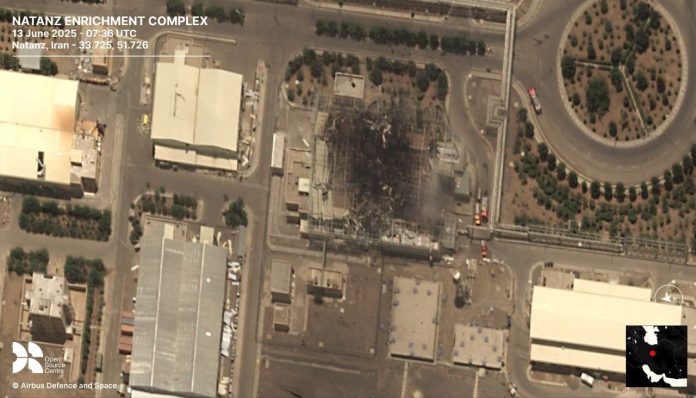
In a strongly worded statement, SCO members condemned the Israeli and US military strikes on Iranian facilities in June, which targeted non-military infrastructure and resulted in civilian casualties.

The statement slammed the attacks as “a blatant violation of international law and the United Nations Charter,” stressing that such actions undermine regional and global security.

Member states also reiterated their support for UN Security Council Resolution 2231, calling for full compliance and constructive dialogue to prevent further escalation.

The summit also addressed the ongoing conflict in Gaza, urging an immediate and lasting ceasefire, unhindered humanitarian access, and a renewed push for a comprehensive and just resolution to the Palestinian issue.

Israel tells US of plans to annex occupied West Bank: Report

Israeli settlement

Israeli news outlet Walla, citing sources familiar with the matter, said Saar posted Rubio during their meeting in Washington on Wednesday about Israel’s preparations to annex the occupied territory in the coming months.

The broadcaster added a consensus has been reached within the Israeli government over the move, but there are disagreements on the timing of the announcement.

Israel’s Knesset (parliament) has already begun discussing the West Bank annexation in the last meeting, the sources stated.

In August, Israel approved a major settlement project, called E1, which aims to split the occupied West Bank into two parts, cutting off the northern cities of Ramallah and Nablus from Bethlehem and Hebron in the south and isolating East Jerusalem.

The international community, including the UN, considers the Israeli settlements illegal under international law. The UN has repeatedly warned that continued settlement expansion threatens the viability of a two-state solution, a framework seen as key to resolving the decades-long Palestinian-Israeli conflict.

Since the start of Israel’s genocidal war on the Gaza Strip in October 2023, at least 1,016 Palestinians have been killed and more than 7,000 injured in the West Bank by Israeli forces and illegal settlers, according to the Health Ministry.

In an advisory opinion last July, the International Court of Justice declared Israel’s occupation of Palestinian territory illegal and called for the evacuation of all settlements in the West Bank and East Jerusalem.

UN warns catastrophic rains, floods to trigger food shortages in Pakistan

The raging floods struck the northeastern Punjab, the country’s largest province and food basket, last week, submerging hundreds of villages, schools and health centers, washing away livestock and destroying crops, aside from killing around 50 people and triggering evacuations.

The surging floods have so far affected more than 2 million people, in addition to evacuation of more than 700,000 people, according to official statistics.

The water is flowing further south to fall into the mighty Indus River and is feared to wreak havoc on southern Sindh province in coming days.

“This isn’t normal—yet it’s becoming the new normal. Monsoons, driven by climate change, now bring fear and devastation to communities across Pakistan,” Mo Yahya, the UN resident and humanitarian coordinator, said in a post on US social media company X, after visiting the flood-hit areas.

“Flooded rice fields stretch as far as the eye can see. Farmers now face months without crops or income until the next planting season,” he stated, while posting a video of flooded farmlands in Hafizabad district.

“This is only the beginning — more intense rains are expected in the coming weeks. As the water flows further south, it will threaten more families with displacement and destruction,” Yahya added.

“This is not just another natural disaster; this is #ClimateChange.”

Endorsing the warning, Waqar Ahmad, the secretary general of Kisan Board of Pakistan, a nationwide farmers body, said that the catastrophic floods have destroyed the three main crops of rice, sugarcane and sesame (oil-rich seeds) across Punjab.

“Rice crop has particularly taken a toll as the floods have hit the major rice-producing districts,” Rizvi told Anadolu.

According to him, 70% of the standing rice crop has been destroyed by the latest floods.

He cautioned that if neighboring India releases another deluge of floodwaters towards Pakistan, the remaining amounts of the standing crops will be badly affected.

Waheed Ahmad, the head of Pakistan Fruit and Vegetable Exports Association, fears that the latest floods would likely to cause food inflation as massive deluges have destroyed huge amounts of crops, and vegetables across Punjab and northwestern Khyber Pakhtunkhwa provinces.

He urged the government to lift the levy on vegetable and fruit imports from neighboring Afghanistan and Iran to cope with the looming food shortages.

At least 800 killed as powerful quake rattles Afghanistan

The 6.0 magnitude quake struck at 11:47pm local time (19:17 GMT) on Sunday in the province of Kunar near the city of Jalalabad in neighbouring Nangarhar province, destroying numerous villages and causing extensive damage.

The quake, centred 27km (17 miles) east of Jalalabad, was just 8km (5 miles) deep. Shallower quakes tend to cause more damage.

A short while later, another 4.5 magnitude tremor occurred near Basawul in Nangahar.

The effect of the quake was felt in neighbouring Pakistan, too.

In October 2023, an earthquake struck western Afghanistan, killing at least 2,400 people, according to the government there.

Putin defends Ukraine invasion at SCO, slams West

“This crisis was not triggered by Russia’s attack on Ukraine, but was a result of a coup in Ukraine, which was supported and provoked by the West,” Putin said at a summit of the the Shanghai Cooperation Organisation in the Chinese city of Tianjin.

That is a reference to Ukraine’s 2013-2014 pro-European revolution, which ousted a pro-Russian president.

Moscow responded by annexing the Crimean peninsula and backing pro-Russian separatists in the east, triggering a civil war.

“The second reason for the crisis is the West’s constant attempts to drag Ukraine into NATO,” the Russian president added.

Putin was speaking at the SCO summit, attended by Russian allies, including Chinese President Xi Jinping, Indian Prime Minister Narendra Modi and Iranian President Masoud Pezeshkian.

Moscow and Beijing have touted the Shanghai Cooperation Organisation as an alternative to Western-led political and security blocs, including NATO.

Putin said the world needed a “system that would replace outdated Eurocentric and Euro-Atlantic models, and take into account the interests of the widest circle of countries”.

“We highly value the efforts and proposals of China, India and our other strategic partners, aimed at contributing to resolving the Ukrainian crisis,” he added.

Despite US President Donald Trump urging both Moscow and Kyiv to strike an agreement to end the war, peace proposals have stuttered.

Putin has rejected calls for a ceasefire and tabled hardline territorial and political demands — calling for Ukraine to cede more territory and renounce Western backing — as preconditions for peace.

Kyiv has ruled them out as non-starters.

The Russian leader stated he would discuss the diplomacy to end the conflict and his latest talks with Trump in a series of bilateral meetings.

He is set to meet Modi, Pezeshkian and Turkey’s Recep Tayyip Erdogan for separate talks later Monday.

Yemen’s Houthi leader condemns Israel’s ‘record of terror’ after deadly bombing

Yemen Houthi

“The Israeli enemy, with its crimes and savagery, does not spare even children, women and defenceless civilians,” he said during his first speech on Sunday since the Israeli strikes, according to Houthi media.

“The crime of targeting ministers and civilian officials is added to the criminal record of the Israeli enemy in the region.”

The prime minister of the Houthis’ government in the capital, Sanaa, Ahmed Ghaleb al-Rahawi, was killed in a Thursday Israeli strike on Sanaa along with “several” other ministers, the Houthis said in a statement on Saturday.

Al-Rahawi, who served as prime minister in areas of the divided country that the group controls, was targeted along with other members of the Houthi-led government during a workshop, the statement said.

Al-Houthi added that the “record of the Israeli enemy is one of horrific terror” as it kills people in Palestinian territory, Lebanon, Syria, Iraq and Iran. He called Israel “a criminal foe that demonstrates its savagery, criminality and aggression through practices that know no rules, no commitments, no charters and no considerations”.

The Houthi commander stated the group will keep acting against Israel in opposition to the war on Gaza in solidarity with Palestinians suffering, adding that “our people will not be weakened by the aggression they are facing”.

Israel has repeatedly targeted Houthi positions in recent months as the Yemeni group has launched attacks on Israel and on Western vessels in the Red Sea and Gulf of Aden.

Quoting unnamed sources, Israeli media reported on Friday that the Israeli army attacked the entire Houthi cabinet, including the prime minister and 12 other ministers, on Thursday.

The attack came four days after Israeli strikes on the Yemeni capital on August 24 killed 10 people and wounded more than 90, according to health officials.

Iran urges stronger financial, peace initiatives at SCO Summit

Pezeshkian said the SCO, as a key pillar of the emerging multipolar world, should take “clear and practical steps” to create a more peaceful global environment while expanding economic partnerships.

Highlighting the negative impact of “illegal unilateral sanctions,” Pezeshkian proposed a “special SCO accounts and settlements mechanism” to reduce reliance on the US dollar.

The initiative includes conducting transactions in national currencies, developing joint digital payment systems, and establishing a multilateral currency swap fund to support members facing sanctions or liquidity crises.

The Iranian president also recommended forming a committee of foreign ministers to respond swiftly to regional crises, particularly in situations involving violations of member states’ sovereignty.

Pezeshkian noted Iran’s strategic role in regional trade, highlighting the upcoming integration of the port of Chabahar, southern Iran, into the national rail network, which would enhance connectivity between China, Central Asia, Afghanistan, and the Indian Ocean.

Iran confirms visit of two IAEA inspectors amid nuclear oversight talks

IAEA Team

Speaking to state media during President Massoud Pezeshkian’s visit to China for the Shanghai Cooperation Organization summit, AEOI chief Mohammad Eslami said the inspectors monitored the fuel replacement process at the Bushehr nuclear power plant.

“This inspection was part of ongoing cooperation with the IAEA, carried out within the framework of parliamentary law and with the council’s approval,” Eslami said, adding that the inspectors “came, supervised the process, and left.”

Eslami noted that negotiations with the IAEA remain ongoing, with two meetings held so far and a third planned.

He criticized the agency’s leadership, saying its governance is “influenced by global powers” and applies “double standards” in monitoring member states.

Ties between Iran and the IAEA deteriorated even further after Iranian officials slammed the atomic agency’s chief, Rafael Grossi, for its “biased stance” following the US-Israel alliance’s strike on Iran’s peaceful nuclear facilities earlier this year.

Addressing renewed discussions over the activation of the “snapback” sanctions mechanism by the European parties to the JCPOA nuclear deal, Eslami said the issue is “not new,” saying Iran’s adversaries are using pressure tactics to force concessions.

Xi calls on regional leaders to oppose ‘Cold War mentality’ at SCO

In a speech to attendees of the Shanghai Cooperation Organisation (SCO) summit, Xi said that member states are facing increasingly complicated security and development challenges as the world becomes “chaotic and intertwined”.

“Looking back, despite tumultuous times, we have achieved success by practising the Shanghai spirit,” Xi stated.

“Looking to the future, with the world undergoing turbulence and transformation, we must continue to follow the Shanghai spirit, keep our feet on the ground, forge ahead, and better perform the functions of the organisation.”

Calling for an “equal and orderly multipolarisation” of the world, Xi added the bloc should work towards the creation of a “more just and equitable global governance system”.

The Chinese leader said Beijing would provide 2 billion yuan ($280m) in aid to member states this year and a further 10 billion yuan ($1.4bn) of loans to an SCO banking consortium.

“We must take advantage of the mega-scale market… to improve the level of trade and investment facilitation,” Xi added.

Russian President Vladimir Putin, Indian Prime Minister Narendra Modi, Iranian President Masoud Pezeshkian and Belarusian President Alexander Lukashenko are among the more than 20 world readers attending the two-day SCO summit, which opened on Sunday in China’s northern city of Tianjin.

Established in 2001, the Shanghai Cooperation Organisation began as a grouping of six Eurasian nations – China, Kazakhstan, Kyrgyzstan, Russia, Tajikistan and Uzbekistan – but has since expanded to comprise 10 permanent members and 16 dialogue and observer countries.

Analysts say that China intends to use the gathering to promote an alternative to the United States-led global order and repair ties with India amid a shifting geopolitical environment under US President Donald Trump.