Monday, January 19, 2026
Home Blog Page 1748

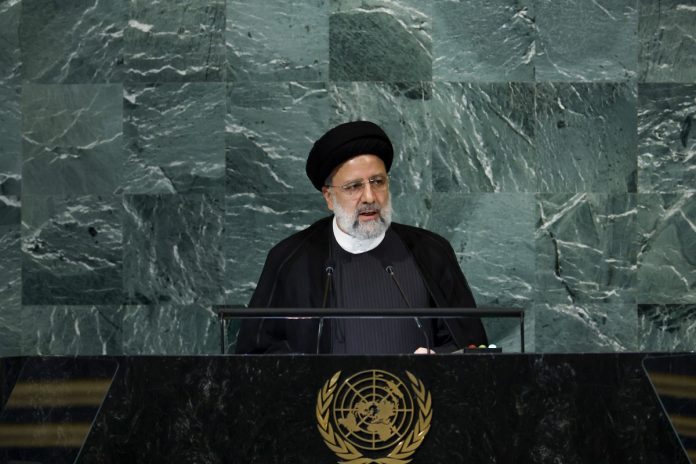
President Raisi at UNGA meeting: Iran firmly determined to resolve nuclear issue

Iranian President Ebrahim Raisi

President Raisi reaffirmed Iran’s opposition to nuclear arms, saying the weapon has no place in Iran’s defensive doctrine.

He also referred to a fatwa issued by Iran’s leader that is also a state decree and forbids the production and stockpiling of nukes.

Raisi pointed to the double standards of nuclear armed countries, saying the governments that claim they are against proliferation of nukes have continued the production of atomic arms, have used the weapons of mass destruction and have gifted them to the Zionist regime.

The president added that this is while countries that have stuck by their obligations are denied their rights under the NPT.

Elsewhere, Raisi spoke of the plight of Palestinians, saying the Palestinian people are the most oppressed in the world and the Zionist regime is the most tyrannical in contemporary history.

He described Gaza as the biggest prison on earth and condemned continued settlement expansions in the occupied Palestinian territories by the Zionists.

Raisi then blamed unilateralism as the cause of underdevelopment in some countries and added that the US cannot accept nations that stand on their own feet.

The president however noted that the US’s allies are not better off, saying military expeditions to West Asian are no different from NATO’s eastward expansion.

He further spoke about Iran’s role in fighting terror. President Raisi said Iran does not care who created Daesh, stressing that what matters is that the US’s decision from the other end of the world to redraw the map of regional countries cost hundreds of thousands of innocent lives including women and children but Iran stopped this project and then rolled it back.

The president then praised the assassinated commander of Iran’s Quds Force as the champion of fighting terrorism who destroyed the Daesh terror group.

He said General Soleimani was martyred on the path of liberating regional nations and the former US president recorded his name in history as the perpetrator of this crime.

President Raisi said fair investigation of the former US president’s crime is a service to humanity.

He noted that Iran will keep pushing for the prosecution of those who killed General Soleimani through legal channels.
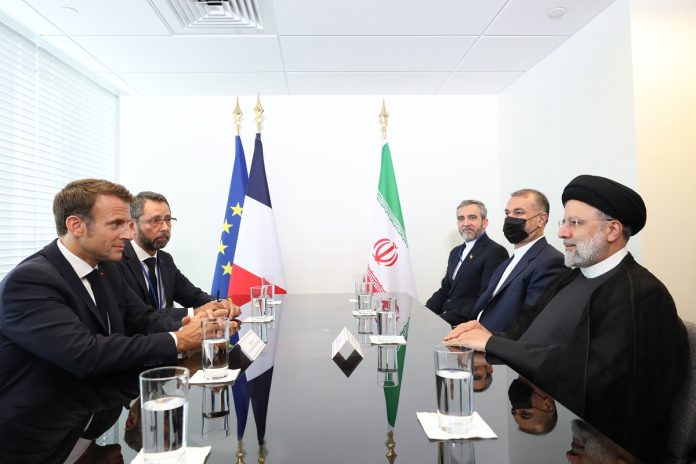

Iranian president: Revival of JCPOA contingent upon closure of safeguards cases

Raisi and Macron

President Raisi made the comments in a meeting with Emanuel Macron on the sidelines of the 77th meeting of the UN General Assembly in New York.

The Iranian president further referred to the US’s unilateral pullout from the Iran nuclear deal, JCPOA, and Washington’s violation of its commitments under the deal as well as Europe’s inaction.

President Raisi said reaching a new deal requires receiving assurances on the side of the US.

Raisi said given the US’s withdrawal from the nuclear deal and its dire consequences, Iran has a legitimate right to demand guarantees.

The president also said Iran’s IAEA cases are another serious obstacle to a deal, adding that the agency’s approach must be purely technical not political.

Raisi said Iran believes without closing the IAEA cases, a deal is impossible.

He described the resolution of the IAEA board of governors against Iran in the middle of the JCPOA revival talks as unconstructive.

The president stressed that Iran’s regional activities are meant to strengthen peace and security and France owes security during its elections to Iran’s anti-terrorism campaign. Macron for his part admitted that it was the US in the first place that created this mess by quitting the JCPOA unilaterally.

He also acknowledged Europe’s inaction in the face of the US’s move.

The French president however said it is necessary to make progress in the JCPOA revival talks.

Macron underlined that the IAEA and Iran are able to resolve their differences through cooperation and that the West won’t exert any pressure on the agency in this regard.

He also said Iran and France can expand their cooperation in economic and regional fields.

Iran communications minister rejects reports of possible internet blackouts

Internet

IRNA cited the minister as saying that media misquoted him after a journalist asked him about the speed of internet over the past days.

The minister Eisa Zare-pour said he had told media that there were some temporary restrictions in certain areas over the past days, which has now ended and that there have been no comments about an internet blackout.

Based on the report, the minister clarified that his ministry is not in charge of making decisions on cutting out the internet or limiting access to the service.

Protests have been held in many Iranian cities against Amini’s death who had a heart attack in police detention. Many say she fell victim to policy mistreatment. Police denies this.

Nour News says leader’s letter to National Security Council “fake”

Iran Protests

In an exclusive report, Nour News says an image of the letter, apparently signed by the leader’s chief of staff and addressed to the council’s secretary Ali Shamkhani, has been published by “unidentified” social media channels and is fake.

Nour News added groups hostile to the Islamic Republic of are abusing people’s pain and sadness over the death of Mahsa Amini to divert the protests and push them toward unrest.

The news website also said that the form and the content of the letter shows it was prepared awkwardly with the aim of disturbing public opinion.

The report said such hostile groups have in the past engaged in such acts to create insecurity land foment uproar in different cities.

Mahsa Amini’s death has led to street protests in many Iranian cities. She died while she was in police custody over failing to observe Islamic dress code.

Official investigations continue to determine the exact cause of the tragedy.

Covid kills 14 more patients in Iran

COVID in Iran

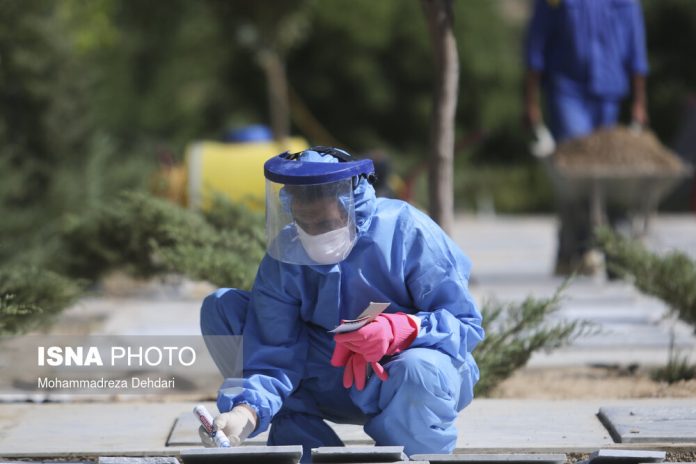
Some 14 more Iranians have died from the coronavirus over the past 24 hours bringing the total deaths to 144,358, Iran’s Health Ministry said on Wednesday.

811 new cases of infection with COVID-19 were found over the past 24 hours, 155 of whom were hospitalized, it added.

The Iranian Health Ministry noted that 7,322,383 patients out of a total of 7,545,351 infected people have recovered or been discharged from hospitals.

228 COVID-19 patients are in critical conditions and in intensive care units, it stated.

The Iranian Health Ministry also announced that 65,071,210 Iranians have received the first dose and 58,468,071 people have so far received the second dose of the COVID-19 vaccine.

Moreover, 31,166,985 people have also received the third or fourth shots as the booster jab.

Kayhan: Iran must not be silent in face of parties that provoke riots

Iran Protests

In an article, Kayhan reacted to a wave of violent riots that broke out in different Iranian cities in the aftermath of the death of a young woman in the custody of morality police on Friday.

“Provocation of riots in Iran by the West’s intelligence services, as an add-on to the sanctions against the country, is an already familiar issue and needs no proof,” it said.

Such a policy gradually took center stage in the West after the tough sanctions on the country did not produce their desired results, it said.

“The country cannot let go of the issue [of the riots], while such incidents lead to confrontations between people and victimizes a group of them. If it does so, crimes and incidents keep taking place,” it said.

“The establishment cannot remain silent in the face of those who pave the way for clashes and cause the shedding of the blood of innocents,” the paper added.

The Leader: Sacred Defense boosted Iranian armed forces’ popularity

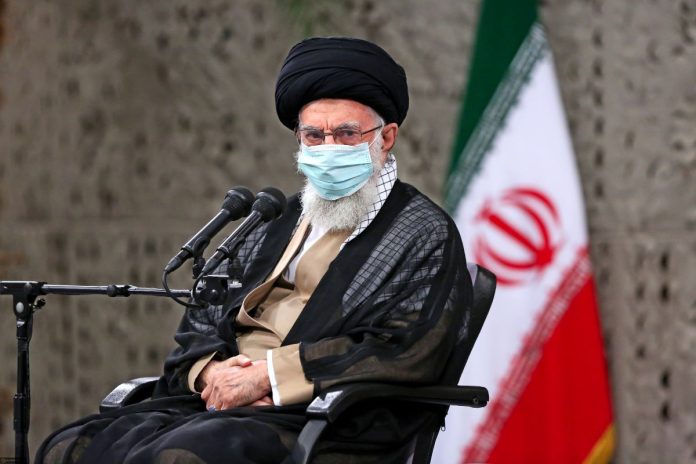
Iran’s Leader Ayatollah Seyyed Ali Khamenei

Addressing former veteran Iranian armed forces to mark the start of the Sacred Defense Week, Ayatollah Khamenei said the Islamic Revolution Guards Corps (IRGC) was born during the Iraqi-imposed war as a ‘shining truth’.

The Iranian Leader added, “One of the examples of turning a threat into an opportunity during the sacred defense was establishing the country’s military authority.”

The Leader added, “When people in a country are interested in the Armed Forces, a sense of security is created in the country. This feeling of security that the Sacred Defense gave people is very important.”

He also noted, “The popularity and authority of the armed forces will last as long as they maintain their progressive movement and do not lag behind the enemy,” and praised the Iranian armed forces for bearing the fact in mind.

Iraq, supported militarily by the US and its allies, initiated the eight-year war with Iran on September 22, 1980, over a year after the victory of the Islamic Revolution in Iran.

Iran’s Raisi blames US ‘indecisiveness’ for lack of progress in JCPOA talks

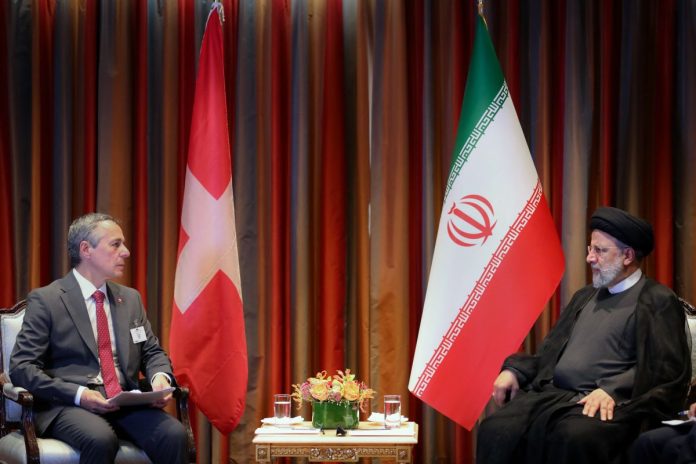
Raisi and Cassis

President Raisi held a meeting with Swiss President Ignazio Cassis in New York on Tuesday, on the sidelines the annual UN General Assembly meeting for talks on bilateral and international issues.

During the talks, the Iranian president rejected claims of the administration of US President Joe Biden that it was opposed to the hostile pressure policies of its predecessor.

“So far, we have seen no practical and serious behavior [on the part of the US] that would be indicative of [trying to] make up for the past behavior and remove the cruel sanctions,” he said.

The president said Iran did not leave the negotiating table and stood ready for a “good and fair” agreement on restoration of the Iran nuclear deal, officially called the Joint Comprehensive Plan of Action (JCPOA).

“Given America’s record, the Islamic Republic’s demands for guarantees for a lasting deal are totally rational,” he said.

The two sides also discussed expansion of bilateral ties.

In turn, the Swiss president said the security of Iran and the West Asia region guaranteed that of Europe.

He said Iran and Switzerland could further expand their banking and financial cooperation, among other things.

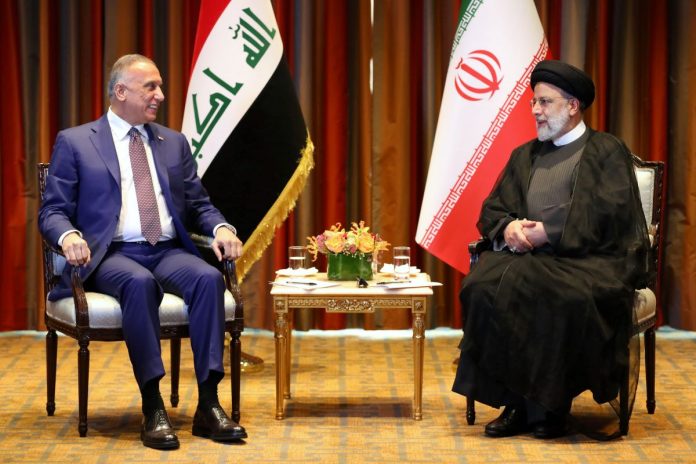
Iranian president, Iraqi PM meet in New York

Raisi and al-Kadhimi

President Raisi hoped an understanding would emerge between Iraqi parties to accelerate the political process for formation of a powerful government in Iraq, hit by a months-long impasse.

He also praised the Iraqi government for hosting talks between Iran and Saudi Arabia to mend their ties after their break-up over their regional and international policies, including the Saud invasion of Yemen among others.

Riyadh severed its diplomatic relations with Tehran in January 2016 after Iranian protesters, enraged by the Saudi execution of prominent Shia cleric Sheikh Nimr Baqir al-Nimr, stormed its embassy in the Iranian capital.

President Raisi said Iran insists that relations with Saudi Arabia have to be restored within the framework of the agreements.

Meanwhile, he expressed gratitude to the government and people of Iraq for the hosting millions of pilgrims from Iran and other parts of the world for this year’s Arbaeen ceremony, marking the 40th day after the martyrdom anniversary of Imam Hussein, the third Shia Imam.

For his part, al-Kadhimi briefed the Iranian president on the latest political situation in Iraq and appreciated Iran’s good will and efforts to step up cooperation with Iraq.

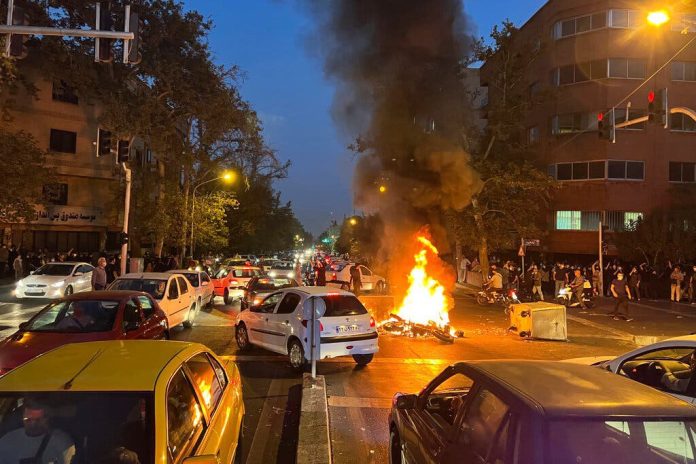
Protests grip Iranian cities after death of young woman in custody

Iran Protests

On Tuesday evening, protests were reported in the capital, Tehran, and a number of other cities and towns countrywide, including Mashhad, Tabriz, Kerman, Kermanshah, Rasht, Ardebil, Hamedan, and Karaj, over the death of Mahsa Amini.

Iranian media said the gatherings in each location were estimated to have been joined by between 300 to 400 people.

Amini fell into a coma while in custody in Tehran after being arrested by officers enforcing Hijab rules, known as morality police, on charge of failure to properly observe the mandatory Islamic dress code. She died in hospital on Friday.

Iran’s police said Amini had suddenly collapsed from a heart attack at the detention center, where she and a group of others were receiving educational training on dress code rules.

The claim was, however, disputed by her family and many others in the public, who blame the incident on the officers’ mistreatment of the young woman.

Investigations by several government institutions are still underway into the case.

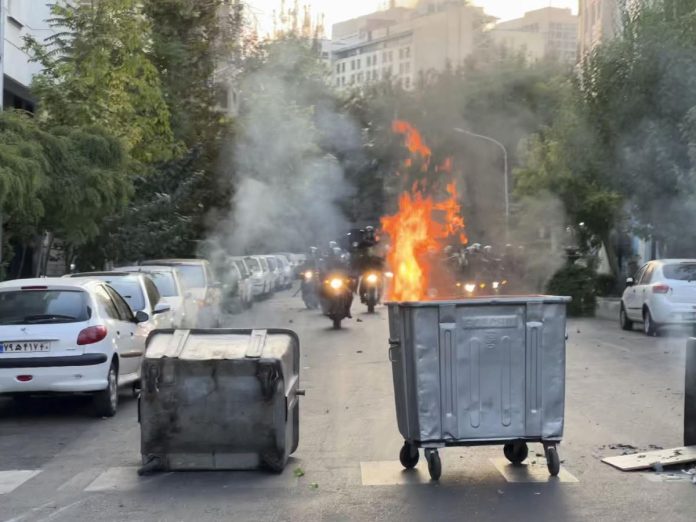
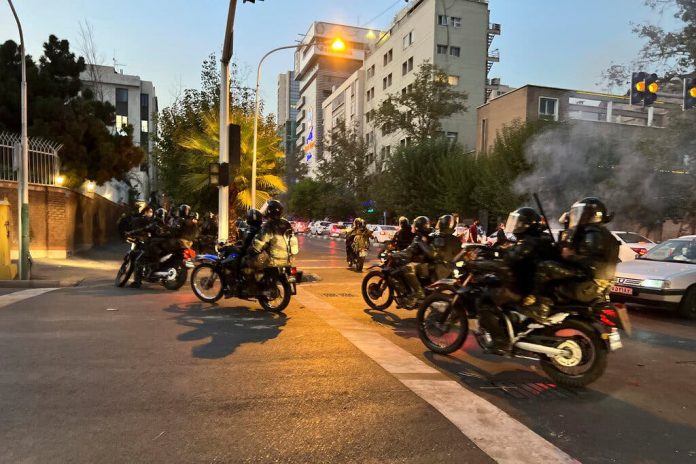
In Tehran and other cities, the protests turned violent as a group of rioters committed acts of vandalism and inflicted damage on state and private property.

Some blocked roads and threw stones at security forces, prompting them to respond with teargas to disperse the crowd.

Dramatic footage also came out of Mashhad showing rioters setting fire to a police officer and an ambulance.

There have been no immediate reports of casualties and the scale of the material damage.

Iranian officials have warned of foreign hands at work to fuel tensions in the country.

Tehran Governor Mohsen Mansouri warned in tweet that elements behind the “organized” violence in Tehran had been “fully trained and were seeking to stoke riots in Tehran as part of pre-mediated schemes.”

The acts of vandalism, he added, could not have been conducted by ordinary protesters.