Tuesday, January 20, 2026
Home Blog Page 1741

IRGC vows to continue attacks on terror bases in northern Iraq

Iran Missile

The IRGC also announced that officials in Iraq’s Kurdistan region are ignoring warnings from Iran about the need to dismantle the groups’ hideouts in the area.

The IRGC said the terrorist cells were involved in attacks on border regions inside Iranian soil and also were behind recent unrests in Iran.

The IRGC demanded the Kurdistan region’s official fulfill their responsibility in this regard.

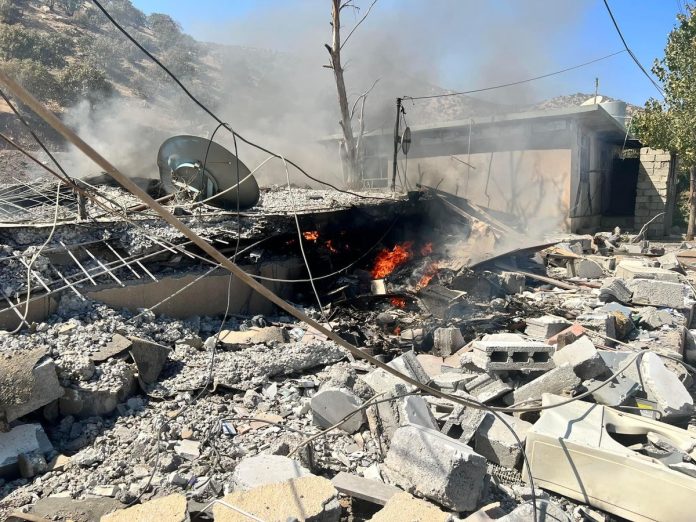
The IRGC has launched several waves of missile and drone attacks on the bases of the anti-Iran terrorists in the Kurdistan region over the past days.

The terrorists are said to have smuggled weapons and ammunition to the rioters and thugs, who took advantage of a series of protests in Iranian cities to instigate violence and chaos.

The violence, sparked by the death of a young Iranian woman in police custody, has left dozens of people dead or injured.

Iran’s IRGC strikes terror bases in northern Iraq with missiles, drones

IRGC strikes terror bases in northern Iraq

Tasnim News Agency reported on Wednesday that the IRGC’s Ground Force targeted bases of the notorious Komala terrorists and other separatist terror groups in the northern Iraqi region.

The IRGC has been striking terrorist bastions in the area for five days, amid reports of the terrorists’ engagement in the deadly protests in Iran.

The terrorists are said to have smuggled weapons and ammunition to the rioters and thugs, who took advantage of a series of protests in Iranian cities to instigate violence and chaos.

In a statement on September 24, the IRGC said the raids came after Iran’s numerous warnings for officials of the Iraqi Kurdistan fell on deaf ears and they failed to end anti-Iran terror activities in the region.

The operations, it added, “will continue in the direction of ensuring stable border security and punishing the aggressor criminal terrorists and making regional authorities shoulder their responsibility for international regulations and their legal duties.”

Sociologist: Protests in Iran won’t die down unless ruling methods change

Iran Protests

Emad Afrough, in an interview with Ensaf News, said, “The least expensive way of ruling and assessing policies is to listen to complaints and take advice from insightful people.”

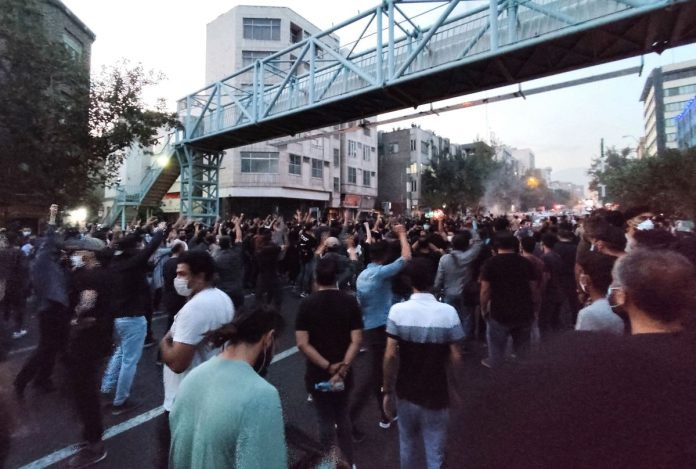
Unrest broke out in several Iranian cities nearly two weeks ago following the death of a woman who died in police custody after she was detained by the morality police for her “improper hijab.”

The deadly protests over the  have left scores of people, including civilians and security forces, dead and hundreds more arrested or injured.

Afrough advised the rulers to listen to the angry protesters, “even if their ultimate goal is to topple the government.”

He said the ruling system in Iran, which is based on “ideological dos and don’ts” need to be updated to interact with the people, adding the authorities need to pay equal attention to the wide spectrum of bipolar Iranian society and avoid excluding any group.

The top sociologist said people resort to anger and violence because they have been denied “the proper ways of protest”, so they feel dejected.

Authorities say people are entitled to hold protest rallies but have warned against plots to ignite people against the ruling system.

Fire in Hoor-al-Azim Wetland still burning, smoke blanketing Iranian cities

Hoor-al-Azim

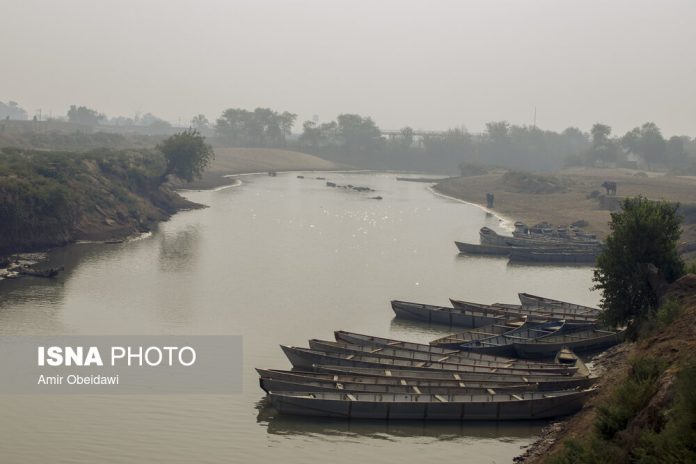
Mohammad Javad Ashrafi, the director general of the Environment Protection Organization for Iran’s Khouzestan Province, told ISNA on Wednesday that the Iranian cities of Ahvaz, Hamidiyeh, Dasht-e Azadegan, and parts of Khorramshahr were covered in smoke from the fire.

Ashrafi said air quality monitoring devices often did not measure the level of contamination from fire smoke but he said “the fact is that now there is thick smoke over some cities in Khouzestan that can be irritating to people with underlying and respiratory conditions.”

He advised individuals with high health risks to avoid going outdoors or use masks.

The Iranian official said action to extinguish the fire was Iraq’s responsibility and that Iran had requested via official channels to help put out the fire but that Iraqi officials had not cooperated.

Fires first erupted in Hoor-al-Azim Wetland in late June and lasted more than 20 days, burning over 18,000 hectares of the lagoon on the Iraqi side.

Mohammed bin Salman named PM of Saudi Arabia

Mohammad bin Salman

MbS is already de facto ruler of the world’s largest oil exporter, and the appointment formalises his role as leader of the kingdom’s government.

The crown prince previously served as deputy prime minister as well as defence minister. He is being replaced as defence minister by his younger brother, Khalid bin Salman, who was deputy defence minister.

The royal decree reaffirmed all the other senior ministers in their posts, including Foreign Minister Prince Faisal bin Farhan Al Saud, Finance Minister Mohammed al-Jadaan and Investment Minister Khalid al-Falih.

By appointing MbS as prime minister, a role previously – and typically – held by the king, the 86-year-old monarch continues a slow but steady transfer of power in the kingdom.

The royal decree on Tuesday did not state the reasons behind the appointment, but the state-run news agency SPA said that the king – who remains head of state – will continue to chair cabinet meetings he attends.

In May, the king was hospitalised for medical examinations and treatments, SPA reported at the time.

The 37-year-old crown prince was already in charge of many of the kingdom’s major portfolios, including the economy, defence, oil, and internal security.

In April 2016, bin Salman introduced Vision 2030, Saudi Arabia’s vision of the future, which is aimed at making the kingdom the heart of the Arab and Islamic world, an investment powerhouse, and a hub that connects three continents.

The initiative seeks to diversify and privatise the economy, and to make it less reliant on oil. By 2030, the initiative also aims to establish an e-government system.

MbS became heir to the throne in 2017, after he previously held the position of defence minister.

His most notable move as defence minister was leading Operation Decisive Storm, a Saudi-led coalition in Yemen against the Houthis, which was launched in March 2015.

The crown prince has also been driving a more aggressive foreign policy to counter the influence of regional rival Iran.

Prince Mohammed has changed Saudi Arabia radically since he rose to power as he led efforts to diversify the economy from dependence on oil, allowed women to drive and curbed the clerics’ power over society.

His reforms, however, have come with a massive crackdown on dissent, with activists, royals, women’s rights activists and businessmen jailed.

In November 2017, four ministers, 11 princes and several high-profile entrepreneurs were detained on orders of MbS in what was presented as an anti-corruption purge. However, the measures targeted many of his direct rivals, thus consolidating the prince’s power over the kingdom.

Earlier this year, he hosted United States President Joe Biden in the kingdom, in an attempt to rebuild bilateral tumultuous relations with Washington over the killing of Saudi columnist Jamal Khashoggi in Istanbul in 2018 by Saudi agents.

Iranian activist Faezeh Hashemi arrested over ‘ties to deadly protests’

Faezeh Hashemi Rafsanjani

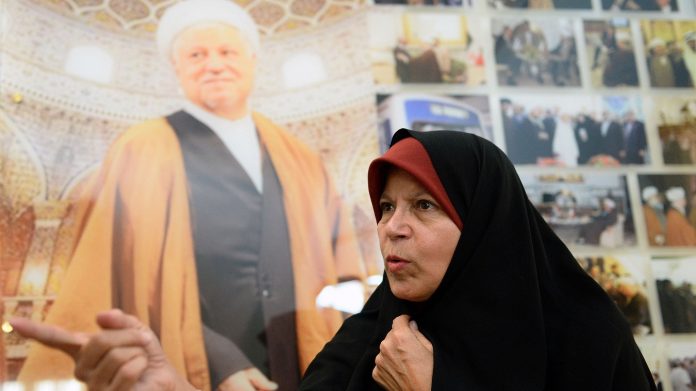
Hashemi, the daughter of former Iranian President Akbar Hashemi Rafsanjani, is accused of ‘instigating the riots’ in the country and ‘provoking’ people to take to the streets.

“Faezeh Hashemi has been arrested in the east of Tehran by a security agency for inciting rioters to street protests,” Tasnim reported, without elaborating.

She has a history of locking horns with officials over her  anti-government stances and has spent six months in jail for “propaganda activities against the Islamic Republic.”

Several Iranian cities have been rocked by violent protests since Mahsa Amini’s death in police custody after she was detained by the morality police for her “inappropriate dressing.”

Iranian officials say foreign agents are pulling the protesters’ strings in the unrest that has so far left scores dead and hundreds more injured or arrested.

Pentagon confirms 12 Afghan civilians killed in military operations in 2021

US Drone Attack Afghanistan

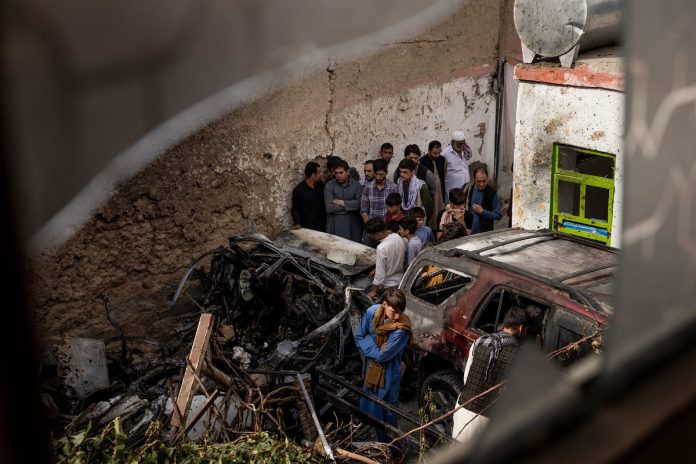
Ten of the civilians killed in 2021 were killed during a botched drone strike the US military conducted in Kabul on Aug. 29, one day before the end of the US withdrawal from Afghanistan, the report stated. Seven of the ten civilians killed in that incident were children.

The botched drone strike triggered a US Air Force investigation and an apology from then-head of US Central Command Gen. Frank McKenzie, acknowledging it was a “mistake.” Ultimately, no US military leaders or troops were penalized for the strike.

Two other civilians were killed in two separate air strikes in Afghanistan in 2021, one conducted on Jan. 8 in Herat, Afghanistan and one conducted on Aug. 11 in Kandahar, Afghanistan. Two civilians were injured during a US airstrike conducted in Kandahar, Afghanistan on Jan. 18, 2021, the report added.

Three civilians were also injured when the US conducted an airstrike in Qunyo Barrow, Somalia on Jan. 1, 2021, the report said. US troops in East Africa support the African Union’s “mission in Somalia,” and the “multi-national effort to combat” violent extremist organizations like al-Shabaab, a terrorist organization affiliated with al-Qaeda, the report added.

The Defense Department made one ex gratia payment in 2021 “for the incident in Afghanistan on Jan. 8” that killed a civilian, the report stated. The Defense Department has said they would work with surviving family members of those killed in the Aug. 29 drone strike to make ex gratia payments to them, but no payments have been made to the family at this point, the report confirmed.

From US military operations in Iraq and Syria during 2021, there were six reports of potential civilian casualties, but three of them are still being assessed and the other three were deemed not credible, the report added.

The latest numbers of civilian casualties from the Defense Department are a significant decline from the previous year. In the 2020 report, DoD assessed that approximately 23 civilians were killed as a result of US military operations and another 10 were injured.

The Defense Department has been working to combat increased scrutiny over civilian casualty deaths from US airstrikes. In August, the Pentagon announced a new plan of action which it says will help reduce the number of civilians killed and injured by US military operations, particularly drone strikes, and better deal with the aftermath of such incidents.

The report, mandated by the 2018 National Defense Authorization Act, only listed assessments of civilian casualties attributed to “the use of US-operated weapons.” The numbers and incidents included in the report are “based on reports of civilian casualties that DoD has been able to assess as credible,” the report noted.

“DoD components conducting assessments deem a report ‘credible’ if, based on the available information, it is assessed to be more likely than not that civilian casualties occurred,” the report states.

A RAND Corporation report released earlier this year about the Department’s handling of civilian casualties said reports from external sources and other nongovernmental organizations on civilian casualties are often much higher than the Department’s estimates, which is a “challenge” to DoD’s credibility. That report recommended DoD engage more with these organizations, as well as be more transparent and cooperative with them.

Iran FM to UN chief: Nuclear deal within reach

Amirabdollahian and Guterres

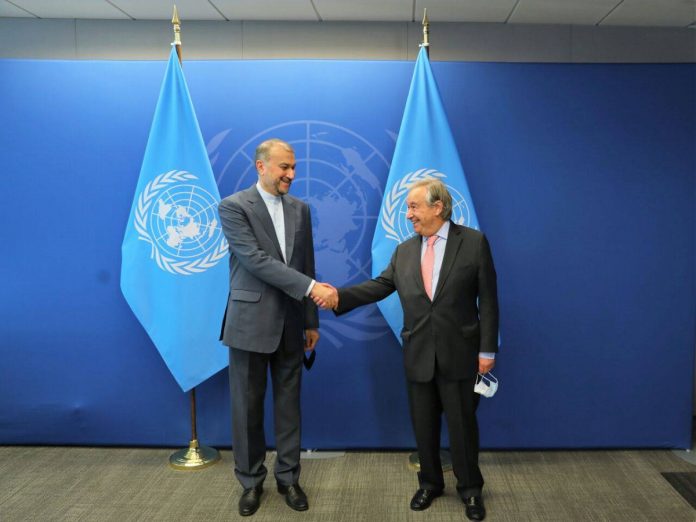
Foreign Minister Hossein Amirabdollahian, held consultations with the Secretary General of the United Nations Antonio Guterres, on the fringes of the UN General Assembly’s meeting in New York.

The two sides exchanged views on the latest developments in negotiations for the revival of the Iran nuclear deal, JCPOA.

Referring to the talks between Iran and the P4+1 namely Russia, China, Britain, France and Germany, Amirabdollahian stated, ”There has been a lot of progress in the negotiations and we believe that an agreement can be reached if the American side is realistic.”

Antonio Guterres also emphasized, “We have always supported the return of all parties to the agreement and I hope we will soon see it realized.”

In the meeting, Amirabdollahian also referred to the deadly unrests in Iran over the death of a young woman in police custody, adding, “We consider peaceful protest the right of the people, but peaceful protest is different from chaos and disrupting the public order of the country.” Dozens of people have so far been killed during the unrests.

The secretary general of the United Nations also appreciated Iran’s important role in contributing to the peace and security in the region.

Iran FM voices hope UNGA would address global security challenges

Amirabdollahian and Kőrösi

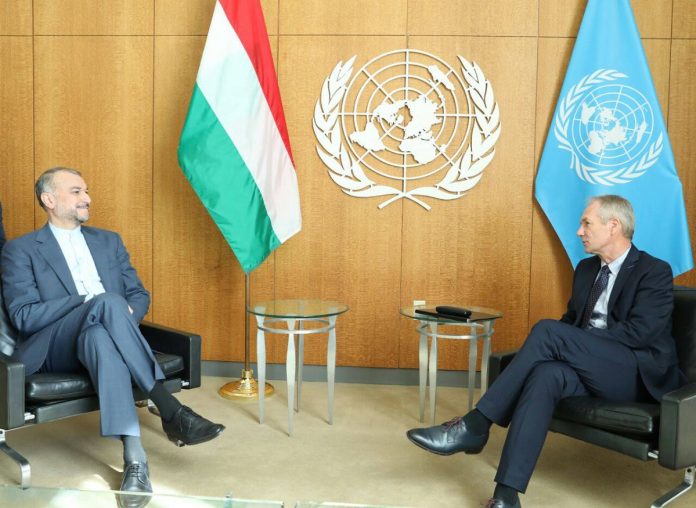
Hossein Amirabdollahian held a meeting with the president of the United Nations General Assembly on the sidelines of the UNGA’s 77th meeting in New York.

During the meeting, Foreign Minister Hossein Amirabdollahian said Iran believes the General Assembly holds a high position, expressing hope that the Assembly’s ongoing session will be an opportunity for exchanging views and dealing with global challenges in the fields of international peace and security.

The Iranian foreign minister elaborated on the latest status of the talks underway for a revival of the Joint Comprehensive Plan of Action (JCPOA) and the relevant messages exchanged with the American side.

He said terrorism and extremism continue to be the main challenge in the Middle East region, which has turned into a serious source of concern for regional countries with the escalation of the situation in Afghanistan.

Amirabdollahian explained Iran’s initiative as the main sponsor of the resolution against dust storms and said this phenomenon was a common issue of the regional countries, which is posing a threat to the health of millions of people. He expressed hope that the General Assembly will draw global attention to the necessity of countering the phenomenon.

For his part, Csaba Kőrösi, president of the 77th session of the General Assembly, welcomed the Islamic Republic of Iran’s approach. He pointed to the capabilities of Iran’s diplomatic apparatus and expressed hope that Iran would play an active role in the consensus-building process in the Assembly’s resolutions.

He also pointed to the Security Council’s failure to address many global issues, saying countries generally expect the General Assembly’s further activation for dealing with global security-related issues.

The General Assembly’s president highlighted the global concerns over the issue of water, expressing hope that Iran will actively participate in the international conference on management of water resources slated for March.

Iran air force unveils new drone

Shahab unmanned aerial vehicle (UAV)

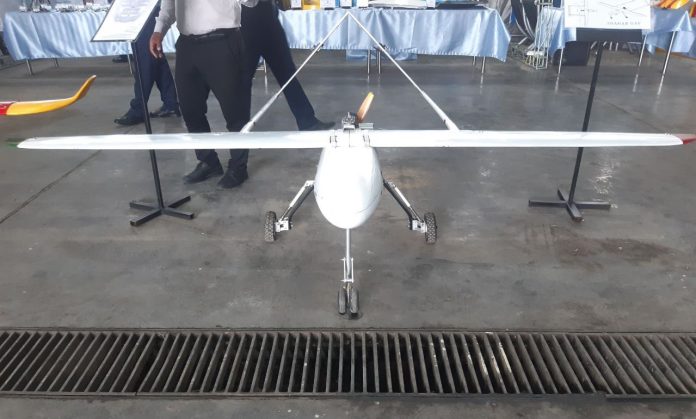
The drone, designed for training purposes, was unveiled in the Shahid Lashgari Airbase in the Iranian capital Tehran on Wednesday.

It is an upgraded and advanced version of Safir drone and is significantly lighter.

Shahab, which also has the reconnaissance capabilities, can fly as high as 11,000 feet for eight hours, a remarkable improvement compared to its predecessor.

The flight radius of the UAV for training activities is 10 km, but its flight radius for reconnaissance missions can be increased to 200 km.

Meanwhile, in order to maintain the balance of the drone during flight, landing and takeoff, the end of its fin is designed in a V shape.

The exhibition is held to mark the Sacred Defense Week in Iran on the anniversary of the start of 1980-88 war imposed by Iraq.

The Iranian armed forces have showcased several new achievements in the exhibition.