Monday, December 29, 2025
Home Blog Page 122

Taliban says will never hand over Bagram Air Base to US

A gate is seen at the Bagram Air Base in Afghanistan, Friday, June 25, 2021. In 2001 the armies of the world united behind America and Bagram Air Base, barely an hours drive from the Afghan capital Kabul, was chosen as the epicenter of Operation Enduring Freedom, as the assault on the Taliban rulers was dubbed. It’s now nearly 20 years later and the last US soldier is soon to depart the base. (AP Photo/Rahmat Gul)

In an exclusive interview with Sky News, Zabihullah Mujahid said: “Afghans will never allow their land to be handed over to anyone under any circumstances.”

But the senior Taliban member stated that his government had held talks with the US about reopening the Afghan embassy in Washington DC and the US embassy in Kabul.

He added: “We have discussed this matter and we wish to see the embassies reopened both in Kabul and in Washington.”

It is four years since the Taliban swept to power and only Russia has formally recognised their government.

But Mujahid denied that they have a “legitimacy problem”, claiming that many countries privately had acknowledged their leadership.

“It is not only Russia that has openly recognised the Islamic Emirate. There are several other countries that have extended recognition, though not publicly.”

The Taliban government has increasingly placed restrictions on women and girls, and girls over the age of 12 still cannot attend school.

The International Criminal Court has issued arrest warrants for two of the Taliban’s top leaders, including the Supreme Leader, Haibatullah Akhundzada, accusing them of persecuting women and girls in Afghanistan.

Afghanistan is in the middle of an economic crisis and has experienced severe droughts.

But in a wide-ranging interview, Mujahid said the country had enjoyed “relative peace and stability under a unified government” with more security and “visible signs of economic recovery”.

But malnutrition has soared in the country, and 90% of children under five are in food poverty, according to UNICEF.

Mujahid added it was the “result of decades of conflict and two major invasions that devastated Afghanistan’s infrastructure and economy”.


Nearly 20k Gaza children killed in Israeli war: Authorities

Gaza War

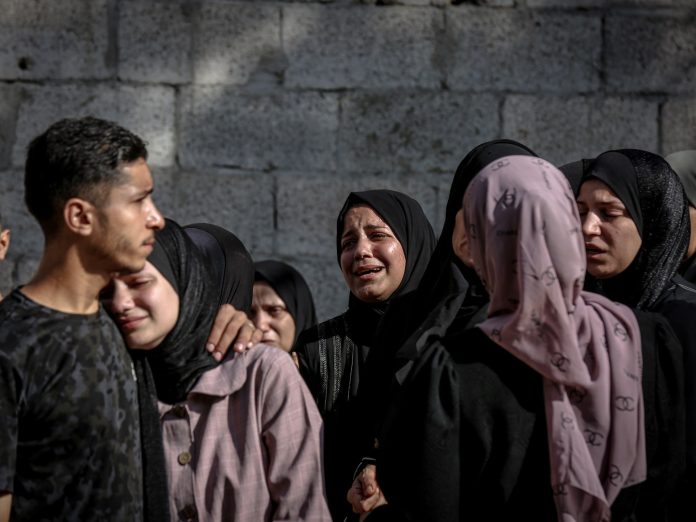
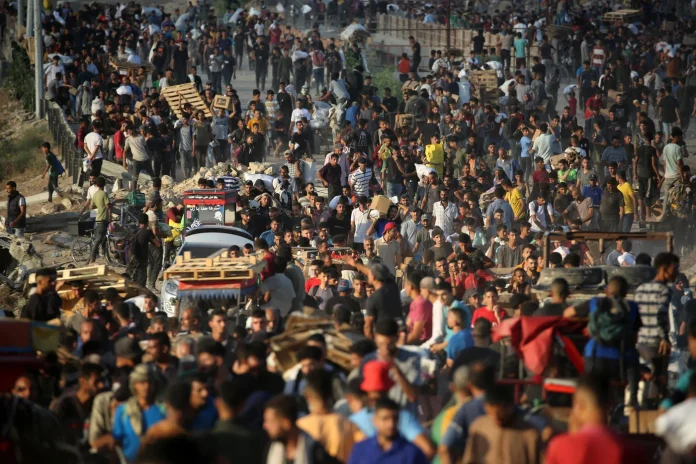
Gaza’s Government Media Office said the bodies of more than 19,450 children were brought to hospitals, while over 12,500 women were also killed, including about 10,160 whose bodies were recovered.

The office added Israeli forces destroyed about 90% of Gaza’s territory and took control of over 80% of the area, using an estimated 200,000 tons of explosives.

According to the statement, at least 1,670 medical personnel, 140 civil defense members, and 254 journalists were killed since the war began two years ago.

The media office said around 12,000 miscarriages among pregnant women were reported in Gaza due to hunger and lack of healthcare.

It accused Israel of “systematically” targeting Gaza’s health sector, destroying or disabling 38 hospitals, 96 health centers, and 197 ambulances.

The office added 835 mosques were destroyed and 180 others partially damaged, while three churches were attacked, 40 cemeteries demolished, and over 2,450 bodies stolen from burial sites.

It said about 268,000 housing units were completely destroyed, 148,000 severely damaged, and 153,000 partially damaged, displacing more than 288,000 families. Most of the 125,000 tents sheltering them are now unfit for use.

Nearly two million Palestinians have been forcibly displaced since the start of the war, with 293 shelters and displacement centers hit by Israeli strikes, the office added.

Since October 2023, Israeli bombardment has killed more than 67,000 Palestinians in the enclave, and rendered it uninhabitable, with the blockade also pushing Gaza to famine.


Hamas dismisses media reports about agreeing to disarm under international supervision

Hamas

Media reports had claimed that Hamas had agreed to hand over its weapons to a Palestinian-Egyptian committee under international supervision.

“We categorically deny the fabricated allegations published by several media outlets about the course of the ceasefire negotiations and Hamas’ position on handing over weapons,” senior Hamas member Mahmoud Mardawi said in a statement.

He called these media reports “baseless and aim to distort Hamas’ stance and mislead public opinion.”

Mardawi called on media outlets to verify information and rely on credible sources, urging journalists not to fall for what he called rumors or unverified claims.

Egypt is set to host delegations from Hamas and Israel on Monday to discuss the details of a prisoner swap deal under Trump’s Gaza plan.

In late September, US President Donald Trump unveiled the 20-point plan, which includes the release of Israeli captives and Palestinian prisoners, a ceasefire, disarmament of Hamas and rebuilding of Gaza. Hamas has agreed to the plan in principle and talks for the next steps are due in Egypt.

The Israeli army has killed over 67,000 Palestinians, most of them women and children, in Gaza since October 2023. The relentless bombardment has rendered the enclave uninhabitable and led to starvation and the spread of diseases.


Iranian daily calls for domestic accountability over UN sanctions, but not at cost of national cohesion

Iran Bazaar

In an editorial published on Monday, the paper argued that identifying and prosecuting wrongdoing is necessary, including addressing negligence, yet stressed such processes must occur at an appropriate time to avoid greater harm.

The editorial criticized ongoing public disputes among political factions amid the return of UN sanctions and the activation of the so-called “snapback” mechanism, calling the current moment the worst possible for airing grievances.

It urged rivals to recognize that the primary threat is external and that diverting attention to internal power struggles helps adversaries.
Public debates, hostile media campaigns and displays of dominance, the paper said, are particularly damaging now and could amount to aiding the enemy.

While acknowledging that domestic actors have committed errors and bear public reproach, even potential legal consequences, Jomhouri-e Eslami emphasized that long years of factional fighting have sacrificed national interests.

The editorial concluded by calling on political rivals to set aside disputes, unite against the external threat and focus national effort on confronting the sanctions and protecting public welfare.

Iran Spox: European trio has proven diplomacy with them is ineffective

Esmail Baghaei

Speaking on Monday to reporters about the activation of the snapback mechanism and renewed calls by Europe for negotiations, Baqaei criticized the approach of the UK, France, and Germany as “irresponsible and destructive,” particularly in recent months.

He said the three countries had misused the dispute resolution mechanism to impose Washington’s demands on Tehran.

According to Baqaei, all three conditions set by the Europeans were unreasonable. Nevertheless, Iran chose to engage in discussions with the International Atomic Energy Agency (IAEA), which resulted in an understanding aimed at creating a new framework for cooperation — a framework the Agency initially welcomed but was later rejected.

He added that the conditions set by the three European states for entering talks with the United States were illogical, and they failed to present themselves as independent actors. “Therefore, the situation will be different from now on,” he stated.

The Foreign Ministry spokesman stressed that the diplomatic path is never completely closed and that “whenever we conclude that diplomacy can deliver results, we will not hesitate to use it.”

Baqaei also reacted to comments by IAEA Director General Rafael Grossi, who claimed that his latest report was unrelated to the US and Israeli attacks on Iran. He argued that the IAEA report and the Europeans’ misuse of it to pass a resolution against Iran had created a pretext for those attacks. “For this reason,” Baqaei said, “the Agency should have condemned the US and Israeli strikes on Iran’s nuclear facilities.”

Iran says welcomes decision by Palaetinians regarding Gaza ceasefire

Gaza War

In a statement, the Ministry of Foreign Affairs of the Islamic Republic of Iran, recalling the legal and moral responsibility of the international community to confront the ongoing genocide in Gaza under the 1948 UN Convention on the Prevention and Punishment of the Crime of Genocide, and the legal and moral responsibility of all governments to support the legitimate and lawful struggle of the Palestinian people to realize their right to self-determination and liberation from the yoke of occupation, apartheid, and colonialism by the Zionist regime, said it has consistently supported any initiative that entails the cessation of ethnic cleansing, war crimes, and crimes against humanity in Gaza and paves the way for the realization of the Palestinian people’s right to self-determination.

It says, taking into account the dangerous dimensions and aspects of this proposal, and while reiterating its warning about the repeated breaches and obstructionism by the Zionist regime in fulfilling its promises, especially in light of its expansionist and racist plans, the Islamic Republic of Iran considers any decision in this regard to be within the authority of the Palestinian people and resistance.

It welcomes any decision by them that guarantees halting the genocide of Palestinians, the withdrawal of the occupying Zionist army from Gaza, respect for the Palestinian people’s right to self-determination, the entry of humanitarian aid, and the reconstruction of Gaza.

“The cessation of crimes and genocide in Gaza does not negate the responsibility of governments and competent international institutions to pursue legal and judicial action against the crimes of the Zionist regime, nor the identification and prosecution of those who ordered and carried out war crimes, genocide, and crimes against humanity in the Gaza Strip, with the aim of ending the decades-long impunity of the Zionist regime.”

The Islamic Republic of Iran, while expressing hope for the immediate delivery of humanitarian aid to the oppressed people of Gaza, declared its readiness to participate in this effort.

Iran women’s volleyball team wins first-ever gold at central Asia championship

Held from October 1 through 5 in Tashkent, the tournament saw Iran emerge undefeated, winning all four matches.

In the final, the Iranian side dominated with scores of 25–14, 25–14, and 25–19, marking a historic first gold medal in the team’s 62-year history.

Under coach Lee Do-hui, Iran soared through the preliminary stage with three straight wins, earning nine points to lead their group into the final.

Notably, Iran did not drop a single set throughout the tournament, defeating Tajikistan, Kyrgyzstan, and Uzbekistan in the preliminary rounds.

The victory is seen as a breakthrough moment for women’s volleyball in Iran and a milestone in the sport’s development in the country.

Syria counts votes after indirect election for first parliament after Assad fall

Nawar Najmeh, spokesperson for Syria’s Higher Election Committee, told the state-run SANA news agency that voting in Sunday’s elections had concluded in some electoral districts, and the winning candidates will be announced during a news conference later in the day.

Members of Syria’s electoral colleges had gathered to vote for the new lawmakers in a process being criticised as undemocratic, with a third of the 210 members of the revamped People’s Assembly appointed by interim leader, Ahmed al-Sharaa. The remaining representatives have not been voted on directly by the people, but chosen instead by electoral colleges around the country.

Critics say the system favours well-connected figures and is likely to keep power concentrated in the hands of Syria’s new rulers, rather than paving the way for genuine democratic change.

In a joint statement last month, more than a dozen nongovernmental organisations announced that the process means al-Sharaa “can effectively shape a parliamentary majority composed of individuals he selected or ensured loyalty from”, which risked “undermining the principle of pluralism essential to any genuine democratic process”.

Elections in the restive Druze-majority province of Suwayda and in northeastern areas controlled by the Kurdish-led Syrian Democratic Forces have been indefinitely postponed due to tensions between local authorities and the central government in Damascus.

In a speech after observing the votes being cast at the National Library Center in Damascus, al-Sharaa hailed the election as a key moment in rebuilding the country.

He applauded the fact that the country was able “in just a few months, to engage in an electoral process suited for its current circumstances”.

“This historic moment among Syrians is very important,” he said, adding, “There are many pending laws that need to be voted on to advance the process of construction and prosperity.”

During the al-Assad dynasty’s years in power, regular elections were held, but they were widely viewed as sham, and the al-Assad-led Baath party always dominated the parliament.

During its 30-month term, the incoming parliament will be tasked with preparing the ground for a popular vote in the next elections.

The People’s Assembly has 210 seats, of which 140 were voted on by electoral colleges throughout the country, with the number of seats for each district distributed by population. The remaining 70 deputies will be appointed directly by al-Sharaa.

A total of 7,000 electoral college members in 60 districts – chosen from a pool of applicants in each district by committees appointed for the purpose – were eligible to vote for the 140 seats.

However, the postponement of elections in the Kurdish-dominated northeast provinces of Hasakah and Raqqa, and the Druze-majority southern province of Suwayda, which remain outside Damascus’s control, means that seats there will remain empty.

All the more than 1,500 candidates came from the ranks of the electoral colleges and ran s independents, as existing political parties were dissolved by Syria’s new authorities following al-Assad’s ouster, and no replacement system has been established to register new parties.

While the lack of a popular vote has been criticised as undemocratic, some analysts say the government’s reasons are valid.

Al-Sharaa has stated it would be impossible to organise direct elections now due to the large number of Syrians who lack documentation after millions fled abroad or were displaced internally.

Critics have also expressed concerns about the representation of minorities and women in the new assembly, with only 14 percent of the candidates being women, and Suwayda and the northeast excluded from the process.


Tomahawk supply to Ukraine would destroy relations between US and Russia: Putin

Trump and Putin

Less than two months since U.S. President Donald Trump met Putin at a summit in Alaska, peace looks even further away with Russian forces advancing in Ukraine, Russian drones allegedly flying in NATO airspace and now Washington talking about direct participation in striking deep into the world’s biggest nuclear power.

Trump has said he is disappointed with Putin for not making peace and has cast Russia as a “paper tiger” for failing to subdue Ukraine. Putin last week hit back, questioning if NATO was not the “paper tiger” for failing to stop Russia’s advance.

U.S. Vice President JD Vance stated last month that Washington was considering a Ukrainian request to obtain long-range Tomahawks that could strike deep into Russia, including Moscow, though it is unclear if a final decision has been made.

“This will lead to the destruction of our relations, or at least the positive trends that have emerged in these relations,” Putin stressed in a video clip released on Sunday by Russian state television reporter Pavel Zarubin.

The Wall Street Journal reported last week that the United States will provide Ukraine with intelligence on long-range energy infrastructure targets in Russia, as it weighs whether to send Kyiv missiles that could be used in such strikes.

But one U.S. official and three other sources told Reuters that the Trump Administration’s desire to send long-range Tomahawk missiles to Ukraine may not be viable because current inventories are committed to the U.S. Navy and other uses.

Tomahawk cruise missiles have a range of 2,500 kilometres (1,550 miles), which means that if Ukraine got the missiles then the Kremlin and all of European Russia would be within target.

Putin on Thursday said that it was impossible to use Tomahawks without the direct participation of U.S. military personnel and so any supply of such missiles to Ukraine would trigger a “qualitatively new stage of escalation”.

“This will mean a completely new, qualitatively new stage of escalation, including in relations between Russia and the United States,” Putin continued.

He added that Tomahawks could harm Russia, but that it would simply shoot them down and improve its own air defence.

Putin portrays the Ukraine war as a watershed moment in Moscow’s relations with the West, which he says humiliated Russia after the 1991 fall of the Soviet Union by enlarging NATO and encroaching on what he considers Moscow’s sphere of influence.

Western European leaders and Ukraine cast the war as an imperial-style land grab and have repeatedly vowed to defeat Russian forces. They argue that unless Russia is defeated, Putin will risk an attack on a NATO member, a claim Putin has repeatedly denied.

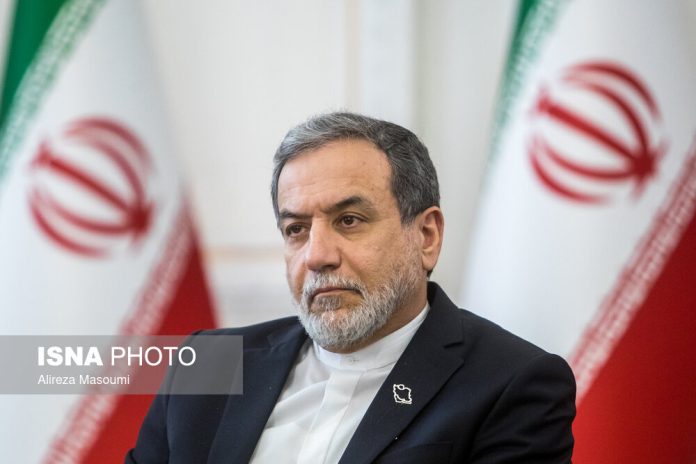
Iran FM: Western countries rejected talks due to excessive demands

He made the remarks on the sidelines of a meeting with ambassadors and representatives of foreign missions based in Tehran.

The session was held to brief diplomats on recent developments on the Iranian delegation’s visit for the UN General Assembly’s annual meeting in New York and to clarify issues surrounding the activation of the “snapback” mechanism by European states.

“Experience has shown that there is no solution to Iran’s nuclear issue other than diplomacy,” he said, adding that the activation of the snapback mechanism by the European trio, namely the UK, France, and Germany, “failed to achieve any results.”

He stated that the three European countries had “weakened their own diplomatic position” and would play a lesser role in any future negotiations.

Araghchi also stressed that Iran’s talks have always been limited to nuclear issues, rejecting claims of broader conditions.

Commenting on cooperation with the International Atomic Energy Agency (IAEA), he said the Cairo Agreement could no longer serve as a framework after recent developments.

He reaffirmed Iran’s commitment to diplomacy but emphasized that future talks would differ in approach, asserting that “Iran will not relinquish its legitimate rights.”