Monday, April 13, 2026
Home Blog Page 121

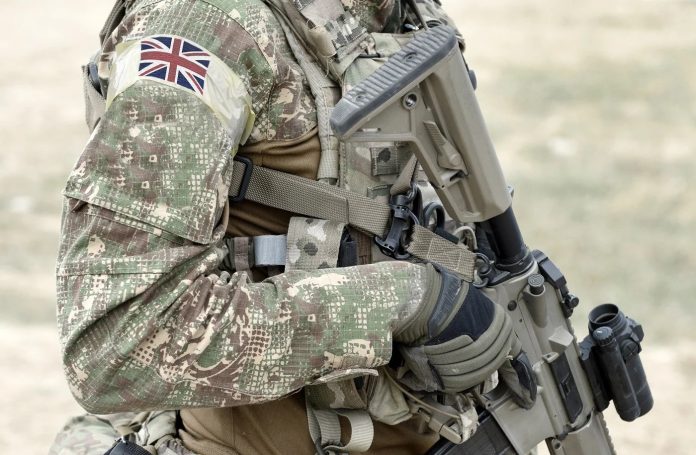
British army to get powers to shoot down drones near bases

UK Army

The plans, to be unveiled by Defence Secretary John Healey in a speech on Monday, are intended to allow troops to take faster, more decisive action.

Four British airbases used by US forces reported mystery drone sightings last year, while drones have disrupted airspace across Europe a number of times in recent months.

The new powers will only apply to military sites, but could be extended to civilian locations such as airports.

Healey is set to announce the introduction of a “kinetic option”, first reported by the Daily Telegraph, that would enable British troops or Ministry of Defence (MoD) police to shoot drones posing a threat to a military site in the UK.

Existing protocol mandates soldiers divert drones or disrupt their GPS signal using counter-drone equipment.

Shooting down an unidentified drone is only allowed in extreme circumstances.

RAF Lakenheath and RAF Mildenhall, in Suffolk, RAF Feltwell in Norfolk and RAF Fairford in Gloucestershire all reported drone incursions in November last year.

About 60 RAF personnel were sent to assist the US Air Force in its investigation.

Neither US nor UK officials have said who might have been behind the drone activity.

The airbases have strategic significance for the US military. It recently deployed F-22A fighter jets to RAF Lakenheath, days after the US bombing of Iranian nuclear sites in June.

Recent drone sightings across the European Union prompted a leaders’ summit in Denmark earlier this month.

Several EU member states have backed plans for a multi-layered “drone wall” to quickly detect, track and destroy Russian drones.

Twenty Russian drones crossed into Poland in September while Russian MiG-31 jets entered Estonian airspace later in the month. Russia has denied or downplayed the incursions.

Other recent drones sightings have also forced numerous European airports to close, including across two consecutive days in Munich, Germany.

Airports in Denmark and Norway also shut after unidentified drones were spotted near airport and military airspaces.

Russia denied any involvement, while Danish authorities said there was no evidence Moscow was involved.
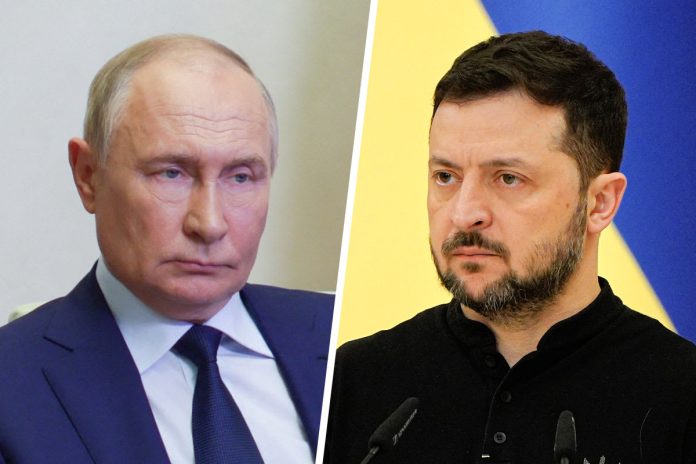
Zelensky stresses Putin stronger than Hamas, calls for more pressure

Putin Zelensky

Asked on “Meet the Press” whether Trump should get tougher on Putin after spearheading a ceasefire deal in Gaza, Zelensky said in English, “Yes, and even more because Putin is something similar, but more strong than Hamas. It’s more bigger war, and he is the second army in the world.”

He added: “And that’s why more pressure.”

The interview aired after Zelensky returned from a trip to Washington where he failed to secure long-range Tomahawk missile supplies.

Zelensky met Trump at the White House after calling for Tomahawks for weeks, hoping to capitalize on Trump’s growing frustration with Putin after a summit in Alaska failed to produce a breakthrough.

But the Ukrainian leader left empty-handed as Trump eyes a fresh diplomatic breakthrough on the back of last week’s Gaza peace deal.

In his interview, the Ukrainian leader also said he should be included in upcoming talks in Budapest that are planned between Trump and Putin.

“If we really want to have just and lasting peace, we need both sides of this tragedy,” Zelensky stated, adding, “Yes, he’s an occupier, but Ukraine is suffering and fighting. And, of course, how can [there] be some deals without us about us?”

But in an interview that aired Sunday shortly after Zelensky’s, Trump again indicated he wasn’t ready to send the weapons to Ukraine.

“We have to remember one thing. We need them for ourselves too. You know, we can’t give all of our weapons to Ukraine,” Trump said on Fox’s Sunday Morning Futures with Maria Bartiromo.

Moscow has stepped up attacks on Ukrainian civilian infrastructure in recent weeks, leaving thousands without heating and light as the cold winter draws nearer.


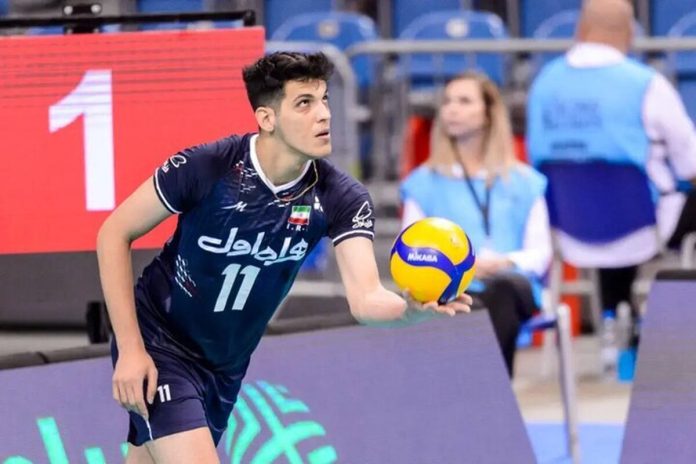
Iranian volleyball star still in induced coma

His medical team reported slight improvement in his level of consciousness, offering a cautious note of hope.

Kazemi was admitted to a hospital in Qatar following a serious health event.
On the previous day his Glasgow Coma Scale score was recorded as 3. This Sunday, the score has increased to between 4 and 5, prompting optimism among the treating physicians.

A specially assembled medical committee comprised of Iranian and Qatari specialists is overseeing his treatment. Additional diagnostic tests are scheduled to determine the optimal therapeutic strategy for the 29-year-old outside-hitter.

Kazemi is a key member of Iran’s men’s national volleyball team known for his powerful serve and athleticism.

No detailed information has been released about the exact cause of Kazemi’s hospitalization or the nature of the induced coma, consistent with the family’s request for privacy.

Trusted Baluch community leader shot dead in southeastern Iran; IRGC vows response

Crime Scene

Local sources reported that unidentified armed groups carried out the attack.

Salahi Zehi had played a visible role in resolving tribal disputes and was described by authorities as a defender of the state who opposed “anti-national and mercenary” currents.

His killing follows a string of recent targeted attacks against Sunni tribal figures in the province.

The IRGC’s Quds Corps released a statement condemning the murders, saying perpetrators “will soon be brought to justice” and promising a decisive security response.

The statement added that such attacks “will not undermine the exemplary unity of Shia and Sunni communities in Sistan and Baluchestan.”

Provincial security forces have launched an investigation.

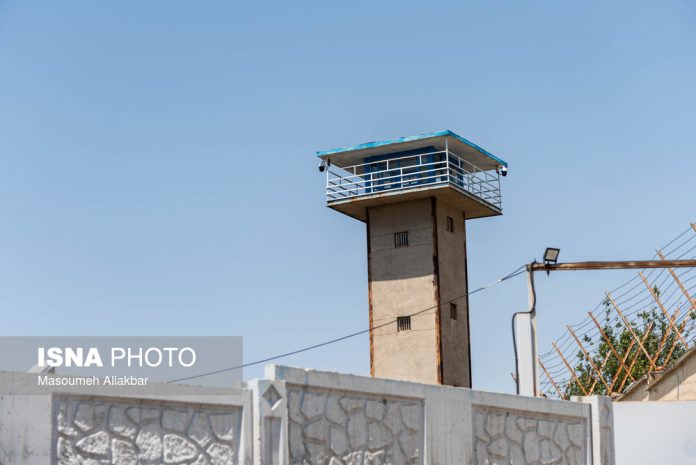
Iran executes convicted Israel spy

Iran Prison

According to the Judiciary’s statement, the convicted spy began collaborating with the Israeli intelligence service (Mossad) in October 2023 and was arrested four months later, in February 2024. Investigations found that he had transmitted classified information to Israeli intelligence websites and maintained contact with a Mossad officer.

Qom Judiciary Chief Hojjatoleslam Seyyed Kazem Mousavi stated that the convict was charged under Article 6 of Iran’s Law on Countering Hostile Acts of the Zionist Regime Against Peace and Security, as well as for cooperation with hostile foreign governments, including the U.S. Department of State.

Mousavi said the man had met with Israeli intelligence agents for personal and professional motives and had begun transferring sensitive information through online platforms before being identified by Iranian intelligence services.

“Timely action by intelligence and judicial authorities prevented the leakage of sensitive national data,” he added.

The judiciary official urged citizens to remain vigilant and promptly report any suspicious activity through official and secure channels to relevant intelligence and security agencies, emphasizing that “public cooperation and awareness are vital to ensuring the continued peace and security of the Islamic community.”

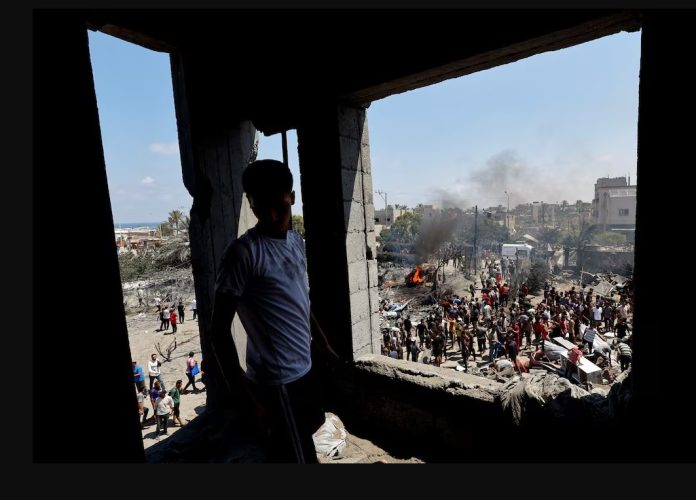
Israel bombs Gaza’s Rafah despite ceasefire

Gaza War

Israel’s Channel 12 reported the strikes were intended to protect members of the Yasser Abu Shabab militia – an Israeli-backed gang accused of stealing humanitarian aid and attacking Palestinian civilians during Israel’s two-year genocidal war on Gaza.

Palestinian outlet Quds Network cited an unnamed source saying that a Hamas‑led internal security unit carried out an operation targeting a hideout belonging to Yasser Abu Shabab east of Rafah.

Abu Shabab, a fugitive convicted of drug trafficking, has led an Israeli-armed militia in the Gaza Strip for more than a year. He is based in southern Rafah under the protection of Israeli troops.

An Israeli military official told Reuters that Hamas fighters carried out “multiple attacks” against Israeli troops during the incident, calling it a “blatant violation” of the ceasefire.

The official added the attacks, which allegedly involved a rocket‑propelled grenade and sniper fire, took place beyond the so‑called “Yellow Line” – a demarcation inside Gaza where Israeli forces are stationed.

Hamas’ armed wing insisted on Sunday that the group is adhering to the ceasefire agreement with Israel and was unaware of any clashes in Rafah.

“We reaffirm our full commitment to implement everything that was agreed upon, foremost of which is a ceasefire across all areas of the Gaza Strip,” the Ezzedine Al-Qassam Brigades announced in a statement.

“We have no knowledge of any incidents or clashes taking place in the Rafah area, as these are red zones under the occupation’s control, and contact with the remaining groups of ours there has been cut off since the war resumed in March of this year.”

Separately, Israeli air strikes were reported in Jabalia, in the northern Gaza Strip, with initial reports indicating several people were killed or wounded.

Since the ceasefire came into effect on 11 October, Israeli forces have violated it around 50 times, including through artillery shelling, drone strikes, tank fire and quadcopter attacks.

More than 38 Palestinians have been killed in these incidents.

Israel has also violated other terms of the agreement, including restrictions on the entry of humanitarian aid and the continued closure of the Rafah border crossing with Egypt.


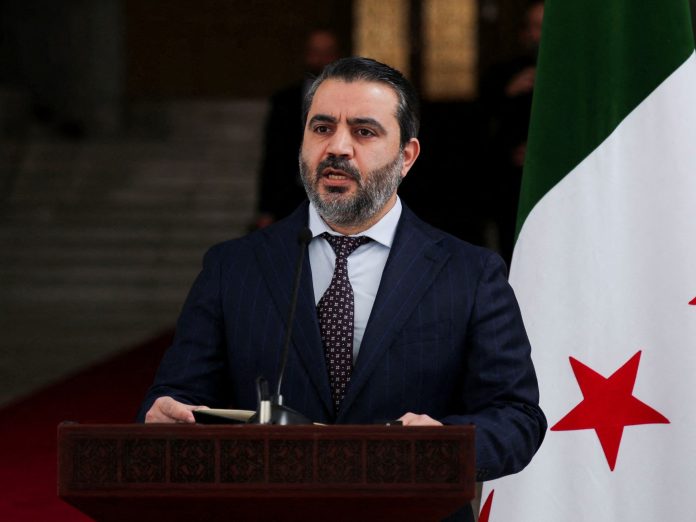
Syrian FM to make first official visit to China in November

Hassan al-Shaibani

“We have redefined our relationship with China, which had politically supported the former regime of Bashar al-Assad and used its veto power on his behalf,” Shaibani said during an interview with the state-run Alikhbaria TV.

“In early November, there will be the first official visit to China, based on an invitation from Beijing,” he added.

Shaibani stressed that Syria needs China’s support at this stage for reconstruction, noting that this development reflects a shift in bilateral relations, as Beijing had previously supported the former government and even upgraded ties to a “strategic partnership” during Bashar al-Assad’s visit to China in Sept. 2023.

Commenting on Syrian-Russian relations, particularly after President Ahmad al-Sharaa visited Moscow, the minister said: “Our engagement with Russia has been gradual. No new agreements have been signed, and the agreements concluded between Russia and the former regime remain suspended—we do not accept them.”

He also expressed Syria’s intention to restore relations with Lebanon, saying: “There is a legacy we are not part of and for which we bear no responsibility.”

On the Syrian refugee issue in Lebanon, the minister added it “has been a source of pressure on both the Lebanese state and Syria.”

Speaking about the country’s new foreign policy, Shaibani stated: “We have launched an external policy free of polarization, without aligning Syria to any bloc or placing it in a state of hostility with any country.”

Addressing the issue of the Syrian Democratic Forces (SDF), whose backbone is PKK/YPG terrorist groups, he said: “We have succeeded in convincing the countries concerned that the only solution is the March 10 agreement, because the absence of SDF representation within state institutions deepens the divide between them and the state.”

“There is a historic opportunity for northeastern Syria to play an active role at this stage,” the minister added, emphasizing that “partnership with the SDF should be finalized as soon as possible.”

Regarding Israel’s repeated attacks on Syria, Shaibani said: “Tel Aviv sought to impose a new reality and an expansionist project, exploiting the political changes in the country.”

He added that “Israel has an expansionist agenda, and its actions only reinforce instability in Syria and the wider region.”

He concluded by affirming, “We reject any form of partition or federalization—this is not a matter open for discussion or negotiation.”


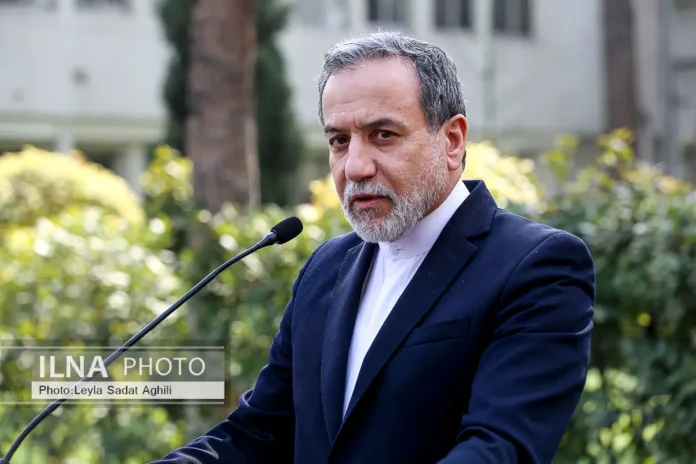
Iran FM condemns UK parliament’s drone display

Abbas Araghchi

Seyed Abbas Araqchi said on Sunday that those opposing friendly relations between Iran and Europe are attempting to fabricate narratives that contradict the centuries-old ties between Iran and European nations, including Poland.

In a post on X, Araqchi wrote that Iran remains ready for technical talks and the exchange of documents to clarify the facts, particularly in response to this “ridiculous show.”

Recently, following the participation of Poland’s foreign minister in an anti-Iran performance at the UK Parliament—staged in collaboration with an American-Zionist group and involving claims about the use of Iranian drones in the Russia–Ukraine conflict—Marcin Wilczek, the head of Poland’s mission in Tehran, was summoned to Iran’s Foreign Ministry.

The Islamic Republic of Iran has repeatedly and categorically rejected allegations of providing military assistance to Russia in the Ukraine conflict, stressing the need to resolve the issue through dialogue.


Two Russian banks agree to accept letters of credit from Iranian banks

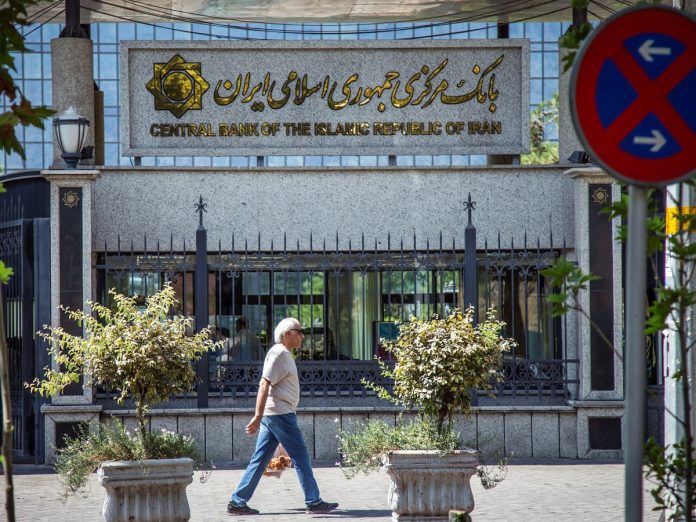
Iran Central Bank

He said the move will help expand financial cooperation and enable new payment mechanisms between Iran and Russia, particularly in the agricultural sector.

Speaking at a meeting with members of Iran’s Chamber of Commerce Agricultural Commission, Bandani said discussions with several Russian banks are ongoing and a third bank may soon join the arrangement.

The new mechanism is expected to facilitate imports and the supply of essential goods under bilateral financial frameworks.

He noted that, despite budgetary limits, more than $9 billion in foreign currency has been allocated to the Ministry of Agriculture this year, exceeding the legal ceiling, in coordination with senior authorities. The Central Bank has also provided $5.5 billion in preferential-rate currency to support the sector.

Officials at the meeting emphasized the need for efficient foreign exchange management, timely supply of agricultural inputs, and better oversight to prevent market disruptions.

They called the collaboration with Russian banks a strategic step toward stabilizing trade and securing Iran’s food supply.

Iran daily criticizes Tehran’s approach to Taliban, urges support for free elections in Afghanistan

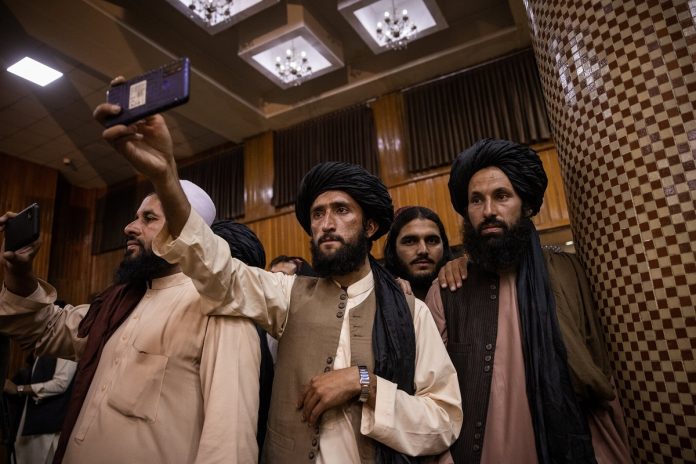
Taliban

The editorial stated that Pakistan’s leadership “appears to have understood the grave danger of Taliban dominance in Afghanistan” and is taking various measures to protect its national security.

In contrast, it said, Iranian policymakers “remain caught in the Taliban’s political game,” despite the damage Tehran has suffered during both periods of Taliban rule.

The paper called on Iran to adopt a “decisive and transparent” political strategy within an active diplomatic framework, rather than military confrontation, to safeguard national interests and help the Afghan people.

It urged regional countries to assist Afghans in holding free elections to form a legitimate government under the framework of a restored or new constitution.

Until then, the editorial said, neighboring states should avoid officially recognizing or engaging with the Taliban’s self-declared administration to pressure it toward respecting the Afghan people’s will.