Monday, December 29, 2025
Home Blog Page 123

Syria counts votes after indirect election for first parliament after Assad fall

Nawar Najmeh, spokesperson for Syria’s Higher Election Committee, told the state-run SANA news agency that voting in Sunday’s elections had concluded in some electoral districts, and the winning candidates will be announced during a news conference later in the day.

Members of Syria’s electoral colleges had gathered to vote for the new lawmakers in a process being criticised as undemocratic, with a third of the 210 members of the revamped People’s Assembly appointed by interim leader, Ahmed al-Sharaa. The remaining representatives have not been voted on directly by the people, but chosen instead by electoral colleges around the country.

Critics say the system favours well-connected figures and is likely to keep power concentrated in the hands of Syria’s new rulers, rather than paving the way for genuine democratic change.

In a joint statement last month, more than a dozen nongovernmental organisations announced that the process means al-Sharaa “can effectively shape a parliamentary majority composed of individuals he selected or ensured loyalty from”, which risked “undermining the principle of pluralism essential to any genuine democratic process”.

Elections in the restive Druze-majority province of Suwayda and in northeastern areas controlled by the Kurdish-led Syrian Democratic Forces have been indefinitely postponed due to tensions between local authorities and the central government in Damascus.

In a speech after observing the votes being cast at the National Library Center in Damascus, al-Sharaa hailed the election as a key moment in rebuilding the country.

He applauded the fact that the country was able “in just a few months, to engage in an electoral process suited for its current circumstances”.

“This historic moment among Syrians is very important,” he said, adding, “There are many pending laws that need to be voted on to advance the process of construction and prosperity.”

During the al-Assad dynasty’s years in power, regular elections were held, but they were widely viewed as sham, and the al-Assad-led Baath party always dominated the parliament.

During its 30-month term, the incoming parliament will be tasked with preparing the ground for a popular vote in the next elections.

The People’s Assembly has 210 seats, of which 140 were voted on by electoral colleges throughout the country, with the number of seats for each district distributed by population. The remaining 70 deputies will be appointed directly by al-Sharaa.

A total of 7,000 electoral college members in 60 districts – chosen from a pool of applicants in each district by committees appointed for the purpose – were eligible to vote for the 140 seats.

However, the postponement of elections in the Kurdish-dominated northeast provinces of Hasakah and Raqqa, and the Druze-majority southern province of Suwayda, which remain outside Damascus’s control, means that seats there will remain empty.

All the more than 1,500 candidates came from the ranks of the electoral colleges and ran s independents, as existing political parties were dissolved by Syria’s new authorities following al-Assad’s ouster, and no replacement system has been established to register new parties.

While the lack of a popular vote has been criticised as undemocratic, some analysts say the government’s reasons are valid.

Al-Sharaa has stated it would be impossible to organise direct elections now due to the large number of Syrians who lack documentation after millions fled abroad or were displaced internally.

Critics have also expressed concerns about the representation of minorities and women in the new assembly, with only 14 percent of the candidates being women, and Suwayda and the northeast excluded from the process.


Tomahawk supply to Ukraine would destroy relations between US and Russia: Putin

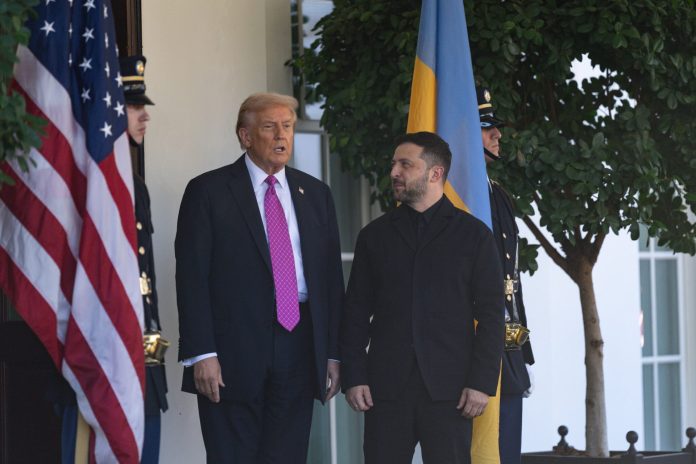
Trump and Putin

Less than two months since U.S. President Donald Trump met Putin at a summit in Alaska, peace looks even further away with Russian forces advancing in Ukraine, Russian drones allegedly flying in NATO airspace and now Washington talking about direct participation in striking deep into the world’s biggest nuclear power.

Trump has said he is disappointed with Putin for not making peace and has cast Russia as a “paper tiger” for failing to subdue Ukraine. Putin last week hit back, questioning if NATO was not the “paper tiger” for failing to stop Russia’s advance.

U.S. Vice President JD Vance stated last month that Washington was considering a Ukrainian request to obtain long-range Tomahawks that could strike deep into Russia, including Moscow, though it is unclear if a final decision has been made.

“This will lead to the destruction of our relations, or at least the positive trends that have emerged in these relations,” Putin stressed in a video clip released on Sunday by Russian state television reporter Pavel Zarubin.

The Wall Street Journal reported last week that the United States will provide Ukraine with intelligence on long-range energy infrastructure targets in Russia, as it weighs whether to send Kyiv missiles that could be used in such strikes.

But one U.S. official and three other sources told Reuters that the Trump Administration’s desire to send long-range Tomahawk missiles to Ukraine may not be viable because current inventories are committed to the U.S. Navy and other uses.

Tomahawk cruise missiles have a range of 2,500 kilometres (1,550 miles), which means that if Ukraine got the missiles then the Kremlin and all of European Russia would be within target.

Putin on Thursday said that it was impossible to use Tomahawks without the direct participation of U.S. military personnel and so any supply of such missiles to Ukraine would trigger a “qualitatively new stage of escalation”.

“This will mean a completely new, qualitatively new stage of escalation, including in relations between Russia and the United States,” Putin continued.

He added that Tomahawks could harm Russia, but that it would simply shoot them down and improve its own air defence.

Putin portrays the Ukraine war as a watershed moment in Moscow’s relations with the West, which he says humiliated Russia after the 1991 fall of the Soviet Union by enlarging NATO and encroaching on what he considers Moscow’s sphere of influence.

Western European leaders and Ukraine cast the war as an imperial-style land grab and have repeatedly vowed to defeat Russian forces. They argue that unless Russia is defeated, Putin will risk an attack on a NATO member, a claim Putin has repeatedly denied.

Iran FM: Western countries rejected talks due to excessive demands

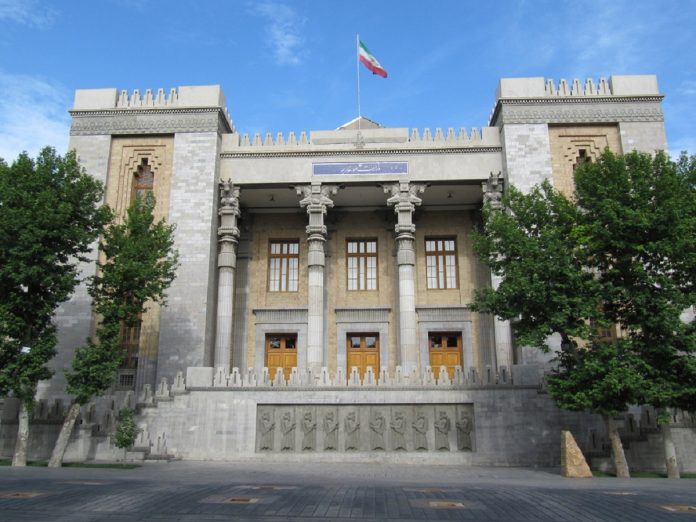
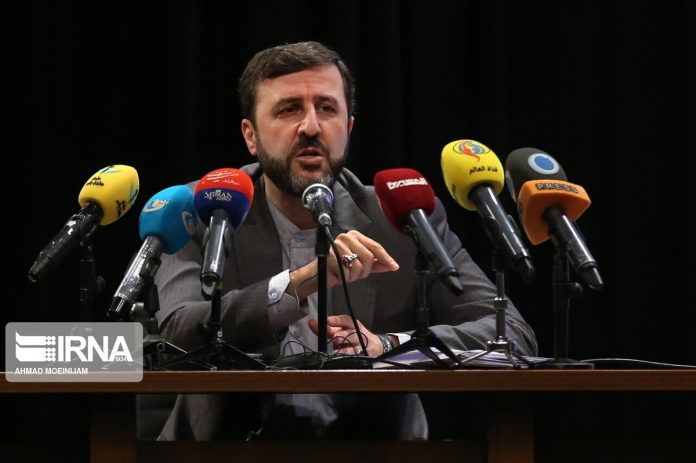
He made the remarks on the sidelines of a meeting with ambassadors and representatives of foreign missions based in Tehran.

The session was held to brief diplomats on recent developments on the Iranian delegation’s visit for the UN General Assembly’s annual meeting in New York and to clarify issues surrounding the activation of the “snapback” mechanism by European states.

“Experience has shown that there is no solution to Iran’s nuclear issue other than diplomacy,” he said, adding that the activation of the snapback mechanism by the European trio, namely the UK, France, and Germany, “failed to achieve any results.”

He stated that the three European countries had “weakened their own diplomatic position” and would play a lesser role in any future negotiations.

Araghchi also stressed that Iran’s talks have always been limited to nuclear issues, rejecting claims of broader conditions.

Commenting on cooperation with the International Atomic Energy Agency (IAEA), he said the Cairo Agreement could no longer serve as a framework after recent developments.

He reaffirmed Iran’s commitment to diplomacy but emphasized that future talks would differ in approach, asserting that “Iran will not relinquish its legitimate rights.”

Iran urges accountability for Israeli genocide, war crimes

Baqaei wrote on his X social media account that a month after the incident, American media confirmed what everyone knew: “The drone attack on boats carrying humanitarian aid to Gaza off the coast of Tunisia was carried out on the orders of Netanyahu.”

He added: “This is simply further evidence of the Israeli regime’s complete disregard for the national sovereignty of countries, international law, and human life and dignity.”

Baqaei reiterated that the world must stop these brutal violations of the law, end the impunity of war criminals and genocidal perpetrators, and hold accountable those who justify these crimes.

Poland deploys air defences as Russia launches new attacks on Ukraine

The latest deployment on Sunday comes as the transatlantic security bloc NATO steps up its air patrols across the region in response to suspected Russian airspace incursions and drone sightings in several member states.

“Polish and allied aircraft are operating in our airspace, while ground-based air defence and radar reconnaissance systems have been brought to the highest state of readiness,” Poland’s operational command said in a post on X early on Sunday.

“These actions are preventive in nature and are aimed at securing the airspace and protecting citizens, especially in areas adjacent to the threatened region,” the statement added.

The Polish military announced it is monitoring the current situation, stating that its forces under its command “remain fully prepared for immediate response”.

Poland shares an estimated 530km (329 miles) with Ukraine.

As of 02:10 GMT, all of Ukraine was under air raid alerts following Ukrainian Air Force warnings of Russian missile and drone attacks.

In late September, Poland was forced to briefly close part of its airspace southeast of the capital, Warsaw, after Russia launched a major attack across Ukraine.

Earlier that month, Polish and NATO forces also intercepted Russian drones which entered Poland’s airspace, marking their first direct military engagement with Moscow since the Kremlin’s full-scale invasion of Ukraine began in 2022.

On Sunday, NATO member Lithuania reopened its main airport after shutting it for hours following sightings of a “series of balloons” in its airspace.

Airports in Germany, Denmark, Norway and Poland have also recently suspended flights due to unidentified drones, while Romania and Estonia have pointed the finger at Russia, which has dismissed the allegations.

Iranian parliament approves plan to remove four zeros from national currency

The decision came after lawmakers resolved the Guardian Council’s objections to the bill during a public session on Sunday.

The bill was passed with 144 votes in favor, 108 against, and 3 abstentions out of 262 members present.
Once implemented, the reform will change the official unit of currency from the rial to the “new toman,” equal to 10,000 current rials or 100 qerans.

According to the approved legislation, the Central Bank of Iran will oversee a three-year transition period, during which both the rial and the new toman will circulate simultaneously.

The Central Bank must also prepare necessary executive measures within two years of the law’s enforcement and officially announce the start of the transition through public channels.

Additionally, the bank is tasked with determining foreign exchange rates in accordance with the country’s legal and economic framework.

The executive bylaw of the reform must be drafted within three months and approved by the Cabinet following endorsement by the Central Bank’s High Council.

Israel pounds Gaza, killing dozens, despite US call for it to halt bombing


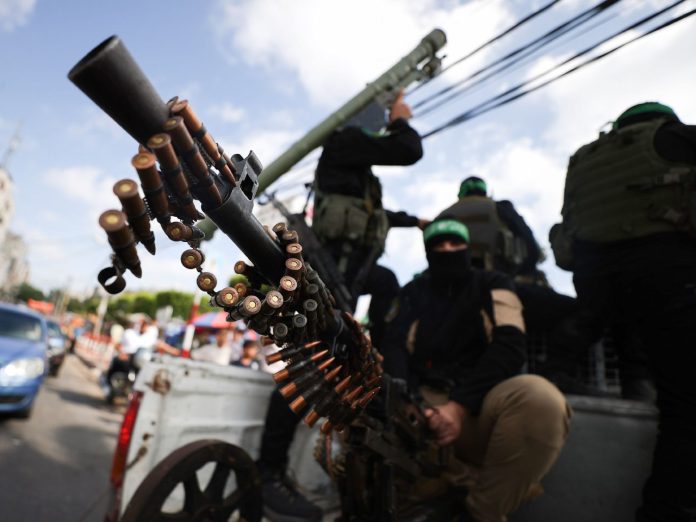
Israeli attacks across the besieged Gaza Strip have killed at least 70 Palestinians, medical sources confirmed, despite calls from United States President Donald Trump for Tel Aviv to stop its bombardment after Hamas announced it had accepted some elements of the American leader’s 20-point plan to end Israel’s war.

At least 45 of the victims killed in bombardments and air strikes on Saturday were in the famine-struck Gaza City, where the Israeli army has been pressing an offensive in recent weeks, forcing some one million residents to flee to the overcrowded south.

Eighteen people were killed and several others wounded in an Israeli strike on a residential home in the Tuffah neighbourhood in Gaza City, medics said. The attack also damaged several buildings nearby.

In a statement shared on Telegram, Gaza’s civil defence agency said seven children between the ages of two months and eight years old were among those killed.

Israeli forces also targeted a displacement camp in al-Mawasi in southern Gaza, killing two children and wounding at least eight others.

Al-Mawasi is a so-called safe humanitarian zone that the Israeli army has been ordering Palestinian families to evacuate to. But the area has been repeatedly targeted over the last few weeks and months.

On Saturday, Trump urged Hamas to move quickly to release captives and finalise negotiations over his plan to end the war, “or else all bets will be off”.

“I will not tolerate delay, which many think will happen, or any outcome where Gaza poses a threat again. Let’s get this done, FAST. Everyone will be treated fairly!” Trump wrote on his Truth Social platform.

In a separate post later on Saturday, Trump stated that Israel had agreed to an initial “withdrawal line” and that it was also shared with Hamas.

“When Hamas confirms, the Ceasefire will be IMMEDIATELY effective, the Hostages and Prisoner Exchange will begin, and we will create the conditions for the next phase of withdrawal,” he added.

Hamas had agreed to certain key parts of Trump’s 20-point proposal, including Israel’s withdrawal from Gaza and the release of Israeli captives and Palestinian prisoners. But the group has left some questions unanswered, such as whether it would be willing to disarm.

Trump will be sending his envoys, Steve Witkoff and Jared Kushner, to Egypt to finalise the technical details of the captive release and discuss a lasting peace deal, according to a White House official. Egypt will also host delegations from Israel and Hamas on Monday to discuss things further, the country’s Ministry of Foreign Affairs said in a statement.

The first phase of Trump’s proposal includes the return of all captives, dead and alive, in exchange for nearly 2,000 Palestinian prisoners.

Speaking to reporters from Jerusalem, Israeli Prime Minister Benjamin Netanyahu confirmed negotiators will be working on a timeline for the release of the remaining captives under Trump’s Gaza plan in Egypt.

He also reiterated that the US proposal includes the demilitarisation of Hamas.

That will be achieved either through Trump’s proposal or through Israeli military action, he said. He added he hoped to announce the return of the captives, all while the Israeli military remained deep in Gaza.

Meanwhile, Hamas has decried Israel’s ongoing raids on the enclave, saying they are proof of “Netanyahu’s lies” about ceasing its offensive in the enclave after Trump’s call.

“The Zionist occupation army continues to commit its horrific crimes and massacres against our Palestinian people in the Gaza Strip,” Hamas announced in a statement.

The group called on the international community, including Islamic and Arab states, to take “urgent action to protect and provide relief to our people”.

Israel’s war on Gaza has killed more than 67,000 people, according to Gaza’s Health Ministry, and experts believe the actual toll could be as much as three times higher.


Swedish campaigner Greta Thunberg abused in Israeli jail: Activists

Thunberg was among the activists who attempted to breach the blockade of Gaza by sea, whose boats were intercepted by the Israeli Navy on Thursday and Friday. Most detainees were taken to Ketziot Prison in the Negev Desert, and more than 130 have since been deported to Türkiye.

Italian journalist Lorenzo D’Agostino told Anadolu that Israeli forces left flotilla members without fresh water for two days, while Thunberg was “wrapped in an Israeli flag and exhibited like a trophy.”

Turkish journalist Ersin Celik said he witnessed the “torture” of Thunberg.

“They dragged little Greta by her hair before our eyes, beat her, and forced her to kiss the Israeli flag. They did everything imaginable to her, as a warning to others,” he told the outlet.

Activists Hazwani Helmi and Windfield Beaver also stated that Thunberg was paraded with an Israeli flag and “used as propaganda” during Israeli National Security Minister Itamar Ben Gvir’s visit to the prison.

The Swedish Embassy in Tel Aviv has announced that Thunberg had complained about “harsh treatment” and not receiving enough food or water. The Israeli rights group Adalah also noted the activists were “forced to kneel with their hands zip-tied for at least five hours.”

The Israeli Foreign Ministry rejected the allegations as “complete lies,” saying that Thunberg and other activists were “safe and in good health.” The ministry added that “their true goal was provocation in the service of Hamas, not humanitarian assistance.”


US denies visas to Iranian football delegation for 2026 World Cup draw

The move effectively prevents their attendance at the 2026 FIFA World Cup draw in Washington DC on December 5.

According to Sports Business Journal, the decision contradicts an executive order issued earlier this year by President Donald Trump, which bars travelers from 12 countries, including Iran, but allows exceptions for major sporting events such as the World Cup and the Olympics.

FIFA Vice President Victor Montagliani said he was confident that Iran’s participation in next summer’s tournament would not be affected by US entry restrictions, noting that match locations would be determined by the December draw rather than political considerations.
He added that FIFA had received assurances from the US, Canada, and Mexico guaranteeing entry for all qualified teams.

Iran Expediency Council member: CFT accession was a measured decision

He underlined that implementation of the convention’s provisions will be subject to Iran’s Constitution and domestic laws.

According to Bahonar, the decision was made by a relative, not unanimous vote, following renewed deliberations authorized by the Supreme Leader and requested by the previous government.

He noted that the CFT bill originally belonged to the 10th parliament, and its recent review was part of Iran’s continuous legal process after the Guardian Council raised objections to the legislation.

Bahonar also said the conditional approval aims to reduce obstacles to international economic cooperation, particularly with countries such as China and Russia, both of which had officially urged Tehran to resolve the issue to facilitate trade and financial exchanges. “While the decision will not lead to the lifting of U.S. sanctions,” he said, “it could help alleviate part of the current economic pressures”.

He also addressed the concerns of critics who believe that joining the CFT under current political and economic pressures is not in the country’s best interest.
However, Bahonar argued that conditional accession would not harm Iran’s national security or sovereignty.

He noted that failure to join has already increased shipping insurance costs, financial transfer expenses, and oil trade discounts. Bahonar described the conditional approval of the CFT as a measured and lawful decision, saying it ensures that Iran’s participation remains fully aligned with its constitutional principles while potentially opening space for smoother economic cooperation with friendly nations.