Saturday, December 27, 2025
Home Blog Page 102

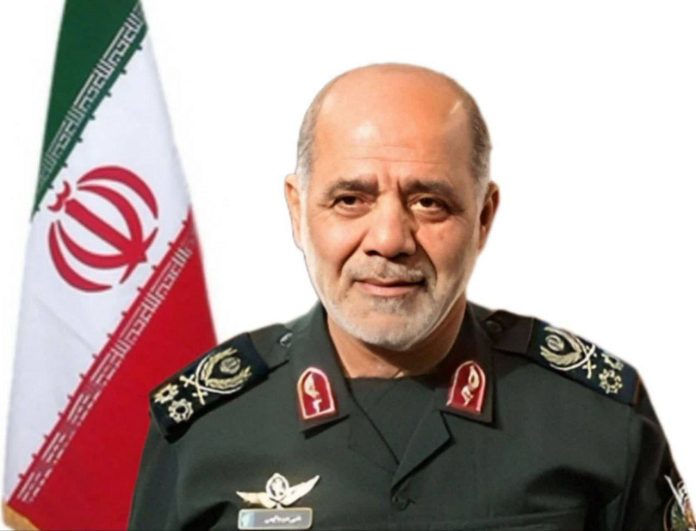
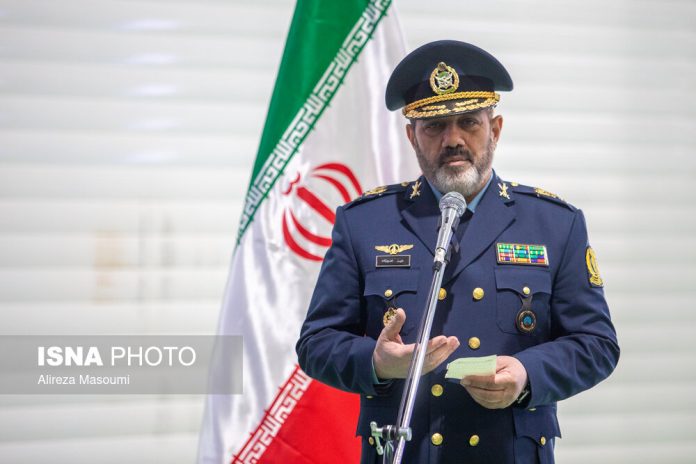
Funeral for Former Basij Commander Held in Tehran

The ceremony took place in the Shahid Mahallati district, in northeastern Tehran.

Before the victory of the Islamic Revolution, General Afshar was arrested for his political activities and spent four months in prison.

He was among the students following the line of Imam Khomeini, the founder of Islamic Republic, and took part in the takeover of the espionage den, former US Embassy in Tehran.

From 1979 to 1982, he was a member of the Central Council of Iran’s Construction Jihad.

During the Iran-Iraq war, he served as deputy head, chief of staff, and spokesman of the Islamic Revolution Guard Corps (IRGC).

From 1989 to 1997, he was the commander of the Basij Resistance Force.

Between 1997 and 2000, he served as president of Imam Hossein University.

He also held several other senior posts, including Head of the Foundation for the Preservation and Publication of Sacred Defense Values, and Deputy for Political and Social Affairs at Iran’s Ministry of Interior.

Iran calls for dialogue between Afghanistan, Pakistan to de-escalate tensions

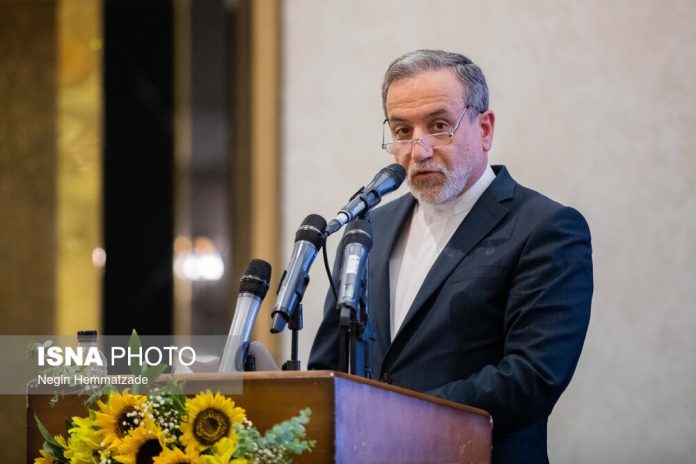
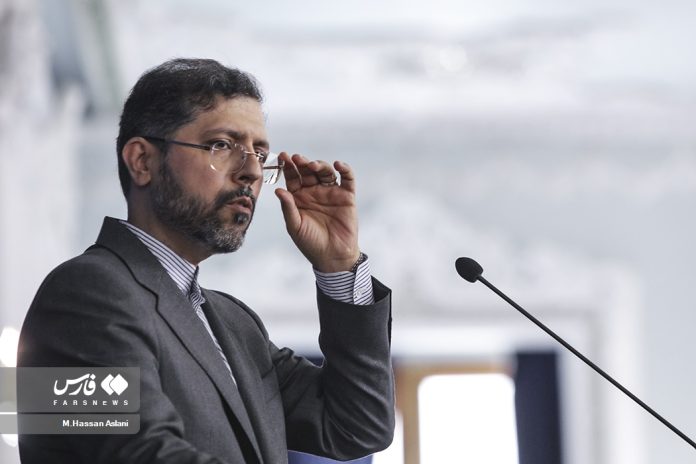
Esmail Baghaei

He underscored the necessity of the immediate commencement of dialogue between the two sides with the aim of de-escalating tensions, achieving a complete cessation of hostilities, and resolving differences through diplomacy.

The Foreign Ministry Spokesman also emphasized the importance of mutual respect for the territorial integrity and national sovereignty of both countries.

He declared the readiness of the Islamic Republic of Iran to extend any assistance aimed at preserving calm and reducing tensions between the two neighboring and Muslim nations.

Baqaei further expressed deep regret and concern over the suffering inflicted upon civilians in both countries as a result of military clashes.

He also stressed the need for effective measures, including the strengthening of multilateral and regional cooperation, to prevent and combat terrorism.

US says shouldn’t deplete Tomahawk arsenal for Ukraine

The missiles, which have a range of up to 2,500km (1,554 miles), are the latest weapons to be requested by Ukrainian leader Vladimir Zelensky. Trump previously signaled that he was considering approving the request, citing a lack of progress in peace talks with Russia, but has so far declined to give a definitive answer.

“We need Tomahawks for the United States of America too. We have a lot of them, but we need them. I mean, we can’t deplete [our own arsenal],” Trump told reporters at the Oval Office, hours after holding a phone call with Russian President Vladimir Putin.

Trump confirmed that he had discussed the issue with Putin and added that the Russian leader “didn’t like the idea” of Ukraine acquiring Tomahawks.

Putin’s close aide Yury Ushakov told reporters after the call that potential shipments would undermine the chance of achieving peace between Russia and Ukraine and would severely damage Russia’s ties with the US.

Zelensky is expected to again push Trump for additional military aid during a meeting at the White House on Friday. Trump earlier reached a deal with NATO that the bloc would pay for American weapons designated for Ukraine.

Russia has repeatedly stated that no amount of foreign aid would stop it from achieving its aims, but would make the risk of wider conflict more likely.

Trump announces plan to meet Putin in Hungary

Trump and Putin

The meeting will take place at a date to be determined after “high-level advisers” from the two countries meet next week, he said in a Truth Social post on Thursday.

Washington’s delegation at the initial meeting will be led by Secretary of State Marco Rubio, he said, adding that the location is yet to be determined.

Trump expressed hope that by meeting with Putin, the two leaders will be able to bring the Ukraine conflict to a close.

The call “was a very productive one,” he stated, adding: “I believe great progress was made with today’s telephone conversation.”

The last summit between the two presidents took place in Anchorage, Alaska in August. Both called the meeting productive, though no breakthrough was reached.

Russian Foreign Minister Sergey Lavrov on Wednesday praised the Trump administration’s diplomatic outreach, saying it is the only Western government that has made an effort to understand the fundamental causes of the Ukraine conflict.

Moscow is still awaiting Washington’s response to the roadmap presented at the Alaska summit, he added.

Iran named 2015 world freestyle wrestling champions after Russian doping case

Gadisov, who competed in the 97 kg category and initially won a silver medal in Las Vegas, tested positive for a banned substance after re-examination, triggering an updated team ranking.

With his disqualification, Iran’s team total moves to 49 points, ahead of Georgia (46) and Russia (44), elevating Iran from runner-up to champions for the 2015 edition.

During the 2015 Worlds — coached by Rasul Khadem, who simultaneously served as federation president and head coach — Iran won two silver and two bronze medals.

Hassan Rahimi (57 kg) and Hassan Yazdani (70 kg) earned silver, while Seyed Ahmad Mohammadi (65 kg) and Alireza Karimi (86 kg) secured bronze.
At the time, Iran had placed second by only four team points behind Russia.

Alireza Dabir, President of the Iranian Wrestling Federation, said two Russian wrestlers tested positive in that tournament and lost points as a result, confirming that the federation had pursued the case with seriousness.

US says wants Japan to stop buying Russian energy

Bessent wrote on X that he discussed with visiting Japanese Finance Minister Katsunobu Kato Washington’s “expectation that Japan stop importing Russian energy.”

Japan relies heavily on importing oil and gas from abroad.

In 2023 Japan spent 582 billion yen ($3.9 billion) importing Russian liquified natural gas (LNG), according to the latest customs data available.

This accounted for 8.9 percent of its total LNG imports.

Japanese media in Washington quoted Kato declining to be drawn out on Bessent’s comments.

“I’d like to refrain from discussing what other ministers said,” Kato was quoted as saying.

“We are committed to doing what we can to realize a just peace in Ukraine by coordinating with fellow G7 countries,” he added.

On Wednesday, Trump had stated that Indian Prime Minister Narendra Modi had promised him New Delhi will stop buying Russian oil.

“You know, you can’t do it immediately. It’s a little bit of a process, but the process is going to be over with soon,” Trump told reporters.

Modi has previously defended buying oil from Russia, a historic partner of India, despite Moscow’s invasion of Ukraine.

Trump in August had raised tariffs on Indian exports to the United States to 50 percent, with Trump’s aides accusing India of fueling Russia’s war in Ukraine.

Bessent stressed that he and Kato also discussed “plans for mobilizing Japan’s strategic investment in the United States through the US-Japan trade and investment agreement.”


China defends buying Russian oil

Putin and Xi

Trump said Wednesday that Indian Prime Minister Narendra Modi had promised him New Delhi would stop buying Russian oil, adding that he will get China to follow suit.

India neither confirmed or denied it was shifting its policy.

Trump has accused both China and India of funding the Ukraine war through the purchases, and has also demanded that European allies immediately stop buying oil from Russia.

Asked on Thursday about Trump’s intention to pressure China further, Beijing’s foreign ministry defended its “normal, legitimate economic, trade, and energy cooperation with countries around the world, including Russia”.

“The actions of the United States are a typical example of unilateral bullying and economic coercion,” ministry spokesman Lin Jian stated at a press briefing.

If China’s interests are harmed, it will “take firm countermeasures and resolutely safeguard its sovereignty”, he warned.

China has maintained that it is not a party to the Ukraine conflict, but Kyiv and Western governments have long accused Beijing of providing political and economic support for Moscow.


India says priority is consumers after Trump comments On halting Russian oil

Russia Oil

New Delhi neither confirmed nor denied it was shifting policy towards Russia.

“It has been our consistent priority to safeguard the interests of the Indian consumer in a volatile energy scenario,” Indian Foreign Ministry spokesman Randhir Jaiswal said in a statement.

“Our import policies are guided entirely by this objective.”

Indian Prime Minister Narendra Modi has previously defended buying oil from Russia, a historic partner of India, despite Moscow’s invasion of Ukraine.

Trump in August raised tariffs on Indian exports to the United States to 50 percent, with Trump’s aides accusing India of fueling Russia’s war in Ukraine.

“Ensuring stable energy prices and secured supplies have been the twin goals of our energy policy,” Jaiswal added.

“This includes broad-basing our energy sourcing and diversifying as appropriate to meet market conditions.”

India, one of the world’s largest crude oil importers, relies on foreign suppliers for more than 85 percent of its oil needs.

New Delhi traditionally relied on Middle East nations.

But since 2022, it shifted sharply toward discounted Russian crude, taking advantage of a buyer’s market created by Western bans on Moscow’s exports.

“Where the US is concerned, we have for many years sought to expand our energy procurement,” Jaiswal stated.

“This has steadily progressed in the last decade. The current administration has shown interest in deepening energy cooperation with India. Discussions are ongoing.”


Israel could resume Gaza military operations if Hamas fails to implement ceasefire terms: US

Israel Army

“What’s going on with Hamas – that’ll be straightened out quickly,” Trump told CNN in a phone interview.

“Israel will return to those streets as soon as I say the word. If Israel could go in and knock the crap out of them, they’d do that,” Trump responded when asked what would happen if Hamas refused to disarm.

“I had to hold them back,” he added.

Trump stated that the release of 20 living Israeli hostages was “paramount,” but Hamas must now fulfill its commitment to return the remains of others and disarm.

Last week, Trump announced that Israel and Hamas agreed to the first phase of a plan he laid out Sept. 29 to bring a ceasefire to Gaza, release all Israeli captives in exchange for Palestinian prisoners and a gradual withdrawal of Israeli forces from the entire Gaza Strip. The first phase of the deal came into force on Friday.

Under the deal, Hamas released 20 living Israeli hostages and handed over the remains of eight captives in exchange for nearly 2,000 Palestinian prisoners.

Phase two of the plan calls for the establishment of a new governing mechanism in Gaza, without Hamas’ participation, the formation of a multinational force and the disarmament of Hamas.

Since October 2023, Israeli attacks have killed over 67,900 Palestinians in the enclave, most of them women and children, and rendered it largely uninhabitable.


Israel confirms it received bodies of 2 more hostages from Red Cross in Gaza

A statement by Prime Minister Benjamin Netanyahu’s office said that “Israel has received, through the Red Cross, two coffins of deceased hostages that were delivered to IDF (army) and Shin Bet forces inside the Gaza Strip”.

The Israeli military announced in a statement that “two coffins of deceased hostages have been transferred into their custody and are on their way to IDF (army) and ISA (security agency) forces in the Gaza Strip.”

Hamas earlier confirmed that it would hand over the remains of two more Israeli captives in Gaza on Wednesday night at 10 pm local time (1900GMT) under the new ceasefire agreement with Israel.

Last week, US President Donald Trump announced that Israel and Hamas had agreed to the first phase of a plan he laid out on Sept. 29 to bring a ceasefire to Gaza, release all Israeli captives in exchange for Palestinian prisoners, and a gradual withdrawal of Israeli forces from the entire Gaza Strip. Phase one of the deal came into force last Friday.

Under the deal, Hamas released 20 living Israeli hostages and handed over the remains of 10 captives in exchange for nearly 2,000 Palestinian prisoners.

Phase two of the plan calls for the establishment of a new governing mechanism in Gaza without Hamas’ participation, the formation of a multinational force and the disarmament of Hamas.

Since October 2023, Israeli attacks have killed nearly 68,000 Palestinians in the enclave, most of them women and children, and rendered it largely uninhabitable.