
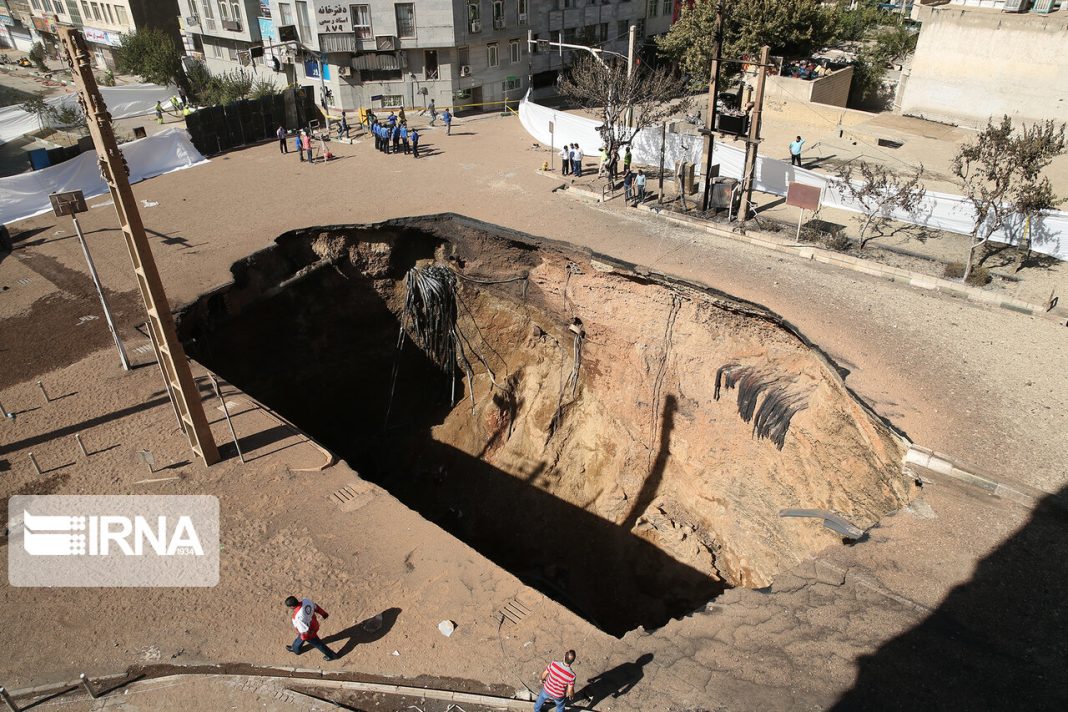
Ali Beitollahi, head of the Seismology and Risk Department at the Road, Housing, and Urban Development Research Center, said that excessive groundwater extraction is the main driver of the phenomenon.
“In areas around Tehran, groundwater levels that used to be just 20 to 30 meters deep now require drilling as far as 120 meters, and even then, there’s often no water left,” he said.
Beitollahi explained that the loss of groundwater compresses underground layers, causing the land surface to sink.
Subsidence has been reported in numerous populated regions, including northwestern Mashhad, southwestern Tehran, northern Isfahan, and southeastern Shiraz. Golestan Province currently has the largest subsidence zone, with unexpected cases also observed in Mazandaran.
The crisis is not only damaging farmland, turning once-fertile plains into barren lands, but also threatening infrastructure and cultural heritage sites.
“About 27 out of 67 key heritage sites, including Naqsh-e Jahan Square in Isfahan and Persepolis, have suffered cracks,” he added, warning that urgent water management reforms are critical to prevent worsening damage.
