Friday, January 2, 2026
Home Blog Page 956

Countering Iran’s aerial attack costs Israel $1.35bln: Report

Iran Attack Israel

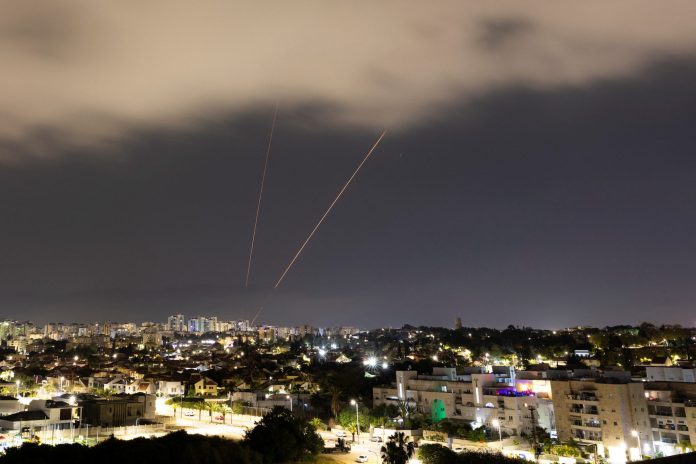
The daily Yedioth Ahronoth quoted Brig. Gen. Ram Aminach, the former financial advisor to the Israeli chief of staff, as saying that “the cost of defense last night was estimated at between 4-5 billion shekels ($1.08-1.35B)”.

“I am only talking about interception to what the Iranians launched and not injuries that were marginal this time,” he stated.

“One ‘Arrow’ missile used to intercept an Iranian ballistic missile costs $3.5 million, while the cost of one ‘Magic Wand’ missile is $1 million, in addition to the sorties of aircraft that participated in intercepting the Iranian drones,” Aminach added.

Earlier on Sunday, the Israeli daily newspaper Haaretz quoted the Israeli army spokesman Daniel Hagari as saying that about 350 missiles and drones were launched from Iran at Israel, most of which were intercepted.

On Sunday, Iranian Armed forces launched hundreds of missiles and drones at military bases in the occupied territories in retaliation for Israel’s April 1 terrorist strike on Tehran’s diplomatic mission in Syria’s Damascus.

Israel’s finance minister calls on government to “learn lessons” and “move on to Rafah”

Gaza War

In a post on X, Smotrich said that he had warned that “giving up on Israel’s red lines and chasing after Hamas for a deal” would “only decrease” the chance of bringing Israeli hostages held in Gaza back.

“It’s time to learn lessons, change direction, move on to Rafah now and restore full Israeli control all over the Gaza Strip,” Smotrich added.

The far-right minister has, in the past, denied the existence of a Palestinian people or nationhood, prompting a rebuke from the United States in March 2023.

More than 1 million Palestinian civilians are estimated to be sheltering in Rafah in southern Gaza, most of them displaced from other parts of the besieged enclave and crammed into a sprawling tent city.

Israel has been threatening an invasion into Rafah for some time now – despite pushback from allies like the US. Last week, Israeli Prime Minister Benjamin Netanyahu said he had set a date for the action, adding that “entry into Rafah” is necessary for a “complete victory over Hamas”.

Israel has waged a military offensive on the Gaza Strip since early October. More than 33,700 Palestinians have since been killed and over 76,300 injured amid mass destruction and shortages of necessities.

Israel has also imposed a crippling blockade on the Palestinian territory, leaving its population, particularly residents of Northern Gaza, on the verge of starvation.

The Israeli war has pushed 85% of Gaza’s population into internal displacement amid acute shortages of food, clean water and medicine, while 60% of the enclave’s infrastructure has been damaged or destroyed, according to the UN.

Israel is accused of genocide at the International Court of Justice (ICJ), which last week asked it to do more to prevent famine in Gaza.

US says Iran’s attack on Israel lasted about five hours

White House

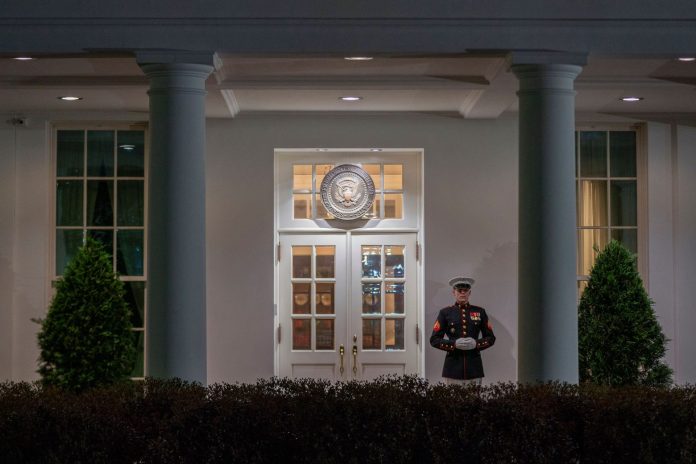
The US, along with Israel, monitored the barrage of drone and missile attacks that began Saturday night and continued into early Sunday morning. The number of launches appeared to fall during Sunday’s early hours, the officials said.

US forces throughout the region were positioned to provide defensive support to Israel ahead of the attack, and the US intended to intercept as many of the launches as it could.

US troops intercepted a number of drones intended for Israel as part of a coordinated defensive effort, and Washington remains vigilant for the potential of more activity.

Two Israeli officials have claimed Iran launched 185 drones and 36 cruise missiles. Most of the launches were from Iran, though a small portion came from Iraq and Yemen. Iran also launched 110 surface-to-surface missiles.

Israel is “working closely” with the US, UK and France, Israeli military spokesperson Rear Admiral Daniel Hagari said, adding that all three “acted tonight” during the Iranian strikes.

“We are working closely with the US, UK and France who acted tonight. This partnership has always been close, but tonight it manifested itself in an unusual way,” Hagari continued.

On Sunday, Iranian Armed forces launched hundreds of missiles and drones at military bases in the occupied territories in retaliation for Israel’s April 1 terrorist strike on Tehran’s diplomatic mission in Syria’s Damascus.

Iranian president: Any new Israeli adventurism will face heavier response

Ebrahim Raisi

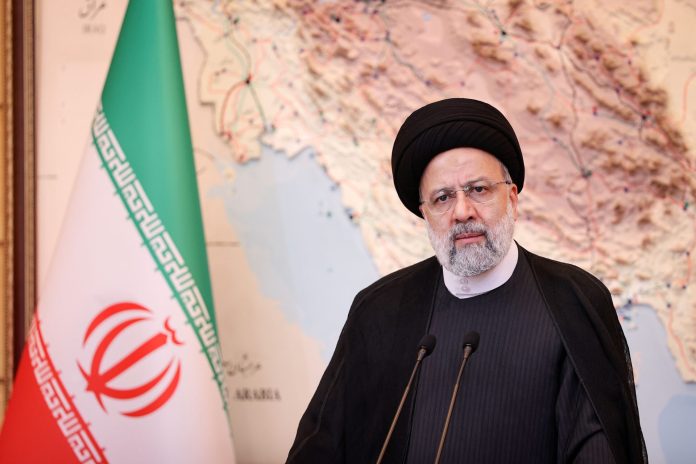
Ebrahim Raisi said, “Relying on Islamic Iran’s proud nation and the strong armed forces, I emphasize that any new adventurism against the interests of the Iranian nation will be met with a heavier and regrettable response.”

Iran staged an unprecedented operation from its own territory against the Israeli-occupied territories in retaliation for the Tel Aviv regime’s aggression against the Iranian Embassy’s consular section in the Syrian capital Damascus two weeks ago.

President Raisi praised the Islamic Revolution Guards Corps (IRGC) for launching the extensive operation involving dozens of drones, ballistic and cruise missiles.

He said, “The Islamic Revolution Guards Corps, with the cooperation and coordination of all defense and political sectors of the country, opened a new page in the history of Iran’s authority and taught the Zionist enemy a lesson they will never forget.”

Although Israeli officials have threatened that they will respond to the Sunday attack, several Iranian military and political figures have warned the next Iranian retaliation will be more painful.

President Raisi described the strikes as decisive, saying the hybrid operation carries a message of power and grandeur.

Criticizing the inaction of the regional and international bodies regarding the Israeli deadly raid on Iran’s mission, President Raisi said the UN Security Council, under the influence of the US and a few supporters of the Zionist regime, has failed to fulfil its duties.

He said the Islamic Republic of Iran took the prudent and powerful measure to safeguard its interests, and protect its territorial integrity and national sovereignty.

President Raisi added the Islamic Republic regards regional security as a prerequisite for its national security and will spare no efforts to restore and keep peace and stability in the region.

He warned the Zionist regime poses an immediate and continuous threat against regional peace and security.Emphasizing on Iran’s policy of neighbourliness, President Raisi added the prowess of the Islamic Republic of Iran serves the interests of the regional nations.

The Iranian president also said the Zionist regime’s genocide and violence against Palestinians is the root cause of the regional crisis, throwing Iran’s full support for the Resistance Front.

Any Israeli aggression will get ‘stronger’ response from Iran: Envoy

Amir Saeed Iravani

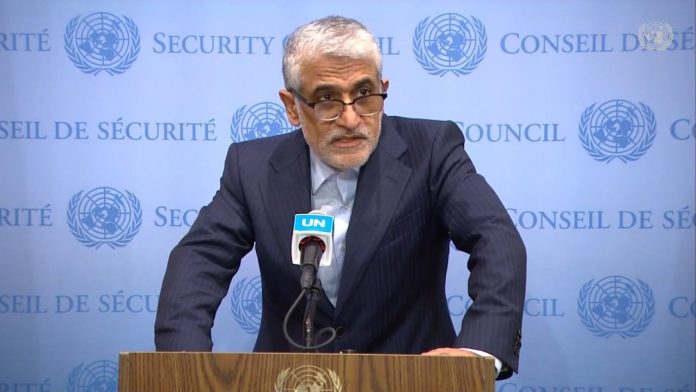
Iravani issued the warning in a letter sent to UN Secretary General Antonio Guterres and Security Council President Vanessa Frazier, after Iran’s decisive retaliation against the occupying regime’s April 1 terrorist attack on the Islamic Republic’s diplomatic mission in Syria.

“The Islamic Republic of Iran will not hesitate to exercise its inherent right of self-defense when required,” he said.

“Should the Israeli regime commit any military aggression again, Iran’s response will assuredly and decisively be stronger, and more resolute.”

Iravani also reaffirmed Iran’s “unwavering determination” to defend its people, national security and interests, sovereignty, and territorial integrity in the face of threats and “vigorously” retaliate against acts of aggression in accordance with international law.

Overnight on Saturday and early Sunday morning, Iran launched hundreds of retaliatory missiles and drones at military bases in the occupied territories.

The attack came less than two weeks after Israeli warplanes bombed the consular annex of Iran’s embassy in Damascus, killing seven IRGC members who were on an advisory mission to the Arab country.

The envoy emphasized that Iran’s retaliatory operation was an exercise of Iran’s inherent right to self-defense as outlined in Article 51 of the UN Charter.

“Regrettably, the United Nations Security Council has failed in its duty to maintain international peace and security, allowing the Israeli regime to transgress red lines and violate the fundamental principles of international law,” he added.

“As a responsible Member of the United Nations, the Islamic Republic of Iran is committed to the purposes and principles enshrined in the Charter of the United Nations, and international law, and reiterates its consistent position that it does not seek escalation or conflict in the region.”

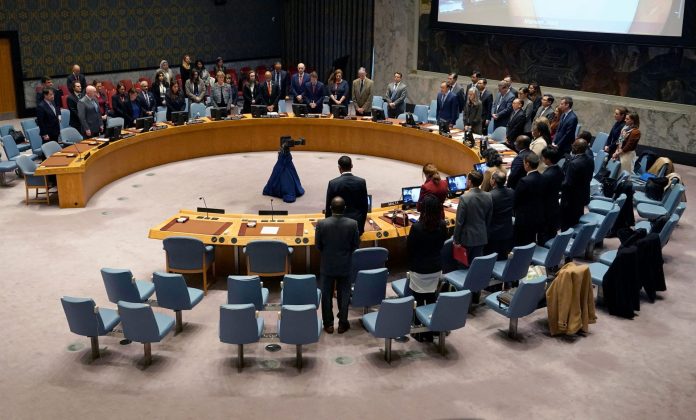
UN Security Council to hold emergency meeting on Iran’s retaliation against Israel

UNSC

A UN schedule released late on Saturday showed the UNSC meeting is scheduled to be held at 04:00 pm local time (20:00 GMT) on Sunday at the UN headquarters in New York.

The Israeli regime permanent representative to the United Nations, Gilad Erdan, requested the council to hold an emergency meeting in a letter on Saturday to the council’s president.

“The Iranian attack is a serious threat to global peace and security and I expect the Council to use every means to take concrete action against Iran,” Erdan wrote in a post on X.

Iran’s permanent mission to the United Nations defended the country’s retaliation against the Zionist regime’s recent terrorist attack on the Islamic Republic’s diplomatic premises in the Syrian capital.

Iran’s UN mission said in a statement on Saturday, “Iran’s military action was based on Article 51 of the United Nations Charter concerning legitimate defense in response to the Zionist regime’s aggression against our diplomatic premises in Damascus.”

It added, “The matter can be considered as concluded. However, Iran’s UN mission also warned that if the Israeli regime perpetrated another mistake, Iran’s subsequent response could be “remarkably more intense.”

The mission stated that the fight was between Iran and the Israeli regime and that the United States should stay out of it.

The Islamic Revolutionary Guard Corps of the Iranian Armed Forces on Saturday night, launched hundreds of ballistic missiles at Israeli military targets in the occupied territories, naming the retaliatory action as “Operation True Promise”.

Two weeks ago, Israeli aircraft targeted the Iranian Embassy complex in Damascus, killing seven IRGC members who were on an advisory mission to Syria.

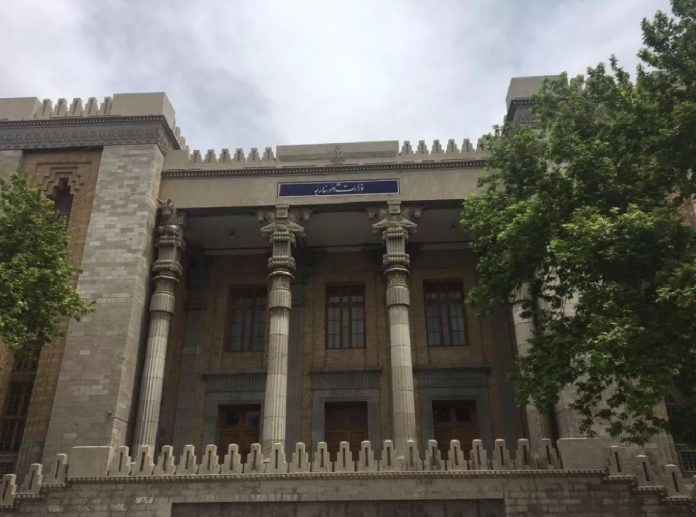
Iran’s Foreign Ministry says strikes on Israel “self-defense”

The Iranian Foreign Ministry

In a statement released on Sunday, the ministry said Iran’s armed forces were “exercising the inherent right of self-defense stipulated in Article 5 of the United Nations Charter and in response to the repeated military aggressions of the Zionist regime and the martyrdom of the official military advisors of Iran who were working in this country [Syria] at the invitation of the Syrian government” and especially in response to the attack on Iran’s consulate in Syria on April 1.

“The Islamic Republic of Iran’s recourse to defensive measures in exercising the right to self-defense shows Iran’s responsible approach to regional and international peace and security at a time when the illegal and genocidal actions by the Zionist apartheid regime against the Palestinian nation and the regime’s repeated military aggression…” it added.

The ministry’s statement concluded: “If necessary, the Islamic Republic of Iran will not hesitate to take more defensive measures to protect its legitimate interests against any aggressive military actions and illegal use of force.”

The Islamic Revolution Guards Corps (IRGC) announced on Sunday its Aerospace Division struck specific targets inside Israel, using dozens of missiles and drones, in response to the Zionist regime’s terrorist attack of April 1 against the Islamic Republic’s diplomatic premises in the Syrian capital Damascus.

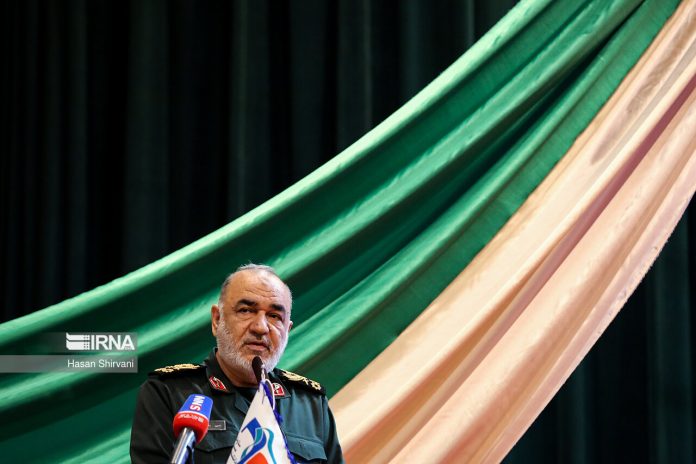
IRGC commander: Iran’s next response against any Zionist aggression will be stronger

Hossein Salami

Iran hit several locations inside the Israeli-occupied territories overnight on Sunday in a massive drone and missile attack in response to the Israeli aggression against the Iranian consular building in the Syrian capital Damascus in early April that left seven IRGC military advisors killed.

The top commander said Iran managed to penetrate the “deep and multi-layered” defense system that has been established with US support, only through the “ingenuity in the planning.”

“Dozens of drones, cruise and ballistic missiles broke the apparently deep layers of defense and struck our targets in the Zionist regime’s territory,” he stated.

The IRGC commander in chief said the Iranian operation, dubbed True Promise, “achieved more success than expected,” citing field reports on the strikes.

In a stern warning, General Salami said, “From now on, if the Zionist regime attacks our interests, assets, senior figures, or citizens from any point, we will retaliate against the aggression from Iran.”

Senior Iranian officials have clarified that the Sunday operation was more of a warning than reprisal, stating that Iran had toned down its operation initially scheduled to be much stronger.

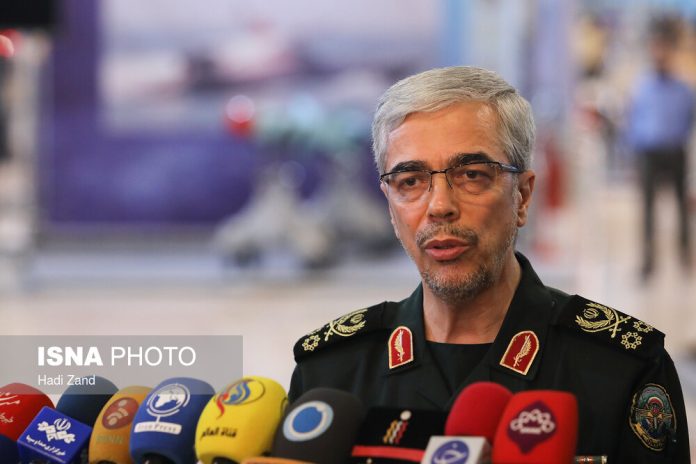
Top Iranian commander: Israel to receive harsher response in case of new attacks

Major General Mohammad Baqeri

Major General Mohammad Bagheri made the remarks following Iran’s unprecedented retaliatory attacks against the Israeli regime in an operation dubbed True Promise that targeted Israeli military sites and strategic centers.

General Bagheri said during the operation, the major intelligence center in Jabal ash-Shaykh along the border with Syria, as well as the Nevatim Airbase which houses F-35 fighter jets, were successfully targeted. Both of the centers were used in the Israeli regime’s attack on Iran’s mission in Damascus. These bases were to great extent destroyed and left unfunctional.

He also noted that Iran intentionally did not target populated areas and economic centers, and changed an initial plan to launch an operation ‘ten times stronger’ than Sunday’s reprisal.

The senior commander said Iran launched a barrage of drone and missile attacks after the Israeli regime “breached the red line.”

He said, “From our point of view, the operation is over and we have no intention to continue it. If the Zionist regime takes any action against us either on our soil or in the centers belonging to us in Syria or another country, our next operation will be bigger.

General Bagheri said, “A significant number of drones and cruise and ballistic missiles was used in the operation and because of the well-considered tactics and a proper planning neither the Zionist regime’s Iron Dome nor its missile defense shield could significantly counter the operation and the operation achieved its goals.”

Meanwhile, he refuted earlier claims by the US that it was not privy to the Israeli attack on Iran’s diplomatic site in Damascus, which led to the death of several Iranian military advisors.

General Bagheri said, “We sent a message to the US through the Swiss Embassy that if it cooperates with Israel in its possible next actions, its bases in the region will not have any security and we will deal with them as well.”

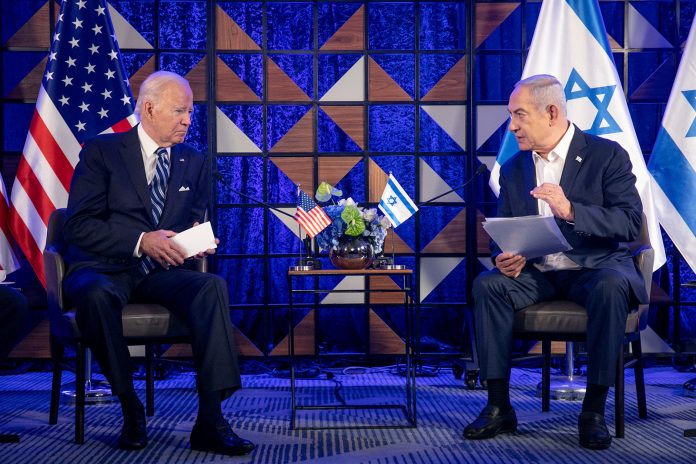
Biden told Netanyahu US won’t support Israeli counterattack on Iran

Joe Biden Benjamin Netanyahu

Biden and his senior advisers are highly concerned an Israeli response to Iran’s attack would lead to a regional war with catastrophic consequences, US officials stated.

Tehran launched drone and missile attacks against Israel on Saturday night local time in retaliation for an airstrike in Syria that killed seven members of the Islamic Revolution Guards Corps (IRGC).

Biden told Netanyahu the joint defensive efforts by Israel, the US and other countries in the region led to “the failure of the Iranian attack”, according to the White House official.

“You got a win. Take the win,” Biden told Netanyahu, according to the official.

The official added that when Biden told Netanyahu that the US will not participate in any offensive operations against Iran and will not support such operations, Netanyahu said he understood.

US Secretary of Defense Lloyd Austin also spoke on Saturday with his Israeli counterpart Yoav Gallant and asked that Israel notify Washington ahead of any response against Iran, a senior Israeli official stated.

Austin has also condemned the Iranian attack as “reckless and unprecedented”.

“We do not seek conflict with Iran, but we will not hesitate to act to protect our forces and support the defense of Israel,” he said in a statement.

The US secretary of state has also issued a statement condemning the Iranian launches “in the strongest terms”.

Antony Blinken stated that the US does “not seek escalation” but will “continue to support” Israel’s defence and defend US personnel.

“I will be consulting with allies and partners in the region and around the world in the hours and days ahead,” he added.

Iran’s permanent mission to the United Nations has defended the country’s retaliation against the Israeli regime’s recent terrorist attack on Tehran’s diplomatic premises in Damascus.

“Iran’s military action was based on Article 51 of the United Nations Charter concerning legitimate defense in response to the Zionist regime’s aggression against our diplomatic premises in Damascus,” the mission said in a statement on Saturday.

“The matter can be considered as concluded,” it added.

The mission, however, warned that if the Israeli regime perpetrated another mistake, Iran’s subsequent response could be “remarkably more intense”.