Friday, December 26, 2025
Home Blog Page 88

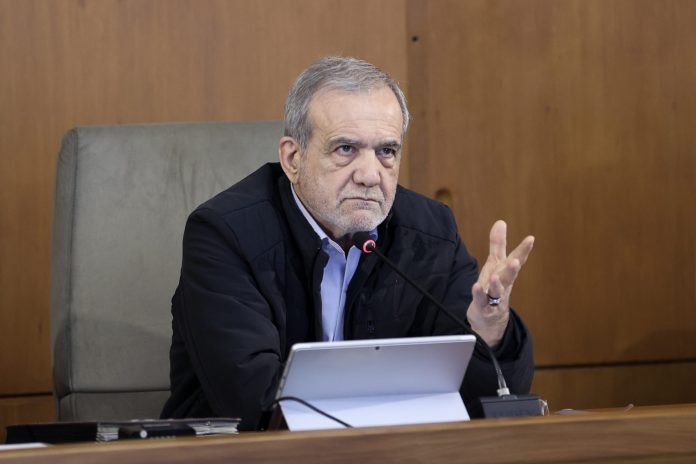
Iranian actor and former footballer Pejman Jamshidi released on bail amid ongoing legal case

The move followed the conversion of his temporary detention order into a bail arrangement, though the legal process regarding allegations against him is ongoing.

Jamshidi, a well-known figure in cinema, television, and sports, was initially summoned to court after a young woman filed a complaint accusing him of abduction and sexual assault.

According to court sources, Jamshidi attended the proceedings voluntarily and has denied the allegations.

His legal team has emphasized his innocence, stating that there is currently insufficient evidence to substantiate the charges.

“Mr. Jamshidi is entirely innocent,” said one of his lawyers, calling on the public and media to avoid premature judgments.

Several Iranian artists also urged caution on social media, asking fans to withhold judgment until the investigation concludes.

Court procedures in cases of sexual assault can involve initial detention, conversion to bail, and eventual trial.

Jamshidi’s attorneys have appealed the detention decision, and if approved, his bail status will remain in effect while investigations continue.

Authorities say the truth will be clarified in due course.

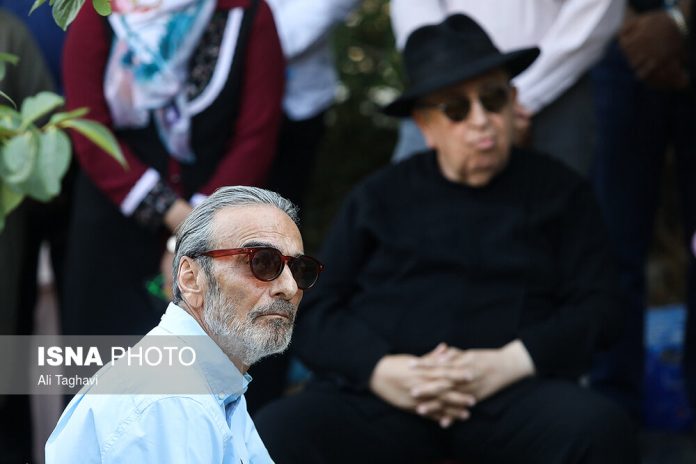
Former Khuzestan bodybuilding champion Kianpour dies of heart attack during training

Hassan Jalili, director of Public Relations for the Khuzestan Bodybuilding and Fitness Association, confirmed Kianpour’s death, describing him as a highly respected and dedicated figure in the province’s bodybuilding community.

“He was one of the most committed and experienced coaches, who devoted his life to training and mentoring the next generation of athletes,” Jalili said.

Kianpour had earned recognition both as a competitor and as a mentor, and his contributions to the sport extended beyond personal achievements.

“Undoubtedly, the memory and legacy of this hardworking and principled coach will remain immortal in the history of sports in Khuzestan and across Iran,” Jalili added.

The bodybuilding and fitness federation, as well as athletes and fans, have expressed condolences over the loss of Kianpour.

Ukraine may face heating failures, plants shutdown in winter amid war with Russia: NYT

Several cities have already postponed activation of centralized heating in residential houses due to insufficient gas supplies. Prolonged interruptions in gas and electric power supplies to households may prompt more Ukrainians to emigrate, which will further weaken the national economy, the newspaper added.

Concerns are increasingly often voiced in Ukraine that the heating season will have to be postponed as much as possible. The Ukrainian government made the decision to reduce it by one month and start supplying heat on November 1 and until March 31.

A Ukrainian presidential adviser has recently urged citizens to practice breathing exercises during prolonged power outages, insisting that Russia – not the Ukrainian government – is responsible for their suffering.

Russia has recently intensified long-range strikes on Ukrainian energy infrastructure, saying the attacks aim to degrade Kiev’s arms production and military logistics, and to retaliate for Ukrainian drone raids on Russian energy sites.

Timofey Milovanov, a member of the advisory board of the Ukrainian state nuclear company Energoatom and an adviser to the presidential office, shared his stress managing recommendations in a Facebook post on Sunday. He said regular blackouts are likely to continue through the winter as the country faces mounting strain on its energy grid.

“How should one prepare? First of all, mentally and psychologically,” Milovanov wrote.

“Breathing exercises are the simplest method. Inhale for four seconds, hold for four, exhale for four, and pause for four. A few such cycles send the brain a signal that everything is under control,” he added.

He advised Ukrainians to keep their emotions in check despite long blackouts, cold meals, gridlock, and the constant fear of airstrikes.

“People must remember that the cause is Russia and no one else,” he stressed.


PKK announces it is withdrawing fighters from Turkiye to Iraq

Kurdistan Militants

“We are implementing the withdrawal of all our forces within Turkiye,” the Kurdish PKK said in a statement read out on Sunday in the Qandil area of northern Iraq, according to a journalist with the AFP news agency present at the ceremony.

It released a picture showing 25 fighters – among them eight women – who had already travelled there from Turkiye.

A spokesman for Turkish President Recep Tayyip Erdogan’s ruling Justice and Development Party (AKP) party posted on X that the PKK’s announcement falls within the framework of the “Terrorism-Free Turkiye process.”

Ömer Çelik stated that the government considered the announcement and its continuation a “strategic and historic step.”

The PKK, which formally renounced its 40-year armed struggle in May, is currently making the transition from armed rebellion to democratic politics in a bid to end one of the region’s longest conflicts, which killed some 50,000 people.

But it urged Turkiye to take the necessary steps to push forward the process, which began a year ago when Ankara offered an unexpected olive branch to its jailed leader, Abdullah Ocalan.

“The legal and political steps required by the process … and the laws of freedom and democratic integration necessary to participate in democratic politics must be put in place without delay,” it added.

The group has announced it wants to pursue a democratic struggle to defend the rights of the Kurdish minority in line with a historic call by Ocalan.

In July, the group held a symbolic ceremony in the mountains of northern Iraq, at which it destroyed a first batch of weapons, which was hailed by Turkiye as “an irreversible turning point”.

“Today is a new day; a new page has opened in history. Today, the doors of a great, powerful Turkiye have been flung wide open,” Erdogan stated at the time.

The end of Turkiye’s conflict with the armed group could have wider consequences for the region, including with neighbouring Syria, where the United States is allied with Syrian Kurdish forces, which Ankara deems a PKK offshoot.


US says getting input on Gaza international force, will discuss in Qatar

“Many of the countries that have expressed an interest in participating at some level — whether it be monetary or personnel or both — are going to need that (a UN resolution or international agreement) because their domestic laws require it,” Rubio told reporters traveling on his plane between Israel and Qatar en route to Asia.

“So we have a whole team working on that outline of it.”

The administration of President Donald Trump wants Arab states to contribute funds and troops for a multinational force to keep the peace in Gaza. Israel has dismissed the idea of Turkish troops participating.

Rubio stated on Friday during a visit to Israel that an international security troops to be put in place in the Gaza Strip under a ceasefire accord will have to be made up of countries that Tel Aviv is “comfortable with”.

Rubio said that the future of governance in Gaza still needs to be worked out among Israel and partner nations but could not include Hamas, adding that any potential role for the Palestinian Authority has yet to be determined.

The first phase of US President Donald Trump’s 20-point Gaza ceasefire deal was reached on Oct. 10.

Since the ceasefire took effect, the Israeli army has committed 80 violations, killing 97 Palestinians.

Phase one includes the release of Israeli hostages in exchange for Palestinian prisoners. The plan also envisages the rebuilding of Gaza and the establishment of a new governing mechanism without Hamas.

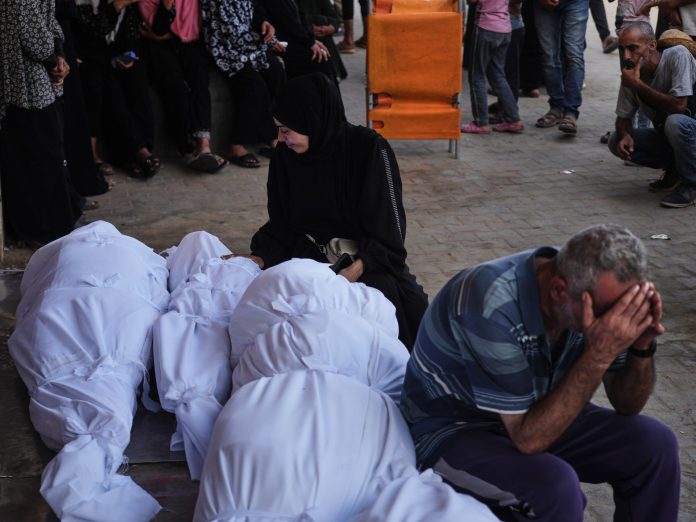
Since October 2023, the Israeli genocidal war has killed over 68,200 people and injured more than 170,300, according to the Gaza Health Ministry.


Trump says he won’t waste time meeting Putin unless Ukraine peace accord is likely to happen soon

Trump and Putin

“I think it will hold,” Trump told reporters after meeting with Qatari Emir Sheikh Tamim bin Hamad al-Thani during a refueling stop in Doha aboard Air Force One while en route to Malaysia.

“Well, if it doesn’t hold, that would be Hamas,” Trump continued. “Hamas will be not hard to take care of very quickly. I hope it holds for Hamas too because they gave us their word on something so I think it’s going to hold and if it doesn’t then they’ll have a very big problem.”

Trump later added in a post on Truth Social that militant group “is going to have to start returning the bodies of the deceased hostages, including two Americans, quickly, or the other Countries involved in this GREAT PEACE will take action.

“Some of the bodies are hard to reach, but others they can return now and, for some reason, they are not,” he wrote. “Perhaps it has to do with their disarming, but when I said, ‘Both sides would be treated fairly,’ that only applies if they comply with their obligations. Let’s see what they do over the next 48 hours. I am watching this very closely.”

The president praised the Qataris for their role in providing peacekeeping troops as part of the International Stabilization Force intended to take over security control of Gaza from Hamas. Any peacekeeping troops would go into Gaza “at the time they need to.”

“By the way, Israel will go in there very easily,” Trump said. “You know that, right? Right there you have a country. But you have the Arab countries. Everybody. Muslim, Arab everybody on board. It’s been really an amazing thing. It’s a great success. It’s going to be a long lasting. Hopefully everlasting peace.”

Trump previously said on Monday that if Hamas violates the ceasefire, the response will “happen very quickly and pretty violently, unfortunately, we are going to eradicate Hamas.”

Hamas has not fully committed to disarming and releasing control of Gaza. Releasing control would then, as part of the stabilization plan, allow a technocratic government to be formed to carry out governance in Gaza.

Vice President Vance, while in Israel on Tuesday to inaugurate the U.S.-led Civilian-Military Coordination Center (CMCC) that is overseeing the ceasefire, reiterated the administration’s demands from the U.S.-designated terrorist organization.

“Hamas has to comply with the deal, and if Hamas doesn’t comply with the deal, very bad things are going to happen,” Vance said.

So far, there is no deadline for Hamas to relinquish power over the Gaza Strip.


Trump says measures to be taken against Hamas if bodies of captives not returned

“Hamas is going to have to start returning the bodies of the deceased hostages, including two Americans, quickly, or the other countries involved in this great peace will take action,” the US leader wrote on Truth Social.

The US president also added that he will be watching Hamas activities “very closely” during the coming 48 hours.

The first phase of a ceasefire took effect in Gaza on Oct. 10 under Trump’s 20-point plan.

Phase one includes the release of Israeli hostages in exchange for Palestinian prisoners. The plan also envisages the rebuilding of Gaza and the establishment of a new governing mechanism without Hamas.

Since October 2023, the Israeli genocidal war has killed over 68,500 people and injured more than 170,300, according to the Gaza Health Ministry.


Egypt to send special team to Gaza to search for bodies of Israeli captives: Report

Israel Hostages

According to its sources, the necessary equipment for this work will also be sent to the enclave. Further details have not yet been provided.

On October 13, the Palestinian movement Hamas and its allies, in accordance with the Gaza ceasefire agreement, released the 20 remaining Israeli hostages. That evening, the first four coffins containing the remains of the deceased abductees were handed over to the Israeli side through the International Committee of the Red Cross.

Israeli authorities expressed dissatisfaction with the fact that the radicals had only returned four of the 28 bodies in the first stage of the return of the remains. Israeli Defense Minister Israel Katz called this a deviation from the agreement and warned that further delays by the radicals would have consequences.

Overall, Israel has received 14 coffins with the bodies of deceased hostages. Thirteen bodies have been identified. Thus, according to the Israeli side, Hamas continues to hold the bodies of 15 hostages.

As the newspaper Asharq al-Awsat reported on October 17, citing Hamas sources, Palestinian radicals would need to conduct a “large-scale search operation” to locate the remaining bodies of the hostages in Gaza. According to the publication’s sources, the search process is complicated by the fact that Hamas supporters who knew where the remains were buried were killed in the fighting. Furthermore, some areas of the enclave where the bodies were believed to be buried were completely destroyed and razed by the Israeli military, making access extremely difficult.


Araghchi: Iran ready for engagement If US abandons hegemonic attitude

Abbas Araghchi

In an interview with the online network Sahra, Araghchi said that as long as the U.S. maintains its hegemonic mindset and the Islamic Republic continues to reject domination, tensions between the two countries will persist.

“However, I believe this situation can be managed”, he noted.

“There is no reason for either side to pay unnecessary costs…we have serious differences with the US, most of which stem from Washington’s pursuit of dominance.”

Araghchi underscored that Iran will not give in to pressure or coercion but is receptive to respectful dialogue.

“The Iranian nation does not respond to the language of force, pressure, or sanctions”, he added.

“But if you speak with the Iranian people with dignity and act with respect, you will receive the same in return.”

Afghanistan, Pakistan to firm up truce at Istanbul negotiations

Taliban

The confrontation — which resulted in dozens of deaths, among them civilians — began two weeks ago following explosions in central Kabul, which the Taliban government blamed on its Pakistani neighbour, launching a retaliatory offensive at the border.

Vowing a strong response, Islamabad then carried out “precision strikes” against armed groups on Afghan soil which are at the heart of the dispute, security sources said.

After further clashes that left soldiers and civilians dead, both sides declared an initial 48-hour ceasefire which collapsed two days later, with Kabul blaming Islamabad.

A second truce took shape on Sunday following talks in Doha thanks to mediation by Qatar and Turkey, which appears to have held, although the terms remained unclear.

At Saturday’s talks, negotiators are expected to detail the “mechanisms” for ensuring the return to stability that were announced in Doha.

It was not clear when the talks would begin nor where they were meeting in Istanbul.

The Afghan delegation, which left for Turkey on Friday, will be led by its deputy Interior Minister Haji Najib. Islamabad has not said who it is sending for the talks.

For the Taliban government, the goal is to ensure Afghanistan’s territorial integrity.

For Islamabad, the negotiations must address “the menace of terrorism emanating from Afghan soil towards Pakistan,” its foreign ministry spokesman Tahir Hussain Andrabi said on Friday.

Security issues are at the heart of recurring bilateral tensions.

Facing a resurgence of attacks against its security forces, Islamabad has repeatedly accused its Afghan neighbour of “harbouring” groups it views as “terrorist”, primarily the Pakistani Taliban (TTP) — a charge Kabul denies.

Throughout the confrontation, Islamabad demanded that the Taliban authorities “regain control” over fighters present on Afghan soil.

From the Pakistani perspective, this would be key to the Istanbul talks, explained Ibraheem Bahiss, an International Crisis Group analyst in Afghanistan.

“The meeting in Istanbul is going to be quite essential because that’s where the so-called mechanism would be agreed on in terms of when Pakistan has concerns that anti-Pakistan elements inside Afghanistan are doing things against Pakistan,” he told AFP.

He said such “mechanisms” could involve intelligence sharing on armed groups.

“For example, Pakistan would give coordinates of where they suspect TTP fighters or commanders are, and instead of carrying out strikes, Afghanistan would be expected to carry out action against them,” he said.

But it was unclear if that would end the problem.

“I’m not so hopeful that a technical mechanism will really address the fundamental drivers of this escalatory cycle,” he admitted.

Before the latest skirmishes, Pakistan had long been the Taliban’s biggest supporter, bolstering them in Afghanistan for so-called strategic depth against arch-rival India.

Two weeks ago, the initial explosions in Kabul — which triggered the escalation — took place as the Taliban foreign minister was making an unprecedented visit to India.

Turkey has not confirmed any details about Saturday’s meeting beyond hailing their joint decision in Doha “to establish mechanisms to strengthen peace and stability” and pledging to “continue to support the efforts” to achieve that.