Friday, December 26, 2025
Home Blog Page 89

UK Appeals Court refers Crescent case to Supreme Court, delaying seizure of Iranian Oil Pension Fund building

According to the source, who requested anonymity, the decision follows Iran’s appeal against the appellate court’s earlier ruling, with disagreement among the three judges paving the way for a higher review.

Earlier this month, the UK Court of Appeal had upheld a lower court’s decision allowing the seizure of the Victoria Street property in favor of the Emirati firm Crescent Petroleum, which claims the building was transferred to the pension fund to shield assets from creditors after an international arbitration ruling.

More than 15,000 Iranian oil industry employees and retirees have signed an online petition asserting that the property was purchased with pension assets and must remain under the fund’s ownership. The National Iranian Oil Company (NIOC) said it remains committed to pursuing all legal channels to overturn the ruling and protect the assets of its workers.

The long-running Crescent dispute stems from a 2001 gas contract between NIOC and Crescent Petroleum, which has been subject to arbitration and litigation for over two decades.

Iranian Foreign Ministry: Israel’s “ongoing impunity must end” after ICJ advisory opinion

Esmail Baqaei wrote on X that the ICJ’s October 22 advisory opinion “once again proclaims the indisputable truth that the Israeli regime is the largest violator of international humanitarian norms.”

He noted the court’s reaffirmation that Israel is obligated to ensure access to basic necessities for Palestinians under occupation and must not prevent delivery of essential supplies.

The ICJ also reiterated that using starvation as a method of warfare is prohibited under international law, Baqaei said.

The spokesman referred to the ICJ’s earlier findings on the illegality of occupation and censured Israel for persistent violations of those legal principles.

He added that both the ICJ and the International Criminal Court (ICC) have been examining complaints related to the gravest international crimes, including war crimes, crimes against humanity and genocide, attributed to atrocities in Gaza.

“The sustained impunity granted to the supporters and apologists of Israeli crimes must end,” Baqaei wrote, urging international accountability and enforcement of humanitarian obligations.

Trump says he believes in Russia’s resolve to end Ukraine war

Donald Trump

“I think he’d like to see it over with,” he told reporters aboard Air Force One.

When asked if he was concerned that the sanctions Washington had imposed on Russia on Thursday could turn out to be too “biting,” Trump stated: “He’s [Putin] saying, well, they won’t have that much of an effect. So I don’t know. <…> I don’t think he’s right about that, but we’ll see.”

On Wednesday, the US Department of the Treasury blacklisted Russia’s Rosneft and Lukoil oil giants, together with their 34 subsidiaries. White House Press Secretary Karoline Leavitt said that Washington expected the restrictions to put significant pressure on Moscow with regard to the conflict in Ukraine.

Russian President Vladimir Putin pointed out that new US sanctions would not have a considerable impact on the country’s economic situation but would damage bilateral relations.


EU leaders fail to agree to use frozen Russian funds for Ukraine

Ruble

Hopes of agreeing a new way of funding Ukraine’s war effort were dashed after opposition from Belgium, which hosts most of the Russian central bank funds immobilised in the EU at the Brussels-based institution Euroclear.

EU leaders agreed at a summit in Brussels on Thursday to merely ask the European Commission to present “options for financial support” for Ukraine, without direct reference to Russian frozen assets.

Earlier drafts, in contrast, said the proposals should involve “the possible gradual use of the cash balances” associated with the immobilised assets.

“The EU is committed to addressing Ukraine’s pressing financial needs for the next two years, including support for its military and defence efforts,” the European Council president António Costa tweeted after the talks.

Ursula von der Leyen, the European Commission president, insisted there had been an agreement on the principle of the reparation loan.

“There are points to be clarified and [we need] to have a deep dive and to work more on them. So in other words, we agreed on the what – that is the reparation loan – and we have to work on the how – how we make it possible.”

Costa, who chaired the meeting, stated that both the presidents of the European Central Bank and the Eurogroup, who took part in the meeting, agreed that the reparations loan respected international law and that all technical issues could be resolved.

“That means that this solution is feasible,” Costa added.

The conundrum of how to fund Ukraine’s war effort as the US steps back will be discussed again at another EU summit in December. The reparation loan remains an option, but is less likely to be ready early next year as Ukraine had hoped.

Earlier on Thursday Zelensky urged leaders to take this “great” decision to fund Ukraine’s defence as soon as possible.

“Anyone who delays this decision is not only limiting our defence but also slowing down your own progress,” he told EU leaders, promising that Ukraine would spend a lot of money buying European weapons.

“The time to act on Russian assets is now and I urge for your full support.”

The European Commission hopes to use the assets at Euroclear as the basis for a €140bn (£122bn) loan to Ukraine, which would only be repaid once Russia paid compensation for the war.

Officials believe they have found a way of making Russia pay for its war without confiscating the assets or breaching property rights.

The Kremlin says the scheme is theft and has vowed to pursue any individual or country deemed to have taken Russian money.

Leaders need the agreement of Belgium, which hosts €183bn of Russian central bank assets at Euroclear – 86% of all Russian state assets in the EU and two-thirds of the worldwide total.

Belgium’s prime minister, Bart De Wever, said the biggest problem was how to guarantee that the cash was available immediately if something went wrong.

Arriving at the summit earlier on Thursday, he threatened to oppose the plan without guarantees that the rest of the EU would cover the cost if Russia came looking for its money.

“If you want to do this, we will have to do this all together. We want guarantees if the money has to be paid back that every member state will chip in. The consequences cannot only be for Belgium,” he added.

EU leaders tried to meet his concerns with a promise of “burden sharing and coordination” with the G7, but it was not enough to secure an agreement.

About one-third of Russian state assets are held outside the EU, including in Japan (€28bn), the UK (€27bn), Canada (€15bn) and the US (€4bn). While the UK and Canada are expected to make similar moves, EU officials are less hopeful about the US, which holds a small but symbolic amount of Russian state assets.

The loan plan remains on the table, with many unanswered questions. It depends on EU unanimity to keep Russian assets frozen for a long time. Hungary’s Russia-friendly government has frequently delayed EU sanctions and, although it has never dared to block them, its anti-Ukraine rhetoric raises questions about its future support.

Hungary’s prime minister, Viktor Orbán, skipped the discussions on Ukraine to attend events in Budapest commemorating the 1956 Hungarian revolution, which was crushed by Soviet repression. As now customary, the EU adopted a statement of support for Ukraine – including future financing – without Hungary’s backing.

Earlier in the day, the EU agreed its 19th package of sanctions against Russia, targeting liquefied natural gas for the first time. The move came soon after the US imposed sanctions on Russia’s two largest oil companies, Rosneft and Lukoil, the first restrictive measures passed by the Trump administration.

Latvia’s prime minister, Evika Siliņa, said an agreement on the loan would strengthen Zelensky in any peace talks with Putin.

“I believe [Zelensky] will be much stronger to enter those negotiations if those negotiations take place,” she added.

Ireland’s taoiseach, Micheál Martin, said his government supported the plan and did not see any implications for Irish neutrality.

“This cannot be a repeating cycle where … big countries feel, like Russia, they can go in and destroy a place and expect other people to pay for the reconstruction afterwards,” he added.

Zelensky expressed hope that the US would eventually supply long-range Tomahawk missiles.

“It was like sanctions: before it was unbelievable and now we see the decisions on these energy sanctions, which are very important,” he stated.

But he downplayed reports of a 12-point peace plan that emerged earlier this week, suggesting it was the work of “some very good friends” seeking to pre-empt “some plan from Russia” promoted by another country that he did not name.

The plan, which was first reported by Bloomberg, called for a ceasefire, prisoner exchanges and the creation of a peace board chaired by Donald Trump – taking inspiration from the US administration’s Gaza plan.

Zelensky said Russia showed no sign of wanting to stop the war, citing the recent bombing of a kindergarten.

“More pressure on Russia and they will sit and speak and I think this is the plan,” he added.


Defense Ministry spokesman: Israel grows increasingly susceptible to Iran’s offensive capabilities

Iran Missile

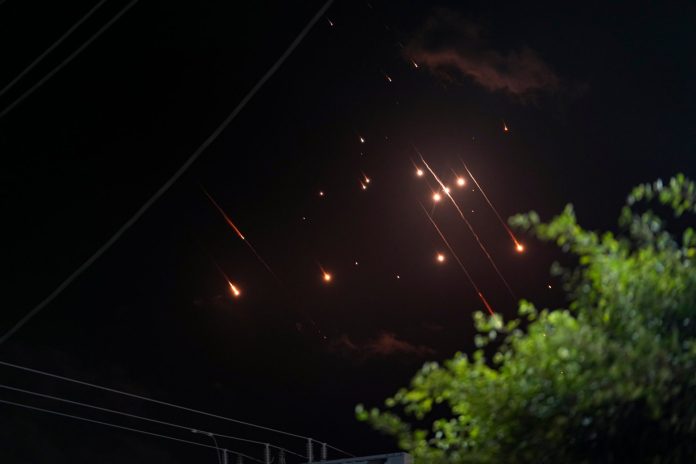
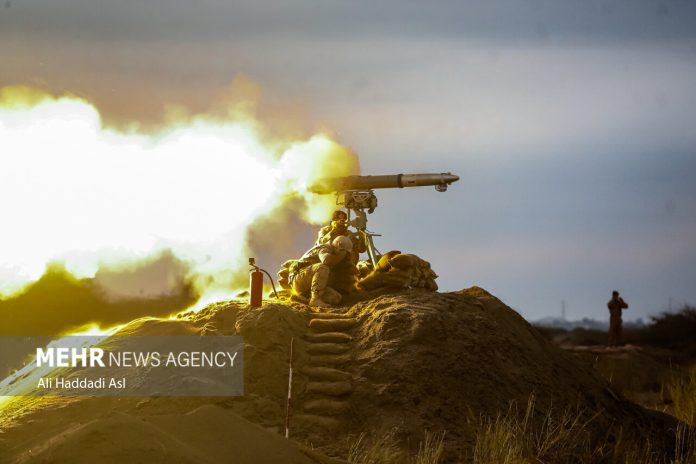
Brigadier General Reza Talaei-Nik, Deputy Minister for Strategic Planning and Parliamentary Affairs and the ministry’s spokesperson, said Iran’s military readiness, weaponry, and operational capacities have all advanced compared to the period before the conflict with the US-Israeli coalition in June.

“The enemy, despite 15 years of preparation to strike Iran, failed during the 12-day imposed war,” General Talaei-Nik said.

“If it dares to threaten again, it will face an even greater failure than before.”

He added that Iran’s enhanced defense readiness has been accompanied by an increase in the adversary’s susceptibility to Iran’s offensive capabilities.

According to him, the heavy losses sustained by Israel during the conflict have made it unlikely to make another attack decision without reassessing its vulnerabilities.

“The enemy suffered a severe blow in the 12-day war,” General Talaei-Nik stated. “It is improbable that it can again muster the resolve for a new aggression.”

The Defense Ministry spokesman reiterated that Iran continues to strengthen its defensive and deterrent power.

Top Indian oil buyer to comply with Western sanctions against Russia

Reliance “will be adapting the refinery operations to meet the compliance requirements”, a company spokesperson said in a statement on Friday, while maintaining its relationships with suppliers.

“Whenever there is any guidance from the Indian Government in this respect, as always, we will be complying fully,” the statement added.

On Wednesday, the United States Treasury Office of Foreign Assets Control (OFAC) designated Russian majors Rosneft and Lukoil for the first time as President Donald Trump becomes increasingly frustrated with Russia’s unremitting war on Ukraine.

US Secretary of the Treasury Scott Bessent stated that the move was the result of Russian President Vladimir Putin’s “refusal to end this senseless war” and encouraged allies to adhere to the new sanctions.

The following day, the European Union adopted its 19th package of measures against Russia, which includes a full transaction ban on Rosneft. The EU has previously said that, starting January 21, it will not receive fuel imports from refineries that received or processed Russian oil 60 days prior to shipping.

Reliance, chaired by billionaire businessman Mukesh Ambani, operates the world’s biggest refining complex in western Gujarat. The company has purchased roughly half of the 1.7-1.8 million barrels per day (bpd) of discounted Russian crude shipped to India, the news agency Press Trust of India reported this week.

In 2024, Reliance signed a 10-year deal with Rosneft to buy nearly 500,000 bpd, Reuters reported at the time. It also buys Russian oil from intermediaries.

Reliance did not offer details on how, exactly, it planned to navigate the sanctions – nor the fate of the 2024 Rosneft agreement – but emphasised it would comply with European import requirements.

“Reliance is confident its time-tested, diversified crude sourcing strategy will continue to ensure stability and reliability in its refinery operations for meeting the domestic and export requirements, including to Europe,” the company spokesperson noted.

The sanctions also arrive as India navigates the fallout from Trump’s tariffs on Indian exports, which rose to 50 percent starting in August as a penalty for importing Russian oil. China and India are the world’s largest importers of Russian crude.

Trump has claimed multiple times over the past month that India has agreed to stop buying Russian oil as part of a broader trade deal, an assertion the Indian government has not confirmed.

Neither India’s Ministry of External Affairs nor oil ministries have responded since the sanctions were announced on Wednesday.


Demining Gaza could take up to 3 decades: Report

Gaza War

“The territory of the enclave has become a minefield, and the removal of unexploded bombs and shells left in Gaza as a result of shelling and bombing by Israeli forces could take 20 to 30 years,” the Maan news agency quoted the NGO representative as saying.

Moreover, in his view, it is “simply impossible” to defuse all unexploded objects in Gaza, as many are located very deep underground.

“It will take a whole generation just to locate and defuse the explosive objects on the surface,” the NGO representative stated.

He also noted that Israeli authorities do not allow the necessary equipment for detecting and destroying unexploded shells to be brought into Gaza. According to him, NGOs have also been denied permission to deliver equipment designed to incinerate explosive devices so they do not detonate on site and cannot be reused.

Earlier, a Handicap International representative, an NGO involved in explosive device disposal and victim assistance, reported that Israeli forces have dropped approximately 70,000 tons of shells and bombs on Gaza since October 2023. An analysis by a specialized UN agency found that between 5% and 10% of the bombs and shells dropped on Gaza by Israeli forces did not explode.

According to the press service of the Palestinian enclave’s administration, there are currently at least 20,000 explosive devices under the rubble of destroyed buildings and in the streets of settlements. These include artillery shells, mines, bombs, and projectiles launched by the Israeli army on Gaza. The press service emphasized that all unexploded shells “pose a real threat to local residents returning to their homes and to workers and specialists engaged in debris clearance in the settlements of the enclave.”

On October 6, delegations from Israel and Hamas resumed indirect talks on resolving the conflict in the Gaza Strip, mediated by Egypt, Qatar, and the United States, with Turkey also joining the consultations. On October 9, the sides signed an agreement to implement the first phase of the peace plan previously presented by US President Donald Trump. The following day, the ceasefire deal in Gaza came into force.


Gaza security force to include countries Israel ‘comfortable with’: US

Gaza War

Rubio said that the future of governance in Gaza still needs to be worked out among Israel and partner nations but could not include Hamas, adding that any potential role for the Palestinian Authority has yet to be determined.

The first phase of US President Donald Trump’s 20-point Gaza ceasefire deal was reached on Oct. 10.

Since the ceasefire took effect, the Israeli army has committed 80 violations, killing 97 Palestinians.

Phase one includes the release of Israeli hostages in exchange for Palestinian prisoners. The plan also envisages the rebuilding of Gaza and the establishment of a new governing mechanism without Hamas.

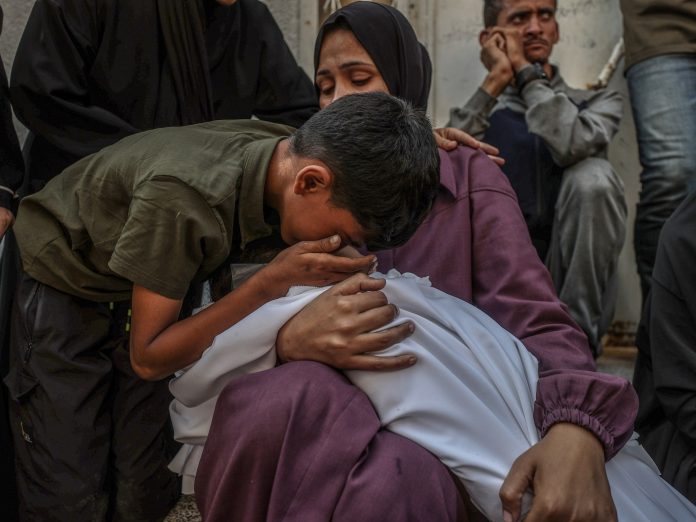
Since October 2023, the Israeli genocidal war has killed over 68,200 people and injured more than 170,300, according to the Gaza Health Ministry.


Kim, Trump have chance to meet next week: South Korea

Unification Minister Chung Dong-young, who is Seoul’s top policymaker on ties between the divided Koreas, said Trump’s trip to South Korea was an “opportunity from the heavens” that could help boost North Korea’s global standing and its economy.

“The leaders of North Korea and the U.S. must not miss this chance,” Chung was quoted by Yonhap as telling South Korean media.

“They need to make a bold decision.”

Trump met North Korean leader Kim Jong Un three times during his previous term as president but failed to reach agreement on ending Pyongyang’s nuclear program because of differences on lifting sanctions and over how to scrap the North’s nuclear facilities.

Officials in Seoul, including South Korean President Lee Jae Myung, have been sceptical that a new meeting could take place next week but welcomed the prospect of a breakthrough in diplomacy with Pyongyang if it were to happen.

Trump left Washington on Friday night for a five-day trip spanning Malaysia, Japan and South Korea — his first to the region since taking office in January.

Chung stated that the visit was a chance to bypass preparations and coordination normally required for a meeting between the leaders of the two old foes that would otherwise make it very difficult for them to see each other.

“It would help North Korea’s international standing and improve its people’s lives … and for that, peace and stability need to be guaranteed and that’s only possible by meeting President Trump,” Chung added.

Trump met Kim at the Panmunjom truce village straddling the inter-Korean border in 2019 in a hastily arranged trip immediately following his visit to Japan for a global summit.

Iran, Russia, China write letter to IAEA chief declaring UN Security Council Resolution 2231 terminated

Kazem Gharibabadi

In a post on his X account on Friday, Iran’s Deputy Foreign Minister for Legal and International Affairs, Kazem Gharibabadi, said ambassadors and permanent representatives of China, Iran and Russia sent a letter to Director General of the International Atomic Energy Agency (IAEA) Rafael Mariano Grossi.

It came after the three countries’ joint letter to the Secretary General of the United Nations and President of the Security Council declaring the termination of Resolution 2231 on October 18, he added.

In the letter to the IAEA chief, he noted, the three countries reaffirmed the “illegal” move by the European trio — Britain, France and Germany — to invoke the so-called snapback mechanism and the expiration of all provisions of Resolution 2231 on October 18, 2025.

“But there is another key point which relates to the end of the mandate of the IAEA Director General’s reporting on verification and monitoring under the Resolution 2231 and the implementation of the JCPOA,” Gharibabadi emphasized, referring to the 2015 nuclear deal, formally known as the Joint Comprehensive Plan of Action.

According to the Iranian diplomat, the letter asserted that in the IAEA, “the implementation of the JCPOA, as well as verification and monitoring in the Islamic Republic of Iran in light of UNSCR 2231, were enacted by the resolution of the Board of Governors of 15 December 2015(GOV/2015/72).”

He stated, “Operative paragraph 14 of this Resolution unequivocally stipulates that the Board ‘decides to remain seized of the matter until ten years after the JCPOA Adoption Day or until the date on which the Director General reports that the Agency has reached the broader conclusion for Iran, whichever is earlier’.”

“Consequently, as of 18 October 2025, the related agenda item has been automatically removed from the agenda of the Board of Governors, and no further action is required in this regard,” Gharibabadi pointed out.

Iran has rejected the legality of E3’s triggering the snapback of UN sanctions, calling the mechanism “null and void” and a “fabricated” term.

On October 18, Tehran declared an end to all UN restrictions on its nuclear program following the expiration of Security Council resolution 2231.

Iran has faced sustained economic pressure in recent years, particularly after the United States unilaterally withdrew from the JCPOA in 2018 and re-imposed sweeping sanctions under the so-called “maximum pressure” policy.

Despite these pressures, Iran has sought to adapt through increased domestic production, non-dollar trade mechanisms, and expanding economic ties with partners in Asia and neighboring states.