Saturday, December 27, 2025
Home Blog Page 712

US, some European countries root cause of regional problems: Iran’s Leader

Ayatollah Khamenei

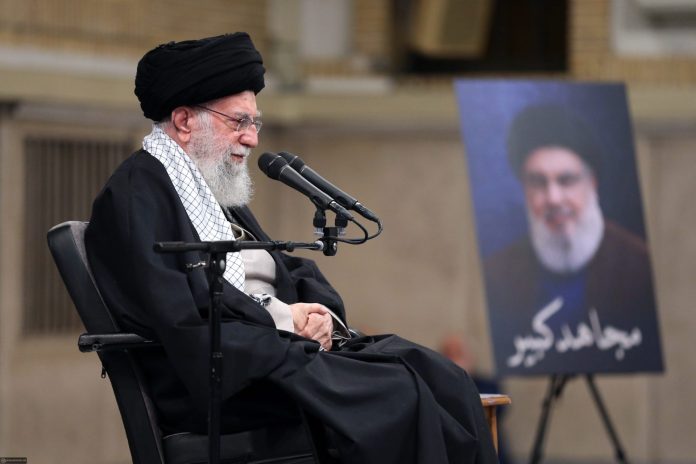
In a meeting with Iranian elites on Wednesday, Ayatollah Khamenei said that the departure of these countries from the region would mark the end of wars and conflicts.

He emphasized that the regional countries are fully capable of managing their own affairs, addressing their issues, and living in peace and tranquility without external interference.

The Leader also referred to the support Western countries provided to Saddam Hussein, the former dictator of Iraq, in attacking Iran and starting the bloody eight-year war against Iran in the 1980s.

He added that when these powers provoke a country or an individual like Saddam, difficult and bitter events ensue. However, now that Saddam is gone and those supporters are no longer present, a sense of friendship has emerged between the two nations.

Ayatollah Khamenei also mentioned the martyrdom of Seyyed Hassan Nasrallah, the Hezbollah leader, by the Zionist regime, noting that his martyrdom is not a small incident.

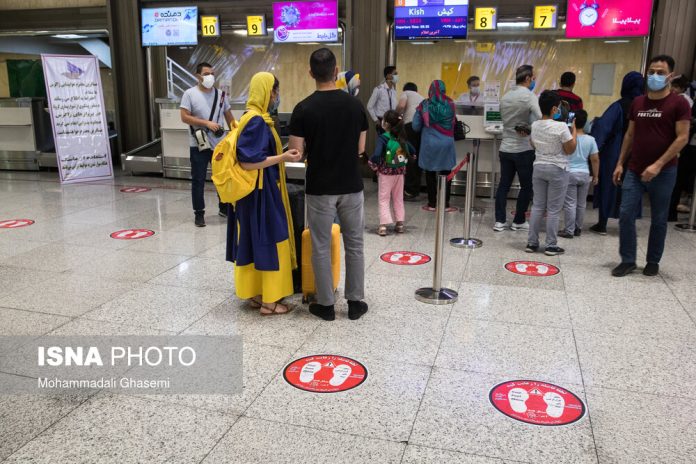
Iran extends nationwide flight cancellations following missile attacks on Israel

Iran Airport

The spokesperson for the organization, Jafar Yazarloo, made the announcement, adding that airlines will provide necessary updates regarding future flights amid the escalating tensions between Iran and Israel.

The decision was made after Iran’s much-anticipated response to the occupying regime by striking Israeli targets deep inside the occupied Palestinian territories with a barrage of missiles on Tuesday evening.

In a statement, Iran’s Islamic Revolution Guard Corps (IRGCC) said the missile strikes were in response to the Israeli assassination of Hezbollah leader, Sayyed Hassan Nasrallah, former Hamas chief Ismail Haniyeh and IRGC commander General Abbas Nilforoushan.

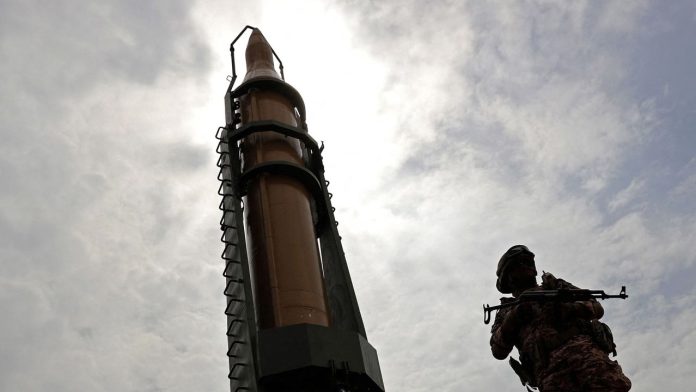
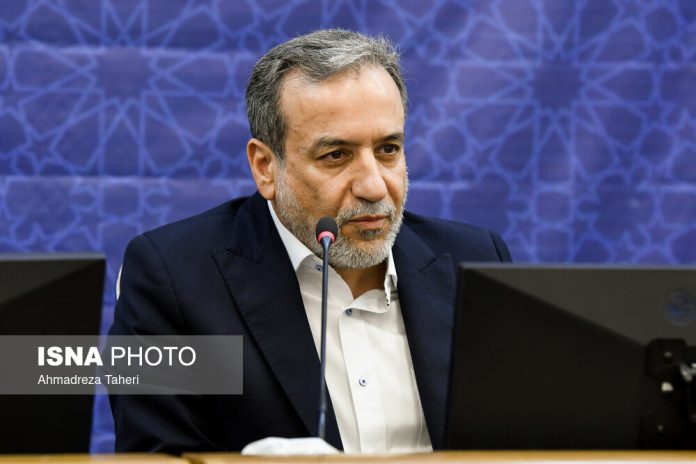
Iran FM Araghchi says no coordination made with US prior to missile attack on Israel

Iran Missile

In a televised interview on Wednesday, Araghchi however clarified that Iran had issued a stern warning to the US through the Swiss Embassy in Tehran the previous night.

He noted, “Message exchanges do not equate to coordination. No messages were exchanged before the attack, but it was logical to issue warnings to all parties, including the U.S., after the attack.”

The warning emphasized that the U.S. should refrain from interference, or face a severe response from Iran.

Araghchi stated, “Any new actions by the Zionist regime or its supporters would be met with a stronger response from the Islamic Republic of Iran. The warning was communicated through official statements and phone conversations with all relevant parties.”

The foreign minister stated that Iran’s defensive move on Tuesday was in accordance with Article 51 of the UN Charter, asserting Iran’s right to self-defense.

He underlined, “The operations were completed, and Iran had no intention of continuing unless provoked by the opposing parties.”

IRGC military operation targeted 3 main Israeli bases: Chief of Staff of Iran Armed Forces

Iran Missile Attack Israel

Speaking on Wednesday following the attack, dubbed Operation True Promise II, the top commander said the country exercised self-restraint after the Israeli regime’s aggression against the country in July but ran out of patience following its assassination of Hezbollah’s secretary general and a top Iranian commander in Beirut.

The regime assassinated Ismail Haniyeh, former chief of the Political Bureau of the Palestinian resistance movement Hamas, during a targeted killing in the Iranian capital Tehran on July 31.

“After Martyr Haniyeh’s assassination, Iran went through a tough period of self-restraint amid repeated requests by the Americans and Europeans, who would ask us to exercise self-restraint so they would establish a ceasefire in the Gaza Strip (where the Israeli regime has been waging a genocidal war),” Major General Bagheri stated.

“However, after Seyyed Hassan Nasrallah and Brigadier General Abbas Nilforoushan’s martyrdom, the situation was no longer tolerable,” he added.

The Hezbollah leader and the Iranian commander were assassinated during intense Israeli airstrikes on the southern suburb of Beirut on Friday.

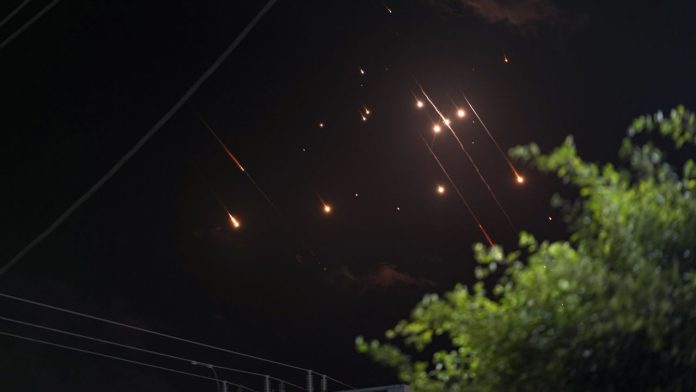
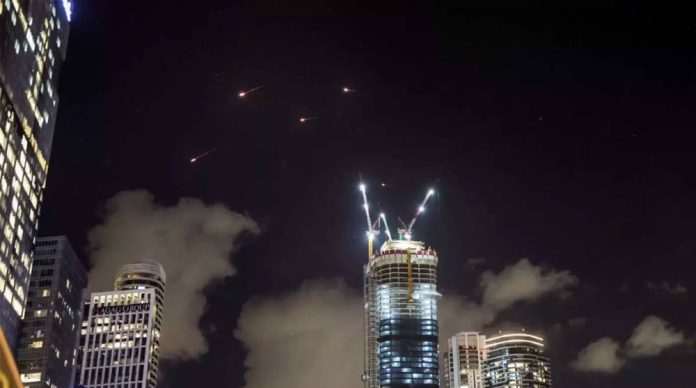
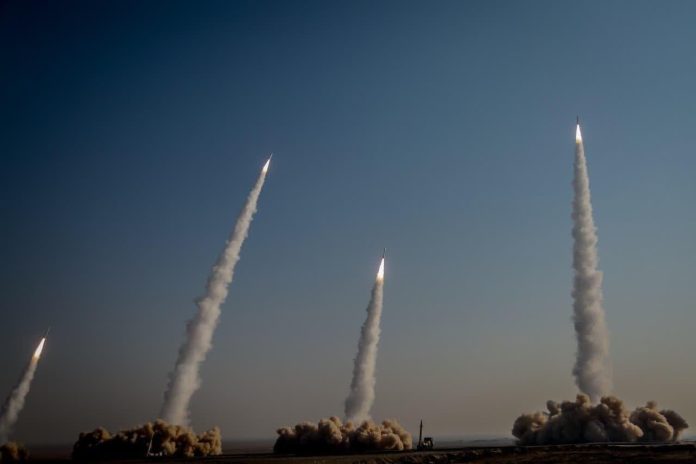
On Tuesday, Iran responded to the triple assassinations as well as the regime’s ongoing deadly aggression against Gaza and Lebanon by launching around 200 missiles toward the Israeli military and intelligence bases all over the occupied Palestinian territories.

Flares and missiles were seen in the Tel Aviv sky and explosions could be heard in the occupied al-Quds during the operation dubbed Operation True Promise II, while “direct hits” were reported in Negev, Sharon, and other locations.

According to Baqeri, the targets of the “heroic” operation that “served as a response to many of the Zionists’ crimes,” included three of the Israeli regime’s main airbases.

He named the bases as the headquarters of the regime’s Mossad spy agency, which he identified as the “center for terrorism,” the regime’s Nevatim airbase that houses its F-35 warplanes, and the Hatzerim base that was used towards enabling Nasrallah’s assassination.

The targets also featured the regime’s strategic radars, the centers housing the regime’s tanks and personnel carriers, and the center accommodating those of the regime’s forces that partake in massacres against Palestinians in Gaza.

The military chief asserted that the Islamic Republic’s Armed Forces were completely prepared to respond to the potential repetition of such atrocities on the part of the regime, describing the forces’ capabilities as “many times more than” what was displayed during True Promise II.

“If the Zionist regime, which has reached madness, were not controlled by the United States and Europe, and sought to either continue its atrocities or take action against our territorial integrity and sovereignty, last night’s operation would be repeated with multiple magnitude and all of their infrastructures would be struck.”

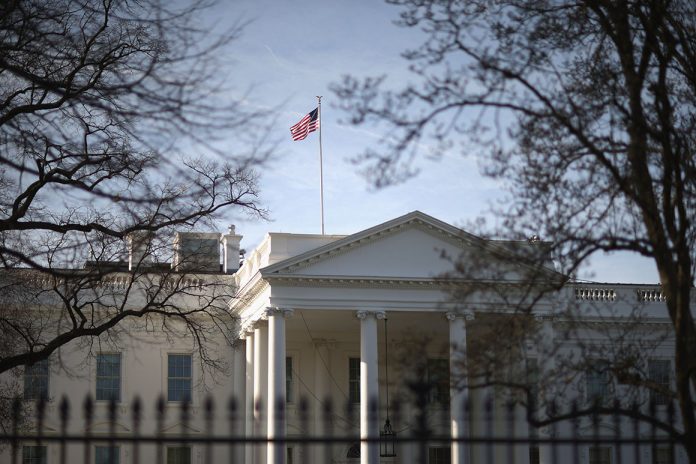
US says helped Israel thwart Iranian aerial attack

White House

US National Security Advisor Jake Sullivan stated on Tuesday that “US naval destroyers joined Israeli air defence units in firing interceptors to shoot down in-bound missiles”.

“In short, based on what we know at this point, this attack appears to have been defeated and ineffective,” Sullivan said during a news briefing at the White House.

“This was first and foremost the result of the professionalism of the [Israeli military]. But in no small part because of the skilled work of the US military and meticulous joint planning in anticipation of the attack.”

Asked what Washington’s view was on possible Israeli retaliation, Sullivan noted discussions were continuing between top US and Israeli military and political leaders. “We want to have some deep consultations with the Israelis,” he said.

Sullivan added later: “We are proud of the actions that we’ve taken alongside Israel to protect and defend Israel. We have made clear that there will be consequences — severe consequences — for this attack, and we will work with Israel to make that the case.”

Washington provides Israel with at least $3.8bn in military aid annually, and President Joe Biden has greenlit $14bn in additional assistance to the US ally since the Gaza war began in October of last year.

The Islamic Revolutionary Guard Corps announced it fired missiles at Israel on Tuesday evening in retaliation for the killings of people in Gaza and Lebanon, as well as the recent assassinations of Hamas, Hezbollah and IRGC leaders.

The IRGC said in a statement that it has targeted “the heart of the occupied territories” in response to the martyrdom of Hamas political bureau chief Ismail Haniyeh, Hezbollah Secretary General Seyyed Hassan Nasrallah, and IRGC general Abbas Nilforoushan at the hands of the Zionist regime.

The statement noted the retaliatory attack has been launched after a period of self-restraint following the violation of Iran’s sovereignty.

The IRGC added it has fired tens of ballistic missiles at vital military and security Israeli targets.

It noted that 90 percent of the Iranian missiles fired at Israel have successfully hit the targets, including the “strategic centers” in the occupied territories.

In his first comments on the Iranian attack, Biden told reporters that his administration was in “active discussion” with Israel on its response.

“The attack appears to have been defeated and ineffective,” the US president said, adding that “the United States is fully, fully, fully supportive of Israel”.

Earlier on Tuesday, the White House said that Biden had “directed the US military to aid Israel’s defense against Iranian attacks and shoot down missiles that are targeting Israel”.

The Pentagon also announced in a statement that Secretary of Defense Lloyd Austin and his Israeli counterpart Yoav Gallant had discussed “the severe consequences for Iran in the event Iran chooses to launch a direct military attack against Israel”.

The statement did not elaborate on what those consequences would be.

Iran’s attack against Israel today was twice as large as Iran’s attack in April, Pentagon spokesperson Maj. Gen. Pat Ryder stated Tuesday.

“[I]t’s about twice as large in terms of the number of ballistic missiles that they launched from the last,” he continued, adding that you “don’t launch that many missiles at a target without the intent of hitting something.”

“So absolutely, just like the last time their intent is to cause destruction.”

A spokesman for the US State Department said on Tuesday afternoon that the Biden administration’s support for Israel’s security remains “ironclad”.

“We will continue to stand with the people of Israel at this critical moment,” Matthew Miller told reporters.

US Secretary of State Antony Blinken has also called the Iranian missile attack against Israel “totally unacceptable” and added that the “entire world should condemn it”.

Blinken said this attack included “some 200 ballistic missiles”, adding Israel “effectively defeated this attack”.

Iran FM warns E3 diplomats against interference in Tehran’s military operation against Israel

Abbas Araghchi

During the phone calls, Araqchi referred to Iran’s missile attacks on the occupied territories, asserting that the Islamic Republic had exercised its legitimate right to self-defense, in accordance with Article 51 of the United Nations Charter.

He clarified that the operation, carried out on Tuesday night, specifically targeted military and security bases of the Zionist regime.

The top Iranian diplomat held phone conversations with David Lammy, Annalena Baerbock, and Stéphane Séjourné, the foreign ministers of the UK, Germany, France, and several other countries, regarding Iran’s missile strikes on Israeli-occupied territories and the ongoing tensions in Gaza and Lebanon.

Araghchi condemned the Zionist regime’s assassination of Hamas leader Ismail Haniyeh in Tehran and the continued Israeli aggression in Gaza and Lebanon, which has claimed over 42,000 innocent lives. He emphasized that Iran had exercised restraint over the past two months.

The Iranian foreign minister announced the conclusion of the operation but warned that if the Zionist regime retaliated, Iran’s response would be even more devastating.

While stating that Iran does not seek war or the escalation of tensions, Araqchi noted that the Islamic Republic is not afraid of conflict and cautioned all third parties against interference.

Araghchi reiterated his call for all countries to work toward establishing a ceasefire in Gaza and Lebanon.

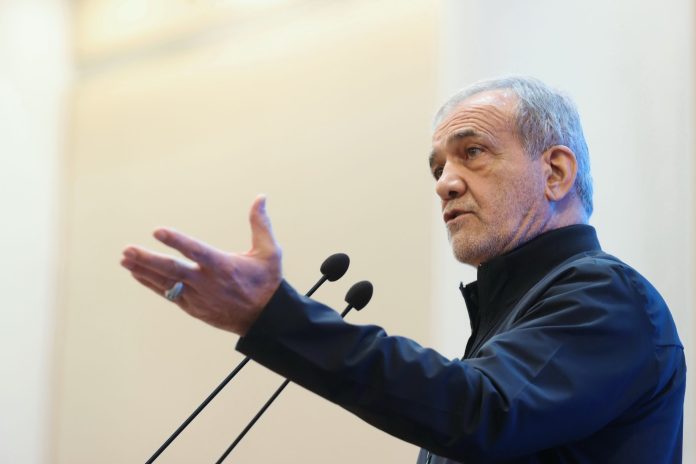
President Pezeshkian: Missile strike only a portion of Iran’s power

Masoud Pezeshkian

“This action was in defense of the interests and citizens of Iran. To let (Israeli Prime Minister Benjamin) Netanyahu know that Iran is not belligerent, but it stands firmly against any threat,” he wrote in a message on X.

“Do not enter into a conflict with Iran,” said the Iranian president.

The Islamic Revolution Guards Corps carried out a missile strike against the Israeli regime on Tuesday evening.

The IRGC said in a statement that it has targeted “the heart of the occupied territories” in response to the martyrdom of Hamas political bureau chief Ismail Haniyeh, Hezbollah Secretary General Seyyed Hassan Nasrallah, and IRGC general Abbas Nilforoushan at the hands of the Zionist regime.

The statement said the retaliatory attack was launched after a period of self-restraint following the violation of Iran’s sovereignty.

The IRGC added it fired tens of ballistic missiles at vital military and security Israeli targets.

It noted that 90 percent of the Iranian missiles fired at Israel successfully hit the targets, including the “strategic centers” in the occupied territories.

IRGC says 90% of missiles hit targets in Israel

Iran Missile Attack Israel

Despite the area being heavily protected by advanced defense systems, the IRGC stated that 90% of the missiles involved in the strikes successfully hit their intended targets.

The statement added that the Zionist regime is now in a state of fear, recognizing Iran’s superior intelligence and operational capabilities.

The IRGC emphasized that this operation falls within the framework of legitimate self-defense under international law.

They warned that any foolish response from the enemy would be met with devastating and regretful consequences.

This latest development follows the IRGC’s earlier announcement, reaffirming that further aggression by the Zionist regime will prompt an even more forceful retaliation.

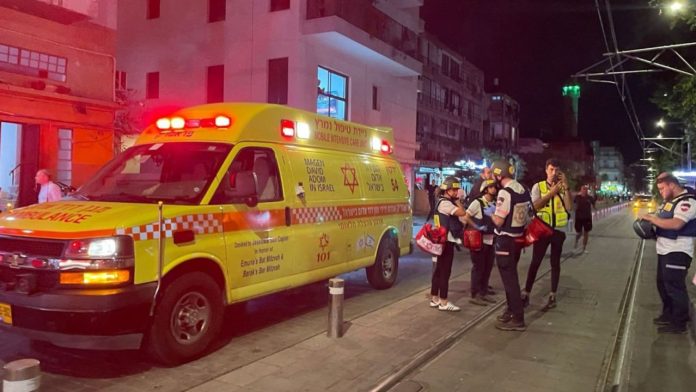
At least seven killed in Tel Aviv shooting

Israel Ambulance

Israeli police said the attack happened at 19:00 local time (16:00 GMT) when two men armed with guns entered a light rail station in Jaffa, southern Tel Aviv, and opened fire.

Police added the two men who carried out the attack were subsequently killed.

Israel’s national emergency service, the MDA, said paramedics gave medical aid to the wounded people on the site who had varying degree of injuries.

“There are several wounded with varying degrees of injuries,” the MDA added.

Iran says launched dozens of ballistic missile into Israel

Iran Missile

In an official statement, the IRGC announced the attack was a response to the martyrdom of Hamas leader Ismail Haniyeh, Sayyed Hassan Nasrallah Hezbollah chief, and Abbas Nilforoushan, an IRGC commander by Israel.

The statement further warned that any retaliatory action by the Zionist regime will be met with a crushing response.

According to the IRGC, the ongoing operations against Israel are being supported by both the Iranian Armed Forces and the Ministry of Defense.

Meanwhile, the Permanent Mission of the Islamic Republic of Iran to the United Nations posted a tweet on X.

The tweet read: “Iran’s legal, rational, and legitimate response to the terrorist acts of the Zionist regime—which involved targeting Iranian nationals and interests and infringing upon the national sovereignty of the Islamic Republic of Iran—has been duly carried out.”

It added should the Zionist regime dare to respond or commit further acts of malevolence, a subsequent and crushing response will ensue.