Monday, December 29, 2025
Home Blog Page 705

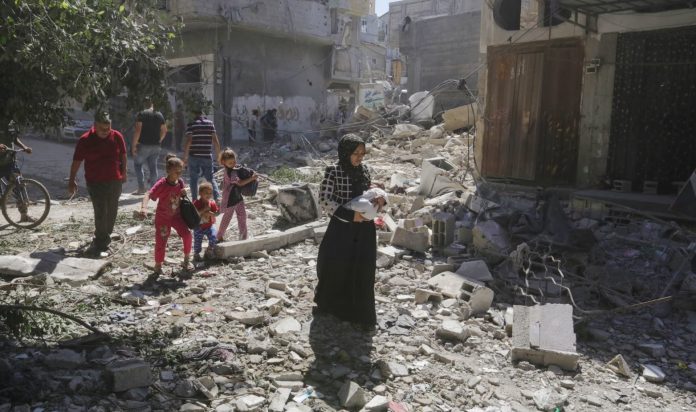
‘No Place is Safe in Gaza’: UN Chief

Gaza War

Guterres expressed concern for the escalating humanitarian and political crises in the Gaza Strip and Lebanon as he condemned violations of international law.

“The nightmare in Gaza is now entering an atrocious, abominable second year. This has been a year of crises. Humanitarian crisis. Political crisis. Diplomatic crisis. And a moral crisis,” Guterres said at a news conference at UN headquarters in New York.

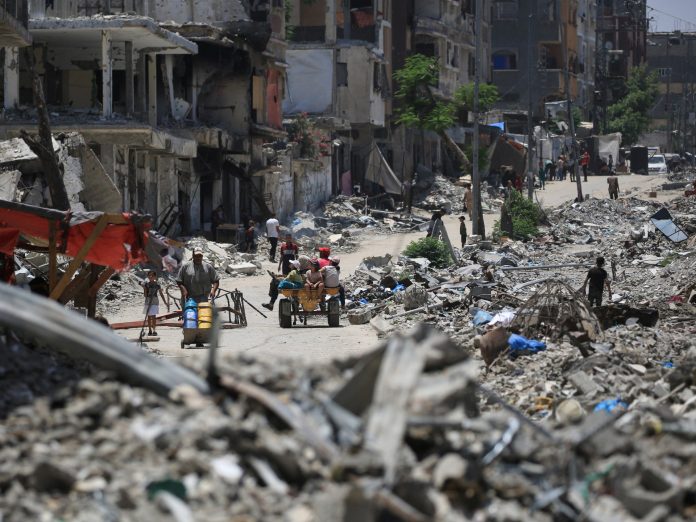
The Gaza Strip “has become ground zero to a level of human suffering that is hard to fathom”, he said and noted that more than 41,000 Palestinians have been killed, the vast majority of them women and children, with thousands more missing and believed to be trapped under the rubble.

“I strongly condemn all violations of international humanitarian law in Gaza,” he added.

Highlighting the worsening situation for humanitarian workers and journalists, Guterres noted that “journalists have been killed at a level unseen in any conflict in modern times. And humanitarians — those who have dedicated their lives to helping others — are facing unprecedented, epic dangers”.

Guterres stressed the indispensable role of the UN Relief and Works Agency (UNRWA) in Gaza, while warning about the potential consequences of an Israeli draft legislation to restrict the agency’s operations.

The UN chief announced that he has sent a letter to Israeli Prime Minister Benjamin Netanyahu “to express profound concern about draft legislation that could prevent UNRWA from continuing its essential work in the Occupied Palestinian Territory”.

The measure would suffocate efforts to ease human suffering and tensions in Gaza, and indeed, the entire Occupied Palestinian Territory. It would be a catastrophe in what is already an unmitigated disaster, he said.

Last week, the Knesset (Israel’s parliament) advanced a bill to revoke the immunity and privileges afforded to UNRWA, in a move seen by Palestinians and the UN as part of an Israeli campaign to dismantle the UN agency and resolve the refugee issue.

Guterres also condemned Israel’s intensified military operations in northern Gaza, where residential areas and hospitals have been targeted, forcing 400,000 residents to relocate again to overcrowded, unsanitary conditions in the south.

“Ordering civilians to evacuate does not keep them safe if they have no safe place to go and no shelter, food, medicine or water,” he stated, adding that nowhere in Gaza is safe.

The Secretary-General also warned about an escalating conflict in Lebanon that threatens to engulf the region.

“We are on the verge of an all-out war in Lebanon — with already devastating consequences,” he said, citing large-scale Israeli strikes that have killed more than 2,000 victims in Lebanon, and displaced over 1 million.

Guterres also stressed that “the sovereignty and territorial integrity of all countries must be respected”.

Reiterating calls for peace, the UN chief said, “The conflict in the Middle East is getting worse by the hour and our warnings about the horrific impacts of escalation keep coming to pass.”

“Every air strike, every missile launch, every rocket fired, pushes peace further out of reach and makes the suffering even worse for the millions of civilians caught in the middle,” he added

The secretary-general concluded by calling for an immediate cease-fire and renewed efforts toward a two-state solution.

“All people in the region deserve to live in peace.”
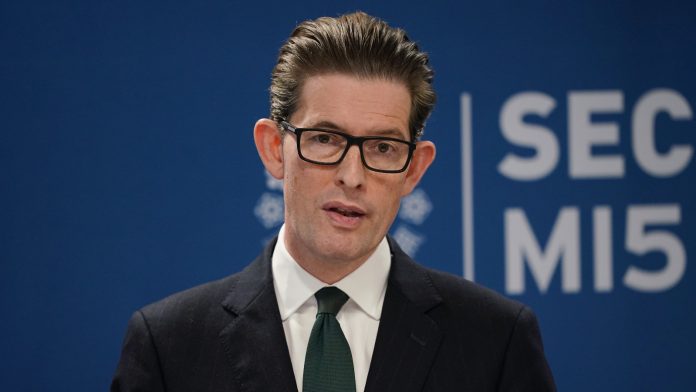
Iran refutes British intelligence claims as “enemy-making” policy

Kenneth McCallum

Baqaei pointed to the frequent use of the word “potential” in the allegations against Iran, arguing that the British intelligence service’s move is aimed at distorting global public opinion about the British government’s role in the ongoing crimes of the Israeli regime in the region, including the genocide of Palestinians.

He described these unsupported accusations as part of an artificial “enemy-making policy.”

On Tuesday, Kenneth McCallum, Director General of MI5, claimed that British intelligence had thwarted 20 Tehran-backed plots that “posed potentially lethal threats to British citizens” since the beginning of 2022.

Baqaei advised British officials to refrain from making such baseless and misleading accusations and instead use their influence to pressure the Zionist regime to stop its aggressions and crimes in the region.

The spokesperson also noted that the UK is hosting certain terrorist groups and organizations involved in spreading violence and discord, urging Britain to reassess its unconstructive policies toward the Iranian nation and the West Asia region.

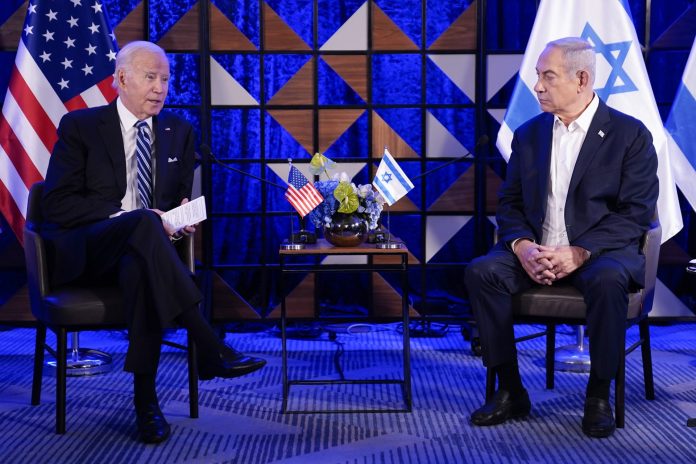
Report: White House’s distrust of Netanyahu’s government growing

Biden Netanyahu

Washington’s wear in trust comes as Israel prepares its response to Iran’s ballistic missile attack last week. Tehran announced it carried out the strikes in retaliation for the July assassination of Hamas political leader Ismail Haniyeh in Tehran and the killing of Hezbollah Secretary-General Hassan Nasrallah in Beirut last month.

Four US officials told the Axios news website that Washington is not opposed to Israel carrying out its reprisal but wants it to measure its attack.

“Our trust of the Israelis is very low right now, and for a good reason,” one of the officials said.

Jake Sullivan, US President Joe Biden’s National Security Advisor, told his Israeli counterpart Ron Dermer last week that Washington expects “clarity and transparency” from Tel Aviv as it plans its response, in part because any Israeli attack has implications for the security of US forces and interests in the region.

Sullivan signaled during the call that if the Biden administration is not informed beforehand, it would not automatically step in to thwart another ballistic missile attack from Iran, Axios reported. Dermer reportedly stated Israel wants to keep the US in the loop, but the officials are skeptical that is the case.

The US had been left in the dark about Israel’s assassination of Haniyeh, which took place just days after Netanyahu assured Biden that he would work to advance a Gaza cease-fire and hostage deal, as well as the strike that killed the Hezbollah leader and a series of explosions that targeted the communication devices in Lebanon.

US Defense Secretary Lloyd Austin was reportedly livid when he was informed of the strike that killed Nasrallah within minutes of the time when the jets dropped dozens of bombs on Beirut’s southern suburbs. He was irked by the fact that the notification time was not sufficient to adequately increase the security of US forces in the region.

Officials said Israeli Defense Minister Yoav Gallant told Austin that he was instructed by Netanyahu not to give Washington an advance warning.

Gallant’s visit to the Pentagon, which was to take place Wednesday, was called off at the last minute, according to the Pentagon. It did not give a reason, but Israeli media reported that Netanyahu is barring his defense minister from flying to Washington until Biden calls him directly.

Netanyahu’s further decision to walk away from a US-backed 21-day cease-fire proposal in Lebanon further eroded US trust, as has Israel’s decision to order all civilians in northern Gaza to flee south as it prepares a new offensive on the region.

US officials have stated they are concerned that the directive is setting the stage for a potential siege and that Palestinian civilians would not be allowed to return.

“They tell us what we want to hear — the problem is lack of trust,” a US official told Axios.

Israel dragging West Asia into war to manipulate US presidential election: Iran

Trump and Harris

“The occupying regime’s haste in dragging the whole region into an ever-expanding war is primarily aimed at malignantly manipulating the US upcoming elections,” Esmail Baghaei said in a post on X on Wednesday.

“At the same time, the US security agencies are falsely accusing Iran of trying to interfere in the country’s internal affairs. What an absurd twist of facts,” he added.

The foreign ministry spokesman made the remarks after an annual assessment by the Department of Homeland Security alleged that Iran, Russia and China are trying to influence the November vote, including by employing artificial intelligence to disseminate fake or divisive information.

In reaction to the assessment, Baghaei on Friday rejected the accusations as “baseless”, saying Washington, with a record of interference in other countries’ affairs, is “in no position” to make such claims against the Islamic Republic.

Back in August, the campaign of US Republican presidential candidate Donald Trump claimed that it had been hacked, pinning the blame on Iran without providing evidence.

The FBI and other US agencies have also alleged that Iranian hackers had sought to interest President Joe Biden’s campaign in information stolen from Trump’s campaign, and had sent unsolicited emails to people associated with the then-Democratic candidate.

At the time, Iran’s Permanent Mission to the United Nations roundly refuted the allegations about the Islamic Republic’s interference in the 2024 US presidential election, calling the assertion “unsubstantiated”.

It added the Islamic Republic does not accord any credence to the accusations, emphasizing that it has no intent or motive to meddle in the American election.

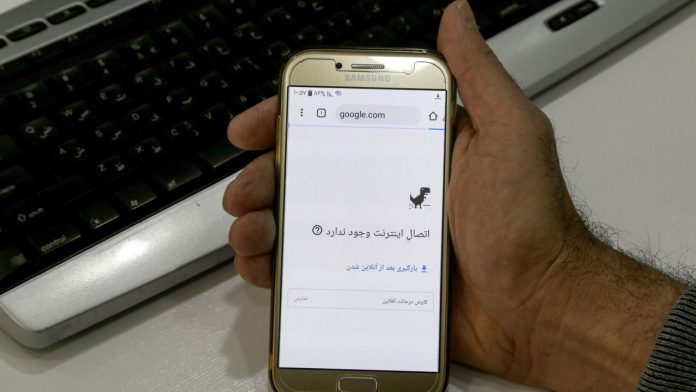
Iranian gov’t: Immediate lifting of internet filtering unlikely

Internet restrictions in Iran

The Information and Communications Technology Minister, Sattar Hashemi, responding to a reporter’s question on Tuesday about the potential lifting of filtering, said that managing the situation needs legal and intelligent strategies and cannot be achieved with the push of a button.

Hashemi, however, later expressed the administration’s resolve to get President Pezeshkian’s campaign promise fulfilled.

In a message on X social media platform, he wrote, “The irreversible decision of the 14th administration is to lift restrictions and enhance internet speed; through consensus and agreement.”

“Managing cyberspace is different from imposing restrictions,” he added.

President Massoud Pezeshkian’s administration faces mounting pressure from voters to address the issue. However, officials suggest that filtering results from social, political, and security conditions and requires a nuanced approach.

During a recent Supreme Council of Cyberspace meeting, President Pezeshkian ordered investigations into the sale of VPNs and a detailed report on the current cyberspace conditions.

Internet filtering in Iran has been a contentious issue, particularly since the 2009 protests, with the government using filtering as a tool to control information flow and maintain security.

However, this has led to the widespread use of VPNs and other circumvention tools, creating additional challenges.

Lebanon seeing “the same patterns” and “methods of warfare” as Gaza: UN

Gaza War

“We are seeing the same patterns that we saw in Gaza, the same means and methods of warfare that are being used,” Jeremy Laurence, spokesperson for the UN’s human rights commissioner, told a press briefing in Geneva Tuesday.

“As a result, we’re seeing civilians pay the ultimate price, whether it be the hospitals being closed, a million people displaced, civilians killed, schools impacted. The devastation is beyond belief for all people in Lebanon as it is in Gaza. We can’t let this happen again,” Laurence continued.

James Elder, spokesperson for the United Nations’ Children’s Fund (UNICEF), also stated the commonalities between Lebanon and Gaza were “everywhere.”

“If we look at the ferocity of the early attacks, if we look at the language being used … Look at the mass displacement. Look at the sheer number of people being forced to move,” Elder added.

“The commonalities are unfortunately absolutely there to be seen.”

The warning came amid Israel’s October-present escalation against Lebanon and genocidal war on the Gaza Strip, which have respectively claimed the lives of more than 2,100 Lebanese and over 41,900 Palestinians. Women and children comprise the majority of the victims.

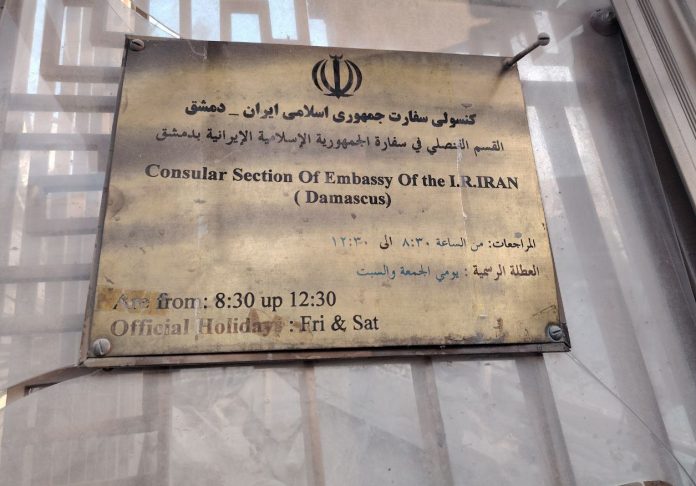
Iran mission says no Iranian among dead, injured in Israeli missile attack on Damascus

Israeli strike on Iranian consulate in Syria

The mission issued a strong condemnation following an Israeli missile strike that targeted a residential building near the Iranian embassy in Damascus on Tuesday.

Some media outlets claimed that Iran’s Foreign Minister Seyed Abbas Araghchi was in the targeted building. However, it was confirmed that Araghchi is currently in Tehran.

“The Israeli enemy has committed another crime, targeting a residential building in Damascus with a cowardly missile attack, killing innocent children and women,” the statement reads.

The embassy expressed its deepest condolences to the families of the deceased and wished a speedy recovery for the injured.

According to Syrian sources, the attack involved four missiles aimed at a building near the Sheikh Saeed area, claiming at least 7 civilian lives and injuring 11 others.

Israel has been carrying out airstrikes in Syria for years, often targeting what it claims are Iranian military assets and arms shipments.

Eight Iranian military advisors were among the dead in Israel’s airstrike on the Iranian consulate in Damascus on April 1.

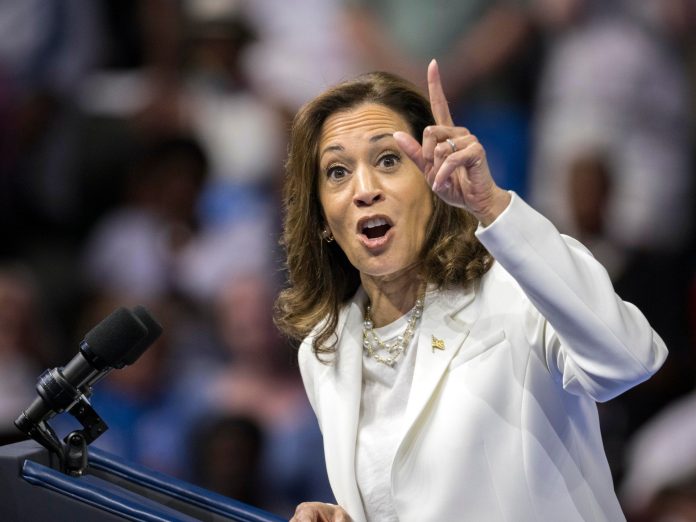
Harris says Iran is top US foe

Kamala Harris

Asked by interviewer Bill Whitaker to name the top US foe, Harris said: “I think there’s an obvious one in mind, which is Iran.”

“Iran has American blood on their hands,” she went on.

“This attack on Israel, 200 ballistic missiles, what we need to do to ensure that Iran never achieves the ability to be a nuclear power, that is one of my highest priorities.”

She would not specify whether she would order preemptive action to take out an Iranian nuclear site if presented proof Tehran was building a nuclear weapon.

“I’m not going to talk about hypotheticals at this moment,” she added.

CIA Director William Burns has recently stated there is no evidence that Tehran has decided to build a nuclear weapon, and if it did, the United States and its allies would most likely be able to detect such a step soon after it was taken.

Iran’s Leader Ayatollah Seyyed Ali Khamenei issued an official fatwa (religious decree) clearly establishing that any form of acquisition, development, and use of nuclear weapons violate Islamic principles and are therefore forbidden.

Iran fired a barrage of missiles at Israeli military bases last week in retaliation for the killing of Hamas chief Ismail Haniyeh in Tehran as well as the assassination of Hezbollah leader Seyyed Hassan Nasrallah alongside an Iranian general in Beirut.

Israel is likely eyeing Iran’s nuclear facilities as it determines its response to Tehran’s missile attack.

US officials have voiced support for Israel responding to Iran’s missile attack earlier this week, with multiple officials publicly saying there must be consequences. At the same time, officials have also voiced concerns about a regional conflagration as they grapple with an increasingly volatile Middle East.

President Joe Biden has stated that the US would not support Israel targeting Iran’s nuclear program.

Iranian officials have warned that Tehran would serve potential further aggression by the Israeli regime against the country with a harsher response.

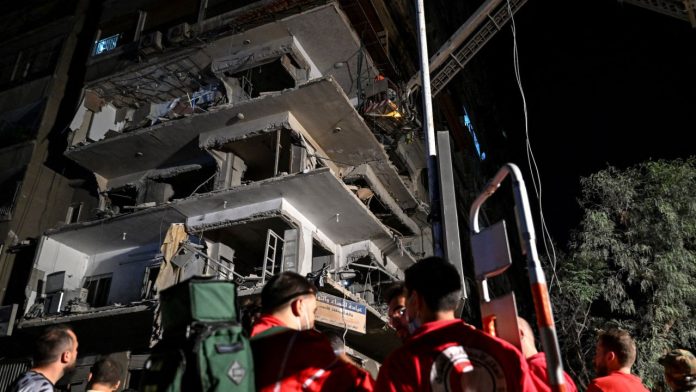
At least 7 killed in Israeli strike on residential building in Damascus

Israel Attack Syria

Three Israeli missiles were fired at a building in the densely populated Mazzeh neighborhood of Syria’s capital around 8:15 p.m. local time, SANA said, citing a military source.

Women and children are among those killed, according to SANA.

Rescuers are still trying to pull people from under the rubble, it added.

The building has been badly damaged, images and footage from the scene showed. Private property surrounding the targeted building has also been significantly damaged, SANA reported.

Israel frequently targets military positions inside Syria, especially those of the Lebanese movement Hezbollah which has played a key role in helping the Syrian army in its fight against foreign-backed terrorists.

Syria has consistently called on the Untied Nations Security Council to take action against these assaults, which it views as clear violations of its sovereignty and territorial integrity.

The Iranian embassy in Syria also condemned the strike as a terrorist bombing, adding no Iranians were among the casualties.

The Tel Aviv regime rarely comments on its attacks on Syrian territories, which many see as a knee-jerk reaction to the Syrian government’s phenomenal success in confronting and decimating terrorism.

17th natl. Iranian soup festival underway in Zanjan

The festival, which runs from October 7 to 11, invites visitors to explore the rich culinary heritage of Iran through a variety of traditional soups.

Attendees can visit the event from 4 PM to 10 PM daily, offering a unique opportunity to sample regional dishes and celebrate Iranian food culture.

The festival is expected to attract food enthusiasts from across the country, highlighting diverse flavors from different provinces.