Tuesday, December 30, 2025
Home Blog Page 694

Iranian scientist appointed as chair of a Global Olympiad Committee

This Tehran-based Sharif University professor, who was previously selected as the head of the International Scientific Committee of the World Computer Olympiad, announced the new position on Twitter.

In his tweet, Sharifi Zarchi, who returned to teaching at Sharif University after being dismissed, stated, “I have been unanimously elected as the Chair of the International Scientific Committee for the International Olympiad of Artificial Intelligence (IOAI).”

“The committee consists of 18 professors and AI specialists from various countries around the world. The second IOAI will be held in China next summer,” he explained.

According to the Tehran-based Entekhab news outlet, the appointment marks another significant milestone in Sharifi Zarchi’s illustrious academic career, demonstrating his expertise and leadership in the field of artificial intelligence on a global stage.

Sharifi Zarchi’s appointment is expected to further elevate the standards and impact of the IOAI, it added.

The IOAI is an esteemed global competition that brings together top AI talents from around the world.

The upcoming event in China marks the second edition of the Olympiad, highlighting the growing importance of AI in academia and industry.

Seoul says North Korean forces arrived in Russia to fight Ukraine

In a statement on its website, the National Intelligence Service (NIS) said Russian navy ships transferred 1,500 North Korean special operation forces to the port city of Vladivostok between 8 and 13 October who were now undergoing training.

“The North Korean soldiers … are expected to be deployed to the frontlines as soon as they complete their adaptation training,” the agency said, adding that more North Korean troops were expected to be sent to Russia soon.

NIS noted North Korean soldiers were given Russian military uniforms and Russian-made weapons and were issued with fake ID cards of residents of Yakutia and Buryatia, two regions in Siberia.

“It appears that they disguised themselves as Russian soldiers to hide the fact that they were deployed to the battlefield.”

The NIS also published satellite and other photos showing what it calls Russian navy ship movements near a North Korean port and suspected North Korean mass gatherings in the past week in the far-eastern Russian cities of Ussuriysk and Khabarovsk.

The statement was the most comprehensive official report to date detailing North Korean involvement in Russia’s war in Ukraine. If proved accurate, it would amount to North Korea’s first major participation in a foreign war.

Additionally, South Korean media reported on Friday, citing anonymous sources, that Pyongyang had decided to dispatch a total of 12,000 troops, formed into four brigades, to Russia.

The statements come a day after Ukraine’s President, Volodymyr Zelenskyy, said his country had intelligence reports that 10,000 North Korean soldiers were preparing to enter the war.

“This is the first step to a world war,” he told reporters in Brussels.

On Friday the Ukrainian Foreign Minister, Andrii Sybiha, demanded an “immediate and strong reaction” from Kyiv’s allies.

“Russia seriously escalates its aggression by involving DPRK [North Korea] on a war party scale,” he continued, adding, “We require an immediate and strong reaction from the Euro-Atlantic community and the world.”

Russia has denied using North Korean troops in the war. A Kremlin spokesperson, Dmitry Peskov, dismissed the claims at a media conference last week as “another piece of fake news”.

The NATO secretary general, Mark Rutte, stated on Friday that the alliance could not yet confirm South Korean intelligence that North Korea was deploying large-scale troops.

North Korea’s leader, Kim Jong-un, and Russia’s president, Vladimir Putin, who first met in 2019, have been seeking greater military and economic cooperation to counter their growing international isolation prompted by Russia’s invasion of Ukraine and North Korea’s ballistic missile and nuclear weapons programmes. In June, the two leaders signed a pact that includes a clause requiring the countries to come to each other’s aid if either is attacked.

Pyongyang is estimated to have provided about half the larger-calibre ammunition used on the battlefield this year, more than 2m rounds, a Ukrainian source said. It also provided KN-23 missiles, which were used in dozens of strikes across Ukraine last winter, Ukrainian media reported.

In return for its missiles and other military hardware, North Korea is thought to be seeking Russian cash as well as help with its spy satellite programme, which has had embarrassing failures over the past two years.

US must be held accountable for any Israeli attack: Iran

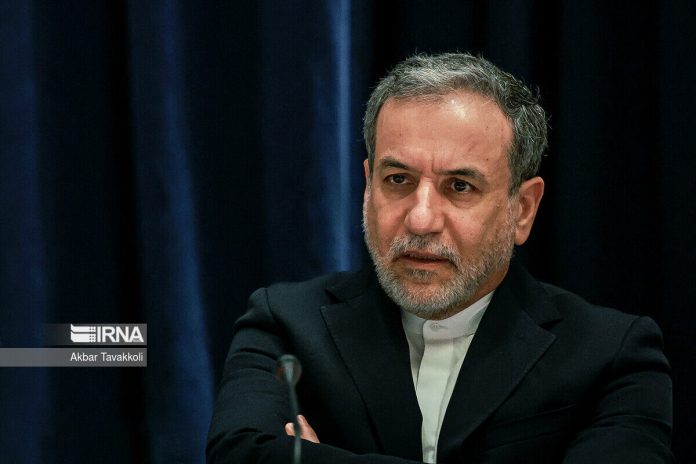
In a social media post, Araghchi said on Friday night that anybody with knowledge or understanding of how and when Israel was going to attack Iran should be held accountable for the casualties.

Araghchi also said this will apply to anyone who provides the means and backing for such an attack.

He was referring to comments from US President Biden saying that he had a better idea of how and when Israel would attack Iran.

Iran fired a barrage of missiles towards at the Israeli entity’s military, and espionage and intelligence bases all over the occupied territories on October 1.

The military operation came in response to the regime’s assassination of senior leaders of the Palestinian and Lebanese resistance front and a commander of the Islamic Revolution Guards Corps (IRGC). Tel Aviv has promised to strike Iran in response to Iran’s missile attack.

UN experts warn countries aiding Israel’s occupation of Palestinian lands may be ‘complicit’

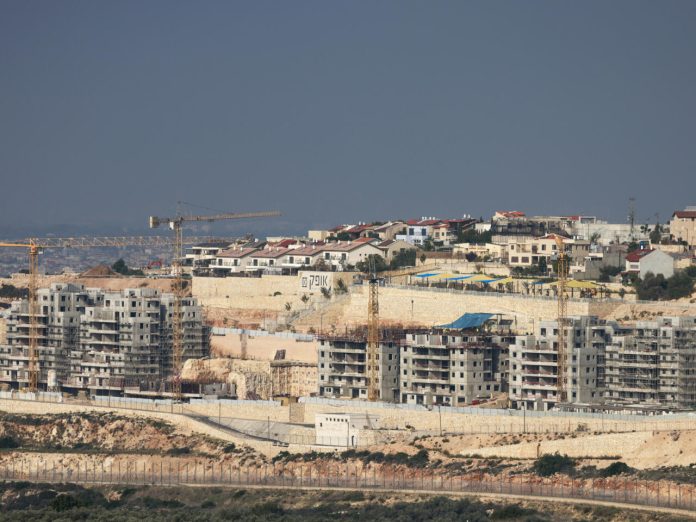
Israeli settlement West Bank

“Israel’s internationally wrongful acts give rise to state responsibility, not only for Israel, but for all states,” Navi Pillay, the head of the UN Independent International Commission of Inquiry, said on Friday.

The commission has published a new legal position paper spelling out specific actions required after a recent advisory opinion from the International Court of Justice (ICJ) declaring Israel’s occupation since 1967 “unlawful”.

It also examines the implications of last month’s UN General Assembly vote demanding the occupation end within a year.

The three-person commission, established by the UN Human Rights Council in May 2021 to investigate alleged international law violations in Israel and the Palestinian territory, pointed first to Israel’s obligations.

The General Assembly vote meant Israel was under an international legal obligation to cease all new settlement activity and dismantle existing settlements as rapidly as possible, the commission noted.

“Israel must immediately put into place a comprehensive plan of action that will physically evacuate all settlers from occupied territory,” it added.

The commission also demanded that Israel “return land, title and natural resources to the Palestinians who have been displaced since 1967”.

All of Israel’s settlements in the West Bank, occupied since 1967 and inhabited by about 700,000 Israeli settlers, including occupied East Jerusalem, are considered illegal under international law, regardless of whether they have Israeli planning permission.

More than 500,000 Israelis live in more than 100 settlements across the West Bank. Their existence remains a major roadblock to since-halted plans outlined in the Oslo Accords that promised the gradual transfer of Israeli-controlled areas to Palestinians.

Both Israeli army and settler violence in the West Bank has surged since Israel’s war in Gaza began. About three million Palestinians in the territory are subjected to Israeli military rule.

Other countries also have a list of obligations to fulfil, according to the commission.

Pillay, a former UN human rights chief, stated all countries are “obligated not to recognise territorial or sovereignty claims made by Israel over the occupied territories”.

States are required to “distinguish in their dealings between Israel and the occupied Palestinian territory”, and no country should “recognise Jerusalem as the capital of Israel or place its diplomatic representatives to Israel in Jerusalem”, she continued.

States must also refrain from rendering “aid or assistance in maintaining the unlawful occupation”, she noted, adding that this included all “financial, military and political aid or support”.

The commission likewise insisted that all states must comply with their “obligations under the Genocide Convention” and follow the provisional measures ordered by the ICJ in a case brought by South Africa accusing Israel of committing genocide in Gaza.

“The commission finds that all states are on notice that Israel may be or is committing internationally wrongful acts in both its conduct in the military operations in Gaza and its unlawful occupation of the West Bank, including East Jerusalem,” the position paper said.

“Thus, the commission finds that, unless states cease their aid and assistance to Israel in the commission of these acts, those states shall be deemed to be complicit in those internationally wrongful acts,” it added.

Israel has long accused the independent UN commission of “systematic anti-Israel discrimination”.

The commission has stressed that the UN also needs to do more to ensure Israel complies with its obligations under international law.

It decried the UN Security Council in particular for repeatedly failing to act due to the veto power wielded by one of its five permanent members, implicitly referring to the United States, Israel’s main ally.

“The commission is of the view that, when peremptory norms of international law are violated, the permanent members of the Security Council should not be allowed to exercise their veto as this is contrary to the obligation to uphold peremptory norms of international law,” it stressed.

Ayatollah Khamenei: ‘Hamas is alive, to remain alive’

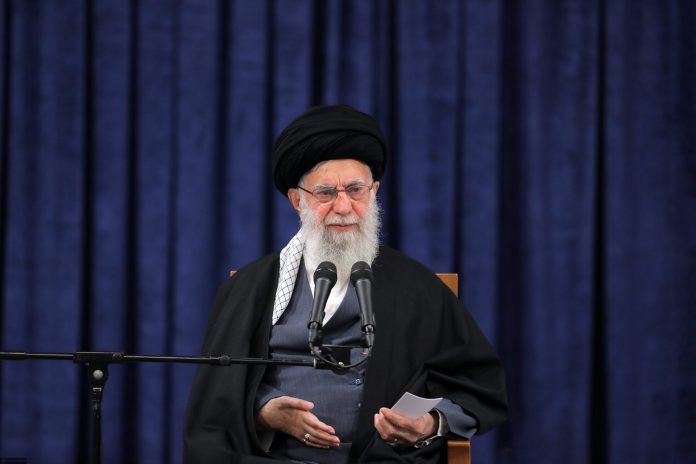
Ayatollah Khamenei

In a message to Muslim nations and youth, Ayatollah Khamenei called martyr Sinwar a distinguished figure of resistance, who stood firm against a ruthless and aggressive enemy, delivering it a strategic blow with prudence.

He highlighted the unprecedented impact of the October 7, 2023, operation in the region left by martyr Sinwar, saying he was martyred with honor and dignity.

Ayatollah Khamenei said Sinwar’s loss is painful for the Resistance Front, but emphasized that the Front will not be halted, just as it was not after the martyrdom of other prominent figures such as Sheikh Ahmad Yassin, Fathi Shaqaqi, Abdel Aziz al-Rantisi, and Esmail Haniyeh.

Extending his congratulations on Sinwar’s martyrdom to his family, comrades, and all who fight for the divine cause, Ayatollah Khamenei also expressed his condolences for the loss.

The Leader reaffirmed that the Islamic Republic remains steadfast in its support for the sincere fighters and mujahids.

Sinwar’s body could be a bargaining chip in hostage deal negotiations: Israeli sources

Sinwar’s remains are currently being held in a secret location in Israel, according to local media reports, after he was killed on Wednesday by Israeli soldiers in southern Gaza.

Two sources told CNN that securing hostage releases would likely be Israel’s priority in deciding how to leverage the remains of the man accused by Israel of masterminding the October 7 terror attacks last year.

More than 100 hostages taken during the Hamas-led attacks remain in captivity in the besieged enclave. Israeli authorities are currently weighing how to “create pressure quickly” on Hamas to let them go, one Israeli source stated.

“If Hamas wants to swap his remains for Israelis, dead or alive, then fine,” according to an Israeli diplomatic source.

Both sources agreed Sinwar could be seen as a “bargaining chip”.

A swap for hostages is likely the only way that Sinwar’s remains return to Gaza, the Israeli source noted, adding, “Otherwise handing him over is not going to happen.”

According to the diplomatic source, returning Sinwar’s remains to the besieged enclave in any circumstance risks rallying Hamas supporters. If Sinwar were buried in Gaza, the site could become a shrine for followers, the source also predicted.

Israeli Prime Minister Benjamin Netanyahu and President Isaac Herzog held a security meeting on Friday about the “significant window of opportunity” that Sinwar’s killing presents for the return of hostages, Herzog’s office announced in a statement.

In remarks Thursday, Netanyahu also called on Hamas members still holding Israeli hostages to lay down their weapons and return the captives, claiming whoever does so will be allowed to “go out and live”.

On Friday, senior Hamas official Khalil Al Hayya said in a televised address that the group will not release Israeli hostages until “aggression on our people in Gaza stops”, Israel completely withdraws from the tiny territory and Palestinian prisoners in Israel are released.

Al Hayya has served as chief negotiator for Hamas in talks for a Gaza ceasefire and the release of hostages.

“We mourn the great leader the martyr Yahya Sinwar…who died as a hero martyr, holding his weapon, clashing and confronting the occupation army until the very end of his life.” Al Hayya stated.

Dozens of Muslim Labour councillors demand complete weapons embargo on Israel

The letter, coordinated by the Labour Muslim Network and signed by 114 elected councillors, cited “clear violations of international humanitarian law” by Israel.

“In the past few days alone we have seen images of Palestinian children and families burnt alive following Israeli military strikes at Al Aqsa hospital, and the continued shelling of schools used as shelter by displaced civilians,” the letter read.

“That is why we have come together, as councillors, as Muslims, and as Labour members, to call on this Labour government to meet our moral obligation by suspending all arms sales to Israel until such a time that international humanitarian law is observed and respected.”

Signatories of the letter include the mayor of Rochdale, Shakil Ahmed, and the mayor of Wellington, Usman Ahmed.

Labour National Executive Committee member and Manchester councillor, Yasmine Dar, has also put her name to the letter.

In early September the Labour government suspended 30 out of 350 arms export licences to Israel and dropped Britain’s objection to the International Criminal Court application for arrest warrants for Israeli Prime Minister Benjamin Netanyahu and his defence minister, Yoav Gallant.

However, critics say the moves do not go far enough.

The letter by the Muslim councillors adds to pressure mounting on the British government from within the Labour Party to take stronger action against Israel.

Last week, 51 British MPs from seven political parties backed a parliamentary motion calling for the Labour government to take measures against Israel.

The demands include: “Ending all military exports to Israel, banning the import of goods from illegal Israeli settlements and revoking the 2030 Roadmap which deepens UK economic, trade and security ties with Israel”.

Starmer stated on Wednesday that he is “looking at” sanctioning Israel’s finance minister, Bezalel Smotrich, as well as the national security minister, Itamar Ben Gvir, over comments he called “abhorrent”.

David Cameron, the former British prime minister and foreign secretary under the previous Conservative government, said on Tuesday that he had planned to impose sanctions on the ministers.

Meanwhile, early this week the British government announced fresh sanctions against three Israeli settler outposts and four organisations.

Foreign Secretary David Lammy said the organisations were responsible for “heinous abuses of human rights” against Palestinians in the occupied West Bank.

UN warns of Israeli settler violence in West Bank

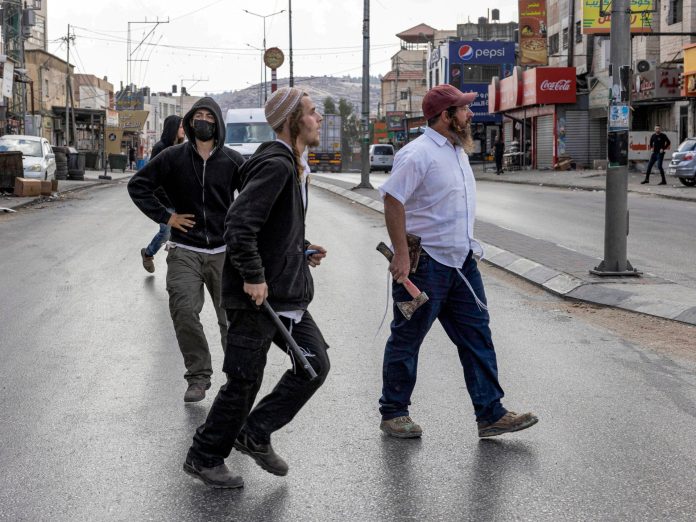
Israeli Settlers

The Office for the Coordination of Humanitarian Affairs (OCHA) warned “that Israeli settler violence in the context of the ongoing olive harvest season is threatening people’s safety and livelihoods”, UN deputy spokesman Farhan Haq told a news conference.

Haq added OCHA has documented at least “32 attacks by Israeli settlers, during which 39 Palestinians harvesting olives were injured and about 600 trees and saplings were vandalized, sawed off, or stolen” since the beginning of October.

He noted that OCHA is conducting initial assessments to determine the needs of affected individuals to inform humanitarian support from the UN and its partners.

Decrying the deteriorating situation in northern Gaza, Haq said that intense hostilities and Israel’s evacuation orders have led to a significant loss of access to critical water, sanitation, and hygiene facilities.

According to Haq, “water production from municipal wells is currently at zero” in areas such as Jabalya and Beit Lahya.

Despite the challenges, the UN is working to restore access to water for communities across Gaza.

“As of a week ago, they (UN partners) report that 638 cubic meters of water were being distributed in northern Gaza on a daily basis through water trucking,” he continued, contrasting how before October 2023, when the current hostilities began, there was 380,000 cubic meters of daily water distribution throughout all of Gaza Strip.

At least 760 Palestinians have since been killed and over 6,250 others injured by Israeli army fire in the occupied territory, according to the Health Ministry.

In a landmark opinion on July 19, the International Court of Justice declared Israel’s decades-long occupation of Palestinian land “illegal” and demanded the evacuation of all existing settlements in the West Bank and East Jerusalem.

Global hunger monitoring body warns all of Gaza ‘at risk of famine’

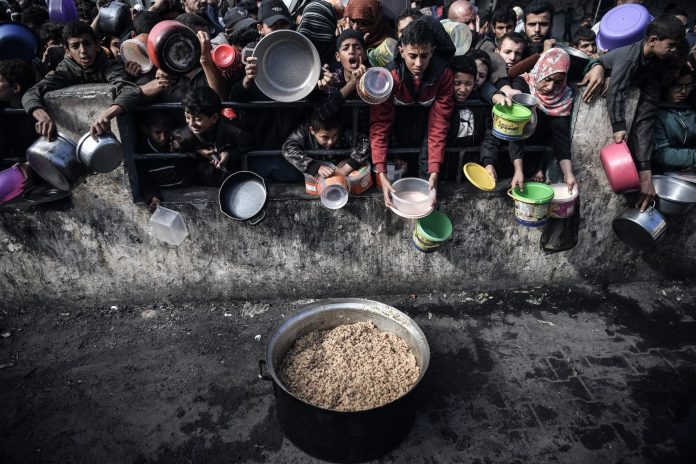
No food or aid of any kind has entered northern Gaza since 1 October amid a massive ground operation launched by the Israeli army.

The obstruction of humanitarian access and the intensity of the bombing campaign has significantly increased the risk of famine for residents in northern Gaza as food, water, fuel and medical supplies dwindle.

In a new UN-backed assessment, the Integrated Food Security Phase Classification (IPC) said around 1.84 million people across Gaza are living through high levels of acute food insecurity, including 133,000 people who are suffering “catastrophic” food insecurity.

The IPC, which conducted its new analysis between 30 September 30 and 4 October, is expecting the number of people experiencing catastrophic hunger to nearly triple in the coming months.

“Between November 2024 and April 2025, almost two million people, more than 90 percent of the population, are classified in IPC Phase 3 (Crisis) or above, of which 345,000 people (16 percent) are in Catastrophe (IPC Phase 5), and 876,000 people (41 percent) in Emergency (IPC Phase 4),” the IPC added.

The IPC classifies the most extreme warning as Phase 5, which has two levels, catastrophe and famine.

An estimated 60,000 cases of acute malnutrition among young children were expected between September 2024 and August 2025, it noted.

In December, the IPC reported that the percentage of families in Gaza experiencing severe acute food insecurity is the highest ever documented worldwide, outranking Afghanistan and Sudan.

UN human rights chief Volker Turk described the assessment as “beyond terrifying”.

“This crisis is principally the consequence of decisions made by the Israeli authorities. It is in their power to change the situation – urgently,” he said, adding that the starvation of civilians as a method of warfare constitutes a war crime.

While the entry of food aid had increased since May, the IPC said, humanitarian access began shrinking again in September. Israel has also stopped processing requests from traders to import food to Gaza, choking off a crucial source of provisions.

“The risk of famine persists across the whole Gaza Strip. Given the recent surge in hostilities, there are growing concerns that this worst-case scenario may materialise,” the IPC added.

The monitoring body expects Rafah and northern Gaza to likely face more severe acute food insecurity.

In recent weeks, the Israeli military has ordered the full evacuation of northern Gaza’s remaining 400,000 people, following the start of its major ground operation in the area on 6 October.

The Jabalia refugee camp has been one of the focuses of the military campaign, which has trapped people in their homes across the north for weeks.

Palestinians fear that the Israeli army is in the process of laying the groundwork for what has come to be known as the “General’s plan”, which involves depopulating northern Gaza and then besieging the region – including preventing the entry of humanitarian supplies – to starve out anyone left, including Palestinian fighters.

UN Secretary-General Antonio Guterres stressed that he was alarmed by the IPC analysis.

“Famine looms. This is intolerable. Crossing points must open immediately, bureaucratic impediments must be removed, and law and order restored so UN agencies can deliver lifesaving humanitarian assistance,” he wrote on social media.

The World Health Organization (WHO) Chief Tedros Adhanom Ghebreyesus has also warned that almost everyone in the Gaza Strip is going hungry, calling this situation “inhumane”.

“WHO calls for immediate access for all humanitarian aid, starting with food and medicine for severely malnourished children, who need to be treated urgently,” Tedros Adhanom Ghebreyesus wrote on X.

WHO continues to call for a cease-fire as “best medicine is peace”, he added.

Israel has continued its military onslaught on Gaza following a cross-border attack by the Palestinian group Hamas on October 7 last year, despite a UN Security Council resolution calling for an immediate cease-fire.

More than 42,500 people have since been killed, mostly women and children, and over 99,500 injured, according to local health authorities.

The Israeli onslaught has displaced almost the entire population of the Gaza Strip amid an ongoing blockade that has led to severe shortages of food, clean water, and medicine.

Israel faces a genocide case at the International Court of Justice for its actions in Gaza.

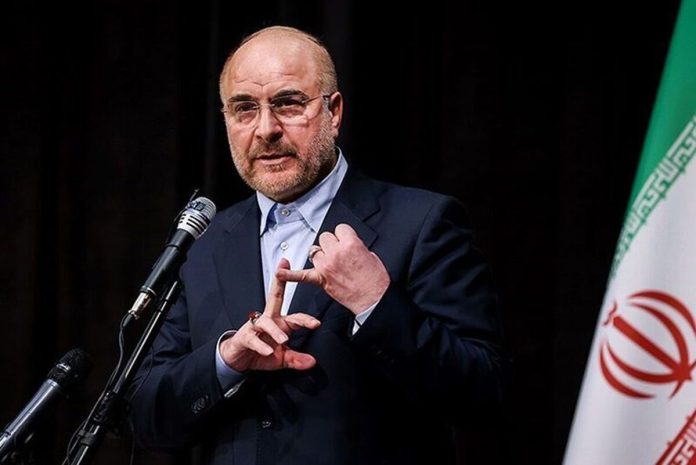
Iranian parliament chief: Iran supports any decision by Lebanese govt. regarding Resolution 1701   

Ghalibaf however said whatever decision the Lebanese government and factions make will be supported by Tehran. Ghalibaf also called for a cease-fire in South Lebanon as soon as possible.

UN Security Council Resolution 1701, adopted in August 2006, aims to end hostilities between Israel and Hezbollah in Lebanon, strengthens the United Nations Interim Force in Lebanon (UNIFIL), and calls for the disarmament of armed groups outside of Lebanese state forces.

Ghalibaf also spoke about Iran’s ballistic missile strikes on Israel on Oct. 1. “History has taught us that the Zionist regime only understands the language of force. It attacked our diplomatic mission in Syria, martyring several senior Iranian officials. Despite our response on April 13, 2024, it persisted, assassinating Ismail Haniyeh in Tehran during an official ceremony.

If we did not retaliate, the Zionist regime would continue to attack us !” Ghalibaf noted.

The Iranian parliament speaker further spoke about the October 7, 2023 attack, saying what Hamas did on that day was a response to 75 years of crimes by the Zionist regime.