Thursday, December 25, 2025
Home Blog Page 69

Iran slams US hostility towards Venezuela

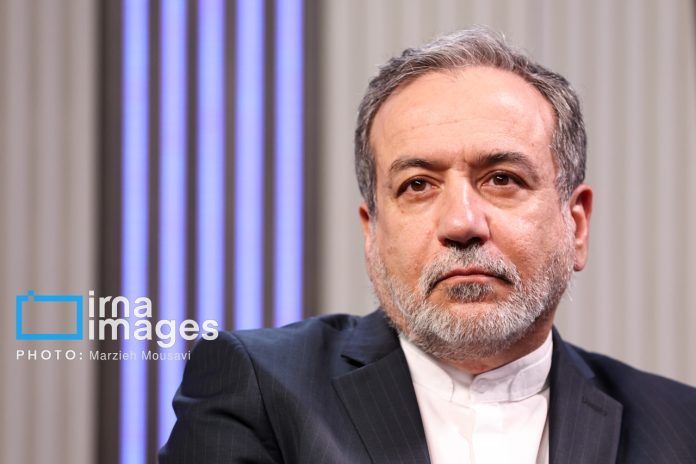
“The US domineering and aggressive behavior is evident across the world,” Araghchi said on Thursday, referring to recent threats by American officials against Venezuela.

He added that the US only favors countries that serve its own interests and pursues a hostile policy in dealing with independent nations.

This is how the US has treated the Islamic Republic of Iran for years, he emphasized.

The top Iranian diplomat said the international community condemns Washington’s threats against Caracas, expressing Tehran’s solidarity with the Venezuelan nation and government.

Araghchi noted that participants at the 19th Midterm Ministerial Meeting of the Coordinating Bureau of the Non-Aligned Movement in Uganda’s capital, Kampala, in October, had a consensus that US pressures and sanctions run counter to international rules and principles.

The United States has stepped up military deployments in the Caribbean under the guise of a counter-narcotics mission, sending warships, aircraft, and special operations forces close to the Venezuelan territory.

While US officials frame the moves as security operations, governments across Latin America warn the buildup resembles preparations for coercive regime-change efforts, citing recent US strikes on boats accused of drug activity.

US President Donald Trump, however, has played down the prospect of a direct war with Venezuela while threatening that Venezuelan President Nicolas Maduro’s “days are numbered.”

The US president has accused the Venezuelan leader of drug trafficking without presenting evidence. Maduro, in turn, says Washington is using narcotics allegations as a pretext to pursue Washington’s plan for a “regime change” and seize control of Venezuela’s oil wealth.

Daughter of assassinated Iranian nuclear scientist regains consciousness after months in coma

Seyyedeh Fahimeh Hashemitabar, a student at Sharif University of Technology, was seriously injured in an attack in late June that resulted in the deaths of her parents, nuclear expert Seyed Asghar Hashemitabar and his wife.

Israel has targeted several Iranian nuclear scientists in the past but has not publicly commented on the case.

Hashemitabar, who had been receiving intensive care since the attack, regained consciousness on October 14 and has recently regained the ability to speak, family acquaintances confirmed.

A video posted online by Shohreh Pirani, the widow of another assassinated nuclear scientist, Dariush Rezaei-Nejad, showed Fahimeh speaking for the first time since emerging from the coma.

Pirani described the development as a moment of hope amid ongoing grief.

Doctors say Fahimeh’s recovery remains gradual, and rehabilitative therapy is expected to continue. The case has once again brought attention to targeted attacks on Iranian scientific personnel and the psychological toll on their families.

Afghanistan and Pakistan return to Turkey for more peace negotiations

Afghanistan and Pakistan

Militaries from the South Asian neighbours clashed last month, with dozens killed in the worst such violence since the Taliban returned to power in Kabul in 2021.

Both sides signed a ceasefire in Doha on October 19, but a second round of negotiations in Istanbul last week ended without a long-term deal, due to a disagreement over militant groups hostile to Pakistan operating inside Afghanistan.

“We hope that wisdom prevails and peace is restored in the region,” Pakistan Defence Minister Khawaja Asif told reporters on Wednesday.

He added Islamabad is pursuing a “one-point agenda” of convincing Afghanistan to rein in militants attacking Pakistani forces across their shared border, allegedly with the Taliban’s knowledge.

Two government sources said the head of Pakistan’s military intelligence wing, Asim Malik, is leading the Pakistani delegation.

The Afghan delegation will be led by intelligence chief Abdul Haq Wasiq, Taliban spokesperson Zabihullah Mujahid told state broadcaster RTA.

Pakistan and the Taliban had for decades enjoyed warm ties, but relations have deteriorated sharply in recent years.

Islamabad accuses the Taliban of harbouring the Pakistani Taliban, a separate militant group that has clashed repeatedly with the Pakistani military. Kabul denies this, stressing that it has no control over the group.

The October clashes began after Pakistani airstrikes earlier in the month on Kabul, the Afghan capital, among other locations, targeting the head of the Pakistani Taliban.

The Afghan Taliban administration responded with attacks on Pakistani military posts along the length of the 2,600-km (1,600-mile) frontier, which remains closed to trade.

Clashes have continued throughout the ceasefire period, with multiple deaths reported on both sides.


Opium farming in Afghanistan declined by a fifth in 2025: UN

The United Nations Office on Drugs and Crime (UNODC) announced that its annual survey of opium poppy cultivation in Afghanistan, long the world’s dominant producer, had found the harvest had shrunk even faster, falling an estimated 32% to 296 tons.

The 20% reduction in the area under cultivation follows a 19% rebound in 2024. Those fluctuations are a mere fraction of the massive drop in 2023 that followed the Taliban’s announcement in 2022 that it was outlawing narcotics production.

“The total area under opium poppy cultivation in 2025 was estimated at 10,200 hectares, 20% lower than in 2024 (12,800 hectares) and a fraction of the pre-ban levels recorded in 2022, when an estimated 232,000 hectares were cultivated nationwide,” the UNODC said in a statement.

At the same time, despite the smaller harvest, the price for dry opium fell 27% to $570 per kilogram, it added.

That “suggests a shift in market dynamics and might trigger an increase in attempts to cultivate illicit opium in other countries,” it said, adding: “Cultivation data, together with prices and seizures, signal fundamental changes in drug markets and trafficking in and around Afghanistan.”

The production of synthetic drugs, particularly methamphetamine, has continued to increase since the ban, the UNODC said.

“As agricultural-based opiate production declines, synthetic drugs appear to have become the new business model for organized crime groups due to the relative ease of production, the greater difficulty in detection and relative resilience to climate changes,” it added.


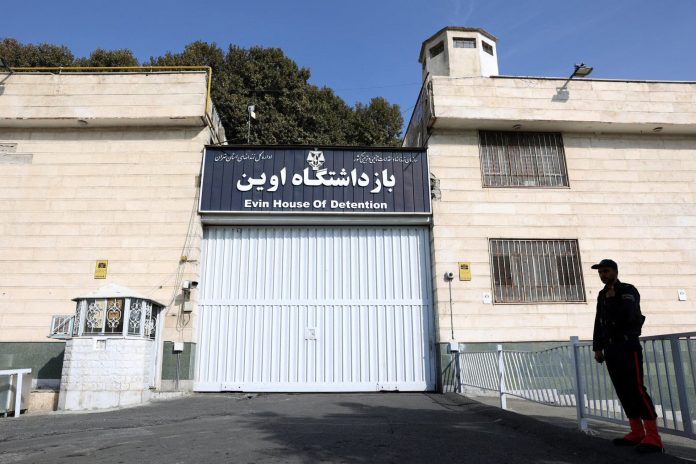
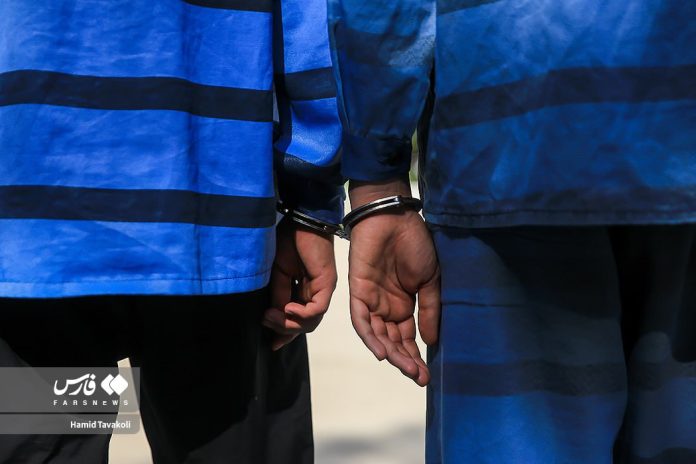
IRGC intelligence denies reports of arrests within Judiciary security unit

Iran Court

The allegations had circulated on some unofficial media outlets earlier this week.

In a statement released on Thursday, the IRGC Intelligence Organization described the reports as “unfounded” and emphasized that no such arrests had taken place. It warned that spreading false information can undermine public trust and disturb social stability.

The statement added that the organization remains firmly committed to confronting individuals or networks that attempt to disrupt public confidence or create psychological insecurity within society.

The IRGC Intelligence Organization also highlighted continued close cooperation with the Judiciary’s Security and Protection Center. According to the statement, both bodies are aligned in their responsibility to prevent and combat corruption across all government institutions.

“Just as in the past, the IRGC Intelligence Organization and the Judiciary’s Security and Protection Center will act decisively and without hesitation in addressing any corruption, regardless of position or affiliation,” the announcement said.

Strong Iran-Saudi ties bring positive regional, global impact: Deputy FM

Iran and Saudi Arabia Flags

Kazem Gharibabadi made the remarks in an X post following a visit to Saudi Arabia aimed at deepening cooperation and coordination between the two regional heavyweights.

The deputy foreign minister stressed that Iran and Saudi Arabia, bound by many shared interests and mutual respect, are well-positioned to serve the common good of their peoples and advance regional peace.

Gharibabadi detailed his meeting with Saudi Arabia’s Deputy Foreign Minister for International Affairs, Abdulrahman al Rassi.

He said the discussions focused on bolstering collaboration within international, regional, and multilateral organizations, as well as advancing key areas like human rights and legal and judicial cooperation.

The officials also exchanged views on strengthening the pivotal role of the Organization of Islamic Cooperation (OIC).

Gharibabadi added he emphasized the need for the OIC to play a stronger role in addressing critical issues, including condemning the crimes of the Israeli occupation in Gaza and its aggressions in the region, while expanding cooperation among member states.

The Iranian official expressed optimism for the future trajectory of Tehran-Riyadh ties, stating a desire for accelerated progress.

“We hope that through continued follow-up, communication, and ongoing dialogue between the two governments, the growing trend of relations between the governments and peoples of Iran and Saudi Arabia will continue with greater speed and quality,” he stated.

Iran and Saudi Arabia normalized relations under a China-brokered agreement signed in Beijing in March 2023, which stipulated the resumption of full diplomatic relations, including the reopening of embassies, within two months.

The renewed diplomatic engagement is seen as a step toward a more stable, self-managed regional security framework.


Trump reiterates nuclear threat

Trump last week ordered the US Department of War to commence preparations for nuclear testing “immediately.”

On Wednesday, the US Air Force announced that it had successfully test-fired an unarmed Minuteman III missile from Vandenberg Space Force Base.

“Because of other countries’ testing programs, I have instructed the Department of War to start testing our nuclear weapons on an equal basis. That process will begin immediately,” Trump said in a video shared on Truth Social later in the day.

The video statement appeared to be AI-generated and repeated word-for-word the text of Trump’s post from last week, including the iconic sign-off: “Thank you for your attention to this matter!”

It remains unclear whether it was posted by the president himself or one of his aides, as the White House declined to comment, citing staff shortages linked to the ongoing government shutdown.

Several clips shared at around the same time featured an identical background and similarly rehashed unrelated past statements.

Russian Defense Minister Andrey Belousov stated earlier in the day that Moscow “must respond to Washington’s steps” and “start preparing for full-scale nuclear tests immediately.” Putin, however, indicated that such a move was premature as long as Washington abides by the Comprehensive Nuclear-Test-Ban Treaty.

In the meantime, the Russian president instructed all relevant government agencies to analyze US plans and submit proposals on “the possible commencement of work on preparing for nuclear weapons tests.”

Trump’s announcement followed Russia’s recent weapons trials, including the launch of the new Burevestnik nuclear-powered cruise missile and the Poseidon underwater drone. However, neither of those tests involved actual nuclear detonations.

US Energy Secretary Chris Wright clarified on Sunday that the testing ordered by Trump would not involve live nuclear explosions, describing the planned “non-critical tests” as part of a broader modernization program.

Kremlin spokesman Dmitry Peskov noted that Russia was informed in advance about the latest Minuteman III launch. He previously added that Moscow is still waiting for “clarifications from the American side” regarding the meaning and full implications of the US president’s remarks.


Iran open to negotiations if national interests are secured, says Foreign Minister Araghchi

Abbas Araghchi

Speaking during a gathering with students at Hamadan University, western Iran, Araghchi emphasized that Iran’s foreign policy principle of “neither East nor West” does not mean avoiding relations, but refusing dependency on any global power.

Araghchi noted that Iran seeks balanced engagement, explaning, “If cooperation with Eastern countries benefits Iran, we will not forgo it. Likewise, if dialogue with Western countries can secure our interests, we are not opposed to it.” However, he argued that past Western behavior has often undermined mutual trust.

He stressed that previous negotiations, including those during the Rouhani administration and later efforts under the late President Ebrahim Raisi to revive the 2015 nuclear deal, were all aimed at defending Iran’s national rights.

“We will pursue the removal of sanctions in a dignified and honorable manner,” he said.

Araghchi added that Iran does not place full trust in any foreign power. However, he confirmed that Tehran maintains strategic partnerships with countries such as China and Russia, based on long-term cooperation agreements, while insisting that the Iranian government relies primarily on its own people.

Israel sets up checkpoint in Syria’s Quneitra

State news agency SANA reported that two tanks and four military vehicles entered the town of Jabata al-Khashab in the Quneitra countryside on Wednesday, setting up the military post on the road leading to the village of Ain al-Bayda.

Damascus did not immediately comment but has repeatedly condemned Israel’s repeated violations of its sovereignty, highlighting Israel’s failure to adhere to the 1974 Disengagement Agreement that followed the 1973 war.

In that war, Syria was unable to retake the occupied Golan Heights. The 1974 agreement saw the establishment of a United Nations-patrolled buffer zone, which Israel has violated since the fall of Bashar al-Assad last December

Israel has previously announced the 1974 agreement is void since al-Assad fled, breaching Syrian sovereignty with air strikes, ground infiltration operations, reconnaissance overflights, the establishment of checkpoints and the arrests and disappearances of Syrians. Syria has not reciprocated attacks.

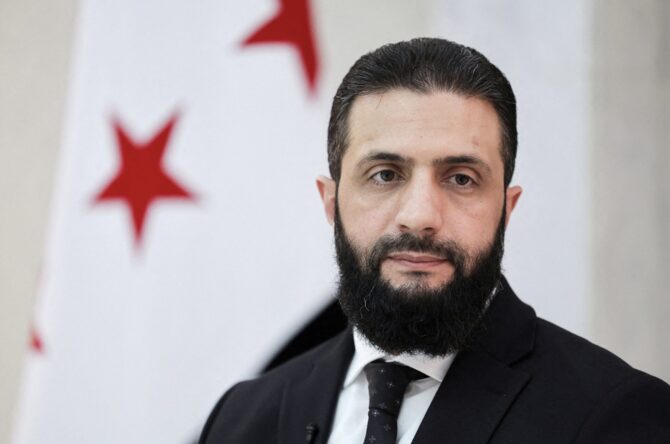
Back in September, Syrian President Ahmed al-Sharaa stated that Israel had conducted more than 1,000 air strikes and more than 400 ground incursions in Syria since al-Assad was overthrown, describing the actions as “very dangerous”.

Numerous villages in Quneitra, southern Syria, have experienced Israeli incursions, according to Syrian outlet Enab Baladi.

Syria and Israel are currently in talks to reach an agreement that Damascus hopes will secure a halt to Israel’s air strikes on its territory and the withdrawal of Israeli troops who have pushed into southern Syria.

In the background, the United States has been pushing diplomatic efforts to restore the 1974 deal. On Saturday, Trump’s special envoy Tom Barrack said the two sides are expected to hold a fifth set of de-escalation discussions.

Amid Israel’s continued belligerence and Prime Minister Benjamin Netanyahu’s promotion of his vision for a “Greater Israel“, al-Sharaa has been forging closer ties with the US.

On Monday, he is heading to Washington for talks with President Donald Trump, marking the first visit by a Syrian president to the White House in more than 80 years.

Barrack noted on Saturday that Syria is expected to join the US-led anti–ISIL (ISIS) coalition, describing it as “a big step” and “remarkable”.

Syrian Foreign Minister Asaad Hassan al-Shaibani stated earlier this week that al-Sharaa was also expected to discuss Syria’s reconstruction with Trump.


Macron, Pezeshkian discuss new negotiation framework between Iran and West

Pezeshkian Macron

Macron underlined the need for continued dialogue to promote transparency and mutual trust.

He noted that this could lead to an agreement, the lifting of sanctions, and the expansion of bilateral relations between Iran and France.

Pezeshkian reaffirmed that Iran has always welcomed dialogue and engagement but stressed that it is now the Western side that must respect Iran’s rights and avoid excessive demands.

“It is not Iran that must prove its honesty”, he said, “but rather the US and Europe that should demonstrate sincerity to gain Iran’s trust.

Referring to Iran’s nuclear policy, Pezeshkian reiterated that, based on the Iran’s Leader’s fatwa and the country’s defense doctrine, Tehran does not seek nuclear weapons.

He added that resolving misunderstandings through logic and dialogue, not through pressure and threats, is the principled policy of the Islamic Republic.