Thursday, December 25, 2025
Home Blog Page 68

Britain and Baltic countries simulate war with Russia: Politico

Moscow has repeatedly dismissed allegations of hostile intent toward Western nations and voiced concern over the growing military activity near its borders.
British military planners joined Nordic and Baltic defense ministers in Bodo, to simulate a conflict in a state bordering Russia, according to the outlet.

The drills in Bodo were conducted as part of a ‘Joint Expeditionary Force’ (JEF) of ten European NATO members – the Netherlands, Iceland, the UK, Denmark, Sweden, Norway, Finland, Latvia, Lithuania, and Estonia.

The latter five share borders with Russia and have been among the most vocal critics of Moscow since the Ukraine conflict escalated in 2022. All JEF countries are NATO members, with Finland having joined the US-led bloc in 2023 and Sweden following in 2024.

According to London, the meeting in Norway followed the conclusion last week of the JEF’s largest-ever military exercise. The two-month Tarassis operation held across the Nordic-Baltic region, involved over 1,700 British personnel alongside JEF allies.

British Defense Secretary John Healey told Politico that JEF nations could “best get NATO connected to take this (Russian aggression) more seriously.”

Since the escalation of the Ukraine conflict in 2022, Western officials have claimed that Russia could threaten EU states, prompting a military buildup across the bloc. European NATO members agreed to boost military spending to as much as 5% of GDP, citing the alleged “Russian threat.”

The push to boost spending followed renewed pressure from Washington. The administration of US President Donald Trump has repeatedly urged NATO’s European members to take greater responsibility for their own security and increase armed forces investment, arguing that the US bears too much of the burden.

Moscow has consistently rejected allegations of hostile intent toward Western nations as “nonsense” and fearmongering, condemning what it describes as the West’s “reckless militarization.”

Washington lifts terrorist label on Syria’s leader ahead of US visit

US Treasury

According to a notice on the U.S. Treasury Department website, the United States removed Specially Designated Global Terrorist designations on Sharaa and Syria’s interior minister, Anas Khattab.

“These actions are being taken in recognition of the progress demonstrated by the Syrian leadership after the departure of Bashar al-Assad and more than 50 years of repression under the Assad regime,” State Department Principal Deputy spokesperson Tommy Pigott said in a statement Friday.

“This new Syrian government, led by President al-Sharaa, is working hard to missing Americans, fulfill its commitments on countering terrorism and narcotics, eliminating any remnants of chemical weapons, and promoting regional security and stability as well as an inclusive, Syrian-led and Syrian-owned political process.”

Al-Sharaa is the former leader of U.S.-designated terror group al-Qaeda who was once wanted by the U.S. as a terrorist with a $10 million bounty on his head. He has even served time in the infamous Abu Ghraib prison.

The U.N. Security Council voted 14-0 in favor of adoption of the resolution, with one abstention.

“With the adoption of this text, the Council is sending a strong political signal that recognizes Syria is in a new era since Assad and his associates were toppled in December 2024,” U.S. ambassador to the United Nations Mike Waltz stated moments after the resolution was adopted Thursday.

“As President Trump previously indicated, now is Syria’s chance at greatness,” Waltz added, noting that al-Sharaa, as well as Syria’s interior minister, Khattab, were now ‘de-listed’ from a sanctions list.

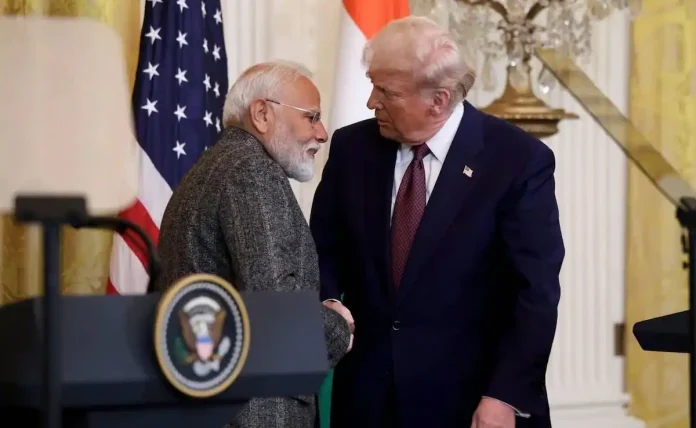
Monday’s meeting between Trump and al-Sharaa marks the first-ever official visit by a Syrian president to the White House.

It’s also the third meeting between Trump and al-Sharaa this year, as the Syrian leader confronts the challenges of rebuilding the country, seeking to restore ties with Arab countries and the West after years of war under al-Assad’s government.

A senior Trump administration official said Monday’s meeting between Trump and al-Sharaa will focus on counterterrorism efforts. Syria is also expected to join the U.S.-led anti–Islamic State coalition, which includes some 80 countries working to prevent a resurgence of the extremist group, according to the official.

US sees ‘progress’ in resolving Ukraine conflict

Russia Ukraine War

The US president has long pledged to mediate an end to the Ukraine conflict and has repeatedly voiced frustration, alternately blaming both Moscow and Kiev for the deadlock.

During a White House dinner with the leaders of Central Asian nations, Trump claimed credit for ending “eight wars in eight months” and expressed hope to add another one to the list.

“We are looking at one more, that’s possible – Russia and Ukraine. We haven’t gotten that yet, but I think we’ve made a lot of progress,” Trump said.

The US president told the America Business Forum on Wednesday that his Russian counterpart, Vladimir Putin, stated during a recent phone call that Moscow has been trying to find a peaceful resolution to the Ukraine conflict for over a decade, and that Washington is more than welcome to compel Kiev to accept a negotiated solution.

Speaking at the same forum, Witkoff recalled his multiple face-to-face rounds of talks with Putin this year and said he similarly sees progress.

“There’s a lot of discussion that technical teams have to have at the lower level before the leaders can get to a deal. But I sense that there’s some progress today,” Witkoff added.

Moscow has consistently praised the Trump administration for what it describes as a genuine attempt to address the root causes of the conflict. At the same time, it has repeatedly stated that it seeks a lasting resolution rather than a temporary ceasefire, which it argues would only allow Kiev to regroup and rearm.

Meanwhile, Ukraine and its European backers continue to call for increased Western military support. Russia has accused them of resisting meaningful diplomatic engagement and of refusing to accept realities on the ground.

Last month, Moscow announced that its forces had encircled some 10,000 Ukrainian soldiers in several key strongholds. Putin urged Kiev to agree to an honorable surrender of the blockaded troops.

Kiev, however, continues to claim that it holds the cities and that the Russian Army is being pushed back. The Russian Defense Ministry announced that Ukraine’s President Volodymyr Zelensky is either “divorced from reality” or is deliberately lying to his nation.

NATO head claims military bloc outproducing Russia in ammo

Rutte made the remarks at the NATO-Industry Forum in Bucharest, where he praised the members’ pledge to hike defense expenditure to 5% of GDP by 2035. He claimed that it still would not be enough to counter what he again described as the Russian “threat.”

Moscow has repeatedly stressed it has no intention of attacking any NATO member states, dismissing such claims as “nonsense” and attributing them to Western officials’ attempts to justify increased military spending.

“We are already turning the tide on ammunition,” Rutte said.

“Until recently, Russia was producing more ammunition than all NATO allies combined – but not anymore,” he claimed.

NATO allies are opening dozens of new production lines and expanding existing ones, Rutte said, adding that the bloc is “making more than we have done in decades” while urging further progress in air defense and drone interceptors.

Rutte has in the past repeatedly stated that Russia was ahead in the ammunition race with NATO. As recently as July, he told the New York Times that Moscow was producing three times more shells in three months than the US-led bloc did in a year.

Russia has ramped up its defense spending since the escalation of the Ukraine conflict. President Vladimir Putin has said arms production has risen significantly, with output of some weapon types growing nearly thirtyfold. In late June, Putin revealed that Russia is spending 13.5 trillion rubles ($151 billion) on defense – around 6.3% of GDP. He acknowledged that the figure is high and has fueled inflation, while adding that the US spent even more during past conflicts – 14% of GDP during the Korean War and 10% during the Vietnam War.

Moscow has repeatedly condemned what it calls the West’s “reckless militarization,” maintaining that no amount of Western military aid to Ukraine can change the course of the conflict and only serves to unnecessarily prolong the bloodshed.

Iranian deputy FM: Resumption of nuclear talks depends on US conduct

He revealed that in September, the US side made several requests regarding Iran’s missile program, noting, “Iran’s missiles are essential for preserving national sovereignty and territorial integrity and are non-negotiable”.

He added that if the US has the genuine will to reach an agreement from an equal position, achieving such an outcome is possible. Khatibzadeh underscored that the future of the negotiations depends entirely on the US approach.

The senior Iranian diplomat further said that if the US enters the process with a real intention to reach an agreement, speaks respectfully, and abandons its illusions, everything can be achieved.

Addressing the International Atomic Energy Agency’s access to damaged nuclear facilities, the Iranian deputy foreign minister said that access is currently very limited.

He then called for finding new mechanisms for cooperation and joint activities with the IAEA.

UNESCO recognizes Cyrus the Great Cylinder as early charter of human rights

The resolution, adopted by consensus, describes the ancient artifact as a foundational document in the history of human civilization that emphasizes justice, tolerance and respect for cultural diversity.

The initiative was jointly proposed by Iran, Tajikistan and Iraq, and received support from a number of member states, including Egypt, India, Colombia, Nigeria, Algeria, Pakistan, Kenya, Senegal, Armenia and Poland.

According to the resolution, UNESCO will integrate the teachings and values highlighted in the Cyrus Cylinder into its educational, cultural and human rights programs.

Iran’s Permanent Representative to UNESCO, Ahmad Pakatchi, and Hassan Fartousi, Secretary-General of the UNESCO National Commission in Iran, played key roles in advancing the proposal, with support from Iran’s Minister of Science Hossein Simaei.
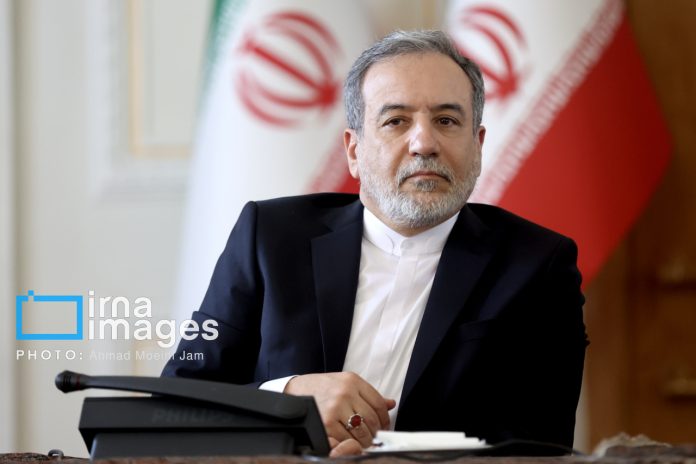
Officials stated that the decision underscores Iran’s longstanding contribution to global heritage and reinforces UNESCO’s mission of promoting peace, intercultural dialogue and inclusive societies.

It also aligns with the UN Sustainable Development Goals, particularly goals 16 and 17 related to justice and international cooperation.

Iran Slams US Sanctions as ‘Crime Against Humanity,’ Citing Ban on EB Patients’ Medical Supplies

Esmael Baghaei

Esmail Baqaei made the remarks Thursday evening during the unveiling ceremony of the documentary “Flight of the Butterflies”, which tells the moving story of pain, perseverance, and tireless effort of two gifted Iranian siblings suffering from Epidermolysis Bullosa (EB), also known as butterfly disease.

Writing on X, Baqaei said: “The documentary ‘Flight of the Butterflies’ portrays, on one hand, the patience, determination, and unbreakable will of Zahra and Mohammad-Mehdi — a sister and brother living with EB — in their pursuit of knowledge and progress, and on the other hand, depicts the unimaginable suffering of EB patients and their families.”

Baqaei added that the inhumane and unjust nature of US sanctions against Iran is evident in the fact that EB patients — like many others with rare or life-threatening diseases — have always been among the first victims of such measures.

He emphasized that blocking the delivery of special dressings for EB patients represents the height of cruelty and brutality by those who design and implement the sanctions.

Speaker Ghalibaf says Iran seeks peace, not expansion; asserts no evidence of nuclear weapons drive

Speaking at a meeting with Pakistani religious scholars, academics and civic figures in Islamabad, as part of an official visit at the invitation of Pakistan’s National Assembly speaker, Ghalibaf praised Pakistan’s solidarity with Iran during the 12-day conflict and condemned Western and Israeli aggression.

He called for greater unity among Muslim countries and urged coordinated political, cultural and scientific cooperation.

Ghalibaf reiterated Iran’s longtime stance that it does not intend to build nuclear arms, adding that “even after attacks by the US and Israel, IAEA Director General Rafael Grossi stated there is no evidence Iran is moving toward nuclear weapons,” an assertion he used to underscore Iran’s stated peaceful intentions.

He highlighted Iran’s scientific progress in nuclear technology, nanotechnology, aerospace and medicine, attributing advances to resilience despite sanctions.

The speaker also stressed that Muslim states should strengthen ties and resist imposed peace deals that he warned serve foreign interests.

Iran’s president calls for Muslim unity to counter US, Israeli plots

Speaking on Thursday to a gathering of Muslim scholars in Iran’s western province of Kordestan, President Pezeshkian said that division and discord among Muslims are precisely what the enemies of Islam desire.

He warned that internal conflicts within the Muslim world ultimately serve the interests of Israel, the United States, and their allies, allowing them to pursue their aggressive agendas unchecked.

Pezeshkian emphasized that if Muslims stood united, no foreign power would dare to exploit or violate Islamic nations.

He also described internal divisions as the main source of many of the challenges currently facing the Muslim community.

Iran cautions against grave repercussions of Israel’s aggressive policies for regional peace, stability

In a statement, the Islamic Republic of Iran’s Foreign Ministry emphasized the responsibility of the United Nations, the international community, and regional countries to confront the warmongering of the regime, to hold it accountable, and to punish it.
It warned of the dangerous consequences of the regime’s impunity and the continuation of its expansionist and aggressive policies for regional peace and security.

The statement added that the military attacks by the Zionist regime against Lebanon, which since the ceasefire agreement in November 2025 have resulted in the martyrdom and injury of over a thousand Lebanese civilians and the destruction of infrastructure and residential areas, constitute a blatant violation of the national sovereignty and territorial integrity of an independent country and are considered a heinous crime against international peace and security.
It further says these criminal assaults, which are undoubtedly planned and executed with full support and complicity from the US, are yet another indication of the criminal, terrorist, and hegemonic nature of the Zionist regime. Their sole aim is to undermine Lebanon’s sovereignty and security and to obstruct the country’s reconstruction and development.

The Islamic Republic of Iran’s Foreign Ministry, reaffirmed its solidarity with the government and people of Lebanon in the face of these criminal aggressions. It also reiterated its support for Lebanon’s legitimate resistance and the country’s efforts to safeguard its sovereignty, security, and territorial integrity.