Thursday, December 25, 2025
Home Blog Page 70

US to share draft UN resolution on Gaza with most of Security Council

Gaza War

Representatives for Egypt, Qatar, Saudi Arabia, Turkey and the United Arab Emirates will join the U.S., “showing clear regional support,” the official added.

Israel and the Palestinian group Hamas agreed a month ago to the first phase of Trump’s 20-point plan for Gaza: a ceasefire in their two-year war and hostage-release deal.

The United States has drafted a U.N. Security Council resolution that would approve a two-year mandate for a Gaza transitional governance body and an international stabilization force in the Palestinian enclave, according to the text seen by Reuters.

It was not immediately clear if any changes have been made to the draft that will be shared with the 10 elected Security Council members. A resolution needs at least nine votes in favor and no vetoes by Russia, China, the U.S., Britain or France to be adopted.

It was not immediately clear if the U.S. has yet shared a copy of the draft resolution with Russia and China.

The two-page text seen by Reuters would authorize a Board of Peace transitional governance administration to establish a temporary International Stabilization Force (ISF) in Gaza that could “use all necessary measures” – code for force – to carry out its mandate.

Washington asks UN to lift sanctions on Syria’s president ahead of US visit

United Nations

The draft resolution would also lift sanctions on Syria’s Interior Minister Anas Khattab. It was not immediately clear when it could be put to a vote.

A resolution needs at least nine votes in favor and no vetoes by Russia, China, the U.S., France or Britain to be adopted.

Washington has been urging the 15-member Security Council for months to ease Syria sanctions.

After 13 years of war, Syria’s President Bashar al-Assad was ousted in December in a lightning offensive by Hayat Tahrir al-Sham (HTS).

Formerly known as the Nusra Front, HTS was al Qaeda’s official wing in Syria until breaking ties in 2016. Since May 2014, the group has been on the U.N. Security Council’s al Qaeda and Islamic State sanctions list.

A number of HTS members are also under U.N. sanctions – a travel ban, asset freeze and arms embargo – including its leader Sharaa and Khattab.

A Security Council sanctions committee has been regularly granting Sharaa travel exemptions this year, so even if the U.S.-drafted resolution is not adopted before Monday, the Syrian president is still likely to be able to visit the White House.

Trump announced a major U.S. policy shift in May when he stated he would lift U.S. sanctions on Syria.

United Nations sanctions monitors have seen no “active ties” this year between al Qaeda and HTS, according to a U.N. report, seen by Reuters in July.

Russia to take ‘reciprocal measures’ if US resumes nuclear tests: Putin

The Russian leader told his Security Council on Wednesday that should the US or any signatory to the Comprehensive Nuclear-Test-Ban Treaty (CTBT) conduct nuclear weapons tests, “Russia would be under obligation to take reciprocal measures”, according to a transcript of the meeting published by the Kremlin.

“In this regard, I instruct the Foreign Ministry, the Defence Ministry, the special services, and the corresponding civilian agencies to do everything possible to gather additional information on this matter, have it analysed by the Security Council, and submit coordinated proposals on the possible first steps focusing on preparations for nuclear weapons tests,” Putin said.

Moscow has not carried out nuclear weapons tests since the collapse of the Soviet Union in 1991. But tensions between the two countries with the world’s largest nuclear arsenals have spiked in recent weeks as Trump’s frustration with Putin grows over Russia’s failure to end its war in Ukraine.

The US leader cancelled a planned summit with Putin in Hungary in October, before imposing sanctions on two major Russian oil firms a day later – the first such measures since Trump returned to the White House in January.

Trump then stated on October 30 that he had ordered the Department of Defense to “immediately” resume nuclear weapons testing on an “equal basis” with other nuclear-armed powers.

Trump’s decision came days after he criticised Moscow for testing its new Burevestnik missile, which is nuclear-powered and designed to carry a nuclear warhead.

According to the Kremlin transcript, Putin spoke with several senior officials in what appeared to be a semi-choreographed advisory session.

Defence Minister Andrei Belousov told Putin that Washington’s recent actions significantly raise “the level of military threat to Russia”, as he said that it was “imperative to maintain our nuclear forces at a level of readiness sufficient to inflict unacceptable damage”.

Belousov added that Russia’s Arctic testing site at Novaya Zemlya could host nuclear tests at short notice.

Valery Gerasimov, the Chief of the General Staff of the Russian Armed Forces, also cautioned that if Russia does not “take appropriate measures now, time and opportunities for a timely response to the actions of the United States will be lost”.

Following the meeting, state news agency TASS quoted Kremlin spokesman Dmitry Peskov as saying that Putin had set no specific deadline for officials to draft the requested proposals.

“In order to come to a conclusion about the advisability of beginning preparations for such tests, it will take exactly as much time as it takes for us to fully understand the intentions of the United States of America,” Peskov added.

Russia and the US are by far the biggest nuclear powers globally in terms of the number of warheads they possess.

The Center for Arms Control and Non-Proliferation (CACNP) estimates that Moscow currently has 5,459 nuclear warheads, of which 1,600 are actively deployed.

The US has about 5,550 nuclear warheads, according to the CACNP, with about 3,800 of those active. At its peak in the mid-1960s during the Cold War, the US stockpile consisted of more than 31,000 active and inactive nuclear warheads.

China currently lags far behind, but has rapidly expanded its nuclear warhead stockpile to about 600 in recent years, adding about 100 per year since 2023, according to the Stockholm International Peace Research Institute.

France, Britain, India, Pakistan and North Korea comprise the remaining nuclear-armed countries.

The US last exploded a nuclear device in 1992, after former Republican President George HW Bush issued a moratorium on nuclear weapons testing following the collapse of the Soviet Union a year earlier.

Since 1996, the year the CTBT was opened for signatures, only three countries have detonated nuclear devices.

India and Pakistan conducted tests in 1998. North Korea has carried out five explosive tests since 2006 – most recently in 2017 – making it the only country to do so in the 21st century.

Such blasts, regularly staged by nuclear powers during the Cold War, have devastating environmental consequences.

Trump has yet to clarify whether the resumption he ordered last week refers to nuclear-explosive testing or to flight testing of nuclear-capable missiles, which would see the National Nuclear Safety Administration test delivery systems without requiring explosions.

Security analysts say a resumption of nuclear-explosive testing by any of the world’s nuclear powers would be destabilising, as it would likely trigger a similar response by the others.

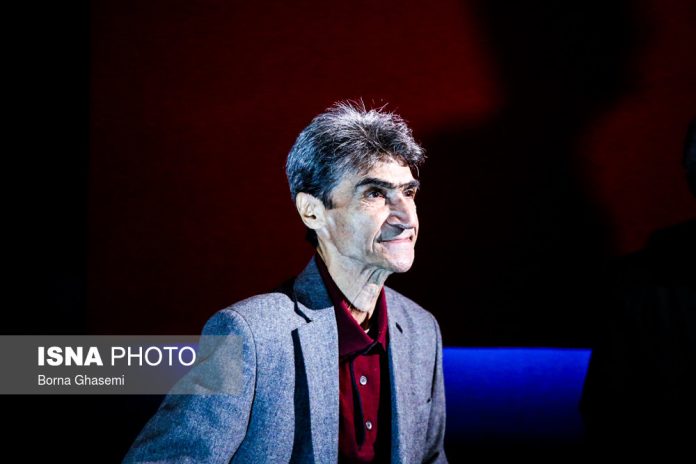
Iranian composer Aria Aziminezhad Performs “Love Through the Ages” in Paris

The performance offered a fresh interpretation of love in Iranian culture and literature, featuring Aziminezhad’s live music alongside narration by French actress Séjeanel, delivered in French.

The show was staged at the prestigious and historic Eiffel Theater.
It played to a full house and received an enthusiastic response from the Parisian audience.

IAEA condemns Trump’s nuclear test plan

IAEA

Speaking to France’s LCI TV channel on Tuesday, Grossi described Trump’s announcement as a “manifestation of profound unease, tension, and increasing fragmentation,” adding that it undermines both global peace and the non-proliferation regime.

Last week, Trump ordered the US Department of War to begin preparations for nuclear testing, claiming that the US is “the only country that doesn’t test” and accusing Russia and China of conducting “secret” nuclear explosions. Both Moscow and Beijing have refuted the allegations.

Grossi questioned the veracity of Trump’s claims, emphasizing that any nuclear detonations by other nations would be detected by the international monitoring system established under the Comprehensive Nuclear-Test-Ban Treaty. The IAEA chief noted that the organization responsible for overseeing compliance “can immediately record such phenomena.”

Grossi called for the restoration of the United Nations’ role in maintaining global peace and safeguarding the nuclear non-proliferation system amid rising tensions.

Chinese FM reaffirms Iran’s nuclear rights under NPT

China's Foreign Minister Wang Yi

Wang made the remarks in a phone conversation with his Iranian counterpart, Seyed Abbas Araghchi on Wednesday.

The Chinese foreign minister referred to the strategic nature of Tehran–Beijing relations and underscored the importance of maintaining close coordination and regular consultations between the two sides at the UN and other multilateral forums.

Wang also commended Iran’s peaceful nuclear approach.

Araghchi for his part appreciated China’s responsible and principled stance on the EU troika’s activation of the so-called “snapback mechanism” against Tehran and also thanked Beijing for describing the move at the UN Security Council as illegal.

The top Iranian diplomat underlined that “the constructive cooperation of China, Iran, and Russia in countering the unilateralism of the US and some Western countries at the UN has been of great importance and was supported by 121 member states of the Non-Aligned Movement.

Araghchi further spoke about the continued destabilizing actions of the Zionist regime in West Asia, saying the international community must stand against Tel Aviv’s warmongering and hegemonic policies and prevent further escalation of tensions in the region.

Araghchi and Wang further pointed to the constructive meeting between the presidents of Iran and China last September and the upcoming session of the High-Level Cooperation Mechanism, reaffirming the determination of both countries’ leaders to advance the Comprehensive Strategic Partnership.
The two top diplomats voiced hope that the agreements reached would soon be implemented through practical mechanisms.

Both foreign ministers agreed to maintain close diplomatic contacts and pursue joint efforts to deepen bilateral cooperation in the coming year, which marks the 55th anniversary of the establishment of diplomatic relations between Iran and China.

Iran’s envoy urges urgent UN action over Trump’s ‘alarming’ nuclear testing remarks

In a letter addressed to UN Secretary-General António Guterres and Security Council President Michael Imran Kanu, Iran’s Ambassador Amir Saeid Iravani detailed recent public statements by the US President regarding testing nuclear weapons.

“Upon instructions from my government, I am writing to draw your attention and that of the members of the Security Council to extremely alarming statements by the president of the United States of America, which pose a serious threat to international peace and security and represent a flagrant violation of the United States’ obligations under international law,” the letter said.

Iravani noted that on October 29, 2025, the US President publicly stated on social media that he had directed the Department of War to “start testing our Nuclear Weapons on an equal basis” with other nuclear powers, declaring that “the process will begin immediately.”

The ambassador added that in a later interview with CBS’s 60 Minutes on October 31, 2025, the US president claimed the country’s nuclear arsenal was sufficient “to destroy the world 150 times over.”

“These reckless statements and nuclear rhetoric, made by the head of a nuclear-weapon state, constitute an explicit threat to use nuclear weapons and a clear declaration of intent to resume nuclear testing,” he continued.

The letter underlined that such rhetoric represents a “flagrant violation” of US obligations under Article VI of the Treaty on the Non-Proliferation of Nuclear Weapons (NPT) and undermines the spirit of the Comprehensive Nuclear-Test-Ban Treaty (CTBT).

Iravani also denounced the US for a campaign of “falsehoods and disinformation” aimed at misrepresenting Iran’s peaceful nuclear program.

The letter further referenced a US “act of aggression” on June 24, 2025—an aerial bombardment of Iranian nuclear facilities—as a breach of international law and the UN Charter.

The letter requested that the secretary-general invoke Article 99 of the UN Charter to bring the matter before the Security Council and assess its implications “for the global nuclear disarmament and non-proliferation regime.”

It also urged the international body to act in fulfillment of its mandate to maintain “international peace and security.”

On Thursday, Iranian Foreign Minister Abbas Araghchi issued a warning in response to Washington’s announcement to resume nuclear weapons testing, calling it a regressive and irresponsible move.

“Make no mistake: The US is the World’s Most Dangerous Proliferation Risk,” Araghchi stated, arguing that the resumption of nuclear tests poses a serious threat to international peace and security.

The top diplomat also condemned the US for its longstanding criticism of Iran’s peaceful nuclear program while simultaneously resuming its own atomic weapons tests, actions he claims violate international law.

Saudi Arabia’s request to purchase F-35s clears key Pentagon hurdle: Reuters

A sale would mark a significant policy shift, potentially altering the military balance in the Middle East and testing Washington’s definition of maintaining Israel’s “qualitative military edge.”

Saudi Arabia made a direct appeal earlier this year to President Trump and has long been interested in Lockheed Martin’s fighter, one of the people and a U.S. official said. The Pentagon is now weighing a potential sale of 48 of the advanced aircraft, the U.S. official and the person familiar with the talks told Reuters. The size of the request and its status have not been previously reported.

The U.S. official and a second U.S. official, who acknowledged the weapons deal was moving through the system, said no final decision has been made and several more steps are needed before the ultimate nod, including further approvals at the Cabinet level, sign-off from Trump and notification of Congress.

The Pentagon’s policy department worked on the potential transaction for months, and the case has now progressed to the secretary level within the Defense Department, according to one of the officials, who spoke on condition of anonymity.

The Pentagon, White House and State Department did not immediately respond to requests for comment. A Lockheed Martin spokesperson said military sales are government-to-government transactions and the matter is best addressed by Washington.

Washington weighs weapons sales to the Middle East in a way that ensures Israel maintains a “qualitative military edge”. This guarantees that Israel gets more advanced U.S. weapons than regional Arab states.

The F-35, built with stealth technology that allows it to evade enemy detection, is considered the world’s most advanced fighter jet. Israel has operated the aircraft for nearly a decade, building multiple squadrons.

Saudi Arabia, the largest customer for U.S. arms, has sought the fighter for years as it looks to modernize its air force and counter regional threats, particularly from Iran. The kingdom’s renewed push for what would constitute two squadrons comes as the Trump administration has signaled openness to deepening defense cooperation with Riyadh. The Saudi Air Force flies a mix of fighter aircraft including Boeing F-15s, European Tornados and Typhoons.

The F-35 issue has also been intertwined with broader diplomatic efforts. The Joe Biden administration previously explored providing F-35s to Saudi Arabia as part of a comprehensive deal that would have included Riyadh normalizing relations with Israel, though those efforts ultimately stalled.

Trump has made arms sales to Saudi Arabia a priority since returning to office. In May, the United States agreed to sell the kingdom an arms package worth nearly $142 billion, which the White House called “the largest defense cooperation agreement” Washington has ever done.

Congressional scrutiny could also pose challenges to any F-35 sale. Lawmakers previously questioned arms deals with Riyadh following the 2018 murder of Saudi journalist Jamal Khashoggi, and some members of Congress remain wary of deepening military cooperation with the kingdom.

The potential sale also comes as Saudi Arabia pursues ambitious economic and military modernization plans under MbS Vision 2030 agenda. The kingdom has sought to diversify its defense partnerships in recent years while maintaining its decades-long security relationship with Washington.


Envoy: Macron holds video call with two French nationals released from detention in Iran

French President Emmanuel Macron

Cécile Kohler and Jacques Paris had been detained in Iran since 2022 on charges linked to national security.

Pierre Cochard, the French ambassador to Iran, told RTL radio that Macron’s conversation on Wednesday with the pair was “emotional and meaningful.”

France’s Foreign Minister Jean-Noël Barrot also stated that the physical and psychological condition of the two individuals was “satisfactory,” adding that they appeared relieved following their release. However, he noted that Kohler and Paris are not yet permitted to leave Iran.

“We must allow diplomatic efforts to continue so that they can return home,” Barrot said.

On Tuesday, Iran’s Foreign Ministry spokesperson Esmail Baqaei confirmed that the two were released on bail by judicial order and will remain under supervision pending further legal procedures.

Iranian Foreign Minister Seyed Abbas Araghchi said the two had been convicted on espionage-related charges, but were granted conditional release as part of “Islamic clemency.”

He also noted that Iranian national, Mahdiyeh Esfandiari, had been released in France and is currently at Iran’s embassy in Paris.

Hamas transfers remains of another Israeli captive under Gaza ceasefire agreement

A statement by the Israeli military said a coffin of a deceased hostage had been transferred to the ICRC and was on the way to Israeli troops in Gaza.

Later, the Israeli Prime Ministry confirmed that the body of Israeli soldier Staff Sgt. Itay Chen was returned and his identification had been completed.

“The Government of Israel shares in the deep sorrow of the Chen family and all the families of the fallen hostages,” it added in a statement.

Hamas earlier announced that it would transfer the body after it had recovered it from the rubble east of Gaza City’s Shejaiya neighborhood within the designated “yellow line.”

The “yellow line” is the first withdrawal line outlined in the initial phase of the ceasefire agreement between Israel and Hamas, which took effect on Oct. 10. It separates areas still under Israeli military control in the east from those where Palestinians are permitted to move in the west.

Hamas has released 20 Israeli captives alive and returned the remains of 21 out of 28 deceased captives, most of them Israelis, under the ceasefire deal, according to the group.

Israel, however, previously claimed that one of the bodies received did not match any of its missing captives.

Israel has tied the start of negotiations for the second phase of the ceasefire to the handover of all the hostage remains. Hamas says the process requires time due to the massive destruction from Israel’s two-year offensive in Gaza.

Phase one of the deal includes the release of Israeli hostages in exchange for nearly 2,000 Palestinian prisoners. The plan also envisages the rebuilding of Gaza and the establishment of a new governing mechanism without Hamas.

Israel has killed close to 69,000 people, mostly women and children, and injured over 170,000 others in attacks in Gaza since October 2023.