Thursday, January 1, 2026
Home Blog Page 671

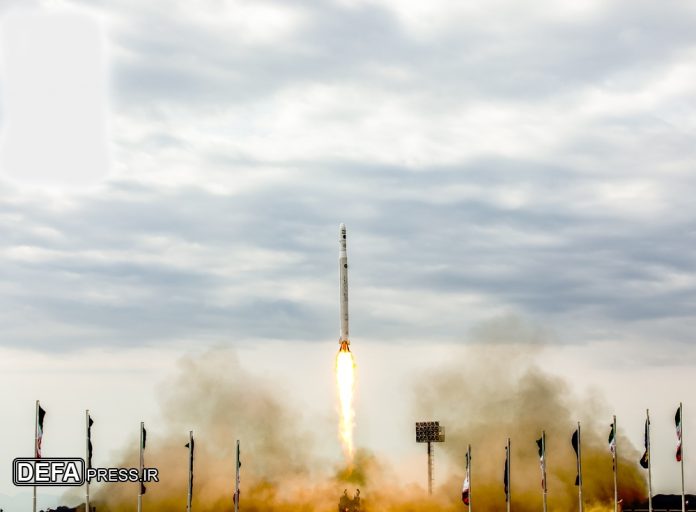
Iran says Chamran 1 research satellite functioning properly, announces new launches

Iran Satellite

In a post on the social network, Hassan Salarieh stated that successful tests in various orbital positions confirm the proper functioning of all hardware and software components of the Chamran.

He emphasized the advancement and pride of Iran’s indigenous space industry, noting that the research satellite has effectively carried out its missions over the past few weeks.

Additionally, the satellite successfully executed a maneuver to change its orbital position to approach the body of the Qaem 100 satellite carrier, demonstrating the reliable performance of its systems.

In related news on Monday, Iran’s Ambassador to Russia, Kazem Jalali, tweeted that the Iranian satellites Kowsar and Hodhod are scheduled to enter a 500-kilometer orbit.

Jalali said the satellites will be launched by a Soyuz rocket on Tuesday, at 2:48 a.m. Tehran time.

The two satellites were designed and built by young Iranian elites from a knowledge-based company with support from the Iranian Vice Presidency for Science, Technology, and Knowledge-Based Economy, the Iranian Space Agency, and the Embassy of the Islamic Republic of Iran in Russia announced.

The launch marks the first private sector venture of Iran into space aimed at solidifying the private sector’s entry into the space industry.

Dozens of countries press UN for arms embargo on Israel amid Gaza war

Gaza War

In a statement released on Sunday, Turkey’s Foreign Ministry said it had submitted the letter to the United Nations, signed by 52 countries and two organizations, calling for a halt in arms deliveries to Israel.

Turkey’s Foreign Minister Hakan Fidan in remarks also confirmed the move and accused countries exporting weapons to Israel of complicity in genocide.

“We have written a joint letter calling on all countries to stop the sale of arms and ammunition to Israel. We delivered this letter, which has 54 signatories, to the UN on November 1,” stated Fidan at a press conference in Djibouti where he was attending a Turkey-Africa partnership summit.

“We must repeat at every opportunity that selling arms to Israel means participating in its genocide,” the top Turkish diplomat added.

Arms have continued to flow from Western countries to Israel in recent months. The US, Germany, Britain, France and some other Western countries are the main culprits behind lethal arms to Israel.

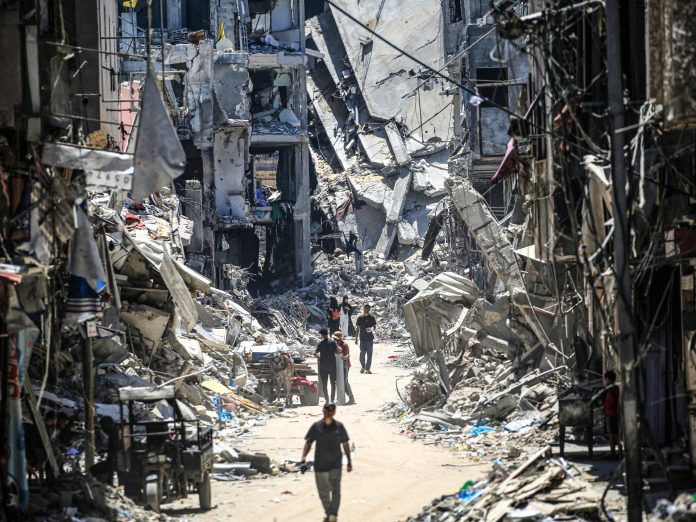
The Zionist regime has continued its devastating offensive on the Gaza Strip since a cross-border incursion by Hamas last October, despite a United Nations Security Council resolution demanding an immediate cease-fire.

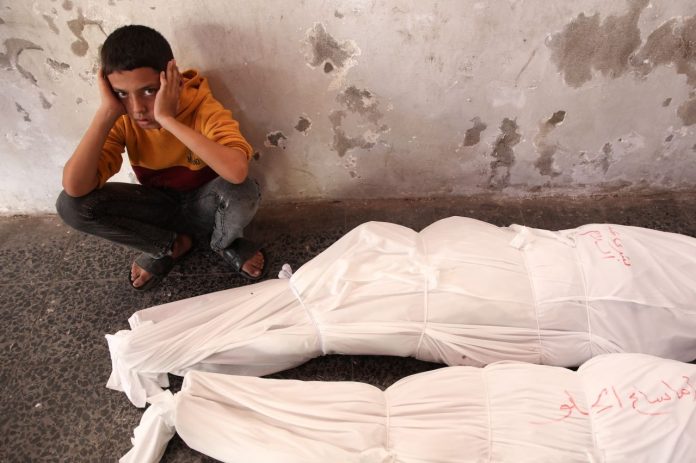
More than 43,000 people have since been killed, mostly women and children, and over 102,000 injured, according to local health authorities.

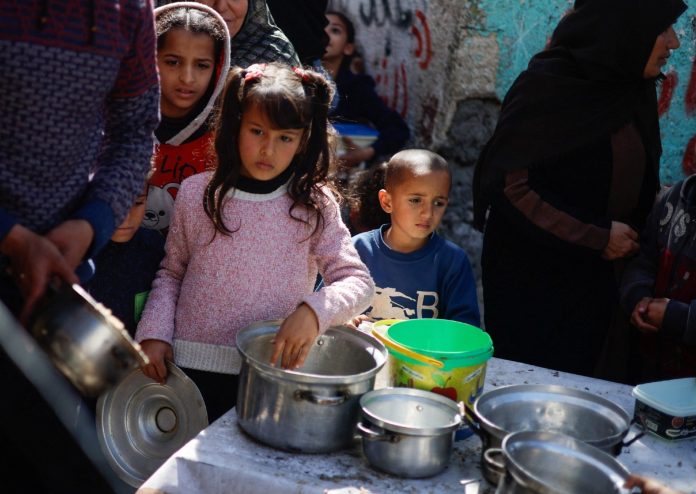
The Israeli onslaught has displaced almost the entire population of the territory amid an ongoing blockade that has led to severe shortages of food, clean water and medicine.

Israel also faces a genocide case at the International Court of Justice for its actions in Gaza.

Iran’s foreign trade hits $100b

Iran Trade

Mohammad Rezvanifar stated that of the mentioned figure, $60.2 billion was the value of the country’s export, and $39.5 billion was the worth of the import.

He put the value of non-oil export at $32.5 billion, the oil export at $27 billion, and technical-engineering export at $700 million in the seven-month period.

Noting that the value of the country’s non-oil export rose 15 percent in the first seven months of this year, as compared to the same period of time in the past year, the official put the weight of non-oil export at 88.7 million tons in the mentioned seven-month, with 11.48 percent growth, year on year.

He further put the weight of the seven-month import at 21.7 million tons.

According to Rezvanifar, the average value of each ton of exported goods has increased by three percent to $367 and the average worth of each ton of imported products has risen six percent to $1,819 in the first seven months of this year, as compared to the same time span of the past year.

Iran planning ‘strong and complex’ response to Israel’s attack: WSJ

Khaibar Missile

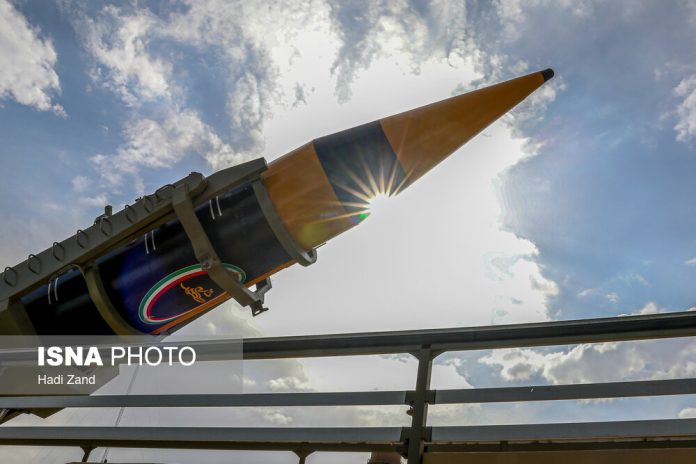
Iran isn’t planning to limit its response to missiles and drones, the daily reported Sunday, citing the officials. The newspaper noted it remains to be seen whether the threats are real.

On October 26, Israeli fighter jets used US-controlled airspace over Iraq to fire projectiles at military installations in Iran’s Tehran, Khuzestan, and Ilam provinces.

The General Staff of the Iranian Armed Forces confirmed that a significant number of the missiles were intercepted, and the Israeli warplanes were blocked from entering Iran’s airspace.

Iran has stressed it is resolved to respond to the act of aggression and will not abandon its right.

Leader of the Islamic Revolution Ayatollah Seyyed Ali Khamenei on Saturday warned the United States and Israel that they will definitely receive a teeth-breaking response for their assault.

WFP warns of looming famine in Gaza amid Israeli siege

Gaza War

The UN agency said it reached only 42 percent of the 1.1 million people targeted for food assistance in October due to a lack of supplies and access.

“North Gaza remains under siege since early October, with humanitarian agencies unable to reach people in need. Urgent international effort is required to allow the delivery of critical assistance and grant humanitarian agencies access to the area,” it added.

The Israeli army has continued a deadly onslaught in northern Gaza since early October to reportedly prevent the Palestinian resistance group Hamas from regrouping amid a siege on the area. Palestinians, however, accuse Israel of seeking to occupy the area and forcibly displace its residents.

More than 1,200 people have been killed in northern Gaza since the offensive began, according to the Gaza Health Ministry.

The aggression is the latest episode in a brutal Israeli war on Gaza since an attack by Hamas in October last year, despite a UN Security Council resolution demanding an immediate cease-fire.

More than 43,300 people have since been killed, mostly women and children, and over 102,000 others injured, according to local health authorities.

The Israeli assault has displaced almost the territory’s entire population amid an ongoing blockade that has led to severe shortages of food, clean water, and medicine.

Israel faces a genocide case at the International Court of Justice for its actions in Gaza.

Pezeshkian says ceasefire ‘could affect’ Iran’s response to Israel’s attack

Gaza War

“If they (the Israelis) make a revision in their behavior, accept a ceasefire and stop killing the oppressed and innocent people of the region, it could have an effect on the type and intensity of our response,” Pezeshkian said in a cabinet session on Sunday.

However, he insisted that Iran will not leave “unanswered” any act of aggression against its sovereignty and security.

The Iranian president warned the Israeli authorities that they will receive a “tooth-breaking” response if they “commit a mistake” against the Islamic Republic.

On October 26, Israeli warplanes used US-controlled airspace over Iraq to fire projectiles at military installations in Iran’s Tehran, Khuzestan, and Ilam provinces in flagrant breach of the country’s national sovereignty.

The General Staff of the Iranian Armed Forces confirmed that a significant number of the missiles were intercepted, and the Israeli warplanes were blocked from entering Iran’s airspace.

Iran has stressed it is resolved to respond to the act of aggression and will not abandon its right.

Leader of the Islamic Revolution Ayatollah Seyyed Ali Khamenei on Saturday warned the United States and Israel that they will definitely receive a crushing response for their atrocities.

Pezeshkian further slammed the hypocritical approach of the United States and European countries to the regional crisis and said all countries in the region now know that “Iran seeks to establish peace and stability and the Zionist regime seeks to intensify the crisis and war in the region.”

“We have never started a war and have never recommended any country to go to war. It has been the United States that has always waged wars in different parts of the world, including our region,” he emphasized.

The president added that the US keeps the fire of war raging in the region through its support for the Israeli regime.

Pointing to Israel’s acts of crime and aggression to fan the flame of war and bloodshed in the region, he stated the assassination of Ismail Haniyeh, the forner head of the political bureau of the Palestinian resistance movement Hamas, in Tehran late in July exposed its warmongering policies.

Some countries had called on Iran to show self-restraint in the hope of a ceasefire and secession of Israel’s massacre of innocent women and children but the regime escalated its crimes and spread its criminal acts to Lebanon, Pezeshkian pointed out.

He blasted the “shameful and disgraceful” silence of the self-proclaimed defenders of human rights towards Israeli killing of tens of thousands of innocent and oppressed women and children in Gaza and Lebanon.

“We have never dropped bombs and missiles on the women and children of any country and we have never deprived any people of water, food, and medicine, but they have committed all these crimes against humanity,” the Iranian president continued.

They are leveling unfounded allegations against Iran to force nations into obeying their demands, he added, emphasizing that the free peoples in the world will never succumb to oppression.

Iranian president’s aide hails ‘breaking taboos’ with consensus

Masoud Pezeshkian

In a message on the X social media platform, Ali Rabiei emphasized that these achievements, along with the lifting of internet filtering and the reinstatement of dismissed university professors and students, are the results of consensus and agreement approach adopted by the administration of President Massoud Pezeshkian despite numerous challenges.

Rabiei wrote, “Recently, we witnessed the appointment of three Arab, Kurdish, and Baluch governors in the provinces of Khuzestan, Kurdistan, and Sistan and Baluchestan. This has been a long-standing aspiration of the residents of these regions, which has always been considered a taboo. Even the appointment of Sunni political deputies was deemed impossible.”

He also noted that the return of dismissed university professors and students and the facilitation of social activities, which seemed out of reach and impossible, have finally occurred. “All these achievements, despite all difficulties, are the result of consensus and agreement,” he asserted.

Rabiei also had some promising news on efforts to remove internet filtering in Iran, explaining “Despite significant resistance, effective steps have been taken towards lifting filtering, which will soon be evident.”

In related news, Ezzatollah Zarghami, a member of Iran’s Supreme Council of Cyberspace, announced on Sunday that positive developments regarding internet filtering are on the way.

“Events in the country will certainly be carried out in a timely and correct manner in response to the rightful demands of the people,” Zarghami stated.

Iran, Azerbaijan conduct joint naval exercise in Caspian Sea

Hosted by Iran’s Navy in Bandar Anzali in northern Iran, the exercise aims to strengthen cooperation and ensure maritime security in the region.

The Azerbaijani Navy’s rescue vessels, G129 and A640, arrived in Iranian territorial waters on Monday to participate in the two-day exercise.

The exercise, named AZIREX 2024, is held under the motto Cooperation for Peace and Friendship.

It features various naval units from the Iranian and Azerbaijani navies, alongside units from the Islamic Revolution Guard Corps Navy and the Iranian National Police Marine Command.

During a briefing session held after the Azerbaijani vessels docked, the Deputy Operations Officer of the Iranian Navy, Rear Admiral Mostafa Taj al-Dini, emphasized the importance of coordination in executing scenarios, combat organization, execution phases, support, communications, and safety.

The primary objective of AZIREX 2024 is to strengthen sustainable collective security and cooperation among participating countries, demonstrate goodwill, and showcase capabilities in supporting peace, friendship, and maritime security, he added.

The exercise includes various drills, such as aiding distressed vessels, providing medical and emergency assistance, conducting search and rescue operations, and ensuring navigational safety.

Former official: Iran president has sufficient momentum for FATF approval

Pezeshkian Jalili

Mahmoud Vaezi, Chief of Staff for former Iranian President Hassan Rouhani, has revealed in an interview with Entekhab news website that Saeed Jalili, a principlist member of the Expediency Council, played a significant role in initiating opposition to FATF during Mahmoud Ahmadinejad’s presidency.

“The initial review and actions regarding FATF began under Ahmadinejad’s administration, with Jalili, then Secretary of the Supreme National Security Council, significantly involved,” Vaezi stated, citing a letter signed by Jalili as evidence.

Resolving the FATF issue was a core economic promise of President Massoud Pezeshkian during his presidential campaign. In less than six months, Pezeshkian has demonstrated his commitment, from sending a letter to the Expediency Council to tasking the minister of economy with addressing the matter.

However, Pezeshkian’s efforts have faced significant opposition. Recently, Qasem Ravanbakhsh, a representative of the Perseverance Front in Qom and a supporter of Jalili, explicitly stated that the Palermo and CFT conventions of the FTAF, which are the core disputes of Iran, would not be accepted.

Vaezi, however, expressed optimism about resolving the matter, stating, “Pezeshkian has sufficient support to take serious steps towards FATF approval.”

In contrast, the principalist newspaper Kayhan argued in an editorial on Monday that FATF cannot lift Western sanctions on Iran.

The newspaper questioned why some advisors suggest that resolving economic issues hinges on complying with FATF dictates and criticized the task force for not targeting the U.S. and Israel, despite its mandate to track and sanction terrorism financiers.

As the debate over FATF continues, the Iranian government faces the challenge of navigating internal and external pressures while striving to address economic sanctions and improve the country’s financial standing.

Leader of terrorist group behind deadly attack on Iran’s Sistan and Baluchestan border guards killed

Iran Police

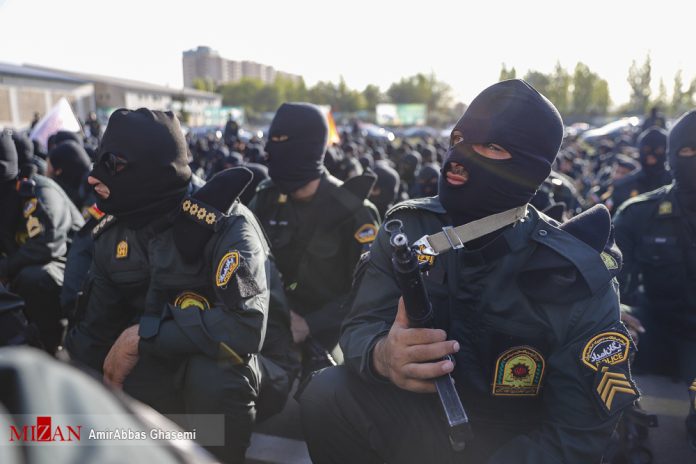
Brigadier General Montazer al-Mahdi, said the primary members of the terrorist cell responsible for the recent attack in Taftan were neutralized or apprehended within a week.

He added that in a complex intelligence operation, police counter-terrorism units located and killed the group’s leader in the Goharkooh area of Taftan.

Additionally, the spokesman added, two more terrorists were detained, including one who recorded the attack scene. Six individuals who provided support to the terrorists were also arrested, with some admitting to involvement in past attacks on security personnel.

Last Saturday, the terrorists  ambushed police forces patrols, killing 10 servicemen. The terrorist attack even drew a strong condemnation from the UN Security Council.