Saturday, December 27, 2025
Home Blog Page 669

Hezbollah’s Sheikh Qassem will ‘strengthen’ resistance: Iran’s Pezeshkian

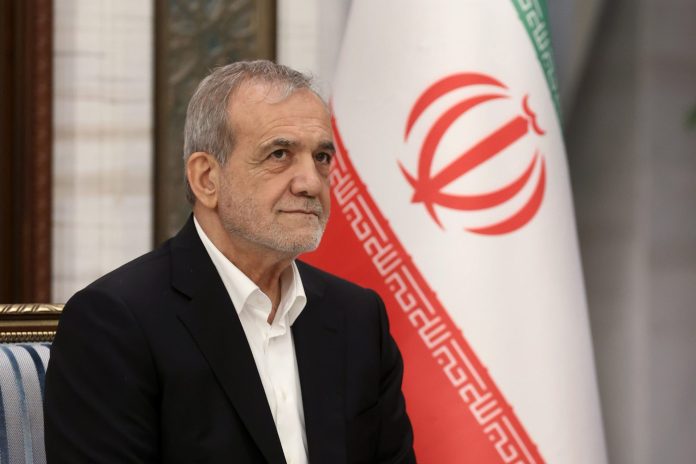
Masoud Pezeshkian

Pezeshkian has praised tsheikh Qassem as a “bright figure” who will “strengthen” resistance against the country’s foes.

Hezbollah named the Shiite cleric as its new leader on Tuesday, more than a month after his predecessor Nasrallah was killed in an Israeli airstrike.

Pezeshkian added that in the present context the “defense of Lebanon’s sovereignty and territorial integrity” and the support of the “oppressed Palestinian nation” were “of historical importance.”

“I am confident that the presence of a bright figure with clear records like your excellency at the head of the Hezbollah group will strengthen the will in the field of resistance,” Pezeshkian said, addressing Qassem directly.

Iran says Europe ‘hypocritical’ after criticism over execution of terror group’s ringleader

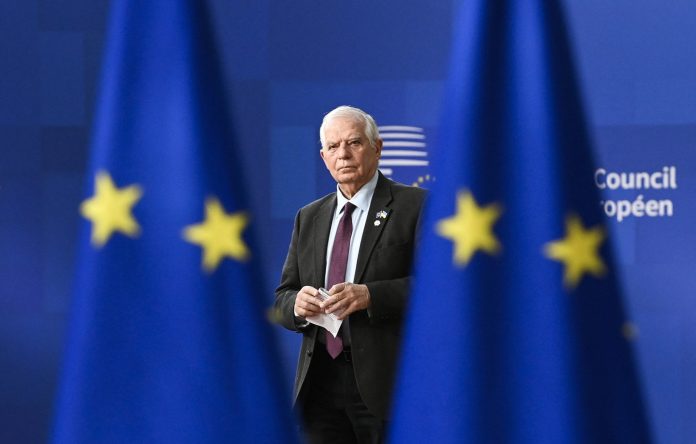
Borrell

“Do you have any opinion regarding the adoption of measures by the European Union to support the families of those who were killed by Jamshid Sharmahd? If you do not have an answer, it should be said that Europe is only a symbol of hypocrisy,” Araghchi wrote on X.

“I like to believe you when you say life and human dignity should be protected. The issue is that your fellow Europeans unashamedly support genocide in Gaza and carnage in Lebanon,” he added.

The Iranian foreign minister pricked Borrell about “an EU measure” to end the killing of more than 50,000 Palestinians in Gaza.

“How about ‘an EU measure’ to allow 1.5m refugees in Lebanon to return to their homes?” Araghchi asked.

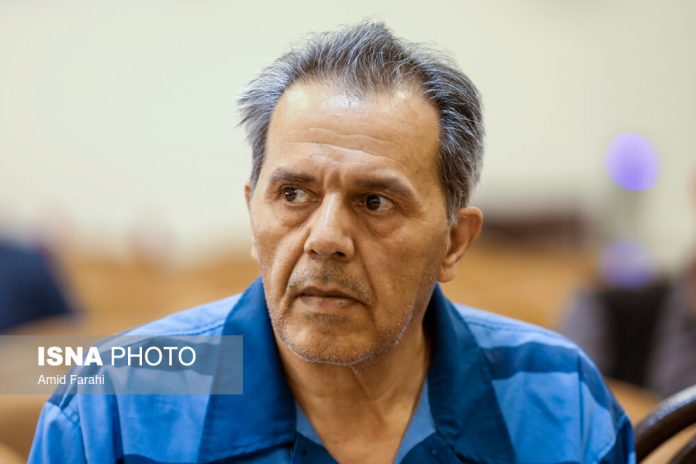
Sharmahd, who was convicted last year, was executed on Monday. He was behind a series of terrorist attacks, including a 2008 attack against a religious congregation center in the southern Iranian city of Shiraz, which killed 14 people, including 5 women and an infant, and wounded hundreds more.

WFP warns lack of aid to Gaza could have “catastrophic consequences”

Gaza War

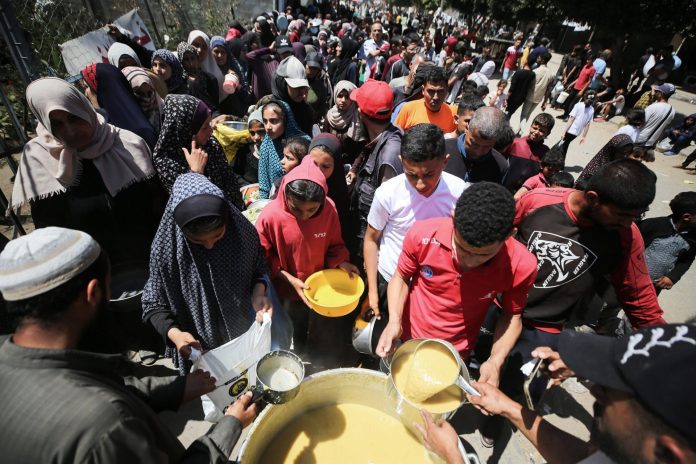
Citing a report from the Integrated Food Security Phase Classification, the WFP said more than 90% of Gaza’s population will face severe food insecurity by November, and that more could be impacted by famine if conditions don’t improve.

The agency called for the opening of more border crossing points into Gaza, adding that the movement of humanitarian aid into the strip is facing “severe” restrictions.

“During the month of October, only 5,000 metric tons of food have been delivered into Gaza, amounting to just 20 percent of basic food assistance for the 1.1 million people who depend on the WFP’s lifesaving support,” it noted.

WFP also criticized new Israeli legislation that limits the activities of UNRWA, the UN’s agency for Palestinian refugees, stressing the move would have “devastating consequences” for the most vulnerable.

More than 1.9 million Palestinians are displaced and the Gaza Strip faces widespread shortages of food, water and medicine.

The Israeli army has continued its devastating offensive on the Gaza Strip since a cross-border incursion by Hamas last October, despite a UN Security Council resolution demanding an immediate cease-fire.

More than 43,060 people have since been killed, mostly women and children, and over 101,200 injured, according to local health authorities.

The Israeli onslaught has displaced almost the entire population of the territory amid an ongoing blockade that has led to severe shortages of food, clean water and medicine.

Israel also faces a genocide case at the International Court of Justice for its actions in Gaza.

UN chief pens letter to Israel’s PM protesting UNRWA ban

UNRWA

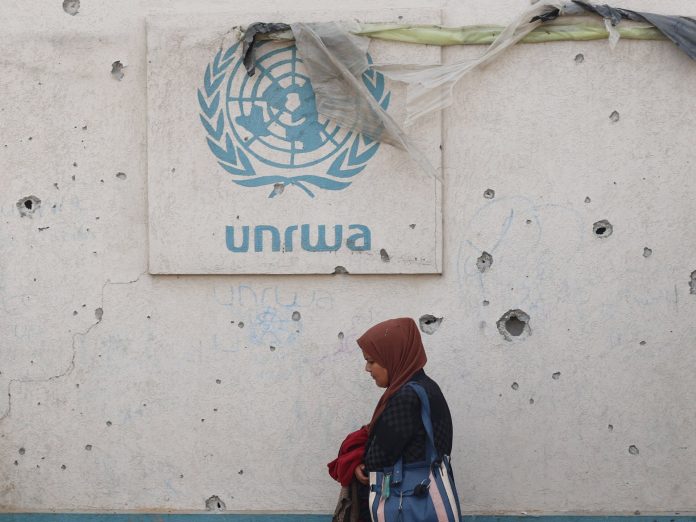
The regulations approved by the Israeli parliament ban the UN agency from operating in Israel and occupied East Jerusalem, and prevent it from communicating and coordinating with Israeli authorities, which could essentially end its work in Gaza and the occupied West Bank.

In the letter, Guterres said the law could have “devastating consequences” for Palestinians.

“I appeal to you and to the government of Israel to prevent such devastating consequences and to allow UNRWA to continue carrying out its activities in the Occupied Palestinian Territory, including East Jerusalem, in accordance with its obligations under international law,” Guterres wrote.

“Israel, as the occupying power, continues to be required to ensure that the needs of the population are met,” he added.

UN humanitarian office spokesperson Jens Laerke has also warned that Israel’s decision to ban UNRWA would represent a form of collective punishment for Gaza’s people if fully implemented.

“I think it is a fair description of what they have decided here, if implemented, that this would add to the acts of collective punishment that we have seen imposed on Gaza,” he stressed.

Collective punishment, which amounts to a war crime, is a term that refers to actions taken against a group in retaliation for acts by individual members of that group.

UNICEF spokesperson James Elder also said Israel’s decision to ban UNRWA could result in the deaths of more children,

“If UNRWA are unable to operate, you would likely see the collapse of the humanitarian system in Gaza,” he stated at a news conference in Geneva, Switzerland.

“So a decision such as this suddenly means that a new way has been found to kill children,” he added.

UNRWA chief Philippe Lazzarini has also written to the president of the UN General Assembly calling for “decisive intervention” to help the UNRWA carry out its mandate in the occupied Palestinian territory.

The Knesset’s laws forbidding Israeli officials from contact with UNRWA and banning the agency’s operations in Israeli-controlled territory risk the collapse of the UNRWA’s operations in Gaza and the occupied West Bank, posing “dire consequences for international peace and security”, he wrote.

“Today, even as we look into the faces of children in Gaza, some of whom we know will die tomorrow, the rules-based international order is crumbling in a repetition of the horrors that led to the establishment of the United Nations, and in violation of commitments to prevent their recurrence,” he said.

“The attacks on UNRWA are an integral part of this disintegration,” he added.

“Under such untenable conditions, I seek Member States’ support, commensurate with the gravity of the situation and risks, to ensure the Agency’s ability to fully implement the mandate conferred by the General Assembly,” he continued.

US State Department spokesperson Matthew Miller said on Tuesday Washington is “deeply troubled” by Israeli legislation banning UNRWA from operating and will “engage with the Government of Israel in the days ahead about how they plan to implement” the ban.

Miller reiterated that its implementation could result in “consequences under US law and US policy”.

“We’re going to watch and see if there are legal challenges to the law and if there’s any impact by those legal challenges, and then we will make our decisions after looking at all those factors,” he added.

Miller stressed that the legislation “poses risks for millions of Palestinians who rely on UNRWA,” specifically those in Gaza. He noted UNWRA undertakes a role that “cannot be filled by anyone else”.

Palestine says Israel’s UNRWA ban ‘new level in war against UN’

UNRWA

The Israeli parliament or Knesset approved bills on Monday aimed at banning UNRWA from operating in Israel.

UNRWA supports Palestinian refugees in Gaza and the occupied West Bank, occupied East Jerusalem, as well as surrounding countries.

Palestinian envoy to the UN Riyad Mansour told the UN Security Council on Tuesday that the Knesset’s legislation to ban UNRWA “constitutes a new level in this war against the UN and an integral part of an all-out assault on the Palestinian people”.

He noted how Israel had declared UN Secretary-General Antonio Guterres “persona non grata” – and had killed, detained and tortured UN staff and UN peacekeepers.

Mansour noted many countries condemned Israel’s decision to ban UNRWA.

“And yet Israel still sits among us and utilises its seat to incite against the UN … When will the condemnations lead to actions and accountability?” Mansour questioned.

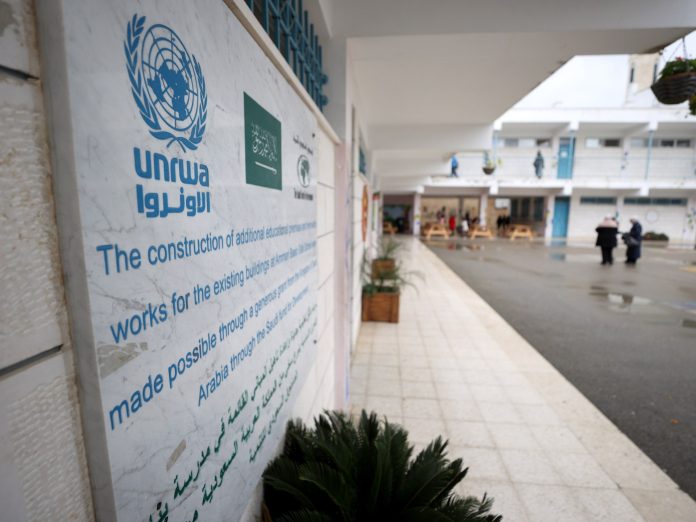
UNRWA has provided essential aid, schooling, and healthcare across the Palestinian territory and to Palestinian refugees elsewhere for more than seven decades.

But since Israel’s war on Gaza began last October, the agency itself has suffered heavy losses, with at least 223 of its staff killed and two-thirds of its facilities in Gaza damaged or destroyed.

Danny Danon, Israel’s representative at the UN, told the Security Council that UNRWA in Gaza has become a front for Hamas, the Palestinian armed group.

Israeli authorities have long called for the agency to be dismantled, arguing that its mission is obsolete and it fosters anti-Israeli sentiment among its staff, in its schools and in its wider social mission. UNRWA strongly disputes this characterisation.

Israeli Prime Minister Benjamin Netanyahu has in the past also called on the United States, Israel’s top ally and the agency’s biggest donor, to roll back its support.

UNRWA head Philippe Lazzarini called the vote by Israeli lawmakers a “dangerous precedent” and said that it was the latest in an ongoing campaign to discredit the agency and “delegitimise its role towards providing human development assistance and services to Palestine refugees”.

Israel’s decision to ban UNRWA would represent a form of collective punishment for Gaza’s people if fully implemented, UN humanitarian office spokesperson Jens Laerke added.

Russia, China, Qatar, European countries and rights organisations around the world also condemned the vote in the Israeli parliament.

The Security Council session came as Israel continued its bombardment of the besieged enclave.

“Israel has crossed every red line, broken every rule, defied every prohibition. When is enough really enough? When are you going to act? You are the Security Council. You have to reach every single one who is in pain among the Palestinians. That is your duty,” Mansour stressed at the UN Security Council meeting.

“By ending impunity and ensuring accountability, by finally bringing to an end this terrible injustice, let your actions match your words. Stop this genocide or forever remain silent.”

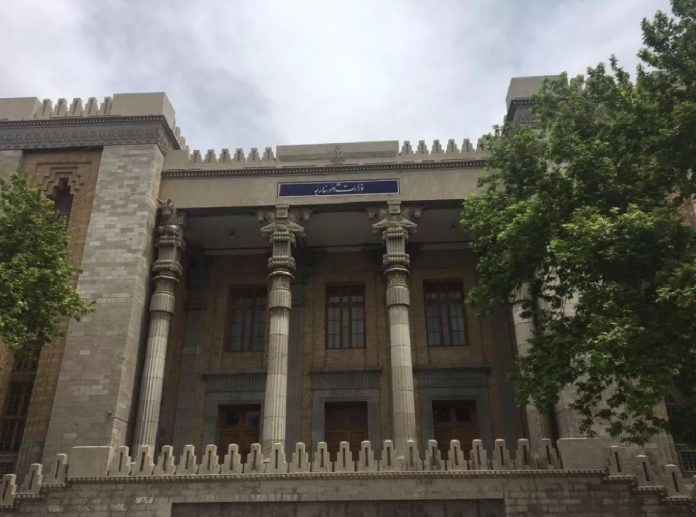
Iran summons German ambassador over Berlin’s interference in judicial matters

The Iranian Foreign Ministry

In protest of the interventionist stance of certain German officials regarding the judicial competencies of the Islamic Republic of Iran, German Ambassador to Tehran Markus Potzel was summoned by the Director-General for Western Europe of the Ministry of Foreign Affairs on Tuesday.

During this meeting, the Director-General for Western Europe conveyed the Islamic Republic of Iran’s strong objection to the inappropriate statements made by some German officials concerning Sharmahd, who was convicted of organizing and leading terrorist operations.

He emphasized that support for Sharmahd, responsible for multiple terrorist actions, including the bombing of the Rahpouyan-e Vessal Hosseiniyeh in Shiraz in 2008, which resulted in the martyrdom and injury of over 200 innocent Iranians, contradicts Germany’s claims of upholding the rule of law, human rights, accountability, and counter-terrorism.

The Director-General further noted Germany’s support of the Zionist regime’s genocide in Gaza and Lebanon, including the supply of arms to this regime, highlighting that Germany’s claims regarding human rights are clearly inconsistent with its all-encompassing support for Israel, which equates to complicity in severe international crimes, particularly genocide.

It was also emphasized that all individuals are equal before the law, and possessing a third-country passport cannot serve as a pretext or exemption for a country’s citizens from facing the law in their home country.

The German envoy stated that he would promptly convey these concerns to his government.

Former Iran football federation chief sentenced to 15 years for cryptocurrency fraud

Tehran derby football match Persepolis and Esteghlal

Ali Alghasi, Head of the Tehran Province Justice Administration, announced the ruling on the second part of the multi-defendant case, explaining that three individuals and one corporation were convicted of disrupting Iran’s economic system by creating and distributing a fraudulent cryptocurrency called “King Money.”

Three individuals received long-term prison sentences, while the company “Baderan Gostaran” was banned from any cryptocurrency-related activities for two years.

Fereydoon Ghorbanian, CEO of Baderan and the primary defendant, received a 20-year prison sentence for his role in orchestrating the fraudulent network.

Shohreh Mousavi, another key defendant, was sentenced to 15 years for participating in the scheme and facilitating the distribution of the fake cryptocurrency.

Ex-Iranian MP warns against escalation amid Israeli regime’s internal tensions

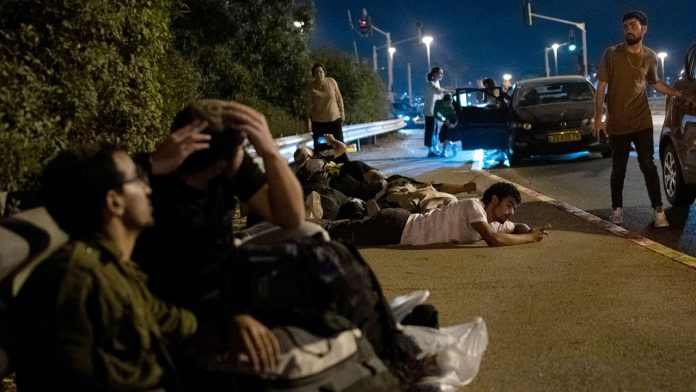
Iran Missile Attack Israel

According to Falahatpisheh, a radical faction within Israel is attempting to expand the war to Iran to shift attention away from security vulnerabilities within Israel.

“Recent developments show that war does not bring security for this regime,” he stated, highlighting that while radical ideologies dominate Israeli policy, there is a growing Haredi faction that views Israel as engaged in an ideological war, potentially aiming to instigate an apocalyptic conflict.

Despite this, Falahatpisheh believes that calls for peace and ceasefire are growing louder within Israel, even if sometimes overshadowed by extremist-driven military actions. Pressure on Prime Minister Netanyahu to pursue peace and accept a ceasefire has increased, marginalizing apocalyptic factions.

Falahatpisheh urged Iran to leverage this moment and propose an international mechanism to end the conflict, cautioning that Iran should avoid falling into a trap set by extremist Zionists seeking to bring conflict into Iranian homes as a distraction from their own ideological failures.

Iran hits back at Germany over execution of terror group ringleader

Jamshid Sharmahd

Araghchi made the remarks following the execution of Jamshid Sharmahd, the ringleader of the US-based terror group Tondar (Thunder), in response to Germany’s reaction. Sharmahd held dual Iranian-German citizenship.

Araqchi said Sharmahd outrageously and shamelessly took responsibility for the bombing of a mosque in Shiraz, Southern Iran, which resulted in the martyrdom of 14 innocent people, including women and children. More than 200 others were injured in the terror attack. There is sufficient evidence related to this, and it is available to the public.

The top Iranian diplomat called on his German counterpart to stop the concealment and psychological warfare.

The European Union strongly condemned the execution, and Annalena Baerbock, Germany’s Foreign Minister, threatened Iran with serious consequences.

The Iranian foreign minister also urged German officials to stop supporting the child-killing Zionist regime and not to hide behind hypocritical human rights slogans.

Araghchi stated that the German government, as the second-largest military supplier to the Zionist regime, is an accomplice in the Israeli genocide in Gaza and the onslaught against Lebanon.

He also referred to the provision of chemical weapons to the former Iraqi regime of Saddam Hussein by some German citizens during the 1980-1988 imposed war against Iran, stating that Iran has not forgotten the story of those lethal weapons.

Iran’s Abadan refinery “unaffected” by Israeli regime’s attack

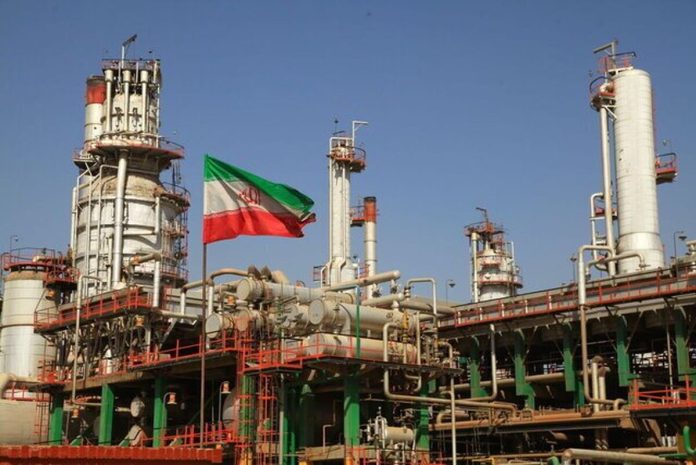
Iran’s Abadan refinery

In a recent report, BBC claimed that a storage unit at the Abadan refinery, in southern Iran, was damaged during Israel’s early Saturday morning assault on several Iranian targets.

However, investigations have confirmed that this claim is unfounded. All facilities and storage units at the Abadan refinery remain intact, and operations have continued uninterrupted.

The CEO of Abadan Refinery confirmed that the refinery’s activities are running as usual, with staff actively working in their units.

International media outlets had previously alleged damage to the Tehran refinery after an Israeli attack, which was also refuted.

During Israel’s assault, some military sites were targted in the provinces of Tehran, Khuzestan and Ilam, killing three army officers and a civilian.