Thursday, December 25, 2025
Home Blog Page 64

Convicted killer of cardiologist executed in Iran

Iran Prison

The sentence was implemented in a public square in the provincial capital before sunrise, following approval from the Chief of the Judiciary and at the request of the victim’s family.

According to the provincial judiciary, the killer had shot Dr. Davoudi dead on the night of November 11, 2024, while the physician was returning home.

The case was reviewed by Branch One of the Criminal Court of Kohgiluyeh and Boyer-Ahmad Province, where experts confirmed the perpetrator’s mental competence at the time of the crime.

The death sentence was later upheld by Branch 20 of the Supreme Court.

Prosecutor Seyyed Vahid Mousavian stated that the execution served as a message to those who threaten public security, warning that “the safety of the people is the Judiciary’s red line.”

He added that the convict had shared a video of his crime on social media and had threatened others, but was swiftly apprehended and brought to justice.

The murder of this popular specialist doctor had deeply shaken the medical community and public opinion in Iran.

Russia claims thwarted Ukrainian-UK plot to hijack missile-carrying jet

Russia, which launched its full-scale offensive against Ukraine in 2022, regularly accuses Kyiv and its European allies of brazen sabotage operations on its soil, often without providing evidence.

Russia’s Federal Security Service (FSB) said it had “uncovered and thwarted an operation by the… Ukrainian Ministry of Defence and its British supervisors to steal a Russian MiG-31 high-altitude supersonic fighter jet, which carries the Kinzhal hypersonic air-launched missile”.

It accused Kyiv of trying to “recruit Russian pilots” by promising them $3 million and citizenship of a Western country.

Kyiv planned to have the plane flown towards a NATO base in Constanta on the Black Sea, where it would have been “shot down” by air-defences, the FSB added.

The security services announced it had “thwarted the plans of the Ukrainian and British services to organise the large-scale provocation.”

State media published an FSB video showing a Russian soldier, face concealed, saying that he had received an email from a Ukrainian intelligence agent trying to recruit him for the plot.

In retaliation, the FSB noted Russian forces had hit a Ukrainian military intelligence centre and airfield in the Kyiv and Khmelnitsky regions.

Throughout its almost four-year Ukraine offensive, Russia has been hit with sabotage attacks — usually on its rail network — and regularly hands out heavy jail sentences to those accused of treason.

In August 2023, a Russian Mi-8 helicopter pilot defected to Ukraine after flying into Ukraine in an operation led by Kyiv’s security services.

His crew members were unaware of his intentions and were killed as they tried to escape, both Kyiv and Moscow had said at the time.

The pilot, Maxim Kuzminov, was found dead in Spain in February 2024.


Iranian president orders investigation after Ahvaz youth dies following self-immolation

Masoud Pezeshkian

Baledi, who suffered burns over 70% of his body, was admitted to hospital in Ahvaz last week. Despite intensive medical treatment, he succumbed to his injuries on Tuesday, local authorities confirmed.

Following the incident, President Pezeshkian instructed the interior minister to convey his condolences to Baledi’s family and to take immediate steps to provide support and comfort to them.

The president also demanded a rapid and thorough investigation into the circumstances of the case and the prompt accountability of those responsible, with measures to prevent similar incidents in the future.

The public prosecutor of Khuzestan Province announced that the judicial system has opened a formal inquiry into the matter.

The mayor and the municipal enforcement officer in Ahvaz have been detained as part of the investigation.

The incident has drawn widespread attention in Iran.

Iranian commander highlights enhanced combat readiness in naval islands

Naaz Islands in Persian Gulf

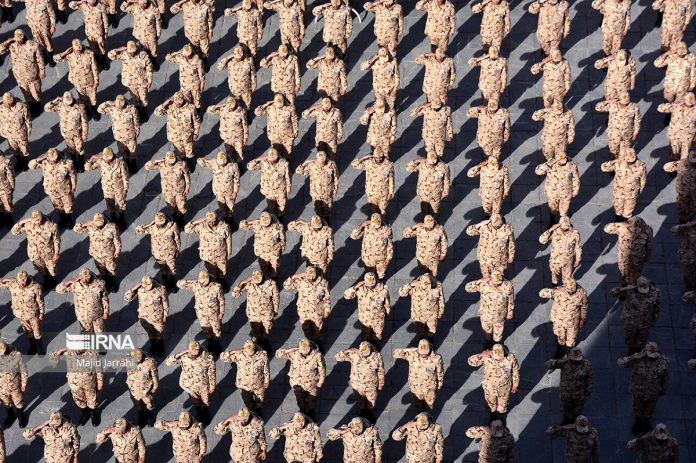
During an inspection of the Nazeat Islands, part of the Islamic Revolution Guard Corps (IRGC) Navy, General Abdollahi emphasized that Iranian forces are fully prepared to confront any threats to protect the country’s maritime and territorial borders.

Visiting all operational units, General Abdollahi noted that substantial upgrades have been made across the islands, with new equipment and capabilities enhancing the operational readiness and symmetrical combat strength of the IRGC Navy.

Months after a conflict between Iran and the US-Israeli alliance ended in a ceasefire, he praised the personnel for their high motivation and skills, describing them as a key factor in the forces’ effectiveness.

“The Nazeat Islands belong to Iran, and security is firmly established across all islands and coastal areas,” he said.

General Abdollahi specifically highlighted readiness along the strategic Strait of Hormuz and the Persian Gulf.

He added that the continuous modernization of equipment, combined with highly motivated personnel, has made the naval forces stronger than ever before.

Official says Iran to launch 3 remote-sensing satellites soon

Iran satellite

Hassan Salarieh said that according to schedule, the three Iranian satellites — Zafar, Paya, and the second model of Kosar — will all be launched simultaneously in  winter, less than a month and a half from now.

All three satellites are designed for remote sensing and will undertake key missions in land resource management, environmental monitoring, and the development of Iran’s space economy.

The Kosar satellite, developed by a private knowledge-based company in Iran, symbolizes the speed and high readiness of the private sector within Iran’s space ecosystem.

Remarkably, the upgraded version has been prepared for launch in less than a year after the first model’s deployment.The most significant feature of Kosar is its ability to capture images with a resolution of about four meters, making it a valuable tool for high-precision applications such as smart agriculture, environmental observation, and urban mapping. The 50-kilogram satellite will be placed in a sun-synchronous orbit at an altitude of approximately 500 kilometers.

Paya is another Iranian remote-sensing satellite designed for environmental monitoring, natural resource management, and the collection of practical data for land management. It can capture color images with a resolution of about 10 meters and black-and-white images with a resolution of up to 5 meters.

The third satellite to be launched in winter, Zafar, developed by Iran University of Science and Technology, is a remote-sensing and imaging project designed to capture images of the Earth’s surface with a resolution between 16 and 26 meters. This level of precision enables accurate monitoring of surface changes, making it an effective tool for resource management, environmental protection, and land-use planning.

Officials say the simultaneous launch of these three satellites in early winter, using a foreign launch vehicle, marks an acceleration in the country’s space activities and highlights the growing collaboration between Iran’s public and private sectors in the space domain.

Famous Iranian actor Homayoun Ershadi passes away at 78

Ershadi rose to international fame with his breakout role in the late Abbas Kiarostami’s Palme d’Or-winning Taste of Cherry (1997), which tells the story of a hopeless man looking for someone to bury him after his planned suicide.

The film brought him global recognition and marked the start of a late but highly respected acting career.

Born in the central city of Isfahan in 1947, Ershadi studied architecture before entering the film industry.

His work also reached international audiences with roles in Hollywood productions, such as The Kite Runner (2007).

He also featured in A Most Wanted Man (2014) and had a brief appearance in Zero Dark Thirty (2012).

Iran’s House of Cinema confirmed his death and offered condolences to the artistic community, praising Ershadi as a prominent figure of cinema, theatre and television.

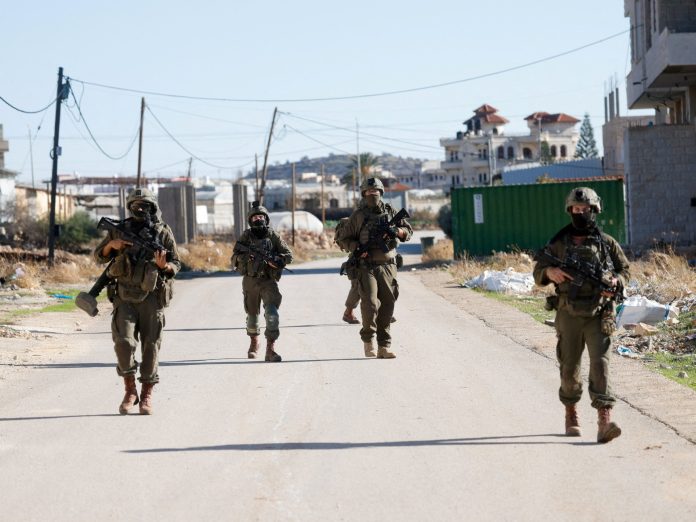
Hamas: Israel has killed over 270 Palestinians since Gaza ceasefire

Gaza War

In a statement, the Palestinian group said it has “fully and faithfully” abided by the ceasefire deal despite repeated Israeli violations.

It added that it had handed over 20 Israeli captives alive and the remains of 24 others out of 28 under the deal “despite widespread destruction, lack of equipment, and the martyrdom of several resistance fighters.”

Hamas said 39 women, 107 children, and 9 elderly people were among 271 Palestinians killed by Israel since the ceasefire took effect on Oct. 10. It added that 622 other people were injured by Israeli fire, including 137 women and 221 children.

“This confirms the retaliatory and systematic nature of the (Israeli) occupation’s attacks,” the group announced.

According to Hamas, the Israeli army has also detained 35 Palestinians, including fishermen and civilians, with 29 still in detention.

“The Israeli army continues to demolish homes daily and systematically within Israeli-controlled areas in Gaza,” it added.

The group said Israel continues to close the Zikim crossing, a main entry route for aid from Jordan, and restricts the entry of essential goods and heavy machinery needed for rubble removal.

Hamas added the Israeli army also keeps the Rafah crossing with Egypt shut in both directions, despite pledges to reopen it under the ceasefire deal, worsening humanitarian conditions for Gaza’s population.

It urged mediators, and guarantors of the ceasefire deal to act to compel Israel to fully implement the agreement, ensure an immediate halt to killings, and withdraw troops along the agreed temporary line.

Phase one of the deal included the release of Israeli hostages in exchange for Palestinian prisoners. The plan also envisages the rebuilding of Gaza and the establishment of a new governing mechanism without Hamas.

Since October 2023, Israel’s genocidal war has killed more than 69,000 people and injured more than 170,600, according to the Gaza Health Ministry.


Syrian president claims he ‘had nothing to do’ with 9/11 attacks

11 September

Al-Sharaa, who was removed from the US State Department’s “global terrorist” list last week, met with President Donald Trump in the White House on Monday. He had led the militant group Hayat Tahrir al-Sham (HTS), a regional offshoot of Al-Qaeda, which spearheaded a coalition of anti-government forces that seized Damascus in December 2024, toppling Syria’s longtime president, Bashar Assad

Speaking to Fox News shortly after meeting with Trump, al-Sharaa described his former affiliation with militants as “a matter of the past.” When asked if he had any “regrets” over Al-Qaeda’s 9/11 attacks, he denied any involvement.

“I was only 19 years old. I was a very young person. I didn’t have any decision-making power at the time. I don’t have anything to do with it. Al-Qaeda was not present right then in my area,” al-Sharaa said. He added that he was “the wrong person” to be linked to the plane hijackings that killed nearly 3,000 Americans on September 11, 2001, which also paved the way for US invasions of Afghanistan and Iraq.

“We mourn for every civilian that got killed,” he added.

Although al-Sharaa has pledged to rebuild war-torn Syria as an inclusive state, his rule has been marred by sporadic sectarian violence against Druze, Alawite, and Christian communities.

In his Fox News interview, al-Sharaa stated that Syria and the US need to coordinate efforts against the terrorist group Islamic State (IS, formerly ISIS).

He also expressed hope that Trump can help negotiate a deal with Israel, which expanded its occupation of southwestern Syria in 2024.

Israeli parliament approves first reading of bill on death penalty for Palestinian prisoners

Israel Prison

The bill passed late Monday by a vote of 39 in favor and 16 against out of 120 members, the Israeli Broadcasting Authority (KAN) reported.

During the session, a heated argument broke out between Arab lawmaker Ayman Odeh and far-right National Security Minister Itamar Ben-Gvir, nearly escalating into a physical confrontation.

The legislation was proposed by Ben-Gvir’s far-right Jewish Power party, and before being brought to a vote, it was referred to Knesset committees for preparation ahead of its second and third readings, required for final approval.

The draft law stipulates that “any person who intentionally or through recklessness causes the death of an Israeli citizen, when motivated by racism, hatred, or intent to harm Israel, shall face the death penalty” and bars any reduction of the sentence once imposed.

Ben-Gvir celebrated the vote on the US social media company X’s platform, writing: “Jewish Power is making history. We promised and delivered. The death penalty law for terrorists has passed its first reading.”

Human rights groups have long condemned Ben-Gvir’s push for the law, warning that it targets Palestinians specifically and deepens systemic discrimination.

The approval comes as Palestinians face the aftermath of Israel’s two-year war in Gaza since October 2023 alongside deadly military assaults across the occupied West Bank.

More than 10,000 Palestinians, including women and children, are currently being held in Israeli prisons, enduring torture, starvation and medical neglect that has led to the deaths of numerous detainees, according to both Israeli and Palestinian human rights organizations.


Top Iranian general warns US, Israel of stronger strikes if new war erupts; praises state media role in recent conflict

Iran Missile Attack Israel

Speaking during a visit to Iran’s public broadcaster, IRIB, General Mousavi said the armed forces had focused on deterrence and acted to “deter and punish” the adversary in the recent confrontation.

“To date we have pursued deterrence and imposed costs on the enemy. From this point forward, should aggression recur, the next phase of our response will be aimed at inflicting serious hardship on the aggressor,” he said.

General Mousavi commended IRIB staff for maintaining broadcasts and bolstering public morale amid attacks, describing the media’s work as closely aligned with military needs and vital to national resilience.

IRIB president Peyman Jebelli joined General Mousavi in praising public participation during the conflict and highlighted the broadcaster’s uninterrupted programming despite direct threats.

General Mousavi stressed that Iran’s doctrine remains defensive and that the country does not seek to initiate war, but asserted readiness to respond decisively to any future aggression, underlining the armed forces’ reliance on public solidarity and the Leader’s guidance.