Thursday, December 25, 2025
Home Blog Page 620

Iranian FM voices Tehran’s support for Syria against Takfiri terrorist groups

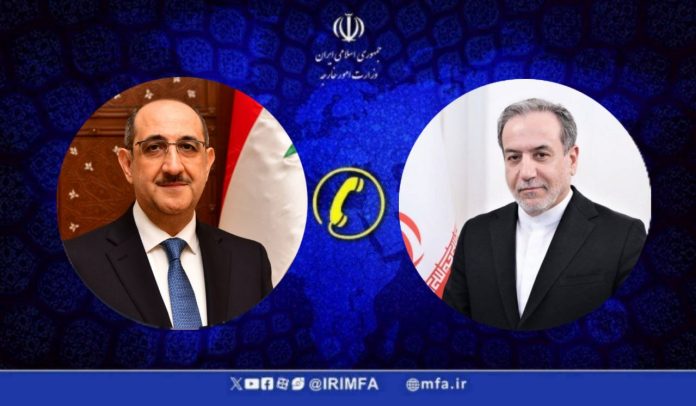
Seyed Abbas Araghchi the Foreign Minister of the Islamic Republic of Iran held a phone conversation on Friday with his Syrian counterpart Bassam Sabbagh to discuss the latest developments in Syria and the region.

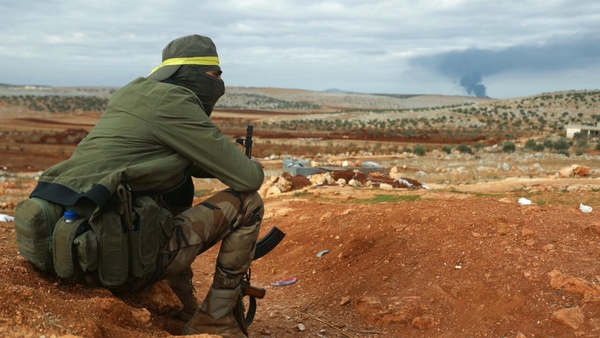
The foreign minister of the Arab Republic of Syria provided an update on the situation in northern Syria following attacks by terrorist groups.

He underlined that the Syrian government and people remain steadfast in resisting these assaults and are committed to thwarting the sinister plans of terrorists and their supporters.

Araghchi described the resurgence of terrorist activities in Syria as part of a U.S.-Zionist scheme following the setbacks Israel faced in Lebanon and Palestine.

He reaffirmed the Islamic Republic of Iran’s ongoing support for Syria’s government, people, and military in their fight against terrorism and in safeguarding regional security and stability.

Iran urges EU to abandon ‘arrogant, irresponsible’ behavior in nuclear talks 

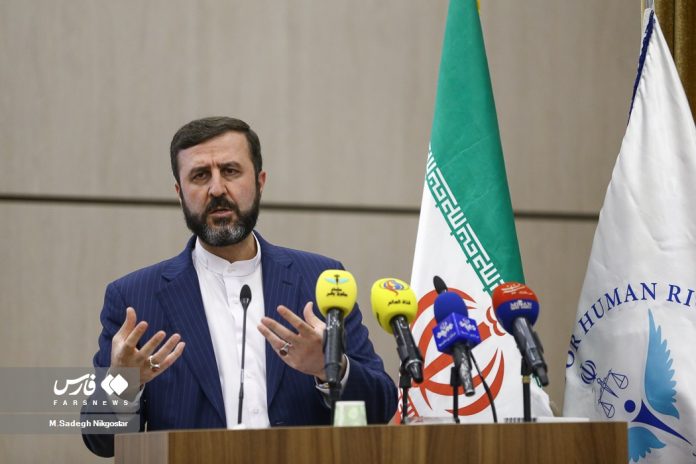
Kazem Gharibabadi

Gharibabadi made the demand on Friday following his meeting with the EU Deputy Foreign Policy Chief, Enrique Mora, as well as the talks between Iran’s Deputy Foreign Minister Majid Takht-Ravanchi and the top EU official in Geneva on Thursday.

They discussed a range of issues, including the prospects for nuclear negotiations and sanctions relief in light of recent developments.

Mora, in a post on X social media platform, mentioned having a frank discussion with the Iranian deputy foreign ministers about Iran’s nuclear program, regional tensions, and human rights.

He stressed the need for a diplomatic solution to the nuclear issue but added Iran’s military support for Russia must stop.

Gharibabadi emphasized that the EU should stop projecting its own problems and mistakes, such as those related to the Ukraine conflict, onto others.

He also noted that the EU has long ceased to be an influential player in the Iranian nuclear issue due to its lack of responsibility and confidence.

Furthermore, the Iranian deputy foreign minister for legal affairs criticized the EU’s complicity in the Gaza genocide, stating that it has no moral standing to lecture others on human rights.

On Friday, the deputy foreign ministers of Iran, Germany, Britain, and France are scheduled to hold talks on a range of issues in Geneva.

Iran UN mission dismisses allegations of chemical weapons production 

In a message on its X account, the mission wrote on Thursday, “A victim of Western-donated chemical weapons employed by the Saddam regime, Iran stands as a responsible member of the Chemical Weapons Convention (CWC).”

The mission asserted, “Over the past several decades, not a single instance of Iranian violation has been recorded.”

“The current unfounded reports are merely an outgrowth of psychological warfare propagated by the Zionist regime in the wake of its recent defeat on the Lebanese front,” it noted.

The reaction came after a Washington-based think tank claimed earlier this month that Iran has developed chemical weapons based on synthetic opioids, such as fentanyl, that can incapacitate soldiers or civilians when added to grenades or artillery.

Iran says to fully support Lebanon, underlines vigilance following ceasefire 

In a telephone conversation with his Lebanese counterpart, Abdullah Bou Habib, on Thursday afternoon, Araghchi welcomed the ceasefire agreement in Lebanon.

He attributed the success to the unwavering resilience of the Lebanese people, the steadfast efforts of the resistance fighters on the ground, the political wisdom of Nabih Berri, Speaker of the Lebanese Parliament, and the government of Lebanon.

Pointing to the Zionist regime’s history of reneging on agreements, Araghchi emphasized the need for Lebanon to remain vigilant and exercise serious caution in implementing the ceasefire.

Highlighting recent developments in Syria and the renewed activity of Takfiri terrorist groups, Araghchi described these incidents as part of a US-Zionist plan to destabilize the region following the failures and setbacks of the Zionist regime in the face of resistance.

He stressed the necessity of a robust and effective response to the scourge of terrorism.

The Lebanese Foreign Minister, in turn, expressed gratitude for the call and provided a detailed account of Lebanon’s situation following the ceasefire.

Abdullah Bou Habib also thanked the Islamic Republic of Iran for its enduring solidarity and support for Lebanon.

Iran says terror raids in Syria orchestrated by US-Israel

Strongly condemning all forms and manifestations of terrorism, Baqaei called for decisive and coordinated measures to prevent the expansion of this scourge in the region.

He emphasized the necessity of vigilance and collaboration among regional countries, particularly Syria’s neighbors, to neutralize this dangerous conspiracy.

The Foreign Ministry spokesperson highlighted that, based on existing agreements among the three guarantor states of the Astana Process (Iran, Turkey, and Russia), the outskirts of Syria’s Aleppo and Idlib are designated as de-escalation zones.

He stated that the attacks by Takfiri terrorist groups in these areas constitute a blatant violation of the Astana agreements, jeopardizing the positive achievements of the process.Scores of people were killed in the recent attacks by Takfiri groups on Aleppo and Idlib.

Baqaei also reminded the international community of its shared responsibility to prevent and combat the ominous phenomenon of terrorism.

He reiterated the Islamic Republic of Iran’s continued support for the Syrian government and people in their resolute confrontation with terrorist groups and efforts to restore security and stability to the country.

IRGC Chief: Zionists Have No Hope for Future with Hezbollah’s Presence 

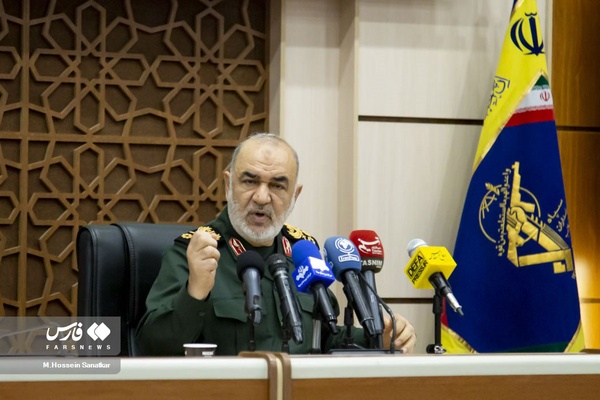
Major General Hossein Salami made the remarks on Thursday evening, during the closing ceremony of the Congress of 24,000 Martyrs of Isfahan Province.

General Salami stated the goal of the Zionist regime’s missile and ground attacks on all Hezbollah positions was to transform Hezbollah into a leaderless entity. However, Hezbollah is so resilient that it can rebuild itself even under fire.

He noted with the explosions of pagers in Lebanon, some of Hezbollah’s commanders were injured, and after the martyrdom of Seyed Nasrallah and Yahya Sinwar, the Zionist regime thought it had an opportunity to end the confrontation. But they didn’t realize this was the beginning of their own end.

Referring to the Zionist regime’s aggressions against Lebanon, Major General Salami added, the Zionist regime assumed Hezbollah lacked the morale to fight and believed it had destroyed their ammunition depots. However, Hezbollah is stronger than ever.

He pointed out today, by launching missiles at Haifa and Tel Aviv, Hezbollah has disrupted the enemy’s calculations.

The IRGC commander further stated the United States, as the Zionist regime’s supporter, ally, and political and economic backer, entered the field to rescue this regime. But Hezbollah, by infiltrating the Zionist regime, delivered a severe blow to it.

General Salami stressed the Zionist regime and the United States are disoriented by Hezbollah’s attacks and power. Hezbollah imposed its will on the enemy, forcing them to accept its conditions for a ceasefire.

He pointed out that Israel is compelled to agree to an end to the war in Gaza; otherwise, it will face even greater decline.

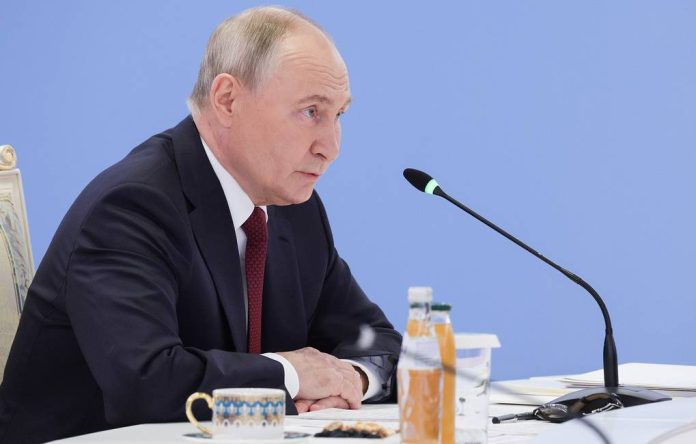
Putin claims Russian missiles more powerful than those supplied to Ukraine by US, Europe

Vladimir Putin

Russia’s Iskander short-range ballistic missile system has a similar payload to all three modifications of the US-made ATACMS (Army Tactical Missile System), but boasts a longer range, Putin said during the Collective Security Treaty Organization (CSTO) summit in Kazakhstan’s capital, Astana, on Thursday.

“The new American PrSM (Precision Strike Missile) system is in no way superior to its Russian counterparts in terms of its characteristics,” he added.

Earlier this month, the US, UK and France allowed Ukraine to use the long-range weapons that they’d supplied earlier to conduct strikes on internationally-recognized Russian territory. Several such attacks have already taken place. Kiev’s forces are currently equipped with American ATACMS as well as British Storm Shadow and French SCALP missiles.

“We know, of course, how many relevant weapons systems our potential opponent has; where exactly they are located; how many weapons have been delivered to Ukraine and how many are planned to be delivered,” Putin stressed.

The Russian president said that “no arms deliveries, even of the most advanced weapons, to Ukraine will change the situation on the battlefield”.

He also pointed out that Moscow vastly surpasses Ukraine’s Western backers in terms of production of long-range weapons.

“As for the output of the relevant missile systems, in Russia it is ten times higher than the combined production in all NATO countries, and next year it will grow by another 25-30%.”

The president noted that Russia’s arsenal already includes Kalibr cruise missiles as well as Kinzhal and Zircon hypersonic missiles, which “in terms of their characteristics have no analogues in the world”. Their production is now “in full swing” and is being extended further, he added.

In the coming the years, new state-of-the-art hypersonic systems would be added to the country’s “menu”, Putin promised.

The Russian military is selecting targets in Ukraine for further possible strikes using the country’s new Oreshnik hypersonic ballistic missiles, Putin warned.

Potential targets for the missiles could be “decision making centers” in Kiev, the Russian leader stated.

Military facilities could also be targeted, along with defense and industrial enterprises – “especially since the Kiev regime has repeatedly attempted to strike at facilities of national importance in Russia,” Putin explained.

Moscow already has several Oreshnik missiles at its disposal and has begun the large-scale production of the advanced weapon system, he added.

Putin reiterated that the first Oreshnik launch last week had been Moscow’s response to Western countries granting permission for Kiev to fire long-range weapons deep inside Russia. This made NATO member states directly involved in the conflict, he continued.

“Oreshnik has no counterparts in the world, of course, and I believe none will appear anytime soon,” he said.

“[The system has] dozens of homing warheads that attack their targets at Mach-10 speed… Their temperature reaches 4,000 degrees,” the president added, noting, “Anything located in the strike center is obliterated into elemental particles, reduced to dust.”

Oreshik can destroy highly fortified targets buried deep underground, Putin said. A massive strike with such missiles would be comparable to a nuclear strike in its force, he stated.

“We have several units ready for use now. Certainly, should the strikes with Western long-range weapons on our territory continue, we will respond, including by launching more combat tests of Oreshnik systems.”

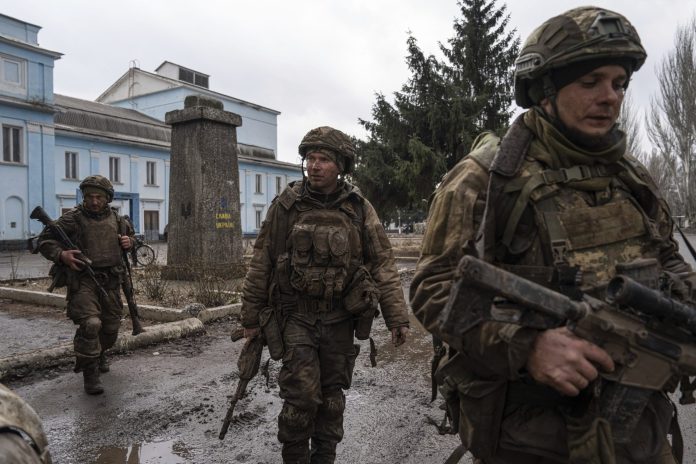
Washington urges Kyiv to lower draft age to 18 amid Ukraine troop shortage

Russia Ukraine War

The recommendation is part of a broader push to address Ukraine’s armed forces personnel shortage as the war with Russia nears its third year.

“The pure math of Ukraine’s situation now is that it needs more troops in the fight,” the official said to AP, adding that Ukraine is not currently mobilizing enough soldiers to replace battlefield losses or match Russia’s growing military.

The proposal has faced resistance from Kyiv, with Ukrainian officials expressing concerns about the lack of equipment for additional troops and potential economic harm from drafting younger workers.

European officials, speaking anonymously, have suggested that Western allies believe Ukraine’s primary issue is a shortage of troops rather than weapons, raising concerns about its ability to sustain operations in Russia’s Kursk border region.

The situation has been further complicated by the arrival of thousands of North Korean troops supporting Moscow’s efforts to reclaim territory lost to a Ukrainian incursion earlier this year.

In April, Ukraine passed laws lowering the draft age from 27 to 25, which added 50,000 troops but fell short of the country’s needs.

After the new law on mobilization came into force in Ukraine on May 18, military-aged men were given 60 days to update their personal data so that the state could locate them. The deadline for updating data expired on July 17, 2024.

From May 18 to July 16, 4,690,496 military-aged men updated their data by the July 17 deadline, according to the Defense Ministry.

Biden unlikely to deliver full planned multibillion-dollar aid to Ukraine before Trump inauguration: Report

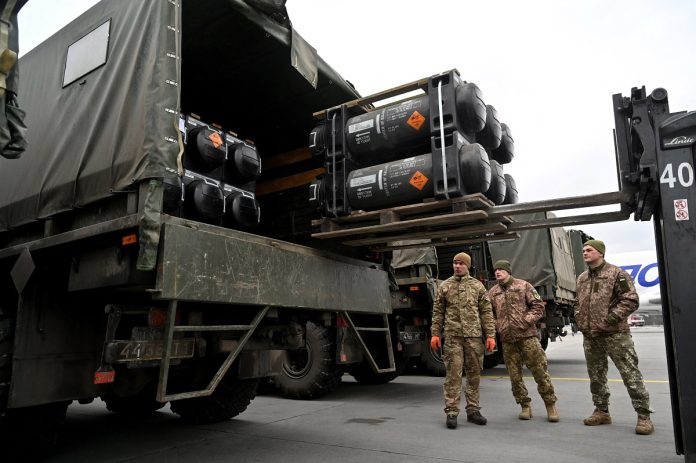
Western weapons flow to Ukraine's military

The administration still has $6.5 billion to transfer to Ukraine, but time is running out to use the allocated resources.

The Pentagon has reached its monthly limit on weapons shipments and is facing logistical challenges in delivering arms to Ukraine.

To exhaust the remaining funds, the U.S. would need to supply Ukraine with approximately $110 million in weaponry daily, amounting to nearly $3 billion in December and January.

“It’s impossible,” a congressional source told the WSJ.

A Pentagon source stated that the current plan now is to send $500-750 million worth of weapons from U.S. stockpiles to Ukraine each month. These shipments will mainly consist of artillery and ammunition, as they are easier to transport, while larger equipment could take months to arrive.

The remaining decisions on aid will likely fall to the incoming administration of President-elect Donald Trump.

Trump’s support for Ukraine hangs in the air as analysts and politicians try to gauge his plans to bring peace to Ukraine, as he promised to end the war within “24 hours” after reelection without revealing details.

There are concerns that Trump’s victory might lead to the U.S. withdrawing its military support for Ukraine, leaving it up to European allies to help Kyiv resist Russia’s war.

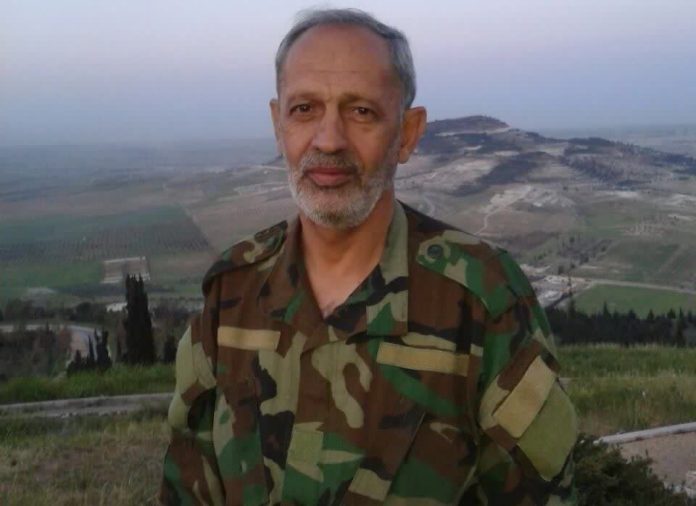
Senior IRGC advisor killed in Syria’s Aleppo

Kiumars Pourhashemi

Pourhashemi was martyred during Wednesday’s terrorist attack by Takfiri-Zionist forces on the outskirts of Aleppo, Syria, it added.

The IRGC statement highlighted the increasing aggression by Takfiri terrorists under the guidance of Zionist forces, who, following their strategic defeats in Gaza and Lebanon, have intensified attacks on Syria.

These actions, aimed at compensating for their failures against the Islamic resistance, have been met with resolute responses from Syria’s army and allied forces, the IRGC said.

Iran’s military advisers are present in Syria at the formal invitation and request of the Damascus government to fight the remnants of foreign-backed terrorists including Takfiri groups.