Thursday, January 15, 2026
Home Blog Page 585

Zelensky claims heavy Russian, North Korean losses in Kursk

Russia Ukraine War

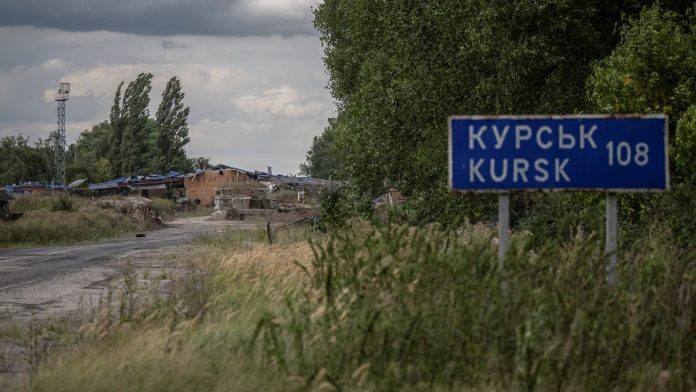
“In battles yesterday and today near a single village, Makhnovka, in Kursk region, the Russian army lost up to a battalion of North Korean infantry soldiers and Russian paratroops,” Zelensky said, citing information from Ukraine’s top commander.

He added that “this is significant”.

While Zelensky did not share further details, a battalion typically consists of several hundred troops.

In late 2024, Zelensky also called on China to use its influence over North Korea to prevent the deployment of North Korean soldiers to the front line.

“The Korean people should not lose their people in battles in Europe. And this can be influenced, in particular, by Korea’s neighbors, in particular, China. If China is sincere in its statements that the war should not expand, appropriate influence on Pyongyang is necessary,” Zelensky said.

Reports have suggested that Russia had stationed approximately 12,000 North Korean soldiers in the Kursk region to assist in ousting Ukrainian forces.

Ukraine first began its surprise incursion into Kursk Oblast in early August. Ukrainian forces have been fighting to hold onto territory in the region ever since in hopes it can be used as a bargaining chip in future negotiations with Russia.

US says supplied ‘a lot of weapons’ to Ukraine ahead of war

Western Weapons

The top diplomat made the remarks while speaking on the New York Times’ ‘The Interview’ podcast, aired on Saturday.

The US saw the conflict between Russia and Ukraine “coming” and wanted to get Kiev “prepared” for it, according to Blinken.

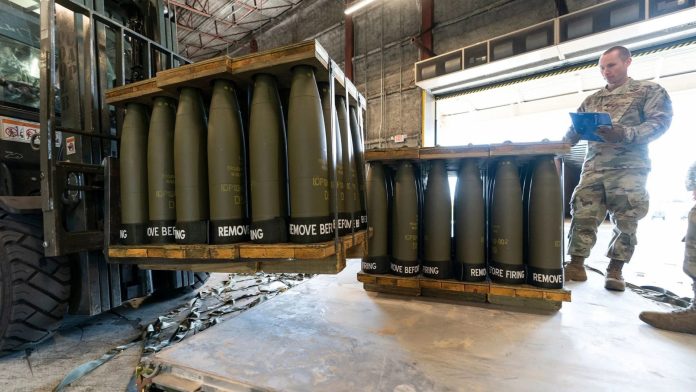
“Starting in September and then again in December, we quietly got a lot of weapons to Ukraine to make sure that they had in hand what they needed to defend themselves – things like Stingers, Javelins that they could use,” he said.

The weaponry has proven “instrumental” in “preventing Russia from taking Kiev,” as well as “rolling over the country, erasing it from the map,” Blinken asserted.

The intentions ascribed to Moscow by the top US diplomat, however, sharply contrast with the goals of the military operation repeatedly articulated by Russia’s leadership. The original aims included demilitarization and denazification of the country, as well as Kiev accepting a neutral status and abandoning its aspirations to join NATO.

Over time, the list was somewhat expanded in the wake of the incorporation of the four formerly Ukrainian regions of Kherson and Zaporozhye, as well as the Donetsk and Lugansk People’s Republics, into Russia. Moscow has repeatedly stressed any potential negotiations with Kiev would require it to accept the “realities on the ground”, as well as to withdraw troops from the new Russian territories.

Iran calls US-UK attack on Yemen ‘violation of UN charter’

Esmael baghaei

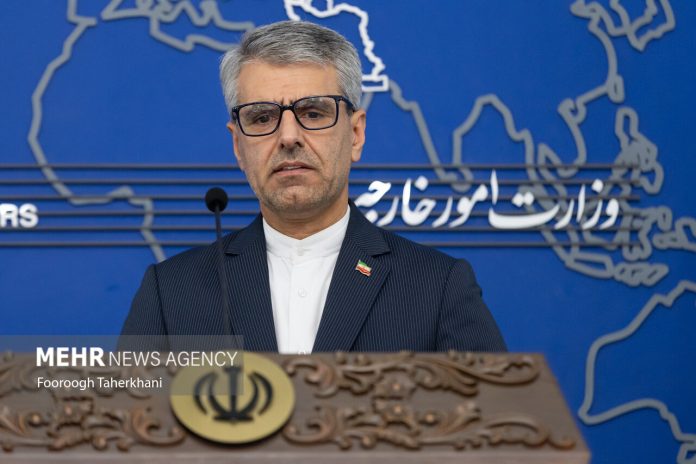
Baqaei emphasized that the ongoing and repeated military aggressions by the US, UK, and the Zionist regime against Yemen constitute a clear violation of Yemen’s national sovereignty and territorial integrity, and contradict the principles of international law and the United Nations Charter.

He warned that these aggressive actions would lead to increased insecurity and instability in the West Asia region.

Elsewhere, the Iranian Foreign Ministry spokesperson condemned the continued genocide and killings of the oppressed people of Palestine by the Israeli regime.

Pointing to the ongoing US-UK military and political support for the Zionist regime, Baqaei highlighted their direct involvement in committing heinous international crimes against the people of Gaza.

He praised the honorable stance of the Yemeni people and other free nations in showing solidarity with and support for the Palestinian people.

Baqaei called for more serious action from the international community and Islamic countries, especially through the Organization of Islamic Cooperation (OIC), to stop the genocide in occupied Palestine and help the displaced people of Gaza.

Gaza health ministry says Indonesian Hospital out of service

Gaza War

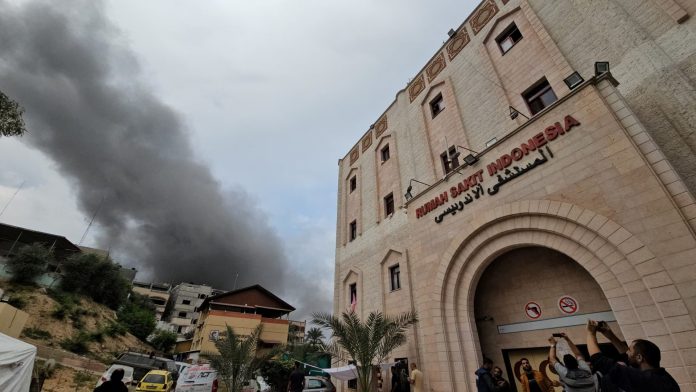
The ministry noted that the North Gaza governorate has three public hospitals, Kamal Adwan, Beit Hanoon and the Indonesian Hospital, all of which have been taken out of service by Israel’s offensive.

On Friday, Israeli soldiers surrounded the Indonesian Hospital in Beit Lahiya, where many displaced Palestinians have sought shelter.

Kamal Adwan Hospital in Beit Lahiya was cleared of patients and staff and it was severely burned by the Israeli army last week. Hussam Abu Safia, the director of the hospital, was also arrested by Israeli forces during their raid on Kamal Adwan Hospital in Beit Lahiya last week.

On Saturday, World Health Organization (WHO) chief Tedros Adhanom Ghebreyesus posted on X that the agency had received “no updates on the safety and wellbeing” of the 51-year old Abu Safia.

A separate evacuation order has also been issued to the al-Awda Hospital in Jabalia.

Healthcare in the Gaza Strip has been pushed to the brink of collapse amid repeated attacks by Israeli forces, including last week’s destruction of the Kamal Adwan Hospital. Both the Indonesian and al-Awda Hospitals have been damaged due to repeated Israeli attacks since October 2023.

Images from the Indonesian Hospital show children among the severely injured patients.

Israel has defended its raids on medical facilities by saying they are being used by Palestinian armed groups, but the UN has frequently questioned the veracity of the claims.

Israel’s targeting of medical facilities in Gaza prompted the UN Security Council to hold an emergency meeting on Friday, during which UN officials pleaded for the protection of the hospitals.

At the meeting, UN human rights chief Volker Turk said Israel has failed to substantiate many of its claims that the facilities were being used by fighters in Gaza, describing the allegations as “often vague and broad” and in some cases “appear to be contradicted by publicly available information”.

Turk called for an independent investigation into all Israeli attacks on medical facilities and healthcare workers in Gaza, as well as the alleged misuse of such facilities.

Rik Peeperkorn of the WHO urged Israel to immediately rescind its evacuation orders on the Indonesian and al-Awda Hospitals.

“They are struggling to stay open. Food, water and fuel are depleting fast,” he said at the UNSC meeting, adding that the hospitals have been without many essential medicines over the last 85 days amid Israel’s renewed assault on northern Gaza.

Peeperkorn stated the WHO was deeply concerned about the fate of the director of the Kamal Adwan Hospital, who was detained by Israel last week.

“We have lost contact with him since and call for his immediate release.”

Israel’s war on Gaza has killed at least 45,650 Palestinians and wounded 108,5600 since October 7, 2023. At least 1,200 people were killed in Israel during the Hamas-led attacks that day and about 250 others were taken captive.

IRGC says deploying ‘new weaponry’ during military drills

Iran Army

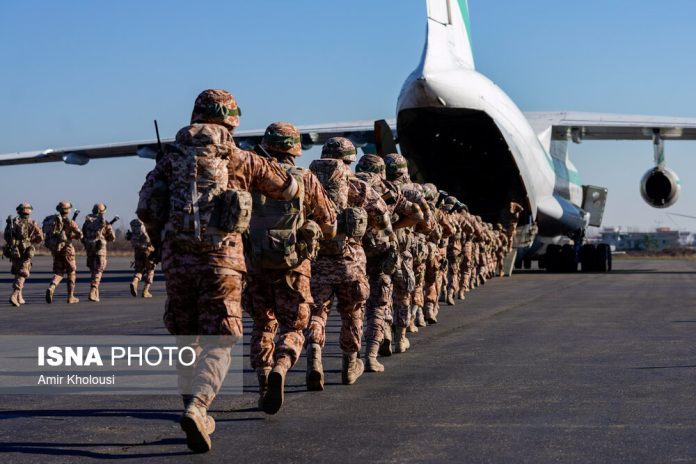
The drills also enlist the capabilities of local Basij volunteer forces, he said, adding, “I hope that these series of measures and maneuvers serve to contribute to the [country’s] holy [Islamic] establishment’s and the Iranian nation’s esteem and strength.”

The drills were taking place “in continuation of the country’s efforts to enhance the capabilities of its Armed Forces and defend the Islamic Republic’s holy establishment”, the commander noted.

The maneuvers currently feature aligning the enlisted servicemen in designated columns and establishing their presence across the region, and would go on to comprise various other stages, the military official said.

“The region that has been chosen for implementation of the maneuvers is among our border regions. In the past too, namely during the country’s Sacred Defense [against the invading army of Iraq’s former dictator Saddam Hussein], as well as during various other junctures, when the Iranian nation’s enemies were seeking to stir up insecurity, we witnessed implementation of some valuable measures by our servicemen in this region,” Azimi noted.

The drills also host combat performance by a military unit enlisted by the IRGC’s Special Ground Forces from the northern province of Gilan, he added.

The Islamic Republic’s Armed Forces, including the IRGC and the country’s Army, have been continuously enhancing their military hardware and combat readiness in line with the directives that have been issued by Leader of the Islamic Revolution Ayatollah Seyyed Ali Khamenei.

The forces have vowed to defend the country’s sovereignty and territorial integrity in the face of the threats that are posed by the Iranian nation’s enemies.

Hezbollah warns its ‘patience might run out’ over Israel violations of cease-fire

Hezbollah

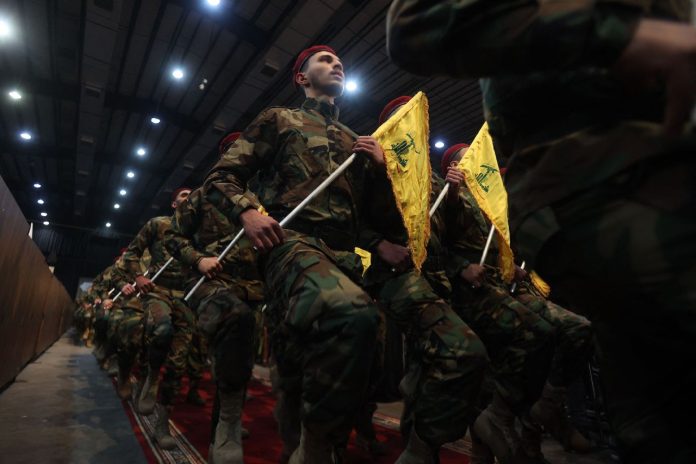
Addressing critics of Hezbollah’s silence on Israel’s violations of the cease-fire agreement, Qassem said in a televised speech that the group’s leadership “is the one that decides when to resist, how to resist, the method of resistance, and the weapons to use”.

Warning further, he stated: “Our patience (regarding these violations) might run out … and when we decide to act, you will see it immediately.”

In this context, Qassem added that the cease-fire agreement “exclusively applies to the area south of the Litani River, and the (Lebanese) state is responsible, along with the sponsors, for restraining Israel and ensuring the agreement’s implementation.”

Under the cease-fire terms, Israel is required to withdraw its forces south of the Blue Line – a de facto border – in phases, while the Lebanese army is to deploy in southern Lebanon within 60 days.

The 1701 resolution, adopted on Aug. 11, 2006, calls for a complete halt to hostilities between Hezbollah and Israel and the establishment of a weapons-free zone between the Blue Line and the Litani River in southern Lebanon, with exceptions for the Lebanese army and UNIFIL.

Data from the Lebanese Health Ministry indicates that since Israel’s onslaught against Lebanon began on Oct. 8, 2023, at least 4,063 people have been killed, including women, children, and health workers, while 16,664 others have been injured.

Families of Israeli captives call for immediate swap deal

Israel Hostages Gaza

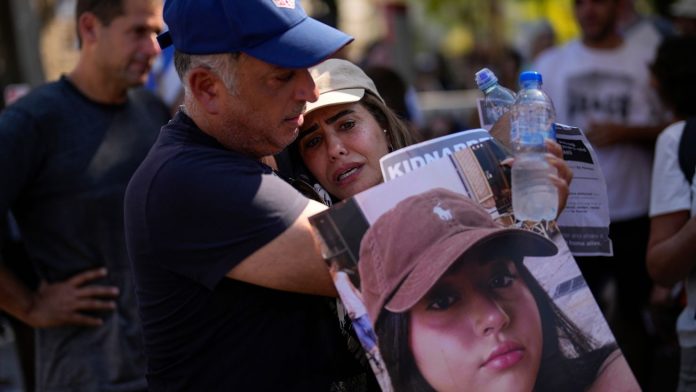
The Al-Qassam Brigades broadcasted a video of captive Liri Albaj, who expressed frustration over being ignored by her government and military, along with other captives in Gaza. She asked to the Israeli government poignantly, “Do you want to kill us?”

During a press conference held outside the Ministry of Defense in Tel Aviv following the release of the video, the families issued a statement: “We have received proof of life for a captive enduring hell, which should be a driving force to finalize an immediate exchange deal.”

They warned saying “any partial deal would amount to a death sentence for many captives”.

The families sharply criticized Israeli Prime Minister Benjamin Netanyahu for obstructing a prisoner exchange agreement with Palestinian factions.

Hours after Hamas released the video, thousands of people also rallied in Tel Aviv and Jerusalem Saturday night to call for a deal to free hostages held in Gaza for over 450 days.

On Friday, Hamas announced the resumption of indirect negotiations with Israel in Qatar’s capital, Doha, focusing on a ceasefire, the withdrawal of Israeli forces from Gaza, and the return of displaced persons.

Mediation efforts led by the US, Egypt, and Qatar to reach a cease-fire in Gaza have so far failed due to Israeli Premier Benjamin Netanyahu’s refusal to halt the war.

Israel holds over 10,300 Palestinian prisoners, while Hamas is said to be holding around 100 Israeli captives in Gaza. The group also said that dozens of captives had died in indiscriminate Israeli airstrikes.

The Israeli army has continued a genocidal war on Gaza that has killed over 45,650 victims, mostly women and children, since Oct. 7, 2023 despite a UN Security Council resolution calling for an immediate cease-fire.

In November 2024, the International Criminal Court issued arrest warrants for Netanyahu and his former Defense Minister Yoav Gallant for war crimes and crimes against humanity in Gaza.

Israel also faces a genocide case at the International Court of Justice for its war on the enclave.

Zahedan prosecutor: Eulogist who undermined Shia-Sunni unity arrested in Qom

Iran Court

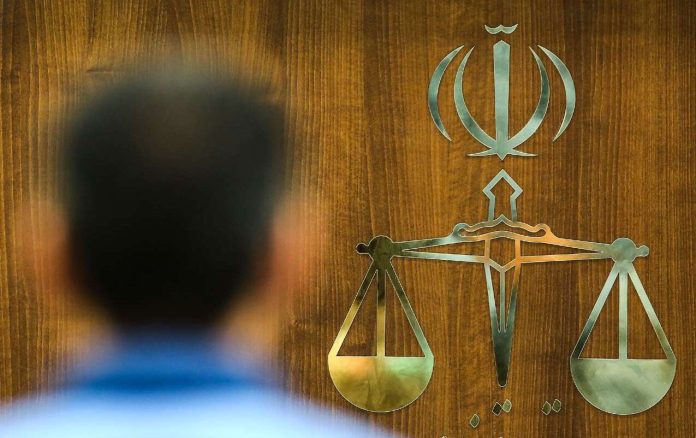
Mehdi Shamsabadi stated in a televised interview on Saturday evening that a case was filed at the provincial center’s prosecutor’s office based on reports from the Sistan and Baluchestan’s IRGC intelligence unit.

After an arrest warrant was issued by the investigating judge, the suspect was detained and handed over to the Qom IRGC intelligence. The suspect will be transferred to Zahedan for further judicial proceedings.

A clip, which is circulated on social media, shows the eulogist insulting iconic Sunni cleric Molavi Abdulhamid, who has been vocally critical of the Iranian government, and the Makki Mosque in Zahedan, which was used by protesters as a shelter against security forces during past years’ unrest and deadly riots.

The clip caused public outrage and was strongly condemned by several figures, including the Iranian Leader’s representative in Sistan and Baluchestan province, who labeled it as an example of “British Shia” and divisiveness.

Hossein Ali Shahriari, a lawmaker representing Zahedan, called for legal action against those who create such issues.

Molavi Abdulhamid himself, the Sunni Friday prayer leader of Zahedan, emphasized the importance of allowing the law to take its course and preventing further exploitation of such conflicts.

Israel set to extend Lebanon presence after ceasefire deadline: Report

Israeli Army

The cease-fire, brokered by the US and France, took effect on Nov. 27, was meant to end 14 months of intense clashes between Israel and Hezbollah – the deadliest conflict there since the 2006 Lebanon War.

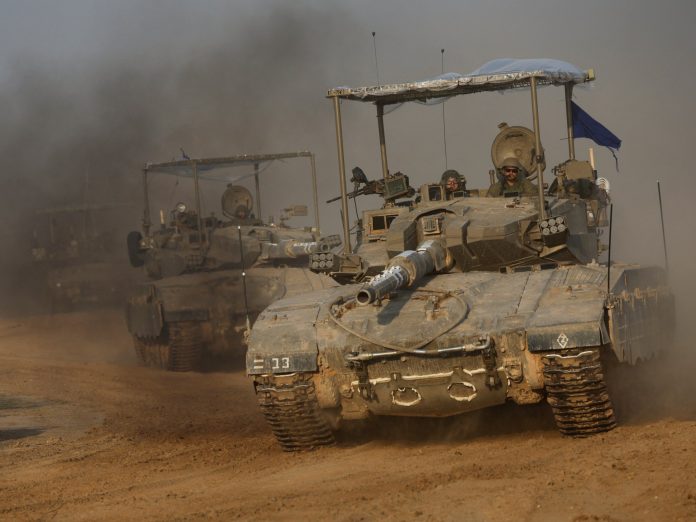
Claiming that the Lebanese Army has not met its obligations under the agreement, Israel sought to justify its extended military presence by pointing to Hezbollah’s efforts to regroup in the region.

“Under the cease-fire agreement, the Lebanese Army was supposed to deploy in the region, but it has done so at a very slow pace,” the report said.

It added: “The Lebanese Army has not targeted Hezbollah sites that Israel identified and shared through a designated mechanism established for this purpose.”

The broadcaster also noted Israel intends to tell the US that it will continue preventing residents of Lebanese villages near the border from returning to their homes.

Lebanon has yet to issue an official response to Israel’s allegations.

The cease-fire agreement outlines key provisions, including a phased withdrawal of Israeli troops to the southern side of the Blue Line de facto border, the deployment of Lebanese military and security forces along the border, and the removal of unauthorized military sites in southern Lebanon.

However, Lebanese officials have documented 353 violations by Israeli forces since the cease-fire was signed, resulting in 32 deaths and 38 injuries.

According to the Lebanese Health Ministry, at least 4,063 people have been killed, including women, children, and health workers, since Israel’s offensive against Lebanon began on Oct. 8, 2023, with another 16,664 people injured.

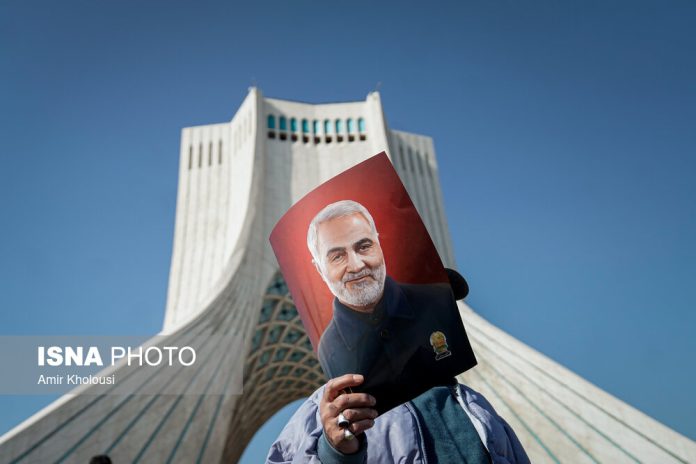
Iran’s Jalili rapped for blaming Gen. Soleimani’s assassination on ex-pres. Rouhani

Qassem Soleimani

Hesameddin Ashena, addressing Jalili, said, “Your vulnerability and your reliance on delusional analyses regarding your own and the enemy’s capabilities combined with the adversary’s advanced technologies laid the groundwork for the assassination of General Soleimani”.

Ashena also dismissed Jalili’s claim that it was the “strategic patience” of the Rouhani administration that led to the martyrdom of General Soleimani.

The former presidential advisor also told Jalili, “General Soleimani knew your weaknesses in analytical, managerial, and operational levels better than anyone else”.

Following the US withdrawal from the Iran nuclear deal in 2018, then Iranian president Hassan Rouhani urged the adoption of strategic patience.

He however reduced Iran’s commitments under the nuclear deal known as JCPOA but stopped short of ditching the treaty.

Jalili was a staunch opponent of the 2015 nuclear deal from the very beginning.

His critics however dismiss his claims that the Rouhani administration projected weakness in the face of Trump’s pullout from the JCPOA.

They say it was during Jalili’s tenure as the secretary of Iran’s Supreme National Security Council that Iranian nuclear scientists were assassinated inside Iran.