Saturday, January 17, 2026
Home Blog Page 561

Gaza ceasefire begins after hours-long delay

Gaza War

Yet, a three-hour delay proved deadly for at least 19 Palestinians, who were killed by Israeli strikes after last-minute issues over a list of captives.

Just before the truce was about to be enforced, Israel said it would continue its attacks on Gaza as Hamas had not provided a list of captives due to be released.

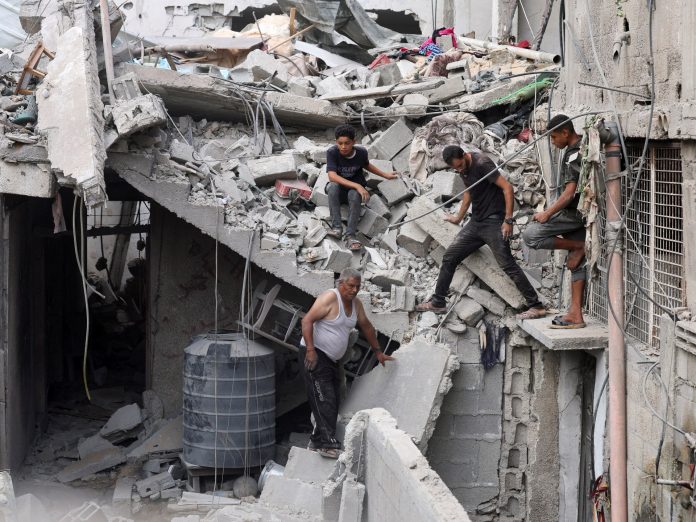
As Palestinians finally breathed a sigh of relief and began returning to their homes, Israeli jets and artillery began pummelling several areas of Gaza. Emergency services said the casualties included 36 wounded.

Hamas said it was committed to the ceasefire and the delay in providing the list was due to “technical field reasons”, delivering it later that morning. Due to begin at 8.30am local time (6.30am GMT), the ceasefire did not start until 11.15am.

Despite strong opposition from elements of Prime Minister Benjamin Netanyahu’s coalition, Israel’s cabinet approved the deal in a vote on Friday. Over 15 months Israel has killed over 46,000 Palestinians.

According to the full text of the truce agreement, the first phase, which will last six weeks, will involve the exchange of Israeli captives and Palestinian prisoners and a return to “sustainable calm”.

Three living female Israeli captives are to due to be released after 4pm, with Israeli authorities releasing around 95 Palestinian prisoners – mostly minors or female – shortly afterwards.

Hamas announced the Israelis to be released on Sunday are Romi Gonen, Doron Steinbrecher and Emily Damari, who is also a British citizen.

Thirty-three Israeli captives held in Gaza will be released in total as part of the first phase.

They will be freed in exchange for Palestinians serving life sentences at a ratio of 1-3 and Palestinians serving other sentences at a ratio of 1 – 27, according to the agreement.

On Friday, Israel’s justice ministry published an extensive list of hundreds of Palestinians set to be freed as part of the prisoner exchange deal.

Hisham al-Sayed and Avera Mengistu, who have been held in Gaza since before Israel’s war on Gaza, are expected to be released in exchange for 60 Palestinian prisoners and an additional 47 Palestinian detainees who were re-arrested after being freed in 2011 as part of the Gilad Shalit prisoner exchange deal.

As well as the prisoner exchange, Israel will gradually begin to withdraw from the Gaza Strip as part of the first phase, moving eastwards from densely populated areas, including from the Netzarim Corridor and Kuwait roundabout.

They will retreat to a perimeter 700 metres from the boundary with Gaza, with the exception of five localised points where the perimeter will increase by 400 additional metres.

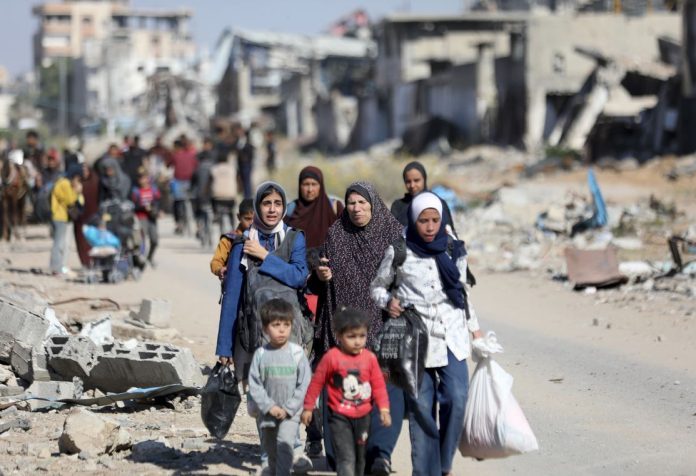
Displaced Palestinians are set to return to northern Gaza as part of the first phase, an area that Israel’s military had decimated in a brutal military operation in recent weeks.

Israeli forces will remain in the Philadelphi Corridor, a buffer zone along the Gaza boundary with Egypt, until day 42 of the ceasefire, when they will begin their withdrawal from the area.

On the 16th day of the ceasefire, negotiations are planned to begin over the second phase of the ceasefire.

The broad outline of the second phase is for all Israeli captives to be released in return for a total withdrawal from Gaza. The exact details are still to be negotiated.

Netanyahu said in a video address on Saturday that Israel would continue its war on Gaza in “new, forceful ways” if the second stage of the ceasefire agreement proved to be “futile”.

“President [Donald] Trump and President [Joe] Biden have given full backing to Israel’s right to return to combat if Israel concludes that negotiations on Phase B are futile.”

He added that Israel would not rest until “all of its war goals are completed”, including the return of all Israeli captives.

Bezalel Smotrich, Israel’s far-right finance minister, said that he was given assurances that the war on Gaza would continue and Israel would launch a “gradual takeover of the entire Gaza Strip”.

Smotrich and his far-right Religious Zionism party voted against the ceasefire deal, but remained in the government after Netanyahu reportedly agreed to a number of their demands.

The far-right minister noted that while his party could not prevent the deal, they were able “to ensure” through the cabinet and “other ways”, that the war would not end without achieving Israel’s full goals, foremost of which is “the complete destruction of Hamas in Gaza”.

He stated that his faction had demanded and “received a commitment” that the method of war would be completely changed.

That included, said Smotrich, “through a gradual takeover of the entire Gaza Strip, the lifting of the restrictions imposed on us by the Biden administration, and full control of the Strip, so that humanitarian aid will not reach Hamas as it has been until now.”

Far-right minister Itamar Ben-Gvir’s Jewish Power party announced that its lawmakers would submit letters of resignation from the government on Sunday morning in protest against the deal.

Meanwhile, the Israeli military’s Arabic language spokesperson threatened that if Palestinians in Gaza approached Israeli troops following the ceasefire, they would be exposed to “danger”.

“According to the agreement, [Israeli military] troops will remain deployed in specific areas in the Gaza Strip. Do not approach… troops in the area until further notice. Approaching the forces exposes you to danger,” Avichay Adraee wrote on X.

“Movement from the south to the north of the Gaza Strip or toward the Netzarim Corridor remains dangerous.”

“Once such movement is permitted, a statement and instructions will be issued regarding safe methods of movement. Residents are warned against approaching [Israeli] troops in general and in the Netzarim Corridor area in particular,” Adraee continued.

According to the agreement, unarmed displaced Palestinians will be allowed to return to northern Gaza via Rasheed Street on day seven. Others will be allowed to return via Salah al-Din Street on day 22.

Adraee added: “In the maritime area, along the entire Strip, there is a great risk of fishing, swimming and diving and we warn against entering the sea in the coming days.”

The Palestinian health ministry said that Israeli forces had killed at least 23 Palestinians in Gaza on Saturday ahead of the start of the ceasefire.

Israel’s war on Gaza has killed at least 46,899 people, most of whom are women and children, since 7 October 2023 after the Hamas-led attacks on southern Israel. More than 110,000 others have been wounded in the enclave since then.

Iran’s Miankaleh wildlife sanctuary: A haven for migratory birds

Traveling long distances from northern latitudes, the birds seek refuge in this internationally recognized sanctuary, one of the 600 biosphere reserves worldwide.

During each migration season, approximately 70,000 to 80,000 flamingos and other birds flock to Miankaleh and nearby wetlands.

The majestic visitors grace the region from winter until early spring.

More in pictures:

President Aoun: Israel should withdraw from Lebanon by deadline

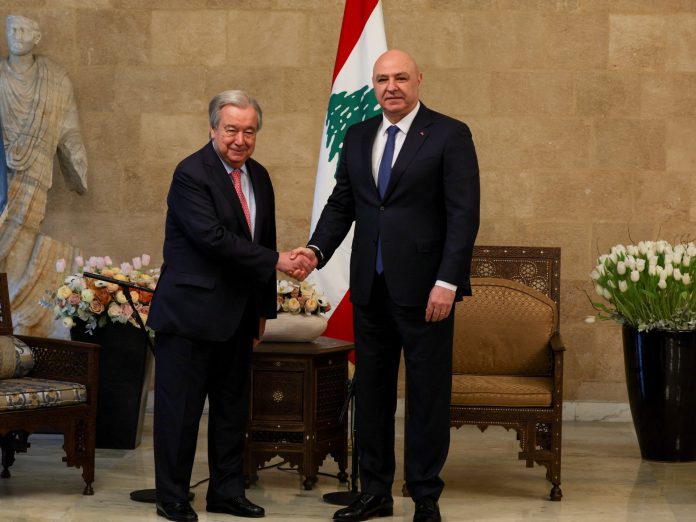
“The continued Israeli violations on land and in the air, especially in terms of blowing up houses and destroying border villages, completely contradicts what was stated in the ceasefire agreement and is considered a continuation of the violation of Lebanese sovereignty and the will of the international community,” President Joseph Aoun’s office said on Saturday after his meeting with Antonio Guterres in Beirut.

Guterres has stated he will “exert utmost efforts” to ensure the “secure” withdrawal of the forces within the January 26 deadline set by the agreement reached on November 27.

Guterres added a “more hopeful future” awaited Lebanon under Aoun’s leadership in which the country could become stable and a hub in the Middle East.

Aoun was selected in January after an agreement between political parties in Lebanon ended a two-year power vacuum that was further destabilising the country as it faced Israeli attacks and a turbulent economy.

The president, who is the former army chief, has also emphasised his support for the UN Interim Force in Lebanon (UNIFIL), who are tasked with securing the southern part of the country as part of Resolution 1701, which ended the 2006 war between Israel and Hezbollah.

The Lebanese army has been gradually deploying in further areas in the south along with UN peacekeepers, as Israeli military troops have gradually withdrawn.

As the UN’s Guterres pledged more international support to Lebanon during his visit, the United States announced on Saturday that it will provide more than $117m to the country.

The US Department of State announced in a statement that the funds will be given as part of “new, expanded security assistance” for both the Lebanese army and security forces in line with implementing UN Security Council Resolution 1701.

The Lebanese army, the UN and France have accused Israel of repeated “violations” of the ceasefire, as it has launched many attacks in its stated attempts to “enforce” the agreement.

Hezbollah leader Naim Qassem said in a televised speech on Saturday that the Israeli military has violated the agreement “hundreds” of times.

“We have been patient with the violations to give a chance to the Lebanese state responsible for this agreement, along with the international sponsors, but I call on you not to test our patience,” he added.

Iran president open to direct talks with US, says MP

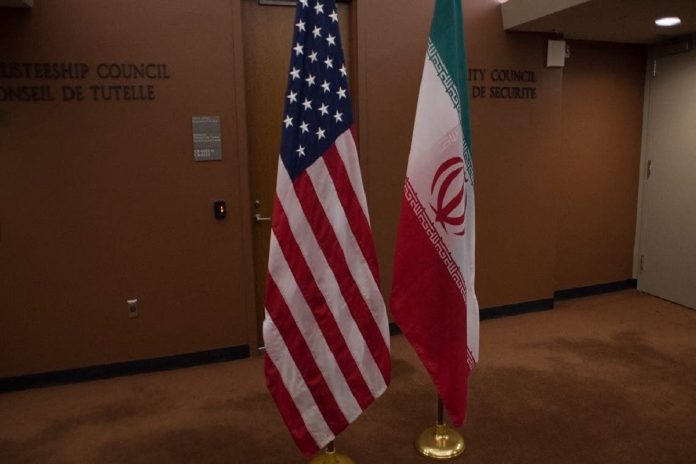
Iran US Flags

Ahmad Bakhshayesh, a member the parliament’s National Security and Foreign Policy Committee, said on Sunday that Oman has traditionally mediated between the two nations, but direct talks would be more effective.

He also mentioned the possibility of initiating discreet negotiations with Western countries, explaining that since President Pezeshkian took office in August last year, there have been plans to sign a long-term agreement with Europe, akin to deals with China and Russia.

Bakhshayesh stressed President Pezeshkian coordinates with the Iranian Leader Ayatollah Seyyed Ali Khamenei on various matters, including negotiations.

Amid assertions that the Iranian administration is willing to launch direct talks with Washington under incoming US President Donald Trump, Bakhshayesh said the extent to which negotiation details are shared with parliament depends on the government’s approach.

The lawmaker also suggested that the president consult with the parliamentary committees before negotiating with other countries, explaining that any agreements made must be approved by the parliament, according to Iran’s Constitution.

Iran’s minister: No platform excluded from internet unblocking

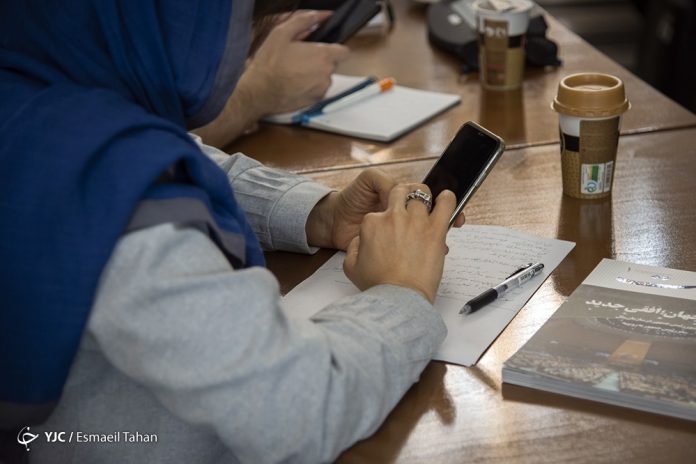
Iran Mobile Internet

He stated on Sunday that mechanisms for unblocking all platforms have been established, and the process will be determined based on public needs and negotiations.

Hashemi mentioned that various proposals for unblocking were submitted to the National Center for Cyberspace, adding the first phase, dubbed “reopening,” has already been implemented by unblocking WhatsApp and Google Play in December.

He added that the topics discussed in the Supreme Council of Cyberspace could significantly aid the content creation ecosystem, which he emphasized would transform the economy.

Iran has imposed the filtering to harness the social unrest, especially after the 2020 protests.

In a cabinet meeting last year, President Massoud Pezeshkian highlighted that scientific evaluations and social impact analyses of filtering show that none of the goals have been achieved, and additional problems have arisen.

He stressed the need to expedite efforts to address the social concerns and remove the restrictions.

Iran’s Leader expresses condolences over martyrdom of two senior judges in Tehran

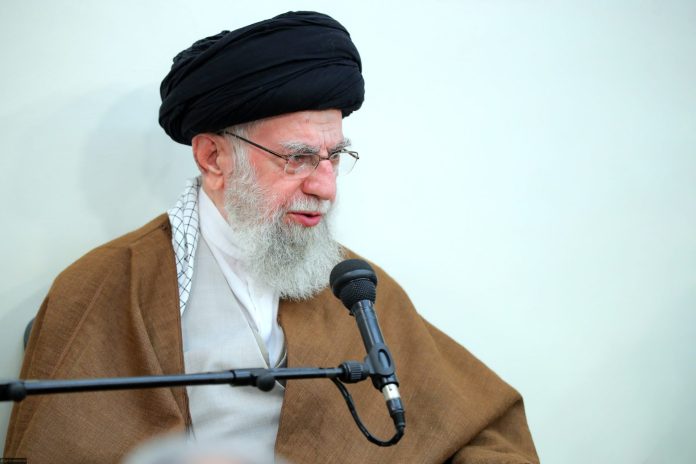
Ayatollah Seyyed Ali Khamenei

The prominent judges — identified as Ali Razini, head of Branch 39 of the Supreme Court, and Mohammad Moqiseh, head of Branch 53 – were assassinated in a terrorist attack at the Supreme Court building in downtown Tehran on Saturday.

The judges worked on cases fighting crimes against national security, espionage, and terrorism.

In a message on Saturday, the Leader extended his condolences to the bereaved families of the two judges over their sad demise.

The Leader said that Razini had been a target of an assassination attempt by ill-wishers in the past and had been suffering pains as a veteran, adding that two of his brothers had also been martyred.

Ayatollah Khamenei asked God Almighty to grant their patient families mercy and solace.

In a message, Iranian President Masoud Pezeshkian also expressed condolences over the martyrdom of the two judges in a “cowardly” and “inhumane” terror attack, emphasizing that security and law enforcement forces should take immediate action to identify the perpetrators of this crime.

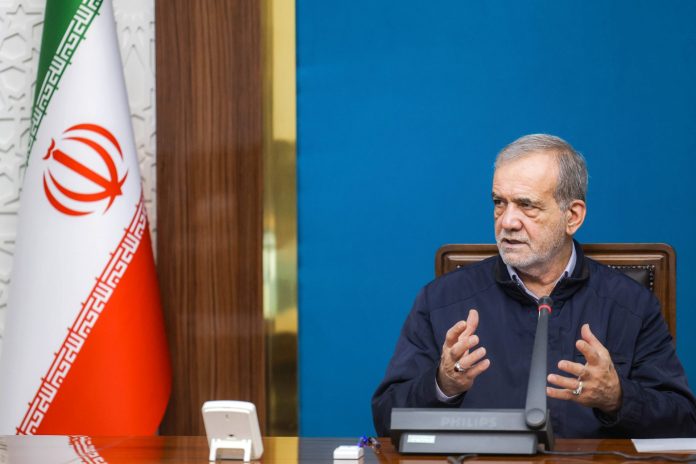
President Pezeshkian urges probe to identify perpetrators of attack on top judges

Masoud Pezeshkian

In a message on Saturday, Pezeshkian expressed condolences over the martyrdom of the two judges, Ali Razini and Mohammad Moqiseh in a “cowardly” and “inhumane” terror attack earlier in the day, emphasizing that security and law enforcement forces should take immediate action to identify the perpetrators of this crime.

He went on to say that undoubtedly, the clear path of these hardworking and experienced Supreme Court judges, who dedicated their entire lives to confronting various crimes against national security and defending the rights of the nation, will continue with strength and there will be no disruption to the administration of justice in the country.

Pezeshkian further tasked Iranian security and law enforcement forces with investigating the dimensions of this terrorist attack and taking the necessary measures to identify its perpetrators, while expressing sympathy with the families of the victims.

Ali Razini, head of Branch 39 of the Supreme Court, and Mohammad Moqiseh, head of Branch 53 were assassinated in Tehran on Saturday morning.

The judges worked on cases fighting crimes against national security, espionage, and terrorism.

According to the preliminary investigation, the attacker was not involved in any cases before the Supreme Court.

Over the past year, the Iranian judiciary has taken a series of measures to identify, arrest, and prosecute agents and elements affiliated with Israel, the US, and terrorist groups.

Razini, 71, held several important positions in Iran’s judiciary and was previously targeted in a 1998 assassination attempt by assailants, who planted a magnetic bomb on his vehicle.

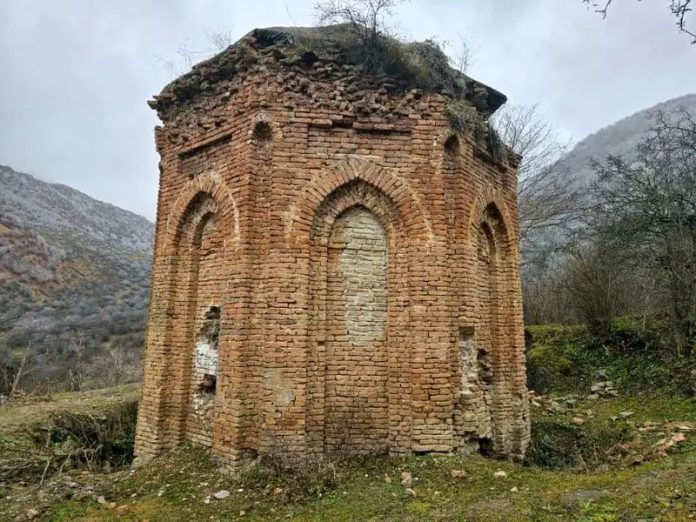
Ancient shrine in Iran’s Mazandaran crumbles, awaiting philanthropic aid

Constructed over 900 years ago near the Kandelous village, the shrine remains unregistered and largely unknown, even on platforms like Google, ILNA News Agency reported.

Preservation efforts are hindered by limited resources, with cultural heritage officials stressing the need for financial aid from local philanthropists.

The dire state of Iran’s historical sites, coupled with insufficient governmental budgets, exacerbates the problem.

According to the deputy head of Cultural Heritage Department in Mazandaran, Mohsen Bastani, even the province’s scant national budget allocation has not yet been distributed.

The chronic underfunding leaves many historical structures, including the shrine, vulnerable to further decay.

Local heritage activists, such as Mohammad Azimi of the Huto Cultural Heritage Association, reveal that unauthorized excavations have further deteriorated the shrine.

The shrine’s remote location poses additional challenges for access and preservation.

Despite these obstacles, there remains hope that increased awareness and philanthropic support might save this critical piece of Mazandaran’s history from oblivion.

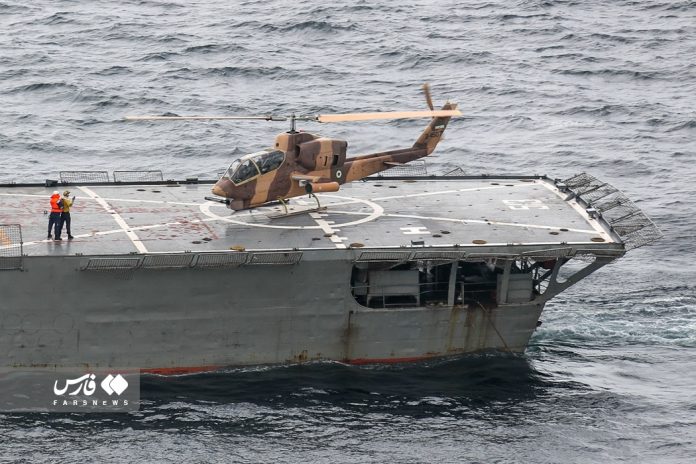
IRGC unveils new naval floating city

Iranian Navy

Major General Salami highlighted the strategic importance of the facilities, which house numerous assault vessels, missile-launching systems, and mine layers.

Despite their impressive scale, the floating cities represent just a fraction of the IRGC Navy’s defensive capabilities, the top commander boasted.

He emphasized the continuous enhancement of the IRGC Navy’s combat readiness and defensive power, noting that besides the floating cities, numerous combat vessels patrol the Persian Gulf, safeguarding Iran’s maritime borders.

He explained that the missile-launching systems and other strategic assets are stationed on the Persian Gulf’s islands and shores.

Major General Salami also underscored the IRGC Navy’s significant advances in both the quantity and quality of its offensive systems over the years.

He said the combat vessels are now faster, capable of greater range and depth, and equipped to navigate treacherous waters and high seas, thanks to the efforts of local engineers and operational teams.

The commander, however, pointed out that a persistent challenge is the increasing number of vessels and missile systems that surpass the available storage space, necessitating further expansion of the facilities.

Regional expert outlines key concerns for Iran following Gaza ceasefire

Gaza War

Speaking with Entekhab news website, Alireza Majidi emphasized that a new entity, the “Committee for Social Assistance,” with neither Fatah nor Hamas affiliations, will now oversee Gaza’s administration. This structural change, approved by Palestinian Authority President Mahmoud Abbas, is a critical development.

Contrary to expectations, Majidi argues that the ceasefire does not signal a reduction in regional tensions. Instead, it provides Netanyahu more latitude to implement his ambitious regional plans, necessitating vigilance from Iran regarding potential new conflict zones.

Weighing in on Netanyahu’s government stability, Majidi noted that the ceasefire is unlikely to destabilize his administration. Despite rumors, Netanyahu’s coalition maintains a strong majority in the Knesset, with opposition leader Yair Lapid expressing willingness to support the government if needed.

While the ceasefire does not equate to a clear victory for either side, Majidi believes Israel will likely leverage it to advance its strategic objectives in the region.