Tuesday, December 23, 2025
Home Blog Page 55

Iran starts cloud seeding operations amid severe drought

“Today, a cloud seeding flight was conducted in the Urmia Lake basin for the first time in the current water year,” which begins in September, according to IRNA news agency.

Urmia, in the northwest, is Iran’s largest lake, but has largely dried out and turned into a vast salt bed due to drought.

IRNA added that further operations would be carried out in the provinces of East and West Azerbaijan.

Cloud seeding involves spraying particles such as silver iodide and salt into clouds from aircraft to trigger rain.

Last year, Iran announced it had developed its own technology for the practice.

On Saturday, IRNA reported that rain had fallen in Ilam, Kermanshah, Kurdistan and Lorestan in the west, as well as in the northwestern West Azerbaijan province.

It quoted the country’s meteorological organisation as saying rainfall had decreased by about 89 percent this year compared with the long-term average.

“We are currently experiencing the driest autumn the country has experienced in 50 years,” it noted.

State media has shown footage of snow falling on the Tochal mountain and ski resort, located in the Tehran area on the Alborz range, for the first time this year.

Iran, a largely arid country, has for years suffered chronic dry spells and heat waves expected to worsen with climate change.

Rainfall in the capital Tehran has been at its lowest level in a century, according to local officials, and half of Iran’s provinces have not seen a drop of rain in months.

Water levels at reservoirs supplying many provinces have fallen to record lows.

Earlier this month, President Masoud Pezeshkian warned that without rain before winter, Tehran could face evacuation, though he did not elaborate.

Other countries in the region have also used cloud seeding to artificially produce rain.


Iranian VP to attend SCO Council of Heads of Government Meeting in Russia

Aref will travel to Moscow on Monday to attend the meeting scheduled for the following day.

Prior to the Council meeting, representatives from SCO member states held a three-day expert meeting, which will conclude Sunday.

The expert meeting focused on coordinating the draft Action Plan for 2026-2030 for the implementation of the Program of Multilateral Trade and Economic Cooperation among SCO member states, according to a release by the organization.

During the event, the authorized representatives agreed on the text of the Plan, which has been included in the list of documents proposed for signing at the upcoming Council of Heads of Government meeting, the statement added.

Mehrdad Kiaie, director general for SCO and BRICS affairs at the Iranian Foreign Ministry, attended the expert meeting. He also held talks with Iran’s Ambassador to Moscow, Kazem Jalali, discussing the latest measures related to cooperation between Tehran and the Shanghai Cooperation Organization.

Iran became an official member of the SCO in September 2021. The ten-member SCO is a Eurasian political, economic, and international security organization focused on cooperation in politics, economics, security, and counter-terrorism.


More forceful response awaits repeated onslaught: Iran govt. spokesperson

Fatemeh Mohajerani made the remarks to Lebanon’s al-Mayadeen television network on Saturday, emphasizing the Islamic Republic’s unwavering commitment to defending its sovereignty and people.

Referring to the unprovoked Israeli-American war on the country in June, she stressed that Iran would not take external sensitivities into account when safeguarding its territory as a matter of principle reflecting its firm determination and readiness for self-defense.

Mohajerani also underscored that Iran’s missile capabilities had been strengthened precisely in response to past attacks, with Tehran now addressing weaknesses exposed during those assaults.

“Iran’s orientation is grounded not in slogans, but in action,” she said, highlighting the nation’s strategic preparedness in the face of potential threats.

On diplomacy, Mohajerani described ongoing Western talks as “meaningless” if dominated by coercion, despite Iran receiving indirect messages about possible negotiations.

She insisted that genuine engagement required agreements based on shared interests that protect the national priorities of both sides, noting that her country has consistently demonstrated seriousness in seeking negotiations, peace, and global engagement.

Regarding nuclear issues, she stressed that discussions were strictly limited to Iran’s nuclear file to the exclusion of all other issues.

Mohajerani reiterated the peaceful nature of the Iranian nuclear energy program, which continued to serve civilian purposes such as medicine, agriculture, and scientific research.

She noted that enriched uranium had been affected during the imposed war, temporarily preventing practical activity, but affirmed that Iran remained within the framework of the Nuclear Non-Proliferation Treaty (NPT).

She criticized European states recourse earlier this year to the so-called “snapback mechanism” as illegal, asserting that that Iran-Europe relations proceeded strictly on a basis of mutual benefit and respect.

Highlighting the Islamic Republic’s broader economic and strategic positioning, Mohajerani detailed the country’s resilience against Western sanctions, noting self-sustaining economic policies, structural reforms, and strengthened domestic capabilities.

She emphasized Tehran’s focus on deepening strategic partnerships with Russia and China, fostering such issues as comprehensive trade, joint projects, and scholarships, while also stressing expansion of ties with Persian Gulf neighbors.


Iran’s FM says requests for new talks have begun after military aggression

Speaking at an international conference titled “International Law Under Aggression, Invasion and Defense” in Tehran, Araghchi argued that the joint US-Israeli strikes in June failed to achieve their objectives and ultimately reinforced the necessity of diplomatic engagement.

Araghchi said the first missiles launched by the US and Israel “hit the Iran-US negotiating table,” but the conflict demonstrated that the Iranian nuclear issue has no military solution.

He added that while some facilities were damaged, Iran’s technological capabilities and national resolve remained intact.

The minister stressed that negotiations can only proceed on the basis of mutual respect and realistic expectations, warning that no party can secure through talks what it failed to achieve through force.

He reiterated that Tehran has never abandoned diplomacy, blaming Washington for undermining the 2015 JCPOA nuclear agreement.

Araghchi said “Iran emerged from the 12-day conflict militarily stronger and more unified,” and that any future engagement with Tehran must be conducted through “the language of respect and dignity.”

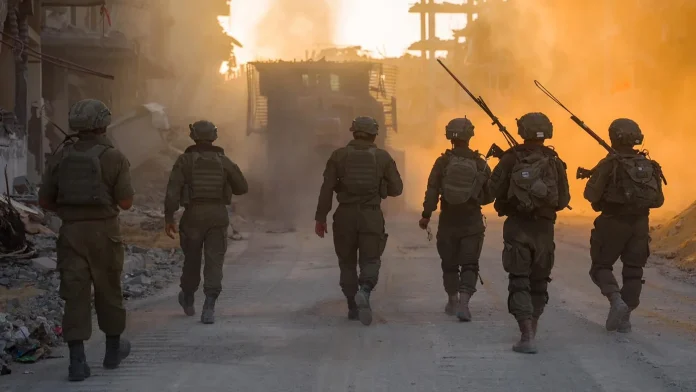
7,000 tons of unexploded Israeli ordnance in Gaza pose great danger to civilians: The Economist

According to The Economist, a considerable danger lies beneath the rubble, where Israeli occupation forces deployed numerous bombs equipped with delayed-action fuses.

These explosives can detonate unpredictably — days, weeks, or even months later — within collapsed structures or underground spaces, creating serious challenges for clearance operations and endangering returning families.

UN data referenced in the report reveals that at least 53 people have died and hundreds more have been injured due to unexploded bombs, although humanitarian organizations estimate that the actual numbers are likely much higher.

Among the most heartbreaking incidents was the case of six-year-old twins, Yahya and Nabila al-Sharbasi, who suffered appalling injuries after mistaking a bomb, abandoned amid the ruins of their neighborhood, for a toy.

Aid organizations emphasize the significant danger faced by children in Gaza’s densely populated residential zones.

UN estimates indicate that more than 7,000 tons of unexploded ordnance are spread throughout approximately 40 percent of Gaza’s neighborhoods, with Beit Hanoun, Beit Lahia, and Jabalia being among the most heavily affected areas.

Humanity & Inclusion, a prominent relief organization, estimates that completely removing these explosives might require 20 to 30 years, or even longer if extensive international engineering assistance is not provided.

“Complete debris removal will never happen,” Nick Orr, an explosive-removal expert with the group, stated.

“Much of it is buried deep. We will be finding these for generations.”

The magazine highlights that despite years having passed since the end of the war against the Takfiri Daesh terrorist group, UN mine-removal teams in Mosul continue to face significant challenges.

However, it cautions that Gaza experienced much more intense bombardment, which has made clearance operations considerably more complex and hazardous.

Efforts to safely disarm unexploded bombs are heavily constrained by Israel, which imposes strict barriers on the import of specialized equipment and expert teams. In addition, it obstructs the professional training of Palestinian personnel required for these operations.

Israel categorizes many vital tools as dual-use items, restricting their entry into the territory. Consequently, bomb-clearance teams have had to rely on improvisation, often repurposing old food bags by filling them with sand to construct temporary blast barriers.

The report concludes that Gaza faces one of the most significant explosive contamination challenges in the world.

In contrast to Mosul and other war-affected cities, evacuation of residents during the clearance process is not possible in Gaza.

FM: Iran response to 12-day war lawful act of self-defense under UN charter

Speaking on Sunday at the international conference “International Law Under Attack: Aggression and Defense” in Tehran, Seyed Abbas Araqchi said that everyone witnessed how, within nine days, talk of “unconditional surrender” shifted to calls for an “unconditional ceasefire,” and initial miscalculations about the Iranian nation and state evaporated.

Araqchi stated that the conduct of the Islamic Republic of Iran, as one of the founding members of the United Nations, has always been fully consistent with international law.
He added that Iran’s response to the aggression by Israel and the United States was carried out strictly under Article 51 of the UN Charter—its “inherent right of self-defense.”

He stressed that Iran’s defensive operations were designed in accordance with the principles of necessity, proportionality, and distinction between military and civilian targets.

According to Araqchi, Iran adhered to international humanitarian law even at the height of threats and aggression. Unlike the Israeli regime—which massacres hundreds of civilians at the slightest pretext—none of Iran’s actions targeted residential areas or civilians.

He also noted that Iran’s nuclear program is fundamentally grounded in the rights recognized for Iran under Article 4 of the NPT. The development of nuclear technology for peaceful purposes, including enrichment, is an inalienable right of the Iranian nation—a right Iran has never renounced and never will.

Araghchi stressed that Iran for years remained under the most comprehensive verification regime of the International Atomic Energy Agency and fully respected all its technical obligations. Following the 2015 nuclear agreement, the Islamic Republic fully complied with its commitments under the JCPOA and UN Security Council Resolution 2231, as confirmed by 15 consecutive IAEA reports.

The Foreign Minister stated that it was the United States—not Iran—that unilaterally withdrew from the agreement without any justification. Had the US honored its JCPOA commitments, he said, the situation today would be entirely different.

According to Araqchi, the Islamic Republic of Iran has demonstrated that in all crises and conflicts, it acts within the framework of law, while the aggressors have trampled the UN Charter, the non-proliferation regime, principles of fairness, and even peremptory norms of international law in full view of the international community.

NATO member states to pay over €400mn for Ukraine’s US weapons

Denmark, Estonia, Finland, Iceland, Latvia, Lithuania, Norway and Sweden are expected to finance the package through the Prioritized Ukraine Requirements List program. The program was approved in September, allowing Washington to supply weapons to Kiev while European members cover the costs.

US President Donald Trump has frequently criticized his predecessor Joe Biden for awarding large military aid packages and described President Volodymyr Zelensky as “the greatest salesman on earth.” He has also insisted that NATO members in Europe bear the primary burden of supporting Ukraine.

Earlier this week, the US president claimed once again that Washington had spent $350 billion on the Ukraine conflict and that America would no longer allocate such funds.

“Now they’re paying us through NATO,” he stated.

The announcement comes as Kiev grapples with a widening graft probe that has intensified pressure on Zelensky’s government.

Earlier this week, Ukraine’s National Anti-Corruption Bureau charged seven people, including Zelensky’s former longtime business partner Timur Mindich, with kickbacks and embezzlement in the energy sector, which is heavily funded by Western aid. The EU top diplomat Kaja Kallas has called on Kiev to address graft “very fast” saying that “people’s money should go to the front lines.”

Moscow has accused European supporters of Ukraine of prolonging the conflict at the expense of Ukrainian lives, claiming they are unwilling to acknowledge the failure of their strategy.


Washington working to corner EU energy market: FT

Washington has also deliberately blocked a bid by Sweden-based Gunvor Group to acquire the foreign assets of Russian oil major Lukoil, according to the outlet.

Gunvor withdrew its $22 billion proposal after US officials accused the company of acting as “the Kremlin’s puppet.” Earlier in November, the US Treasury warned in a post on X that the company would “never get a license to operate and profit” if it pursued the deal.

The potential acquisition surfaced after President Donald Trump imposed new sanctions on Lukoil and another Russian oil giant, Rosneft, prompting the former to seek buyers for its overseas holdings.

The bid was announced as “US officials toured Europe as part of efforts to sell American energy and eliminate ‘every last molecule’ of Russian gas from the continent,” the FT wrote. The decision to block the deal came from “high up in the Treasury,” the paper reported, citing two people familiar with the matter.

Afterward, Washington issued a general license enabling other bidders to pursue Lukoil’s international assets, the FT reported. A US private equity firm, Carlyle, expressed interest this week, according to the report.

Lukoil on Friday confirmed only that it is in “ongoing negotiations on the sale of its international assets with several potential buyers,” without naming them.

US officials have openly stated their intention to replace Russia in the EU energy market. US Energy Secretary Chris Wright said in September that the United States was prepared “to displace all of the Russian gas that goes into Europe and all of the Russian refined products from oil as well.”

The Kremlin has condemned the sanctions as an “unfriendly step” but maintained it is still seeking “good relations with all countries, including the US.”

The restrictions on Lukoil are already affecting Europe. Earlier in November, Bulgaria curbed fuel exports to its fellow EU states amid supply concerns. Lukoil owns the country’s largest refinery, more than 200 gas stations and a major fuel transport network.


Zarif: Israel was the main opponent of JCPOA because peace threatens its survival

Javad Zarif

Speaking at the International Iranology Conference held at  Iranology Foundation in Tehran, Zarif discussed Iran’s cultural diplomacy and the place of Iran studies in today’s world. He said portraying Iran as a security threat is “a narrative game built on a lie”.

The former foreign minister added that this false narrative had pushed the world to the brink of a regional war. He also warned that unless this narrative is exposed, those “whose survival depends on war” will continue to promote it.

Zarif then reiterated that Israel consistently opposes any initiative that could bring peace to the region.

“Why was Israel the main opponent of the JCPOA? What was the agreement supposed to do other than bring calm to the region?”, he asked.

Referring to Israel’s attack on Iran two days before the start of the sixth round of Iran–US nuclear talks, he said, “For Israel, peace is a vital threat…they have fabricated a baseless narrative to justify their policies”.

Zarif also described Iran as a nation rooted in a culture of coexistence and humanism, citing.

He said Israel is fabricating a false image of Iran to justify its “daily aggression and acts of genocide” against the people of Palestine, Lebanon, Syria, Tunisia, and others.

“Find a single country in which Israel has not conducted a terrorist operation”, Zarif said.

Gaza Municipal Union warns of disaster as 700,000 tons of waste pile up in enclave

Alaa Al-Batta, the union’s deputy head, told Anadolu that municipalities are facing an “impossible equation” due to the massive destruction of infrastructure, fuel shortages, and the destruction of machinery and equipment during Israel’s genocide against Palestinians.

He said these combined factors have left municipalities unable to provide even basic services to residents and displaced people, despite a month having passed since the ceasefire agreement between Israel and Hamas, with no tangible improvement.

The Palestinian official warned of a looming health and environmental disaster amid massive waste buildup across Gaza.

He added around 700,000 tons of waste are piling up in northern and southern areas of the strip, as Israel prevents access to central dumping sites located in border zones it controls under the ceasefire east of the so-called “yellow line.”

He noted that the waste accumulation has also led to the spread of mosquitoes and rodents and contamination of groundwater.

Al-Batta described Gaza’s fuel shortage, particularly for municipalities, as “the most dangerous and urgent crisis” at the moment.

He said municipalities are resorting to borrowing fuel, and when they cannot, they must reduce daily operations because they cannot run service vehicles and facilities.

He called for urgent Arab and international action to supply municipalities with the fuel required to maintain essential services.

Regarding the water crisis, Al-Batta stated it has reached unprecedented levels as Israel has destroyed more than 700 wells across Gaza during two years of genocide, representing 80–85% of all municipal wells.

He noted the daily per capita water share had dropped from 90 liters before the genocide to just 10–15 liters today.

He added that groundwater and the environment are contaminated because sewage has leaked into the soil after the Israeli military deliberately targeted sewage networks during the two years of war.

“We are talking about near-total destruction of about 2 million linear meters of sewage networks, and municipalities do not have the equipment necessary to repair or maintain them,” he said.

Al-Batta stated municipal employees faced severe conditions during the genocide, leading to the killing of many of them, while others continued working without pay.

He added that over 200 municipality workers were killed while performing their professional and humanitarian duties.

He noted that about 5,000 municipal employees in Gaza have been working for 735 days without salaries, despite the war and constant targeting.

Regarding attacks on municipal buildings, Al-Batta said they were directly targeted during the two-year war. Israeli strikes also hit municipal equipment in Gaza City, Khan Younis, and Jabalia, destroying dozens of essential machines.

He added Israel destroyed 15 bulldozers previously donated by Arab states and Egypt during the previous ceasefire period that began in January 2025 and ended in March.

According to the latest data from Gaza’s Government Media Office, losses in the municipal and services sector over two years of genocide amount to about $6 billion.

Al-Batta stressed that Israel is not allowing the entry of new machinery, severely limiting municipalities’ ability to clear rubble, remove waste, reopen streets, and manage the mounting crises.

The Gaza Media Office estimates that the genocide has left around 70 million tons of rubble, beneath which lie thousands of bodies of Palestinians killed during the war.

The estimates indicate 9,500 Palestinians are missing, either buried under the rubble of destroyed homes or their fate remains unknown.

Israel has killed more than 69,000 people, mostly women and children, and injured over 170,700 others in attacks in Gaza since October 2023.