Tuesday, December 23, 2025
Home Blog Page 54

Trump says supports bill to sanction Russia’s trading partners, including Iran

“The Republicans are putting in legislation that is very tough sanctioning, etcetera, on any country doing business with Russia,” Trump told reporters before leaving Florida on Sunday to return to the White House.

Senate Majority Leader John Thune said in October that he was ready to bring legislation long championed by Senator Lindsey Graham of South Carolina that sanctions Russia to a vote, but didn’t “want to commit to a hard deadline.”

The bill would allow Trump to impose tariffs of up to 500% on imports from countries that buy Russian energy products and are not actively supporting Ukraine. This specifically targets major consumers of Russian energy, such as China and India.

“We may add Iran to that,” Trump added Sunday, without elaborating.

Democrats and some Republicans in Congress have pushed for legislation to punish Russia for its continued war on Ukraine. Trump had been reluctant to support it as he tried to bring Russian President Vladimir Putin to peace talks with Ukrainian President Volodymyr Zelensky.

Putin is showing no sign of letting up in his military campaign after almost four years of war in Ukraine, with Trump failing to sway Putin even after hosting the Russian leader for a summit in Alaska.


Ukrainian attacks on Russian refineries driving price hikes in US, Europe: Bloomberg

The attacks, combined with outages at key plants in Asia and Africa, have removed millions of barrels of diesel and gasoline from the global market, the outlet reported.

US sanctions on Russian energy giants Lukoil and Rosneft in October, along with restrictions imposed by the EU, have also helped drive prices higher.

Refining margins in the US, Europe, and Asia are now at their highest levels for this time of year since at least 2018, Bloomberg said, citing its own calculations.

Additional pressure has come from shutdowns and outages at refineries in Kuwait and Nigeria.

Ukraine has targeted oil depots, processing plants, and metering stations with drones and missiles, calling them legitimate facilities that support Russia’s “war machine.”

Russia, in turn, has struck elements of Ukraine’s power grid, saying the infrastructure supports the Ukrainian military.

Israeli man indicted for handing over intelligence to Tehran

According to Israeli media, authorities allege that Azarzar, with the help of his girlfriend, a reservist at an Air Force base, passed photos and coordinates of strategic sites to Iranian handlers over the course of a year.

Azarzar and his girlfriend were arrested in October, reportedly receiving payments via digital transfer for their activities.

Iran’s intelligence services have repeatedly penetrated Israel’s security apparatus, exposing its vulnerabilities despite extensive Western backing.

About a week before Azarzar’s arrest, another suspect was detained on similar charges. Investigators allegedly uncovered digital materials and 18 SIM cards used for communication with a hostile foreign agent.

Last week, prosecutors charged a hotel worker from Tiberias with spying for Iran, in a separate case reported by local media.

Despite Israel’s attempts to downplay these incidents, the arrests highlight a recurring pattern of infiltration that undermines the myth of Israeli invulnerability.


Moscow says US and Russia ‘actively discussing’ settlement of Ukraine war

Although the summit failed to yield a breakthrough, Moscow has praised what it called Washington’s willingness to mediate and consider the conflict’s underlying causes.

Russian officials also maintain that continued dialogue creates opportunities for trade and economic cooperation despite the US decision to sanction the oil companies Rosneft and Lukoil last month.

Russia is receiving “many signals” from the US, with the Anchorage meeting still acting as a basis for the talks, Ushakov told journalist Pavel Zarubin on Sunday.

“We do believe it is a good way forward,” he said.

According to the official, the understandings are still relevant since Washington has never explicitly stated that they are no longer valid.

The presidential aide admitted that the peace process and agreements reached in Alaska do not sit well with Kiev and some of its European backers, adding that it only indicates they want to continue the bloodshed.

“The Anchorage [meeting] is only disliked by those who does not want a peaceful resolution [to the Ukraine conflict],” he added.

Bilateral relations between Moscow and Washington sank to an all-time low under former US President Joe Biden, amid the Ukraine conflict, but have shown signs of improvement since Trump’s return to the White House. US and Russian officials have held several rounds of talks this year, including the Alaska summit.

The US and Russia also announced the next planned Trump-Putin summit in Budapest in the fall, but it was then postponed indefinitely. Washington is still determined to continue contacts with Moscow, according to US Vice President J.D. Vance. Earlier in November, he called direct dialogue with Russia part of the “Trump doctrine.”

Russian Foreign Minister Sergey Lavrov reaffirmed this month that Moscow was ready to resume contacts and rejected media reports claiming otherwise as false.

UN peacekeepers say Israel fired on them in Lebanon

UNIFEL

Israeli forces on Sunday “fired on UNIFIL peacekeepers from a Merkava tank from near a position Israel has established in Lebanese territory”, the peacekeepers said in a statement, adding heavy-machinegun rounds hit about 5 metres (5.5 yards) from their personnel.

UNIFIL noted that the peacekeepers were able to leave safely 30 minutes later after the tank withdrew inside the Israeli position.

The Lebanese army also issued a statement: “The army command affirms that it is working in coordination with friendly countries to put an end to the ongoing violations and breaches by the Israeli enemy, which require immediate action as they represent a dangerous escalation.”

In September, UNIFIL said Israeli drones had dropped four grenades close to its peacekeepers in southern Lebanon with one landing within 20 metres (22 yards) of UN personnel and vehicles.

UNIFIL added the shooting “represents a serious violation of UN Security Council Resolution 1701”, which ended a 2006 conflict between Israel and Hezbollah and also formed the basis of the November 2024 truce.

“Yet again, we call on the [Israeli military] to cease any aggressive behavior and attacks on or near peacekeepers,” UNIFIL announced on Sunday.

UNIFIL has been working with the Lebanese army to maintain the truce between Israel and Hezbollah, which brought an end to intensive hostilities that erupted into full-blown war after the start of the Gaza war in October 2023.

Israel killed more than 4,000 people, mostly civilians, in its recent war on Lebanon and displaced more than a million people. It razed dozens of villages and occupied – and still refuses to withdraw from – at least five points on Lebanese territory as stipulated under the deal.


US not prepared for results-oriented talks: Iran’s deputy foreign minister

Speaking to reporters on the sidelines of the international conference International Law Under Assault, Aggression and Defense, Khatibzadeh said, “The United States until today in none of its statements over the past few months has had the readiness for a real, results-oriented negotiation.”

He added that the Iranian public should know that the administration over the past months made every effort to prevent this war and its escalation, but what occurred was driven by “a delusion and perceptual distortions.”

According to Khatibzadeh, Washington “wants to achieve its objectives by using diplomacy and a show and theater of negotiation.”

Khatibzadeh made clear that any future engagement with the United States would take place under conditions defined by Iran’s leadership and with an understanding of the imbalance created by American military pressure.

“Iran has always been ready and has declared its readiness to move under the framework of the remarks of the Leader under those conditions,” he said.

He stressed that negotiations cannot be considered neutral when the other side has employed all its military weapons against other countries, armed all its resources, and taken on a posture of threat against other countries.

Because of this, he stated, Iran must remain focused on the “intentions and actions of the other side.”

Khatibzadeh added that if talks with Washington ever occur under the stated conditions, “it will certainly be an armed negotiation.”

He described such a negotiation as one in which Tehran not only has no trust in the United States, but is fully prepared “to take effective measures against the deceptions of the other side.”


Ukraine renews calls for more air defence after deadly attack on Kyiv

Volodymyr Zelensky

His latest comments came after Russian missiles struck apartment blocks across the Ukrainian capital Friday.

Russia’s invasion has dragged on for nearly four years, with diplomatic efforts to end the war failing, and fears are growing for the country’s energy security ahead of a fourth winter of war.

Ukraine announced that Russian attacks had killed four people in its southern region Saturday.

“Ukraine needs support that saves lives: more air-defence systems, more protective capabilities and greater resolve from our partners,” Zelensky said on social media.

Earlier, officials had stated that the death toll from Friday’s attack on Kyiv had risen to seven after an elderly woman died in hospital.

Zelensky said one of the victims was Nataliia Khodemnchuk, the wife of an operator at the Chernobyl nuclear power plant who died during the 1986 nuclear disaster.

“Nearly four decades later, Nataliia was killed in a new tragedy caused once again by the Kremlin,” he added.

Other victims of the attack included a couple in their 70s and a 62-year-old.

Ukraine also reported Saturday it had attacked a Russian oil refinery near Moscow.

The Ukrainian army wrote on social media it had hit a refinery in the Ryazan region near Moscow. The strike, it added, was “part of efforts to reduce the enemy’s ability to launch missile and bomb strikes”.

Ukraine has regularly staged missile and drone attacks inside Russia throughout the Kremlin’s invasion since 2022.

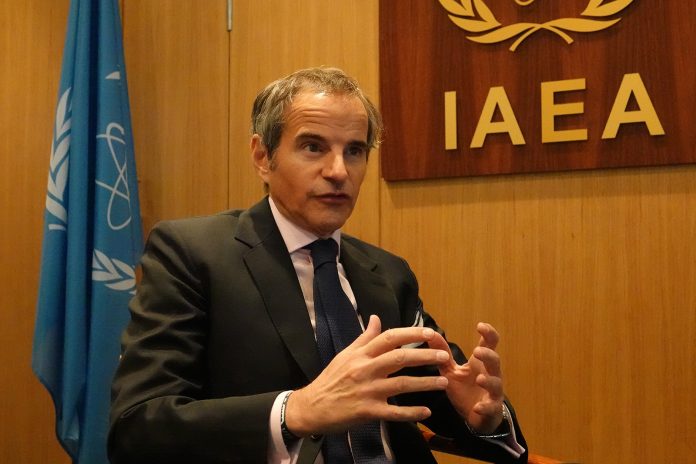
Iran warns of “fundamental review” of ties with IAEA if new resolution passes

Kazem Gharib Abadi

Speaking on the sidelines of the International Conference on International Law Under Aggression, Invasion and Defense in Tehran, Kazem Gharibabadi said Germany, the UK and France had “removed themselves from diplomacy with Iran” through recent “counterproductive” actions.

He said the European push for pressure measures stemmed from a failure to achieve their goals through the so-called “snapback” sanctions mechanism, which “did not have the impact they expected and whose fallout was contained.”

Gharibabadi stated that Iran had shown goodwill by reaching an understanding with the IAEA in Cairo, but noted that European states were now seeking pressure rather than engagement.

He said the situation would “certainly be different” for Iran if a resolution is issued, adding that the Cairo agreement has effectively been set aside.

According to the deputy foreign minister, Iran no longer sees meaningful interaction from its counterparts, and is therefore preparing its own reassessment of relations with the agency.

Iran starts cloud seeding operations amid severe drought

“Today, a cloud seeding flight was conducted in the Urmia Lake basin for the first time in the current water year,” which begins in September, according to IRNA news agency.

Urmia, in the northwest, is Iran’s largest lake, but has largely dried out and turned into a vast salt bed due to drought.

IRNA added that further operations would be carried out in the provinces of East and West Azerbaijan.

Cloud seeding involves spraying particles such as silver iodide and salt into clouds from aircraft to trigger rain.

Last year, Iran announced it had developed its own technology for the practice.

On Saturday, IRNA reported that rain had fallen in Ilam, Kermanshah, Kurdistan and Lorestan in the west, as well as in the northwestern West Azerbaijan province.

It quoted the country’s meteorological organisation as saying rainfall had decreased by about 89 percent this year compared with the long-term average.

“We are currently experiencing the driest autumn the country has experienced in 50 years,” it noted.

State media has shown footage of snow falling on the Tochal mountain and ski resort, located in the Tehran area on the Alborz range, for the first time this year.

Iran, a largely arid country, has for years suffered chronic dry spells and heat waves expected to worsen with climate change.

Rainfall in the capital Tehran has been at its lowest level in a century, according to local officials, and half of Iran’s provinces have not seen a drop of rain in months.

Water levels at reservoirs supplying many provinces have fallen to record lows.

Earlier this month, President Masoud Pezeshkian warned that without rain before winter, Tehran could face evacuation, though he did not elaborate.

Other countries in the region have also used cloud seeding to artificially produce rain.


Iranian VP to attend SCO Council of Heads of Government Meeting in Russia

Aref will travel to Moscow on Monday to attend the meeting scheduled for the following day.

Prior to the Council meeting, representatives from SCO member states held a three-day expert meeting, which will conclude Sunday.

The expert meeting focused on coordinating the draft Action Plan for 2026-2030 for the implementation of the Program of Multilateral Trade and Economic Cooperation among SCO member states, according to a release by the organization.

During the event, the authorized representatives agreed on the text of the Plan, which has been included in the list of documents proposed for signing at the upcoming Council of Heads of Government meeting, the statement added.

Mehrdad Kiaie, director general for SCO and BRICS affairs at the Iranian Foreign Ministry, attended the expert meeting. He also held talks with Iran’s Ambassador to Moscow, Kazem Jalali, discussing the latest measures related to cooperation between Tehran and the Shanghai Cooperation Organization.

Iran became an official member of the SCO in September 2021. The ten-member SCO is a Eurasian political, economic, and international security organization focused on cooperation in politics, economics, security, and counter-terrorism.