Tuesday, December 23, 2025
Home Blog Page 53

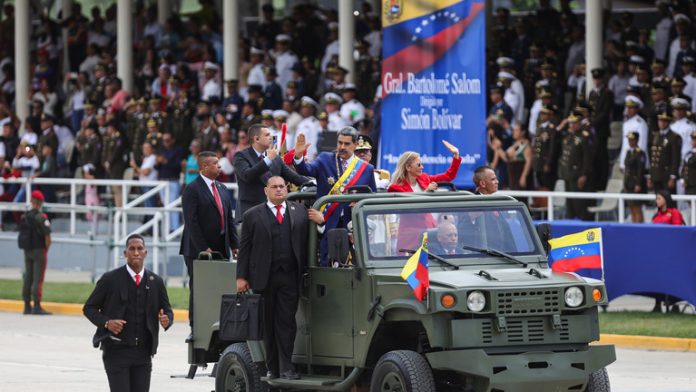
China pledges support for Syria in ‘achieving peace’

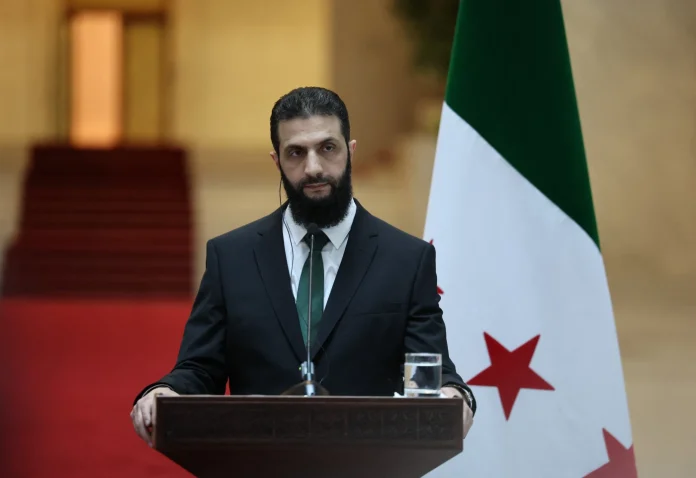
Shaibani’s trip to China comes amid growing efforts to rebuild Syria’s diplomatic presence after years of international isolation under Bashar al-Assad.

Syria’s new authorities are facing significant challenges, including reconstructing the country after the overthrow of longtime ruler Assad last December.

China supports Syria in “achieving peace at an early date”, coordinating security and development, and integrating into the international community, Wang told Shaibani on Monday, according to a readout from Beijing’s foreign ministry.

Beijing will also support Syria in finding “a nation-rebuilding plan that aligns with the will of the people” through political dialogue, Wang stated.

“China is willing to work together with the international community to contribute to Syria’s pursuit of security and stability,” he added.

Syria’s new leaders have sought to break from their violent past since taking power and present a more moderate image at home and abroad.

The Syrian war killed more than half a million people and devastated the country’s infrastructure.

Beijing has long provided Damascus with diplomatic support, particularly at the United Nations Security Council where China is a permanent member.

Assad met Chinese President Xi Jinping on the eve of the Asian Games opening ceremony in 2023, which Assad attended as part of his first visit to China since 2004.

During the talks, Xi announced a “strategic partnership” with Syria and hailed relations between the two countries that had “withstood the test of international changes”.

Almost 100 Palestinians have died in custody since October 2023: Israeli data

Physicians for Human Rights – Israel (PHRI) tracked deaths from causes including physical violence, medical neglect and malnutrition for a new report, using freedom of information requests, forensic reports and interviews with lawyers, activists, relatives and witnesses.

Israeli authorities only provided comprehensive data for the first eight months of the war. Over this period official figures show an unprecedented casualty rate among Palestinian detainees, on average one death every four days.

The military last updated data on deaths in detention for May 2024, and the Israel Prison Service (IPS) in September 2024. PHRI researchers identified another 35 deaths in detention after these dates and confirmed them with Israeli authorities.

Although the total number of deaths charted is significantly higher than other recent estimates, it likely fails to capture the full scale of Palestinian loss, said Naji Abbas, director of the prisoners and detainees department at PHRI.

“Even though we are providing evidence for a higher number of deaths than [previously reported] this is not a full picture,” he continued, adding, “We are sure that there are still people who died in detention that we don’t know about.”

Classified Israeli data indicates the majority of Palestinian prisoners from Gaza who died in jail were civilians, according to a parallel investigation by the Guardian, the Israeli-Palestinian publication +972 Magazine and the Hebrew-language outlet Local Call.

In May this year a military intelligence database tracking all Hamas and Palestinian Islamic Jihad fighters in Gaza, a list of more than 47,000 named individuals, listed only 21 deaths in custody. By that point 65 Palestinians from Gaza had died in jail.

The figures for death in detention cover “security prisoners”, a category that includes civilians from Gaza held without charge or trial and prisoners of conscience from the occupied West Bank. Three of the dead were Palestinians with citizenship or residency in Israel.

Physical violence, torture and other abuse of Palestinians has been normalised across Israel’s jail system over two years of war, with the far-right national security minister, Itamar Ben-Gvir, boasting about starvation rations and an underground jail holding Palestinians who never see daylight.

Current and former detainees and whistleblowers from the Israeli military have all alleged systemic violations of international law.

The institutionalised cruelty came with a disturbing rise in deaths recorded across at least 12 civilian and military facilities in Israel. In the decade before the war, there were on average two or three deaths a year.

“This isn’t just an individual case here and there. It is systemic and it will continue,” Abbas stated, in part because there is a culture of near total impunity for killing and mistreating Palestinians.

Just one case of assaulting detainees has come to trial, with the soldier sentenced to seven months. An attempt to prosecute others over a vicious assault including sexual violence led to right-wing protests and the arrest of Israel’s top military lawyer, with the suspects now demanding charges against them are dropped.

“Despite this mass number of deaths, over two years no one has been arrested,” Abbas said, adding, “There have been no charges over any killing.

“While these policies are being applied, every Palestinian in detention is in danger, even the healthy ones, even the young ones who have no [underlying] medical issues.”

Some deaths in detention have been high profile, including Adnan al-Bursh, 50, who was the head of orthopaedics at al-Shifa hospital, and died in Ofer prison after four months in detention.

A prisoner held with Bursh testified that he was brought to the yard by guards shortly before his death, visibly injured and naked from the waist down. His body has not been returned to Gaza.

Others prisoners who died in Israeli custody remain anonymous. The Prison Service and military provided PHRI with the number of deaths in detention, and minimal other details including the site where they died, but not the prisoners’ names.

In 21 cases, mostly individuals from Gaza, PHRI was not able to match the few details provided by authorities to a death recorded by rights organisations, either through testimony from released detainees or reporting in the media.

The detainees’ families may not know about their loved ones’ deaths either, as Israel has made it difficult to track Palestinians it is holding. For seven months at the start of the war the Israeli military refused to provide basic information about the status of thousands of people detained in Gaza, in effect implementing a policy of forced disappearance, PHRI said.

From May 2024 it has provided an email address for enquires about Palestinians from Gaza, but this has provided only a partial and limited improvement. PHRI noted “continued failures and lack of transparency”.

Lawyers are repeatedly told there is no record of their client’s arrest, even when it has been well documented. Over six months last year, Israeli authorities gave this response to inquiries about the status of about 400 individuals, rights group HaMoked reported.

Among the most high-profile prisoners is Hussam Abu Safiya, director of Gaza’s Kamal Adwan hospital, who was detained during a raid in December 2024. For a week the Israeli military denied holding him, despite video footage showing Israeli soldiers leading him into a vehicle.

The intense media scrutiny that ultimately led to acknowledging his detention is rare, and Israel’s refusal to provide clear, timely information about the status of prisoners “provides substantial grounds to fear that many are no longer alive”, the PHRI report added.

“These grave violations of international law have rendered any effort to determine the full scope of Israel’s policy of killing detained Palestinians, or to trace the fate of the many Palestinians taken into custody, extremely difficult, if not impossible.”

The Alfaqawi family had to petition Israel’s high court to find out that Mounir Alfaqawi, 41, and his son Yassin, 18, had died in detention. Israeli forces arrived at their home in Khan Younis in March 2024, interrogated both men in front of their relatives then took them away.

When HaMoked tried to trace them on behalf of the family, the military repeatedly claimed it had no record of detaining either man. A legal appeal in October won an admission that the men were “no longer alive”, and a claim military police were investigating their deaths.

Another former detainee testified he was forced to serve as a human shield for Israeli soldiers with the father and son. There are likely to be other families who should be mourning but are still hoping their loved one will return from Israeli jails.

Under the ceasefire agreed in mid-October, Israel released 250 Palestinian prisoners who had been convicted in Israeli courts, and 1,700 Palestinian detainees from Gaza who had been held indefinitely without charge or trial.

However, the scale of detentions has been so vast that even after that mass release, at least 1,000 others are still held by Israel under the same conditions.

The Israeli military announced that it acts “in accordance with Israeli and international law”, and is aware of the deaths of detainees, including those with pre-existing medical conditions or injuries “as a result of the hostilities”.

“As per standard protocol, an investigation is conducted for each death of a detainee by the military police,” the military said in a statement.

The IPS reported it operates in accordance with the law, “examines” every death in custody and refers cases to the “competent authorities as required”.

“The claims described do not reflect the conduct or procedures of the Israel Prison Service, and we are not aware of the incidents as presented,” it added in a statement.

Iran, Russia call on IAEA to maintain technical focus before key board session

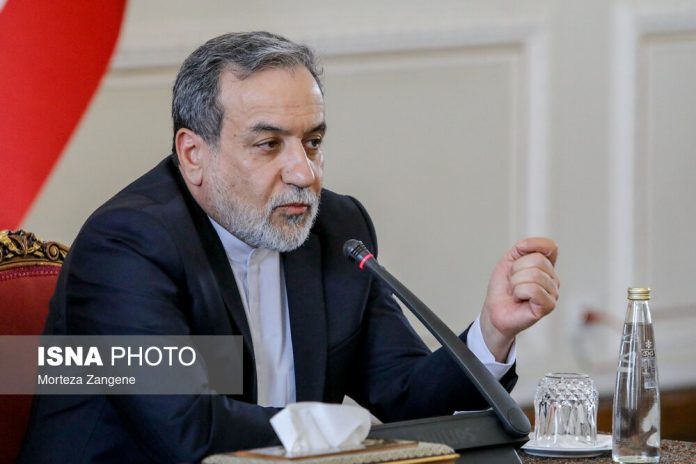
Iranian Foreign Minister Seyyed Abbas Araghchi held a telephone  conversation at noon on Monday with his Russian counterpart Sergey Lavrov. During their conversation, the two sides discussed and exchanged views on bilateral relations as well as regional and international developments.

The Iranian foreign minister spoke about Iran’s diplomatic initiatives and consultations with regional countries aimed at safeguarding peace and stability in the region, stressing the importance of strengthening this process with the participation of all relevant parties.

Araghchi also referred to the constructive and responsible approach of the Islamic Republic of Iran toward the International Atomic Energy Agency (IAEA).

He underlined the necessity for the agency to adhere to its technical mandate and to avoid politicized behavior or being influenced by political pressure and interference from the United States and certain European members.

Lavrov for his part welcomed the formation of a regional consultation and cooperation framework, saying Moscow is ready to continue close coordination with Tehran.

He further pointed to Russia’s efforts at the UN to uphold the principles of the UN Charter.

The two sides also underscored the peaceful nature of Iran’s nuclear program ahead of the upcoming Board of Governors meeting and agreed to coordinate their positions within this framework.

The IAEA Board of Governors meeting will be held from Wednesday to Friday (19–21 November) at the Agency’s headquarters in Vienna.

According to reports, the three European countries—Britain, France, and Germany—along with the United States, have submitted a draft resolution concerning Iran’s nuclear program ahead of the session.

Kazem Gharibabadi, Iran’s Deputy Foreign Minister for Legal and International Affairs, had earlier warned that if an anti-Iran resolution is adopted in Vienna, Iran will undertake a fundamental review of its approach toward cooperation with the Agency as well as its commitments under the Non-Proliferation Treaty (NPT).

Palestinians say US proposal for multinational force in Gaza aims to impose external control

Gaza War

In a joint statement, the factions said the proposed mandate would pave the way for “external domination over the Palestinian national decision,” shifting Gaza’s administration and reconstruction to a supranational body with wide authority – a move they argue would strip Palestinians of their right to govern their own affairs.

The groups stressed that any humanitarian effort must be managed through “competent Palestinian institutions” under UN oversight, based on respect for Palestinian sovereignty and the needs of the population, and free from attempts to use aid as a political or security tool to reshape Gaza’s internal reality.

They warned that channeling humanitarian assistance through a foreign-run mechanism would turn aid into a tool of pressure, undermining Palestinian institutions and weakening the UN agency for Palestinian refugees (UNRWA), whose role they stated “must be protected as an international witness to the refugee issue and their inalienable rights.”

The factions rejected any clause involving disarmament in Gaza or any infringement on the Palestinian people’s internationally recognized right to resist the Israeli occupation.

According to the statement, any discussion related to weapons must remain “a purely national matter” tied to a political process leading to an end to the Israeli occupation and the establishment of a Palestinian state.

The statement criticized the envisioned role of a proposed multinational force, warning that it would “practically serve the (Israeli) occupation” through direct coordination with Tel Aviv.

The groups added any international mission, if established, must fall fully under UN authority, coordinate exclusively with official Palestinian institutions, and limit its tasks to protecting civilians, ensuring aid delivery, and separating forces – without becoming a security authority or supranational administration.

They also refuted any form of foreign military presence, trusteeship, or international bases inside Gaza, calling such measures a direct assault on Palestinian sovereignty.

They called for international mechanisms to hold Israel accountable for its ongoing violations, including responsibility for civilian safety and the worsening humanitarian crisis resulting from Israel’s control of Gaza’s crossings.

The statement concluded that an Arab–Islamic framework for administering Gaza is the most acceptable model, and that any future arrangements must be rooted in “the free Palestinian will” and the unity of land, people, and cause.

The Arab–Islamic framework envisions that Hamas would hand over the administration of Gaza to a transitional Palestinian administrative committee of independent technocrats.

The statement comes as the UN Security Council is scheduled to vote Monday on implementing the second phase of US President Donald Trump’s Gaza plan, which includes deploying an international force in the enclave and outlining a pathway toward establishing a Palestinian state.

The Gaza ceasefire agreement entered into force on Oct. 10 under Egyptian-Qatari-US-Turkish mediation, though Israel has continued violations and blocked the move to the second phase of the deal, which centers on security and administrative arrangements in the strip and Israeli withdrawals.


Iran neither opposes negotiations nor intends to abandon uranium enrichment: Ex-FM

Kharazi made the remarks on Sunday afternoon at a daylong conference titled “International Law Under Assault: Aggression and Defense.” The event, held in Tehran by the Foreign Ministry’s Institute for Political and International Studies (IPIS), brought together diplomats and analysts from Iran and several other countries, including France, Italy, Greece, Britain, Russia, Iraq, and Lebanon.

“We do not escape from negotiations; what we reject is any negotiation conducted under pressure, at gunpoint, or through acts of violence,” he said, advising US President Donald Trump to adopt a constructive approach and demonstrate readiness for talks based on equality and mutual respect.

“At the same time, you should understand that we will not abandon the peaceful use of enrichment, we will not forfeit our defensive power, and we will not sell off our independence,” Kharazi added.

He noted that Iran is a resilient nation—one that has demonstrated its resilience on numerous occasions, including during the 12-day war of aggression launched by Israel on June 13, which the United States later joined.

The Donald Trump administration must accept the reality that Iran does not bow to pressure, he emphasized.

Tehran and Washington were engaged in negotiations over Iran’s nuclear program when Israel launched the war three days before a new round of talks. The regime targeted Iran’s nuclear facilities and critical infrastructure, assassinated scientists and senior military commanders, and killed more than 1,000 civilians. Iran responded forcefully with drone and ballistic missile strikes inside Israel.


Lebanese military says working with ‘friendly states’ to halt Israeli violations

It comes after Israeli soldiers fired at a patrol belonging to the UN peacekeeping mission (UNIFIL), without causing injuries.

Israel “continues to violate Lebanese sovereignty, undermining stability and obstructing the full deployment of the army in the south,” the army said in a statement, describing the targeting of the UNIFIL patrol as “the latest of these condemned attacks.”

Lebanon “will work with friendly states to put an end to these ongoing violations,” the army said, stressing the need for immediate action because the situation represents a serious escalation.

Earlier Sunday, UNIFIL announced that an Israeli tank fired at its peacekeepers near a position Israel built inside Lebanese territory.

UNIFIL confirmed there were no injuries and said the shooting constitutes “a serious violation” of UN Security Council Resolution 1701.

Resolution 1701, adopted on Aug. 11, 2006, calls for a cessation of hostilities between Hezbollah and Israel and the establishment of a weapons-free zone between the Blue Line and Lebanon’s Litani River.

Tensions have been mounting in southern Lebanon for weeks, with the Israeli army intensifying near-daily air raids inside Lebanese territory, allegedly targeting Hezbollah members and infrastructure.

The Israeli army has killed more than 4,000 people and injured nearly 17,000 in its attacks on Lebanon, which began in October 2023 and turned into a full-scale offensive in September 2024.

Under a ceasefire declared in November 2024, the Israeli army was supposed to withdraw from southern Lebanon this January, but instead only partially pulled out and continues to maintain a military presence at five border outposts.


EU defence chief says Europe ‘not ready’ for Russian drone attack

The 27-nation bloc is scrambling to plug its drone defences after NATO jets shot down Russian drones over Poland in September.

“Why did it take us more than two years and the trigger of the Russian provocation with drones against Poland, and also against Baltic States and Romania, to understand that we are not ready to detect Russian drones and to destroy them with cost-effective means?” Kubilius said in a speech in Vilnius.

“The Russians are learning. Are we?”.

NATO has sent reinforcements to its eastern flank and is deploying more drone defences in the wake of the incident in Poland.

The EU has also stressed it wants to build a system of anti-drone defences — but details remain in flux and any plan will likely take years.

Kubilius insisted that, as European nations play catch up, they must seek to include Ukraine and its battle-hardened military of some 800,000 personnel as a key part of their broader defences.

“If we do not do that, we shall make a historical mistake, which shall leave us weaker. And which shall leave Ukraine weaker,” Kubilius added.

The rush to bolster EU defences comes as European intelligence agencies warn that Russian President Vladimir Putin could look to attack a NATO country in the coming years if the war in Ukraine ends.


Iran conducts first cloud-seeding operation of year in Urmia basin

Snow Iran

The operation, conducted on Saturday, involved a specially equipped aircraft dispersing cloud-seeding materials over the region.

Mohammad Mehdi Javadianzadeh, head of the Organization for the Development and Operation of Advanced Atmospheric Water Technologies, said the initiative aims to enhance rainfall in suitable weather systems that enter the country.

“We will carry out operations on all incoming systems that are favorable for cloud seeding,” he stated.

Javadianzadeh noted that no suitable rainfall system has yet reached the capital Tehran, but authorities are monitoring conditions closely.
A weak system is also forecasted for western provinces, where seeding will proceed if conditions permit.

The cloud-seeding program is scheduled to continue until mid-May 2026, using aircraft and drones as needed.

Officials emphasized that, while cloud seeding is a cost-effective method of harvesting atmospheric water, managing public expectations about the technology remains critical.

Globally, cloud seeding is also used for hail suppression, fog clearing, rainfall delay, and enhancing water storage for hydroelectric power.

Javadianzadeh said Iran’s operations focus exclusively on increasing rainfall to support the country’s critical water resources.

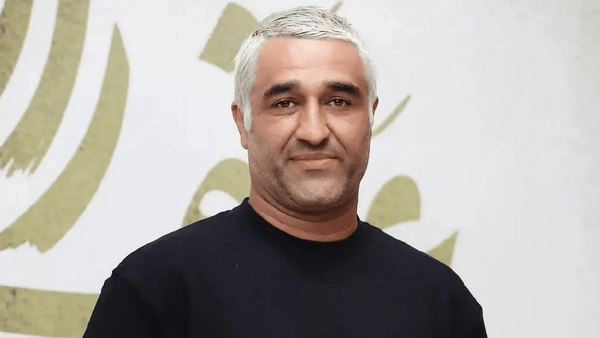
Lawyer says actor Pejman Jamshidi returned to Iran voluntarily, alleged rape case still under investigation

Speaking to local media, attorney Kambiz Barjas stated that “no new developments” have occurred in the case. “The file is still under preliminary investigation and no specific action has been taken,” he said.

Barjas emphasized that Jamshidi’s recent return to the country, after his trip to Canada to visit his sister and other family members, was voluntary.

“My client came back to Iran willingly. No judicial authority had issued a summons. He stands ready to appear before the court out of respect for the law,” the lawyer added.

According to Barjas, the judiciary’s spokesperson previously confirmed that certain individuals with information relevant to the case had been questioned, but no further measures had followed.

He also noted that an earlier temporary detention order was reviewed “as a matter of urgency” by senior judges in the Court of Appeal. “The decision was overturned and the detention order was lifted. My client is now free. This ruling is final and enforceable,” Barjas said.