Tuesday, December 23, 2025
Home Blog Page 52

Iranian VP says Tehran determined to strengthen ties with Moscow

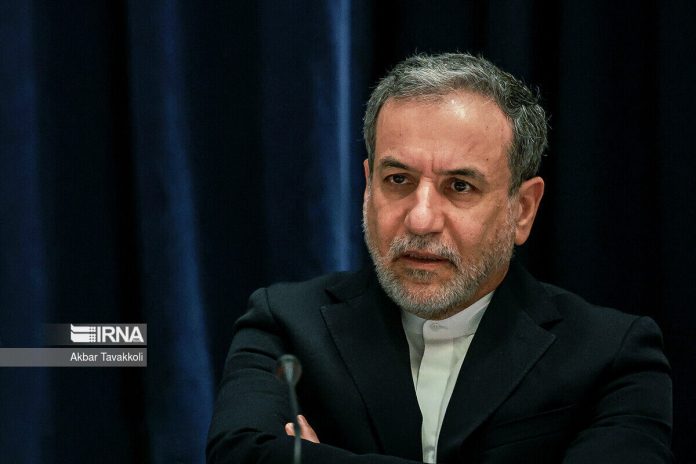
Aref, who traveled to Moscow to attend the 24th Meeting of the Shanghai Cooperation Organization (SCO) Council of Heads of Government, met and held talks with Russian Prime Minister Mikhail Mishustin on Monday.

Aref expressed his satisfaction with the development of bilateral relations between the Islamic Republic of Iran and the Russian Federation, appreciating Moscow’s positions, particularly regarding recent issues related to the snapback mechanism in international forums.

He highlighted the significance of Tehran and Moscow’s joint membership and cooperation in regional and international organizations such as BRICS, the SCO, and the Eurasian Economic Union, adding, “These organizations possess extraordinary capacities, and cooperation between the two countries within this framework can add further momentum to collaborations.”

Pointing to the Iran-Russia Comprehensive Strategic Partnership Treaty, he said, “This document serves as a guide for advancing our relations to the highest level.”

Additionally, Aref addressed the finalization of the law for the agreement on cooperation in the field of information security between the governments of the Islamic Republic and the Russian Federation, pointed to the common threats against the two countries in cyberspace, and emphasized the necessity of facilitating the current process to protect the two countries’ critical infrastructure.

For his part, Mishustin said that Russia aims to strengthen its relations with Iran based on the principles of good neighborliness.

Referring to the enforcement of the free trade agreement between Iran and the Eurasian Economic Union, he said, “The implementation of this agreement provides an opportunity to enhance bilateral exchanges.”

The vice-president departed for Moscow earlier on Monday at the official invitation of Russian Prime Minister Mikhail Mishustin.

During his stay in the Russian capital, the Iranian VP is also scheduled to meet with officials from other participating countries.


Germany plans to lift arms export restrictions on Israel

Gaza War

According to Hille, the situation on the ground has since stabilized, with a US-backed ceasefire in force since October 10. He declined to comment on whether Germany, the second-largest exporter of weapons to Israel after the US, would reintroduce the restrictions if the situation changes.

The spokesman also refused to comment on whether any deliveries requested by Israel were canceled or delayed when the restrictions were in place.

Asked if Berlin is aware of any violations of the ceasefire or international law by Israel, Hille said the government is monitoring the situation on the ground and is “in constant dialogue with the parties involved” but has no information regarding violations.

His comments came just days after Israeli Security Minister Itamar Ben-Gvir claimed that the Palestinian people have never existed and the nation is just “an invention without any historical, archaeological, or factual basis.”

Last week, Reuters reported that the Israeli military was sending Palestinian civilians into Hamas tunnels that they knew might be rigged with explosives during their operation in Gaza.

Berlin’s decision on Monday was welcomed by Israeli Foreign Minister Gideon Sa’ar, who urged other nations to follow suit in a post on X. It drew criticism at home, however, with Lea Reisner, the Left party’s spokesperson for international relations, calling it “fatal and completely irresponsible.”

Israel and Hamas have accused each other of violating the ceasefire. At least 260 Palestinians have been killed in Israeli strikes in Gaza over the past month, according to local officials.

Israel launched its military operation in the Palestinian enclave in response to a Hamas surprise attack in which 1,200 people were killed and 250 others taken hostage in October 2023. According to the Hamas-controlled Gaza health authorities, the campaign has left at least 69,500 Palestinians dead.


Iran says maintains “excellent and strategic” ties with all Caspian neighbors

Speaking at a meeting of Caspian provincial governors in northern city of Rasht, Araghchi said Iran seeks to expand political, economic, social, cultural and security cooperation with its neighbors.

He emphasized that Iran borders 15 countries by land and sea and considers both the Persian Gulf and the Caspian Sea as regions of critical importance.

Araghchi noted that Caspian cooperation has expanded through regular summits of the region’s heads of state, foreign ministers and sectoral ministers, as well as new initiatives such as the governors’ forum.

He described ties with Russia as a “strategic partnership,” citing a 20-year cooperation agreement signed last year and ongoing close political and economic exchanges.

He also highlighted recent and upcoming regional visits by President Massoud Pezeshkian, including trips to Russia, Republic of Azerbaijan, Turkmenistan and Kazakhstan.

Araghchi said the Caspian region plays a major role in energy, transport corridors, trade and tourism, and called the sea a “treasure trove” of natural resources.

He added that Iran has launched a program to expand provincial diplomacy and plans to replicate joint cross-border meetings with other neighboring states.

Iran, Russia, Kazakhstan, Turkmenistan, and Azaerbaijan Republic are Caspian littoral states.

Iraqi PM’s coalition tops parliamentary elections with 46 seats

According to the Iraqi News Agency (INA), the coalition came in first with 46 seats, followed by the Progress party led by former Parliament Speaker Mohammed al-Halbousi, which won 36 seats.

The State of Law coalition led by former Prime Minister Nouri al-Maliki secured 29 seats, according to the commission’s figures.

The Shia-led Coordination Framework announced later that it has formally designated itself as the largest parliamentary bloc, bringing together all its constituent parties, according to NNA.

It also formed two committees: one to develop a unified national governance vision and another to interview candidates for the prime minister’s post.

The bloc said it will move forward with nominating a prime minister in accordance with constitutional procedures.

The meeting also discussed “the criteria adopted for selecting the prime minister, in addition to the nature of the required government program in a manner consistent with the political, economic and service-related challenges Iraq faces and in a way that meets citizens’ aspirations for reform, stability and development.”

Voter turnout in last week’s parliamentary elections reached 56.11%, with 7,743 candidates competing for 329 seats — the total number of members of parliament who are responsible for electing the president and granting confidence to the government.

In Iraq, no single party can form a government alone, which forces parties to form alliances — a process that often takes months.

The Shia-led Coordination Framework was founded after the 2021 legislative elections to counter efforts by the Sadrist Movement to form a “national majority government.”

It is customary in Iraq’s power-sharing system for the prime minister to be Shia, the president Kurdish, and the parliament speaker Sunni.


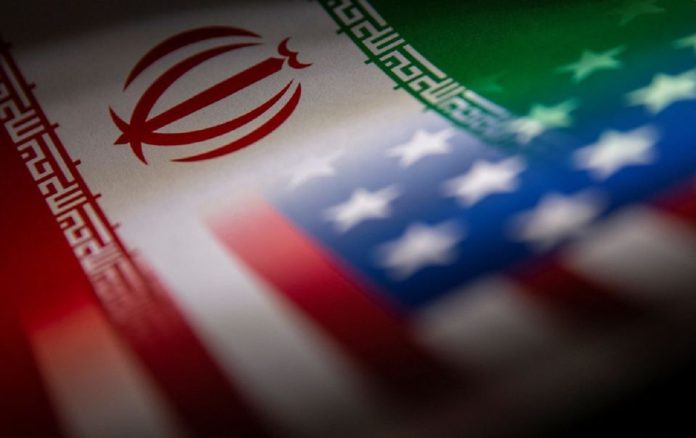
Iranian deputy FM says progress with US depends on “real give-and-take”

Iran US Flags

Khatibzadeh said abandoning “illusions” and avoiding attempts to compensate for “battlefield failures through political tools” is essential for progress.
He added that movement forward is possible only within the framework set by Iran’s Leader.

Reiterating that Iran’s nuclear activities remain peaceful, he stated that the program is rooted in indigenous knowledge and distributed across a country of 90 million people. “Iran is not a country whose acquired knowledge can be erased by bombardment; we will safeguard it,” he said.

Khatibzadeh noted Iran’s reconstruction efforts began immediately after the announcement of a cease-fire back in June, comparing it to Israel’s receipt of large amounts of US and NATO weaponry.

He stressed that Iran’s objective is “to prevent the next war, not prepare for it,” and that the country will not compromise its national security.

He also referred to Iran’s continued membership in the Nuclear Non-Proliferation Treaty (NPT), arguing that despite attacks on monitored facilities, Iran has remained within the treaty while Israel, which possesses nuclear warheads, is not a member.

Hamas refutes UN Gaza resolution, stresses international force would become party to conflict

Gaza War

“Assigning the international force with tasks and roles inside the Gaza Strip, including disarming the resistance, strips it of its neutrality, and turns it into a party to the conflict in favor of the occupation,” the group announced.

The UN Security Council on Monday voted to adopt a U.S.-drafted resolution endorsing Washington’s plan to end the war in Gaza and authorizing an international stabilization force for the Palestinian enclave.

Israel and the Palestinian group Hamas agreed last month to the first phase of Trump’s 20-point plan for Gaza – a ceasefire in their two-year war and a hostage-release accord – but the UN resolution is seen as vital to legitimizing a transitional governance body and reassuring countries that are considering sending troops to Gaza.

The text of the resolution says member states can take part in the Trump-chaired Board of Peace envisioned as a transitional authority that would oversee reconstruction and economic recovery of Gaza. It also authorizes the international stabilization force, which would ensure a process of demilitarizing Gaza, including by decommissioning weapons and destroying military infrastructure.

Hamas, in a statement, reiterated that it will not disarm and argued that its fight against Israel is legitimate resistance, potentially pitting the militant group against the international force authorized by the resolution.

“The resolution imposes an international guardianship mechanism on the Gaza Strip, which our people and their factions reject,” Hamas stressed in its statement, issued after the adoption of the resolution.

The Palestinian Authority issued a statement welcoming the resolution, and stressed it is ready to take part in its implementation.

The resolution’s text says that “conditions may finally be in place for a credible pathway to Palestinian self-determination and statehood” once the Palestinian Authority has carried out a reform program and Gaza’s redevelopment has advanced.

“The United States will establish a dialogue between Israel and the Palestinians to agree on a political horizon for peaceful and prosperous coexistence,” it adds.

Trump greenlights sale of F-35 warplanes to Saudi Arabia 

F35

Trump stated he will greenlight the sale of advanced F-35 fighter jets to Saudi Arabia, signalling a departure in how Washington handles sophisticated weapons transfers to Arab countries.

Trump made the announcement on Monday at the White House, just one day before Crown Prince Mohammed bin Salman is due to visit. “We’ll be selling F-35s,” the president told reporters, lauding Washington’s ties with Riyadh.

“Yeah, I am planning on doing it. They want to buy them. They’ve been a great ally,” Trump said.

The decision marks a substantial win for Riyadh as Trump works to persuade Saudi Arabia to establish official ties with Israel as part of the Abraham Accords.

But Saudi officials have repeatedly reasserted the kingdom’s commitment to the Arab Peace Initiative, which conditions recognition of Israel on the establishment of a viable Palestinian state.

The potential arms deal between Washington and Riyadh raises questions about preserving Israel’s qualitative military edge, which is enshrined in US law. Some Israeli officials have already voiced opposition to the transfer of F-35 jets to Saudi Arabia.

The US has a decades-old commitment of ensuring Israel retains superior military capabilities over potential regional adversaries.

The principle, first established under President Lyndon Johnson in 1968 and formally adopted by President Ronald Reagan, has guided American arms sales in the Middle East for more than four decades.

Every US administration since has pledged to preserve Israel’s ability to emerge victorious against any likely combination of regional forces.

The F-35, manufactured by Lockheed Martin, is widely regarded as the world’s most advanced fighter jet, featuring technology that makes it difficult for enemy defences to detect.

Critics in Israel have warned the sale could erode the country’s longstanding military superiority in the region.

The timing of Trump’s announcement, just before Prince Mohammed’s visit to the White House, underscores the US administration’s efforts to deepen ties with Riyadh as part of its broader Middle East strategy.

Washington has historically managed concerns about Israel’s military edge by either downgrading weapons systems sold to Arab states or providing upgraded versions and additional equipment to Israel.

Prince Mohammed’s visit comes as the shaky ceasefire in Gaza continues amid near-daily Israeli violations.

On Monday, when asked about a potential F-35 deal with Riyadh, Trump invoked the US attack on Iran in June, which he said “obliterated” the country’s nuclear facilities.

Saudi Arabia was not involved in those strikes, but the kingdom’s official news agency, SPA, reported on Monday that Prince Mohammed received a handwritten letter from Iranian President Masoud Pezeshkian before his trip to Washington – without providing details about its content.

If the F-35 sale materialises, Saudi Arabia would become the first Arab country in the F-35 programme.

In 2020, Trump approved the sale of F-35 jets to the United Arab Emirates after Abu Dhabi agreed to establish formal ties with Israel. But the deal fell through after Joe Biden succeeded Trump in 2021 amid concerns by US lawmakers over the security of the technology.

The US Congress can disapprove weapon sales authorised by the president and his secretary of state.


UN Security Council passes US resolution supporting international Gaza force

The resolution, drafted by the United States as part of President Donald Trump’s 20-point peace plan, passed in a 13-0 vote on Monday, paving the way for the crucial next steps for the fragile ceasefire between Israel and Hamas. Russia and China abstained from the vote.

Arab and other Muslim countries that expressed interest in providing troops for an international force had previously indicated that a UN mandate was essential for their participation. At their behest, the US had included more defined language about Palestinian self-determination in the draft to get it over the finish line.

The draft now says “conditions may finally be in place for a credible pathway to Palestinian self-determination and statehood” after the Palestinian Authority, which has limited self-governance in the occupied West Bank, carries out reforms and advances are made in the redevelopment of Gaza.

That language angered Israeli Prime Minister Benjamin Netanyahu, who said on Sunday that Israel remained opposed to a Palestinian state and pledged to demilitarise Gaza “the easy way or the hard way”.

US Ambassador to the UN Mike Waltz stated after the vote that the “resolution represents another significant step that will enable Gaza to prosper in an environment that will allow Israel to live in security”.

The US resolution says the stabilisation troops will help secure border areas along with a trained and vetted Palestinian police force and they will coordinate with other countries to secure the flow of humanitarian aid into Gaza. It adds the force should closely consult and cooperate with neighbouring Egypt and Israel.

It also calls for the stabilisation force to ensure “the process of demilitarising the Gaza Strip” and “the permanent decommissioning of weapons from non-state armed groups”. The resolution authorises the force to “use all necessary measures to carry out its mandate”.

The resolution stresses Israeli forces would withdraw from Gaza “based on standards, milestones, and timeframes linked to demilitarisation”, which would be agreed by the stabilisation force, Israeli forces, the US and the guarantors of the ceasefire.

Trump wrote on his Truth Social platform that the international board of peace overseeing Gaza would “include the most powerful and respected Leaders throughout the World” and thanked countries that “strongly backed the effort, including Qatar, Egypt, United Arab Emirates, The Kingdom of Saudi Arabia, Indonesia, Turkiye, and Jordan”.

Despite the ceasefire that came into effect on October 10, Israel has continued to carry out deadly attacks in Gaza almost daily and to restrict humanitarian aid.

Israel’s brutal assault has killed more than 69,000 Palestinians in what leading rights groups have described as a genocide.


Editor-in-chief: Didar News website reopens after 33-day block

He stated in an interview that following multiple follow-ups and discussions with the relevant authorities, the news portal was reopened after 33 days of being inaccessible.

Mohammadian underlined that the platform’s policy from its inception has been to serve as a pluralistic media outlet, reflecting the diverse thoughts and ideas within Iranian society.

He affirmed the commitment to continue this professional approach with even greater determination.

“The inherent duty of a media organization is to inform society and enlighten public opinion while remaining aligned with national interests”, Mohammadian said.

“We strongly believe that media credibility must remain within the country’s borders, and we will leave no effort undone to uphold this principle. This approach has guided Didar News throughout its years of operation and will continue to do so.”

EU says Ukraine needs 70bn Euros in 2026

The European Commission spelt out Kyiv’s needs in a paper circulated to member states as the 27-nation bloc debates whether to use frozen Russian assets to fund a new loan to plug Ukraine’s looming budget black holes.

“The scale of Ukraine’s financing gap is significant,” commission chief Ursula von der Leyen wrote in a letter accompanying the paper seen by AFP, before outlining financing options and urging states to “rapidly” choose a way forward.

Citing International Monetary Fund projections based on Russia’s war ending by the end of next year, Brussels said Kyiv’s assistance needs would reach over 70 billion euros in 2026 and 64 billion in 2027.

Ukraine can independently provide for only about half of its military needs for next year – worth a total of 103 billion euro — the paper said.

That leaves 52 billion euros in defence support and another 20 billion in macro-financial assistance — for a total of 72 billion euros — for allies to foot, the commission wrote.

The task of finding the money falls largely on the EU as, under President Donald Trump, the United States has cut off funding to Ukraine.

The commission has put forward a plan to use frozen Russian central bank assets to generate a 140-billion-euro “reparations loan” for Ukraine.

But that has faced opposition from Belgium — where the bulk of the money is held — which fears it could face legal reprisals from Moscow.

In the paper the EU executive listed two alternative options.

The first is for member states to underwrite grants to Ukraine and use wiggle room in the bloc’s central budget to back those, while the second is to jointly borrow the money.

“Clearly, there are no easy options. But this reflects both the scale of the challenge and the historic nature of the responsibilities before Europe at this critical juncture for Ukraine,” the paper read.

“Europe cannot afford paralysis, either by hesitation or by the search for perfect or simple solutions which do not exist.”

While the document did not state a preference, von der Leyen said last week that using frozen Russian assets was the “most effective way” to finance Ukraine.

EU officials and diplomats have also warned that the alternative plans would incur greater costs for countries at a time when national budgets are under strain.

The commission is pushing for an agreement to be reached when EU leaders meet in December.

In a bid to assuage Belgian reticence, von der Leyen held talks with the country’s Prime Minister Bart De Wever last week.