Monday, December 22, 2025
Home Blog Page 4899

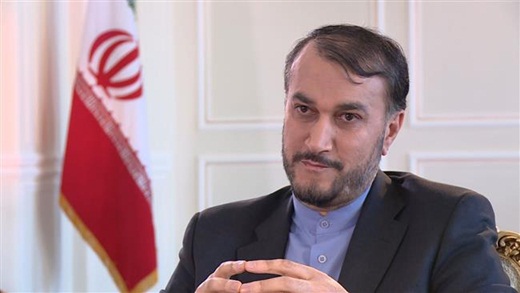
Yemen invasion, a strategic mistake: Senior diplomat

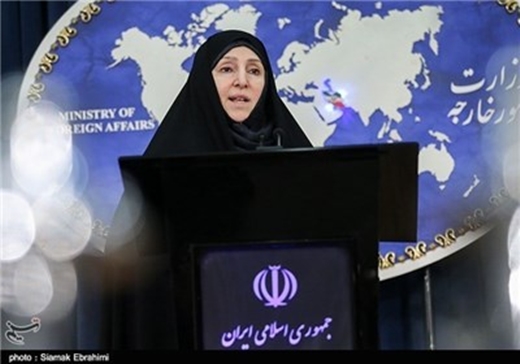
Morteza Samadi

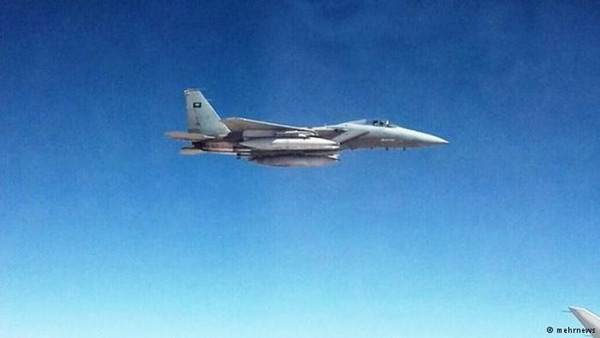
A top Iranian diplomat slammed Saudi-led air strikes against Yemen as a strategic mistake, urging an immediate halt to the bombings which he said only add to extremist moves in the region.

“It seems that, unfortunately, a very strategic mistake has been made in the aggression against Yemen,” Iranian Deputy Foreign Minister Morteza Sarmadi told reporters in Tehran on Sunday.

He called for an immediate end to the air strikes that a coalition of Arab countries, led by Saudi Arabia, has launched on Yemen, stressing the need for dialogue among different Yemeni groups as a way out of the conflict in the poor state on the Arabian Peninsula.

“Undoubtedly, the more this war lingers and the more killing of people and destruction of Yemen’s infrastructure continue, the more hatred, terrorism and extremism will spread in the region and that will be the biggest threat to regional countries that are highly vulnerable in this regard,” Sarmadi noted.

On March 26, Saudi Arabia began to militarily interfere in Yemen’s internal affairs by launching deadly air strikes against the Houthi Ansarullah movement in an attempt to restore power to fugitive Yemeni President Abd Rabbuh Mansur Hadi, a close ally of Riyadh.

Saudi Arabia’s King Salman said in an Arab summit in the Egyptian resort of Sharm el-Sheikh that the operation would continue “until Yemen achieved peace and security”.

A Persian Gulf diplomatic source, speaking on condition of anonymity, said the Arab alliance initially planned a month-long campaign, but it could last up to six months.

Zarif, Kerry open fifth day of nuclear talks in Lausanne

Iran Talks Lusanne

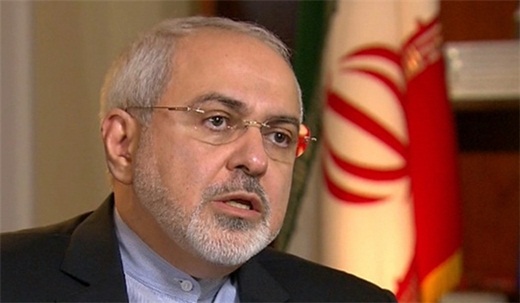
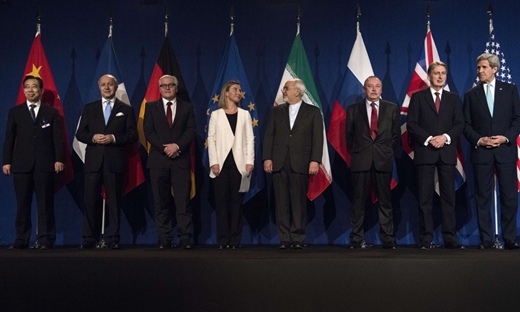
Iranian Foreign Minister Mohammad Javad Zarif and US Secretary of State John Kerry have held another meeting as the fifth day of a new round of talks over Tehran’s nuclear program kicks off in Lausanne, Switzerland.

The meeting between the Iranian and US top diplomats is part of broader negotiations between the Islamic Republic and the P5+1 countries aimed at clinching a final deal over Tehran’s nuclear program.

Following his meeting with Kerry, Zarif is also scheduled to sit down with his Chinese counterpart Wang Yi in the Swiss city.

Russian Foreign Minister Sergei Lavrov and British Foreign Secretary Philip Hammond are also expected to join the talks in Lausanne with separate talks scheduled between the two and Zarif on Sunday.

On Saturday, Zarif held separate talks with his German and French counterparts over the outstanding issues between the parties to the negotiations.

He described his talks with Frank-Walter Steinmeier and Laurent Fabius as “very good” and said, “We discussed all the issues that need to be resolved.”

Zarif said, “I think we can in fact make the necessary progress to be able to resolve all the issues and write them down in a text that will become the final agreement. It depends on how long it will take to do that but we are prepared to work diligently in order to move forward and I think that there is every indication that we can in fact move forward.”

Kerry also held trilateral talks with Steinmeier and Fabius on Saturday.

[…]

Good wives, working moms, top managers are no quitters

iranian women

Women’s social involvement and their active presence in cultural, political and social activities is an indication of how economically developed a country is. A country, in which half of human resources has been kept inactive because of cultural obstacles and traditional beliefs, has a long way to go before being characterized as a developed nation.

Arman-e Emrooz daily ran an opinion piece entitled “Inequality Chips away at Creativity” in early March by Fatemeh Daneshvar, the head of the Social Committee of Tehran City Council, on female executives, the role of women in the country’s development and why they remain under-represented in top leadership positions. The following is a partial translation of the piece:

[…]

For years, Iranian women have stolen men’s thunder by claiming educational positions and studying in postgraduate levels, but they have yet to prove eligible for top managerial levels and civic engagement. There is no denying that female participation in social activities, especially in charitable and religious affairs, has been manifold compared with pre-revolution years.

[…]


Where do Iranian women stand?

It is simple economics: nine women represent their constituencies in the ninth parliament and three women hold a seat on Tehran City Council. Women account for 2-3 percent of managerial posts in executive bodies. A comparison between Iran’s statistics and those of other countries such as Sweden and Norway – which have the highest rate of female representation in top economic and political managerial positions – reveals Iranian women have not done enough to make their presence felt in society.


Major cultural obstacles  

Among the factors that have played a role in sidelining Iranian women and stopping them from growing stronger in top positions of social effectiveness and decision-making, cultural issues are of high importance.

[…]

At a time when a large number of men are weary of shouldering the family’s [heavy] economic burden, and women have taken shaky, still hopeful, steps toward achieving higher education by tapping into [mass] media and asserting their individuality, attempts to sideline half of [the country’s] population under different excuses – women cannot handle certain jobs due to their physical weakness, for instance – do not serve anybody’s interests.


Men and women are not similar

[…]

In our culture, women’s sole responsibility is defined as motherhood and wifehood. Women assume and perform these roles owing to their intrinsic talent. Those women who neglect their motherhood and marital responsibilities due to their engagement in social duties in fact fail to tap into the biggest God-given gift, and they are branded as incomplete people with tunnel-visioned mindsets.

But it would be a fatal mistake if we force women to focus only on their main responsibilities – protecting the foundation of the family – deprive them of training and nurturing other aspects of their lives, and prevent them from playing creative social roles and gaining the least financial and mental independence. The consequences of such a mistake would affect the fabric of society in the first place.


A balance between emotional and life needs

[…]

A look at developed nations – where the state of family is regrettable, emotional bonds have been weakened and the birth rate has decreased – clearly reveals the one-dimensional growth of humans. It also gives substance to concerns about the marginalization of women’s motherly and spousal roles in a society where women are seriously involved in top social and economic activities.

But it is not an impossible job to solve this problem. We shouldn’t try to throw obstacles in the way of women entering social scenes in a bid to prevent such a problem from arising. […]


What is the solution?

Raising awareness and training are perhaps the solution. Now that our girls show interest – more than before – in academic studies, we can and have to tap into this capacity to give a purposeful education to the women who are likely to get into the job market and claim part of managerial roles in the country in the future.

Through this targeted training process, we should try to raise these girls’ knowledge about and understanding of their own real needs. This would help women strike a balance between their noble emotional and life needs – including raising a family and rearing children – and other needs such as independent and meaningful involvement in economic and social activities.

As a result, they can grow on many fronts as far as their individual and social characters are concerned. Only under such circumstances can we protect the family foundation and cultural values as we witness women participate in the development process and claim a bigger share in running the country’s affairs.


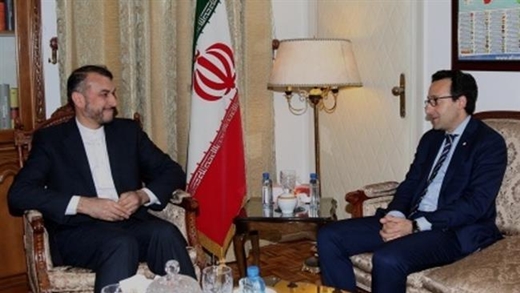
Saudi offensive against Yemen is a strategic mistake: Iranian diplomat

Abdullahian

A senior Iranian official has warned that the Saudi military strikes on Yemen can have serious consequences for the entire Middle East and the Muslim world, saying that the move to launch the military campaign against the Arab country is a strategic mistake.

On Saturday, Hossein Amir-Abdollahian, Iran’s deputy foreign minister for Arab and African Affairs, described as unacceptable the Saudi attacks on the Yemeni people and infrastructure.

“It is unacceptable that Saudi Arabia is attacking the infrastructure and people of this country (Yemen), and unfortunately, the consequences of this Saudi move will be to the detriment of the region and the Islamic world,” Amir-Abdollahian said.

The senior Iranian diplomat advised the new Saudi leadership to deal with the developments in Yemen with “respect and peace.”

Amir-Abdollahian pointed to a similar move by Riyadh in 2011, when Saudi troops were deployed to Bahrain to help the Manama regime in its crackdown against peaceful protests there. He said Riyadh’s military intervention in Bahrain did not end the protests there but, rather, worsened the situation and caused further instability.

The Iranian diplomat advised Riyadh against relying on US support, adding that Tehran will continue to support the political process in Yemen and will urge the political factions in the Arab country to return to national dialogue.

On March 26, the Al Saud regime unleashed deadly air raids against Yemen’s Houthi Ansarullah movement in an attempt to restore power to fugitive Yemeni President Abd Rabbuh Mansur Hadi, a close ally of Riyadh.

[…]

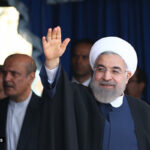
P5+1’s turn to show flexibility in nuclear talks, President Rouhani says

President Rouhani

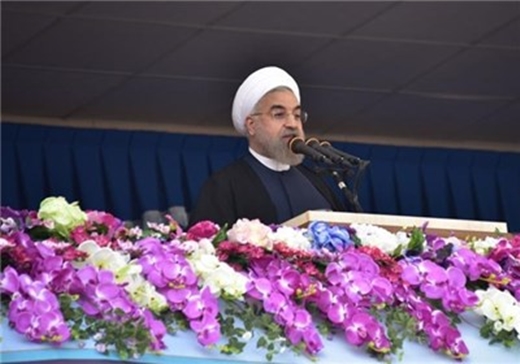
Iranian President Hassan Rouhani says the Islamic Republic has exhibited the necessary flexibility during the course of nuclear negotiations, calling on the P5+1 countries to take the turn and the final steps.

“We have come close to sensitive days. Iran has shown the crucial flexibility during the talks, and now it is the opposite side’s turn to take the final steps,” Rouhani told German Chancellor Angela Merkel during a telephone conversation on Saturday.

President Rouhani added that the removal of sanctions imposed on Iran will be the keystone of a nuclear agreement between the Islamic Republic of Iran and the five permanent members of the UN Security Council – the United States, France, Britain, Russia and China – plus Germany, stressing that the deal will chiefly seek to build trust and confidence between the two sides.

“We have always sought a win-win accord and this will serve the interests of all sides,” Rouhani stated.

Merkel, for her part, voiced Germany’s content with the progressive negotiations, saying her country will constructively support the talks.

The German chancellor noted that Berlin believes in the abolition of anti-Iran sanctions, and spares no effort for a comprehensive deal.

On Saturday evening, High Representative of the European Union for Foreign Affairs and Security Policy Federica Mogherini said the P5+1 countries have never been closer to a deal.

“As you know, we have never been so close to a deal. We still have some critical points that need to be solved, and we are working over the hours, over the weekend to bridge the gaps. I will not go into the details of the negotiations. It’s not the right time to do it. I hope we manage to do it in the coming days,” Mogherini told reports in Lausanne, Switzerland.

Salehi: One or two technical issues still to be resolved

Salehi

Director of the Atomic Energy Organization of Iran (AEOI) Ali Akbar Salehi said one or two technical issues still remain complicated in the nuclear negotiations.

Talking to reporters in Beau Rivage Palace Hotel in Lausanne on Saturday, he said parties to the negotiations could claim they have come to a common understanding on technical issues only when these complicated issues are settled.

In answer to a reporter who asked about the reason for his anger during the past two days, he said he was neither angry nor unhappy. “The process of the negotiations is quite tough but we are moving ahead with strength and reliance on the Almighty as we have the support of both the nation and officials.”

When asked about reports that talks are only a few steps away from producing an agreement, Salehi said negotiations have two dimensions: technical and legal which are interconnected. It will be of no use if technical issues are settled but sanctions still remain in place.

Salehi noted that only when the one or two outstanding technical issues are settled, one can say there is a “common understanding”. Even that does not mean necessarily mean an agreement has been reached.

On the arrival of foreign ministers in the Swiss city he said, the ministers won’t get involved in details, we need to see whether we can conclude things before their arrival.

Mahak Charity among world’s top 10 NGOs

Mahak

Mahak Charity is one of the world’s top ten Non-Governmental Organizations (NGOs). This was announced in a ceremony entitled “Be Kind to Kids with Cancer”” which was attended by musicians, and big names of stage and screen.

Sayeh daily has filed a report on the ceremony. The following is the translation of the report:

Mahak’s Managing Director Arasb Ahmadian said in the ceremony that stem cell transplant – the most advanced cancer treatment – is carried out at Mahak Hospital. He said that children suffering from cancer can be treated in Iran – at Mahak Hospital – and there is no need to send them abroad.

He pointed to the global ranking of the NGOs in 2013 and said Mahak stood 10th among 263 NGOs in the world.

Over the course of history, Ahmadian went on to say, Iranians have always been involved in charitable and humanitarian activities. Well-wishers in the past were engaged in building schools, mosques, bridges and rural roads. Today people’s lifestyles have changed and these activities are pursued by the NGOs.

He further said that Mahak’s turnover this year [starting March 21, 2014] stood at 131 billion tomans (about $43.5 million), of which 110 billion tomans (around $35 million) has been dedicated to the treatment of 9,500 children with cancer in 32 hospitals across the nation.

About 710 people work in three working shifts in hospitals and 300 volunteers are active in Mahak.

Mahak Society to Support Children with Cancer is a non-governmental organization in Tehran dedicated to helping children with cancer. Mahak Hospital and Rehabilitation Complex is a Pediatric Cancer Research and Hospital Center built and organized by Mahak charity. The 120-bedroom complex focuses on the treatment and rehabilitation of children and providing support to their families during treatment.

It takes a woman to shatter the glass ceiling

Sheryl Sandberg

Women should reflect on the past, study the present and step forward, especially when it comes to areas they have failed to do enough in. They should do what it takes to change the status quo without fearing the judgment of others. This is the main advice of Lean In: Women, Work, and the Will to Lead written by Sheryl Sandberg, the chief operating officer of Facebook.

This attitude has been displayed in the book by real examples far from an idealistic mindset, something which makes it all the more gripping.

In its 123rd issue, Tejarat-e Farda (Tomorrow’s Trade) magazine ran a report entitled “Women in the lead” on the female face of Facebook and her best-selling book as well as the translator’s comments in his foreword to the translated version. The following is a free translation of the report:

A translated version of Lean In: Women, Work, and the Will to Lead by Hamid Reza Aryanpour has recently hit bookstore shelves in Iran. The book by Facebook’s number two was a bestseller in 2013 and a 2014 top-seller on management.

The book might be interesting for Iranian readers from different perspectives, among them:

* When writing the book, Sheryl Sandberg was No. 5 on the Forbes list of the world’s most powerful women. The 45-year-old CEO was 10th in the American business magazine’s 2014 list of the most powerful businesswomen.

* For Sandberg, the upward mobility has been a step-by-step process. Having two children, she has experienced failures in her personal life. The advice she offers suits persons of any gender and class.

* For years, she has been involved in efforts to break the glass ceiling and deal with managerial issues [to prove that women can make better managers]. She builds on the viewpoints of pundits, activists and researchers to document the existing professional and social questions.

* Her book features similar conditions which exist in many societies, including Iran where women – married or single – face obstacles the clash between traditions and modernity throws their way.

* Although the book focuses on women, men will find it helpful in two ways: it encourages society – as a whole – to end all manner of discrimination; it is also a book on management which can come in handy for everybody.

* In all, the helpful pieces of advice Lean In: Women, Work, and the Will to Lead puts forward can be used by all people in their professional and personal lives.

As you flip through the book, you should not forget that its female author stands head and shoulders above men in many respects.

The CEO of Facebook has written in the foreword of her book: “This book is not a memoir, although I have included stories about my life. It is not a self-help book, although I truly hope it helps. It is not a book on career management, although I offer advice in that area. It is not a feminist manifesto—okay, it is sort of a feminist manifesto, but one that I hope inspires men as much as it inspires women.

“Whatever this book is, I am writing it for any woman who wants to increase her chances of making it to the top of her field or pursue any goal vigorously. This includes women at all stages of their lives and careers, from those who are just starting out to those who are taking a break and may want to jump back in.

“I am also writing this for any man who wants to understand what a woman—a colleague, wife, mother, or daughter—is up against so that he can do his part to build an equal world.”

Iran’s UN envoy calls for serious approach to extremism

Ali Khoshrou

The Iranian ambassador to the United Nations has warned about the threat of extremism to global security, urging the international community to work out a “serious and comprehensive” approach against such threats.

“A genuine commitment by the international community to a serious and comprehensive approach to challenge extremism is imperative,” Gholamali Khoshroo said on Friday in an address to a UN Security Council meeting in New York.

He added that extremist and terrorist groups will continue to pose the gravest threat to the world unless they are fully dismantled.

Khoshroo emphasized that the international community’s “inconsistent and incoherent” policy on the battle against extremist groups has undermined efforts to confront them and resulted in their emboldening.

The Iranian diplomat reiterated that any failure in the international fight against extremism would doom efforts in ridding the region of “this malicious force.”

Khoshroo also noted that a comprehensive strategy against the ISIL Takfiri terrorists must “address ideological, social, political and economic dimensions of violent extremism.”

Any genuine resolve against extremism must translate into specific and effective actions, he added, stressing that adoption of a united front with a clear message and a coordinated strategy would be imperative.

“The disruption of financial and logistical support and sharing of relevant information and intelligence as well as enforcing effective and coordinated border control are critical to the success of this campaign,” the Iranian ambassador pointed out.

He further warned that failure to disrupt support for terrorists and destroy their networks would lead to more bloodshed and destruction.

Khoshroo said violent extremism has emerged as an unprecedented composition of “narcissistic, dogmatic and violent entities” with a global agenda.

He added that Iran strongly condemns widespread targeting and killing of ethnic and religious minorities by the ISIL Takfiri terrorists and all other extremist groups.

Iran also condemns the destruction of mosques, holy shrines, churches, temples, artifacts and archeological treasures representing the rich cultural heritage of humanity, he said.

[…]

Nuclear sanctions, R&D are disputed issues: Official

Hamid Baeedinejad

A senior member of Iranian negotiating team said there has been some progress in the nuclear talks during the past three days, but there are still some differences on anti-Iran sanctions and nuclear research and development.

Foreign Ministry’s Director General for Political Affairs Hamid Baidinejad told reporters on Friday evening issues under discussion are complicated, but that all parties are trying hard to find solutions for the remaining problems.

He stressed that on-going talks known as Lausanne 2 have been a step forward compared to Lausanne 1 and that contending points have been reduced.

In response to a question about the presence of foreign ministers of Group 5+1 in Lausanne, Baidinejad said there are sensitive issues which are interrelated.

“Political decisions at high level are needed if we want to leave behind this stage and start compiling an agreement. It is possible to happen by Sunday if the other side shows more flexibility,” he said.

Iran and the six world powers have been in talks to resolve outstanding issues surrounding Tehran’s nuclear program to pave the way for striking an overarching deal on the country’s nuclear program as a July 1 deadline draws closer.