Friday, January 2, 2026
Home Blog Page 4769

Storm tears through capital, leaving three injured (PHOTOS)

Storm

A storm packing winds of 65 km an hour tore through Tehran late Monday, leaving three people injured.

The storm which kicked up dust knocked down trees, power lines and scaffolding.

The following images of the storm have been published by different news agencies:

Iran’s Ehsan Hajsafi joins FSV Frankfurt

Hajsafi

Iranian national football team winger Ehsan Hajsafi joined German Bundesliga 2 side FSV Frankfurt.
The 25-year-old has joined FSV Frankfurt until June 30, 2017 for an undisclosed fee.
Hajsafi has played 71 times for the Iranian national football team and scored four goals.
“Ehsan Hajsafi is a highly experienced international player who has represented Iran in the World Cup. He is a versatile player, who can play in different positions in midfield as well,” FSV Frankfurt coach Tomas Oral said

Iran, Oman sign deal to finalize gas pipeline project

139206021449101501039174

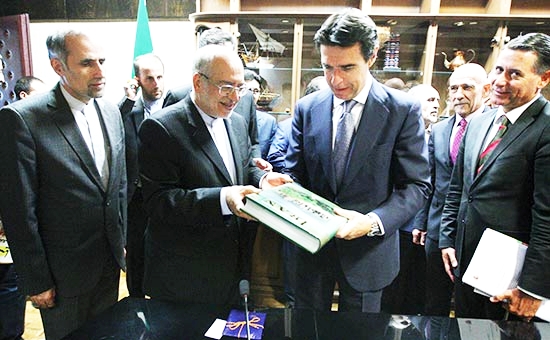
Tehran and Muscat have inked an agreement to finalize the construction of a pipeline which is expected to carry Iran’s gas to the Persian Gulf sultanate.

Salim bin Nasser al Aufi, under-secretary of Oman’s Ministry of Oil and Gas, said the agreement addresses major details, including the cost and route of the project, Oman Daily Observer reported on Monday.

The report added that the gas pipeline is part of a landmark deal clinched by the two countries nearly two years ago.

It added that the 400 km export pipeline will carry Iran’s natural gas to Sohar Port in the Persian Gulf country.

Under the contract, Iran will export 28 million cubic meters of gas per day to Oman for 15 years. Based on the current gas price, the deal is worth $60 billion.

Earlier in June, a senior official with the Iranian Offshore Engineering and Construction Company (IOEC) announced that the company plans to construct a pipeline for exporting gas from Iran to Oman.

“The construction of the gas export pipeline from Iran to Oman will be carried out by the IOEC,” Rahim Tabrizi said in an interview with the Tasnim News Agency at that time.

Kameli had earlier said that construction projects are currently underway and the Iranian contractor is carrying out the basic engineering studies on the pipeline.

Iran’s total gas exports to foreign countries reached over 9.6 billion cubic meters (bcm) in 2014, according to the 64th Edition of the BP Statistical Review of World Energy.

In its statistical review, BP classed Iran as the world’s top gas reserves holder with 33.8 trillion cubic meters.

India, Korea plan $10 billion energy park in Iran

Green Energy

Enterprise Company has also proposed to build gas-powered and combined cycle plants to produce 600 megawatts of electricity, Suesh Sharma, coordinator and head of GTPP Oil and Gas, said.

Iranian project owners have announced readiness to undertake 30% of investment and the foreign side to provide the rest of the funds, an IRNA reporter told Press TV.

Representatives of the consortium visited provincial authorities on Sunday to outline their plans, the news agency said.

The project is part of Iran’s bid to establish 5,000 megawatts of renewable capacity in the country which relies on fossil fuels for 854% of its electricity.

Renewables currently account for less than 14% of the country’s energy mix which mainly come from hydro plants but a lingering drought is reducing their production.

Iran is the biggest producer of electricity in the Middle East, generating over 70,000 megawatt-hours.

Tokyo welcomes JCPOA, closer ties with Tehran

Larijani

A top Japanese parliamentarian has welcomed the nuclear agreement recently sealed by Iran and P5+1 over the Islamic Republic’s nuclear program.

Tokyo is delighted at the agreement and would like to see the ground prepared for its implementation, said Speaker of Japan’s House of Representatives Tadamori Oshima in a meeting with Iranian Parliament Speaker Ali Larijani in New York.

Oshima and Larijani are currently in New York to attend the Fourth World Conference of Parliament Speakers convened by the Inter-Parliamentary Union (IPU) in cooperation with the United Nations.

The top Japanese parliamentarian further said his country stands ready to work with Tehran to help promote peace and stability at regional and international levels.

Japan is prepared to open up a new chapter in its relations with Iran on political, parliamentary, economic, trade and cultural fronts, Oshima further said.

Larijani, for his part, said the Iranian government and people have a “positive view” toward the enhancement of Tehran-Tokyo ties.

Age-old relations between the two countries in political, economic and cultural arenas serve as “capital” for closer mutual cooperation and interactions, he said.

“All potential should be tapped in order to boost [bilateral] relations,” said the Iranian parliament speaker.

In the post-sanctions era, said Larijani, the ground is more prepared for closer Tehran-Tokyo cooperation and Japan can seize this opportunity.

Larijani also expressed hope that an extradition treaty inked by Iran and Japan will come into force as soon as possible.

Qazvin Day (PHOTOS)

Qazvin Day0

August 31 marks the anniversary of the designation of Qazvin – a city west of Tehran – as the capital of the Safavid dynasty centuries ago.

To commemorate what is known as Qazvin Day, some old professions have been revived at the Caravanserai of Sa’d al-Saltaneh.

The following are images of the commemorative event posted online by shabestan.ir:

Iranian diplomats visit peace-themed calligraphy exhibition in Tehran

9dfbea7b-533c-4319-aa8b-de562273f38a

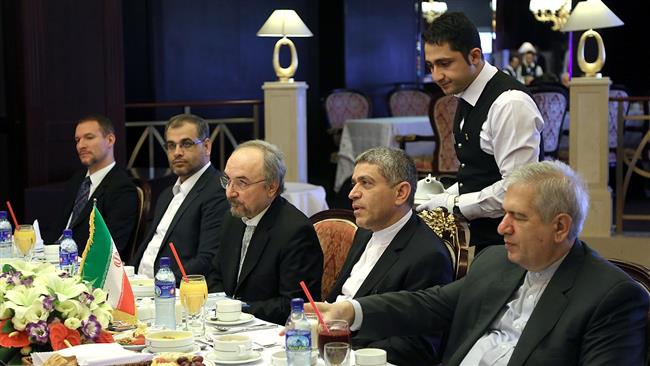
A weeklong exhibition which put on display the works of Iranian calligrapher Hadi Darban, both in Persian and English with a message of peace, was held at Tehran’s Niavaran Cultural Center last week.

The following is the translation of a report on the expo published by Iran Student Correspondent Association (iscanews.ir):

After a visit to the exhibition, Deputy Foreign Minister for Legal and International Affairs Seyyed Abbas Araghchi said, “Depicting the concept of peace in world literature is innovative, and at the expo excerpts of literary works from different nations and internationally respected poets and prophets can be seen.”

Araghchi added, “The exhibition is a valuable cultural initiative to promote peace and to counter violence, massacre and war. It can help fight extremism and violence throughout the world.”

Deputy Foreign Minister for Euro-American Affairs Majid Takht-e Ravanchi, who also visited the expo, said, “The message of peace and friendship is clearly promoted by our religious teachings. The expo features quotes on peace and friendship by Persian poets as well as religious leaders and scholars. Remarkable topics have been chosen; beautiful handwriting and magnificent illuminated manuscripts as well as translation of the quotes for those who do not know Persian can be very useful.”

After inspecting the expo, Sadegh Kharrazi, another veteran diplomat, said, “Today’s world needs peace. Mankind cannot experience security and serenity without peace. All divine religions and cultures identify peace as a lasting virtue. The artist who has identified what today’s world needs and taken the initiative to create works of art with a global impact is admirable.”


Ijtihad in Islam amounts to principlist reformism

rafsanjani-hashemi

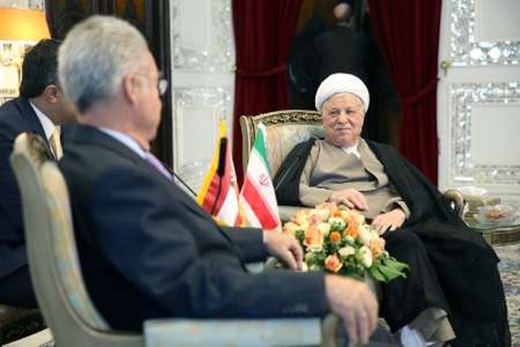
The chairman of the Expediency Council has said that Ijtihad is the principlist reformism which requires adherence to principles and modification in step with the requirements of the times.

Ayatollah Akbar Hashemi Rafsanjani made the comment on Sunday and added that reformists and principlists are simply two titles and the followers of reformism and principlism should only have differences over tactics not tenets. The following is the translation of part of the remarks of the top councilor as reported by the Iranian Students’ News Agency (ISNA) on August 30:

Lines of thinking

It is natural for reformists and principlists to be at odds over methods of administering affairs in the country, but unfortunately some have taken their differences to the level of principles and talk out of grudge. Orthodox principlists are reformist [in nature] and truth-seeking reformists are principlist.

Islam has put forward the idea of Ijtihad [the independent or original interpretation of the problems which are not precisely covered by the holy Koran, Hadith or scholarly consensus] which urges people to maintain the principles and help take society toward better conditions. This is principlist reformism.

Revolution’s values

Society’s culture can undergo transformation if people and officials steer clear of ethical vice such as insult, slander and backbiting. If we keep our distance from such demerits, the Islamic Revolution can turn into a model for the oppressed nations.

Iran’s revolution is unique in the history of Islam and in the contemporary world. Those people who honestly took up the fight [against colonialism] and backed the [late] Imam and his fellow clerics and put their lives on the line will not let outside enemies hijack the ideals of Imam and the martyrs. […]

[Supreme Leader] Ayatollah Khamenei was one of the closest figures to Imam. He is a real, devout revolutionary who remains committed to his allegiance to Imam and the martyrs.

People’s suffrage and role

There are some who think people’s votes are simply for decorative purposes. They want to create a gap between people and the pillars of the revolution. Imam, the Supreme Leader and all those who care for the revolution have always highlighted the role people’s votes play, something that stems from Islamic principles.

One way to run the country is to give the public a say in the administration of affairs, and that can be institutionalized through boosting parties in the country. Different parties should be established so that we can promote the culture of a multi-party system. What matters is how we walk down the path of revolution and how we safeguard its achievements; the names [we choose for these parties] are of secondary importance.

It is an unforgivable sin to dissuade revolutionaries at a time when the friends and foes are watching Iran to see how the Islamic Republic will act on the world stage and how it will influence regional countries. Fuelling differences is a big sin at this juncture. […]

Other revolutions

[…] Extremist terrorists – the third side of the triangle of despotism and colonialism – targeted people’s economic, political and social security [in Egypt]. Lack of experience on the part of the so-called Islamic groups hurt people and made them vote for military men and the remnants of the previous government.

The absence of vigilant leadership, people’s failure to get involved in the country’s affairs and fanning the flames of tensions are the three reasons why these revolutions failed to achieve their ideals and objectives. […]

Terrorism

Terrorists who build on their global communications have benefited from occupying parts of Islamic countries, especially Iraq and Syria. If these radical groups are not countered, radicalism is likely to take advantage of popular dissatisfaction in different countries and spill over into others. […]

[…]

Where does tourism stand in Iran’s Sixth Development Plan?

esfahan-010-www-mehrad-co-coml

Iran has detailed development plans. Experts say that the country’s first five development plans – each running for five years – have failed to achieve their intended results either because of mismanagement, especially during the ninth and tenth governments under Ahmadinejad, or because of international sanctions, especially in the last three years.

Under Article 50 of the general policies of the country’s Sixth [Economic, Social, and Cultural] Development Plan, the tourism industry should be boosted to ensure a minimum five-fold increase, by 2020, in the number of foreign tourists visiting Iran. According to the deputy director for investment at the Cultural Heritage, Tourism, and Handicrafts Organization, the Management and Planning Organization has defined twelve areas in the Sixth Development Plan with one solely focusing on tourism.

Donya-e Eqtesad on August 26 published a report on tourism and the place it has been given in the country’s Sixth Development Plan. It also compares the sixth plan with previous five-year plans asking whether the new development document creates enough opportunities for the country to boost its tourism. The following is the translation of part of that report which includes an interview with Gholamheidar Ebrahim-Bay Salami, the head of the Iranian Tourism Scientific Association (ITSA):

Some experts say that government should take the first step toward developing the country’s tourism industry. They say government should decide to give top priority to tourism and take measures in this regard. Gholamheidar Ebrahim-Bay Salami, a member of the Supreme Cultural Heritage and Tourism Council, says in the general policies of the Sixth Development Plan, the Supreme Leader has openly stressed the need for increasing the number of foreign arrivals; that’s why the government too should focus all its attention on boosting the tourism industry.

He says, “If we want to generate revenues, create jobs, eliminate poverty, promote justice, and protect the environment and the country’s material and spiritual resources, we need to bolster tourism. A country is deprived of progress and security when its tourism stops growing.[…]”.

[…]

He says in the third and fourth development plans, tourism was the country’s 43rd to 46th priority respectively. “Now that we are about to putting together the sixth plan, we need to redouble our efforts to place tourism on top of this plan’s priorities. To make it happen, we should focus on core points such as tapping into the potential of international companies and streamlining joint ventures in the post-sanctions era”.
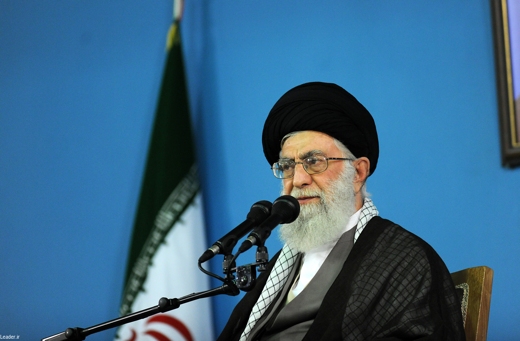
The ITSA chief went on to highlight the necessity for the adoption of laws to smoothly run the industry, saying, “This can be an incentive and catalyst for investment by the private sector in the tourism industry so that the country can absorb both national and international investors and those involved in the industry can make profits.

“Making laws which can streamline things can direct the huge volume of un-invested liquidity in the country – hovering above $250 b – toward the tourism industry. Major tourism laws such as Article 11 of the law on the Cultural Heritage Organization which focuses on finances, ten-year tax exemption, duty-free services for importing tourism-related cars and production of quality cars in Iran should be reformed.

“The sixth development plan calls for the expansion and improvement of transportation in the country. Proper measures should be taken to develop roads and raise the quality of vehicles. As the general policies of the sixth plan focus on developing transportation and creating a competitive market, we need to put development of rail and air fleet on the agenda. The country now needs to add 1,500 cars to its rail fleet and 400 planes to its air fleet,” the official said.

“The country’s airports should be developed and equipped, especially Imam Khomeini International Airport whose passenger-transfer capacity [passenger load factor] should be raised to 25m a year. We all know that the glory of the Islamic-Iranian culture and the hospitality of the Iranians are reflected in the planning we make for the tourism industry. We should make proper planning so that any tourist who comes to Iran can feel the noble culture of Iran firsthand.

“The sixth plan should also pay close attention to the following: a science-based look at the tourism industry, tapping into the experiences of other countries in developing tourism, organizing and exploiting the potential of tourism graduates, and setting the stage for local communities to get involved in the development of tourism.

“All Iranian officials have started to pay attention to the role tourism plays in the country’s economy, but they have yet to take basic steps toward that goal, steps such as placing tourism on the priority list of the sixth plan and implementation of measures to boost tourism,” he concluded.

Bank Melli Iran pursuing case of frozen assets in US

13940608000745_PhotoI

Managing Director of Bank Melli Iran Abdolnaser Hemmati announced on Sunday that the state-owned bank seeks to overturn the given verdict by a court of appeals in the US on its frozen assets in two American institutes.

Hemmati said Bank Melli Iran used to cooperate with American Master and Visa Card institutes and had up to $15 million there by 1995.

The bank’s money was frozen in the same year as part of the US government sanctions against Iran for its peaceful nuclear program, he added.

“When a new round of Western-led sanctions was imposed on Iran in 2007, the said frozen assets plus the added interest grew up to $21m, according to the available documents,” Hemmati said, and added, “A Jewish-American family made a complaint in the United States in that year and the court asked Visa Card institute to block Bank Melli assets.”

As Hemmati explained, an American court of appeals, which has been held recently to re-investigate the case, has issued permission for making withdrawals of Bank Melli assets.

“The lawyer for the Bank Melli Iran is very seriously pursuing the case and we hope for a solution,” Hemmati said.