Friday, December 26, 2025
Home Blog Page 4724

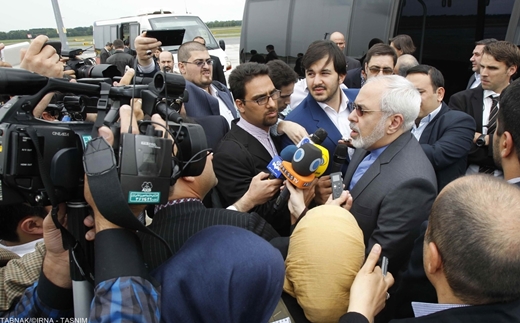
Talks are in a sensitive phase: Zarif

Zarif-Press

Iranian Foreign Minister Mohammad Javad Zarif said Tuesday that nuclear talks between Iran and P5+1 have now reached a sensitive phase.

The only agreement the Iranian nation accepts is one which is fair and balanced, Zarif said upon arrival in Vienna.

The agreement should preserve the nation’s rights and be based on national dignity, said he.

He added he feels there is possibility of progress with the help of political determination and hard work.

What we need today is the other side’s political determination that can smooth the path to an acceptable and sustainable conclusion, he added.

Zarif said he thinks the other side understands that a good long-lasting agreement would be out-of-reach unless the rights of the Iranian nation are recognized.

Asked about hope for a comprehensive agreement, he replied that the talks should be balanced and reasonable.

All Iranian officials have announced that they are ready for exchange of reasonable and logical talks, he said.

If the two sides reach any agreement, it should be based on what both Iran and the Western states accept, Zarif said.

If the two hold talks based on Lausanne statement, there would be a possibility for finding proper solutions, noted the Iranian foreign minister.

Asked about the existing disagreements, Zarif said the text of agreement would not be concluded unless all of its aspects are reviewed, adding we should pass this phase.

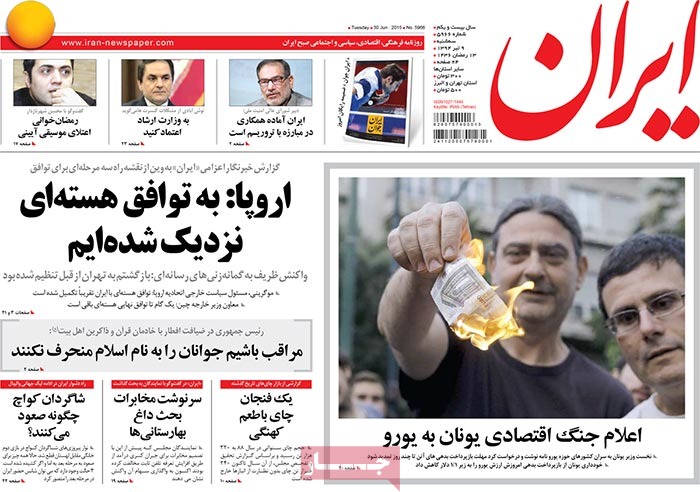
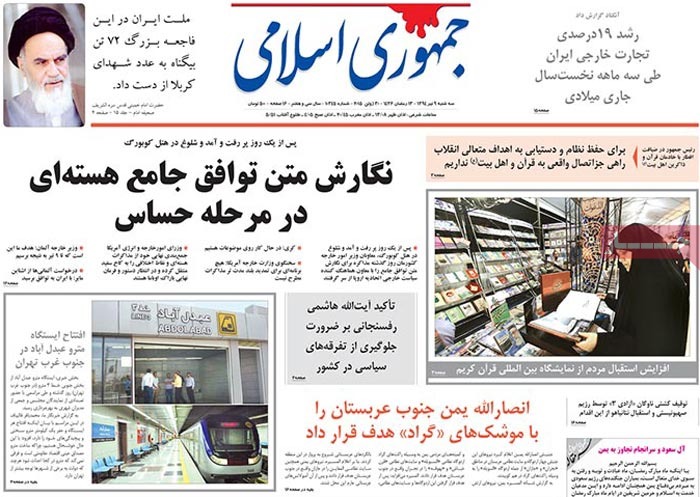
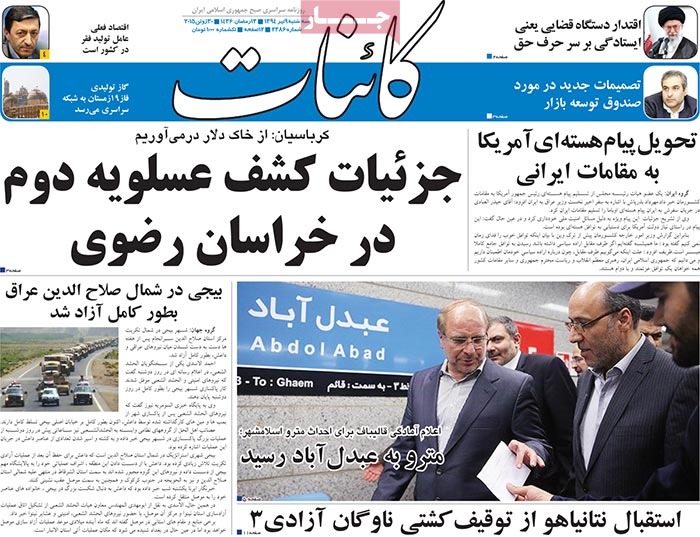
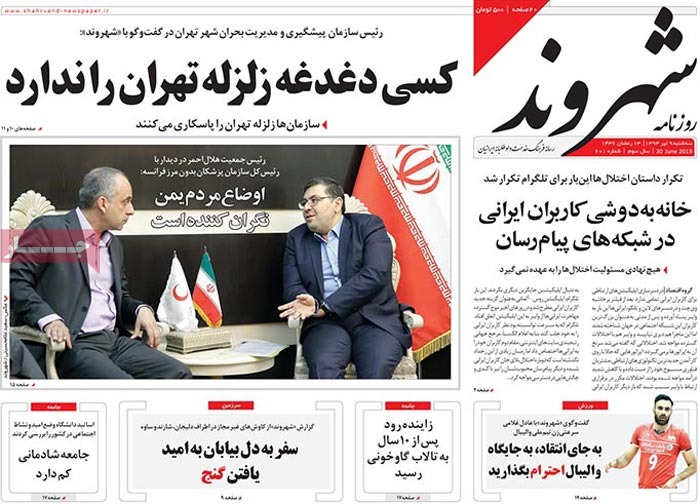
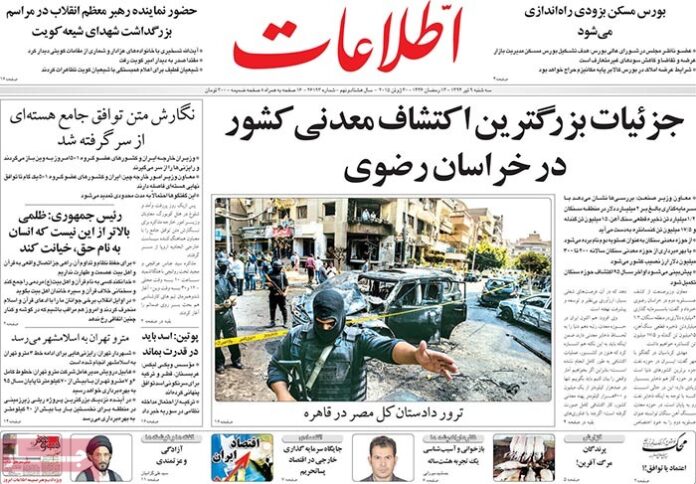
A look at Iranian newspaper front pages on June 30

Iranian Newspapers Headlines

News about the home stretch of nuclear talks between Iran and P5+1 dominated the front pages of Iranian newspapers on Tuesday.


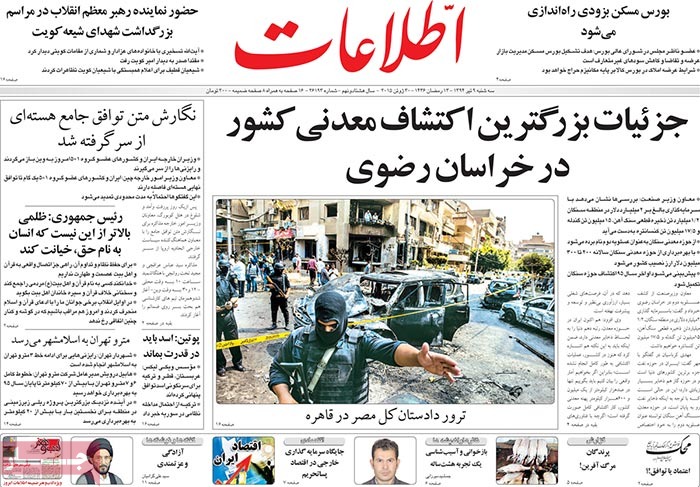
Ettela’at: The biggest mineral find in the country in Khorasan Razavi Province

The deputy industry minister says studies suggest some $2 billion in investment in Sangan will yield 1.2 billion tons of iron ore, 15 million tons of pellets and 17.5 million tons of concentrates.

When fully operational, Sangan, which is described as Iran’s second Assaluyeh [a giant gas field Iran shares with Qatar], will bring in between $200-$300 million in hard currency each year.


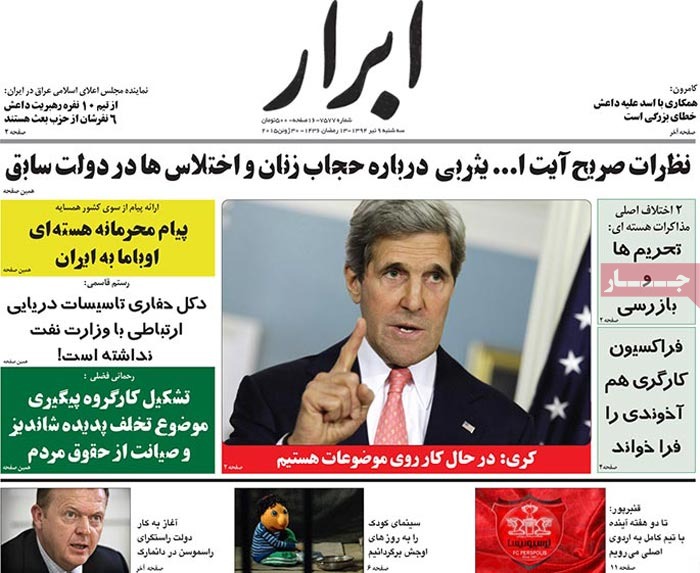
Abrar: The Iran representative of the Islamic Supreme Council of Iraq has said that six of the 10 members of the IS leadership council are Baathists.

Abrar: Obama has sent a secret nuclear message to Iran through a neighboring country.


A look at Iranian newspaper front pages on June 30


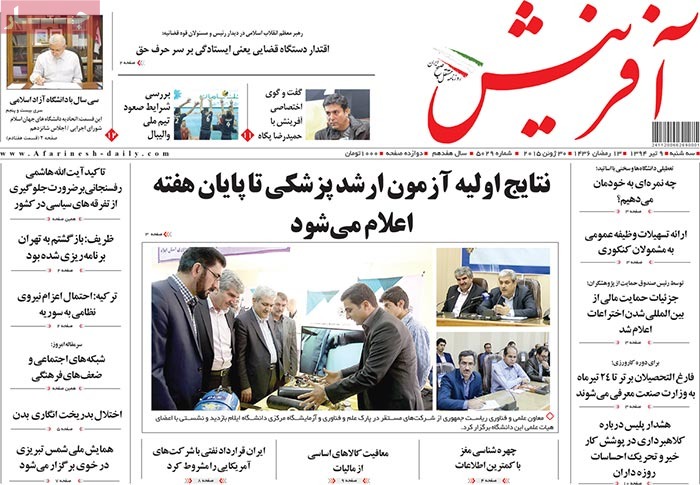
Afarinesh: Ayatollah Akbar Hashemi Rafsanjani has underlined efforts to prevent political division in the country.


A look at Iranian newspaper front pages on June 30


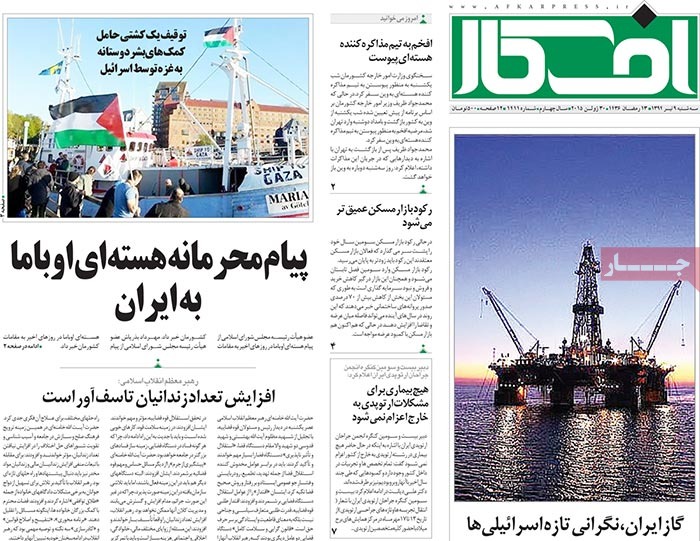
Afkar: Foreign Ministry Spokeswoman Marzieh Afkham has joined Iran’s negotiating team in Vienna.


A look at Iranian newspaper front pages on June 30


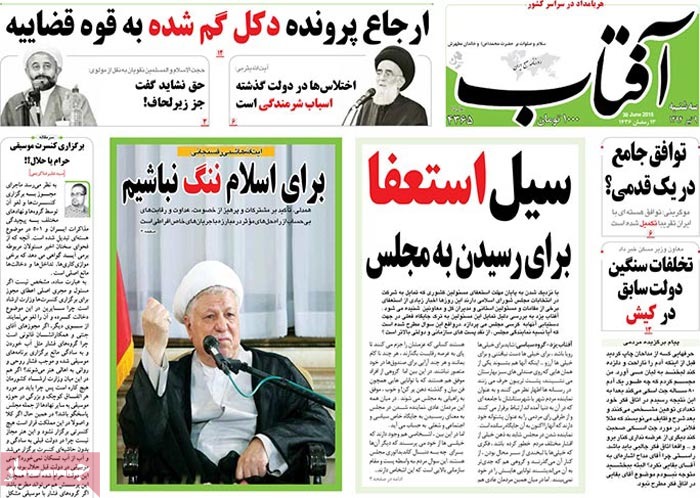
Aftab-e Yazd: “The embezzlements committed when the previous government was in office are a source of shame,” said Ayatollah Yasrebi, the head of Kashan Seminary School.

Aftab-e Yazd: A stream of resignations [by public officials] to run for parliament.

[Under Iran’s electoral rules, candidates should not hold public office when running for elected office.]


A look at Iranian newspaper front pages on June 30


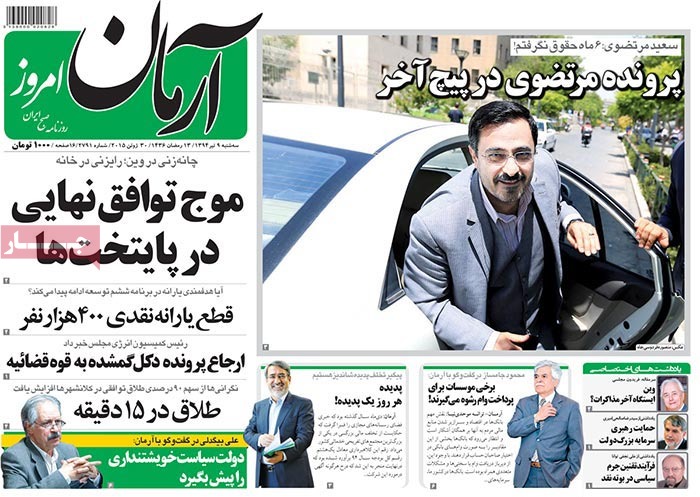
Arman-e Emrooz: The chairman of parliament’s Energy Committee has said that the case involving the disappearance of an oil derrick [when Ahmadinejad was president] has been referred to the Judiciary.


A look at Iranian newspaper front pages on June 30


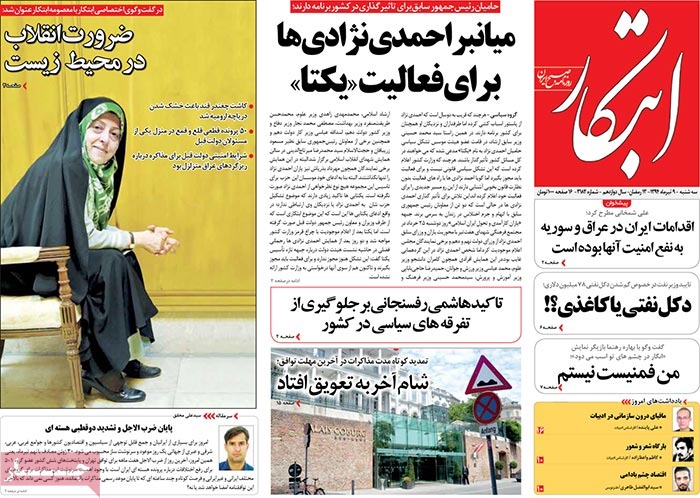
Ebtekar: “What Iran has done in Iraq and Syria has served the cause of security,” said the secretary of the Supreme National Security Council.


A look at Iranian newspaper front pages on June 30


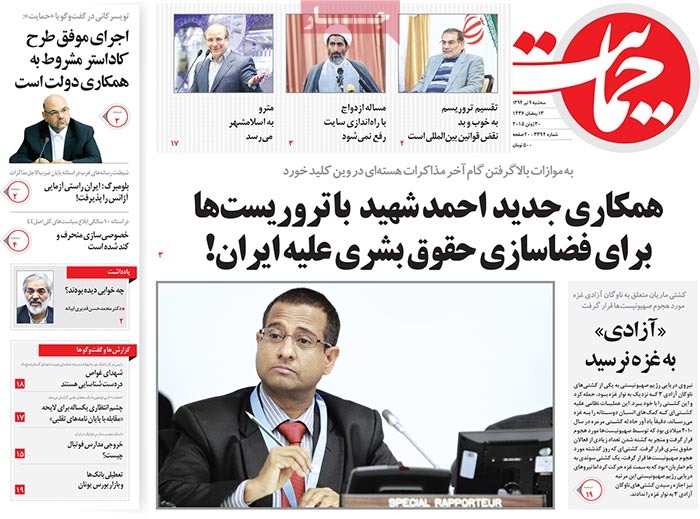
Hemayat: Ahmed Shaheed, the Special Rapporteur on human rights in Iran, is working in cahoots with terrorists to make rights ballyhoo about Iran.


A look at Iranian newspaper front pages on June 30


Iran: “We should be careful not to allow some to lead our youth astray in the name of Islam,” said President Rouhani.


A look at Iranian newspaper front pages on June 30


Jomhouri Islami: Iran’s foreign trade has registered a 19 percent rise in the first quarter of 2015.


A look at Iranian newspaper front pages on June 30


Kaenat: The Iraqi city of Baiji has been liberated; IS is on the run.


A look at Iranian newspaper front pages on June 30


Shahrvand: In a meeting with the president of Médecins Sans Frontières (MSF), the head of Iran’s Red Crescent Society has said that the situation of the Yemeni people is alarming.


A look at Iranian newspaper front pages on June 30

Highlights of Ettela’at newspaper on June 30

ettelaat-30-june

 The biggest mineral find in the country in Khorasan Razavi Province

The deputy industry minister says studies suggest some $2 billion in investment in Sangan will yield 1.2 billion tons of iron ore, 15 million tons of pellets and 17.5 million tons of concentrates.

When fully operational, Sangan, which is described as Iran’s second Assaluyeh [a giant gas field Iran shares with Qatar], will bring in between $200-$300 million in hard currency each year.

 Egypt’s top public prosecutor has been killed in a bomb attack in Cairo.

 A housing stock exchange is to be launched soon.

The launch is designed to manage supply and demand on the housing market and put a lid on unconventional profits some rake in.

♦ The Supreme Leader’s envoy has attended a service for Kuwaiti Shiites martyred in a terrorist bombing in Kuwait City on Friday.

Ayatollah Taskhiri met with the grieved families of the martyred worshippers targeted in a mosque and a number of Kuwaiti officials.

♦ Meetings to nail a final agreement [between Iran and P5+1] have resumed.

The foreign ministers of Iran and P5+1 will return to Vienna later today to resume nuclear talks.

♦ “No injustice is worse than betrayal in the name of service,” said President Rouhani.

♦ Russian President Vladimir Putin has said that Syrian President Assad should remain in power.

Turkey has said that military intervention in Syria is a possibility.

♦ The Capital’s subway service is to be extended to Islamshahr [a town to the southwest of Tehran].

The managing director of Tehran Subway Company said that two new underground lines will be launched by March 2017.

 ISIS officially launches activities in Yemen

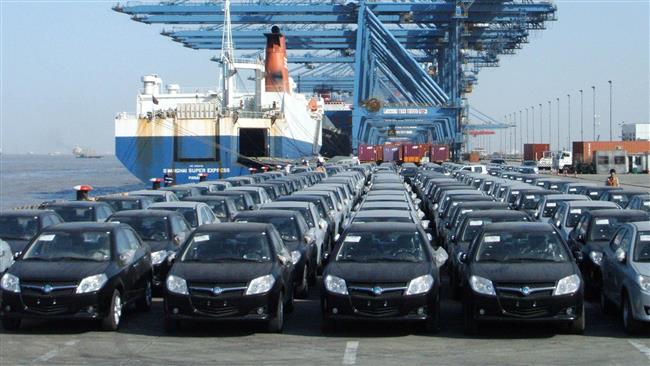
Iran car imports down 51%

Cars import

Newly published figures suggest that Iran’s car imports significantly dropped in the first quarter of the current Persian calendar year (starting on March 21).

According to official statistics, the number of foreign cars brought into Iran in the Q1 dropped by 51% year-on-year.

In total, 10,555 cars were imported in the first three months of the current year, more than 50% down from 21,500 cars brought into the country during the same period last year.

The plunge is as part of the Iranian government’s plans to slash car imports in an effort to boost the country’s domestic auto industries.

The automobile industry is seen as Iran’s biggest non-oil sector, accounting for nearly 10% of the country’s gross domestic product (GDP).

Iran Khodro and Saipa account for more than 90 percent of the total domestic production in Iran.

Latest data shows that Iran ranks 18th on the list of the world’s top auto manufacturers.

The 2014 production statistics by the International Organization of Motor Vehicle Manufacturers (OICA) indicate Iran’s auto production increased by 46.7 percent in the 12-month period.

The figures show Iranian automakers produced 1,090,846 cars and commercial vehicles last year.

Meanwhile, Iran’s media reported on Saturday that the country’s auto industry could see a major rise in production of cars in 2015.

According to a survey conducted by the Business Monitor International (BMI), the production of cars in Iran could witness a 28% increase if Tehran and the P5+1 group of countries manage to secure a final deal over the Iranian nuclear program.

The BMI has added in its report that the final Iran deal – if ever reached – will play a crucial role in the development of the country’s auto industry.

BMI also forecast that Iran’s total auto output could rise to above 2 million cars within five years.

Iran, P5+1 resume work on drafting text of final nuclear deal

Araghchi-nuclear talks

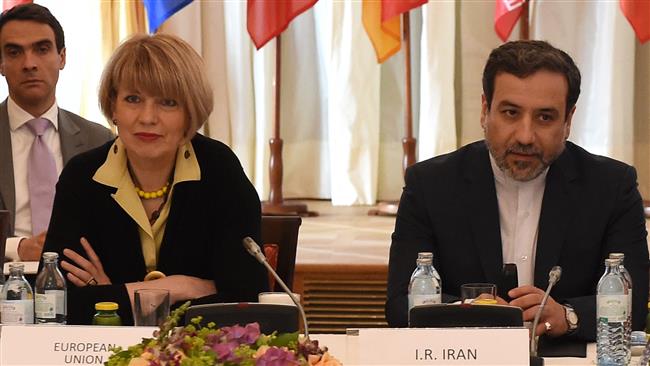
Senior representatives of Iran and the P5+1 group of countries have held talks on drafting the text of a possible final agreement over Tehran’s nuclear program.

The Iranian deputy foreign ministers, Abbas Araghchi and Majid Takht-e Ravanchi, held a three-hour meeting with European Union deputy foreign policy chief Helga Schmid in the Austrian capital, Vienna, on Monday.

The members of Iran’s negotiating team also held discussions with US Under Secretary of State for Political Affairs Wendy Sherman on the draft of the final deal.

Experts from Iran, led by director general for political and international security affairs at Iran’s Foreign Ministry, Hamid Baeidinejad, and the six world powers held simultaneous talks.

Iran and the five permanent members of the UN Security Council – the United States, France, Britain, China and Russia – plus Germany are holding talks to finalize the text of a possible deal over Iran’s nuclear program by the end of June.

The two sides reached a mutual understanding on the key parameters of the potential deal in the Swiss city of Lausanne on April 2.

Foreign ministers returning to Vienna

Foreign Minister Mohammad Javad Zarif, who returned to Tehran from Vienna early Monday, is scheduled to rejoin the nuclear talks later on Tuesday.

Director of the Atomic Energy Organization of Iran Ali Akbar Salehi and Hossein Fereydoun, Iranian President Hassan Rouhani’s special aide, are also set to join the negotiating team.

French and German foreign ministers Laurent Fabius and Frank-Walter Steinmeier as well as British Foreign Secretary Philip Hammond are set to return to the Austrian capital for sensitive nuclear talks as a self-imposed June-end deadline arrives Tuesday.

[…]

Minister submits President Rouhani’s message to Algerian counterpart

Iran-Algeria

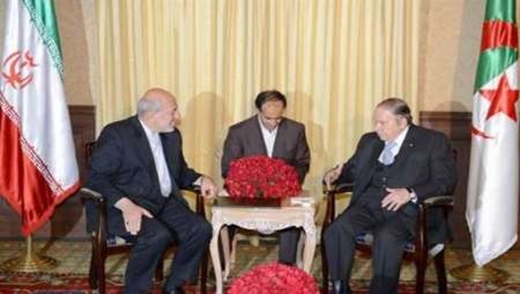
Iran’s Energy Minister Hamid Chitchian on Monday submitted President Hassan Rouhani’s message to Algerian President Abdelaziz Bouteflika, inviting him to attend a 3rd Summit of the Gas Exporting Countries Forum (GECF) which will be held in Tehran on November 23, 2015.

Bouteflika thanked the Iranian minister for the invitation and wished success for Tehran in holding the GECF meeting.

He referred to the falling oil prices and their economic impact and said Iran and Algeria should cooperate in this respect.

On regional developments, the Algerian president called for an end to violence and clashes, preventing bloodshed and establishing conditions for peace, stability and calm.

He said provoking ethnic and religious conflicts is a plot hatched by enemies to undermine countries’ security.

He added that his country opposes any foreign intervention in other countries’ affairs.

Calling Iran-Algeria political ties “good and strong”, he said his government is ready to bolster economic ties with Iran.

Chitchian in turn said Tehran is ready for continued consultation with Algeria in the field of oil price.

He called for the removal of executive problems standing in the way of the expansion of mutual economic relations and for a more prominent presence of Iranian companies in Algeria.

The GECF which was established in Tehran in 2001 has 18 members and observers.

[…]

AIIB discourages poverty, promotes peace, stability: Economy chief

Tayyebnia

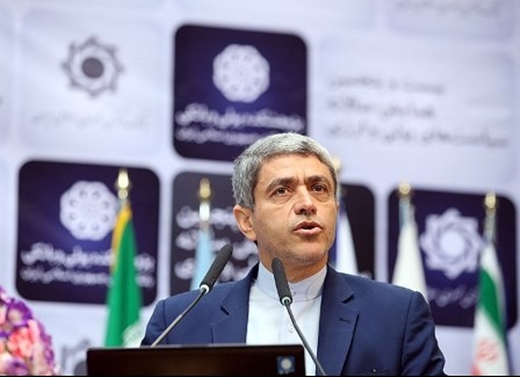
Iran’s Minister of Economy and Financial Affairs Ali Tayyebnia said in Beijing on Monday that establishment of the Asian Infrastructure Investment Bank (AIIB) will lower poverty and help establish peace and stability in the region.

Speaking after a ceremony to sign the articles of association (AOA) of the Asian Infrastructure Investment Bank (AIIB), which outlines the legal framework and management structure of the institution, Tayyebnia said the important role of Asian states in global economy and impact of the bank on infrastructural development of the countries to link their economy with the world, is evident.

He further said that infrastructural development of the members is the most important point for gaining access to economic integrity of the Asian countries.

He expressed hoped that future activities of the bank in financing infrastructural projects in Asia will ease the shortage of credit and help commission new activities.

Tayyebnia said he was pleased that in addition to Asian states, non-Asians, especially European states, had a share in the establishment of the bank, and said such contribution is indicative of the serious endeavor of other countries toward sustainable economic development and living standards of the public.

Meanwhile, Chinese Finance Minister, Lou Jiwei, in a speech to the AIIB meeting, expressed hope that the AIIB will be helpful in the development drive of the Asian continent.

Laylaz: Iran’s economy is not sanctionable (PART ONE)

leilaz_saeed

An Iranian economist says that from 2005 onward Iran’s economy has grown more dependent on imports thanks to the organized, systematic and intentional measures [the governments have adopted].

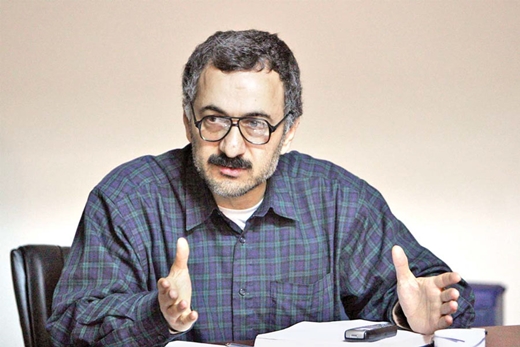
Saeed Laylaz, who is also a journalist, a university professor and a former advisor to President Mohammad Khatami, made the comment in an interview with Khabaronline.ir and added although the removal of sanctions is necessary for the country, it will not work miracles.

The following is a brief translation of PART ONE of his remarks in the interview preceded by an introduction by Saeed Jafari Pouya, the interviewer:

Saeed Laylaz is among a handful of economists who know history and can analyze international politics. The experts in economics are usually versed in their own territory and perhaps have no interest in taking a broader look at political and international developments.

Laylaz, however, is blessed with these characteristics, something which renders him an outstanding analyst in international economics and politics. More than sanctions, he says, the sometime deliberate mismanagements of the previous government have created such a [problematic economic] situation in the country.

Iran’s construction is possible even under sanctions

Basically, the Iranian economy is not sanctionable. If you look back at the country’s experience over the past 20 years, you will realize that what I say is true. The D’Amato law [the “Iran Foreign Oil Sanctions Act” introduced by Senator Alfonse D’Amato (R-NY, 1981-1998) on September 8, 1995 to sanction foreign firms’ exports to Iran of energy technology] was never revoked. The act mainly focused on Iran’s oil, gas and petrochemistry industries, the same areas Iran posted the most growth in after the introduction of the congressional act. The reason: the establishment and government wanted to make progress in these areas despite all domestic problems.

Americans slapped most despicable embargos against Cuba

No ties in the world are more unequal and unfair than those between the US and Cuba. The embargos the US slapped against Cuba are among the most despicable ones. Cuba’s embargos which have been in place for more than 50 years have been worse than Iran’s.

They wouldn’t even sell Iraq pencils

I realized during a trip to Iraq in 1996, when the sanctions [against Iraq] were at the highest level, that the Iraqi children did not have pencils. When I inquired about the reason behind the shortage of pencils, officials told me pencils had been on the sanctions list as a dual-purpose item  with the West arguing their graphite deposit could be used for raising the resilience of the warheads and ballistic missiles.

Economic sanctions crush low-income people 

Where in Iran do you think we can find a place that bears resemblance to a country hit by sanctions? You can ask foreigners who come to Iran whether Iran looks like a country under sanctions. Sometimes the luxury items which are at many people’s disposal in Iran are not as plentiful in Europe and other developed countries. …

Of course, I do not say that sanctions have not brought pressure to bear on people. That the low-income layers of society have felt the pains of sanctions is a separate case, I want to say that the socio-political structure of Iran is not like that of a country which is reeling under tough sanctions. Such sanctions do not deliver a meaningful blow to the country.

Sanctions don’t bring nations to their knees

Since the Napoleonic era, which marks the beginning of the modern-day sanctions, no governments have been brought to their knees because of sanctions. In Cuba’s case, it was the United States that was brought to its knees. Given the situation in Iraq, the US resorted to military action and an internal agreement was the endgame when it came to [sanctions against] other countries such as South Africa.

Iran is a country which has admittedly a $40b smuggling problem to deal with on an annual basis. That comes despite the fact that around 150,000 border guards are constantly clamping down on traffickers. What if the government looks the other way? Isn’t it possible for smuggling to add up to $100b? The answer is a definitive yes.

Iran’s economy hit by mismanagement more than sanctions

Since 2005, deliberate, organized and systematic plans have been at work to make Iran’s economy more dependent on imports. For instance, the country’s import of goods and services hit $100b in 2011, the highest in Iran’s history. The reason: a new bourgeoisie was formed in Iran the members of which knew they would be in office for a short period so they decided to accumulate wealth. They knew this would be achievable only through trade and imports, not production.

I do not believe that Iran’s economy has been hit hardest because of sanctions. Compared with the effect of mismanagement and intention to accumulate wealth through imports, the impact of sanctions [on the economy] is almost none. That’s why everybody has started to complain under the burdens of sanctions, but there is no sign of the sanctions in the country, neither in foodstuffs nor in the high-tech industries such as mobile phones. Foreign journalists who come to Iran and interview me say they are surprised by the high number of iPhones in people’s hands in Iran. It is not the case in Europe, they say.

Iran’s economy began to post a drop in efficiency in 2008 because the country had registered negative productivity and a fall in capital formation three years earlier. For the first time Iran’s capital formation was in single digits when Mr. Ahmadinejad was in office. It was a double-digit figure under President Khatami, but it turned into a one-digit number in the early years of the Ahmadinejad administration and then slid all the way into the negative territory.

Why an unprecedented global consensus against Iran?

In 2005 a sort of absurdity or lack of wisdom began to emerge in foreign policy and Iran paid a dear price for the slogans which turned out to be anything but useful, the denial of the Holocaust for instance. Such issues triggered the biggest and most powerful international consensus against a single country in the course of history. …

China and Russia too realized that some inside the then government seemed to wish for [anti-Iran] resolutions and they were walking down this path. I believe such a global consensus would have not been formed had it not been because of intentional or unintentional support by some individuals inside Iran. …

Which one is more important geopolitically, Iran or Syria? How come they [the UN Security Council members] issued resolutions against Iran five times, but they failed to issue even one against Syria? Think more about this question.

Russia has occupied Ukraine, but Germany is not ready to join the ranks of countries that are against Russia, arguing that it has around $15b in trade exchanges with Russia annually. Iran’s annual trade with China stands at $30b. It is crystal clear.

What have we done that such a broad consensus has been built against Iran? The country is blamed for its human rights record, namely for incarceration of a few people; Iran does not kill people on a daily basis, nor does it launch bomb attacks against anyone; Iran does not send arms across the border into other countries and has not occupied any country.

We had a nuclear program which was moving forward within its own framework … The measures the Ahmadinejad government adopted and the unnecessary ballyhoo it made brought this on us. Unfortunately, on the nuclear front we have moved backward.

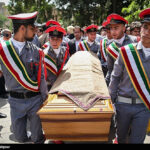
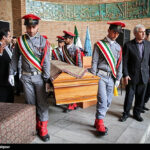
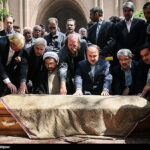
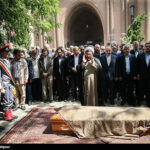
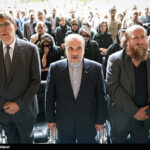
Prominent Iranian archeologist laid to rest in Tehran (PHOTOS)

Shahriar-Adl1

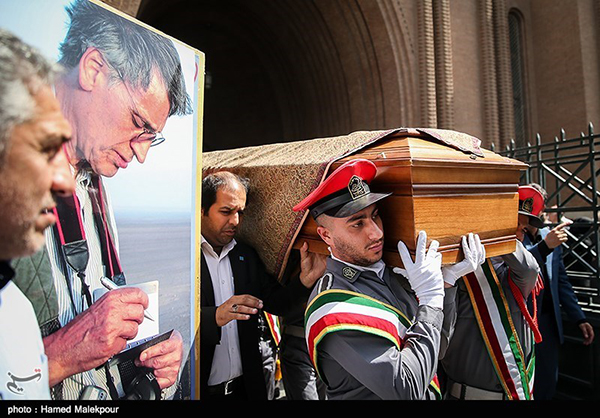
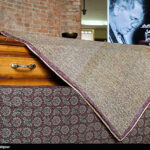
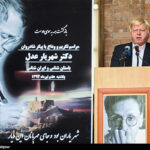
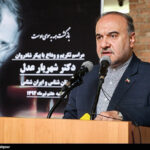
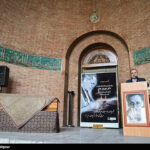
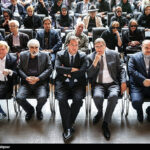
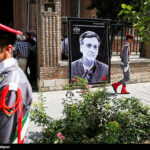
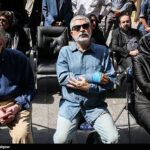
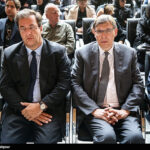
Professor Shahriar Adl, a well-known Iranian archeologist, writer, and scholar was laid to rest in a burial plot at Tehran’s Behesht-e Zahra Cemetery dedicated to prominent figures.

The late Adl, the head of the International Scientific Committee of the International Council on Monuments and Sites (ICOMOS), died of a heart attack in Paris on June 21.

Earlier there were speculations that the body of Professor Adl might be taken to Herat, Afghanistan to be buried alongside his ancestor.

The following images of the burial have been issued by Tasnim News Agency:


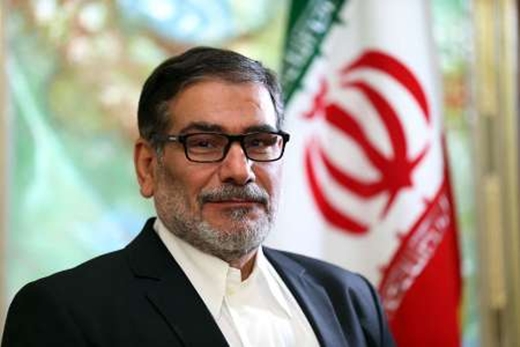
Shamkhani urges collective approach against ISIL

Shamkhani

Secretary of the Supreme National Security Council Ali Shamkhani on Monday called for a collective regional approach to dealing with ISIL.

Speaking to IRNA, he said the US and its allies should give up theatrical behavior toward ISIL, adding that their support for so-called moderate groups have given rise to violence and terrorism.

Dividing terrorists into good or bad amounts to manipulation of the issue and it is totally against international rules and regulations, Shamkhani noted.
He said that nobody, even with the most optimistic approaches, can deny the role of Western support for the Syrian opposition in the spread of terrorism.
Shamkhani asserted that the US and its allies cannot replace the real anti-terrorism approaches with the policy of rebel management.

Speaking about recent explosions in Kuwait, Tunisia and France, he expressed his condolences with the families of victims, adding that such attacks showed that ISIL doesn’t know any bounds for their criminal activities.

All elites, public opinion and world policymakers should know that ISIL is a real threat against world security and stability, the official said.

He called for elimination of the root causes of ISIL, adding that the anti-ISIL coalition should cut ISIL financial, arms and transportation supply lines.

Shamkhani urged unified cultural and political action against extremism, adding that Iran was the first country that warned about the consequences of supporting extremists in Syria and Iraq.

He said continued military interference in Yemen, Iraq and Syria would only complicate the situation and boost the position of terrorist groups.

The official encouraged honest dialogue between regional powers and an end to the dominance of foreign powers.

The gap among regional states would only increase security risks and result in the waste of human and material resources, he concluded.