Friday, December 26, 2025
Home Blog Page 4723

Laylaz: Iran’s economy is not sanctionable (PART TWO)

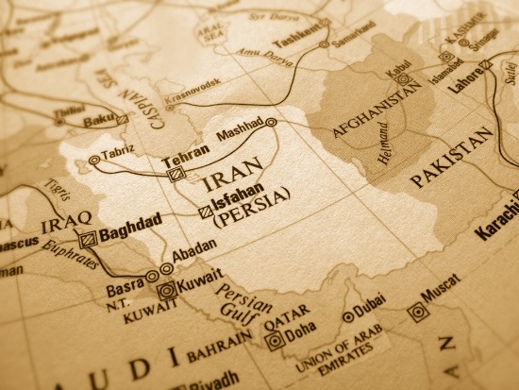
IRAN-map
Saeed Laylaz
Saeed Laylaz

An Iranian economist says that from 2005 onward Iran’s economy has grown more dependent on imports thanks to the organized, systematic and intentional measures [the governments have adopted].

Saeed Laylaz, who is also a journalist, a university professor and a former advisor to President Mohammad Khatami, made the comment in an interview with Khabaronline.ir and added although the removal of sanctions is necessary for the country, it will not work miracles.

The following is a brief translation of PART TWO of his remarks in the interview preceded by an introduction by Saeed Jafari Pouya, the interviewer:

Saeed Laylaz is among a handful of economists who know history and can analyze international politics. Economists are usually versed in their own territory and perhaps have no interest in taking a broader look at political and international developments.

Laylaz, however, is blessed with these characteristics, something which renders him an outstanding analyst in international economics and politics. More than sanctions, he says, the sometimes deliberate mismanagements of the previous government have created such a [problematic economic] situation in the country.


Oil and future of Iran’s post-sanctions economy

A look at the experience of the past 70 years reveals that whenever oil is given a major role to play in Iran’s economy, inflation, corruption and political infighting become inevitable and the money it brings in goes to waste.

I have no reason to believe that this time would be an exception. This is a last chance to grab….


We have a $110 billion enemy

The United States has $110 billion in reserve for Iran. The reserve in question is our worst enemy. It would be the worst present one can get. Had it not been for the sanctions, that $110 billion would have been used up already. This is one final opportunity for our economy to seize.

Immediately after that money returns to the country, challenges such as social crises, corruption and special interest projects will emerge.

The social crisis would be driven by the lower strata who would expect [the arrival back home of the money] to bring them welfare and push prices down. Failure to meet such expectations might turn into a serious challenge.

Corrupt elements whose tentacles are felt in the country’s economic and financial sectors would go into overdrive immediately after the money is unfrozen. This corrupt structure remains intact and problems in this area have yet to be taken on.

The third challenge has to do with a potential rise in security spending. Expansion of security threats in neighboring countries thanks to the presence of IS and other Takfiri groups would haunt the government.


Obama-Rouhani telephone conversation lifted psychological burden from the back of Iranian economy

I believe when President Rouhani came to office in 2013, Iran’s economy had already been pushed over the edge. When it came to foodstuff, inflation stood at more than 60 percent in August 2013. Certain social strata were experiencing triple-digit inflation.

As a result of that famous telephone conversation between Presidents Rouhani and Obama, the psychological pressure of expectations regarding inflation was eased. That trend has worked for 22 months. The reason: that conversation eased the pressures.


Economic achievement of Rouhani administration: Stability, predictability and calm

President Rouhani has taken a number of important steps for Iran’s economy. His biggest service to our economy is qualitative and non-statistical. His presidency, which came after four years of around-the-clock fluctuations, has lent three main features to the country’s economy.

Stability, predictability and calm are the three qualities in question. Our society is not pessimistic about the future. There are bright signs in our economy. They are the results of President Rouhani’s emphasis on interaction with the world and the effect of his foreign policy on our economy.


Termination of sanctions is inevitable    

I believe coming to terms with world powers is inevitable. Sometimes you say you can live with adverse conditions and sometimes you say you want to make progress and leap forward. So an agreement can be likened to walking down a steep slope which eventually turns up and leads to a peak which is inevitable. If we seek to solve our problems, we can’t help but start from international conflicts.


A decision on going nuclear, Japan or Pakistan-style?  

In 2005, if we had followed in the footsteps of the Khatami administration, we would have been more successful on the nuclear front by now. Given the approach of the reformist government [of President Khatami], there would have been no consensus against us on the international stage. Khatami would smile and convince the world.

The path Khatami chose to develop peaceful nuclear capabilities was the same Japan had chosen. But Ahmadinejad showed that he preferred to go down the Pakistan path.

When you are poor but have the nuclear bomb, your nuclear arsenal is largely for domestic consumption: to have a powerful tool in dealing with your local opponents and denying the international community the opportunity to stop you.

Today, no one dares object to Pakistan, although everyone knows that it plays an important role in promoting terrorism internationally. At the same time it is a poor country.

In 2002, for every percentage point of economic growth, we had $2.5 billion in imports. In 2011, when sanctions had yet to be imposed, for every percentage point of growth we imported $25 billion in foreign items. That is a 10-fold growth. Given the performance of the previous government, how did you expect to go nuclear?


Exports of crude gas neither possible nor economical

In the 1960s, we concluded that our country was in a geopolitical deadlock when it came to exports of natural gas. That deadlock, both technical and geopolitical, meant we could not export natural gas to any country. Russia stood in the way of exports to the West, while ethnic conflicts prevented exports to the East. As for Japan, technical issues were to blame.

In the 1960s, the Shah decided at the Economy Council that natural gas needed to be [indirectly] converted to products such as steel, aluminum, etc. before being exported. He brought the direct revival technology to Mobarakeh Steel Company. Iran was expected to become a regional hub for steel and aluminum production. He said he wanted to build so many natural gas-powered plants in the South that thanks to the plentiful electricity generated in those plants Iranian shorelines could be seen from across the Persian Gulf.

I believe the president should take account of this geopolitical deadlock. Basically, the 24 phases of South Pars Gas Field are a manifestation of such strategy. We need to openly announce that we don’t sell crude natural gas.

Sanctions on petrochemicals kicked in much later. The reason why rial’s value to the dollar does not rise is that Iran is exporting more petrochemicals by the day. The hard currency that exports of petrochemicals earn is controlling the market. So, we need to pay close attention to this issue.


Prospects of Iran’s economy are promising     

If we had acted before the economy plunged into this crisis, if we had stopped mismanagement, and if we had stopped appointing profiteering and non-expert individuals to high positions, sanctions would definitely have failed to create trouble for our country.

What has sunk us in this crisis is the sometime witting mismanagement that prevailed in the country between 2005 and 2013. In order to create promising prospects for the country, the Rouhani administration has no choice but break the shackles of sanctions and inject effective management into economy. I believe that is quite likely.
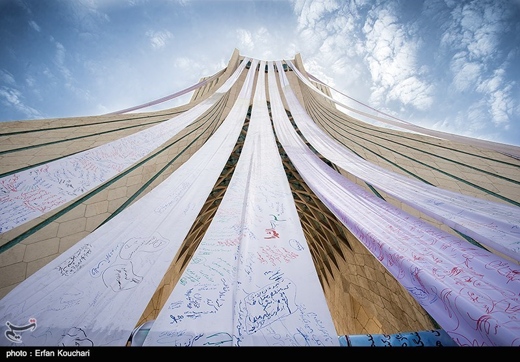

Iran unveils million-signature national fact sheet on nuclear deal

national fact-10

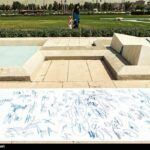
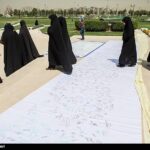
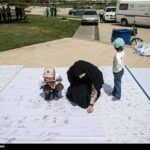
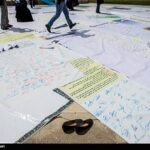
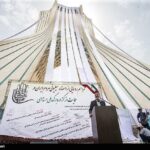
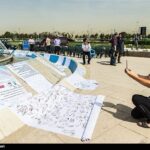
A “national fact sheet” with millions of signatures that outlines the essential requirements for a possible final nuclear deal between Tehran and six world powers was unveiled in Tehran’s Azadi square on Tuesday.

The following are pictures Tasnim News Agency released of the fact sheet on June 30:


Iran warns against violation of any nuclear deal

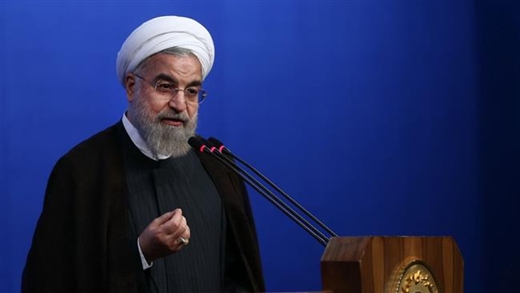
Rouhani

President Hassan Rouhani says the country will return to the previous level of its nuclear activities, if P5+1 violate the terms of a potential nuclear deal with the Islamic Republic.

“If a [final] nuclear agreement is reached, we will be committed to implementing it. However, it is clear that the opposite side should also remain committed to its obligations,” Rouhani said in a meeting with Iranian press corps on Tuesday.

In case of the six countries’ violation of a final nuclear deal, he said, his administration “will be fully ready to immediately return to the previous path even more vigorously than they could imagine.”

He said the ongoing talks between Iran and P5+1 in Vienna, Austria, can lead to a win-win result if the six countries show political will.

“Nuclear talks between Iran and P5+1 can bear fruit within the next couple of days past the [June 30] deadline,” Rouhani pointed out.

He noted that Iran and the six countries have managed to settle the “major part of the issues” and the remaining differences can be solved through initiatives worked out by both sides.

The president also said his administration has managed over the past two years, since taking office, to disprove unfounded allegations against Iran of meddling and belligerence as well as attempts to develop nuclear weapons.

Iran, however, made efforts to prove to the world that it seeks international dialog and interaction, and aims to settle problems at the negotiating table, he said.

“If they claim that they want to prevent the development of nuclear weapons in Iran, they should know that Iran has never sought to build nuclear weapons,” Rouhani said.

Iran will counter enemy threats on its borders, Iranian commander

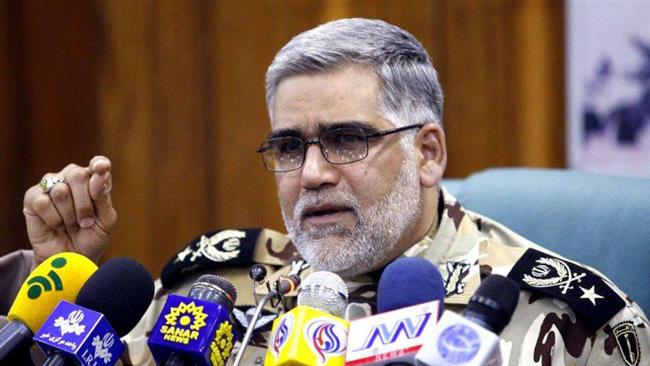
General Ahmad Reza Pourdastan

A senior Iranian Army commander says the Islamic Republic will counter any threat posed by its enemies on the country’s borders, stressing the resolve of the Armed Forces of the Islamic Republic to defend Iran against any foreign threats.

“Rocket-launching units of the Iranian Army Ground Forces possess very good capability and capacity,” Commander of the Iranian Army’s Ground Forces Brigadier General Ahmad Reza Pourdastan told reporters on Tuesday night.

“Our missiles have been reinforced and upgraded both in their range and destructive power,” Pourdastan added.

He went on to say that the Iranian Army’s missiles have passed testing stages in recent war games dubbed Beit ul-Muqaddas 27 held by the Army’s Ground Forces in May.

The Iranian commander also said that the country’s troops are “soldiers of Islam” and will not violate the integrity of any country.

In recent years, Iran has made major breakthroughs in its defense sector and attained self-sufficiency in producing important military equipment and systems.

The Islamic Republic maintains that its military might poses no threat to other countries, stating that its defense doctrine is merely based on deterrence.

Iran must boost defense, deterrence power: Leader

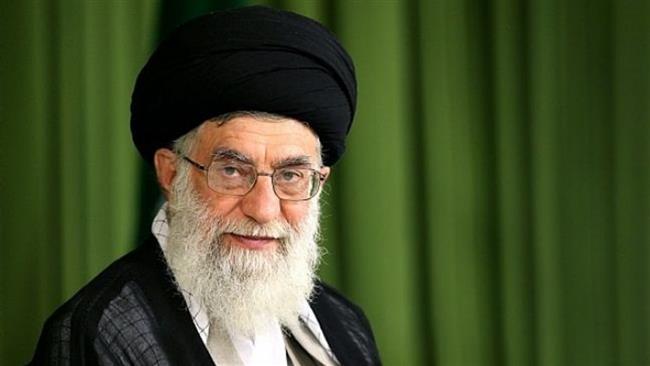
Supreme leader

Supreme Leader of the Islamic Revolution Ayatollah Seyyed Ali Khamenei has instructed the Iranian president to boost the country’s defense and deterrence capabilities.

The directives were part of the Leader’s letter to President Hassan Rouhani in which Ayatollah Khamenei announced the general policies of the Sixth National Development Plan.

In the letter, the Leader underlined the need to upgrade Iran’s deterrence power by developing the nation’s missile capability and defense technologies as well as boosting the capacity to produce weaponry and major defense equipment to help counter “different types of threats.”

Ayatollah Khamenei also stressed the need to develop civil defense programs in critical and sensitive locations in the country.

Among other points highlighted by the Leader was the necessity of boosting soft power and cyber-defense capabilities as well as providing air defense and cyber-security for the country’s infrastructure.

Ayatollah Khamenei noted that at least five percent of the country’s budget should be set aside to boost the nation’s defense capability at the regional level to secure national security and interests.

Nahavandian voices optimism about outcome of nuclear talks

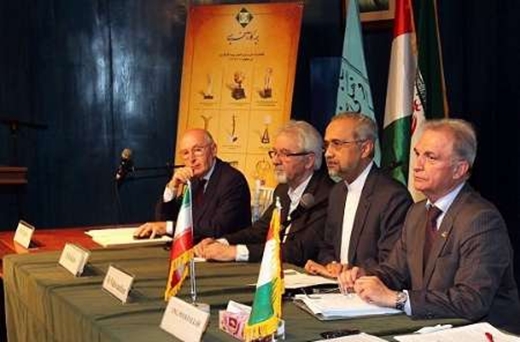
Nahavandian

President’s Chief of Staff Mohammad Nahavandian voiced optimism about the ongoing nuclear negotiations between Iran and P5+1 (the US, China, Russia, France and Britain plus Germany).

Nahavandian made the remarks in a meeting of Iran-Italy joint chamber of commerce in Tehran on Tuesday night.

“Although the nuclear negotiations have not ended, it is sufficient reason that we should be optimistic about the future of talks because the negotiating sides have resorted to logic and joint objectives instead of imposing their one-sided stances,” the president’s chief of staff said.

He called on the other side of negotiations to limit its efforts to make sure Iran’s nuclear program is not to seek weaponry objectives instead of using the nuclear issue as a pretext to confront Iran.

Iran has announced many times before that it had not sought military objectives in its nuclear program and it will not do so, he said, adding the other side’s confirmation that Iran has the right to advance its nuclear plan like other fields will pave the way for striking an agreement in a serious manner.

Salehi meets Moniz, Zarif meets Amano in Vienna

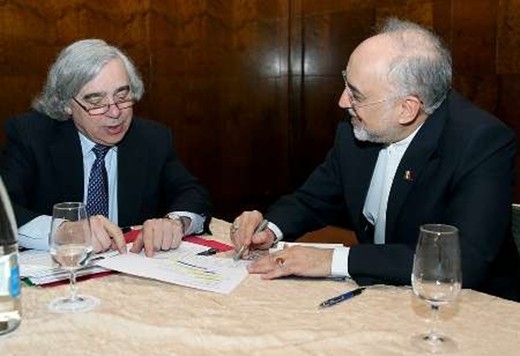
Salehi-Monniz

Head of the Atomic Energy Organization of Iran (AEOI) Ali-Akbar Salehi and US Secretary of Energy Ernest Moniz met and discussed technical aspects of a comprehensive deal over the Iranian nuclear program at Coburg hotel on Tuesday.

This is the first technical negotiations between senior atomic energy managers of Iran and the US after the Lausanne talks in March.

Salehi arrived in Vienna along with Foreign Minister Mohammad Javad Zarif earlier in the day and joined the talks for drafting a comprehensive nuclear deal.

Meanwhile, Yukiya Amano, the director general of the International Atomic Energy Agency also arrived in the Austrian capital on Tuesday evening and held talks with Zarif on cooperation between Iran and the IAEA.

Amano was also in Vienna two days earlier when he met with US Secretary of State John Kerry.

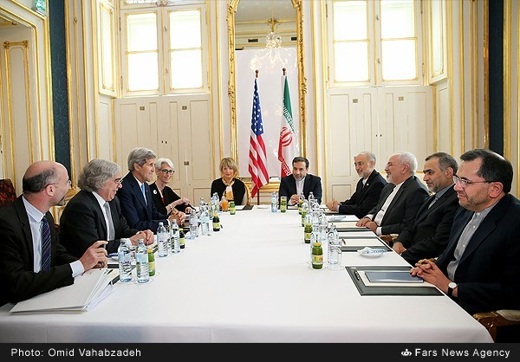
Deputy foreign ministers of Iran and the six world powers and Deputy EU Foreign Policy chief Helga Schmid began the eighth round of nuclear talks in Vienna since last Wednesday.

Iran condemns Saudi airstrikes on UN compound in Yemen

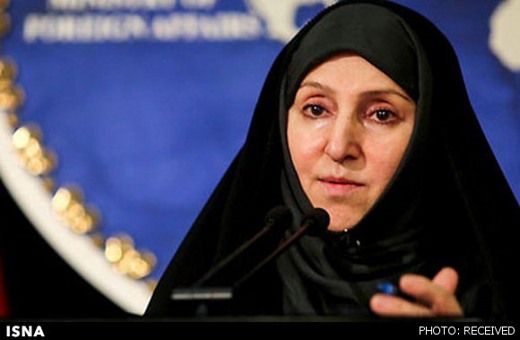
Marzieh Afkham

Iran’s foreign ministry spokeswoman strongly condemned a Saudi-led coalition airstrike that seriously damaged a Development Program office of the United Nations in southern Yemen, and voiced serious concerns over the deteriorating situation in the war-hit country.

The Saudi attacks on Yemen’s infrastructure and civilian targets are “a continued and flagrant violation of human rights”, Marzieh Afkham said on Tuesday.

“According to the international law and regulations, countries should facilitate the activities of relief and rescue organizations affiliated with the UN and their representatives…,” she noted.

A guard was injured when the office of the UN Development Program in the southern city of Aden was hit on Sunday, according to UN spokesman Farhan Haq.

UN Secretary-General Ban Ki-moon also deplored the airstrike, calling for a full investigation into the incident.

On March 26, Saudi Arabia and some of its Arab allies began to launch deadly airstrikes against the Houthi Ansarullah movement in an attempt to restore power to the fugitive former President Abd Rabbuh Mansour Hadi, a close ally of Riyadh.

According to a civil coalition monitoring Saudi Arabia’s crimes, 3043 people, including 722 children and 532 women, have been killed during 95 days of Saudi-led military strikes on the Arab country.

Comprehensive deal requires political resolve: German FM

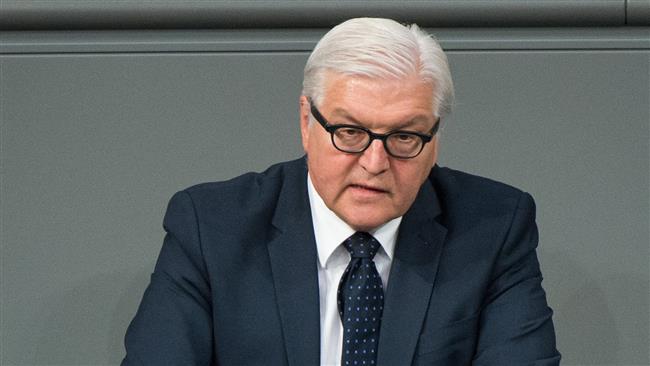
Steinmeier germany fm

Steinmeier said in an exclusive interview with IRNA that the context of the deal must be watertight to avoid different interpretations.

He added the economic and financial sanctions would be lifted entirely on the primary stage of the deal to make the Iranian people enjoy benefits of the deal soon. The following is the full transcript of the interview:

What can Europe (both at member state and at EU level) do to bolster the nuclear negotiations until the JCPOA is concluded?

In Lausanne we achieved a historic framework agreement. We have thus already shown what many had doubted: that an agreement is possible which enables Iran to use nuclear energy peacefully, as well as in a way which is technologically and economically viable, which will bring the sanctions to an end and, at the same time, gives the international community durable and verifiable guarantees that Iran will not seek to acquire nuclear weapons.

The principles for a comprehensive agreement are thus in place. I hope that no‑one will call these principles into question again. Our task now is to set forth the mutual commitments in such detail that the two sides can be sure that the text is watertight and that there will be no disputes in future about its interpretation.

In your view, what are the most difficult issues still to be resolved?

For us, transparency is a key criterion. That means that the IAEA must be able to fully verify compliance with everything that is agreed, in all of the country. I know that there is a contentious debate about this in Iran.

I believe, however, that this issue can be resolved, also because Germany – just like all other states which have ratified the Additional Protocol to the Non-Proliferation Treaty – grants the IAEA unrestricted access. Thus, this is not about spying on military facilities.

Furthermore, there is a series of complex technical issues which still have to be resolved, for instance in the sphere of centrifuge development as well as the modalities for lifting the sanctions. Nevertheless, I believe here, too, that we can find solutions if the political will is there.

Let us turn to the lifting of the sanctions: why should Iran agree to a final nuclear agreement if, in the end, not all sanctions against Tehran are lifted at once? Are the latest sanctions against some Iranian banks and companies even in keeping with the spirit of the Geneva agreement and the Lausanne declaration? How can trust be rebuilt at all?

We have offered to provide relief for all economic and financial sanctions during the first phase. That will bring about improvements from which Iranians will benefit quickly, especially when it comes to the balance of payments and the exchange rate. Experts estimate that lifting sanctions will result in economic growth of between five and seven per cent and to a fall in the unemployment rate of about three per cent. That would create around one million new jobs.

Our experts have therefore been working around the clock since agreement was reached in Lausanne to create the prerequisites that will enable us to fulfil our part of the agreement punctually and in full when the time comes.

How concerned are you about the problem of xenophobia and Islamophobia in Germany? How dangerous is the Pegida movement in your view?

I believe that Pegida has long since had its day. It was a destructive phenomenon which not only damaged our standing abroad but also democratic coexistence in Germany. I am glad that in every place where Pegida appeared, they were far outnumbered by people attending spontaneous counter-demonstrations, thus making it clear that Germany remains a tolerant and outward‑looking country. We will not let ourselves be divided, neither by islamophobes nor terrorists.

In your view, in which areas should German‑ Iranian relations be especially fostered? Do you see a level of interest in Germany as high as we do on the Iranian side? Can Iran once more become Germany’s No. 1 trading partner in the Middle East? How can cultural relations between Germany and Iran develop?

It is true that Germany was Iran’s most important trading partner before the nuclear dispute. Germany imported 1.5 million tonnes of crude oil each year from Iran, while German trucks, engines and machinery were manufactured in Iran. If we can finally manage to resolve the nuclear issue, we will have the chance to build on these foundations. Iran and Germany have a lot to offer to each other – incidentally, also in the cultural sphere. I am not only referring here to the centuries-old mutual  fascination of our poets and artists. Before the dispute about Iran’s nuclear programme, for example, the German school in Tehran was the largest German school abroad. Many thousands of Iranian students and academics are studying and working at the best German universities. The German‑Iranian author and Islamic scholar Navid Kermani has just been awarded the best‑known German literature prize. That is an indication of how much potential for vibrant exchange there will be once the obstacles have been removed.

Several European foreign ministers have visited Iran during the last 18 months. Do you have any concrete plans to visit Iran?

It is well‑known in Germany that Iran is a fascinating travel destination. However, other criteria are more important to a foreign minister. I am convinced that if we reach an agreement in Vienna, that would also provide us with an opportunity to develop our relations in other spheres.

Bilaterally, there is much potential for more exchange between Germany and Iran. Moreover, when it comes to defusing the pressing conflicts in the region, it would be worthwhile to explore where we could engage in more cooperation. So there is certainly enough to talk about during a visit to Tehran – if we finally manage to resolve the dispute surrounding Iran’s nuclear programme in Vienna.

Iran believes itself to be an indispensable partner in bringing peace to the Middle East. The West still seems to take a different view. Could that change with a possible nuclear agreement and could Iran then be regarded more as a partner?

Iran has much influence in the region due to its geographical location, its rich culture, its well-educated population as well as its dynamic economy.

An Iran which lives side by side in peace and trust with its neighbours would have much to offer to the region. We believe that this must include recognition of Israel’s right to exist.

And a successful attempt must be made to defuse the ever more heated confrontation among religious communities in the region. My fear is that not only in Syria and in Iraq but also on both sides of the Persian Gulf and even in Yemen, the fatal perception is taking hold that what we are witnessing are not political conflicts which can be resolved politically but, rather, an implacable enmity between Shiites and Sunnis. When the centuries‑old peaceful coexistence between the different religious communities is called into question, that poses a threat to all states in the region, not least Iran. That is why it is a matter of urgency that we enter into a process to re-establish trust and tolerance. Iran bears considerable responsibility here. Indeed, I hope that once agreement has been reached on Iran’s nuclear programme, there will be an opportunity to think about new forms of cooperation.

Iran has shown resolve in the fight against the terrorist organisation IS. What role do you believe the Islamic Republic can play in the fight against militant jihadism?

Above all, we have to avoid the mistakes of the past, which made the advance of ISIS possible in the first place. Mosul did not fall into the hands of ISIS because the Iraqi army lacked weapons or ammunition, but because the soldiers – and a portion of the population – were not prepared to fight for an Iraqi state which they felt had abandoned them. In the long term, therefore, it will not be possible to defeat the ISIS phenomenon with military means alone. More than anything else, political progress is needed.

Everyone must help to overcome the rifts between the religious communities in Iraq and to offer the Sunni population a stake in the Iraqi state once more. That will only succeed if, for example, the Iraqi army leads the fight against ISIS in Ramadi or Mosul rather than sectarian militia which the local population fears. Support from Iran in this endeavour would be more important in the long term in the fight against ISIS than any missiles or air strikes.

It seems that Tehran has a vital role to play in reaching a political settlement in Syria. Do you see a paradigm shift here, also on the West’s side, a realisation that Iran has to be included? What role would you like to see Iran play?

If a large proportion of the Syrian population only has the choice between Assad’s barrel bombs and the ISIS butchers, any attempts to bring about a political solution seem ever more remote. The longer the conflict lasts, the more foreign extremists and sectarian militias set the tone, the more difficult it will be to maintain a basis on which all communities can live together in peace in Syria. No country has more influence on the Syrian Government than Iran. I hope that Iran will use this influence to bring the Government to the negotiating table as long as there are still forces on both sides who want peace and with whom a dialogue is possible.

A historic twist and betrayal of nation

Iran Talks vienna

Distortion of ground realities and bending the truth is one of the most effective ways to mislead a society and influence public opinion. This ominous phenomenon will be still more effective when 1) it is about an issue with a historic background and 2) it aims to affect a generation which was not born to see certain events firsthand.

These are the opening sentences of an opinion piece bylined by Hossein Shamsian on Iran’s nuclear talks with P5+1 the Kayhan daily published on June 29. The following is the translation of excerpts of the piece:

[…]

Iran is going through a historic stage in its confrontation with its number-one enemy, the US, these days. On a battlefield as vast as the Islamic Revolution, a big, fierce fight is raging over the rights of the Iranian nation. With the warriors of the diplomatic front backed by the nation lining up against the enemy across the negotiating table, some are singing a different tune – instead of showing solidarity – trying to keep society in ignorance by humming the ominous tune, give false clues to the [diplomatic] warriors, and finally prevent the commander from making a decision in keeping with national expediency.

Instead of recalling US crimes and helping people rally around officials, these people are seeking to depict Great Satan, which is a horrible monster, as a kind and mild-mannered angel. The inevitable result would be nothing but disputing the resistance of people on the diplomatic front and negating any resistance to and vigilance against the US, because when you face a kind angel, there is no need to show distrust and defy what she seeks.

What they do is definitely an unforgettable betrayal of the nation and its history. This unfair behavior should not be forgotten under any circumstances. […]

Who are the people who try to distort history and paint a pretty picture of the enemy? […]

First: A group of people are trying to ignore the poor track record of the enemy. This group – that may have taken the toughest stances against the US in the past – talks about anything these days but the US animosity toward a nation which seeks nothing but its independence.

When they raise [people’s] pocketbook issues, insufficiency of credit for the country’s infrastructure or the pain the sanctions have inflicted on people, they never say who has imposed the sanctions and created the problems [for the people]. They say sanctions have put the squeeze on people, but they fail to tell people that the US has slapped these unjust sanctions. […]

They fail to say that the US is the very monster which has blocked and is blocking the sale of plane parts, medicine, medical equipment, agricultural fertilizer, pest control products and many other items to Iran. They fail to say that the US has frozen billions of dollars of Iran’s national wealth since the early months after the victory of the Islamic Revolution and refused to give it back to Iran to date. They fail to say that the US has paid big chunks of Iran’s money as reparations to the families of fallen Israeli servicemen. They fail to say these facts because their mission today is to make up the ugly and terrible face of the US for the young generations.

Second: Another group does not deny US crimes and meddling but plays down the issue and tries – through pretense and negligence – to divide it into two parts: the enemy’s past which they admit was problematic and its present-day situation [about which they say] we are facing a polite and well-mannered rival. […]

The third group identifies the US as a superpower which has the final say on everything in the world. By playing up the economic and military might of the enemy, on the one hand this group strikes fear into the hearts of those have put up resistance, and on the other, leads thinkers and policymakers to wrongfully assume that all roads lead to Rome. “If you want welfare, industrial might, civilization, arts, sports, morality and politeness, you name it, it should be sought in relations with and submission to the US,” they suggest.

They make such suggestions, but fail to answer the following questions: If the US is the utopia they are suggesting it is, why is it that they keep silent about the 99 percent movement and the million-man marches the poor hold in protest at the conduct of the one percent?  Why is it that the countries which are totally dependent and devoted [to the US] have teetered on the brink of explosion thanks to economic and social inequalities and hardships? What is the reason behind daily protest rallies and massive strikes in European countries and other allies of the US? On which front is Iran – that is deprived of US favors – lagging behind its neighbors that are blessed with the favors the US bestows on its regional stooges?

They fail to answer these questions because in that case events would not unfold according to the [pre-planned] scenario. They fail to admit that Iran is the world’s 17th country in terms of science and 20th in terms of economy and lots of other proud achievements (according to international statistics) thanks to the fact that the country has severed ties with Great Satan. This has placed Iran in a position which seems to be an unattainable dream for many US friends and allies.

Who are those people and what objectives are they pursuing? Part of this mission is accomplished by the media outlets which are fed directly and indirectly by the enemies of the Islamic Revolution. Acting against the professional mission of news media which calls for telling the truth and reflecting the realities, such media dictate their own “dreams and illusions” as “news items” in a bid to make the steps of their savior [the US] sound euphonious. […]

In addition to these media outlets, a number of politicians too are busy painting a nice picture of the enemy in the midst of the historic battle [between Iran and the US]. […] This group – whose members are from political has-beens – poses no threat other than the headache they cause by what they publish every day in “chain” newspapers [a reference to reformist-leading dailies]. They also mislead the enemy by feeding misinformation and sending the wrong signal about their weight and credibility.

What is the real intention of these “makeup people” who paint the face of the US? What do they pursue at this historic crossroads? […] They pursue three objectives. First they try to make the negotiating team feel intimidated by the US, inevitably forcing them into submission to the enemy’s acquisitiveness by inflating the power of the rival and the threat of an imaginary war.

Second, they try to depict the US as a trustworthy country which wishes good for people. This would help impose a distorted and one-sided text on the Iranian nuclear team instead of helping prepare a firm deal which will be subject to no interpretation.

Third, they point to the US as the country which would bring economic relief [for Iran] and instill a misconception into the Iranian team that they need to give in to unjust and inhumane US demands if they seek to do something for the welfare and comfort of the Iranians.

Remarks by the Supreme Leader in his recent meetings, especially the meeting on April 9 or the one with government officials, have clearly and astutely set the establishment’s nuclear red lines, suggesting that nobody is allowed to overstep them and that these wrong and deceptive signals can do nothing to influence the historic decision of the Iranian people, one way or another. What the Supreme Leader has said is a unique yardstick to identify the enemy’s supporters in trying times and tell the [nation’s] traitors and servants apart.