Friday, December 26, 2025
Home Blog Page 470

Leader’s advisor: Iran open to talks only based on mutual respect, equal footing

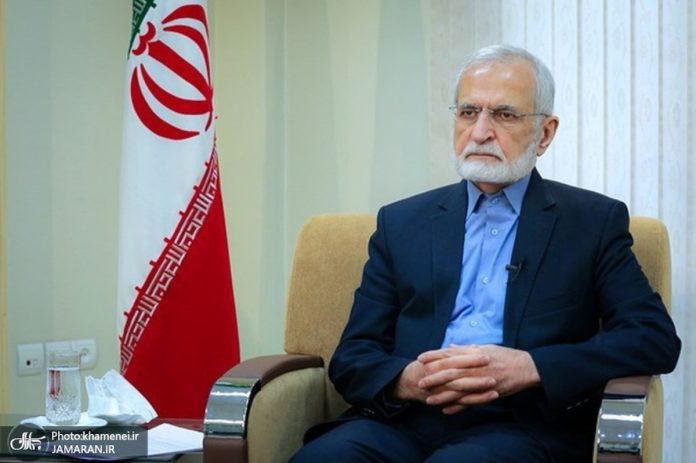
Kamal Kharazi

Kharrazi added that Iran will only sit at the negotiating table with Western governments if the talks are based on mutual respect and on equal footing.

The director of Iran’s Strategic Council of Foreign Relations further referred to the US maximum pressure policy against Iran and US President Donald Trump’s imposition of new sanctions on the Islamic Republic, noting that Tehran has no choice but to exercise maximum patience.

Kharrazi said Iran is ready for talks if the other side is ready for genuine negotiations, but that is not the case currently.

He added m it’s Trump’s policy to give orders to the other side and he expects they only obey his orders, which is at odds with the spirit of the Iranians and revolutionaries.

The former Iranian foreign minister said the conditions are not ripe for talks now due to Trump’s behavior and talks with the US under the current circumstances only means surrender.

Kharrazi underlined that Iran must resist so that the US comes forward for talks based on mutual respect.

Iranian atomic chief calls on IAEA to avoid politicizing nuclear issue 

IAEA

Mohammad Eslami said that the IAEA inspectors  inspect Iran’s nuclear sites according to an existing timetable.

He further referred to the European trio’s escalating pressure on the IAEA to force the body to give a report on Iran’s nuclear program, in a reference to France, Germany and the Uk.

Eslami said Iran hopes that the IAEA act professionally and respect the rights of all nations as this is enshrined in the organization’s charter.

He also expressed hope that the IAEA will avoid politicizing the issue, act according to its own rules and also avoid being reduced to the level of a tool for illegal moves against nations.

Eslami went on to say that the construction of nuclear power plants is ongoing in Iran including in Bushehr.

He added that building each nuclear power plant, regardless of funding, requires 7 to 9 years for its completion and that Iran hopes to increase the country’s nuclear capacity from 1,000 to 3,000 megawatts per hour.

Iran denies Russian FM, Qatari Emir carried messages from US

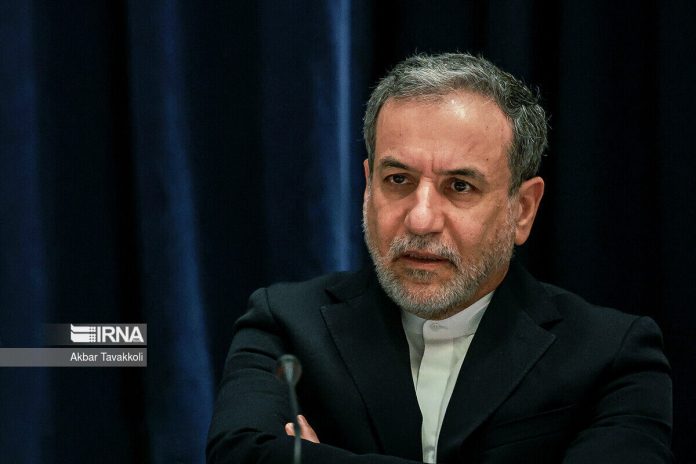
Abbas Araghchi

Speaking to reporters on the sidelines of a cabinet meeting, Araghchi said that Lavrov, in his Tuesday trip, provided a detailed report on Russia’s negotiations with the US and other regional actors but did not convey any messages.

Araghchi emphasized that his discussions with Lavrov focused extensively on regional issues and bilateral cooperation.

He also addressed Iran’s ongoing nuclear negotiations with the three European countries -UK, Germany and Franc- noting that talks in Geneva earlier this week covered nuclear issues and other matters.

The Iranian foreign minister acknowledged the complexities of the negotiations, stating that they would continue despite challenges.

Regarding US pressure aginst Iran, Araghchi reiterated Iran’s longstanding position, asserting that Tehran will not negotiate under “maximum pressure.”

He highlighted Iran’s resilience in the face of sanctions, stating that the country has charted its path of progress independently. However, he added that Iran remains open to dialogue based on mutual respect.

Araghchi also addressed regional dynamics, stressing the need for continuous consultations among regional players.

He mentioned his recent engagements with Persian Gulf Cooperation Council officials, the UN secretary-general, and others, underscoring the importance of sustained diplomacy in addressing complex regional issues.

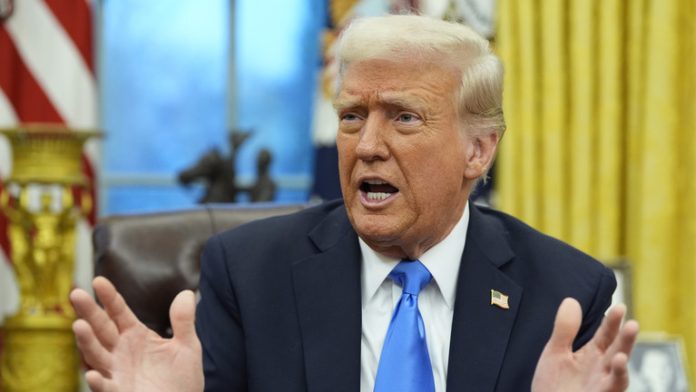
US, Ukraine reach agreement on minerals deal

President Volodymyr Zelensky’s office confirmed to the Kyiv Independent that an agreement has been reached.

The negotiations around the deal have fueled tensions between U.S. President Donald Trump and Zelensky in the past week.

The Financial Times reported that Ukraine has secured more favorable terms during the negotiations and is framing the deal as a way to strengthen ties with the U.S.

Ukraine’s Cabinet of Ministers is expected to recommend on Feb. 26 that the deal be signed, sources familiar with the discussions told Bloomberg.

Zelensky will likely head to Washington for a signing ceremony in the coming weeks, according to the Financial Times. The signing could come as early as Feb. 28, a senior Ukrainian official reportedly told AFP.

Trump told reporters later on Feb. 25 that Zelensky will visit the White House for a signing ceremony on Feb. 28.

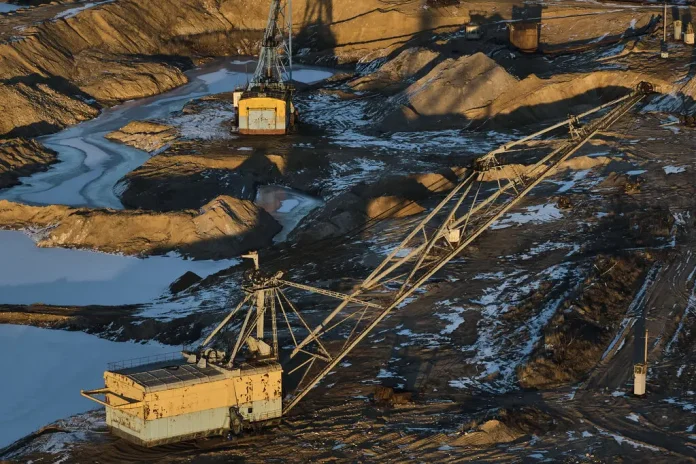
The final version of the agreement, dated Feb. 24, establishes a fund to which Ukraine will contribute 50% of proceeds from the “future monetization” of state-owned mineral resources, including oil, gas, and related logistics. The fund will invest in projects within Ukraine.

The deal excludes resources that already contribute to Ukraine’s state budget, meaning it will not cover operations by Naftogaz and Ukrnafta, the country’s largest oil and gas producers.

The agreement does not include security guarantees from the U.S., which Kyiv had initially insisted on.

When asked what Ukraine gets out of the deal, Trump said Ukraine receives “military equipment and the right to fight on.” It is not clear whether “military equipment” in this instance refers to previously shipped weapons or future aid to Kyiv.

Trump said ongoing weapons shipments to Kyiv could “go forward for awhile, maybe until we have a deal with Russia.”

The latest draft of the agreement drops earlier U.S. demands for a $500 billion claim over Ukraine’s natural resources, which had been a major sticking point, according to the Ukrainian media outlet Economic Pravda, which has seen the agreement.

Under the revised terms, the fund will receive 50% of revenues from Ukraine’s resource-related infrastructure, including ports. Joint ownership will be determined based on actual financial contributions, and while management will be shared, the U.S. will have decision-making authority under its own laws.

The questions of the U.S. stake in the fund and the terms of “joint ownership” will be addressed in follow-up agreements, according to the Financial Times.

Zelensky had previously rejected the U.S. proposal, citing the lack of security guarantees and objecting to the 1:2 repayment structure, which would have required Ukraine to return two dollars for every one received in aid.

The Trump administration has increased pressure on Ukraine to finalize the deal in the past weeks, with Trump publicly attacking Zelensky, calling him a “dictator without elections” and urging him to “move fast, or he won’t have a country left.”

Trump has framed the agreement as a way to strengthen Ukraine’s economy while ensuring the U.S. “recoups the tens of billions of dollars and military equipment sent to Ukraine.”

Two terrorists killed, six captured in Iran’s Sistan and Baluchestan

Iran Police

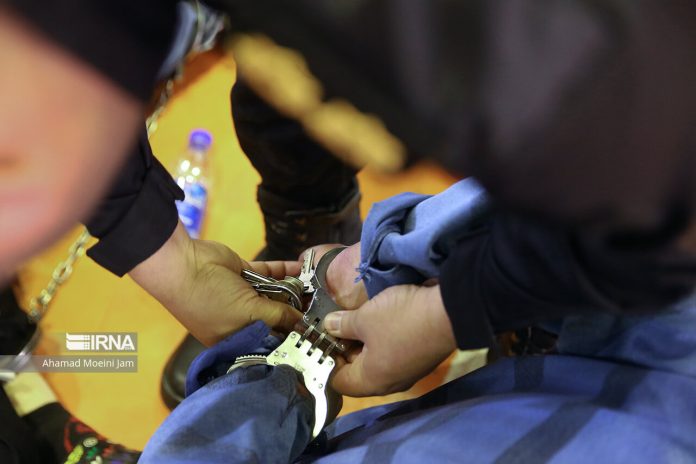
As part of the ongoing “Martyrs of Security” operational exercise, a joint operation by the IRGC Ground Forces’ Quds Headquarters and the Ministry of Intelligence in Chabahar city led to the arrest of six members of an operational team from the terrorist group known as Jaish al-Adl, with one individual killed.

Later in the “Martyrs of Security” exercise, the number of killed members of the terrorist team increased to two. The deceased individuals were of non-Iranian nationality.

The operation by the IRGC and the Ministry of Intelligence to cleanse the region of terrorists continues.

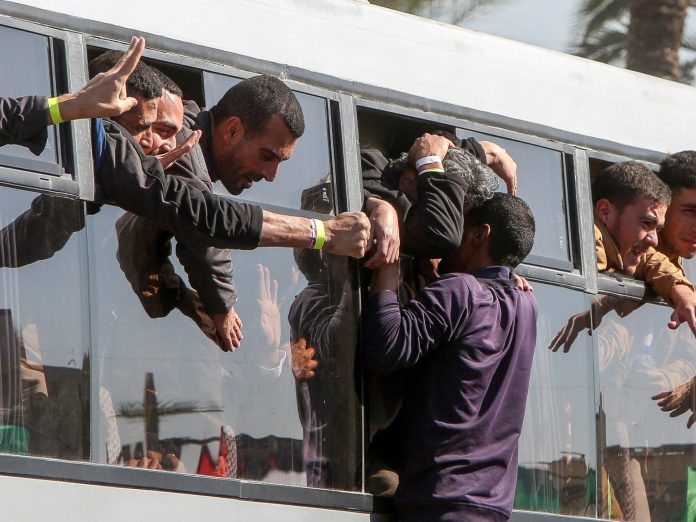
Hamas, Israel reach deal to resolve delay in release of Palestinian prisoners

In a statement, Hamas said its delegation, led by senior official Khalil al-Hayya, met with Egyptian officials to discuss the implementation of the ceasefire and prisoner exchange agreement as well as preparations for the next phase of negotiations.

The group emphasized the need for full and precise adherence to all terms of the deal.

Hamas added that a solution has been reached ensuring that the release of Palestinian prisoners would occur simultaneously with the handover of Israeli remains, as previously agreed to under the first phase of the deal, along with additional Palestinian women and children detainees.

An Israeli official confirmed late Tuesday that an understanding had been reached with Hamas to resolve the delay in releasing Palestinian prisoners.

“The Egyptian mediation has succeeded…An agreement was reached to resolve the issue of the delayed release of Palestinian prisoners,” the unnamed official told Israel’s Channel 13.

“If there are no last-minute changes, the remains of four Israeli hostages will be returned Wednesday night without a formal ceremony, and Palestinian prisoners will be released gradually from Israeli prisons,” the official added.

The first phase of the ceasefire deal in Gaza began on Jan. 19, spanning three stages, each lasting 42 days, with negotiations for the next phase required before the completion of the current one.

As part of this phase, which involves the release of 33 Israeli hostages—both living and deceased—Palestinian resistance factions have already freed 25 living captives and four deceased individuals in seven separate batches.

Israel has delayed the release of around 620 Palestinian prisoners, despite Hamas fulfilling its commitments under the agreement.

On Saturday, Israeli Prime Minister Benjamin Netanyahu, following a discussion with several ministers, decided against releasing the Palestinian prisoners, contradicting the recommendation of Israeli security officials.

Netanyahu’s office claimed the decision was a response to Hamas violations, citing ceremonies held for six released prisoners last Saturday. Hamas dismissed the accusation as baseless, calling it a pretext to evade Israel’s commitments under the deal.

A ceasefire and prisoner exchange agreement has been in place in Gaza since last month, pausing the Israeli war, which has killed nearly 48,350 people, mostly women and children, and left the enclave in ruins.

Last November, the International Criminal Court issued arrest warrants for Netanyahu and his former Defense Minister Yoav Gallant for war crimes and crimes against humanity in Gaza.

Israel also faces a genocide case at the International Court of Justice for its war on the enclave.

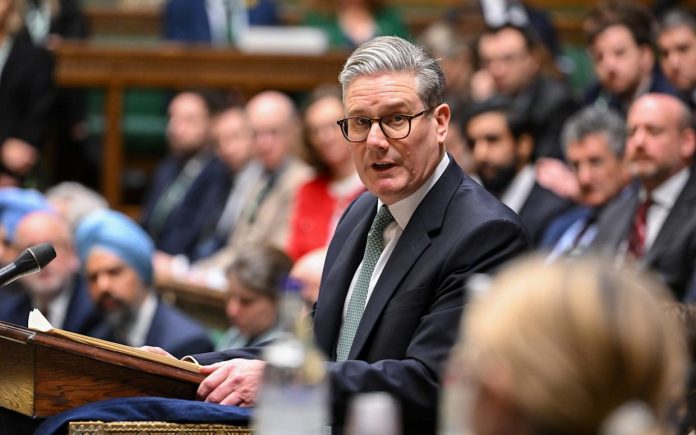
British PM slashes aid to fund major increase in defence spending amid Ukraine war

The U.K. aims to increase defense spending to 2.5% of GDP by 2027, Starmer announced during a speech in the British Parliament.

Starmer’s statement comes amid growing uncertainty about the security situation in Europe, as the U.S. sends clear signals that the continent won’t be able to rely on Washington for its security in the future.

Starting in 2027, the UK will spend £13.4 billion ($17 billion) yearly on security needs. After the end of the parliament’s term in 2029, it is expected to reach 3% of GDP, according to Starmer.

It is the largest sustained increase in British defense spending since the end of the Cold War.

“(Vladimir) Putin thought he would weaken NATO. He has achieved the exact opposite,” Starmer said.

Due to the changes, the budget for foreign aid will have to be cut from this year’s 0.5% of national income to 0.3% in 2027, Starmer added.

“It remains a cut, and I will not pretend otherwise. We will do everything we can to return to a world where that is not the case and rebuild a capability on development,” Starmer said.

“But at times like this, the defense and security of the British people must always come first,” he added.

U.S. President Donald Trump previously urged NATO allies to increase their defense contributions beyond the current 2% benchmark, citing the need for Europe to take greater responsibility for its security amid Russia’s ongoing full-scale war in Ukraine.

Trump also blamed Ukraine for starting the war, saying Kyiv “should have never started it” and instead should have “made a deal.”

Later, Trump added that President Volodymyr Zelensky is not essential to negotiations to end Russia’s war in Ukraine and called him a “dictator.”

Trump says US could lift Russia sanctions during Ukraine peace talks

The US and other Western nations have placed an unprecedented number of economic restrictions on Russia since the Ukraine conflict escalated in 2022. Moscow considers the sanctions illegal and has consistently demanded their removal.

“No, we haven’t lifted any sanctions on anybody… I guess it will be at some point, but right now we haven’t agreed to lift sanctions on anybody,” Trump said at a press briefing, responding to a question on whether the issue has been part of Russia-US discussions so far.

US Secretary of State Marco Rubio recently suggested that Western nations will have to consider lifting sanctions on Russia in order to find an “enduring, sustainable” solution to the Ukraine conflict. Speaking after high-level talks between Moscow and Washington in Saudi Arabia last week, he indicated that in order to bring an end to the conflict, “there has to be concessions made by all sides,” including letting go of sanctions policies. Rubio noted, however, that the EU will have to be “at the table” to discuss sanctions relief as well, as it has also imposed restrictive measures targeting Russia.

Brussels has indicated it is prepared to pursue an independent sanctions policy regardless of Washington’s stance. EU Commissioner Valdis Dombrovskis said last week that the bloc has no plans to lift sanctions against Moscow even if the US decides to do so. Earlier this week, the EU adopted its 16th package of restrictions, largely targeting Russia’s military-industrial complex and energy projects. It also introduced additional measures against alleged sanctions circumvention, including dual-use export restrictions.

Moscow has often noted that sanctions have failed to destabilize or isolate it while backfiring on the countries that imposed them. Russian President Vladimir Putin said last week that Western sanctions have inadvertently bolstered Russia’s development. Speaking at the Future Technologies Forum in Moscow, he stated that despite the challenges that Russia was forced to overcome due to the measures, they played a “stimulating role,” prompting closer collaboration between Russia’s domestic businesses and science and bolstering the country’s economic and technological sectors.

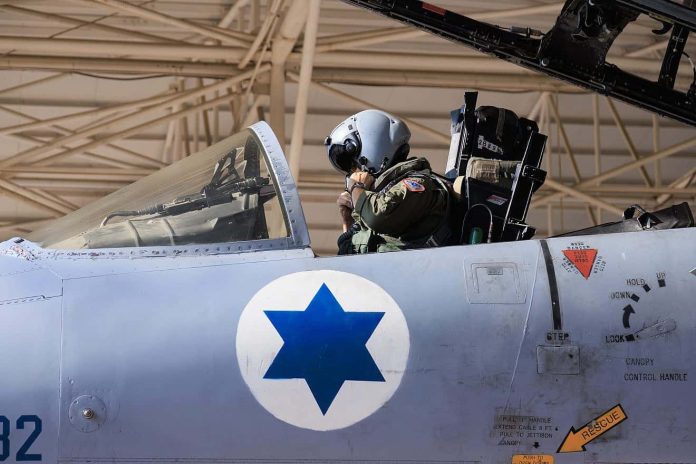
Israel launches air attacks to ‘demilitarize’ Syria

Israeli Air Force

On Tuesday night, the Israel Defense Forces (IDF) struck several Syrian “command centers” and “sites containing weapons” in the town of Kiswah, south of Damascus, and in the southern province of Deraa, arguing that the presence of “military forces and assets in the southern part of Syria poses a threat to the citizens of Israel.”

Israeli Defense Minister Israel Katz’s spokesperson confirmed that the Israeli Air Force was “attacking strongly in southern Syria as part of the new policy we have defined to pacify southern Syria.”

“Any attempt by the Syrian regime forces and the country’s terrorist organizations to establish themselves in the security zone in southern Syria will be met with fire,” Katz added.

The armed group Hayat Tahrir al-Sham (HTS) seized power in Damascus in December after more than a decade of fighting against President Bashar Assad. The IDF used the opportunity to advance beyond its previous positions in the Golan Heights and seize the strategic Mount Hermon.

Netanyahu declared on Sunday that Israel would not allow HTS or the new Syrian army being formed to “enter the area south of Damascus.”

“We demand the complete demilitarization of southern Syria in the provinces of Quneitra, Deraa, and Suweida from the forces of the new regime,” the Israeli prime minister stated in a speech to military cadets. “Likewise, we will not tolerate any threat to the Druze community in southern Syria.”

Israel first gained control of the Golan Heights in 1967 after defeating Syria and Egypt in the Six-Day War. Damascus failed to retake the strategic region in 1973. Tel Aviv officially annexed the territory in 1981, though this move has not been internationally recognized. A buffer zone between Israeli-controlled territory and Syria has long been manned by the UN Disengagement Observer Force (UNDOF).

As HTS seized control of Damascus, the IDF moved into the buffer zone and, in some instances, advanced deeper into Syrian territory. Netanyahu visited the IDF troops on Mount Hermon in mid-December, calling it “an exciting historical moment.”

Around 20,000 Jewish settlers currently live in the Golan Heights, which is also home to a similar number of Syrian Druze. Approximately 30 Jewish settlements in the area are considered illegal under international law. Washington officially recognized the Golan Heights as being under Israeli sovereignty in 2019 under President Donald Trump.

The new Syrian government has repeatedly demanded the withdrawal of Israeli troops and urged the deployment of UN forces in the buffer zone – most recently on Tuesday, just hours before Israel launched its air raids.

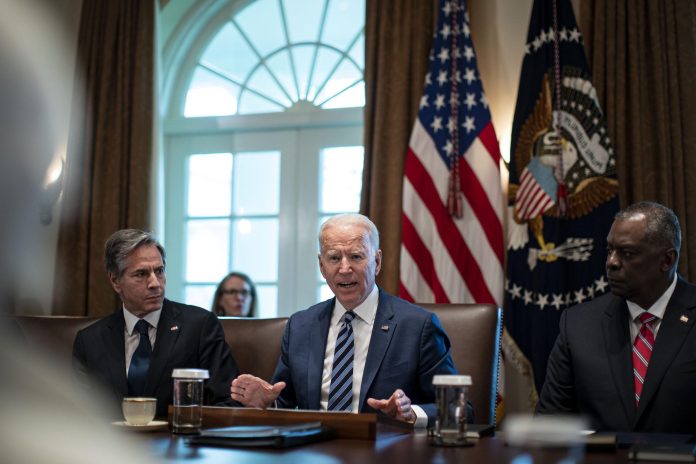
ICC called on to investigate Biden, Blinken, Austin over Gaza war

Biden Blinken Austin

Democracy for the Arab World Now (DAWN) lodged its request with ICC prosecutor Karim Khan last month, according to a press release by the nonprofit. Last year, Khan secured arrest warrants for Israeli Prime Minister Benjamin Netanyahu and his former Defense Minister Yoav Gallant, as well as three figures in the Hamas leadership, over alleged war crimes committed in the besieged enclave.

Biden, former Secretary of State Antony Blinken, and former Defense Secretary Lloyd Austin made “deliberate and purposeful decisions” to “provide military, political, and public support to facilitate Israeli crimes in Gaza,” the press release said.

DAWN’s 172-page communication to Khan laid out the legal reasoning, built with the help of ICC-registered lawyers and war crimes experts, according to the nonprofit.

“There are solid grounds to investigate Joe Biden, Antony Blinken and Lloyd Austin for complicity in Israel’s crimes,” DAWN board member and war crimes lawyer Reed Brody stated in the press release.

“The bombs dropped on Palestinian hospitals, schools and homes are American bombs, the campaign of murder and persecution has been carried out with American support,” he added.

Israel’s military operation in Gaza has devastated the enclave, and killed more than 48,000 Palestinians, according to local Hamas-run health authorities. The EU, UN and the World Bank estimated that it would take more than $53 billion over the next decade to rebuild Gaza, in a joint statement last week.

Since his inauguration last month, US President Donald Trump has sanctioned the ICC and Khan over arrest warrants for Netanyahu and Gallant, accusing the court of setting “a dangerous precedent” and putting Israeli and US personnel in danger of “harassment, abuse and possible arrest.”

Neither Israel nor the US are signatories to the Rome Statute, and therefore do not recognize the ICC’s jurisdiction.

Trump could be liable for obstruction of justice under the treaty, DAWN wrote in its press release. The US president’s proposal to displace Palestinians and take over Gaza “would also subject President Trump to individual liability for war crimes,” the nonprofit added.

In early February, Trump announced that “the US will take over the Gaza Strip,” level the destroyed buildings and develop it. Palestinians would be displaced to “neighboring countries of great wealth,” Trump suggested.

Met with outright rejection by Arab states, Trump has stressed he is not “forcing” the plan.

“I think that’s the plan that really works but I’m not forcing it. I’m just going to sit back and recommend it,” he told Fox News radio in an interview last week.