Friday, December 26, 2025
Home Blog Page 469

President Pezeshkian advocates stronger relations among Muslim states

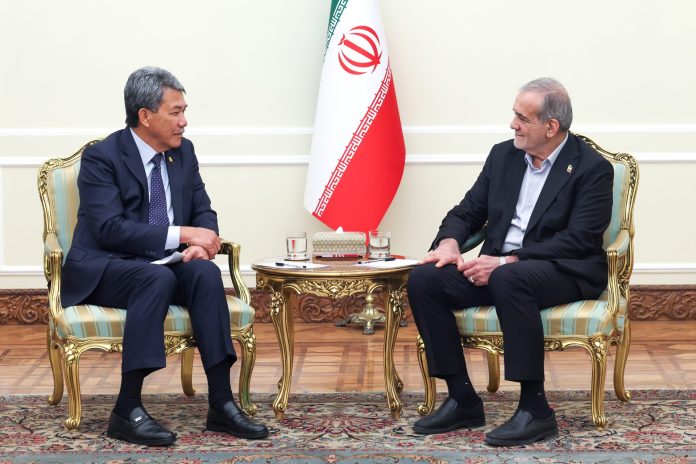
Pezeshkian made the remark in a meeting with Malaysian Minister of Foreign Affairs Dato’ Seri Utama Haji Mohamad Bin Haji Hasan in Tehran on Wednesday.

“The Zionist regime (Israel) currently dares to commit acts of crimes and aggression in the region because Muslims are indifferent to each another,” he said.

He added that fostering synergy among officials and politicians of the Muslim world would play a very important role in removing differences, misunderstanding and poverty in the Muslim states.

“The Islamic Republic of Iran is prepared and emphasizes the expansion of communications with Muslim countries, including Malaysia, in all fields.”

Further in his remarks, Pezeshkian noted that the 8th Iran-Malaysia joint commission meeting was held in Tehran earlier on Wednesday after a 17-year hiatus.

“It is necessary to use the capacity of the joint commission to facilitate permanent exchanges among traders and merchants, intercultural communications and the transfer of experience in various economic, scientific and technological fields to create common interests,” the Iranian president emphasized.

He expressed hope that the exchange of meetings between the two countries would lead to the establishment of bilateral constructive interactions.

For his part, the Malaysian foreign minister said ties between Tehran and Kuala Lumpur are based on understanding and fraternity.

He expressed Malaysia’s willingness to boost ties with Iran and make use of the Islamic Republic’s capacities in the scientific, technological, academic, foodstuff and agricultural areas.

The minister noted that Iran and Malaysia have a common stance on regional and international issues, including the Palestinian issue.

Like Iran, he said, Malaysia condemns the Israeli regime’s crimes and genocidal acts against the oppressed people of Gaza and opposes any plan to forcibly drive Palestinians from their homeland.

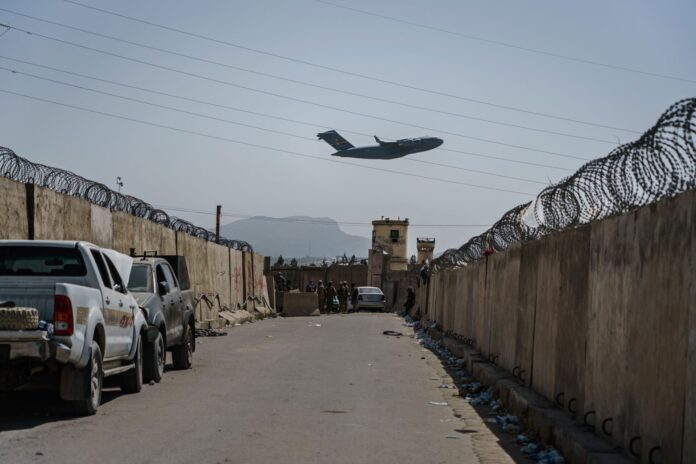
Trump says US generals involved in Afghanistan withdrawal should be fired

US Forces Afghanistan

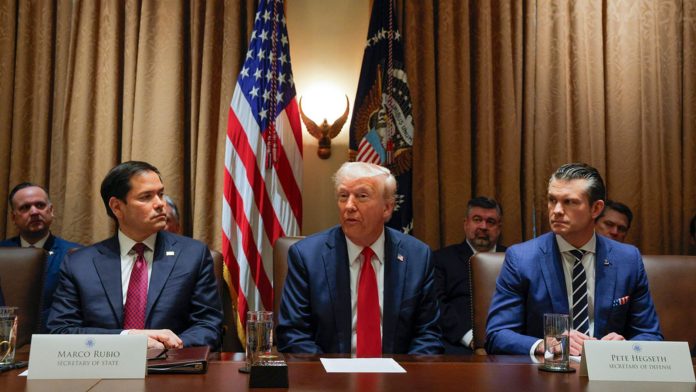
Trump was questioned about whether his administration would fire or relieve from duty the military officers involved in the August 2021 withdrawal.

“I’m not going to tell this man what to do, but I will say that if I had his place I’d fire every single one of them,” Trump said, gesturing to Hegseth.

Hegseth replied that the Pentagon is “doing a complete review of every single aspect of what happened” with the deadly and chaotic August 2021 withdrawal and intends to deliver “full accountability.”

Trump has been highly critical of the United States’ chaotic and deadly departure, which happened under President Joe Biden, but was set in motion by Trump when, in 2020, he negotiated and signed a deal with the Taliban committing to an earlier timeline for the drawdown of U.S. forces in Afghanistan.

After Trump’s election loss in 2020, he ordered a rapid withdrawal of all U.S. troops from Afghanistan, though senior officials never followed through, according to testimony released by the congressional January 6 committee in October 2022.

Under Biden, who delayed the planned withdrawal by a few months, 13 U.S. service members and more than 170 Afghans were killed by a suicide bombing outside the Abbey Gate of Hamid Karzai International Airport in Kabul as forces were exiting.

In the weeks before the U.S. was to fully leave, the country quickly fell to the Taliban, who seized abandoned American military equipment.

Trump on Tuesday called on the Taliban to return the U.S. equipment left behind.

“I think they should give our equipment back. And I told Pete to study that. But we left billions, tens of billions of dollars worth of equipment behind. Brand new trucks. You see them display it every year, on their little roadways,” he added.

He claimed the Taliban was selling the military weapons and gear, making Afghanistan, in Trump’s telling, “one of the biggest sellers of military equipment in the world.”

“They’re selling 777,000 rifles, 70,000 armor plated . . . trucks and vehicles,” he continued, stating, “I think we should get it back.”

He also asserted the U.S. should have kept control of Bagram Air Base, once the largest American military base in Afghanistan now controlled by the Taliban.

Trump claimed that China’s People’s Liberation Army has since taken control of the former U.S. base, which China has repeatedly denied.

It is not unusual for the U.S. military to leave behind heavy equipment when departing combat zones, as the cost of removing such gear from a country is more than the dollars it would take to replace it. But to make sure sensitive technical information doesn’t fall into the hands of enemies, troops decommission or destroy things such as aircraft, communications gear, bombs and missiles.

Over the course of the two decade Afghanistan War, Washington transferred $18.6 billion worth of military equipment to the U.S.-backed Afghan National Defense and Security Forces, according to a 2022 Defense Department report.

Of that amount, approximately $7 billion was left behind when American troops pulled out. And the Taliban was quickly able to seize the gear after the Afghan National Army collapsed.

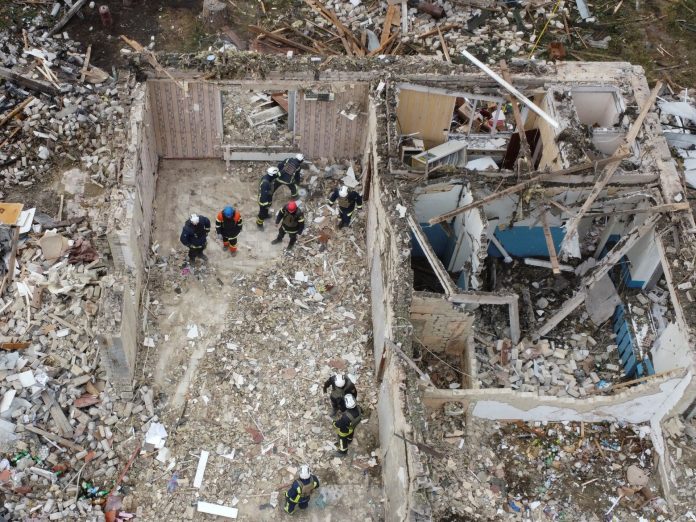
US abstains from WTO statement condemning Russia assault against Ukraine: Reuters

Russia Ukraine War

The refusal comes amid Washington’s shift in policy towards Moscow, which has included reestablishing diplomatic ties and ending the Ukraine conflict.

The statement, shared by EU’s Permanent Mission to the WTO, was reportedly backed by representatives from more than 40 nations, including the UK, Canada, and Australia.

The move would mark the first time Washington has refused to support the annual statement since the escalation of the Ukraine conflict in February 2022. Reuters noted that it could be seen as another signal of US President Donald Trump’s policy pivot regarding relations with Russia.

On Monday, the US declined to support a UN statement holding Russia accountable for the Ukraine conflict, timed to mark the third anniversary of the escalation.

Earlier this month, Trump held a phone call with Russian President Vladimir Putin as part of his administration’s broader effort to mediate peace between Russia and Ukraine. The leaders agreed to initiate negotiations to resolve the conflict.

Last week, US and Russian officials held high-level talks in Saudi Arabia, where the delegations discussed creating a framework for a potential peace agreement and enhancing bilateral ties.

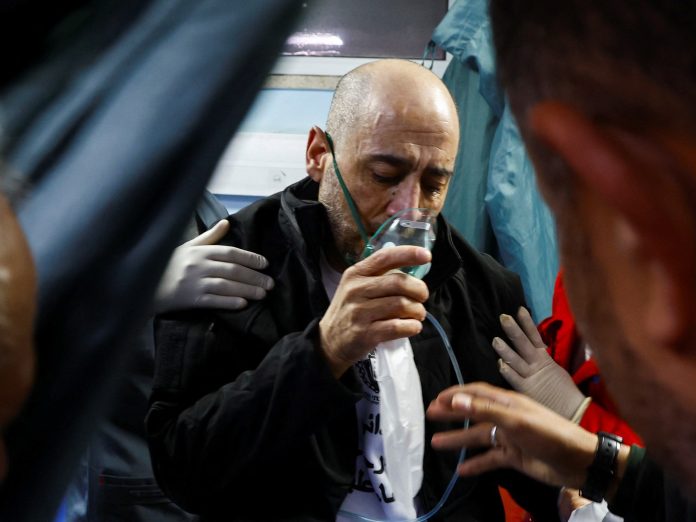
Palestinian prisoners released by Israel show signs of torture, starvation

More than 600 Palestinians were released on Thursday, shortly after Israel said Hamas handed over coffins containing the bodies of four captives. Israel has delayed the release of two Palestinian women and 44 children.

It was the final scheduled swap as part of the first phase of the ceasefire deal between Hamas and Israel.

Several Palestinians were transported in ambulances to the European Hospital in Khan Younis in southern Gaza due to the severity of their injuries. Many Palestinians were also sent to Egypt and the occupied West Bank.

Alaa al-Bayari, a Palestinian released to Gaza City, told Al Jazeera that he witnessed “torture, beating, humiliation and everything you can imagine” while in Israeli prison. He met his one-year-old daughter for the first time.

“We were kept naked, water was thrown on us and then they used electricity” to torture, he said.

Yahya Shrida, a Palestinian prisoner who was released to Ramallah, described Israeli prisons as graveyards.

“We have been taken out of suffering. It was as if we have been dug out of our own graves. No prisoner has had the experience of having their own release delayed twice,” he told Reuters news agency.

“What we have been through is a situation that the mountains can’t carry. It is very hard to explain; it is very hard to talk about what we have been through.”

Footage shared online by Quds News Network showed family members and released Palestinians weeping after their arrival in Gaza.

One clip shows a family member mourning the emaciated condition of his released relative, saying: “Look at the difference, oh my God!”

At one reunion in the West Bank city of Jenin, footage showed freed prisoner Louay Saabneh meeting his son Jabal for the first time after several years of incarceration.

Earlier, Hamas handed over the bodies of four captives to Israel via the Red Cross.

Israel’s President Isaac Herzog stated the bodies were identified as Ohad Yahalomi, Tsachi Idan, Itzik Elgarat, and Shlomo Mantzur.

In a statement, the Palestinian group renewed its “full commitment” to the ceasefire agreement and its readiness to enter negotiations on the second phase.

It also added attempts by the Israeli authorities to obstruct the release of prisoners have “failed”, adding that this means they have “no choice” but to begin negotiations for the second phase of the ceasefire deal.

The group also called on other countries to “stop their double standards” in their discourse regarding Israeli captives while not mentioning the abuse that Palestinian prisoners are subjected to.

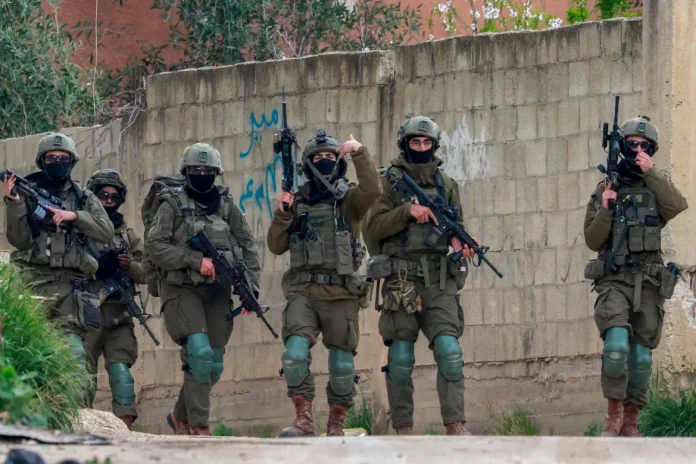
West Bank becoming ‘battlefield’, dozens killed in recent weeks: UNRWA chief

“The West Bank is becoming a battlefield,” Philippe Lazzarini warned on X, saying that “more than 50 people, including children, have been reported killed since the Israeli forces’ operation started”.

“This must end,” he added.

Israel’s military began a major raid in the West Bank’s north a over a month ago, just after a truce went into effect in the Gaza Strip.

Israel has occupied the West Bank since 1967 and carries out regular raids against Palestinians, but the current offensive in the north is the longest continuous one in the territory in two decades.

Israel on Sunday announced its troops would remain for many months in refugee camps in the northern West Bank, after tens of thousands of Palestinians living there were displaced by an intensifying, weeks-long onslaught.

The expansion of Israeli operations in the West Bank come as tensions surge over a fragile truce accord in Gaza, which has largely halted more than 15 months of devastating war.

Lazzarini said that the “destruction of public infrastructure” in the West Bank and that “bulldozing roads and access restrictions are common place”.

“People’s lives have been turned upside down, bringing back traumas and loss,” he continued, adding that “around 40,000 people have been forced to flee their homes especially in refugee camps in the north”.

“Fear, uncertainty and grief once again prevail.”

With Palestinian camps lying “in ruins”, Lazzarini added that “more than 5,000 children who normally go to UNRWA schools have been deprived of education, some for over 10 weeks now”.

“Patients cannot access healthcare, families are cut off from water, electricity and other basic services,” he said.

“More and more people are relying on humanitarian aid at a time aid agencies are overstretched and severely under-resourced.”

Since the start of the war in Gaza, Israeli troops or settler attacks have killed at least 900 Palestinians in the West Bank, including many militants, according to the Palestinian health ministry.

Iranian official says Tehran likely to hold meeting with E3 in coming weeks

Nuclear Talks Vienna

Gharibabadi, Iran’s deputy foreign minister for legal and international affairs, stressed that this round of talks with the European troika is likely to be held within three weeks.

Referring to the latest round of talks with political directors of the three European countries, he added that they were conducted as a continuation of the discussions from the three previous rounds held in Geneva and New York.

“We agreed to continue our contacts. The issue is of importance, covering the lifting of sanctions as well as the nuclear issue and the expectations of both sides,” Gharibabadi said in an interview with Iran’s Tasnim news agency.

“After Leader of the Islamic Revolution Ayatollah Seyyed Ali Khamenei announced the principled policy regarding negotiations with the United States, this has become a policy and a line that we must all follow. Naturally, the Islamic Republic of Iran has always rejected negotiations under sanctions and pressure, and this time as well, this stance must be pursued with strength,” he further added.

Back on February 7, the Leader rejected holding talks with Washington, stressing that experience has shown that negotiations with the US have no effect on solving Iran’s problems.

“Of course, this does not mean that we will not have dialogues with other countries, including the Europeans. Therefore, on the sidelines of [Iranian Foreign Minister Abbas] Araghchi’s trip to Geneva to attend the Disarmament Conference and the Human Rights Council, I held a meeting with the political directors of the three countries,” Gharibabadi continued.

He noted that both sides agreed to continue the discussions at a more technical and specialized level, and that the two sides would probably “meet again within the next three weeks, while our experts continue to engage in further discussions and evaluations.”

“The second point is that all four parties emphasized the need to pursue a negotiated solution for these issues of mutual interest and to reach agreements and outcomes in this regard. We should not tie all topics to the demands of a party that has consistently been disrupting the negotiations,” Gharibabadi said.

The senior diplomat also pointed out that Iran would naturally continue its diplomatic efforts and that It is the duty of the Ministry of Foreign Affairs to pursue various solutions within the framework of the Islamic establishment’s principled policies.

“However, our efforts are not solely limited to negotiations with the European parties; we are also pursuing other initiatives,” Gharibabadi emphasized, adding, “We do not link our policies to the positions of other countries; we pursue our own interests.”

He noted that if Tehran feels there is an opportunity in relation to any country or group of countries, it would naturally plan accordingly and follow its own interests.

“Our discussions with any country or group of countries are based on the national interests and security of the Islamic Republic of Iran. Within this framework, if more opportunities and capacities arise, we will certainly take advantage of them,” Gharibabadi stressed.

In 2015, Iran proved the peaceful nature of its nuclear program to the world by signing the Joint Comprehensive Plan of Action (JCPOA) with six world powers. However, the US’s unilateral withdrawal in 2018 and its subsequent re-imposition of sanctions against Tehran left the future of the deal in limbo.

In 2019, Iran started to roll back the limits it had accepted under the JCPOA after the other parties failed to live up to their commitments.

“We do not put all our expectations and hopes into the basket of a potential rift between Europe and the United States. We always plan for worst-case scenarios,” Gharibabadi emphasized.

The Islamic Republic has repeatedly stressed that it has never functioned as the side to leave negotiations, while declaring it would respond positively to any potential positive steps by the counterparty.

No sanctions relief for Russia pre-agreement, Ukraine ‘can forget about’ NATO: Trump

“You can forget about (NATO membership). That’s probably the reason the whole thing started,” Trump said during a White House cabinet meeting when asked what concessions Ukraine should make in a settlement.

Trump has repeatedly blamed President Joe Biden for provoking Russia’s full-scale invasion by supporting Ukraine’s NATO aspirations. Russian propaganda often cites Ukraine’s potential alliance membership as a justification for the war.

Ukraine officially applied to join NATO in September 2022. While the alliance declared in 2024 that Ukraine’s path to membership is “irreversible,” no formal invitation has been extended.

President Volodymyr Zelensky has called NATO membership the “cheapest” possible security guarantee for Ukraine.

Asked whether sanctions relief for Russia would be part of peace negotiations, Trump said, “No. I want to see if we make a deal (to end Russia’s war against Ukraine) first.”

Washington has imposed multiple rounds of sanctions on Russia since the start of the full-scale invasion, targeting banks, energy exports, and dual-use goods.

U.S. Secretary of State Marco Rubio previously indicated that sanctions relief could be part of negotiations but insisted the U.S. would maintain restrictions at least until an agreement is reached.

Trump’s comments come as Zelensky prepares to visit Washington on Feb. 28 to sign a minerals agreement with the U.S.

Trump stressed that the U.S will not give Ukraine significant security guarantees.

“I’m not going to make security guarantees beyond very much,” Trump said on Wednesday, adding, “We’re going to have Europe do that.”

Zelensky had earlier said that a “preliminary” economic agreement between Ukraine and the US was ready but noted that the deal did not yet include any US security guarantees that Kyiv views as vital to ending the war with Russia.

A full agreement could hinge on the outcome of talks with Trump later this week in Washington, Zelensky told a news conference in Kyiv.

“This deal could be a great success or it could pass quietly. And the big success depends on our conversation with President Trump,” he added.

According to media reports, the agreement will grant the US access to critical minerals in Ukraine in compensation for US assistance in repelling Russia’s full-scale invasion that began in February 2022.

The White House has applied heavy pressure on Kyiv to allow the US access to its vast reserves of minerals that are used in the aerospace, defence and nuclear industries.

The deal is central to Ukrainian attempts to ensure strong support from Trump as he seeks a quick end to Russia’s war in Ukraine.

The Ukrainian president told reporters in Kyiv that the framework economic agreement with the US is a first step towards a full agreement that would be subject to ratification by Ukraine’s parliament.

The planned visit comes after a dramatic week in which the two leaders exchanged hostile remarks, with Trump calling Zelensky a “dictator”.

Trump has cast the deal as a repayment for billions of dollars in aid to Kyiv during the war.

He announced Zelensky’s visit on Wednesday at the start of the first US Cabinet meeting of his second term, hailing the deal as “a very big agreement”.

“The previous administration put us in a very bad position, but we’ve been able to make a deal where we’re going to get the money back and a lot of money in the future,” Trump stated.

Lebanon’s government wins confidence vote in parliament

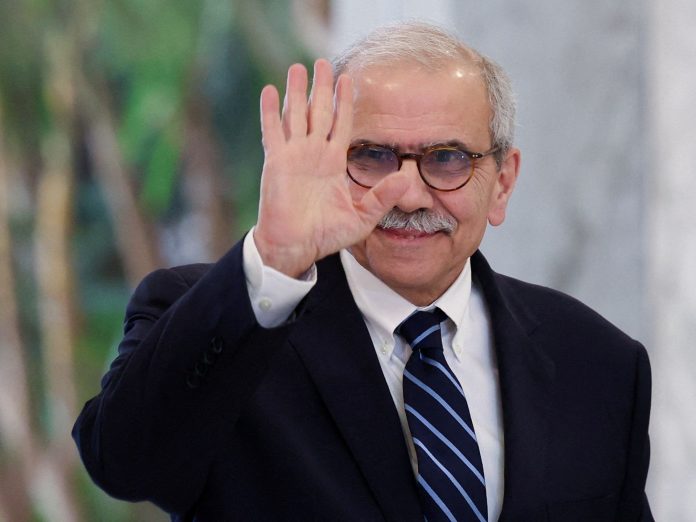
Salam’s government won the backing of 95 lawmakers in the 128-seat chamber late on Wednesday.

Lebanon’s political landscape has been overturned since Hezbollah, long a dominant player in Lebanese politics, was badly pummeled in last year’s war with Israel.

The new government’s policy statement, as such, did not include language used in previous years that was seen as legitimising a role for Hezbollah in defending Lebanon.

“We want a state that holds the exclusive authority over decisions on war and peace, a state loyal to the constitution and national accord ensuring the implementation of unfulfilled provisions,” Salam said before parliament.

On Tuesday, Hezbollah had given its backing to the government in a speech delivered by senior Hezbollah lawmaker Mohammed Raad.

“We will work on removing Lebanon from the grey list and start negotiations with the International Monetary Fund,” Salam stated before the vote.

“We will put depositors at the top of our priorities.”

Lebanon has been in economic crisis since 2019, when its financial system collapsed under the weight of massive state debts, prompting a sovereign default in 2020 and freezing ordinary depositors out of their savings in the banking system.

The country formed a new government on February 8, following unusually direct US intervention in the process and in a step intended to bring the country closer to accessing reconstruction funds following the Israel-Hezbollah war.

Beirut reached a draft funding deal with IMF in 2022 – contingent on reforms that authorities failed to deliver.

US puts sanctions on network behind ‘Iran’s drone program’

United States Department of the Treasury

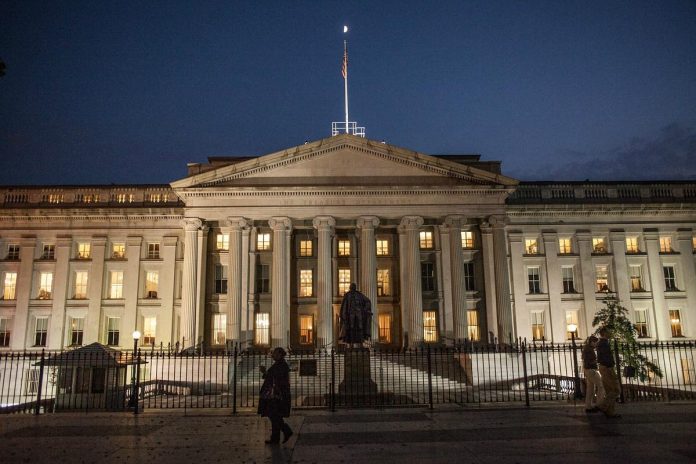
The Treasury said on its website on Wednesday that its Office of Foreign Assets Control (OFAC) had blacklisted three companies in Hong Kong and three firms in China for providing components needed in drone production to an Iranian company and its subsidiary.

The Iranian company Pishtazan Kavosh Gostar Boshra (PKGB) and its subsidiary Narin Sepehr Mobin Isatis (NSMI) had been designated by OFAC in February last year.

However, OFAC said that the new sanctions seek to target PKGB’s efforts to reconstitute its procurement network after last year’s designations.

Secretary of the Treasury Scott Bessent claimed in a statement that Iran continues to try to find new ways through front companies like PKGB and third-country suppliers to procure the key components it needs to bolster its drone program.

The designations came two days after OFAC imposed new sanctions on Iran’s oil industry, targeting more than 30 brokers, tanker operators, and shipping companies that it said were involved in the sale and transport of Iranian oil to foreign customers.

The sanction announcements came weeks after US President Donald Trump said he would restore a so-called “maximum pressure” campaign against Iran that was rolled out during his first term in office in 2018 with the aim of cutting Iran’s oil exports to zero.

Iran has dismissed the significance of Washington’s continued efforts to pile pressure on the country through its sanctions.

Authorities say US sanctions have hardly affected Iran’s ability to sell oil or its plans to expand the country’s defense capabilities.

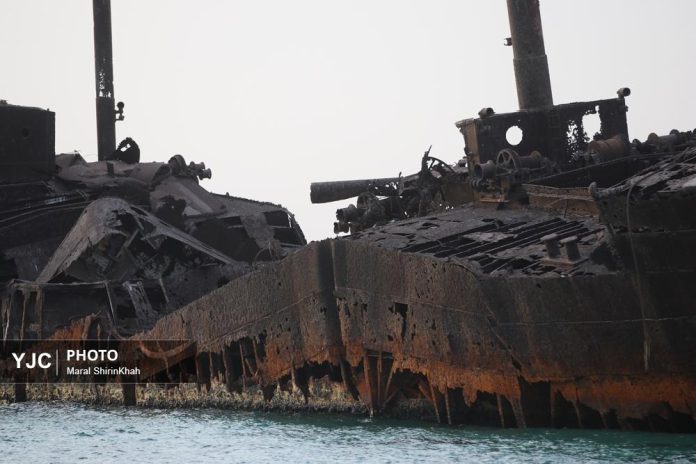
The Greek Ship in Persian Gulf on verge of collapse

The ship ran aground on August 4, 1966 off the western coast of Kish Island in the Persian Gulf. Since then, it has become one of Kish’s most famous tourist attractions.

However, the ship is now on the verge of complete destruction and will soon be submerged underwater.

The current state of the ship, with much of it destroyed and its hull broken, highlights the need for a decision on whether to restore or replace it.

Cultural heritage and tourism experts are exploring the possibility of restoration.