Wednesday, December 31, 2025
Home Blog Page 4689

Anti-Iran Resolutions “Historical Jokes”: Zarif

Zarif

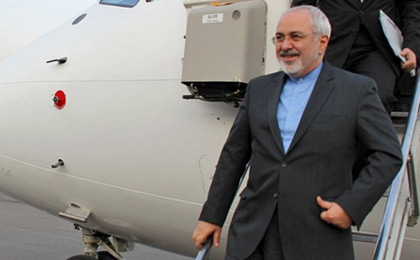
Iranian Foreign Minister Mohammad Javad Zarif on Saturday lashed out at the United Nations Human Rights Committee’s recent resolutions against Iran.

On Thursday, the committee adopted a resolution, authored by Saudi Arabia and co-sponsored by Qatar and some other Arab countries, the United States and other Western powers, which condemns attacks against what it describes as the Syrian moderate opposition and accuses Iran and Russia of interfering in Syria.

The committee also adopted a resolution with 76 votes in favor, 35 against and 68 abstentions, which accuses Iran of human rights violations.

Speaking at a conference held in Tehran to celebrate the 70th establishment anniversary of the UN, Zarif deplored such resolutions as “jokes of history”.

He said countries with no idea about constitution or elections are talking about free elections in Syria.

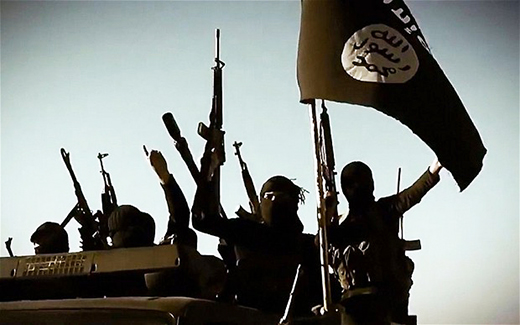
“Those who have nurtured Daesh (ISIL) are criticizing those who are fighting Daesh,” the Iranian minister regretted.

“Unfortunately they get votes because of certain considerations,” Zarif said, lashing out at the countries that vote in favor of such resolutions.

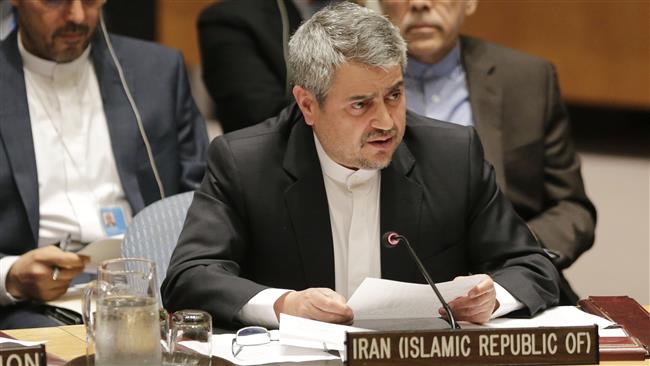
Iranian UN envoy had also earlier slammed the resolution against Tehran and Moscow, saying the move would only discredit the UN.

The non-binding resolution is aimed at undermining the campaign against terrorism and extremism and will only discredit the UN and its General Assembly, Iran’s Ambassador and Deputy Permanent Representative to the United Nations Gholamhossein Dehghani said on Friday.

Iran is active in Syria upon an official request made by the Syrian government to provide consultations to the war-hit country, he noted.

Dehghani also rejected the UN resolution containing allegations of human rights violations against Tehran as unsubstantiated, describing it as a result of Iranophobic policies.

The Canada-drafted resolution that contains spurious allegations against Iran reveals an attempt at “selective and political” distortion of the facts about Iran, he added.

Iran Condemns Mali Terror Attack

Jaberi-Ansari

Iran’s Foreign Ministry has condemned Friday’s terrorist attack on a hotel in the Malian capital of Bamako that killed 19 people.

Foreign Ministry Spokesman Hossein Jaberi Ansari expressed sympathy on Saturday with Mali’s government and nation on the deaths of innocent people in the terrorist incident.

Describing extremism and terrorism as common threats to the world, the spokesman called for concerted efforts by all countries in the fight against the inhumane phenomena.

On Friday, heavily armed gunmen stormed the Radisson Blu Hotel in Bamako, seizing scores of hostages and leaving bodies strewn across the building.

Terrorist groups al-Mourabitoun and al-Qaeda claimed responsibility for the attack, which ended when Malian commandos entered the building and rescued 170 people, many of them foreigners.

President Ibrahim Boubacar Keita said two militants were killed in the commando operation.

His government increased security at strategic points around Bamako at the start of a declared 10-day state of emergency.

West must stop supporting terrorists: Iran’s Larijani

312abc0f-8e75-4cc6-b387-e83825646bd1

Parliament Speaker Ali Larijani has slammed the West’s double standards in the Middle East, calling for an end to foreign support for terrorists operating in the region.

“If Western countries seek to fight terrorism, they must first change the existing mindset toward them because regional countries believe that the West is using the issue of terrorism as a tool [to achieve their objectives],” Larijani said in a meeting with Chair of the UK Parliament’s Foreign Affairs Committee Crispin Blunt in Tehran on Saturday.

Larijani said that Western countries need to ask their regional allies to stop providing the terrorist groups with weapons and oil.

The Iranian Majlis speaker also stressed the importance of developing a common understanding about ways to battle Daesh Takfiris and other terrorist groups.

Larijani emphasized that regional nations have no trust in Western states due to their double standards in the Middle East.

He said sustainable security should be established in the region, adding, “Interference of countries such as the United States has not only failed to restore stability in the region, but intensified problems of [regional] states.”

The British parliamentarian, for his part, said insecurity and instability in the Middle East would be detrimental to all countries in the world.

He added that Britain seeks to prevent the spread of terrorism with the help of major regional countries like Iran.

Time is ripe for the establishment of stability in the Middle East, Blunt said.

He also stressed that London seeks to restore its relations with regional countries.

Heading a parliamentary delegation, Blunt arrived in Tehran on Friday for a three-day visit at the invitation of Alaeddin Boroujerdi, the chairman of the National Security and Foreign Policy Committee of the Iranian Parliament.

Adeli again picked as GECF secretary-general

63da9364-0f35-4c3d-8d56-57a1786430d7

Mohammad Hossein Adeli, the Iranian secretary-general of the Gas Exporting Countries Forum (GECF), was reinstated on Saturday.

Adeli was elected as GECF secretary-general for a second two-year term in a foreign ministerial meeting of GECF member states in Tehran.

Adeli presented a report to the participants about his activities over the past two years he led the organization.

The GECF also picked Iran’s Oil Minister Bijan Zanganeh as deputy chairman and Qatar’s Minister of Energy and Industry Mohammed Saleh Al Sada as chairman of the Forum.

Azerbaijan was given the status of an observer in the GECF.

The third Summit of leaders of the GECF member states will be held in Tehran on 23 November in which the heads of states of nine countries will participate.

So far, the presence of the presidents of Bolivia, Russia, Equatorial Guinea, Nigeria, Venezuela and Iraq has been confirmed. Turkmen president will also attend Monday’s meeting as a special guest.

Russia, Iran, Qatar, Algeria, Bolivia, Egypt, Equatorial Guinea, Libya, Nigeria, Trinidad and Tobago, Venezuela, and the United Arab Emirates are the main members of the gas exporting body. Observer countries are the Netherlands, Iraq, Oman, Peru, Azerbaijan and Norway.

GECF members account for 42 percent of global gas output, 70 percent of global gas reserves, 40 percent of piped gas transfer, and 65 percent of global trade of liquefied natural gas (LNG).

Did Paris fall victim to a faulty trend or a decision?

ISIS

IS does not pose a direct threat to Iran and the country should not join the anti-terrorism coalition, an Iranian expert in Middle Eastern affairs has said.

In a world where there are different readings, and stances are subject to swift change, it’s not a calculated move to join a fluid current whose direction, strategy and tactics are not well defined, Seyyed Ali Moujani said, adding such a move may be carrying a hefty price tag.

Following the telephone conversation between the Iranian and French presidents in the aftermath of the Paris terrorist attacks, in which President Rouhani voiced Iran’s readiness to join France in the fight against terrorism anywhere in the world, some Western diplomats suggested that Iran is likely to join the anti-IS coalition.

Even at home, given comments by the Iraqi foreign minister that IS had threatened Iran, some experts brought up the issue of direct confrontation between Iran and the terrorist grouping, though some described it as utterly wrong and said that Iran shouldn’t walk down that path.

Should Iran join the anti-IS coalition? Should Iran shift its strategy in dealing with IS and get involved in a direct battle against the terrorist group?

In an interview with Fararu.com, Seyyed Ali Moujani, a researcher and author of “Roots of the Revival of the Islamic Caliphate and its Geopolitical Impact”, has talked about terrorism in the wake of the Paris terrorist attacks. The following is the translation of his remarks in the interview that was published by the news website on November 21:

It seems that there is no cohesion in the words of the countries that are fighting terrorists, especially IS. Instead, there is a great deal of confusion.

For instance, we initially heard President Hollande say that France sought to fight terrorism, but only 48 hours later, he said that IS had declared war on France.

I believe in a big European capital which fell victim to terrorism, it has not been clear whether what happened stemmed from a faulty trend or a decision.

Iran has encountered different forms of terrorism in the post-revolution era. To us, terrorism is not a black or white, good or bad concept. To Iran, a nation’s resistance in the face of invaders does not constitute terrorism.

But to some countries which talk about the fight against terrorism, the resistance of people in South Lebanon in the face of occupation or that of the Afghan and Iraqi nations is deemed as terrorism. Interestingly, their interpretation is in contrast with the historical traditions of their own countries.

For instance, the leaders of the anti-Nazi resistance movement in France destroyed the country’s roads and bridges and killed French nationals only to stop the Nazi Army from overrunning the country and dealing a blow to the French sovereignty.

Therefore resistance is an admirable concept to the Iranians, whereas the anti-terror coalition views – without any dissection – any entity that stands up to it as terroristic one way or another unless it bows to the coalition or reaches a deal with it in which case acts of terrorism would be negotiable with terrorists. Talks between the US and the Taliban fall into that category.

These double standards and the lack of a detailed mentality do not allow Iran to take risks and board a wayward ship in choppy seas sailing against headwinds.

As for whether Iran should single-handedly take on IS or continue the current trend, I would say IS is growing in our backyard. What we need to pay attention to is that we should contribute to political, security and social stability in the region.

The present circumstances pose no direct threat to Iran, but IS is a major socio-cultural threat to the country.

If the unholy phenomenon of IS lives long, it can have a deep cultural impact on Iran’s neighbors and stoke ethnic, factional and tribal tensions.

In light of the fact that Iran is a country of ethnic, linguistic, religious and factional diversity, we need to tread very cautiously and take measures to soothe regional conditions and counter the cultural impacts IS seeks to leave in its wake. We also need to use these tools to stop violence in the region.

JCPOA sets the stage for Iran’s interaction with the rest of the world

1910984

The minister of culture and Islamic guidance has said that opportunities have emerged for closer cultural ties between Iran and the rest of the world, adding that other countries including Italy are seeking to have cultural interactions with the Islamic Republic.

Ali Jannati made the remark at a ceremony in the Tehran Museum of Contemporary Art (TMOCA) on Friday to preview “In Quest of the Missing”, a collection of artworks by the late Farideh Lashai, a painter, writer and translator. Honaronline.ir on November 21 published a report on the ceremony which was also attended by Deputy Culture Minister for Artistic Affairs Ali Moradkhani and a host of Iranian and foreign guests, and remarks by the culture minister there.

The following is the translation of part of that report:

The culture minister said that Farideh Lashai is a world-class, influential artist, adding this exhibition which brings together her works from different centers and collections is of great significance.

Jannati pointed to the conclusion of the Joint Comprehensive Plan of Action (JCPOA) and said that JCPOA has undoubtedly had an impact on political, economic, cultural and artistic fronts. “It can set the stage for development of culture and art, and establishment of international interactions between [nations on different fronts including] culture and art.”

The minister then expressed hope that his ministry can introduce and promote Iran’s art to the world more than ever.

The culture chief also said that the letter of understanding the Tehran Museum of Contemporary Art has signed with Germany’s Prussian Cultural Heritage Foundation shows that the stage is set for artistic interaction [between Tehran and Berlin], adding that other nations such as Italy have called for [showcasing] TMOCA artworks and for the cultural interactions between with Tehran.

Majid Mola Norouzi, the head of the Culture Ministry’s Visual Arts Department, addressed the same ceremony and said the exhibition at the museum is different from the previous ones for having two Italian and Iranian curators working together.

He added that Mr. Germano Celant – who is a top European curator – and Ms. Faryar Javaherian will jointly be in charge of this exhibition.

As many as 130 works of Farideh Lashai, including paintings, video arts, glassworks and crystal designing, will be on display along with 40 other works at the Tehran Museum of Contemporary Art (November 21 – February 26).

Farideh Lashai, born in Rasht in 1944, came to Tehran with her family in 1950. At 19, she went to Germany to continue her studies. For a while she studied at the Academy of Fine Arts in Munich and then went to the school of translation.

While in Germany, she was inspired by Bertolt Brecht, a German poet. In 1966, she went to Austria and worked in the Riedel Company, a famous glass company in southern Austria, where she also learnt crystal designing and engraving.

In addition to creating artistic works, Farideh Lashai spent a lot of time on literature. She held her first solo exhibition in 1974 in Tehran Gallery which mainly focused on nature.

In the 1990s and 2000s, she had a stronger presence in the Tehran Museum of Contemporary Art.

She passed away on February 24, 2013 [after a long battle with cancer] at the age of 68.

[Farideh Lashai is renowned for her abstract contemporary paintings, which are a combination of traditional and contemporary views of nature.]

If it weren’t for Iran, IS would have captured Baghdad and Damascus

Aliakbar Velayati

The advisor to the Supreme Leader for international affairs has said that Turkey does everything it can to undermine Bashar al-Assad in Syria, but Tehran maintains friendly relations with Ankara despite differences of opinion over Syria.

The following is the translation of the comments Ali Akbar Velayati made in an interview with Lebanon’ As-Safir daily as reported by entekhab.ir on November 21:

If Iran had not helped Syrian President Bashar al-Assad and left Damascus in the lurch, the Syrian capital would have fallen by now and plunged into conditions worse than those of Libya.

A plan to disintegrate Syria into five states was pursued as a dream to break up Iraq into three countries was followed. Tehran stood up to such plans. I can say that if it wasn’t for Iran’s stance, Damascus and Baghdad would have fallen by now.

At a meeting between Iran’s foreign minister and the US secretary of state during the nuclear negotiations, John Kerry once told Mohammad Javad Zarif that America knew about Iran’s help to the Iraqi government.

In response, Zarif said that if Tehran had not done that, IS would have made phone calls to the US from Baghdad rather than Mosul.

IS has sought to overrun Baghdad and Damascus, but it has never said that it plans to fight Israel. That means Israel would have secured dominance over Baghdad and Damascus, and if Iran had not helped Yemen, Sana’a would have fallen to invaders. It’s not hyperbole to describe Iran as the backbone of the region and the world of Islam.

After Paris and Beirut, it’s time to rein in Saudi Arabia

Saudi-Mohammed-bin-Nayef-U

America’s leading Sunni ally has been propagating a violent, sectarian religious ideology long before ISIS came on the scene, according to Foreign Policy, an American news publication.

Alef.ir on November 21 released the Farsi translation of an article in Foreign Policy (November 20, 2015). IFP has picked the original text of the article by Inge Fryklund, JD, PhD, who has worked in the Balkans, Iraq, and Afghanistan, with USAID, UNDP, and with the US Army and Marine Corps:

After the carnage in Paris, Western governments turned immediately to debating the usual tactics for “bringing the terrorists to justice.” Should we employ drone strikes, they wonder? Boots on the ground? Police?

The much more important matter, however, is identifying and stopping the source of the nihilism, misogyny, and sectarian animus that’s found fertile breeding grounds in the civil wars of the Middle East. Unless the source is addressed, there will be an endless supply of terrorists wreaking havoc. And we in the West will continue wringing our hands and responding impulsively rather than strategically.

While virtually all Islamic scholars dispute the theological soundness of the ISIS ideology, the group’s roots lie in fundamentalist Sunni Islam, specifically the Wahhabi strain officially espoused by Saudi Arabia — our “ally” — which views Shiites as apostates and seeks to turn Islamic societies back to an intolerant (and imagined) medieval past where women are stoned for adultery and reporters are lashed. Since the 1970s, the Saudi government and its allied religious establishment have exported their extremist version of Sunni Islam around the world — all financed by their oil money.

During the 1970s and ‘80s, Saudi Arabia financed Pakistan’s ISI (Inter-Services Intelligence) in support of the anti-Soviet insurgents in Afghanistan that became the Taliban. The US matched the Saudi contribution to ISI, but abdicated its responsibility to see where the money was going. Anxious to avoid overt provocation of the Soviets, Washington allowed Pakistan and Saudi Arabia to choose the recipients of American taxpayer dollars, and these were the most fundamentalist insurgent factions — like the Haqqani network, which plagues Afghanistan even today and has targeted American soldiers serving there.

Saudi money financed the Pakistani madrassas that provided the only available “schooling” for a generation of young Afghan male refugees. In camps devoid of women, the extreme separation of the sexes resulted in young males detached from any experience of women or family life. They were taught to memorize the Koran (in Arabic, having no idea what it said), use weapons, and hate the West. They were otherwise illiterate about both secular subjects and Islamic jurisprudence.
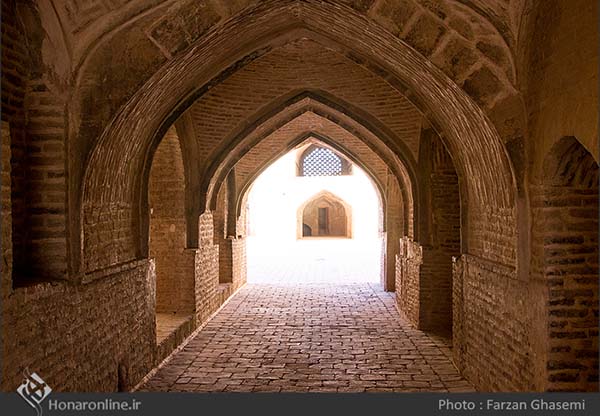
Since the 1990s, Saudi money has similarly financed mosques and Wahhabi-inspired teaching throughout the Balkans as well, contributing to the instability of that region.

It appears that the connection between Saudi Arabia and the Paris bombings is even more direct. Many of the plotters came from the Molenbeek neighborhood in Brussels. In the 1970s, Saudi Arabia and other [Persian] Gulf countries funded Wahhabi religious schools there, displacing or taking over the more moderate mosques founded by the Turkish and Moroccan immigrants in the district and helping to thwart their children’s potential for cultural integration.

ISIS’ extreme misogynistic worldview was starkly on display in its statement after the Paris massacre. It referred to a “profligate prostitution party” at the Bataclan Conference Center. This should be a red flag. The equation of women out to a concert and prostitution reflects the same mindset animating the Saudi insistence that women cannot drive, cannot leave the house unless escorted by a male relative, and must be covered head to toe. (In fact, I would argue there’s an insufficiently explored thread of distorted sexuality in hardline Wahhabi belief and practice.)

Our “ally’s” religiously mandated intolerance was displayed to the world in the hatred that we witnessed on Nov. 13th, with hundreds dead and many more maimed in Lebanon and Paris. Why do we put up with this aggressive medieval proselytizing from Saudi Arabia? With allies like this, who needs enemies?

Well, the simple answer is oil: We’ve chosen to buy our oil from Saudi Arabia and boycott the Shiite Iranian source.

But cheap oil may have been purchased too dearly when the mayhem in the Middle East and now Europe is the result. Accepting higher oil prices in the interests of containing Sunni nihilism could be a worthwhile bargain.

We’ve also boxed ourselves in diplomatically by a generation of demonizing and isolating Iran, the major Shiite power, leaving no counterweight to the Saudi Sunni ideology. Yes, we cite the 1979 takeover of the American embassy in Tehran, but forget that Iranian anti-American sentiment was a predictable result of the CIA overthrowing the elected and more or less democratic government of Prime Minister Mossadegh in 1953. (The US acted at a British request; they wanted to control Iranian oil and Mossadegh nationalized it.) We condemned Iran to a generation of brutal dictatorship under the Shah’s notorious secret police. Should we have been surprised when the revolution that came in 1979 brought payback to the Americans?

While Iran does indeed support violence in other countries, its efforts seem rationally related to political objectives (supporting Hezbollah against the Israeli occupation, and Assad as a fellow Shiite power) and might be resolved as such. They have thus far not included assaults on uninvolved civilians and barbarism for its own sake.

So what to do at this point? We have leverage over Saudi Arabia if we choose to use it. We should stop supplying weapons — which are currently being used to attack Shiite factions in Yemen — and insist that Saudi Arabia cease financing fundamentalists throughout Afghanistan, Pakistan, Syria, and the Balkans. It’s pointless to apply tactical solutions to the problems of the Middle East while Saudi Arabia is free to (almost literally) pour oil on the fires.

Iranian researchers build fully automatic VTOL drone

13940830000390_PhotoI

Iranian inventors at Sharif University of Technology designed and built a vertical take-off and landing (VTOL) drone capable of flying automatically in different environments even out of the pilot’s sight.

Hodhod [Hoopoe] 3 Drone, which was put on display at a Tehran exhibition, is capable of flying 53 minutes and can carry some loads.

The VTOL drone doesn’t need any runway for taking off and landing, and can continue flight even after one of its engines is damaged.

It can also be used for simultaneously sending information to the command center, returning home in emergency situations, and automatically taking off and landing out of the pilot’s sight.

In recent years, Iran has made great achievements in its defense sector and secured self-sufficiency in producing essential military equipment and systems, including UAVs.

Iranian defense researchers built the country’s first home-made VTOL drone with particular specifications in March.

The VTOL drone makes its vertical climb using two wings which increases its speed.

In 2013, an Iranian inventor designed and built a VTOL drone using combined fuel which he said was highly functional for military operations.

“The vertical Unmanned Aerial Vehicle (UAV) which uses combined fuel and has a big propeller and two side rotors can fly vertically for 2 hours,” Iranian inventor Jafar Aghazadeh said.

He added that the drone, which is under flight test, is especially good for military missions and uses a fuel cell and a hydrogen generator system as its power source.

A look at Iranian newspaper front pages on Nov. 21

Iranian Newspapers Headlines

Comments by the director of the Management and Planning Organization about the value of the rial and next year’s budget dominated the front pages of Iranian newspapers on Saturday. Reformist-leaning newspapers also gave extensive front-page coverage to an attack by hardliners on a reformist meeting in Varamin and the comments of the grandson of the late Imam Khomeini about a possible run in the upcoming elections.


Ettela’at: Iran and Russia will hold talks on energy and the future of the Middle East.

The Russian president is due in Tehran. On Monday he will meet with the Supreme Leader and President Rouhani.


Abrar: IS leaders are said to have fled Raqqa in Syria for Mosul, Iraq.

Abrar: The grandson of the late Imam Khomeini has said that he will do what he deems as his responsibility.

The comment by Seyyed Hassan Khomeini came after he was urged to field his candidacy for the Assembly of Experts.


A look at Iranian newspaper front pages on Nov. 21


Afarinesh: The deputy foreign minister for consular affairs has said that entering Iraq without securing a visa first is punishable by jail term.

Afarinesh: The minister of culture and Islamic guidance has visited a number of bookstores on Tehran’s Revolution Street as part of a plan to promote book reading and mark Book Week.


A look at Iranian newspaper front pages on Nov. 21


Afkar: Ali Akbar Velayati, an advisor to the Supreme Leader, has likened Iran to the spinal cord of stability in the region.


A look at Iranian newspaper front pages on Nov. 21


Aftab-e Yazd: An unauthorized gathering against an authorized meeting of reformists

The deputy interior minister has said that lawbreakers will be definitely dealt with.


A look at Iranian newspaper front pages on Nov. 21


Arman-e Emrooz: Hardliners have staged an attack on Abdolvahed Mousavi Lari [a former interior minister] in an authorized reformist meeting in Varamin.

The interior minister has ordered the incident investigated.


A look at Iranian newspaper front pages on Nov. 21


Asr-e Iranian: Security plots against Iran have been foiled, said the commander of the Islamic Revolution Guard Corps.


A look at Iranian newspaper front pages on Nov. 21


Asrar: An advisor to Foreign Minister Mohammad Javad Zarif has said that wisdom does not prevail in the Saudi foreign policy.

Asrar: The director of the Environment Protection Organization has said that her organization is quite serious in getting damages from individuals or entities that harm the environment.
 

A look at Iranian newspaper front pages on Nov. 21


Bahar: Parliament Speaker Ali Larijani has joined the ranks of officials critical of the misuse of the term infiltration.

“The Americans do not seek regime change in Iran,” said the top MP.


A look at Iranian newspaper front pages on Nov. 21


Ebtekar: America’s failure to implement the Joint Comprehensive Plan of Action will carry a hefty price tag, said Mehdi Motaharnia, an international relations expert.

 

A look at Iranian newspaper front pages on Nov. 21



Eghtesad-e Pooya: According to a Cabinet decision levying tariffs on export items is banned.


A look at Iranian newspaper front pages on Nov. 21


Emtiaz: Iraqi security forces have found toys and dolls filled with explosives along the same route Arba’een pilgrims are to take in less than two weeks.


A look at Iranian newspaper front pages on Nov. 21


Etemad: Standing up to the pressure group

A protesting principlist MP has alleged that attacking Mousavi Lari [at a reformist gathering in Varamin] was the work of reformists.


A look at Iranian newspaper front pages on Nov. 21


Hemayat: The judiciary chief has said that the West has developed an IS-like mentality.

His deputy has urged officials to make sure the enemies do not crawl their way into the decision-making process in the country.


A look at Iranian newspaper front pages on Nov. 21


Iran: Natural gas heavyweights have warmly welcomed an invitation by Iran to attend a summit of the Gas Exporting Countries Forum in Tehran.


A look at Iranian newspaper front pages on Nov. 21


Javan: Commander of the Islamic Revolution Guard Corps Major General Mohammad Ali Jafari has said that Iran has drawn down the curtain on enemy bullying.


A look at Iranian newspaper front pages on Nov. 21


Jomhouri Islami: Ayatollah Abdul-Karim Mousavi Ardebili, a source of emulation, has called on officials to reveal the behind the scenes of astronomical embezzlements.


A look at Iranian newspaper front pages on Nov. 21


Kayhan: IS is on a mission to counter Islam, said Tehran Friday prayer leader Ayatollah Ahmad Khatami.


A look at Iranian newspaper front pages on Nov. 21


Mardomsalari: Foreign delegations are in Tehran for a summit of gas exporting countries.

Mardomsalari: The most important concern of the Welfare Organization is an increase in the ranks of female addicts, said the director of the organization.


A look at Iranian newspaper front pages on Nov. 21


Resalat: Closing the possible military dimension (PMD) case is Iran’s key condition for reconfiguration of Arak Reactor, said the director of the Atomic Energy Organization.


A look at Iranian newspaper front pages on Nov. 21


Rooyesh Mellat: The value of the US dollar against the rial will go down shortly, said the director of the Management and Planning Organization.


A look at Iranian newspaper front pages on Nov. 21


Siasat-e Rooz: For the attention of wishful thinkers!

The West put a seal of approval on its undying enmity toward Iran by adopting an anti-Iran human rights resolution at the UN General Assembly.


A look at Iranian newspaper front pages on Nov. 21