Thursday, January 1, 2026
Home Blog Page 4676

Iran urges vigilance against plots to harm Tehran-Baku ties

Jaber Ansari

Iran has warned of plots by ill-wishers to harm the country’s relations with Azerbaijan, stressing the importance of remaining vigilant to thwart such schemes.

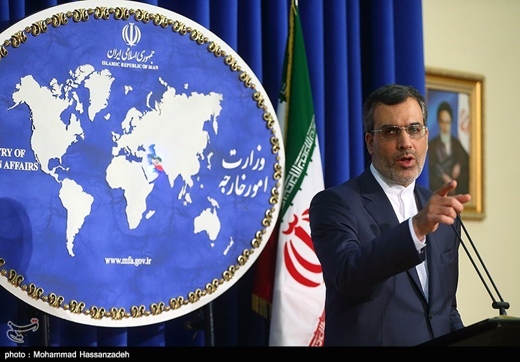
Iran’s Foreign Ministry Spokesman Hossein Jaber-Ansari said on Saturday that the Iranian people are concerned about Azerbaijan’s intensified wave of arrests and the killing of Shias in Nardaran district, north of the Azeri capital of Baku.

“The Iranian Foreign Ministry closely monitors different aspects of these events and is in constant contact with the country (Azerbaijan)’s relevant officials,” he said.

Following close consultation between Iranian and Azeri officials, a more suitable condition was created for Azeris to respect Islamic ceremonies as well as the sanctity of religious sites in Azerbaijan, including mosques, Jaber-Ansari said.

Azerbaijan has been carrying out a fresh wave of attacks on the majority Shias since November 26 when security forces killed four members of the Movement for Muslim Unity (MMU) during a raid in the village of Nardaran. At least 14 people were nabbed in the raid, including the MMU leader Tale’ Bagirzade, who is also known as Sheikh Bagirov.

In a later attack on Nardaran on December 3, policemen shot and killed five Shia Muslims and arrested 32 others.

Azerbaijan is a majority Shia state of more than nine million people. Shias account for 85 percent of the population.

The secular government of President Ilham Aliyev suppressed a Shia-dominated popular uprising in 2010 amid international outcry over his heavy-handed crackdown.​

On Thursday, ethnic Azeris in the northwestern Iranian province of East Azerbaijan gathered in front of Azerbaijan’s Consulate in the provincial capital of Tabriz to denounce Baku’s crackdown on Shia Muslims in Nardaran.

The protesters, who were marking the demise of the Prophet Muhammad (PBUH), called on Azerbaijan’s government to stop its anti-Islamic moves and immediately release those arrested in Nardaran over the past days.

Iran arrests main culprit behind 2014 attack

Iranian boarder guard

Authorities have arrested a main culprit behind last year’s killing of three security forces in the southeastern province ofSistan and Baluchestan.

Security forces launched a surprise attack on a residential building earlier identified as a hideout of armed bandits and smugglers outside the town of Zahak, provincial Police Chief Brigadier General Hossein Rahimi said on Saturday.

All six individuals inside the building were arrested during the operation, according to Rahimi.

One of the main perpetrators behind the killing of three security forces in November 2014 was among the detainees, he said.

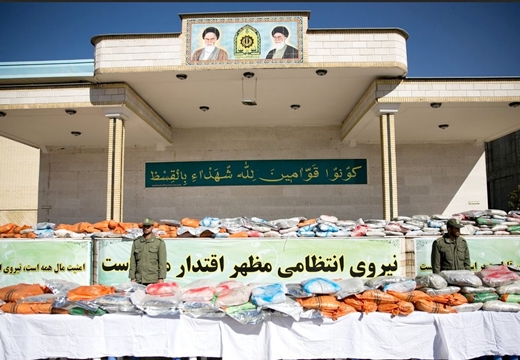
During the operations, security guards also discovered and confiscated a cache of weapons and ammunition from the criminal gang.

Sistan and Baluchestan Province has been the scene of a number of terrorist attacks in recent years.

The insecurity in the province is mainly caused by terror groups that cross the border into Iran from neighboring Pakistan.

On November 21, Iranian security forces busted a terror cell in Sistan and Baluchestan. The terrorists were planning to blow up over 150 kilograms of explosives in the form of ten bombs in the eastern Iranian border region.

Iran ready to help resolve Turkey-Russia tensions: First VP

Erdogan-Jahangiri

Iran’s First Vice-President Es’hagh Jahangiri says the recent escalation of tensions between Moscow and Ankara over Turkey’s downing of a Russian jet is worrisome, expressing Tehran’s readiness to help settle the dispute.

“We are concerned about the tension created in relations between Turkey and Russia and do not regard this tension as beneficial to the region at all and are ready to help ease the tension,” Jahangiri said in a meeting with Turkish President Recep Tayyip Erdogan on the sidelines of a meeting in Turkmenistan’s capital of Ashgabat on Saturday.

Moscow and Ankara have been locked in a war of words since November 24, when Turkey downed the Russian Su-24 fighter jet over Syria, claiming that it had entered Turkish airspace, an accusation strongly rejected by Moscow.

Of the two pilots aboard the warplane, one was rescued with the help of the Syrian army, but the other was wounded by militant fire while he was parachuting down and was killed on the ground.

Jahangiri further said Iran’s foreign policy stipulates the expansion of relations with all countries, particularly the neighboring states, on the bases of good neighborliness and mutual trust.

He stressed the importance of holding more consultation between Iranian and Turkish officials to find peaceful solutions to the ongoing crises in the region.

“Despite the difference of opinion [between Tehran and Ankara] about the Syrian issue, we should cooperate with each other in the fight against extremism and terrorism,” Jahangiri added.

He emphasized that interaction, respect for the country’s national sovereignty and territorial integrity and efforts to solve differences can lead to the establishment of sustainable peace and stability in the region.

Dialog to solve regional tensions: Erdogan

The Turkish president said his country does not welcome the escalation of tensions in the region and calls for dialog to clear misunderstandings.

Erdogan added that Tehran-Ankara relations should not be affected by foreign influences and said the two sides should foil attempts to cause religious discord as soon as possible.

He called on the two countries to make use of their capacities to strengthen cooperation in various fields.

Erdogan unhappy with Iran media

The Turkish president criticized certain reports in Iranian media against his family members and said the Iranian government should control the media inside the country. Erdogan was apparently referring to the coverage in Iranian media of the reports of the links between some of his family members and the Daesh Takfiri militants in Syria.

In response to Erdogan’s remarks, Jahangiri said the Iranian administration does not impose any restrictions on media, adding that even the administration is itself criticized in the media.

He added that Iranian officials have never made any comment against the Turkish government.

“However, your authorities have expressed many negative and incorrect statements against the Islamic Republic of Iran, the government and sanctities of the Iranian people,” the Iranian vice-president added.

FM Zarif confident about closure of Iran’s PMD case

zarif-22

Iranian Foreign Minister Mohammad Javad Zarif has given assurances that the case on the so-called PMD (possible military dimensions) in Tehran’s nuclear program will be closed by a UN resolution next week.

Speaking to Tasnim News Agency, Zarif pointed to a draft resolution recently submitted to the International Atomic Energy Agency (IAEA) Board of Governors by the P5+1 (Russia, China, the US, Britain, France and Germany), and said, “In the paragraph 9 of the draft resolution, there is emphasis on the closure of the PMD issue.”

The Iranian top diplomat added that the draft resolution explicitly says it has fully considered IAEA Director General Yukiya Amano’ report on Iran’s PMD case and has closed it.

The IAEA report is clear and says the agency has not found any sign or reason that shows Iran’s nuclear program has diverted to military activities, the foreign minister noted.

The draft resolution, which will be put to the vote in a session of the IAEA Board of Governors on December 15, will make it possible to close Teheran’s nuclear dossier and begin the implementation phase of the nuclear deal between the Islamic Republic and six world powers, also known as Joint Comprehensive Plan of Action (JCPOA).

The IAEA has been given the role of verifying Iran’s commitments under the nuclear deal with six world powers.

As part of a Road-map signed between Iran and the IAEA on July 14, the agency was required to finish its investigations about Iran’s nuclear activities and submit a report to the Board of Governors by December 15.

A report released on December 2 by Amano on Iran’s nuclear program confirmed that the agency has no credible indications of suspicious work in Tehran’s nuclear activities.

The Road-map was signed on the same day that Tehran and the Group 5+1 reached a conclusion on a lasting nuclear agreement.

The agreement was officially adopted on October 18, and is going to take effect within the next few weeks.

Old minaret along Silk Road (PHOTOS)

Old minaret0

Khosrogerd Minaret, located to the west of Sabzevar, in northeastern Iran is a unique historical monument.

The structure which is 38 meters in height dates back to the Seljuq era (1037–1194).

It is one of the oldest and tallest historical minarets in Iran. Archeological research shows that the minaret – a desertanswer to the light house – was meant to guide caravans in the desert.


Tehran subway station shooting accidental: Police

81873750-70366299

Tehran Police Information Center said a gunshot fired at the capital’s Niroo Havaei subway station on Thursday evening which left a passenger injured was unintended.

“At 20:30, a policeman deployed at the station unintentionally pulled the trigger, assuming the magazine empty,” the center announced in a statement.

“A 30-year-old passenger was hit in the leg and was immediately rushed to a clinic by police for treatment,” the statement said adding the injured is in a satisfactory condition.

Iran seals banking deal with France

9cdcd3fc-705f-4650-b8dc-c189b29da368

Iran says it has reached a basic agreement with France to re-establish mutual banking ties as soon as the sanctions against Tehran are removed.    

Deputy Minister of Industries, Mines and Trade Valiollah Afkhami-Rad has been quoted by local media as saying that sanctions are the only obstacle in the way of the implementation of the agreement with France.

Afkhami-Rad emphasized that similar deals have also been reached with other countries. Nevertheless, he said they cannot be implemented unless the much-awaited Joint Comprehensive Plan of Action (JCPOA) takes effect.

Most of the countries with which Iran has been negotiating over the re-establishment of banking relations are European, the official added.

JCPOA was reached between Iran and P5+1– the five permanent members of the Security Council plus Germany – after marathon talks in July.

Based on this agreement, Iran would limit certain aspects of its nuclear energy activities in return for the removal of certain economic sanctions against the country.

Some key sanctions have targeted Iran’s banking industry and have led to severe restrictions on the country’s financial transactions with the world.

The International Atomic Energy Agency (IAEA) – that checks the compliance of Iran’s measures in limiting its nuclear energy activities with what it agreed with P5+1 in JCPOA – has already announced that Iran has lived up to its commitments.

Tehran has said the ball is now in the court of P5+1 to implement its end of the bargain under the deal and move toward the removal of the sanctions.

No exact date has yet been set for the termination of sanctions but P5+1 have already said the lifting of the sanctions could occur in early 2016.

Iran envoy submits new WAVE version to UN

f21fb860-7fd4-4198-b0bc-8cdd20bbcdc6

Iran’s Ambassador to the UN Gholamali Khoshrou has submitted to the world body an updated version of a resolution based on President Hassan Rouhani’s proposal for the World Against Violence and Extremism (WAVE).

The draft was presented to the General Assembly in New York during on Thursday.

In December 2013, the General Assembly overwhelmingly voted to approve President Rouhani’s WAVE proposal, which called on all nations across the globe to denounce violence and extremism.

The Iranian president had made the proposal in his address to the UN Disarmament Conference in New York on September 25, 2013.

Khoshrou said the consensus on the draft and support for it by various countries indicates that the UN must take immediate action for containing violence and extremism in the world.

The Iranian envoy further warned against associating violent extremism with any religion. He said those who are accusing divine religions of violence are engaged in hate speech and fanning the flames of prejudice.

Referring to the atrocities committed at the hands of Takfiri militants in Iraq and Syria over the past two years and recent acts of terror in France, Lebanon and Egypt, among other places, claimed by Daesh terrorists, Khoshrou said the acts of terror signify the role the UN General Assembly can play in stemming the tide of extremism.

“In the world today, terror threats know no geographical boundaries,” he said, noting that launching collective efforts by the international community is the only way to face the issue of terrorism.

The Takfiri Daesh terrorists, who were initially trained by the CIA in Jordan in 2012 to destabilize the Syrian government, now control parts of Syria and Iraq. They have been engaged in crimes against humanity in areas under their control.

House of Mirza Kuchak Khan (PHOTOS)

Mirza Kuchak Khan0

Among gabled houses of the northern Iranian city of Rasht, there is one which stands out, not because it is big or luxurious, simply because of its one-time occupant: Mirza Kuchak Khan (an early twentieth century revolutionary).

The old house which was called home by this national hero now partly serves as a museum.

The following images of the mosque have been released by Mehr News Agency:


A terror group which bites the hand that feeds it

Iraq

An Iranian university professor says the West has been terrorized by what it helped create in the Middle East: Daesh (ISIS).

Ebrahim Fayyaz, a professor of social sciences at the University of Tehran, made the comment in an interview with Mosalas, a weekly news magazine (the 289th issue) and added that the new polarizations – Shiite Islam versus those who carry out acts of violence in the name of Islam on the one hand, and Liberal Democracy versus fundamentalism on the other – are not perpetual.

During the extensive interview, Dr. Fayyaz took a sociological look at the reasons why European youth are lured to join ISIS, the terror group’s notorious ideology, as well as the Arba’een March and its goals and message, violence in the name of Islam, and the exit strategies.

The following is the THIRD and FINAL PART of the translation of the professor’s remarks on the theorization of violence and how to get out of the crisis:

Polarization of thoughts: Perpetual or ephemeral 

Polarization of schools of thought such as Liberal Democracy and fundamentalism is not a lasting phenomenon. Such thoughts are on the brink of collapse. The war which is being fought [between different schools of thought] is harsh and violent. European thinkers and people too appreciate this.

The future of such movements [and ideologies] is bleak and their followers have realized that uncertainty lies in their future. They say that terrorism has become homegrown in the West, and that accusing the times is but excusing ourselves, so to speak…. They did this [created, funded and nurtured terrorist groups] to stop the spread of Islam in Europe, but what they did backfired.

When 9/11 attacks were launched in the United States, I was in Germany. I saw Iranians come to the Frankfurt Book Fair asking for copies of the holy Koran, but the Iranian publishers had not brought even one volume of the divine book. It terribly enraged me. At the same event Germans sold many copies of the Koran.

The 9/11 attacks were a kind of violence the West incited, but the attacks caused Europeans to pay more attention to the holy Koran. The attacks did nothing to arrest the growth of Islam, and the divine faith grew at a pace even faster than before.

In the structure the Americans have developed, the FBI advocates activities by violent Islamists in the United States, but it does not allow the Shiites to be active. Saudi Arabia too has dedicated staggering funds to help enforce such a policy in other countries.

They [the Saudis] were pursuing an agenda which called for the development of a violent version of Islam which was also favored by the deviant British-promoted Shiism. At the same time, they did not want to authorize activities by the Shiite Islam which was centered on the school of thought put forward by Imam Ali.

What comes to the fore is the fact that the West initiated such a movement, but Western countries are the ones who bear the brunt of the terrorist acts of these violent groups. So the West will eventually pivot. The governments may fail to do so, but the silent majority and Western thinkers will definitely do so.

I gather that a number of thinkers in Germany are interested in Alawi Shiism [the Alawites follow a branch of the Twelver school of Shiite Islam,] and its concepts. They describe Germany as the West’s seminary school. No doubt, they [the Western countries] will fail [in their attempts] due to the senselessness of violent acts.

The paradigmatic failure of the West will, in no way, translate into its victory; the fact remains that these two [the West and its paradigm] will collapse. ISIS is akin to the violent Western ideologies, such as nationalism and nation states as far as its format goes. Such a movement [violent ideologies] came to a head during the Second World War when Hitler was in power and millions of people were killed.

In a not-too-distant future a number of nations will move toward and opt for the wisdom and ideology of Imam Ali. Are we ready for [embracing] Imam Ali’s ideology and wisdom? The Ummah-Imamate mindset is an international theory which does not solely belong to Shiism. It is based on the ideology and the governance of Imam Ali who did nothing in war which crossed the ethical red lines. The Sunni thinkers follow his example, but nothing has yet replaced it.

A way out of the crisis

Pierre Bourdieu, a contemporary French sociologist [1930 – 2002], repeatedly discussed the ways to weather the crisis, but nobody heeded what he brought up. Alain Touraine [a French sociologist] says the world is witnessing the collapse of social order which will result in the collapse of power and political systems. They are not much hopeful about the future.

[…]

The aristocracy which comes with capitalism in Europe has pushed people toward a path which is against ethical values and brings them humiliation. In the West there are multiple unethical issues [gripping society]. People in the West have shown no hesitation in talking about such immorality. A case in point is the use of chemical bombs against the Iranians. Westerners are mainly to blame for the death and injury of a large number of Iranians, but today they are concerned about the bombs which might be set off by ISIS.

This reveals the big mistakes the West has committed in promoting unethical issues in society. Homosexuality, which is far from ethical norms and standards, has been promoted on a number of fronts. Questions associated with family are yet another major crisis in the West.

The collapse of civilization, social order and rationality in the West as well as the mentality of Western politicians and their civilizational stupidity do not point to a promising future in the West.