
To mark Christmas, Supreme Leader Ayatollah Ali Khamenei visited the house of Assyrian martyr Robert Lazar.
The following images of the visit have been released by Mehr News Agency:
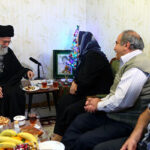
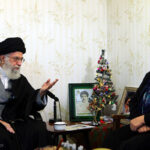
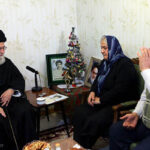
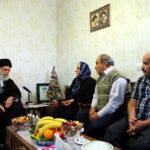
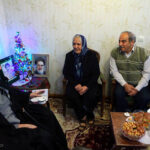
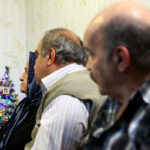
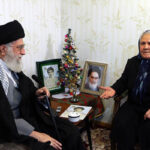
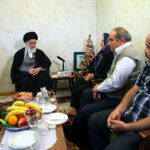
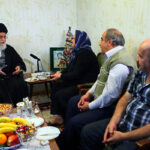
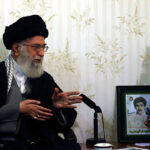
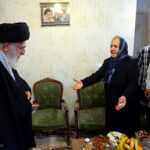
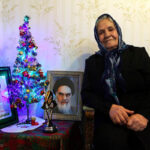
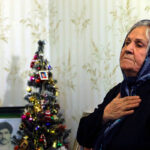

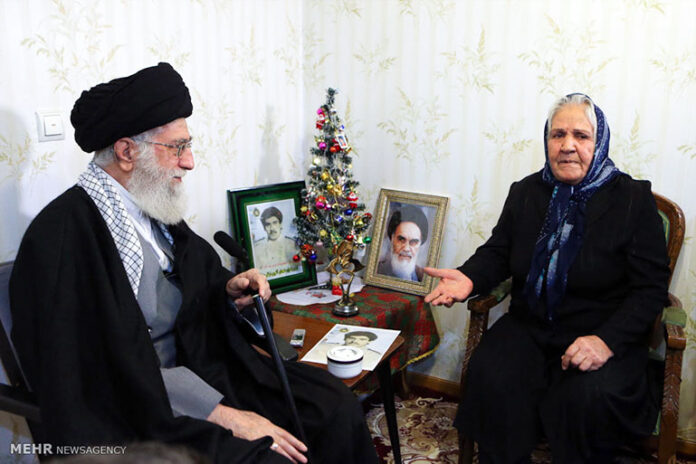
To mark Christmas, Supreme Leader Ayatollah Ali Khamenei visited the house of Assyrian martyr Robert Lazar.
The following images of the visit have been released by Mehr News Agency:
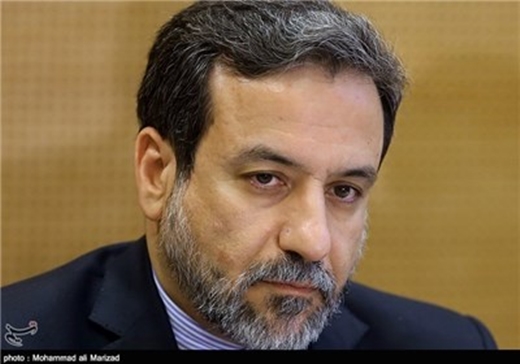
Head of the Foreign Ministry Committee to Monitor the Joint Comprehensive Plan of Action (JCPOA) Abbas Araghchi has underlined that the possible changes to the US Visa Waiver Program proposed by the Congress blatantly violate the nuclear agreement.
“Although it is not an important issue, it is aimed at harassment and is against the paragraphs 28 and 29 of the Joint Comprehensive Plan of Action (JCPOA),” Araghchi, also deputy foreign minister for legal and international affairs said as he addressed an open session of parliament on Sunday.
Earlier he had warned of the country’s serious reaction to possible changes in the US Visa Waiver Program if they amounted to violation of the recent nuclear agreement between Tehran and six world powers.
“The US Congress’s approval has different legal aspects which are being studied and if they are against the contents of JCPOA, we will take action against it,” Araghchi, who presides over the Iranian committee monitoring the six powers’ compliance with their undertakings under the Vienna nuclear deal, told reporters in Tehran.
He said, “We are in consultation with P5+1 (the US, Russia, China, Britain and France plus Germany), especially the EU (Foreign Policy) Coordinator (Federica Mogherini), to show the necessary reaction in this regard.”
[…]
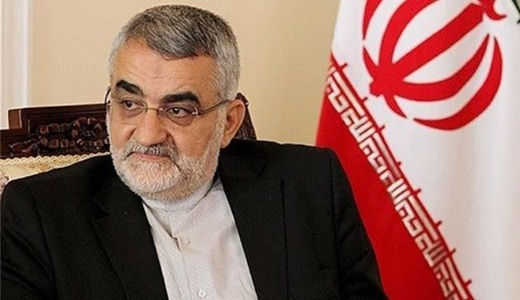
Chairman of parliament’s National Security and Foreign Policy Committee deplored a new law that tightens visa-free travel to the US for those who have visited Iran, saying it violates a comprehensive nuclear deal that Tehran and six world powers hammered out in July.
Alaeddin Boroujerdi on Sunday sent letters to his counterparts at the European Parliament and the parliaments of France, Britain, Germany, Russia and China, complaining about the bill that the US House of Representatives passed to tighten visa-free travel to the US and President Barack Obama signed into law.
The new law not only is “unfair and discriminatory” in nature, but also contradicts what the US is committed to do under the Joint Comprehensive Plan of Action (JCPOA), the lawmaker said in the letter.
If enacted, the new US visa program will adversely affect normalization of Iran’s trade and economic ties with the world, since it will discourage international business people from traveling to Iran, Boroujerdi explained.
According to the bill, which was passed in the US House by 407 to 19 on December 8, visitors from 38 “visa waiver” countries will need to obtain a visa to travel to the US if they have been to Syria, Iraq, Iran or Sudan in the past five years.
On December 18, US lawmakers sent Obama a huge tax and spending package, which also included reforms of the US visa waiver program, and the president quickly signed it into law.
The controversy comes weeks before implementation of JCPOA, the nuclear deal signed between Iran and P5+1 (Russia, China, the US, Britain, France and Germany) in July.
[…]
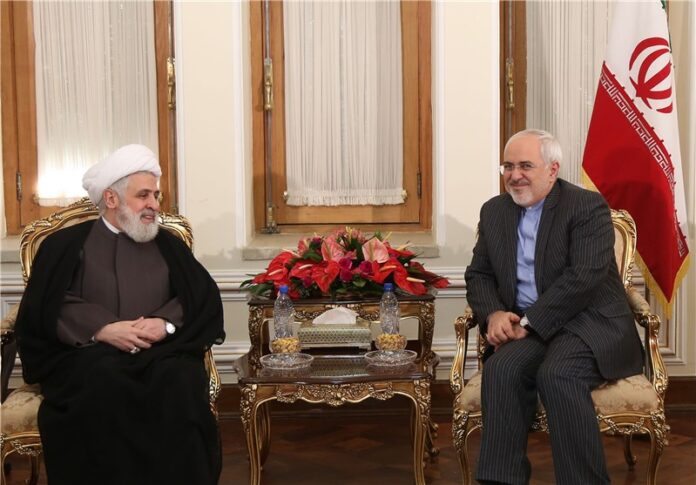
Iran’s Foreign Minister Mohammad Javad Zarif highlighted the role of Lebanese Hezbollah Resistance Movement in regional developments, saying that Muslim states are proud of Hezbollah’s achievements in the face of plots hatched by the Zionist regime of Israel.
“We are constantly pleased with the vigilance of Lebanon’s Islamic Resistance regarding different events,” Zarif said Sunday in a meeting in Tehran with Sheikh Naim Qassem, Hezbollah’s second-in-command.
Iran’s top diplomat also described Hezbollah’s approaches, which involve boosting Lebanese people’s unity, as being in the interest of everyone.
In the meeting, Sheikh Qassem, who is in Tehran to attend the 29th International Islamic Unity Conference, appreciated the Islamic Republic’s stances in support of the people of Lebanon.
He also expressed hoped that the scholars, thinkers and politicians attending the conference could come up with solutions for Muslim world issues.
Hundreds of clerics, intellectuals and academics from some 70 countries are taking part in the conference in Tehran to discuss the “present Islamic world crises.”
Organized by the World Forum for Proximity of Islamic Schools of Thought, the gathering is to discuss ways to promote unity and solidarity in the Islamic world and bring closer views of Muslim clerics and scholars’ on diverse religious issues.
The event will also focus on problems that have beset the Islamic world, particularly the threat posed by the Takfiri thoughts and sectarianism.
Participants also plan to discuss the issue of Palestine, propose solutions to settle its problems and adopt a common stance on the issue.
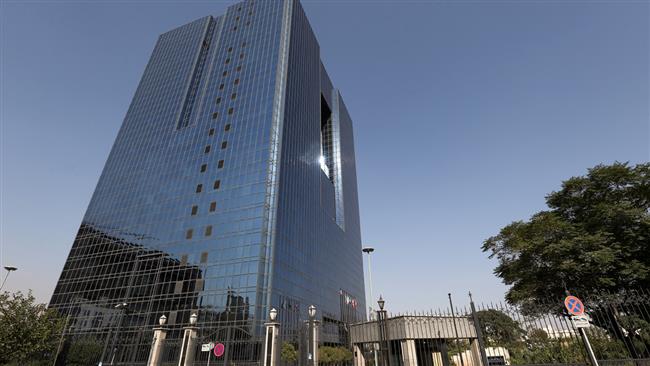
Iran is following the case of its assets frozen in bank accounts in New York which the US seeks to appropriate under court rulings, Central Bank Governor Valiollah Seif says.
The US Congress has approved a bill allowing the Americans to claim Iranian funds in a case which is currently before the Supreme Court, with the Obama administration urging the tribunal to rubber-stamp it.
Over 1,300 Americans are reportedly pressing to receive billions of dollars of the Iranian money in awarded damages over two bombings in Beirut and Saudi Arabia in 1983 and 1996.
On Sunday, Seif said the Central Bank of Iran (CBI) has a total of $2.5 billion frozen in New York, including the interest on top of the original $1.7 billion held in Citibank accounts.
“This case is being followed by the Presidential Office and Ministry of Foreign Affairs which we hope we will get to a conclusion,” he told reporters in Tehran on the sidelines of a forum on Islamic finance.
In 2012, President Barack Obama issued an executive order blocking all of CBI’s assets held in the US in order to prevent Tehran from repatriating them.
At the same time, Congress passed a law which included a provision making it easier for the Americans to use Iranian funds frozen in the US.
CBI says the US Congress passed the law to change the outcome of the case. It has asked the US federal courts to decide whether that violates the constitutional separation of powers.
The case is currently before the US Supreme Court, with the Obama administration urging it not to overturn the decisions of US Circuit and Appeals courts to award the plaintiffs.
Tehran is already disappointed by Obama’s signing of a Congressional bill this month aimed at limiting travels to Iran and trade with the country.
Iran says the law violates a July nuclear accord and amounts to new sanctions on the country.
On Friday, Foreign Ministry Spokesman Hossein Jaberi Ansari rapped US judicial decisions, saying American courts are “violating the basic principles of international law through recourse to unsubstantiated and baseless allegations”.
“Some US courts are making a travesty of justice by sentencing the Islamic Republic of Iran over the past few years to paying restitution to victims of terror acts carried out by known citizens of US allies,” he said.
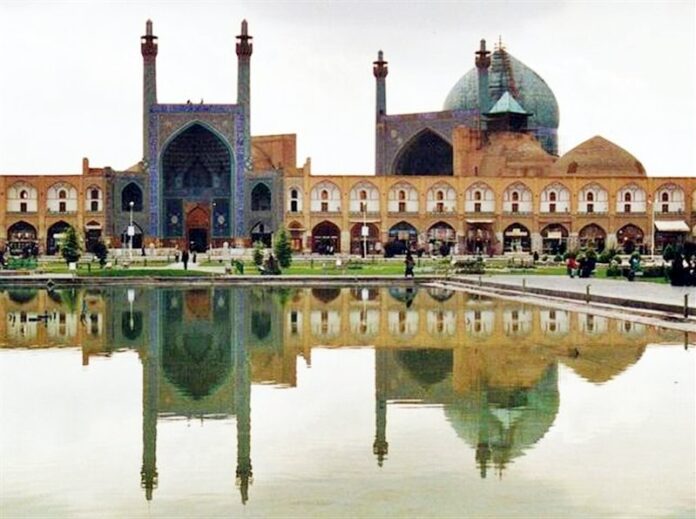
After CNN recommended its audience to visit Iran in 2016, Los Angeles Times too has put Iran on its list of 16 must-see destinations in 2016.
The following is what the daily wrote about Iran in a story titled: Looking for a 2016 vacation? Here are 16 must-see destinations:
Iran
Many Americans are eager to visit Iran, and several tour operators are helping them. (In terms of U.S. government red tape, it’s easier than going to Cuba.)
Iran is full of historic towers, mosques and squares, especially in the ancient city of Esfahan (where the atmospheric Abbasi Hotel is a favorite of western visitors).
Persepolis, not far from the city of Shiraz, holds some of the most striking pre-Christian ruins outside of Egypt and Peru.
Both destinations are well removed from the Iraq and Afghanistan border zones, which the U.S. State Department urges travelers to avoid.
Tehran, more modern, includes many museums. To get there, Americans often fly to Istanbul, then continue on to Tehran or Esfahan.
At Distant Horizons in Long Beach, owner Janet Moore says she is sending 14 groups to Iran in 2016 — twice the number she sent in 2014.
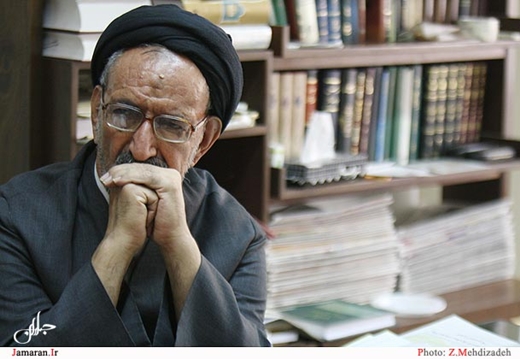
A former Iranian ambassador to Iraq has reacted to claims that the late Imam Khomeini had insisted on war with Iraq despite advice by his inner circles to avoid such a conflict.
A story from the days predating the Iran-Iraq war has made the rounds on social networking sites despite the fact that Iran’s former ambassador to Iraq – Seyyed Mahmoud Doaei who knows things first-hand – has already denied it outright.
Sharq daily’s Marjan Towhidi had a Q-and-A with Mr. Doaei about his stint as Iran’s ambassador to Iraq, his contacts with Saddam and how the war erupted. The following is the translation of PART ONE of the interview ( Part Two ):
Seyyed Mahmoud Doaei had come to the daily’s office with his characteristic humbleness. New information on the Internet on how the Iran-Iraq prompted him to share with us his first-hand information about the imposed war.
What was the story?
In an interview with a news website, Abdolali Bazargan [the son of former Prime Minister Mehdi Bazargan] has evoked a memory of the pre-war era: Once in 1980, I was asked to attend a consultative session of the Council of the Islamic Revolution on an important issue. Iran’s ambassador to Iraq Mr. Doaei was also there. I was told Mr. Doaei had a report to submit.
Mr. Doaei said, “… Last week Saddam Hussein summoned me, expressed strong protest against [Iran’s alleged] interferences and disruptions and said no longer could he tolerate such a situation. Saddam said, ‘You go to Tehran and tell Mr. Khomeini that Iraq was the first government which recognized the Islamic Republic. If he [the late Imam Khomeini] let me, I will personally come to Iran to hold talks and settle our differences. If he is not willing to talk with me, I will send a high-ranking delegation to Iran, or the Iranian government can send a top ranking team to Iraq for talks so that we can patch up our differences. I cannot take the current trend anymore and I will launch a military attack on Iran to put an end to such a situation.’
Mr. Doaei then stressed that he [Saddam] is a guy who will [definitely] launch military attacks. The Council of the Islamic Revolution decided that Mr. Doaei together with Messrs. [Mehdi] Bazargan and [Mohammad] Beheshti meet with the Islamic Revolution leader [the late Imam Khomeini] to explain the situation on the ground and ask what should be done.
In the meeting, Mr. Doaei tells the whole story as well as Saddam’s threat. The leader tells Mr. Doaei not to pay any attention to him [Saddam]. Then Mr. Bazargan steps in and argues that … In response, the leader says, ‘I said [what I said]. Pay him no attention.’
Once again, Mr. Beheshti starts to reason with the leader, but Ayatollah Khomeini does not wait for Beheshti to finish his words, rises to his feet and says for a third time that they should not pay any attention to Saddam. He then moves toward the door.
Being so dejected, Mr. Doaei tells Imam that he will not go back to Baghdad. Mr. Khomeini, who was close to the door, turns back after a short pause and says, ‘It is your responsibility to go [back to the mission].’ He then leaves the room without waiting for a response.
Those gentlemen come back to the Council of the Islamic Revolution. A downcast Mr. Doaei starts crying and says, ‘Swear to God! He (Saddam) will attack. No one can do anything [to prevent it].’ And after a while Iraq mounted a surprise attack against Iran.
Q: Let’s go to a meeting between you, the late Ayatollah Beheshti, Mr. Ebrahim Yazdi and the late Imam. Apparently the three of you talked about the threat of war and the need to hold talks with Saddam, with you saying that Saddam has asked for a personal meeting [with Imam] and Imam turning it down. Earlier you denied such a meeting and what Mr. Abdolali Bazargan said about it.
A: The scenario they have created is distorted or damaged from different perspectives. They claimed that I returned from Iraq with a message from Saddam in 1980, but I was not in charge then. I was called home one year earlier, after I served out my term [in Iraq]. Back then I was in charge of the Ettela’at newspaper.
Later they claimed that Saddam had summoned me, but I said that I had no [personal] meetings with Saddam except for those which came my way according to protocols and that I had not had any message from Saddam to convey to the late Imam in the presence of senior officials.
Thanks to Iran’s complaints against their movements and their failure to take note of Iran’s good intentions, the only case which came up for talks was a proposal suggesting that a representative with full authority from Iran come over for talks.
The proposal was brought forward by Sa’dun Hammadi, the then Iraqi foreign minister. There was nothing else except for this proposal. The late Imam prudently said that he preferred a representative who was elected and recognized by people enter the talks.
“We have elections ahead for president and parliament. I prefer to see an official who has political responsibility in the country to represent Iran in the talks. If you have good intentions, you should help maintain calm until Iran elects its office holders and then talks can be held,” the late Imam said.
He wanted somebody who cared about the homeland and the revolution to go on that mission.
Q: One of the topics referred to is the intelligence Mr. Ebrahim Yazdi is provided with on Iraq’s movements near Iran’s borders. In response, Mr. Yazdi says the intelligence was not trustworthy ….
A: The topics Mr. Jafari has referred to could be answered by Mr. Yazdi too. The point I want to make here is that a scenario which was created a few years ago to tarnish Imam’s image and attribute false things to him is recently changing hands on Telegram claiming that it is part Dr. Yazdi’s recollections.
But what is certain is the fact that untrue materials are nowhere to be found in his memories. Courtesy of his piety and accuracy in recalling his memories, he will not include an untrue story – which has never happened – in his memories.
I remember the time when Dr. Yazdi – who was seeking to record his memories – handed me part of his memoir which focused on Iraq to study. I did study it and let him know about my views on the date of some of his memories. I found no such reports in his memoir.
Certain friends attribute a distorted and untrue story to Dr. Yazdi due to his position and the significance of his memories. What they do is in fact cruelty to him.
Q: By and large, do you think it was possible to prevent the war from erupting despite all [provocative] movements of Iraq?
A: The war could have prevented if Iran had surrendered to Iraq’s demands and renounced its national sovereignty. No revolution would have bought such an idea. The Iraqis wanted to act against what was envisioned in the 1975 Algiers Agreement as far as the question of the Arvandrud River was concerned. They wanted to lay claim to Shatt al-Arab [or the Arvandrud River].
They also claimed that the triple islands [in the Persian Gulf] did not belong to Iran and had to be handed over to their Arab owners. They also sought to make Iran offer concessions on Arabic- and Kurdish-speaking Iranians. Since Iran lacked a powerful army in the early months after the revolution, the Iraqis wanted to seize the opportunity and make Iran give in to their conditions.
Q: Do you think talks could have prevented the war if they had ever been held?
A: It could have been put on hold, but talks could not have prevented the war unless Iran would have given in to their demands.
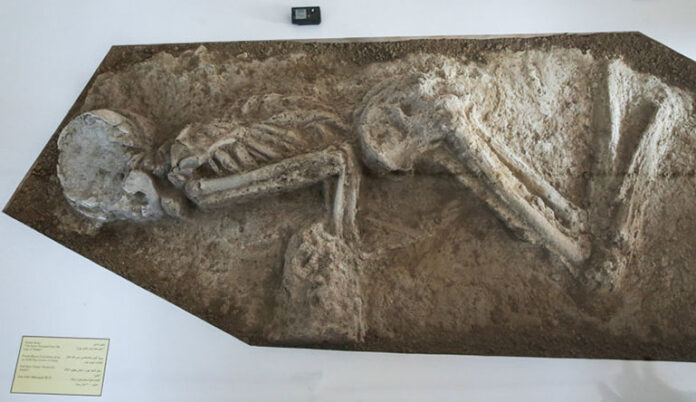
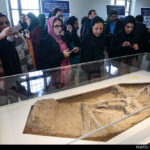
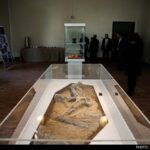
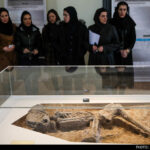
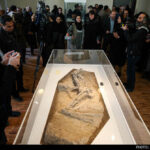
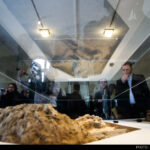
The skeleton of a woman who lived in what is downtown Tehran today some 7,000 years ago has gone on display at the Ancient Iran section of the National Museum.
The skeleton and 34 other items found in excavations on Mowlavi Street will remain on display for 50 days.
The following images have been published by the Iranian Students’ News Agency:
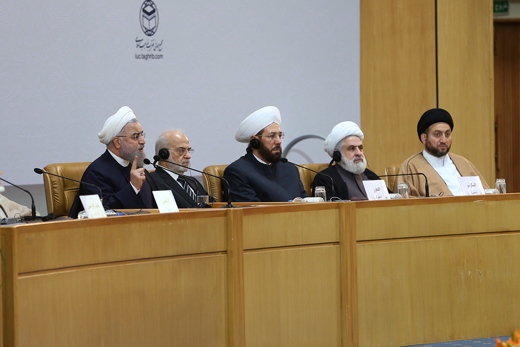
Iran’s President Hassan Rouhani says the Islamic world is currently at a critical juncture, urging all Muslim nations to strengthen unity to counter enemy plots.
Addressing a 29th International Islamic Unity Conference in Tehran on Sunday, Rouhani said enemies and big powers are doing their best to portray Islam as a religion of violence, urging Muslims to take the necessary steps to thwart all efforts aimed at depicting Islam as the religion of violence.
The Iranian president added that faced with such plots, “Muslims have no option but to join hands and … choose the right path.”
Rouhani stated that many ongoing acts of violence and terror as well as massacre are taking place in the Muslim world, North Africa, the Middle East and West Asia, adding that there must be an end to “intellectual and discourse-based violence.”
The president criticized certain Muslim countries for purchasing great quantities of US arms, and either delivering the weapons to militant groups or using them against other Muslim nations.
Daesh Takfiri terrorists, Rouhani argued, recruit members that are overcome by cultural or economic poverty, adding, “So, let’s eradicate cultural and financial poverty in our societies.”
The Iranian president emphasized that bombs and military equipment cannot do away with terrorism.
The biggest responsibility we shoulder is to repair the image of Islam in the court of world public opinion, President Rouhani said.
In reference to efforts made to unseat the Syrian President Bashar Assad, Rouhani said no foreign country can make decision on the fate of another country and only that country’s people can make that decision.
Iran has repeatedly announced that it pursues the goal of achieving a world without violence and that every problem can be settled through negotiations, Rouhani said.
Iran succeeded in solving a problem, which had been aggravated over years, through wisdom and negotiations with major world powers, he noted, adding, “At the negotiating table, we managed to bring the most complicated international political issue to a resolution that is beneficial to all the negotiating sides, the region and the world.”
Prominent religious figures, ministers and scholars from some 70 countries are participating in the conference, organized by the World Forum for Proximity of Islamic Schools of Thought in Tehran. The meeting which focuses mainly on the existing crises in the Muslim world will endon Tuesday.
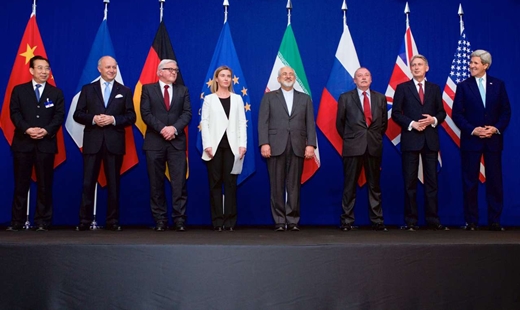
The final word should come first: those who are really willing to see the materialization of the Joint Comprehensive Plan of Action (JCPOA) and termination of economic sanctions should today show a strong reaction – in practice – to the US policy. And those who show tolerance today would be to blame for the failure of JCPOA in the future and can prepare for a memorial service for the Iran nuclear deal (JCPOA) already.
Alef.ir released a piece by Farhad Dadjoo on December 26 about the future of the Iran nuclear deal and what Tehran should do in reaction to the new US policy on Iran. The following is the translation of the piece:
1) Reports on the [huge omnibus] spending bill – that cleared the House of Representative and Senate last week and was signed into law by President Barack Obama – are indicative of the dishonest approach of US officials toward Iran by imposing new restrictions. Such restrictions, which definitely constitute breach of JCPOA, come as the ink on the [Iran nuclear] deal is still wet and Implementation Day has yet to arrive.
Visa requirement for those who have traveled to Iran (and a probable failure to give them a nod to set foot on US soil), sanctions to be imposed on economic institutions affiliated to IRGC and freezing part of Iran’s assets so that it can be paid as compensation to the families of the victims of terrorism (!) are some of the reports leaked to news agencies.
2. In the world of business, if you are willing to have firm relations with your trading partner, you need to show serious reaction to his/her first bad check. Such a reaction may strain your trade ties for a few days, but it will reassure you in the long run that s/he will not sign a non-payable check again.
The same rule applies to marital life as well. If you don’t want to spend all your time trying to settle your arguments [with your spouse], you need to take what you’ve agreed on in married life seriously and show objection to the first violation of the agreement.
3. What is said above is one principle of game theory. Your rival designs his/her strategy based on your previous reactions and possible [future] responses. Tolerance of any uncommon move of the rival translates to encouragement for the rival to choose a second uncommon move.
In other words, backing down in the face of violation of the agreement is a failing strategy in the first place. We have lost the game unless our reaction denotes the end of uncommon behaviors.
4. Russia’s strong reaction to the downing of its plane by Turkey is a good example of a game theory-based play, a sign which points to the price all players should pay for taking on Russia. Consequently, global players will exercise extra caution in picking their strategies vis-à-vis Russia.
5. Pessimistic analysts in the area of international relations believed that after the 2016 US presidential elections and possibly a Republican president at the White House, JCPOA will walk down a different path. The Iran nuclear deal would be violated under different pretexts and it would be a distant possibility for JCPOA to be honored at an eighth year.
Now that the Obama administration is still in office and Implementation Day of the Joint Comprehensive Plan of Action has yet to arrive, the American side has taken the initial steps to impose extra restrictions [on Iran]. The only measure the current US administration has done is sending a letter to suggest that these restrictions [imposed by Congress] will not put into force.
It seems that even cynical analysts could not imagine that at a short time after announcement [by two sides] that a deal has been successfully struck, the US government would issue signals which are 100 percent against JCPOA!
The ball is now in the court of the Iranian government. By seeking and inking JCPOA over the past two years, if the eleventh government had aimed to simply strike a political deal to send a signal to foreign countries and win people’s votes here at home, this piece has nothing to offer.
But if the Iranian government is seeking to make JCPOA return to the right path – namely, implementation by both sides of their commitments and undoing the knot of economic sanctions and improving public welfare (something the government insists on) – it is expected to react to the violation of the nuclear deal by the other side and send a signal which can result in a shift of strategy in the US.
If the government shows tolerance today, the country has to hold a memorial service for the Joint Comprehensive Plan of Action now [even before its implementation gets underway].
© All Content by IFP News ( Iran Front Page ) is licensed under a Creative Commons Attribution 4.0 International License.
